Click to read the transcript
This transcript is AI-generated. Check against delivery.
Jenna Ben-Yehuda:
Good afternoon and welcome to the Atlantic Council’s AC in New York programming. I’m Jenna Ben-Yehuda, Executive Vice President at the Atlantic Council. We are really in for a treat. We have Her Excellency Oana Țoiu, Minister of Foreign Affairs of Romania, for our conversation on Black Sea security, energy, and connectivity. Minister, it’s great to see you. Thank you for making time. I know we are tight on time. The minister is one of the fastest talkers I’ve met, so we’re going to cover a lot of ground today, I know.
I also want to welcome the Romanian delegation here and thank everyone for joining us in person and online. This conversation, of course, builds on the Atlantic Council’s continuing work in Romania and the wider region. We opened our office in Bucharest in June of 2025 to deepen cooperation across energy, technology, defense, and security. That would not have been possible without our founding partners for that effort, many of whom are here today. It’s wonderful to see you. And in fact, Minister, you took office at around the same time.
But that followed, I think, a really incredible career of service in Romania’s parliament, including as Vice President, in the Chamber of Deputies, and then earlier work in government and social entrepreneurship. Minister Țoiu, as you know, let’s just kick right off. We’re going to jump right in here.
The US-Romania strategic partnership dates back to 1997, but the bond between our countries obviously has endured for far, far longer. As you meet with partners in New York, tell us a little bit, please, about Romania’s priorities for the next phase of that relationship and what progress you would like to see over the year. What are you here and getting up to this week?
Oana Țoiu:
So thank you, Jenna, for having me. It’s really nice to see you in New York after our meeting in Munich. In terms of our strategic partnership, I would say the core part of the partnership has always been security. But I would dare now to say it has, throughout the years, transformed.
Security remains the core part of the partnership, but because we have such strong communities of Romanians living here in the United States, and throughout the last decades, we have seen investments and partnerships happening in Romania with United States, now we can say there’s a strong pillar of people-to-people ties and business-to-business ties. And where we are now in the conversations I’ve had with Secretary of State Marco Rubio and Secretary Wright—we’ve just met in Vienna a couple of weeks ago, and last night I was speaking with Secretary Greer, who we met here in New York—is to be able to use that strong foundation to have more opportunities that we seek together in terms of investment, in terms of energy, in terms of connectivity with the region, because we do see our strategic partnership not just bilaterally.
Romania is also a gateway from Europe to the South Caucasus, to the Middle East, and to the Black Sea specifically, where we will focus, and where we have our focus as well in our conversations with US institutions, because that’s the highway, or rather, the waterway, I would say, of the future.
Jenna Ben-Yehuda:
Well, thank you for laying that out. You mentioned Secretary Wright, of course, US Secretary of Energy Chris Wright. The Atlantic Council Global Energy Center and Atlantic Council Romania have been working on this report on the vertical energy corridor, and our colleagues have been tracking the increasing Russian drone incursions and attacks on and around key infrastructure in the region, including in Romania. You raised this with EU foreign ministers recently, earlier this month, I believe. So I’d love to hear you talk to us about how you think about the energy conversation, of course, the security dimension of that energy conversation, and how can Romania, its NATO allies, and the EU cooperate more effectively to protect the Black Sea region’s airspace, trade routes, and critical infrastructure?
Oana Țoiu:
Those are all easy questions. Thank you.
Jenna Ben-Yehuda:
We’ve got all the time in the world!
Oana Țoiu:
No, it is true. And it’s obvious to us. It’s obvious to the United States. I would say it’s obvious to the world that we see increased risks specifically of spillover effects of the Russian war against Ukraine. And therefore, the only sustainable solution is to help Ukraine and to help the peace process until that war is over. I would say we have to focus on that solution.
Now, it might take a while until we get there. We have had hopes throughout the last year, at least. We still have our hopes here at the UN as conversations unfold. But until we reach that moment where that is the solution for the security of our region and investments as well, there are many things we’re doing in the process. First of all is to realize in times as complicated as these, that we are not only focused on diminishing the risk. But it’s also: what do we see as an opportunity in this timeframe?
For example, it’s quite clear now that it is also a window of time where not just Romania, but the region, can create more strategic autonomy from Russian energy sources, for example. And that doesn’t just mean producing more. In our case, we are now the main natural gas supplier in the European Union. We have plans to double our nuclear energy in the next years with the Cernavodă nuclear plant—and that’s also part of the conversations I’ve had with Secretary Wright and with Canada, because we have there an international setup. Japan is involved. South Korea is involved. We’ve just met the ministers yesterday, as well.
So we are also looking at what we can build, because it’s a moment in time where not just our country, but the world looks at the need for the region to be less dependent on Russian energy sources. It has relied on that too long. But we need to be able to do that while maintaining affordability of life and competitiveness for our businesses.
Because at the end of the day, even as a minister of foreign affairs, even in a geopolitical angle, we still need the mandate from our citizens and from our businesses, and that mandate is always based on very pragmatic criteria. So you cannot say we want to switch what we’re doing in the region just based on values—that is the most important part, but you need to deliver solutions for affordable energy that allow for the prices to be affordable. And that’s something that we’re working on with United States as well. And the vertical corridor, to come to that part of the questions, actually is a way to allow for LNG American gas to reach markets in Europe. Romania’s role is first of all as a transit country. We have done work in the last year to lower our prices, so our contribution to the model is to have the proper business model.
But at the same time, we need a better infrastructure at the connection points and the investments for that. And then we have also taken on a different role in the political arena. [Former] President Klaus Iohannis has hosted the leaders’ meeting on the vertical corridor, because it is quite clear that there are many countries involved, many political situations are quite diverse in these countries, and so therefore, President Klaus Iohannis has taken on the role to convene all of the leaders at the same conversation table to see what we can do to make sure that we are bureaucratically and strategically aligned in building the vertical corridor alternative.
Jenna Ben-Yehuda:
So you’ve laid out a really ambitious energy and infrastructure agenda, understanding that there are a lot of ifs and assumptions and funding required and legislation that needs to pass.
Oana Țoiu:
Yeah, but sorry for interrupting, but I want to say there are many things we don’t know. But there’s one thing that we know, and that is that the industries of the future that are already here require an increased amount of energy. So that’s something that doesn’t change. That’s, what we know among all of the other variables. So that means our focus on energy—and specifically sustainable, reliable energy—is going to pay dividends in time, irrespective of what else is changing in the environment.
Jenna Ben-Yehuda:
So where does that leave Romania in five years? What is the vision and the timeline? How do you think about some of these new assets coming online with what you’ve laid out?
Oana Țoiu:
Can I ask your permission for two minutes to go into the past?
Jenna Ben-Yehuda:
You can answer whatever question you want.
Oana Țoiu:
I always forget that’s the American way. It’s like whatever question you have—
Jenna Ben-Yehuda:
I may come back to it!
Oana Țoiu:
Whatever question you receive, you can put your pitch as part of the answer.
Jenna Ben-Yehuda:
Please.
Oana Țoiu:
No, but what I want to say is: if you look at the Romanian story, and those of you here in the room that are working with Romania from a business side or a policy perspective, you have seen this firsthand. We do have a spectacular story. Since the 1990s, we have increased our economy more than ten times. Our GDP has increased more than ten times. There are very few countries that are able to add a zero to their GDP growth in a lifetime, right? After joining the European Union and becoming part of a single market that reaches half a billion people, we’ve tripled our GDP.
Now, I am mentioning that because this is a country that has a strong experience of transformation. After each crisis, we’re one of the countries that has had the fastest rebound.
And I’m mentioning this because, again, we’re also a country that is facing increased risks and challenges at the same time. But based on this story of transformation, I’m confident that in the next five years, what we’re going to see is Romania’s role as a connectivity hub to the region as being even more instrumental. Specifically, what are we doing? In the next five years, if you look at our investment plan, it’s more than fifty billion euros. We are finishing the highways and the railways for connection points with Moldova and Ukraine. We have taken on a specific role to support the EU integration of the Western Balkans as well. So that would mean literally that Romania is moving more from the edge of Europe—and I mean that in the geographical sense—to closer to the center of the European Union with the process of enlargement, specifically gradual enlargement. We’re building up all these connection points on energy, highway, railroads, but also in terms of how our societies and our markets are connected.
And that makes us, for the United States, a partner in the region. We have the legacy of a strategic partnership, a great experience together, and the fact that we are allies within NATO. But also through our strategic partnership, we offer access to the European Union market that’s increasingly more focused on itself, while also doing global outreach at the same time, and to the region.
Jenna Ben-Yehuda:
I’m glad you mentioned the work that you’re doing with Ukraine and Moldova, this Odesa Triangle work that you’re doing, and also the European Commission on these grain export routes. Can you talk a little bit about the cross-border connections that you see as being really important for security and integration with the EU? Take us a little bit deeper into your strategy there.
Oana Țoiu:
Yeah, thank you. So, with the grain exports that you mentioned, we’re going to have a panel focused on that at United Nations as well, together with the European Union, France, and our neighbors.
There are more than sixty billion tons of grain that are transiting the Port of Constanța. When the Black Sea or the Port of Constanța or the transit routes have a challenge, it is felt directly in the food price in Africa and the Middle East.
For example, this year we started the year in Davos. One of the conversations with the ministers of commerce and trade around the world was specifically on the role we have with the Constanța Port and the connectivity we share with Ukraine to these markets.
Inside the European Union, again, we’re now negotiating the budget for the next five years. Our strategy in that negotiation is, first of all, to have an increased focus on the eastern regions in terms of investment, to be able to continue our traditional investment policies in agriculture. Because again, what we know is food is still going to be absolutely essential in the future. And it’s also livelihood—half of our country is in rural areas, and agriculture is core to our economy, but also core to the countries we service around the world as well.
Coming back to what I was saying about the European Union market, there’s now an increased focus on competitiveness.
Jenna Ben-Yehuda:
Mm-hmm.
Oana Țoiu:
It has always been extraordinary that we are a single market, but now, in facing tougher negotiations, including with United States and partners around the world, we did realize that the single market that we said we have is not necessarily a fully functioning single market as we would like it to be. So we are focused on increasing internally the single market by cutting down red tape, cutting down bureaucracy, cutting down barriers of access to capital.
For example, if you look at the loans inside the European Union, only 8 percent of the loans are intra-union, meaning from another bank than that of your own country. There is a huge potential there that we don’t use in terms of access to capital, for example. So, we are focused on competitiveness. And here there are at least two directions of thought on that. One is to focus on Made in Europe: to allocate European budgets and European procurement procedures to build European, buy European, and so on. That’s something that obviously United States sees as potentially a barrier in our commercial relationships, right?
The way we approach that is that, it makes sense if at the same time we have investment opportunities, joint ventures, and capital funds that create together value. So that’s one thing. Then, in terms of military procurement, for example, which is the most sensitive, I would say, our position has always been that the risks are already here today. So it’s not just about what you buy and from where you buy, but it’s also about the speed of delivery. And I know that in the US, people I’m speaking with in Congress or even in industry say the same thing. Now the demand is significantly higher than the capacity to deliver. So this gap that we need to bridge can only be bridged together if we build production capacities together. And that’s something that we’re doing now as well with the United States in Romania.
Jenna Ben-Yehuda:
So I’m glad you turned to defense because just last month, Romania received its first tranche of the SAFE funds, €2.5 billion. This is the security action for Europe. It’s a defense instrument. 15 percent of these funds are going to Romania. You’re the second largest recipient after Poland. What is Romania’s strategy for using these funds?
Oana Țoiu:
So we are indeed, as you’ve mentioned, the second in terms of allocation. We have used these funds to revitalize what we had as a defense production base in Romania. And we have crafted inside the plan also the option to work with United States, because the rules are in such a way designed for the European financial allocation that it is increasingly harder to be able to do that. But we are working on a process where that is possible, for example, on building ammunition in Romania and also making sure that the way we do it also creates jobs and creates long-term thinking, not just seizing the current opportunity.
Jenna Ben-Yehuda:
So you’re talking about like a joint venture, or is it 65 percent or something that’s a majority share?
Oana Țoiu:
What we approach differently now than in the past procurement processes is that we’ve said, okay, we need to allocate more money. And we have been among the first countries to support, even in the first President Trump term, his perspective that European countries need to invest more in their own defense. So when we raised our budget to 2 percent—and now at The Hague summit as well, our commitment is to 5 percent, and we are now at 3.7 percent for this year. And we have also been one of the first institutional public partners on the NATO 3.0 concept with the Bucharest 9 and Nordic Summit the president has hosted in Bucharest, where in the final statement of the Bucharest 9 and Nordic Summit, we included [reference to] the transformation toward NATO 3.0. It’s not necessarily a scenario we would have preferred if you would have asked us years ago, but it is the scenario we’re in.
And that means we’re allocating significantly more for defense across Europe in our own budget. Why do I start from that? It is because that also means in order to have that money to allocate in the future, not just one time, that you need to do it in a way where you don’t create vulnerabilities in other areas where that money is needed. Education, for example, right? Because you’re going to have planes and you’re going to have tanks and you’re going to have boats for defense, but if you don’t have the proper education, you have an increased vulnerability to Russian strategies of disinformation.
So, you’ve protected the flag on land, on air, on water, but you’ve remained vulnerable on another tactical ground, which is disinformation and people’s opinions, perceptions, and access to truth.
There’s only one way that you can allocate more money on defense and still invest in what is absolutely needed in a society such as ours, and I would dare to say everywhere around the world: Education. And that is to also create a financial stream that comes back: that creates jobs, creates production where you’re also a supplier to others across the world. So you do have that financial flow that allows you to have a stronger defense and allows you to continue the strategic investments the growth of the country needs.
Jenna Ben-Yehuda:
So it’s an economic growth strategy.
Oana Țoiu:
And it’s an imperative. It’s not an option. That’s what I want to say, because many people say, yes, but let’s not—let’s buy from wherever they are around the world. And I understand that angle, but it’s not going to be sustainable over time. That’s why how we approached our procurement is we’ve said: this time, from the SAFE instrument, but also from our national budget, what we buy is not just evaluated based on technical features, but it needs, whenever possible, to create jobs here at home and to create with our strategic partners an offering that makes us a supplier in the market.
Jenna Ben-Yehuda:
Can you talk a little bit more about the kind of dual-use infrastructure, to your point? This 5 percent target for NATO, this includes 1.5 percent for infrastructure. How is Romania thinking about that split, whether it comes to cyber or roadways or the Port of Constanța? How do you think about that?
Oana Țoiu:
We have allocated more than two billion euros on dual-use infrastructure to the highway connecting us to Moldova—that’s something we should have done at least a decade ago, and it’s great that we’re finishing it now—and to Port of Constanța, because we want to increase capacity and because as you have seen also, we had drones drifting close to Port of Constanța. So, there’s a focus on procurement there to have a better analytical awareness of what’s happening and a better capacity to protect it.
So, those are essential for us. And also, of course, in terms of technology, this digital resilience part that you mentioned is very important. In the Odesa Triangle as well, we have finished the partnership between Romania, Ukraine, and Republic of Moldova, also on cybersecurity, because we’ve seen similar challenges, and our experts are now working together. We’ve actually launched the Munich Conference.
Jenna Ben-Yehuda:
Excellent. Get ready, we’re going to come to you for questions in just a moment. We’ll start with those who are braving our frigid temperatures in this very cold room. So wake up and be brisk about it and we’ll come to you. I’ll look for hands.
Minister Țoiu, we’ve covered a lot of ground. We’ve talked about security, energy, infrastructure, connecting Romania to its neighbors, the strategy for growth.
What’s the ingredient that is needed for those priorities to become realized? What are you looking for from American partners, from European partners, and what is the story that you want to tell to regional companies about investing in Romania?
Oana Țoiu:
So far, I think the best story is told by the companies that have invested already. The companies that I talked to—the US companies that have invested in Romania and have plans in Romania— share the spectacular quality of our human resources and how amazing it is if you put experts together in the same room that their time to delivery to projects, their capacity to envision what’s needed in the market, is spectacular together.
That’s why, for example, we finished this year—on September 1st it came into force—our Romanian–US Social Security partnership to acknowledge our contributions together. So you have an easier mobility of human resources between the two countries.
So I would say to also look at the growth potential once investing in Romania, because it’s first of all an investment in a strategic partnership that has proven to be trustworthy through decades, but also it’s also access to the single market inside the European Union and to the region, to our eastern neighbors, to the Western Balkans, and through the Black Sea connections to the South Caucasus and beyond. I would say that’s a core part of the opportunities that are seen in Romania.
And then something that cannot be ignored is how the long-term political arena is going to look. Because we have seen, even as we speak now, more intense conversations inside Romania, not just on internal politics, but what’s our place in the world. And our citizens are one of the most anchored in both the transatlantic relationship and in the European project. Why do I mention both at the same time? It is because a lot of the public conversation, in Europe, at least in most of public or TV debates, has been for each country, what do you choose as a priority: the European project or the transatlantic relationship? I understand where that question comes from, because conversations between the US and Europe have taken global stage in many episodes. But at the same time, I think us being part of a strong European Union actually makes us a more valuable, stronger partner to United States, as well. That’s how we look at it.
Jenna Ben-Yehuda:
So you reject that binary. You don’t see that choice.
Oana Țoiu:
I see that choice. I reject making it.
Jenna Ben-Yehuda:
Right. Fair enough.
Oana Țoiu:
So I see where the question comes from, and I’m not saying that question is not a relevant question also in official conversations and rooms. I’m just saying the world in its entirety has part of its security and prosperity based on the fact that the transatlantic partnership works. And I think we’ve seen that in core investments from a political angle, because whenever we have these conversations, the world is paying attention because it directly affects them as well.
Jenna Ben-Yehuda:
That’s right. Okay, I’m turning to the audience here. I see a hand right in front. And please introduce yourself with your name and affiliation, please.
Ariel Cohen:
Thank you very much. I’m Ariel Cohen, Senior Fellow at the Atlantic Council. I worked very hard with Mircea Geoană to get your country into NATO.
Oana Țoiu:
Thank you. Thank you.
Ariel Cohen:
You’re welcome. And I have a connected twofold question.
Oana Țoiu:
Okay.
Ariel Cohen:
One is on the Caspian and the Caucasus and the Black Sea, as not only is there a vertical axis: there is a horizontal axis for energy, right? It’s very important.
There was a story of an electric cable—I don’t know where that stands now, if you can enlighten us—from Azerbaijan to Europe. But connected to that is how you protect it. And I was at a high-level Council of Foreign Relations briefing three days ago where the gentleman said, yeah, we understand Russia is up to no good, but we don’t have the drone capacity and the anti-missile, anti-aircraft capacity that the moment and the threat require.
What can Romania do? How can Romania contribute to European security to ensure the flow of energy from the Caspian and the Caucasus horizontally, and help to build that envelope that will keep that energy and security at large of Southeastern Europe safe from the Russian threat? Thank you.
Jenna Ben-Yehuda:
A simple question upon which to close.
Ariel Cohen:
Right.
Oana Țoiu:
So thank you for the question. It’s a spectacular question. I was just speaking with the Minister of Foreign Affairs of Armenia yesterday. It was also their national day, and I was called to celebrate, of course, but at the same time, in preparation for the meeting that President Iohannis is going to have with the Prime Minister of Armenia tomorrow. And you’re going to see good news coming out of that. We’ve worked in the last months on raising our relationship to a new level, and with Azerbaijan as well, throughout the last years, but with a strategic focus throughout this last year, we do see a direction of attention. And with that attention of financial investments from the European Union as well, it was part of Ursula von der Leyen’s State of the Union speech in the European Parliament, the Middle Corridor, and the European approach to that. And so those investments are going to matter significantly in time. With the cables, with the undersea cables, we are working now together with Bulgaria to put forward dedicated projects on that and the investment needed for that.
In terms of your question on how we protect the Black Sea, something that was at the top of our agenda, and of the European Union’s Black Sea strategic approach agenda as well, was the European Union Maritime Security Hub.
We now have a final decision together with Bulgaria and in conversation with the European institutions to place it in Constanța and Varna, to be able to have at the same time a connection with the European institutions, NATO, but also the other countries at the Black Sea that are not Russia to simplify the selection, because we need also a better coordination among us.
Something that is part of the diplomatic effort is to work more with the Baltic countries because they have done good work in how they coordinate around the maritime security. It’s not similar, of course. If you look at the Black Sea, we’re way more diverse. But at the same time, I think we have a lot to transfer from their practices. In terms of new military equipment, actually, in Romania as well, we’re producing maritime drones and boats that in and of themselves have the anti-missile capacity.
And this is a US-Romanian production line, and we do see a potential for that in the future as well. At the NATO summit in Ankara, based on the good partnership we already have in the naval task force with Bulgaria and Türkiye on demining activities, we agreed on a memorandum on increasing that collaboration to protect critical infrastructure. And we did that specifically at the NATO summit because we see that as being essential for how NATO is looking there.
Jenna Ben-Yehuda:
Well, thank you for that very detailed and comprehensive response. A woman who really knows her brief, always does. Please join me in thanking Minister Țoiu for her time this afternoon.
Oana Țoiu:
Thank you so much.
On the sidelines of the United Nations General Assembly in New York, Romanian Foreign Minister Oana Toiu joined the Atlantic Council for a conversation on the future of the US-Romania strategic partnership and Romania’s growing role in Black Sea and European security.
On Tuesday, September 22, at 12:00 p.m. ET, Atlantic Council Romania hosted a conversation with Romanian Foreign Minister Oana Țoiu on the country’s strategic role in the region and opportunities to deepen US-Romanian cooperation.
As a NATO ally on the Black Sea, a key partner to Ukraine and Moldova, and an increasingly important energy and infrastructure hub, Romania plays a pivotal role along the Alliance’s Eastern Flank. The discussion explored opportunities to strengthen regional connectivity, energy security, deterrence, and economic resilience.
Moderated by Jenna Ben-Yehuda, Executive Vice President of the Atlantic Council, the conversation also examined Romania’s role in advancing the Vertical Corridor liquefied natural gas project, critical energy infrastructure, and broader regional connectivity, as well as opportunities to reinforce cooperation across the Black Sea region.
This event is part of our #ACinNY series, happening on the sidelines of the United Nations General Assembly. See the rest of the line-up and register for more events here.

featuring
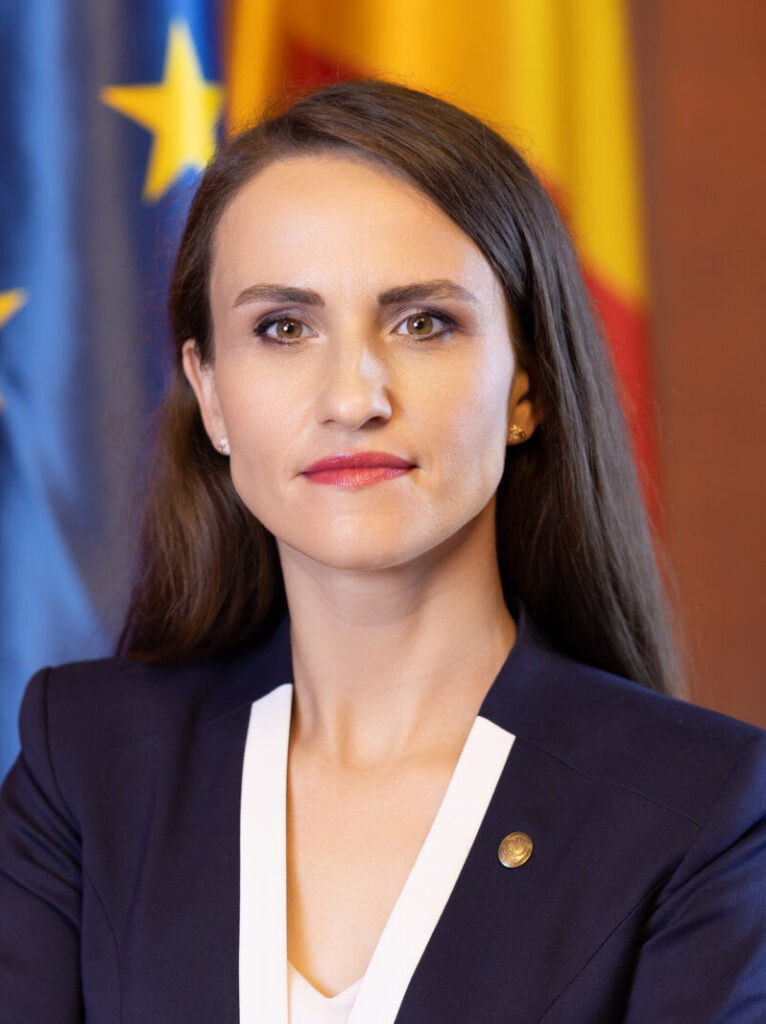
H.E. Oana Țoiu
Minister of Foreign Affairs,
Romania
moderated by
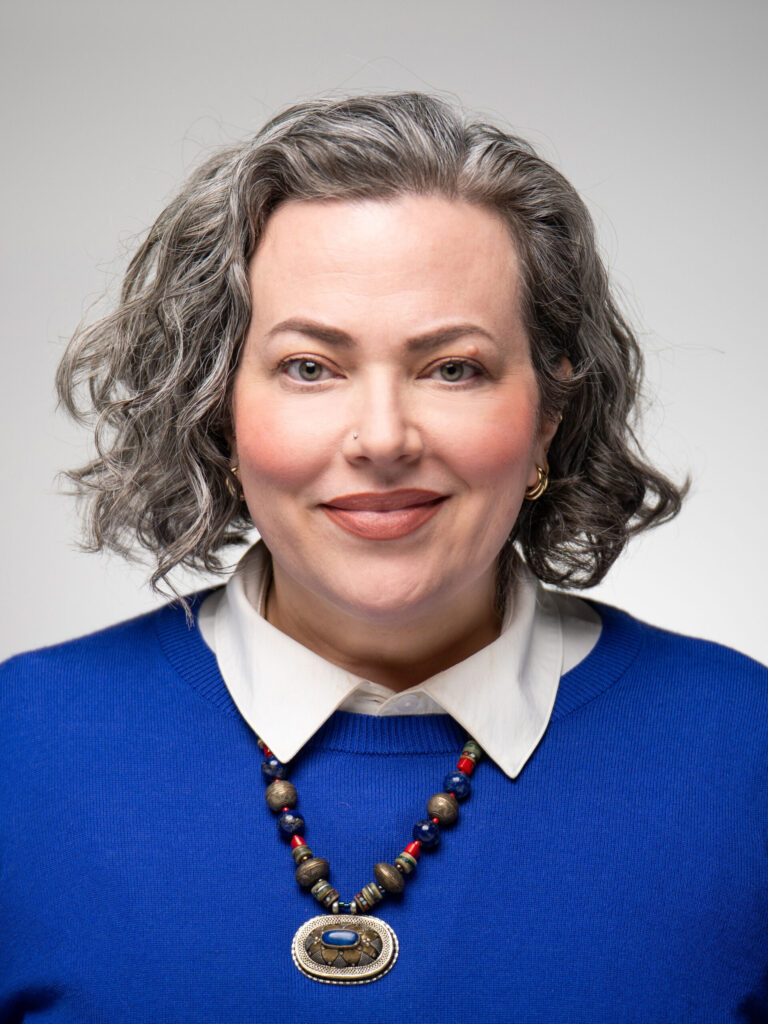
Jenna Ben-Yehuda
Executive Vice President,
Atlantic Council
Stay connected
explore the program

The Atlantic Council Romania office bolsters US cooperation with Central and Eastern Europe on the world’s most pressing challenges at a decisive moment for the transatlantic relationship.
Atlantic Council TV
Watch this event and more content on ACTV
Follow the conversations shaping our world. Available on all major platforms.
Follow the conversation on X