
Toplines: Twenty-five years after anthrax, the US still is not prepared for a biological attack
Top three
- The anthrax events of 2001 transpired twenty-five years ago, claiming the lives of five Americans and sickening seventeen others.
- Defense against biological threats was and remains far from comprehensive or efficient—but there is a path forward.
- Countries around the world cannot afford to take another two and a half decades to make the same small amount of progress toward adequate biodefense.
Worth a thousand words
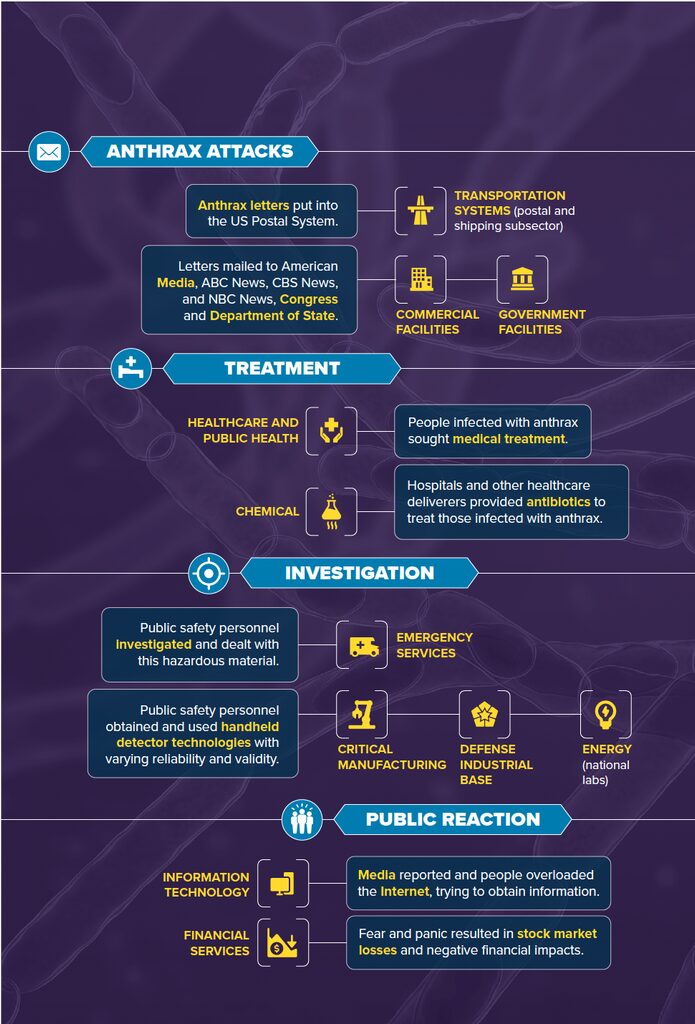
Figure 1. Impacts of the 2001 anthrax attacks
The diagnosis
The letter appeared innocuous, with its childlike handwriting and a return address for a fourth-grade class. An intern in Senator Tom Daschle’s office named Grant Leslie, excited to read what schoolchildren had to say to the senator, cut it open with a pair of scissors. Out spilled white powder onto her lap. In that moment, Leslie and her colleagues were victims of an anthrax attack.
The October 15, 2001, anthrax exposure in Daschle’s office was just one incident in a series of attacks targeting two US senators and several major media outlets. The abuse of the nation’s mail system, a lifeline of communication and commerce for many across the country, caused a shockwave among the public. Letters carrying a biological weapon ultimately claimed the lives of five Americans and sickened seventeen others just weeks after the September 11, 2001, attacks, leading to a nationwide panic and wide-ranging fallout. The anthrax events of 2001 affected eleven critical infrastructure sectors, according to Insidious Scourge: Critical Infrastructure at Biological Risk by the Bipartisan Commission on Biodefense at the Atlantic Council (see Figure 1).
The US response could have been worse. Due to the efforts of the Clinton and George W. Bush administrations, some biodefense measures were in place before the events occurred. The nation was also lucky enough to have medical countermeasures already available and in common use for other bacterial infections, and an anthrax vaccine.
Still, defense against this biological threat was far from comprehensive or efficient. The government failed to prevent or deter these attacks from occurring. The public and private sectors made some attempts to prepare but failed to detect these events until after people became ill and entered clinical settings, seeking health care. Law enforcement and medical professionals responded but without adequate protocols in place—potentially and certainly exposed people were told to go home, change clothes, return to their worksites with those clothes in garbage bags, and provide them to law enforcement personnel. Initial attempts at biological attribution provided little in the way of direction for the investigation that ensued. Neither the executive nor legislative branch had previously assigned the task of remediating areas contaminated with biological agents to a particular federal department or agency (although the Environmental Protection Agency eventually fulfilled that responsibility). There was no standard for determining how clean was clean. Those exposed who did not become ill immediately were not tracked—no prospective studies were conducted, no central facility provided care, and biostatistical surveillance occurred only after the fact and with the same problems that always occur with dissimilar data collection, sources, and analysis.
Eventually, people moved back into previously contaminated spaces, stayed healthy, and kept working. Families and friends of the deceased held funerals and moved on after grieving. Inventories of ciprofloxacin and doxycycline returned to normal, lacking the panicked demand of a few months earlier.
The investigation conducted by the Federal Bureau of Investigation (FBI), US Postal Inspection Service, and Department of Justice continued for eight years after 2001. With the passage of time, the FBI took advantage of advancements in forensic, biological, and other sciences to further examine specimens and other evidence. Theories arose and fell away regarding who was responsible. Intent remained unclear. Initial information was true regarding the biological agent—it was, indeed, the Ames strain of anthrax—but that information was not useful. That research strain, named for Ames, Iowa, had been distributed throughout the nation and the world for decades. It was, and is, a commonly used research strain.
But science did finally allow law enforcement to narrow down the source. It could identify slighter and slighter changes to the organism’s structure. Additional information came to light regarding the work habits and other behaviors of Bruce Ivins, a microbiologist at the US Army Medical Research Institute of Infectious Diseases. Ivins eventually committed suicide before he would have been arrested and charged with perpetrating these crimes.
Some do not believe Ivins was responsible—or solely responsible—for these events. Yet the Department of Justice felt that enough resources had been expended on attribution of these biological events. It closed the case in 2010.
Daschle, then-Senate majority leader and recipient of one of the anthrax letters in 2001 (the other recipient being Senator Patrick Leahy), serves as a commissioner of the Bipartisan Commission on Biodefense and feels that “overall, however, we are not much better prepared for the next biological attack than we were twenty-five years ago.” Tom Ridge, who headed the Office of Homeland Security in the Executive Office of the President when the letter to Daschle arrived and now co-chairs the commission, agrees, noting recently that the commissioners “remain deeply concerned about the biological threats facing America today.” This, despite ongoing attempts to send biological agents through the mail to elected officials like President Barack Obama and President Donald Trump. This, after multiple toxin events occurring throughout the country and abroad. This, despite the proven use of toxins for assassination—not two centuries ago but just two years ago with the high-profile death of Russian dissident Alexei Navalny. This, despite the continued vocalized pursuit of biological agents and weapons by American domestic extremists, dark web and black-market criminals, terrorist organizations like al-Qaeda and the Islamic State of Iraq and al-Sham, and nation-states with active offensive biological programs looking for the asymmetric and other advantages that biological weapons afford.
The prescription
There is hope and a way forward. The Bipartisan Commission on Biodefense produced its National Blueprint for Biodefense in 2015, updated it in 2024, and has put out thirteen other reports and plans providing recommendations on how to better defend the nation against biological threats. All can be, and some have already been, taken up into statute, presidential directives, and federal (and in some cases, international) policy guidance. Forty-seven of the commission’s recommendations have been adopted in whole or in part into statute since 2015. But these do not sufficiently comprise the entirety of national biodefense or even preparedness. The commission recommends taking the following actions now to significantly bolster US national biodefense:
- Identify and seriously charge one high-level position within the White House with the responsibility for national biodefense. Ultimately, the president is responsible, and the commission previously called upon the vice president and the national security advisor to take on this responsibility. However, adding biodefense to their already massive sets of responsibilities helps with imprimatur but does not help with actually getting anything done unless an event is currently unfolding that affects the entire nation (in the case of the vice president) or national security (in the case of the national security advisor). Topic czars are powerless. A dedicated biodefense advisor is needed.
- Identify and coordinate activities across the entire spectrum of biodefense efforts (i.e., prevention, deterrence, preparedness, detection and surveillance, response, attribution, recovery, mitigation) and the fifteen departments that comprise the cabinet, nine independent agencies, and one independent institution across the federal government with responsibilities for biodefense.
- Determine what it takes to fully update and implement the National Biodefense Strategy, signed into law by Obama, produced by Trump, and amended by President Joe Biden. Biological threats evolve quickly, and an implementation plan composed of tens of action items is a good start, but just that—a start. The current National Biodefense Strategy must translate the strategic into the operational and tactical.
- Organize disparate congressional jurisdictions and activities touching upon biodefense into a comprehensive congressional agenda. Without taking away from the right of all congressional committees to hold hearings on anything they deem to be under their jurisdiction, Congress needs to increase its efficiency in addressing the pressing issues of today. Both chambers need to build upon, and move beyond, the occasional caucus to an informed set of activities that enables congressional oversight, investigation, appropriation, legislation, and even confirmation with regard to biodefense.
- Accept the need for dedicated biological intelligence activities. This intelligence area has bounced around the intelligence community like a game of hot potato, but only when the biological threat rises high enough to affect national security and political interests. The White House must make the biological threat an ongoing high priority for collection, analysis, and dissemination. Coming at the intelligence community with a last-minute, desperate request to help determine what was going on within a closed country like China during the COVID-19 pandemic cannot be the US government’s chosen course of action again.
- Conduct periodic posture reviews in keeping with the evolving nature of biological threats, their convergence with previously believed separate domains, and the complex interactions between and among burgeoning, powerful technologies like artificial intelligence and biotechnology. The Pentagon released its Biodefense Posture Review in 2023, and it is said to be releasing the next such review later this year. Other federal departments and agencies should review their own abilities to fulfill their responsibilities to defend the nation against biological threats as well. At a minimum, it is important to understand what biodefense posture reviews look like for the Department of Agriculture, Department of Health and Human Services, Department of Homeland Security, Department of Justice, and Department of Defense, keeping in mind that questions regarding other departments and agencies remain and must be addressed.
- Recognize that critical infrastructure must be defended against direct and indirect biological threats. If US critical infrastructure sectors go down, the nation goes down and probably takes others with it. Four letters impacted eleven critical infrastructure sectors. A pandemic like COVID-19 impacted all sixteen sectors. Deciding which critical infrastructure owners and operators should receive limited medical countermeasures after a biological event starts does not constitute biodefense of critical infrastructure.
- Get serious about biodeterrence efforts. If the United States’ BioWatch detectors actually had any value for deterrence, they would be deployed to the Pacific and other regions of concern. While the BioWatch system of detectors is said to perform as intended, it does not function well, if at all. Instead, the Pentagon is pushing hard to develop, produce, and deploy useful technology, surveillance, diagnostics, medical countermeasures, and other activities and efforts that may deter the use of biological weapons throughout the world. More resources should be provided to the Biological Technologies Office in the Defense Advanced Research Projects Agency and the national laboratories to address the science, technology, research, and development needs for biodeterrence.
- Invest in the development of medical countermeasures that could be of use now to combat current, emerging, and reemerging biological threats. All of the economists, industrial-base specialists, inventory managers, and government officials in the world cannot overcome the basic reality that pharmaceutical companies cannot invest in the development of medical countermeasures without viable, extant demand paired with a market dominated by governments or people with the money to buy.
- Optimize health care and public health preparedness for biological events before they occur. Endlessly forcing the health care and public health sector to respond after a biological crisis has begun does not work according to the only measures that count: people sickened and killed. Refusing to increase the numbers of respirators and personal protective equipment available in the US will result only in reusing respirators and making masks from socks. Cutbacks in public health funding and personnel are misguided attempts to punish disease by purging the very people who warn about the threat and respond to it. Reductions at the Centers for Disease Control and Prevention may seem like a good idea in an era characterized by the desire to save money, but eliminating a national and global resource before the nation needs it to address current and future large-scale biological events is as foolhardy as it is ineffective.
- At least recognize the role that animals play in disease propagation and the enormous contribution that food and agriculture make to the US (and every) economy. Congress and the Department of Agriculture have done right by the American people by setting aside millions of dollars in the Commodity Credit Corporation to fund response to large-scale agricultural events that affect national or economic security. But the department has served neither the American people nor its partners well by continuing to resist even acknowledging the need to address national and homeland security from within.
- Establish full-scale capacity and capability to attribute biological events. Bureaucratic infighting about who pays for FBI lab activities and whether agricultural crimes rank highly enough for the bureau to investigate needs to stop. Badges alone will not get the job done. The FBI and other law enforcement personnel need science, technology, and expertise to be able to go after those who seek to do harm. The FBI should be empowered to establish its own contracts to run the National Bioforensic Analysis Center and put it entirely under the control, management, funding, and leadership of the bureau.
The anthrax events of 2001 transpired twenty-five years ago. Taking today’s biological threats into consideration, countries around the world cannot afford to take another two and a half decades to make the same small amount of progress toward adequate biodefense. All countries have only to accept that biological threats exist and that they must do something about them before they have no choice. The United States owes at least that to the five people who died, the seventeen who became sick and survived, and the millions who lived in terror wondering whether every white powder they saw was anthrax.
View the toplines
about the authors
Robert Bradley is the associate director for government relations and policy for the Bipartisan Commission on Biodefense at the Atlantic Council, part of the Council’s Scowcroft Center for Strategy and Security. An experienced homeland security and biodefense professional with a comprehensive background in issues and oversight related to the field, Bradley leads Commission outreach activities with federal and other policymakers and develops policy recommendations to enhance national biodefense.
John (J.T.) O’Brien is the associate director of research for the Bipartisan Commission on Biodefense at the Atlantic Council, part of the Council’s Scowcroft Center for Strategy and Security. He is a public health security professional with a background in bioengineering and emerging infectious diseases.
Related content


explore the program

The Bipartisan Commission on Biodefense at the Atlantic Council provides a comprehensive assessment of the state of US biodefense and recommends changes to policy and law that strengthen national biodefense while optimizing biodefense resources.
Image: 2002 Laura Rose Under a high magnification of 12,483X, this scanning electron micrograph (SEM) depicted spores from the Sterne strain of Bacillus anthracis bacteria. For a black and white version of this image see PHIL 2267. A key characteristic of the Sterne strain of B. anthracis is the wrinkled surface of the protein coat of these bacterial spores. These spores can live for many years which, enables the bacteria to survive in a dormant state.