Putin’s next move? Five Russian attack scenarios Europe must prepare for
Bottom lines up front
- If Vladimir Putin can’t win a clear victory in Ukraine, he will seek one elsewhere; a clear victory in Ukraine would embolden Moscow to further aggression.
- Europe must prepare to meet these threats with less American support.
- The lowest risk option for Moscow—and therefore most likely—is Russian forces occupying Norway’s Svalbard archipelago.
Table of contents
- The strategic setting: Autocrats on the rise
- The threat: A formidable military backed by a resilient war economy
- The risk: NATO is not ready
- Target 1: Svalbard archipelago
- Target 2: Åland islands
- Target 3: Eastern Estonia
- Target 4: Gotland
- Target 5: Land bridge to Kaliningrad
The accession of Sweden and Finland as NATO’s newest members has fundamentally altered Russia’s security calculations in the Baltic and Nordic region. Should the war in Ukraine evolve into a prolonged frozen conflict, Russia will rearm its military in pursuit of Vladimir Putin’s imperial ambitions. He will seek opportunities to rebuild Russian prestige and recover former or disputed territories, improve Russia’s strategic posture, and test NATO’s resolve in Article 5 scenarios in which he assesses the chance of a robust Alliance response is low, or the chances of success at acceptable cost are high. As one expert notes, “Russia wants to expand its military and political opportunities in the face of the West and considers a direct clash with the West highly probable, if not unavoidable.”1Pavel Luzin, “Russia Reorganizes Military Districts,” Jamestown Foundation, February 29, 2024, https://jamestown.org/program/russia-reorganizes-military-districts.
The potential rewards for continued and successful Russian aggression in Europe include enhanced prestige for Putin’s regime, an improved geostrategic position along Russia’s periphery, delivery of a damaging and perhaps fatal blow to NATO, and the severing of the transatlantic link—all of which are powerful incentives. To deter future Russian aggression, NATO should identify and address these challenges now with concrete solutions. If Putin succeeds in such tests the lack of an effective response could well fracture NATO, fundamentally altering the transatlantic security environment.2These scenarios figure prominently in recent publications such as “If Russia Wins” by noted NATO scholar Carlo Masala and “War with Russia” by former Deputy SACEUR General Sir Richard Shirreff, both best sellers.
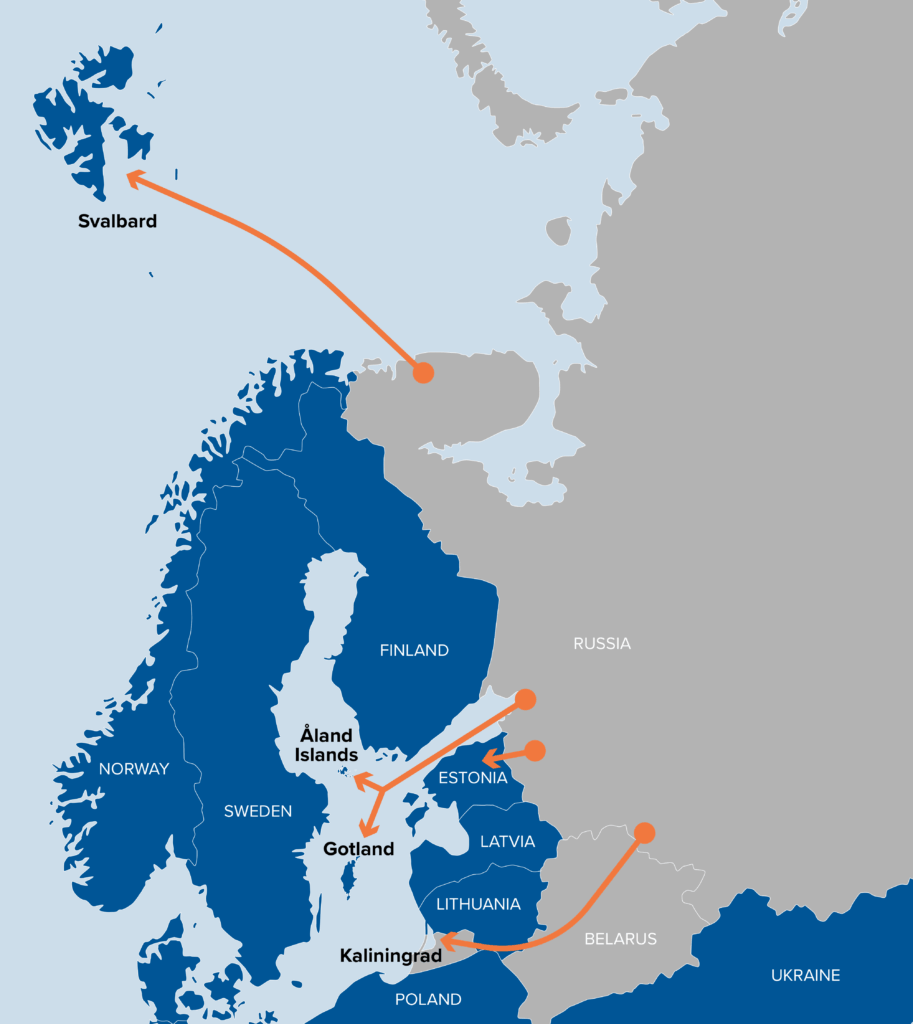
Despite its war in Ukraine, Russia remains a formidable, capable, and determined adversary in possession of the world’s largest and strongest nuclear arsenal. As Western intelligence services have warned, the Russian military is reconstituting its forces in preparation for future contingencies. Senior NATO military and intelligence leaders regularly warn that Russian aggression on NATO territory in the near term is a serious threat.3Tom Dunlop, “Germany Warns Russia May Be Preparing Attack on NATO,” UK Defense Journal, March 29, 2025, https://ukdefencejournal.org.uk/germany-warns-russia-may-be-preparing-attack-on-nato; Anne Kauranen, “Finland’s Intelligence Chief Urges Vigilance over Planned Russian Military Build-up,” Reuters, January 16, 2025, https://www.reuters.com/world/europe/finlands-intelligence-chief-urges-vigilance-over-planned-russian-military-build-2025-01-16/; Aleks Phillips and Paulin Kola, “Sweden Says Russia Is Greatest Threat to Its Security,” BBC, March 11, 2025, https://www.bbc.com/news/articles/c89y8gn2w8vo. This study will assess five key scenarios in which Russia might seek to improve its geostrategic position in the Nordic-Baltic region—the most likely target for future Russian aggression on NATO territory. In order of least to most risk for Russia, these are: military occupation of Svalbard; military occupation of the Åland islands; seizure of NATO territory in eastern Estonia; seizure of Gotland; and military operations to establish a land corridor to Kaliningrad. The intent of the study is to develop specific, realistic, and practical recommendations to deter Russian aggression in the Nordic and Baltic region.
The strategic setting: Autocrats on the rise
In 2025 the transatlantic community finds itself facing multiple serious challenges, framed by major-theater war on its doorstep in Ukraine, a new US administration critical of NATO and strongly prioritizing the homeland and China, dissensus within the Alliance on burden sharing and how to deal with Russia, and the potential for further Russian aggression in the European security space. More broadly, a consortium of autocratic states (China, Russia, Iran, and North Korea)—enabled by supporters such as India, Brazil, South Africa, and others—supports Russian aggression in Ukraine directly and indirectly by providing arms, troops, or markets that prop up Russia’s war economy.4Nicole Bibbins Sedaca, “Russia’s Attack on Ukraine Is Part of a Larger Wave of Authoritarianism,” Bush Center, Spring 2022, https://www.bushcenter.org/catalyst/ukraine/bibbins-sedaca-russia-attack-on-ukraine-part-of-wave-of-authoritarianism.
The strongest and most alarming trend in global affairs is the rise of autocratic regimes that threaten the stability of the international system. On every continent, democratic institutions face concerted opposition from authoritarian movements and regimes seeking to undermine the rule of law, free elections, and constitutional frameworks. Many of these movements are supported and financed by China and Russia. As Europe and the United States struggled to recover from the effects of the pandemic, global supply chain disruptions, and rising inflation, worsening tensions in the Indo-Pacific region and the outbreak of major-theater war in Ukraine roiled international markets, energy transfers, and food supplies. The international system today is marked by instability and increasing fragmentation as traditional alliances and coalitions come under growing pressure and strain.5Joshua Kurlantzick, “The Growing, Broad, Authoritarian Network and Its Ramifications for the World,” Council on Foreign Relations, last visited November 3, 2025, https://www.cfr.org/project/new-global-authoritarianism-china-and-russias-strategic-support-autocracies.
US economic policy, foreign policy, and national security responses to these challenges under the current administration differ strikingly from those of the past. US leaders have strongly condemned European Union (EU) trade practices, harshly criticized NATO member states, and imposed stiff tariffs on European and Canadian goods, provoking angry economic retaliation and damaging diplomatic relationships with traditionally staunch allies.6Koen Verhelst, “EU Wields ‘Sledgehammer’ Against Trump Tariffs,” Politico, March 12, 2025, https://www.politico.eu/article/eu-tariffs-donald-trump-diplomat-eu-war-defending-nation-bloc/. It remains to be seen whether these measures are bargaining chips, which can be lessened or withdrawn in exchange for European concessions (such as increased defense spending or US defense contracts), or long-term shifts in US policy. US conservatives today regularly call for disengagement from Europe.7Ben Friedman, “A New NATO Agenda: Less U.S., Less Dependency,” Defense Priorities, July 8, 2024, https://www.defensepriorities.org/explainers/a-new-nato-agenda/. Apparently serious US threats to expand territory by annexing Canada and Greenland have widened this breach, a process only intensified by the Donald Trump administration’s embrace of far-right movements across Europe and autocratic leaders such as Hungary’s Viktor Orban. Senior officials have repeatedly argued that Europe must “look to itself” for security so that the United States can prioritize the Indo-Pacific, now described as its “sole pacing threat.”8Dan Sabbagh, “US No Longer ‘Primarily Focused’ on Europe’s Security, Ssays Pete Hegseth,” Guardian, February 12, 2025, https://www.theguardian.com/us-news/2025/feb/12/us-no-longer-primarily-focused-on-europes-security-says-pete-hegseth. Increasingly, the United States is no longer seen across Europe as a reliable ally with common values and interests.9“Germany’s likely next chancellor has warned that the United States cares little about Europe’s fate,” as quoted in: Henry Ridgewell, “German Election Winner: Europe Must Defend Itself as US ‘Does Not Care,” Voice of America, February 25, 2025.
Several alternative futures thus appear possible, ranging from outright US withdrawal to a measured drawdown of forces to a purely transactional approach, whereby the United States demands bilateral concessions (more European forces and defense spending, as well as economic and trade concessions) in exchange for continued support.10Giuseppe Spatafora, “The Trump Card: What Could US Abandonment of Europe Look Like?” European Institute for Security Studies, February 17, 2025, https://www.iss.europa.eu/publications/briefs/trump-card-what-could-us-abandonment-europe-look. Regardless of which outcome materializes, it seems clear that Europe must rapidly increase its defense capabilities. For the contingencies addressed in this study, solutions that rely primarily on European contributions are optimal.
The threat: A formidable military backed by a resilient war economy
Russian aggression in Europe clearly presents the most serious challenge facing NATO and the European Union.11This section is adapted from: Richard D. Hooker, Jr., “Building a Stronger Europe,” Harvard Kennedy School’s Belfer Center for Science and International Affairs, February 12, 2025, https://www.belfercenter.org/research-analysis/building-stronger-europe-companion-new-transatlantic-bargain. The 2022 NATO Strategic Concept highlights Russia as “the most significant threat to Allied security,” while the 2025 Hague Summit cites the “long-term threat posed by Russia to Euro-Atlantic security.”12“NATO 2022 Strategic Concept,” NATO, July 18, 2022, https://www.nato.int/cps/en/natohq/topics_56626.htm#:~:text=The%20current%20Strategic%20Concept%20%282022%29%20reaffirms%20that%20NATO%E2%80%99s,defence%2C%20crisis%20prevention%20and%20management%2C%20and%20cooperative%20security; “The Hague Summit Declaration,” NATO, press release, June 25, 2025, https://www.nato.int/cps/en/natohq/official_texts_236705.htm. Following its seizure of Georgian territory in 2008, the occupation of Crimea in 2014, and the incursion into the Donbas in the same year—the latter two both sovereign Ukrainian territory—the Russian Federation conducted a festering campaign in eastern Ukraine resulting in more than fifty thousand killed and wounded through 2021.13“Conflict-Related Civilian Casualties in Ukraine,” United Nations Human Rights Monitoring Mission in Ukraine, January 27, 2022, https://ukraine.un.org/sites/default/files/2022-02/Conflict-related%20civilian%20casualties%20as%20of%2031%20December%202021%20%28rev%2027%20January%202022%29%20corr%20EN_0.pdf. In February 2022, Russia launched an unprovoked, massive invasion of Ukraine that continues today.
Russian losses in Ukraine have been severe, with as many as 770,000 killed, wounded, or missing, more than twice the size of the entire initial invasion force.14Bojan Pancevski, “One Million Are Now Dead or Injured in the Russia-Ukraine War,” Wall Street Journal, September 17, 2024, https://www.wsj.com/world/one-million-are-now-dead-or-injured-in-the-russia-ukraine-war-b09d04e5; Yurri Clavilier and Michael Gjerstad, “Combat Losses and Manpower Challenges Underscore the Importance of ‘Mass’ in Ukraine,”International Institute of Strategic Studies, February 10, 2025, https://www.iiss.org/online-analysis/military-balance/2025/02/combat-losses-and-manpower-challenges-underscore-the-importance-of-mass-in-ukraine/. (A disproportionate number are non-ethnic Russians drawn from more rural areas.15Paul Goble, Mairbek Vatchagaev, and Valeriy Dzutsati, “Nationalities at War: Non-Ethnic Russians in Putin’s War against Ukraine,” Saratoga Foundation, April 25, 2025, https://www.saratoga-foundation.org/p/eurasia-outlook-nationalities-at. ) Most of Russia’s inventory of modern main battle tanks—some three thousand in all—have been destroyed or captured, along with 5,600 armored fighting vehicles, 1,500 artillery systems, 110 fixed-wing aircraft, and more than one hundred helicopters.16Jakub Janovsky, et al., “Attack on Europe: Documenting Russian Equipment Losses During the Russian Invasion of Ukraine,” Oryx, February 24, 2022, https://www.oryxspioenkop.com/2022/02/attack-on-europe-documenting-equipment.html. The Russian Black Sea Fleet has also been crippled, with seventeen ships sunk (including the flagship cruiser Moskva). At the outset, all of Russia’s then eleven combined-arms armies, its one tank army, and all of its airborne/air assault and naval infantry forces were committed to the invasion. That force was shattered by more than two years of intense combat.
Nevertheless, the Russian Federation’s ability to replace its losses has been remarkable.17Andrew A. Michta and Joslyn Brodfuehrer, “NATO-Russia Dynamics: Prospects for Reconstitution of Russian Military Power,” Atlantic Council, September 19, 2024, https://www.atlanticcouncil.org/in-depth-research-reports/report/nato-russia-dynamics-prospects-for-reconstitution-of-russian-military-power/. Through forced conscription and by offering financial incentives to boost recruiting, Russian forces fighting in Ukraine now total more than six hundred thousand.18Murray Brewster, “Ravaged by War, Russia’s Army Is Rebuilding with Surprising Speed,” CBC News, February 23, 2024, https://www.cbc.ca/news/politics/russia-army-ukraine-war-1.7122808. By drawing on reserve stocks of older equipment and ramping up production, Russia has made up for equipment losses, albeit with older and less capable systems and weapons.19Mark Trevelyan and Greg Torode, “Russia Refits Old Tanks after Losing 3,000 in Ukraine—Research Centre,” Reuters, February 13, 2024, https://www.reuters.com/world/europe/russia-relying-old-stocks-after-losing-3000-tanks-ukraine-leading-military-2024-02-13/. At the Munich Security Conference in February 2025, President Volodymyr Zelenskyy reported that Russia is building an additional fifty combat divisions, totaling some 150,000 troops—far more than any European state.20“Ukraine Receives UAH 267B in Western Aid over Three Years of War,” UKRINFORM, February 15, 2025, https://www.ukrinform.net/rubric-economy/3960455-ukraine-receives-uah-267b-in-western-aid-over-three-years-of-war.html; Thomas Grove, “The Russian Military Moves that Have Europe on Edge,” Wall Street Journal, April 27, 2025, https://www.msn.com/en-us/politics/international-relations/the-russian-military-moves-that-have-europe-on-edge/ar-AA1DJhEx. Supported by China, Iran, North Korea, and others, Russia has managed to evade sanctions to obtain the microchips and other advanced electronics it needs to manufacture and repair its advanced military technology.21Camille Gijs, Jakob Hanke Vela, and Nicolas Camut, “Russia Is Getting Better at Evading Western Sanctions on Electronics, US Official Says,” Politico, June 8, 2023, https://www.politico.eu/article/russia-better-evading-western-sanctions-electronics-war-ukraine/. Now on a war footing, with defense spending exceeding 6 percent of gross domestic product (GDP), Russia has escaped the worst effects of international sanctions.22“Russian Federation,” International Monetary Fund, last visited November 3, 2025, https://www.imf.org/en/Countries/RUS. There is little evidence to suggest its economy will collapse in the near or medium term.23“Missiles of Russia,” Center for Strategic and International Studies, last updated August 10, 2021, https://missilethreat.csis.org/country/russia/.
The state of the Russian military
The Russian armed forces consist of 1.5 million active-duty soldiers, with another nine hundred thousand reservists, organized into three branches (the aerospace forces, ground forces, and navy), two independent arms (the strategic rocket forces and airborne forces) and the Special Operations Forces Command. The National Guard and Border Service are paramilitary formations not controlled by the Russian General Staff. Russian military forces are made up of both contract and conscripted soldiers, with elite formations such as special operation, parachute, and naval infantry enjoying a higher proportion of volunteers. All physically qualified Russian males aged 18–27 are subject to one year of military service.
The world’s strongest nuclear power, Russia fields an array of strategic and tactical nuclear systems that provide a wide range of options on the escalatory ladder.24“Missiles of Russia,” Center for Strategic and International Studies, last updated August 10, 2021, https://missilethreat.csis.org/country/russia/. The total number of nuclear warheads of all types is 5,600, including some two thousand tactical weapons (almost ten times the US number).25“Russia’s Nuclear Inventory,” Center for Arms Control and Non-proliferation,” September 2022, https://armscontrolcenter.org/wp-content/uploads/2022/09/Russias-Nuclear-Inventory-091522.pdf. Russian intercontinental ballistic missiles (ICBMs) are controlled by the strategic rocket forces, headquartered in Moscow with an alternate command post in the Ural Mountains. The aerospace forces control a fleet of some sixty-six strategic bombers, though as many as thirteen were damaged or destroyed in recent Ukrainian drone attacks.26Anna Fratsyvir, “Destroyed Russian Bombers Seen in First Satellite Images after Ukrainian Drone Strike,” Kyiv Independent, June 2, 2025, https://kyivindependent.com/first-satellite-images-show-destroyed-russian-bombers-after-ukrainian-drone-strike-on-belaya-air-base/. The Russian navy has eleven ballistic missile submarines equipped with sea-launched ballistic missiles (SLBMs). Russian ground forces include a variety of tactical nuclear systems, such as the Kalibr cruise missile and Iskander ballistic missile, deployed in the missile brigades found at army level. Russia also possesses air- and sea-launched tactical nuclear weapons in its army and navy. This inventory provides Russian leaders with a variety of escalatory options below the strategic threshold that NATO is poorly equipped to answer.
The Russian ground order of battle today consists of fourteen combined arms armies (CAA), roughly equivalent to NATO corps, and one tank army (the 1st Guards Tank Army or 1GTA) with a total of seventeen army divisions.27These are 1GTA, 6 CAA, 20 Guards CAA, 8 Guards CAA, 5 CAA, 49 CAA, 58 CAA, 41 CAA, 2 Guards CAA, 35 CAA, 36 CAA, 29 CAA, 25 CAA, 14 CAA and 18 CAA. Three army corps are identified, though force structure changes are under way (11th, 68th, and 3rd). See: Mason Clark and Karolina Hird, “Russian Regular Ground Forces Order of Battle,” Institute for the Study of War, October 2023, https://www.degruyterbrill.com/document/doi/10.1515/sirius-2024-1015/html?lang=en&srsltid=AfmBOopfNKuElg6WTdhEThbuZ7H1ST6SoMpzII6PEFCW_9aorJwjyOj1; Karolina Hird, “Restructuring and Expansion of the Russian Ground Forces Hindered by Ukraine War Requirements,” Institute for the Study of War,November 12, 2023, https://understandingwar.org/wp-content/uploads/2025/04/Special20Campaign20Assessment20November2012_0.pdf. (Ukrainian sources report that an additional fifteen divisions will be raised in the near term, although independent confirmation is lacking.28Christina Harward, et al., “Russian Offensive Campaign Assessment February 15, 2025,” Institute for the Study of War, February 16, 2025, https://www.understandingwar.org/backgrounder/russian-offensive-campaign-assessment-february-15-2025.) Russian ground forces also include some twenty-six independent motor rifle or tank brigades. (There are also three “army corps,” non-standard groupings with generally fewer units than armies.) Ground forces are geographically assigned to five military districts (Leningrad, Moscow, Eastern, Southern, and Central).29The Western Military District was split into the Leningrad and Moscow Military Districts in 2024. The Russian Northern Fleet and Arctic Joint Strategic Command lost its status as a military district in this reorganization. See: Luzin, “Russia Reorganizes Military Districts.” Russian field armies are less uniform in organization than in Soviet times and can include as many as three divisions plus supporting arms (as in the case of 1GTA) or as few as a single brigade (as with the 29th CAA in Siberia). However, all armies include an artillery brigade, missile brigade, and air defense brigade. Of note, Russian army units are supported by far more tubed and rocket artillery than is found in any NATO ally, including the United States.30Colonel (Ret) Ted Donnelly, et al., “How Russia Fights,” US Army Europe and Africa, March 2025, https://api.army.mil/e2/c/downloads/2025/07/11/f2b1e75e/how-russia-fights-a-compendium-of-troika-observations-on-russia-s-special-military-operations.pdf.
The Russian military also fields strong airborne/air assault forces (considered a separate service), including four divisions and three separate brigades, often used as spearhead forces in conventional roles (a fifth division is reportedly forming).31The 104th Air Assault Division. Hird, “Restructuring and Expansion of the Russian Ground Forces Hindered by Ukraine War Requirements,” 7. Referred to as Vozdushno-desantnye-voyska (VDV), literally “air landing troops,” all are mechanized with greater firepower and mobility than NATO counterparts. Their primary mission is to seize key strategic terrain in support of military operations or campaigns directed by the Russian General Staff.32Lester W. Grau, “The Russian Army Is an Artillery Army with Tanks” in Donnelly, et al., “How Russia Fights,” 33. Russian naval infantry operates under control of the Russian navy in support of the Northern, Baltic, Black Sea, and Pacific fleets; there are five brigades, organized along army lines. Russian special operations forces (SOF) include eight spetsnaz brigades, much smaller units trained and equipped for deep penetration raids against high-value targets. All of these formations have been badly damaged in Ukraine and are reconstituting.33Jon Jackson, “Russia’s Elite Airborne Suffers ‘Exceptionally Heavy Losses,’” Newsweek, December 14, 2023, https://www.newsweek.com/russia-elite-airborne-suffers-exceptionally-heavy-losses-1852673.
Private military companies (PMCs) such as the Wagner Group must also be considered. They have been used extensively in the Middle East, Africa, and, of course, Ukraine, where they sustained heavy losses.34Raphael Parens, “Wagner Group Redefined: Threats and Responses,” Foreign Policy Research Institute, January 30, 2023, https://www.fpri.org/article/2023/01/wagner-group-redefined-threats-and-responses/#:~:text=Bottom%20Line%20*%20Wagner%20Group%20has%20suffered,and%20the%20Kremlin%20are%20focused%20on%20Ukraine. PMCs offer several advantages: a degree of deniability, flexibility in the place and manner of employment, and a lack of accountability or public outcry when they suffer heavy losses. Since the abortive coup of June 2023, Yevgeniy Prigozhin’s Wagner Group has declined in importance and influence while PMCs have been more strictly subordinated to state control.35Karen Philippa Larsen, “The Rise and Fall of the Wagner Group,” Danish Institute for International Studies, January 9, 2025, https://www.diis.dk/en/research/the-rise-and-fall-of-the-wagner-group. With some twenty-seven PMCs officially registered with the Russian Ministry of Defense, Russia has multiple options for employment of mercenaries in clandestine or covert operations in which a measure of deception is considered advisable. Just such a scenario appears in the 2024 Finnish documentary series Konflicti, which describes the introduction of Russian mercenaries on the Hanko Peninsula in an attempt to destabilize the Finnish government.
On the whole, Russian ground forces have underperformed in Ukraine despite massive superiority in artillery, armored vehicles, and airpower. Pre-war training and combined-arms proficiency were shown to be lacking, while command arrangements, battlefield leadership, and logistic planning have all been criticized.36Lasha Tchantouridze, “Why Russia’s Military Reforms Failed in Ukraine,” National Interest, October 15, 2022, https://nationalinterest.org/feature/why-russias-military-reforms-failed-ukraine-205338. Lack of initiative and an inability to fuse intelligence in support of targeting are common problems.37Mykhaylo Zabrodskyi, et al., “Preliminary Lessons in Conventional Warfighting from Russia’s Invasion of Ukraine,” RUSI Journal, February–July 2022, https://www.rusi.org/explore-our-research/publications/special-resources/preliminary-lessons-conventional-warfighting-russias-invasion-ukraine-february-july-2022. Since 2022, many Russian general officers have been killed, wounded, or relieved, disrupting the chain of command.38Lucy Papachristou, “Senior Russian Commanders Killed by Ukraine since Start of the War,” Reuters, July 3, 2025, https://www.reuters.com/world/europe/senior-russian-commanders-killed-by-ukraine-since-start-war-2025-07-03/. Nevertheless, Russian resilience has been impressive and Russian excellence in some areas, such as electronic warfare and use of drones, is impressive.39Michael Kofman, “Assessing Russian Military Adaptation in 2023,” Carnegie Endowment for International Peace, October 2024, 47, https://carnegie-production-assets.s3.amazonaws.com/static/files/Kofman-Russia-final-2.pdf. The Russian Army today is far more combat experienced than any NATO land force, and it continues to learn and adapt. Its resilience and willingness to take high casualties to achieve its objectives make it a dangerous adversary that should not be underestimated in future conflicts.40Mathieu Boulègue, et al., “Assessing Russian Plans for Military Regeneration,” Chatham House, July 9, 2024, https://www.chathamhouse.org/2024/07/assessing-russian-plans-military-regeneration/02-manpower-force-structure-and-command-and.
Traditionally, the Russian navy has operated in support of its land forces and not at great distances from the homeland, except in small numbers. Those trends are likely to continue.41Michael B. Petersen, “Toward an Understanding of Maritime Conflict with Russia” in Andrew Monahan and Richard Connoly, The Sea in Russian Strategy (Manchester UK: Manchester University Press, 2023), 212. Even so, Russian naval power is increasing, with twenty-three new vessels commissioned since 2023.42Andrew Monaghan, “Russia’s Naval Futures: New Horizons 2050,” NATO Defense College, November 2025, https://www.ndc.nato.int/wp-content/uploads/2025/11/2025_outlook_11.pdf. In the transatlantic region, its principal tasks are to contribute to strategic nuclear deterrence with its submarine-launched ballistic missile submarines; to defend the ballistic missile submarine (SSBN) bastions in and around the Kola Peninsula; to threaten the Atlantic sea lanes with its attack submarines; to defend against enemy sea-launched carrier and missile strikes against critical targets ashore; and to support ground operations with its cruise missiles, naval gunfire, and naval infantry. The Russian navy currently lists 283 vessels in its order of battle, though many are aging or are smaller corvettes or coastal patrol craft. A significant number are partially manned, under refit, or otherwise not battle worthy. Principal surface combatants include one carrier (the Kuznetsov, under long-term refit if not cancellation), four cruisers, ten destroyers, and twelve frigates. These are supported by eighty-three corvettes, forty-eight mine warfare vessels, fifty patrol vessels, and seventeen amphibious assault vessels, along with other support craft. The Russian submarine force consists of fifty-eight vessels, including twelve nuclear ballistic missile boats and fourteen nuclear attack subs.43“Russian Navy (2025),” World Directory of Modern Military Warships, 2025, https://www.wdmmw.org/russian-navy.php. While most Russian submarines were commissioned in the 1980s or 1990s, a small number—such as the nuclear-powered guided missile sub Severodvinsk—are modern, powerful, and difficult to detect.44Eric Wertheim, “Russia’s Capable New SSGN,” US Naval Institute Proceedings, May 2020, https://www.usni.org/magazines/proceedings/2020/may/russias-capable-new-ssgn. The bulk of the Russian navy is assigned to the Northern Fleet, based in Severomorsk on the Kola Peninsula. In confined waters, such as the Black Sea or Baltic Sea, the Russian navy has been shown to be vulnerable to land-based anti-ship missiles as well as unmanned surface attacks.45Scott Savitz and William Courtney, “The Black Sea and the Changing Face of Naval Warfare,” RAND, October 31, 2023, https://www.rand.org/pubs/commentary/2023/10/the-black-sea-and-the-changing-face-of-naval-warfare.html. Beyond the range of its land-based anti-ship missiles, the Russian navy is vulnerable to NATO’s maritime forces—but the European allies will find it difficult to cope without the US Navy.46The UK Royal Navy has only sixteen surface combatants (two carriers, six destroyers, and eight frigates) plus five nuclear attack submarines; the Norwegian Navy has four frigates and six diesel/electric submarines optimized for coastal defense. The Finnish navy has no major surface combatants or submarines. For operations north of the GIUK gap, NATO will be hard pressed without the US Navy. “The Military Balance 2025,” International Institute for Strategic Studies, 2025, https://www.iiss.org/publications/the-military-balance/.
The Russian Air Force, on paper at least, is one of the strongest in the world, with some 1,200 fighter aircraft and more than one hundred bombers, supported by an array of command and control (C2), electronic warfare, transport, and intelligence, surveillance, and reconnaissance (ISR) aircraft.47“Russian Air Force (2025) Aircraft Inventory,” World Directory of Modern Military Aircraft, 2025, https://www.wdmma.org/russian-air-force.php. Russian aerospace forces also include eleven air and missile defense brigades. The Russian Air Force has not performed well in Ukraine despite its overwhelming numbers and despite facing older Ukrainian air defense systems.48Douglas Barrie and Giorgio Di Mizio, “Moscow’s Aerospace Forces: No Air of Superiority,” International Institute for Strategic Studies, February 7, 2024, https://www.iiss.org/online-analysis/military-balance/2024/02/moscows-aerospace-forces-no-air-of-superiority/. With a ten-to-one superiority in fighter aircraft at the outset, Russia failed to achieve air dominance—primarily due to outstanding Ukrainian air defense, but also due to deficiencies in Russian training and airpower employment. More than one hundred fixed-wing Russian combat aircraft have been lost, while many others are aging out prematurely due to heavy strain in flying hours.49Maya Carlin, “The Russian Air Force Has Suffered Heavy Losses in Ukraine,” National Interest, April 28, 2025, https://nationalinterest.org/blog/buzz/the-russian-air-force-has-suffered-heavy-losses-in-ukraine. About half of Russia’s aircraft fleet is more than thirty years old.50Michael Bohnert, “The Russian Air Force Is Hollowing Itself Out. Air Defenses for Ukraine Would Speed that Up,” RAND, March 29, 2024, https://www.rand.org/pubs/commentary/2024/03/the-russian-air-force-is-hollowing-itself-out-air-defenses.html. Attack and transport helicopters belong to the Russian air force, not the army, and they have also suffered grave losses, losing 40 percent of their strength in combat. Maintenance issues, battle damage, and the requirements of other theaters also reduce the number of airframes available. Effective Ukrainian air defense forced Russia to change tactics, increasing reliance on attack drones and on aerial delivery of glide bombs launched beyond the range of enemy air defenses.51David A. Deptula, “Air Superiority and Russia’s War on Ukraine,” Air and Space Forces, July 26, 2024, https://www.airandspaceforces.com/article/air-superiority-and-russias-war-on-ukraine. Russian high and medium air defense also resides in the air force and is impressive, especially in the air defense bastions surrounding Kaliningrad, St. Petersburg, and the Kola Peninsula. In the near term, Russia will field more modern replacement aircraft in modest numbers, but NATO airpower should have the advantage.52By 2034, European allies are projected to have more than six hundred fifth-generation F-35s. European allies currently field slightly more than two thousand fighter aircraft (F-16, F/A-18, Gripen, Eurofighter, Rafale, and some others). Audrey Decker, “F-35 Sales Rise as Russian Invasion Grinds on,” Defense One, March 23, 2023, https://www.defenseone.com/threats/2023/03/f-35-sales-rise-russian-invasion-grinds/384360/; “Fleet Size,” EUROCONTROL, October 1, 2025, https://ansperformance.eu/economics/cba/standard-inputs/chapters/fleet_size.html. In all scenarios involving military force, Russian unmanned aerial vehicles can be employed en masse and in sophisticated ways, with heavy use of decoys and deliberate targeting of civilian populations and infrastructure if deemed necessary.
Russian politics presents no threat to Putin’s control
Now in power for a quarter of a century, Putin at seventy-two is in firm control of the Russian political system, which stages periodic “show elections” that do not threaten his hold on power. Powerful oligarchs, military and intelligence figures, and legislators cannot establish independent centers of power able to challenge his authority, while opposition figures are regularly imprisoned, assassinated, or executed. As Freedom House reports:
Power in Russia’s authoritarian political system is concentrated in the hands
of President Vladimir Putin. With loyalist security forces, a subservient judiciary, a controlled media environment, and a legislature consisting of a ruling party and pliable opposition factions, the Kremlin manipulates elections and suppresses genuine dissent.53“Russia,” Freedom House, last visited November 3, 2025, https://freedomhouse.org/country/russia.
Strongly nationalist and supported by the Russian Orthodox Church, the Russian political system follows centuries of Russian history as an authoritarian and autocratic regime preoccupied with expansion and external threats. As one expert observes, “The main aim of the system is the perpetuation of the ruling elite’s hold on power, first by shielding it against any challenges that might emerge from the society, and second, by regulating the intra-elite rivalries . . . the state is treated by the elite as if it were its collective property through neo-patrimonialism. Neither citizens’ welfare nor economic development are among its primary goals.”54Witold Rodkiewicz, “Russia’s Political and Social Landscape in the Context of Geopolitical Risks,” Salzburg Global, December 18, 2023, https://www.salzburgglobal.org/news/topics/article/russias-political-and-social-landscape-in-the-context-of-geopolitical-risks. The Russian system is opaque, rendering independent assessments and analyses difficult. Catastrophic defeat on the battlefield, economic collapse, or serious internal rivalries might conceivably cause Putin’s overthrow, but at present his hold on power appears solid and durable. For planning purposes, analysts should assume that the current power structures will remain in place through Putin’s lifetime.
The Russian economy has rebounded from sanctions pressure
Though beset with comprehensive sanctions since 2022, the Russian economy has proven to be resilient, with GDP growing by 3.4 percent in 2024 as Russia transitioned to a war economy. There is disagreement regarding Russian economic prospects going forward.55Simon Saradzhyan, “Is Russia’s Economy Collapsing,” Russia Matters, February 6, 2025, https://www.russiamatters.org/blog/russias-economy-collapsing. Rising inflation and interest rates, corporate debt increases, a weakening ruble, declining energy prices, labor shortages, sharp reductions in foreign investment, and the loss of European markets for Russian energy have all negatively impacted Russian economic performance.56Brendan Cole, “Russian Ruble Collapses as Putin’s Economy in Trouble,” Newsweek, November 27, 2024, https://www.newsweek.com/russia-ruble-dollar-currency-economy-1992332. Diversion of capital into the defense sector has also affected investment in other parts of the economy, stunting efforts to offset these impacts.57Mark Temnycky, “Is 2025 the Year that Russia’s Economy Finally Freezes Up Under Sanctions?” Atlantic Council, January 8, 2025, https://www.atlanticcouncil.org/blogs/new-atlanticist/is-2025-the-year-that-russias-economy-finally-freezes-up-under-sanctions. Russia’s sovereign wealth fund has also declined from $175 billion in early February 2022 to $135 billion in March 2025, while $340 billion in Russian assets held in foreign banks were frozen following the 2022 invasion of Ukraine.58Elena Fabrichnaya and Guy Faulconbridge, “What and Where Are Russia’s $300 Billion in Reserves Frozen in the West?” Reuters, December 28, 2023, https://www.reuters.com/world/europe/what-where-are-russias-300-billion-reserves-frozen-west-2023-12-28/. Some economists therefore conclude that the Russian economy might collapse or decline in the near term.59Oleksiy Hrushevsky, “The Collapse of the Russian Economy Is Near—Wage Arrears Have Tripled,” Online.UA, December 26, 2025, https://news.online.ua/en/the-collapse-of-the-russian-economy-is-near-wage-arrears-have-tripled-899906/.
Others, however, point to factors that challenge this assessment.60“An unbiased assessment of Russia’s economic capabilities . . .… excludes almost any chances of a serious crisis caused by internal factors in at least three to five-years.” Ben Aris, “Russia’s Economy Is Tougher than It Looks, No Chance of a Crisis in the Next 3–5 Years,” BNE Intellinews, November 14, 2024, https://www.intellinews.com/russia-s-economy-is-tougher-than-it-looks-no-chance-of-a-crisis-in-the-next-3-5-years-case-353210. Russia is self-sufficient in both agriculture and energy, rendering the state at least partially immune to external economic pressures. It includes perhaps the world’s largest reserves of natural resources, including oil, natural gas, timber, iron ore, coal, bauxite, diamonds, rare earths, and other commodities. The Russian shadow fleet, chartered by Russian entities but operating under foreign registries, includes hundreds of vessels engaged in carrying Russian cargoes (principally oil and natural gas) in order to evade international sanctions.61Erik Brown, “The Baltic Sea at a Boil: Connecting the Shadow Fleet and Episodes of Subsea Infrastructure Sabotage,” Carnegie Endowment for International Peace, June 5, 2025, https://carnegieendowment.org/research/2025/06/baltic-russia-maritime-cable-sabotage/?lang=en. The Russian steel industry ranked first in Europe in 2024 with $74 billion in revenue.62“A Guide to Russia’s Resources,” Geohistory, January 8, 2025, https://geohistory.today/resource-extraction-export-russia/.
With new energy markets in China, India, Turkey, and elsewhere, the Russian energy sector has adapted well to Europe’s attempts to wean itself from Russian oil and natural gas (though a substantial fraction of Europe’s energy today is still supplied by Russian energy purchased from other countries on the secondary market and transported by Russia’s shadow fleet to avoid sanctions).63“EU Imports of Russian Fossil Fuels in Third Year of Invasion Surpass Financial Aid Sent to Ukraine,” Centre for Research of Energy and Clean Air, April 10, 2025, https://energyandcleanair.org/publication/eu-imports-of-russian-fossil-fuels-in-third-year-of-invasion-surpass-financial-aid-sent-to-ukraine/. The EU also continues to import Russian oil, nickel, natural gas, fertilizer, iron, and steel.64“US and Europe Do Billions in Trade with Russia Despite Sanctions,” Reuters, September 15, 2025, https://www.reuters.com/business/autos-transportation/us-and-europe-do-billions-trade-with-russia-despite-sanctions-2025-09-15/. Wages for Russian workers across the economy have risen and are running well ahead of inflation, while sanctions regimes have historically eroded as international business interests push for renewed access to Russian markets, commodities, and capital. Trade with China alone has risen by 70 percent, or $237 billion, since 2021.65“Russian Wage Growth Hits 16-Year Peak Amid Race to Find Workers,” Bloomberg, March 5, 2025, https://www.bloomberg.com/news/articles/2025-03-05/russian-wage-growth-hits-16-year-peak-amid-race-to-find-workers. Since then, Russia has transformed its economy to sharply prioritize military production, a change that will not be reversed quickly.66Philip Luck, “How Sanctions Have Shaped Russia’s Future,” Center for Strategic and International Studies, February 24, 2025, https://www.csis.org/analysis/how-sanctions-have-reshaped-russias-future. Russian debt, by international standards, is relatively moderate at 20 percent of GDP.67Heli Simola, “Falling Oil Prices Reduce Russia’s Budget Revenues,” Bank of Finland, May 5, 2025, https://www.bofbulletin.fi/en/blogs/2025/falling-oil-prices-reduce-russia-s-budget-revenues/. Unlike European consumers, the Russian population—especially in a starkly autocratic Russian state—appears well able to withstand privation and hardship. Given these realities, Russia is unlikely to suspend its military ambitions anytime soon due to economic constraints.68“Russia’s economy has confounded expectations throughout the war and, despite suffering several complications, remains well-placed to support the Kremlin’s ambitions in Ukraine and beyond.” Richard Connolly, “Russia’s Wartime Economy Isn’t as Weak as It Looks,” Royal United Services Institute for Defence and Security Studies, January 22, 2025, https://www.rusi.org/explore-our-research/publications/commentary/russias-wartime-economy-isnt-weak-it-looks. Stronger Western sanctions could change this calculus, but sanctions fatigue and an erosion of the sanctions regime over time appear just as likely.69Aaron Krolik, “Lack of New U.S. Sanctions Allows Restricted Goods and Funds into Russia,” New York Times, July 2, 2025, https://www.nytimes.com/2025/07/02/us/politics/trump-russia-sanctions.html. While long-term collapse is possible, Russia seems well able to sustain its military activity for the near to medium term.
Russian hybrid operations seek to “fracture” Europe
Russian capabilities in the information domain are formidable and include offensive cyber, subversion, propaganda, and disinformation. State-sponsored media such as RT and Sputnik collaborate with sophisticated hacking and social media manipulation to sow dissension and distrust of institutions on a global scale. Financial support for opposition parties in Western democracies is a favored tactic with proven results; the recent election of an almost unknown, Russian-backed candidate in the Romanian presidential election is a primary example.70The election result was subsequently annulled by Romania’s constitutional court. Tim Ross and Andrei Popoviciu, “How Putin Won the Romanian Election,” Politico, December 23, 2024, https://www.politico.eu/article/how-vladimir-putin-win-romania-election-calin-georgescu/. (As another example, almost every living Austrian chancellor has accepted highly paid employment with Russian businesses upon leaving office.71Matthew Karnitschnig, “How Austria Became Putin’s Alpine Fortress,” Politico, June 5, 2023, https://www.politico.eu/article/austria-russia-vladimir-putin-alpine-fortress-ukraine.) Russian interference in US elections in 2016, 2020, and 2024 is well documented.72Lily Hay Newman and Tess Owen, “Russia Is Going All Out on Election Day Interference,” Wired, November 5, 2024, https://www.wired.com/story/russia-election-disinformation-2024-election-day/. The Baltic region is a high priority for Russian information operations, which seek to destabilize host nation governments using highly sophisticated means, often leveraging the ethnic Russian populations found there.73Minna Ålander and Patrik Oksanen, eds., “Tracking the Russian Hybrid Warfare,” Stockholm Free World Forum, last visited November 3, 2025, https://frivarld.se/wp-content/uploads/2024/05/Hybrid-Tracker-SFWF.pdf.
Direct sabotage is a regular feature of these efforts. Attacks on Baltic and Nordic infrastructure on land and at sea escalated alarmingly since 2022, often involving explosives and incendiaries as well as targeted assassinations.74Seth G. Jones, “Russia’s Shadow War against the West,” Center for Strategic and International Studies, March 18, 2025, https://www.csis.org/analysis/russias-shadow-war-against-west; Charlie Edwards and Nate Seidenstein, “The Scale of Russian Sabotage Operations against Europe’s Critical Infrastructure,” International Institute for Strategic Studies, August 19, 2025, https://www.iiss.org/research-paper/2025/08/the-scale-of-russian–sabotage-operations–against-europes-critical–infrastructure/. Deniable attacks on undersea infrastructure have increased dramatically and are now a standard part of Russia’s hybrid toolkit.75Benjamin L. Schmitt, Michal Kurtyka, and Alan Riley, “Underwater Mayhem: Countering Threats to Energy and Critical Infrastructure Across the NATO Alliance and Beyond,” University of Pennsylvania, May 2025, https://upenn.app.box.com/s/wvrobfk9j1h34agng36chj73ibtkcx0h. Airspace violations by Russian aircraft and drones are now almost common, most spectacularly on September 9, 2025, when nineteen Russian drones entered Polish airspace.76Tom Balmforth, “Ukraine Says Russia Drone Incursion Part of Pressure Plan against West,” Reuters, September 26, 2025, https://www.reuters.com/business/aerospace-defense/ukraine-says-russia-drone-incursion-part-pressure-plan-against-west-2025-09-26/; Fintan Hogan, “How ‘State-Sponsored’ Drone Activity Is Pushing NATO to Brink,” Times, October 16, 2025, https://archive.is/2025.10.16-111444/https:/www.thetimes.com/world/europe/article/nato-russia-drone-attacks-europe-hfcqnksrb. These activities suggest at least an attempt to probe and test host country and NATO detection and response capabilities, if not a deliberate program of intimidation. Any kinetic operation launched by Russia in the region will almost certainly be preceded by comprehensive hybrid activities meant to fracture civilian support for the authorities, cripple financial and command-and-control systems, and alarm and distract civil society. These efforts are ongoing and increasing on a large scale.77Jones, “Russia’s Shadow War against the West.” As one example, Russia recently “neutralized” the GPS signal to Ursula von der Leyen’s airplane as it was attempting to land in Bulgaria, forcing its pilots to utilize paper maps in order to set down safely. Maia Davies and Will Vernon, “EU Chief von der Leyen’s Plane Hit by Suspected Russian GPS Jamming,” BBC, September 1, 2025, https://www.bbc.com/news/articles/c9d07z1439zo.
Russian objectives
Russian active measures, in the Nordic and Baltic region and more broadly, are based on a series of strategic objectives with deep roots. Among these are:
- enhancing the prestige and stability of the regime by demonstrating influence and power relative to adversaries;
- destabilizing neighboring democratic states;
- laying the groundwork for recovery of former imperial possessions;
- restoration of the Russian Federation as a great power;
- reconfiguration of the international order in ways that benefit Russia in particular, and friendly autocratic regimes in general;
- resetting geostrategic conditions in ways that favor Russian political and military interests and goals;
- conducting intelligence preparation in support of future military operations;
- punishing formerly neutral Sweden and Finland for joining NATO; and
- fracturing the NATO Alliance and the European Union.
Though it has sustained serious losses in Ukraine, Russia remains a capable and determined adversary and the world’s strongest nuclear power. Its ultimate victory in Ukraine is in some doubt, with the conflict likely to subside into yet another frozen conflict.78In this scenario, the conflict subsides into an uneasy stasis along the current line of contact, although fighting can still occur. John Lough, “Four Scenarios for the End of the War in Ukraine,” Chatham House, October 16, 2024, https://www.chathamhouse.org/2024/10/four-scenarios-end-war-ukraine. (In the unlikely event of a Russian victory or a durable peace in Ukraine, Russia is even more likely to consider aggression in other parts of Europe, as more of its forces would be freed for other contingencies.) As Putin has repeatedly asserted, his ambitions go beyond Ukraine and encompass the recovery of former imperial territories lost over the centuries.79Fiona Hill and Angela Stent, “The World Putin Wants,” Foreign Affairs, August 25, 2022, https://www.foreignaffairs.com/russian-federation/world-putin-wants-fiona-hill-angela-stent. Both Finland and Sweden have difficult conflict histories with Russia extending back to imperial times, complicated by Russian anger over their recent accession to NATO.80Anne Kauranen and Johan Ahlander, “A Brief History of Finland’s and Sweden’s Strained Ties with Russia,” Reuters, May 11, 2022, https://www.reuters.com/world/europe/brief-history-finlands-swedens-strained-ties-with-russia-2022-05-12/ Norway, formerly part of Sweden and sharing a border with Russia, is similarly a target of Russian ire as a strong supporter of Ukraine and an outspoken champion of sanctions. Baltic allies Estonia, Latvia, and Lithuania are regular targets as well; all formerly belonged to the Russian Empire and all possess ethnic Russian minorities that are oppressed, according to Russian propaganda.81Vladimir Soldatkin, “Putin Derides ‘Russophobia’ in Europe at World War Two Memorial,” Reuters, January 27, 2024, https://www.reuters.com/world/europe/russias-putin-derides-russophobia-europe-world-war-two-memorial-2024-01-27/. They also represent prosperous Western democracies whose high standards of living and free societies stand in sharp contrast to conditions in bordering Russia—a clear threat Putin is known to fear. Standing between Russian territory and the Russian exclave at Kaliningrad (home to the Russian Baltic Fleet), the Baltic states are a high priority for Russian disinformation and subversion, as well as outright aggression.
The Russian Federation today is an aggressive state determined to restore its former glory and its place as a great power.82Daria Dmytriieva, “Putin Is Ready for Small Military Operation against NATO—Polish Counterintelligence,” RBC-Ukraine, May 7, 2024, https://newsukraine.rbc.ua/news/putin-is-ready-for-small-military-operation-1715084131.html. Russian troops occupy Moldovan and Georgian sovereign territory and are based in Armenia as well. With a powerful conventional military and the world’s largest nuclear arsenal, Russia has used force repeatedly and successfully in recent years to achieve its political aims. Western intelligence agencies assess that further aggression is under serious consideration.83“Russia Is Preparing for War with the West—Head of German Intelligence,” Baltic Times, November 28, 2024, https://www.baltictimes.com/russia_is_preparing_for_war_with_the_west_-_head_of_german_intelligence/. Over the next two to five years, Russia will continue to rearm and reconstitute its forces, posing a serious threat to the transatlantic region.84Paul Taylor, “The Threat from Russia Is Not Going Away. Europe Has to Get Serious about Its Own Defence,” Guardian, July 10, 2023, https://www.theguardian.com/world/commentisfree/2023/jul/10/russia-threat-europe-defence-military. Meanwhile, Russian hybrid warfare will continue to play a prominent role.85Souad Mekhennet, et al., “Russia Recruits Sympathizers Online for Sabotage in Europe, Officials Say,” Washington Post, July 10, 2024, https://www.washingtonpost.com/world/2024/07/10/russia-sabotage-europe-ukraine/.
The potential rewards for continued and successful Russian aggression in Europe include enhanced prestige for Putin’s regime, an improved geostrategic position along Russia’s periphery, delivery of a damaging and perhaps fatal blow to NATO, and the severing of the transatlantic link. These are powerful incentives. The most likely scenarios for future Russian aggression in Europe share several factors in common: they are relatively close to Russian territory; they represent a lower probability of a strong NATO or US-led response; they are opposed by weak defending forces; and they are subject to Russian historical claims. Western leaders should have no illusions. The prospects for direct conflict with Russia are substantial.86“Russia wants to expand its military and political opportunities and considers a direct clash with the West highly likely, if not unavoidable, in the near future.” See: Luzin, “Russia Reorganizes Military Districts.” As one senior Nordic officer opined when interviewed for this study, “What Putin says he will do, he does.”
The risk: NATO is not ready
For some seven decades, NATO has been the backbone of North American and European security. The Russian invasion of Ukraine has fundamentally altered the security landscape in which NATO is operating, posing a threat not seen since its inception. How the Alliance meets these challenges will define its future and survival.
Inside the Alliance, NATO faces serious challenges. The Trump administration’s aversion to NATO is well documented, as is its strong prioritization of China as the principal threat.87Ivo H. Daalder, “NATO Without America: How Europe Can Run an Alliance Designed for U.S. Control,” Foreign Affairs, March 28, 2025, https://www.foreignaffairs.com/united-states/nato-without-america. Redeployment of some or all US forces in Europe is reportedly under active consideration.88Connor Stringer, “Trump Considers Pulling Troops oOut of Germany,” Telegraph, March 7, 2025, https://www.telegraph.co.uk/us/politics/2025/03/07/donald-trump-considers-pulling-troops-out-of-germany/; Ellen Mitchell, “Lawmakers Worry US Will Give Up Military Command of NATO,” Hill, March 20, 2025, https://thehill.com/newsletters/defense-national-security/5206676-lawmakers-worry-us-will-give-up-military-command-of-nato/. A steady drift away from NATO’s core values of democracy, human rights, and rule of law in some member states impairs Alliance cohesion.89Interview with former US Ambassador to NATO Doug Lute, July 10, 2025. Key allies such as Canada, Spain, Portugal, Italy, and Belgium still fall well below the defense spending threshold of 2 percent of GDP. Autocratic states such as Hungary, Turkey, and Slovakia refused to participate in sanctions against Russia over Ukraine and represent difficult allies should direct conflict with the Russian Federation erupt. Readiness is low across the Alliance, with half of NATO allies possessing no tanks or combat aircraft. Differing threat perceptions across NATO and the EU further complicate concerted action.
These dynamics suggest opportunities for Russia to exploit in the next few years. The United Kingdom’s difficult exit from the European Union, chronically low interoperability and military readiness across the Alliance, underinvestment in key capabilities such as space, theater missile defense, and offensive cyber, and wide divergences in burden sharing all complicate Alliance cohesion.90Sabine Siebold, “‘50% Battle-Ready’: Germany Misses Military Targets Despite Scholz’s Overhaul,” Reuters, February 13, 2025, https://www.reuters.com/world/europe/50-battle-ready-germany-misses-military-targets-despite-scholzs-overhaul-2025-02-13/. The German government report cited critical deficiencies in virtually all major combat systems. “While the US President’s remarks may have caused some confusion with regard to his commitment to the Atlantic Alliance, the interest of an EU strategic autonomy has appeared much more clearly than before to many of our European partners. We have always been convinced of it; others are much more so today than they were yesterday.” European Affairs Minister Nathalie Loiseau, French Ministry of European and Foreign Affairs, cited in Hajnalke Vincze, “Beyond Macron’s Subversive NATO Comments: France’s Growing Unease with the Alliance,” Foreign Policy Research Institute, November 26, 2019, https://www.fpri.org/article/2019/11/beyond-macrons-subversive-nato-comments-frances-growing-unease-with-the-alliance/. The rise of far-right political movements in Germany, France, and elsewhere raises elemental concerns. Financial and military support for Ukraine is taxing strained defense budgets, particularly given reductions in US aid. Looming over all of this is the question of the US role in NATO going forward. Faced with US demands to raise defense spending to 5 percent of GDP “or else,” a requirement that many allies cannot realistically meet, European states must question the US administration’s actual commitment to the Washington Treaty and the defense of the transatlantic community.91“Likely Next German Chancellor Merz Questions NATO’s Future in ‘Current Form,’” Reuters, February 24, 2025, https://www.reuters.com/world/europe/germanys-merz-questions-longevity-natos-current-form-2025-02-23/; John Deni, “Europeans Are Concerned that the US Will Withdraw Support from NATO. They Are Right to Worry—Americans Should, Too,” Conversation, May 27, 2025, https://theconversation.com/europeans-are-concerned-that-the-us-will-withdraw-support-from-nato-they-are-right-to-worry-americans-should-too-253907. Alarmingly, the head of the German Federal Intelligence Service reported in 2025 that his agency “had clear intelligence indications that Russian officials believed the collective defence obligations enshrined in the NATO treaty no longer had practical force.”92Thomas Escritt, “Russia Could Send ‘Little Green Men’ to Test NATO’s Resolve, German Intelligence Chief Warns,” Reuters, June 9, 2025, https://www.reuters.com/world/russia-has-plans-test-natos-resolve-german-intelligence-chief-warns-2025-06-09/.
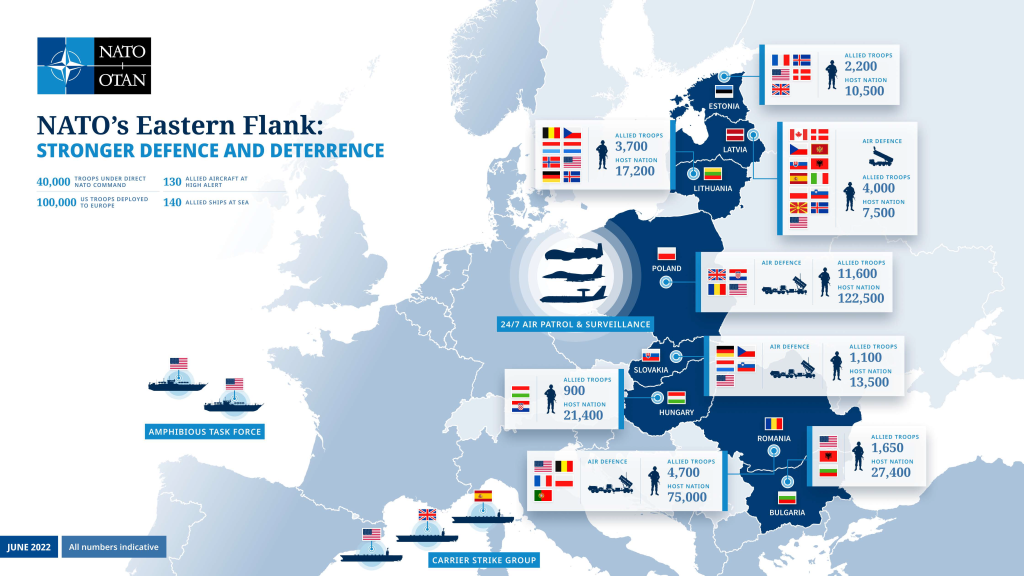
NATO’s security posture on its eastern flank is generally characterized by small regular forces, limited reserves, an absence of large armored formations, and weak artillery. The Baltic states presently field no tanks or combat aircraft and only coastal patrol craft. Poland, much larger than its neighbors to the north, is an exception. It has much stronger active and reserve forces and formidable tank, artillery, and fighter holdings (though these are still far smaller than Russian forces). NATO forward forces in the form of multinational battalion battlegroups are present in each of the eastern flank countries.93R. D. Hooker, Jr. and Max Molot, “Building a Stronger Europe: A Companion to the Belfer Center Task Force Report on a New Transatlantic Bargain,” Havard Kennedy School Belfer Center for Science and International Affairs, February 2025, 21–22, https://www.belfercenter.org/sites/default/files/2025-02/Belfer_Building%20a%20Stronger%20Europe_Companion%20Report_1.2.pdf. Lacking strategic depth, the Baltic states are unlikely to successfully defend against Russian aggression without substantial augmentation from allies.
NATO’s posture in Nordic Europe is, in some ways, more reassuring. All Nordic allies (except Iceland, which has no military) require mandatory military service. Defense spending is well above the NATO average and rising. A shared strategic culture, common history, and geographical proximity ensure higher interoperability. Difficult terrain, limited road and rail nets, greater strategic depth, and harsh weather conditions favor the defense. Nordic defense cooperation is long-standing and advanced.94Minna Ålander, “NATO’s New Northern Flank—Don’t Ruin It,” Center for European Policy Analysis, July 20, 2023, “https://cepa.org/article/natos-new-northern-flank-dont-ruin-it/. Finland, Sweden, and Norway, with their long experience bordering Russia, can boast resilient societies marked by high levels of defense preparedness, advanced technology, and significant defense industries. Finland possesses large reserves and the largest artillery inventory in European NATO, while Nordic air forces field some 250 modern fourth- and fifth-generation fighter aircraft.95Karsten Friis, “Reviving Nordic Security and Defense Cooperation,” Carnegie Endowment for International Peace, October 2, 2024, https://carnegieendowment.org/research/2024/10/nordic-baltic-defense-cooperation-nato?lang=en. Nevertheless, minimal force projection capabilities, small active forces, modest ballistic missile defense, and limited blue-water naval strength all constitute vulnerabilities. All Nordic countries lack corps and higher-level formations and staffs with appropriate enablers. A serious threat from Russia would require assistance from across the Alliance.
This discussion feeds into the larger question of how best to deter further Russian aggression in the Nordic-Baltic region under present circumstances. The following considerations should be addressed as the Alliance seeks to meet its many challenges in this dangerous time.
- A shared consensus and commitment to action with respect to Russia is imperative. NATO should establish clear redlines respecting the sovereignty and territorial integrity of members and speak with one voice. A major part of this effort must be combating Russian disinformation through unified and coordinated messaging from capitals.
- Readiness and interoperability are by far the most urgent concerns. Though NATO force structure far outmatches Russia’s on paper, low readiness undermines deterrence across the board.96Germany, France, and the UK cannot field so much as a single division in the Baltic or Black Sea region in less than 90–120 days. See: R. D. Hooker, Jr., “Major Theatre War: Russia Attacks the Baltic States,” RUSI Journal, March 25, 2021, https://www.rusi.org/explore-our-research/publications/rusi-journal/major-theatre-war-russia-attacks-baltic-states. Operational readiness rates, deployment timelines, training, and stocks of ammunition, spare parts, fuel, and precision-guided munitions must all be strengthened and improved.97“Introduction: How Ready?” International Institute for Strategic Studies, November 8, 2024, https://www.iiss.org/publications/strategic-dossiers/introduction-how-ready. Addressing the lack of space-based ISR is an urgent priority.
- Addressing capability shortfalls is also an urgent need. High-altitude air and missile defense, intra-theater airlift, division- and corps-level “enablers,” electronic warfare, and offensive cyber, drone, and counter-drone systems all require investment and strengthening.
- Across Europe, the defense industrial base must grow in size and capacity to generate adequate stocks of major end items (tanks, aircraft, warships), as well as ammunition and spare parts.
- Military mobility, long recognized as a debilitating problem, must be solved. Here, close coordination and effective interaction with the European Union will be required.98Curtis M. Scaparrotti and Colleen B. Bell, “Moving Out: A Comprehensive Assessment of European Military Mobility,” Atlantic Council, April 22, 2020, https://www.atlanticcouncil.org/in-depth-research-reports/report/moving-out-a-comprehensive-assessment-of-european-military-mobility/. Stress testing through regular exercises should be implemented.
- Burden sharing—currently the most divisive issue within the Alliance—must be addressed and rationalized. Overall, NATO allies reached the target of 2 percent of GDP set at the 2014 Summit in 2024, spending $500 billion on defense, or about four times more than Russia. However, key allies such as Italy, Spain, Canada, and Belgium (among others) remain below the 2-percent threshold. To relieve rising pressures related to burden sharing, all allies must achieve a minimum threshold of 2 percent of GDP for defense spending now and show clear progress toward a revised goal of 3.5 percent within the next decade, as agreed at the 2025 NATO Summit at the Hague.
- Updates to NATO’s cyber and nuclear policies are also needed.99Offensive cyber is so highly classified that accurate capability assessments from open sources are lacking. US Cyber Command, the UK’s National Cyber Force, and France’s Directorate General for External Security exercise responsibility for offensive cyber operations, subject to national direction. Other NATO allies might have more limited capabilities. Especially for tactical nuclear weapons, important questions about basing, release authority, site security, deterrent posture, and messaging are all appropriate policy issues affecting NATO as a whole.100Belgium, Germany, Italy, the Netherlands, and Turkey currently host tactical nuclear weapons and possess aircraft and crews able to deliver them. Opposition parties regularly attack these arrangements. See: Constanze Stelzenmuller, “Nuclear Weapons Debate in Germany Touches Raw NATO Nerve,” Brookings, November 19, 2021, https://www.brookings.edu/articles/nuclear-weapons-debate-in-germany-touches-a-raw-nato-nerve/. In the cyber domain, NATO can help to improve cyber defense and cyber awareness across the Alliance, sharing best practices and advanced technology.
- As the conflict in Ukraine has highlighted, addressing the lack of reserves is essential. Small volunteer militaries or limited conscription with short terms of service cannot generate the forces and replacements needed to deter and defend. Conscription based on the Israeli model, especially for those states under greatest threat, will almost certainly be required—and would send a strong deterrent signal.
- Above all, deterrence—the concrete ability and will to inflict unacceptable costs on any aggressor—must be strengthened. This requires the stationing of heavy NATO forces, with enablers, on the eastern flank. Specifically, the enhanced Forward Presence (eFP) battle groups should be increased from battalion to brigade size, as NATO committed to in Madrid in 2022; NATO should assist the Baltic states in transitioning to heavy forces of divisional strength, with enablers; and the US “heel-to-toe” rotational brigade in Poland should be maintained. These forces represent a credible defensive deterrent but are far too small to pose an offensive threat.
Here NATO has many advantages. Its combined GDP is some twenty times greater than Russia’s, and its overall defense spending is some fourteen times greater. NATO’s thirty-two allies and close, official partners such as Japan, Australia, and South Korea constitute most of the economic and military power on the planet, and their combined populations dwarf Russia’s. Nevertheless, NATO must generate the political will to compete. The unity and cohesion of the Alliance is at stake. It is decisively in the US national interest to combine and cooperate with likeminded and wealthy allies who share common values and interests. Accordingly, key Alliance objectives include:
- maintaining Alliance unity and cohesion;
- deterring and defending member states’ sovereignty and territorial integrity;
- increasing overall defense spending;
- correcting capability shortfalls;
- strengthening the defense industrial base;
- improving readiness and interoperability to meet wartime requirements;
- generating manpower reserves; and
- improving NATO-EU cooperation.
What NATO could look like—from the status quo to full US withdrawal
In the near and medium term, NATO might assume one of three forms. The first is the status quo, perhaps with a reduced US footprint and a more transactional approach. Allies should expect continued strong pressure to assume greater defense burdens. In this scenario, the United States will continue to provide its nuclear umbrella; three European-based brigade combat teams; forward divisional and corps headquarters with enablers; one divisional set of pre-positioned equipment; four fighter squadrons based in Europe; the US Sixth Fleet; US European Command; and a US Supreme Allied Commander Europe (SACEUR). In time of war, the US contribution would be reinforced to include four fighter wings, an army corps of two divisions with enablers, and the US Second Fleet. US pressure to assume costs for its presence in countries like Germany is likely. This option could see the United States prioritizing exercises and troop deployments in those countries that meet the administration’s defense spending demands.
The second would resemble France’s withdrawal from the military command structure in 1967, with a much-reduced US presence. This option would see most US ground and air forces withdrawn; retention of the US nuclear umbrella and pre-positioned equipment; trainers and advisers as well as staff representation in NATO structures; and a European SACEUR. In this scenario, the United States will remain committed to Article 5 but only in a reinforcing role, with far greater reliance on Europe.
In a third case, the United States withdraws from NATO, removes its nuclear umbrella, and redeploys its military forces to the United States or the Indo-Pacific region.101Spatafora, “The Trump Card.” In this circumstance, NATO might carry on without the United States, be disestablished, or perhaps function as the military component of an expanded European Union.102For the EU’s assessment on “the way forward for European defense,” see: “Joint White Paper for European Defence Readiness 2030,” European Commission, March 19, 2025, https://defence-industry-space.ec.europa.eu/document/download/30b50d2c-49aa-4250-9ca6-27a0347cf009_en?filename=White%20Paper.pdf. Should the Alliance fold altogether, a regional coalition or consortium including the Nordic and Baltic states, Poland, and perhaps the United Kingdom (UK) could evolve.
This study assumes a reduced US presence in Europe, continued US extended nuclear deterrence, and a US SACEUR. As mentioned above, proposed solutions for the threats and challenges presented herein assume limited US participation. With these considerations in mind, the following discussion will examine possible scenarios for further aggression in the Nordic and Baltic region along with suggested solutions for deterrence and defense.
In all the scenarios discussed below, certain factors apply. Any Russian military operation to seize NATO territory will be preceded by an assessment of expected Alliance reactions; if the chances of a robust response are considered low, the probabilities that Russia might act increase. The scenarios considered here could unfold in isolation or in tandem. Russian diplomacy will focus on support for nationalist or right-wing parties in order to generate dissensus inside NATO and the EU. Russian forces based in western Russia, such as 1GTA, must first be reconstituted, reequipped, and returned to full strength. Any operation will be fully joint, involving air, sea, land, space, and cyber domains. In all, intelligence preparation of the battlefield will be intense, and Russia will deploy disinformation, espionage, and sabotage. Indicators of a pending operation might include redeployment of air and sealift platforms; increased aerial and maritime reconnaissance; increased activity of rapid intervention forces; stepped-up disinformation; and no-notice snap exercises intended to mask actual operations. Russian SOF will participate and will probably precede the introduction of conventional forces. Military deception, such as the use of civilian shipping and commercial air transport and diversionary operations elsewhere, should be expected. A “cold start” using elite intervention forces (e.g., naval infantry and airborne units) is more likely than extensive mobilization that might alert NATO forces in advance. Finally, the timing of Russian aggression might be linked to climactic conditions and time of year, Western political transitions or domestic unrest, or crises such as conflict in the Indo-Pacific or Middle East that might hinder effective responses.103Andrea Kendall-Taylor, et al., “Understanding Russia’s Calculus on Opportunistic Aggression in Europe,” Center for a New American Security, September 4, 2025, https://www.cnas.org/publications/reports/understanding-russias-calculus-on-opportunistic-aggression-in-europe.
Target 1: Svalbard archipelago
Undefended and far from military assistance, the Svalbard archipelago is a tempting opportunity to test NATO resolve and improve Russia’s geostrategic posture in the High North.104“The Kremlin seems to view the [Svalbard] archipelago as a place to test new ways of asserting itself and undermining the West.” See: Elisabeth Braw, “We Need to Pay Closer Attention to Svalbard,” Politico, March 26, 2025, https://www.politico.eu/article/we-need-to-pay-closer-attention-to-svalbard/. A sudden, uncontested military occupation by Russian troops would pose a severe test for both Norway and the Alliance. Located 750 kilometers (km) north of the Norwegian mainland in the Norwegian Sea, the archipelago includes Svalbard (formerly Spitzbergen), Hopen, and Jan Mayen islands. In accordance with the 1920 Svalbard Treaty, the archipelago is sovereign Norwegian territory but subject to a number of stipulations: military installations cannot be placed there; citizens of any treaty signatories can reside and pursue commercial opportunities on the islands, subject to Norwegian law; and all parties must respect and preserve the local environment.
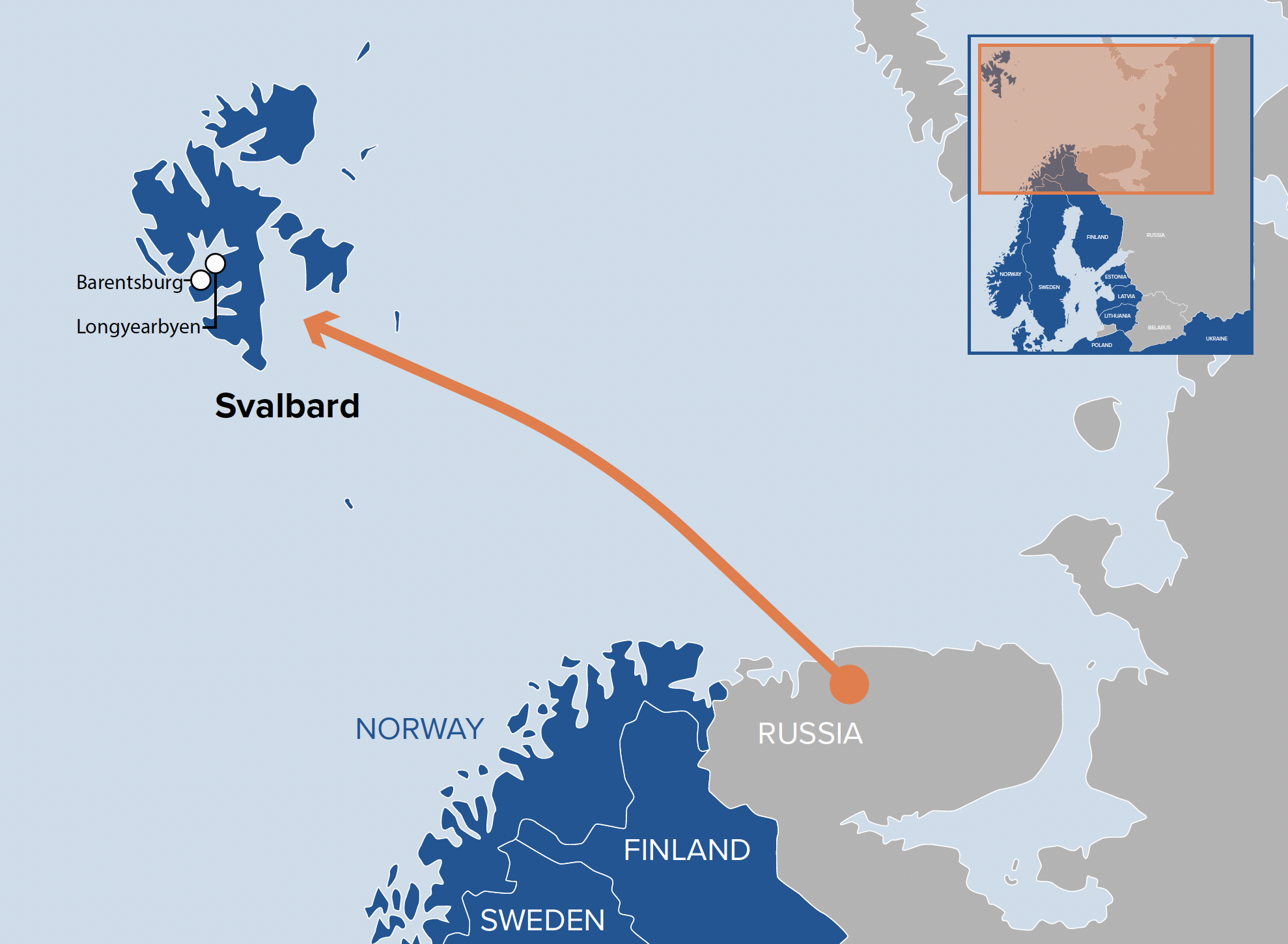
The archipelago is sparsely populated, with fewer than three thousand residents spread across seven locations and only two permanent settlements (Longyearbyen and Barentsburg, on Svalbard island). Seventeen percent of its population is made up of Russian nationals. Its principal mineral resources are coal, zinc, copper, and phosphate. Norway operated a single coal mine that exports 80,000 tons annually to European customers, but it closed in 2025.105Thomas Nilsen, “Norway Prolongs Coal Mining at Svalbard until 2025,” Barents Observer, September 2, 2022, https://www.thebarentsobserver.com/arctic-mining/norway-prolongs-coal-mining-at-svalbard-until-2025/103395. One local airport supports regular commercial air service to Svalbard from mainland Norway. One of the world’s largest ground-based commercial telecommunications stations is based on the island. It was bombed by Germany in World War II and later used as a weather station by the German military.
In support of its commercial interests—and as allowed by the treaty—Russia has maintained a nearly permanent presence on Svalbard for decades, principally for mining. At the height of the Cold War, Svalbard was home to more than twice as many Russian citizens as Norwegians. A major mining complex at Pyramiden was abandoned in 1998; today it is manned as a research station by twelve Russian nationals. A Russian mining operation remains active at Barentsburg, producing 120,000 tons of coal per year but programmed for reduction to 40,000 tons by 2032.106Heiner Kubny, “Russia to Slash Barentsburg Coal Mining by Two Thirds,” Polar Journal, May 17, 2023, https://polarjournal.ch/en/2023/05/17/russia-to-slash-barentsburg-coal-mining-by-two-thirds. A Russian Geographical Society office opened in Barentsburg in October 2025 as well. The Russian government also encourages tourism from “friendly” countries, raising the Russian profile and footprint on Svalbard. In recent years, Russia has stepped up its complaints, asserting various violations of the treaty concerning fishing rights, treatment of Russian citizens, research activities, Norwegian military activity, and Norwegian claims to an exclusive economic zone (EEZ).107[1] Andreas Østhagen, “The Myths of Svalbard Geopolitics: An Arctic Case Study,” Marine Policy 167 (2024), https://www.sciencedirect.com/science/article/pii/S0308597X24001817.
Current Norwegian government documents acknowledge “the risk of military conflict involving Norway [has] increased” and assert that “the exercise of national control in Svalbard is to be strengthened.”108[1] “The Norwegian Defence Pledge,” Norwegian Ministry of Defence, April 5, 2024, https://www.regjeringen.no/en/documents/the-norwegian-defence-pledge/id3032809/; “New Norwegian Long Term Plan on Defence: ‘A Historic Plan,’” Office of the Prime Minister of Norway, press release, April 5, 2024, https://www.regjeringen.no/en/whats-new/new-norwegian-long-term-plan-on-defence-a-historic-plan/id3032878/; “National Security Strategy,” Office of the Prime Minister of Norway, May 2025, 20, https://www.regjeringen.no/en/documents/national-security-strategy/id3099304/?ch=1. Though lacking in military infrastructure, the archipelago represents a potential platform for reconnaissance and surveillance of the Norwegian and Barents Seas and a listening post for observation of the High North, as well as Russian naval activity out of Murmansk and the Kola Peninsula, home to the Russian Northern Fleet.109Andreas Østhagen, Otto Svendsen, and Max Bregmann, “Arctic Geopolitics: The Svalbard Archipelago,” Center for Strategic and International Studies, September 14, 2023, https://www.csis.org/analysis/arctic-geopolitics-svalbard-archipelago. The bulk of the Russian navy is based in the Kola Peninsula, including the majority of Russian ballistic missile and attack submarines, as well as long-range naval aviation.110Captain Christopher Bott, “Responding to Russia’s Northern Fleet,” US Naval Institute Proceedings 147, 3 (2021), https://www.usni.org/magazines/proceedings/2021/march/responding-russias-northern-fleet. If militarized, Russian possession of Svalbard would deny NATO allies this potential advantage and enhance Russian presence and reach in these waters, contributing to a layered defense of the Kola complex and strengthening Russian access to the Arctic Ocean and the North Atlantic. Of note, Norwegian analysts report a strong Russian intelligence focus on the archipelago, as well as the Arctic region and the Northern Sea Route in recent years, highlighting the islands’ geographic importance.111Eugene Rumer, Richard Sokolsky, and Paul Stronski, “Russia in the Arctic—A Critical Examination,” Carnegie Endowment for International Peace, March 29, 2021, https://carnegieendowment.org/research/2021/03/russia-in-the-arctica-critical-examination?lang=en. In January 2022, just weeks before the invasion of Ukraine, a major telecommunications cable from the mainland to Svalbard was cut, almost certainly by Russian commercial vessels.112Schmitt, et al., “Underwater Mayhem,” 36.
These developments suggest that, as part of a larger program to drive wedges inside NATO and to punish Norway for its unstinting support of Ukraine (including economic sanctions), Russia could see greater political value in exploiting Svalbard’s territorial “ambiguity” by seizing the undefended archipelago. Contrived complaints about Norwegian treatment of Russian nationals and arguments over disputed Norwegian sovereignty in Svalbard have been simmering for years and would provide a ready, if thinly veiled, justification.113Sara Matea Sundquist, “High Noon for the High North? Norway, Russia, and the Svalbard Stronghold,” International Centre for Defence and Security, November 2024, https://icds.ee/wp-content/uploads/dlm_uploads/2024/11/ICDS_Analysis_High_Noon_for_the_High_North_Sara_Sundquist_November_2024.pdf. In recent years, Russian officials have also falsely claimed that Norway is “militarizing” Svalbard, a clear attempt to generate a false narrative in support of possible military action.114“Russia Calls Out Norway for ‘Militarizing Svalbard,’ Setting the Stage for War—How Strong Is NATO’s Northern Flank?,” Defense Express, March 22, 2025, https://en.defence-ua.com/analysis/russia_calls_out_norway_for_militarizing_svalbard_setting_the_stage_for_war_how_strong_is_natos_northern_flank-13928.html.
Any Russian operation to seize Svalbard would be preceded by hybrid activities, such as destruction of undersea telecommunications, the insertion of intelligence officers in civilian clothes, and SOF troops conducting strategic reconnaissance and seizing key locations such as the commercial airfield north of Longyearbyen. Naval infantry from the Northern Fleet (the 61st Naval Infantry Brigade, based in Murmansk) or airborne troops flown in from mainland Russia could rapidly seize and occupy the archipelago with little warning, presenting NATO with a fait accompli.115The 61st Guards Naval Infantry Brigade includes two naval infantry battalions (one trained in air assault operations), a tank battalion, a reconnaissance battalion, two artillery battalions and an air defense battalion. Ropucha and Ivan Gren-class landing ships assigned to the Northern Fleet provide organic transport by sea. Russian airborne brigades are similarly organized with three maneuver battalions, supporting artillery and air defense, and other enablers. Although an overt military movement using Russian amphibious assault craft or military transport aircraft is possible, a military occupation might involve maskirovka (military deception) using commercial aircraft or ships, at least for the leading echelon. The initial occupying force would likely be of battalion strength, followed by its parent brigade with the normal enablers (air defense, artillery, engineers, intelligence, and electronic warfare units), supported by fighters, warships, and submarines from the Kola Peninsula.116The Russian Northern Fleet includes thirty-four attack and cruise missile submarines, three cruisers, nine frigates and destroyers, and eight corvettes with anti-ship missiles as well as six amphibious assault vessels for transporting naval infantry. See: “Russian Navy 2025: List of Active Russian Navy Ships and Submarines,” RussianShips.info, last visited November 3, 2025, https://russianships.info/eng/today/. Four fighter regiments, including two equipped with anti-ship missiles, are based in Murmansk along with one regiment of TU-22M3 Backfire bombers. See: Thomas Withington, “Arctic Medians,” Armada International, April 2, 2025, https://www.armadainternational.com/2025/04/arctic-meridians-electronic-warfare/. Some form of civil administration and ministry of the interior border guards would follow in due course.
Given Svalbard’s remote location and small population, it is not certain that all thirty-two NATO allies would agree to oppose Russian aggression on Svalbard.117James K Wither, “Svalbard: NATO’s Arctic ‘Achilles’ Heel,’” RUSI Journal, December 6, 2018, 18, https://www.rusi.org/explore-our-research/publications/rusi-journal/svalbard-natos-arctic-achilles-heel. Without consensus, a robust NATO response is less likely. At the outset, Norway’s small military can do little in response. Though a clear Article 5 violation, NATO’s failure to respond effectively will significantly damage Alliance prestige and cohesion, at low risk and low cost to Russia. Should Russian planners assess that NATO lacks the resolve to act, this scenario becomes far more probable.
Technically, Norway might not abrogate the 1920 treaty without the consent of the participating parties (which number some forty-eight, including Russia).118“Treaty between Norway, the United States of America, Denmark, France, Italy, Japan, the Netherlands, Great Britain and Ireland and the British Overseas Dominions and Sweden Concerning Spitsbergen Signed in Paris 9th February 1920,” Arctic Poral Library, last visited November 3, 2025, https://library.arcticportal.org/1909/1/The_Svalbard_Treaty_9ssFy.pdf. The introduction of foreign troops is forbidden. However, Article 9 of the treaty permits the presence of Norwegian troops with caveats: Norway cannot establish naval bases or other military fortifications on Svalbard and the archipelago cannot be used “for warlike purposes,” but “defensive measures” are permitted.119Øystein Jensen, “The Svalbard Treaty and Norwegian Sovereignty,” Arctic Review on Law and Politics 11 (2020), https://arcticreview.no/index.php/arctic/article/download/2348/4673?inline=1. Citing repeated Russian aggression and violations of international law, Norway could station a rotational force—perhaps border guards or other paramilitary troops—in company strength as a reaction force on Svalbard to deter an unopposed landing. Such a force could not withstand a determined attack but would raise the political stakes and signal Norway’s determination to assert its sovereignty and defend its territory, strengthening the case for NATO and international diplomatic and military intervention.
These steps can be augmented by more focused intelligence and surveillance, including signal and human intelligence, aimed specifically at detecting Russian troop movements before they happen. Early detection could provide opportunities for diplomacy, activation of response plans, and perhaps some form of interdiction prior to the operation taking place. Any strong evidence of a pending coup de main should trigger stepped-up NATO air and maritime patrols. In these circumstances, the Norwegian government might also consider a preemptive deployment.120Norway has some eighteen C130-series aircraft that could be used in this scenario, each capable of transporting sixty-four troops or 45,000 pounds of cargo. This translates into the ability to lift one battalion with vehicles and supplies in a single lift.
NATO should also prepare detailed plans to retake Svalbard in the event of aggression. Unfortunately, Norway has no amphibious assault ships or marines, other than a company-sized coastal ranger unit equipped with CB90 fast assault craft.121The CB90 can carry up to eighteen troops. Norway has no units comparable to Russian VDV brigades capable of long-distance parachute or helicopter assaults. It also lacks parachute troops needed for no-notice, long-range response. One option is to employ Norwegian special forces along with US, UK, and Dutch marines who regularly exercise in north Norway.122Oscar Rosengren, “Forsvarets Spesialkommando: Norway’s Army SOF,” Grey Dynamics, January 23, 2025, https://greydynamics.com/forsvarets-spesialkommando-norways-army-sof/; “New Arctic Operations Base for UK Commandos,” Royal Navy, March 8, 2023, https://www.royalnavy.mod.uk/news/2023/march/08/230308-campvikingnorway; Master Sgt. Scott Schmidt, “Norwegian Military, U.S. Marines, NATO Allies Prepare for Major Winter Warfare Exercise in Norway,” US Marines, January 15, 2025, https://www.marines.mil/News/News-Display/Article/4029972/norwegian-military-us-marines-nato-allies-prepare-for-major-winter-warfare-exer/#:~:text=The%20United%20States%20Marine%20Corps,interoperability%20and%20joint%20operational%20capabilities. Another is to employ UK, Dutch, and Belgian parachute troops along with Norwegian SOF—a more rapid solution.123The UK 16 Air Assault Brigade includes three parachute battalions. One battalion of the Dutch 11th Airmobile Brigade is parachute –trained, as is the 3rd Paratroopers battalion of the Belgian Special Operations Regiment. Other NATO SOF might also participate. All are trained and equipped to operate in cold-weather scenarios. Such an operation would require air and naval forces, as well as ground troops in sufficient strength to overcome local Russian resistance and any reinforcing echelon. Russian planners will surely anticipate a NATO response, so effective air defense and anti-submarine assets in support of the reaction force are essential. Speed is critical, as delay would enable the Russian military to both establish stronger defenses (such as air defense and anti-ship missiles) and bring in reinforcements. Norwegian and Alliance public diplomacy should reinforce Norway’s determination to defend its sovereign territory and NATO’s commitment to assist when threatened, reinforced by recurring exercises to demonstrate Alliance resolve and capability.124These exercises should replicate actual operations but should not be sited on or near the archipelago. Should the North Atlantic Council decline to respond, an alternative is a “coalition of the willing” supported by the UK, the Nordic powers, and perhaps others.
Recommendations
- Conduct public diplomacy to reinforce Norway’s determination to defend its sovereign territory and NATO’s commitment to assist when threatened.
- Implement diplomatic and government information programs to inform residents and neighbors of forthcoming actions to deter or defend against aggression on Svalbard.
- Position a rotational company-sized Norwegian military or paramilitary unit on Svalbard.
- Conduct focused intelligence and surveillance, to include signal and human intelligence, aimed specifically at detecting Russian troop movements toward Svalbard.
- Conduct detailed military planning to reinforce or retake Svalbard in crisis scenarios.
- Conduct regular NATO exercises to practice rapid reinforcement, beginning with BALTOPS 2026.
- Stockpile supplies of fuel, ammunition, and spare parts in north Norway in support of contingency plans.
- Establish NATO defensive counter-air patrols if Russian aggression is imminent.
Target 2: Åland islands
As with Svalbard, the Åland islands are undefended and represent a tempting prize for Russian forces. Situated at the entrance to the Gulf of Bothnia in the Baltic Sea, they are in close proximity to three NATO capitals: Stockholm in Sweden, Tallinn in Estonia, and Helsinki in Finland. Described by Napoleon Bonaparte as “a pistol aimed at the heart of Sweden,” the 6,700 islands in the chain were formerly Swedish territory but were ceded to Russia in 1809 along with the Grand Duchy of Finland.125Ralph Tuchtenhagen, “Between Russia, Sweden, and Finland: The Åland Question Since 1809,” Studia Europejskie 26, 4 (2022), https://journalse.com/pliki/pw/4-2022-Tuchtenhagen.pdf. Following the Crimean War, the islands were demilitarized in accordance with the Treaty of Paris. Though sovereign Finnish territory since Finland’s independence in 1917, the islands enjoy substantial autonomy and remain demilitarized, with no military installations or infrastructure.
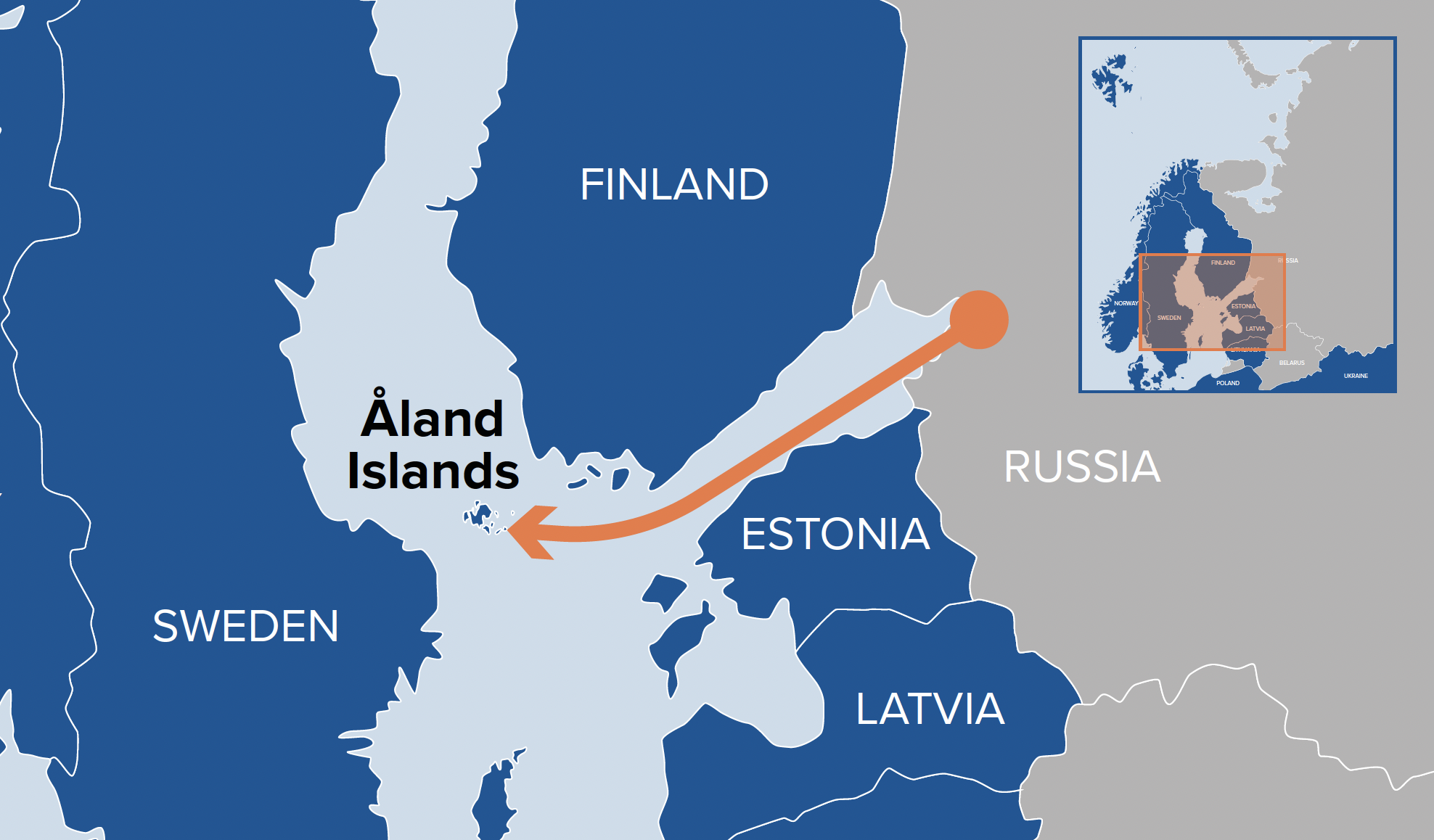
The population is Swedish speaking and enjoys the highest standard of living in Finland. Residents are not subject to military service. With thirty thousand inhabitants and a surface area of 1,700 km, the regional economy is based on shipping, fishing, and agriculture. The regional capital is Mariehamn on Fasta island, home to 90 percent of the local population. The islands are a crucial maritime waterway, as shipping routes nearby carry $180 billion of regional trade annually along with critical undersea cables linking Finland to the rest of Europe.126Chas Newkey-Burden, “The Peaceful Archipelago that May Take Up Arms,” Week, August 14, 2024, https://theweek.com/defence/Aland-Islands-the-peaceful-archipelago-that-may-take-up-arms. There is daily ferry service to Sweden and the Finnish mainland, as well as to the Baltic states, and daily air service to Stockholm and Helsinki from Mariehamn, the islands’ only commercial airport. The islands’ status is governed by the 1921 Åland convention, brokered by the League of Nations, which grants substantial cultural and political autonomy to the islanders.127Sweden, Finland, Germany, United Kingdom, France, Italy, Denmark, Poland, Estonia, and Latvia—all NATO members—are signatories. See: Hasan Akintua, “The Legal Basis of Åland’s Demilitarization and Neutralization,” Nordics.info, Arhaus University, November 1, 2023, https://nordics.info/show/artikel/the-legal-basis-of-aalands-demilitarization-and-neutralization.
Largely due to the conflict in Ukraine and Finland’s subsequent joining of NATO, some Finnish politicians and analysts have suggested revisiting the islands’ demilitarized status, provoking a strong reaction from Russian commentators.128Ibid. Although a majority of Finns support this step, local residents do not.129Tom Fort, “A Region on Alert: Åland and the Prospect of Remilitarisation,” St Andrews Economist, September 1, 2024, https://standrewseconomist.com/2024/09/01/a-region-on-alert-aland-and-the-prospect-of-remilitarisation/. The Finnish government has tabled such proposals, careful not to inflame an already tense relationship with the Russian Federation.130David Brennan, “NATO Faces Dilemma over Baltic Sea Islands Eyed by Russia,” Newsweek, May 24, 2024, https://www.newsweek.com/nato-dilemma-baltic-sea-islands-eyed-russia-gotland-aland-1904436. Still, an evolving security environment in the Baltic and Nordic region could change that calculus. Given the geostrategic stakes, Helsinki must take such threats seriously.131Ibid.
A prime driver for Moscow is the importance of Baltic Sea trade, a major contributor to the Russian economy.132Up to 60 percent of Russia’s trade traverses the Baltic Sea. See: Lee Willett, “The Baltic: A ‘Strategic Sea,’” European Security and Defence, February 17, 2025, https://euro-sd.com/2025/02/articles/42619/the-baltic-a-strategic-sea/. The Åland islands also sit astride the entrance to the Gulf of Finland and the approaches to St. Petersburg, Russia’s second largest city, while the Kaliningrad exclave to the south is the home of the Russian Baltic Fleet and Russia’s only year-round, ice-free port in the Baltic. With almost all of the Baltic coastline now NATO territory, Russian planners face an acute challenge: in the event of direct confrontation with the Alliance, their use of Baltic waters and airspace is at grave risk, as is the survival of Kaliningrad as a Russian entity. The defense of St. Petersburg, now almost a NATO suburb, is also in question from the Russian perspective.
For these reasons, the Åland islands represent an attractive target.133Paul Goble, “Moscow Focusing on Åland Islands as Target in Event of War with NATO,” Jamestown Foundation, September 24, 2024, https://jamestown.org/program/moscow-focusing-on-aland-islands-as-target-in-event-of-war-with-nato/. Their possession in time of war confers vital advantages to Russia, altering the strategic landscape in the Baltic region significantly. These include more defense in depth for St. Petersburg, an enhanced air defense zone in the northern Baltic, and a potential platform for surveillance and reconnaissance as well as anti-ship missiles and rocket artillery. A military operation to seize them would also punish Finland for joining NATO and, like Svalbard, pose a wrenching dilemma for NATO. Though clearly an act of war, as well as a striking violation of international law, an unopposed military occupation in time of peace would more likely than not result in diplomatic protests, but perhaps not a NATO military response.
As in the Svalbard scenario, any Russian operation to occupy the islands would be preceded by Russian SOF, inserted clandestinely, to conduct strategic reconnaissance and seize critical infrastructure, such as the commercial airfield at Mariehamn.134Probably the 2d Guards Spetsnaz Brigade based in Pskov. These would be supported by combat aircraft and air defense forces from the Leningrad Military District. The occupation force would likely come from the 336th Naval Infantry Brigade based in Kaliningrad, or the 76th Air Assault Division based in Pskov.135The 76th Guards Air Assault Division consists of three air assault regiments, a tank battalion, and supporting artillery, engineer, signal, reconnaissance, electronic warfare, and other support units. Each air assault regiment has two air assault battalions and one parachute battalion. The Russian Air Force has enough IL-76 strategic transports to deliver one VDV regiments in a single lift. See: Michael Kofman, “Rethinking the Structure and Role of Russia’s Airborne Forces,” Russia Military Analysis (blog), January 30, 2019, https://russianmilitaryanalysis.wordpress.com/2019/01/30/rethinking-the-structure-and-role-of-russias-airborne-forces/. As in Scenario 1, troops in battalion or regimental strength could be inserted by sea or air with little or no warning, possibly using commercial shipping or aircraft. Elements of the Russian Baltic Fleet would support the operation.136These include one Kilo-class attack submarine, one destroyer, three frigates, fourteen guided-missile corvettes and four amphibious assault ships for transporting naval infantry. See: “Russian Navy 2025.” Moscow would likely then annex the islands, following up with national guard or border police troops and emplacing air defense, anti-ship missiles, electronic warfare units, and other enablers—in all, the equivalent of an independent brigade group.
Finnish military leaders are well aware of the Russian threat to the islands and increasingly advocate for their defense, as do a growing number of parliamentarians.137“Finnish Military Leaders Want to Remilitarize the Åland Islands,” Nordic Times, April 19, 2023, https://nordictimes.com/the-nordics/finland/finnish-military-leaders-want-to-re-militarize-the-aland-islands/. An appropriate response to the growing Russian threat is to amend the 1921 Åland convention (Russia is not a signatory) and position adequate defense forces on Fasta, perhaps with Swedish and other NATO elements equipped with armored vehicles, air defense, and supporting artillery, and supplemented by local volunteer reserve units. A possible solution is the Nyland Brigade, Swedish-speaking “coastal jaegers” currently based at Ekenas on the southern tip of Finland, augmented by air defense, field artillery, and anti-ship missile units.138The Nyland Brigade consists of two battalions armed with mortars and light weapons but no artillery or air defense. This force would deny Russian forces an unopposed landing, impose costs on an attacking force, strengthen the case for NATO intervention in the event of Russian aggression, and buy time for reinforcements to arrive. Should the mission be to retake the islands, spearhead forces would be Finnish SOF (specifically the Uttii Jaeger Regiment) and the Nyland battlegroup, perhaps supported by Swedish marines.139The Swedish 1st Marine Regiment, based near Stockholm, is a battalion battlegroup-sized formation equipped with CB-90 fast assault craft as well as standard small arms, anti-tank systems, and limited air defense. Though the Russian government would protest any preventive deployment strongly, the islands are sovereign Finnish territory and such a deployment would clearly pose no offensive threat to Russian territory or interests. Given heightened tensions in the region and Russia’s demonstrated propensity for aggression, as well as direct Russian threats related to Finland’s accession to NATO, a defensive deployment like this is both prudent and necessary. Now, while Russia remains preoccupied in Ukraine, is the best time to bolster Finnish defenses in this critical area.
Recommendations
- Conduct public diplomacy to reinforce Finland’s determination to defend its sovereign territory and NATO’s commitment to assist when threatened.
- Implement focused diplomatic and government information programs to inform residents and neighbors of forthcoming actions to improve local defense.
- Establish declaratory policy that Russian aggression on NATO territory in the Baltic region will result in closure of the Baltic straits to all Russian commercial maritime traffic.
- Position a composite Swedish and Finnish mechanized battalion battle group and reserve infantry battalion on Fasta.
- Equip these composite forces with tanks, infantry fighting vehicles, self-propelled artillery, air defense, and electronic warfare units.
- Prepare the terrain for defense with fortifications and obstacles.
- Strengthen Finnish capabilities to react to and retake occupied territory.
- Conduct detailed contingency planning and regular NATO exercises to practice rapid reinforcement, beginning with BALTOPS 2026.
- Stockpile supplies of fuel, ammunition, and spare parts.
- Strengthen NATO air patrols and presence.
- Establish NATO defensive counter-air patrols if Russian aggression is imminent.
Target 3: Eastern Estonia
Located on the southern coast of the Gulf of Finland, Estonia shares a 294-km border with Russia (its easternmost city, Narva, is only 136 km from St. Petersburg). Formerly a possession of the Holy Roman Empire and later of the Kingdom of Sweden, Estonia was incorporated into the Russian empire in 1710 following the Great Northern War. Estonia enjoyed brief independence from 1918–1940 before reoccupation by Soviet troops, and it existed as part of the USSR until the end of the Cold War. Between 1945 and 1989, the presence of ethnic Russians in Estonia increased from 3 percent to 39 percent as part of a deliberate “russification” policy.140Archana Upadhyay, “Borderland Geopolitics in Estonia,” World Affairs: The Journal of International Issues 21, 3 (2017), 163, https://www.jstor.org/stable/48531360. Since independence in 1991, Estonia has grown into a modern functioning democracy with a thriving economy and robust institutions. A member state of both NATO and the EU, Estonia has a population of 1.4 million, 21 percent of whom are ethnic Russians. Most are concentrated in Tallinn, the capital, and in Ida-Viru, Estonia’s northeastern province centered on Narva.
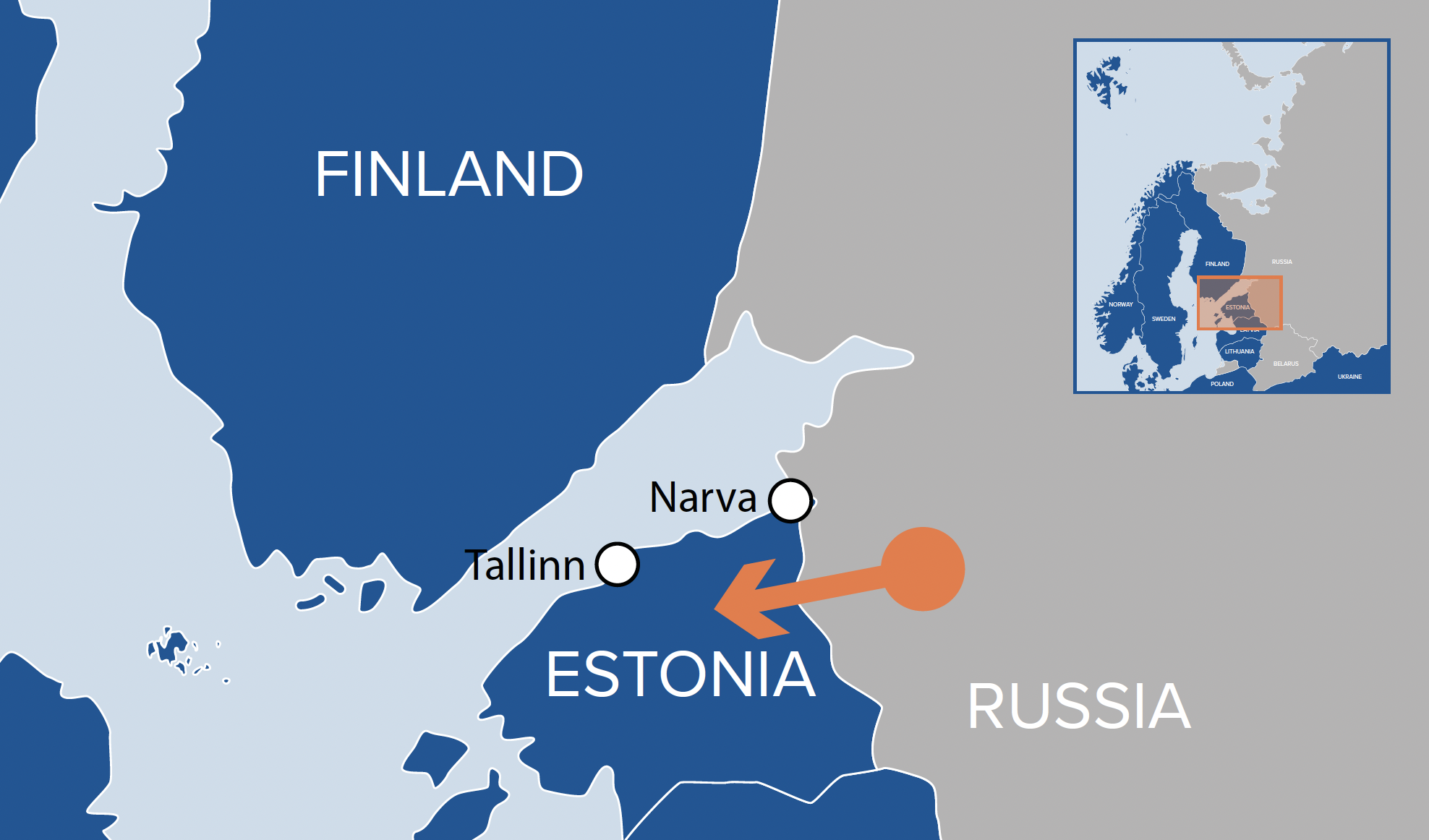
A prime target of Russian influence operations, Estonia has struggled to effectively integrate its ethnic Russian citizens, many of whom hold Russian passports and do not speak Estonian. (A recent constitutional amendment bars ethnic Russians who lack Estonian citizenship from voting.141Iida-Mai Einmaa, “How Will the Stripping of Voting Rights Affect Integration in Estonia?” ERR News, March 31, 2025, https://news.err.ee/1609649165/how-will-the-stripping-of-voting-rights-affect-integration-in-estonia.) Russian intelligence services employ a variety of methods, including clandestine support of political parties, cyberattacks, disinformation spread through social media, vandalism, aggressive propaganda, and orchestrated bomb threat campaigns to affect Estonian social and political life.142“ISS Director: Russian Influence Activities in Estonia Have Become Harsher,” ERR News, April 12, 2024, https://news.err.ee/1609311528/iss-director-russian-influence-activities-in-estonia-have-become-harsher. Although Estonian defense spending exceeds 3 percent, its tiny GDP means that external support is essential for its defense. Its defense forces consist of one active brigade, one reserve brigade, and no tanks or fighter aircraft; its navy consists of a handful of coastal patrol craft. A UK-led NATO battalion battle group based in Tapa is also present as a deterrent. (Allies committed in Madrid in 2022 to station NATO brigades in threatened eastern flank states “where and when required,” but that promise never materialized.143“Madrid Summit Declaration,” NATO, press release, June 29, 2022, https://www.nato.int/cps/en/natohq/official_texts_196951.htm.) A NATO Air Policing activity is also located at Amari Air Base. Border fortifications are being constructed but will take time. With such a small and poorly equipped military, Estonia depends on NATO’s Article 5 security guarantees to deter possible Russian aggression. That threat is looming; as one expert recently opined, “Russia is thinking seriously about a combat operation in the Baltic region.”144Luzin, “Russia Reorganizes Military Districts.”
In this scenario, Russian paramilitary troops, special operations soldiers, and intelligence officers without markings would enter eastern Estonia to carve out a separatist enclave in support of “oppressed” Russian minorities seeking reincorporation into the Russian Federation.145“In the national perception, Narva has acquired the image of the regional ‘other’ inhabited by fifth columnists with pro-Russian sympathies. The city’s ethno-linguistic ‘Russian-ness’ within an ethnic Estonian nationalising state, sharing borders with the neighbouring Russian-kindred state raises concerns about security challenges emanating from this borderland amidst rising geopolitical tensions between Russia and NATO.” Upadhyay, “Borderland Geopolitics in Estonia,” 167.
Using this cover story, Russian operatives backed with armed force would occupy the area around Narva and Lake Peipus. “Separatists” would then set up a mock government and vote for reincorporation into the Russian Federation, as seen in the Donbas and Crimea. The operational objectives would be to test NATO’s resolve, to intimidate and destabilize a neighbor and former imperial possession, and to set conditions for possible future aggression against the Baltic states.146Liliana Oleniak, “Russia May Try to Seize Part of Estonia—Politico,” RBC-Ukraine, December 26, 2024, https://newsukraine.rbc.ua/news/russia-may-try-to-seize-part-of-estonia-politico-1735214959.html. Estonian authorities would surely act quickly in response to this threat, alerting military and police forces, mobilizing reserves, stiffening cyber defenses, and calling for immediate Article 4 and Article 5 consultations under the Washington Treaty. Should actual fighting break out, which is likely, Russia will swiftly escalate and introduce combat troops under the pretext of assisting ethnic Russians seeking self-determination. Local Estonian active and reserve forces and police might be able to deal with small incursions, but a sophisticated operation backed by Russian GRU and SOF, supported by conventional forces such as the 76th Air Assault Division in nearby Pskov and the 6th CAA in St. Petersburg, would exceed their capabilities. The lone NATO eFP battalion in Estonia is not enough to materially alter the balance of forces.
Here the risks for Russia appear to be relatively low. NATO intervention in strength is not certain; in all probability, close neighbors such as Sweden, Finland, and Latvia would not send ground forces or risk a direct confrontation with Putin. Large Russian forces would not be required, easing logistical requirements, and the prospect of high casualties is remote. A successful Russian operation of this kind would demonstrate the cleavages within NATO and force neighboring Baltic and Nordic states to reassess their relationships with the Russian Federation. Strong measures—above all, the timely deployment of a full-strength NATO heavy brigade combat team with enablers to Estonia—are needed now to deter this threat. In short, there is much Estonia can do for itself, but it will remain vulnerable without significant external support.
Recommendations
- Conduct public diplomacy to reinforce Estonia’s determination to defend its sovereign territory and NATO’s commitment to assist when threatened.
- Implement focused diplomatic and government information programs to inform residents and neighbors of forthcoming actions to improve local defense.
- Establish declaratory policy that Russian aggression on NATO territory in the Baltic region will result in closure of the Baltic straits to all Russian commercial maritime traffic.
- Increase active Estonian forces to divisional strength.
- Equip these forces with tanks, infantry fighting vehicles, self-propelled artillery, air defense, and electronic warfare units.
- Solicit increased security assistance from wealthier allies and partners in the form of needed equipment and funding.
- Revise Estonian conscription laws to expand military manpower and extend service commitments.
- Prepare the national territory for defense with fortifications and obstacles.
- Increase in-place NATO forces from battalion to brigade strength with enablers.
- Conduct detailed contingency planning and regular NATO exercises to practice rapid reinforcement.
- Stockpile supplies of fuel, ammunition, and spare parts.
- Strengthen national cyber defense and resilience measures.
- Establish NATO defensive counter-air patrols if Russian aggression is imminent.
Target 4: Gotland
Situated in the middle of the Baltic Sea, the island of Gotland confers major advantages to any regional power in time of war.147Rany Ballout, “Gotland Island’s Strategic Importance to NATO’s Defense,” Diplomatic Courier, May 16, 2024, https://www.diplomaticourier.com/posts/gotland-islands-strategic-importance-to-natos-defense. These include air and maritime dominance over the Baltic Sea and environs; enhanced security for Kaliningrad and the Russian Baltic Fleet; a strike platform and “unsinkable aircraft carrier” to threaten Sweden and the other Nordic powers; and an intelligence-gathering site to extend the reach of Russian sensors in the region. The Swedish government openly recognizes a deteriorating security environment.148“National Security Strategy,” Government Offices of Sweden, Prime Minister’s Office, 2024, 15, https://www.government.se/globalassets/government/national-security-strategy.pdf. Russian leaders, citing Swedish efforts to shore up Gotland’s defenses, state publicly that “western actions in Gotland, Bornholm, and other islands in the Baltic Sea threaten Russian national security . . . Russia will soon have no choice but to respond militarily.”149Paul Goble, “Moscow Focusing on Gotland and Other Baltic Sea Islands as Potential Targets,” Jamestown Foundation, Eurasia Daily Monitor 21, 89 (2024), https://jamestown.org/program/moscow-focusing-on-gotland-and-other-baltic-sea-islands-as-potential-targets/. For these reasons, Swedish leaders are increasingly concerned that Russia might seize the island in time of crisis or war.150Liv Martin, “Putin Has ‘Both Eyes’ on Gotland, Warns Sweden’s Army Chief,” Politico, May 22, 2024, https://www.politico.eu/article/russia-putin-eyes-sweden-gotland-baltic-sea-army-chief.
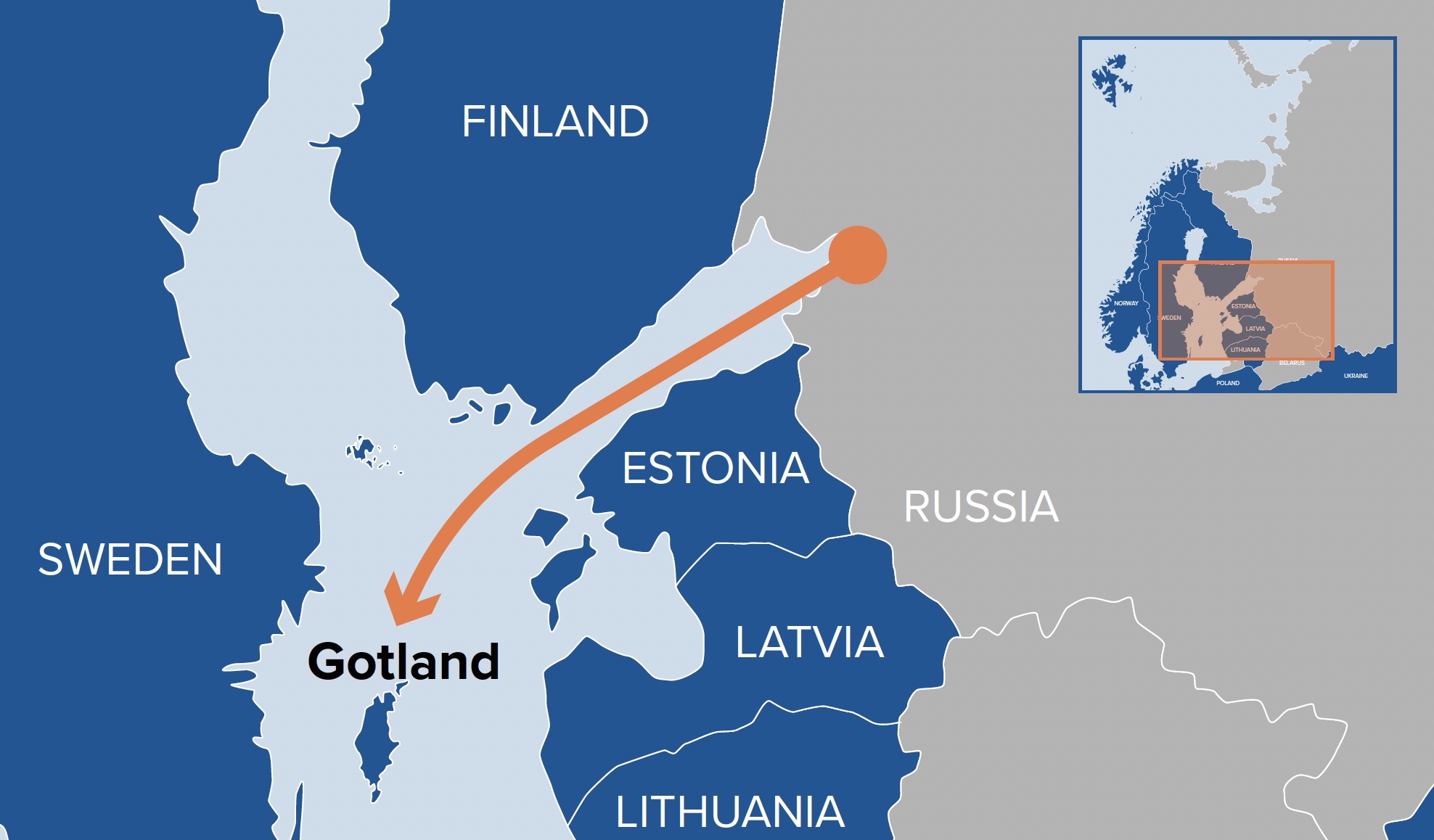
Gotland encompasses 3,200 square kilometers and lies 224 km from Stockholm and 345 km from Kaliningrad. A major Hanseatic trading emporium in medieval times, the island was ceded to Sweden from Denmark-Norway in 1645 and was briefly occupied by Russian troops in 1808 during the Napoleonic Wars. Gotland has sixty-one thousand inhabitants and its economy is based principally on agriculture and tourism. Its largest municipality is Visby, with twenty-two thousand citizens. The island is largely forested and free of ice year-round, with regular air and ferry service. There is one 2,000-meter airfield suitable for military use.
At the height of the Cold War, the Gotland garrison numbered some twenty-five thousand soldiers.151“Sweden’s First Task in NATO: Defend Key Island on Baltic’s Sea Lanes,” Maritime Executive, March 13, 2024, https://maritime-executive.com/article/sweden-s-first-task-in-nato-defend-key-island-on-baltic-s-sea-lanes. Demilitarized in 2004, Gotland gained greater attention as a strategic flashpoint following the Russian annexation of Crimea in 2014. Control of the island gives Sweden, and NATO, virtual command of the air and maritime domains in the Baltic Sea, potentially a decisive advantage in times of conflict. In 2017, the Gotland regiment was reconstituted as a mechanized infantry battalion with CV90 infantry fighting vehicles and a company of Leopard 2 tanks.152Suzanne Freeman, “Are Current Russian Expeditionary Capabilities Capable of a Coup de Main in Sweden?” Center for Strategic and International Studies, September 30, 2021, https://www.csis.org/analysis/are-current-russian-expeditionary-capabilities-capable-coup-de-main-sweden. There is also a Home Guard reserve battalion, but no artillery. An air defense battery equipped with a modest array of air defense systems provides limited coverage.153[1] “Gotland Air Defence Is Reinforced,” Swedish Armed Forces Headquarters, March 17, 2021, https://www.forsvarsmakten.se/en/news/2021/03/gotland-air-defence-is-reinforced; “Sweden Demonstrates Upgraded RBS 70 Air Defense System during Live-Fire Drills on Gotland,” Defense News, November 17, 2024, https://www.thedefensenews.com/news-details/Sweden-Demonstrates-Upgraded-RBS-70-Air-Defense-System-During-Live-Fire-Drills-on-Gotland.
Russian forces in the area are based in Kaliningrad and consist of the Baltic Fleet, a naval infantry brigade, a motor rifle division with supporting units, and strong air defense, anti-ship missile, and aviation formations.154Clark and Hird, “Russian Regular Ground Forces Order of Battle,” 16. The fleet includes one attack submarine, one destroyer, two frigates, fourteen corvettes, and an assortment of smaller patrol craft, minesweepers, landing craft, and support vessels.155“Russian Navy 2025.” Some nuclear systems are reportedly based in the exclave.156Hans Kristensen, “Russia Upgrades Nuclear Weapons Storage Site in Kaliningrad,” Federation of American Scientists, June 18, 2018, https://fas.org/publication/kaliningrad/. Gotland falls just inside the range of Russian S-400 long-range air defense systems based in Kaliningrad and is well within range of Russian missile systems.
Should Russian leaders decide to confront NATO in the Baltic region, seizure of Gotland is almost imperative, both to deny NATO its strategic advantages and to secure them for Russia itself.157Scott Savitz and Isabelle Winston, “A Brief Naval Overview of the Baltic Sea Region,” RAND, June 2024, https://www.rand.org/content/dam/rand/pubs/perspectives/PEA2100/PEA2111-1/RAND_PEA2111-1.pdf. For commercial as well as military reasons, control of the Baltic Sea is critical, as 40 percent of Russia’s total energy exports transit the region.158Victor Jack and Gabriel Gavin, “Inside the New Plan to Seize Russia’s Baltic Fleet,” Politico, February 10, 2025, https://www.politico.eu/article/russia-shadow-fleet-finnish-bay-snow-eagle-s-december-oil-baltic-sea-europe-waves-europe-kremlin/. This might be attempted as a standalone operation to set conditions for future aggression, or as a supporting effort for larger-scale attacks.
A Russian coup de main against Gotland would, in all probability, avoid the use of conventional motor rifle or tank units. Naval infantry or VDV forces in brigade strength, assisted by the Baltic Fleet and supporting aviation and missile units, would likely conduct the operation with little advance warning.159Freeman, “Are Current Russian Expeditionary Capabilities Capable of a Coup de Main in Sweden?” (One battalion of the 336th Naval Infantry Brigade at Kaliningrad is trained in airborne operations.) As in other scenarios, Russian SOF would be inserted clandestinely prior to invasion and commercial air and sea platforms might be used to preserve surprise.160A 120-man GRU sabotage unit known as the 390th Special Purpose Reconnaissance Point is known to be based at Kaliningrad. See: Anna Gielewska, et al., “Mapping Russia’s War Machine on NATO’s Doorstep,” VSqure, October 30, 2024, https://vsquare.org/russia-military-bases-threat-europe-nato/. (Russian ground forces in Kaliningrad would remain in place to defend against possible NATO reprisals.) Sabotage against critical infrastructure, such as the power grid, is likely.161Kateryna Serohina, “Baltic NATO Island Goes Dark, Electricity Outage Explained,” RBC-Ukraine, August 24, 2025, https://newsukraine.rbc.ua/news/baltic-nato-island-goes-dark-electricity-1756009570.html. With surprise, these forces could overwhelm the defenders before Swedish reinforcements from the mainland could arrive. If successful, control of the Baltic Sea would shift from NATO to Russia—a decisive outcome.
To deter such an attack, or to successfully defend should deterrence fail, Sweden should increase its ground defense force on Gotland from battalion to brigade strength; position stronger artillery, air defense, and anti-ship missile units there; rehearse rapid reinforcement with Swedish SOF and the 1st Marine Regiment; conduct annual exercises with potential NATO reinforcements; prepare the terrain for defense with obstacles, mines, and field fortifications; and pre-position supplies and ammunition.162An example would be Exercise SWIFT DEFENDER in May 2025, which involved US Marines, UK Paras, and the HIMARS system. Based on intelligence indicators, the Swedish military should be ready to increase air and sea patrols on short notice to provide early warning.
Attacking a major NATO state carries risks, to be sure, but the rewards for Russia are also great—a decisive strategic setback for the Alliance, a punishing blow to Sweden in response to its actions in joining NATO, and the intimidation of neighbor states such as Estonia, Latvia, Lithuania, and Finland. Should Russian planners conclude that a coordinated, heavy response from NATO is unlikely, the prospects for a coup de main to seize Gotland could increase greatly.
Effective defense of Gotland, however, is certainly within Sweden’s means and would require strengthening the garrison in the near term. All this will require extensive diplomacy and domestic political work. Unlike the Svalbard and Åland cases, however, there are no treaty impediments or local autonomy considerations. If completed, these preparations can ensure that NATO holds the trump cards in any Baltic crisis.
Recommendations
- Conduct public diplomacy to reinforce Sweden’s determination to defend its sovereign territory and NATO’s commitment to assist when threatened.
- Implement focused diplomatic and government information programs to inform residents and neighbors of forthcoming actions to improve local defense.
- Establish declaratory policy that Russian aggression on NATO territory in the Baltic region will result in closure of the Baltic straits to all Russian commercial maritime traffic.
- Increase Swedish ground forces on Gotland from battalion to brigade strength.
- Incorporate NATO contingents in the Gotland defense force.
- Station a 155-millimeter (mm) self-propelled artillery regiment on Gotland equipped with the Swedish FH77BW L52 “Archer” system.163“Archer FH77 BW L52 Self-Propelled Howitzer,” Army Technology, March 11, 2021, https://www.army-technology.com/projects/archerhowitzer.
- Position an air defense battalion on the island equipped with the Swedish Saab MSHORAD system.164“Saab Mobile Short Range Air Defense System (MSHORAD), Sweden,” Army Technology, January 26, 2024, https://www.army-technology.com/projects/saab-mobile-short-range-air-defence-system-mshorad-sweden/.
- Site anti-ship missile units on Gotland equipped with the Swedish RBS15 system.165“Sweden Restores Its Coastal Defense Capability with a New RBS15 Missiles Battalion Armed,” Global Defense News, March 10, 2025, https://www.armyrecognition.com/news/army-news/2025/sweden-restores-its-coastal-defense-capability-with-a-new-rbs15-missiles-battalion-armed#:~:text=Its%20arsenal%20is%20based%20on%20the%20Saab%20RBS15,to%20rising%20security%20concerns%20in%20the%20Baltic%20region.
- Conduct detailed contingency planning and rehearse rapid reinforcement through regular exercises, beginning with BALTOPS 2026.
- Pre-position critical supplies.
- Establish obstacles and fortifications on key terrain.
- Establish NATO defensive counter-air patrols if Russian aggression is imminent.
Target 5: Land bridge to Kaliningrad
Since the fall of the Soviet Union, the Russian exclave at Kaliningrad has been separated from mainland Russia by some 300 km. As Russia’s only ice-free port in the west and the home anchorage of the Baltic Fleet, it is a critical strategic asset. Supplied overland and by air and sea through NATO territory, and contiguous to powerful Polish forces, Kaliningrad is extremely vulnerable should conflict erupt—especially following Sweden and Finland’s accession to NATO. From a geostrategic perspective, this situation is untenable for Russia and, under the right circumstances, a sudden and large-scale strike through Lithuania to link up with the Kaliningrad garrison would yield important and even decisive advantages.
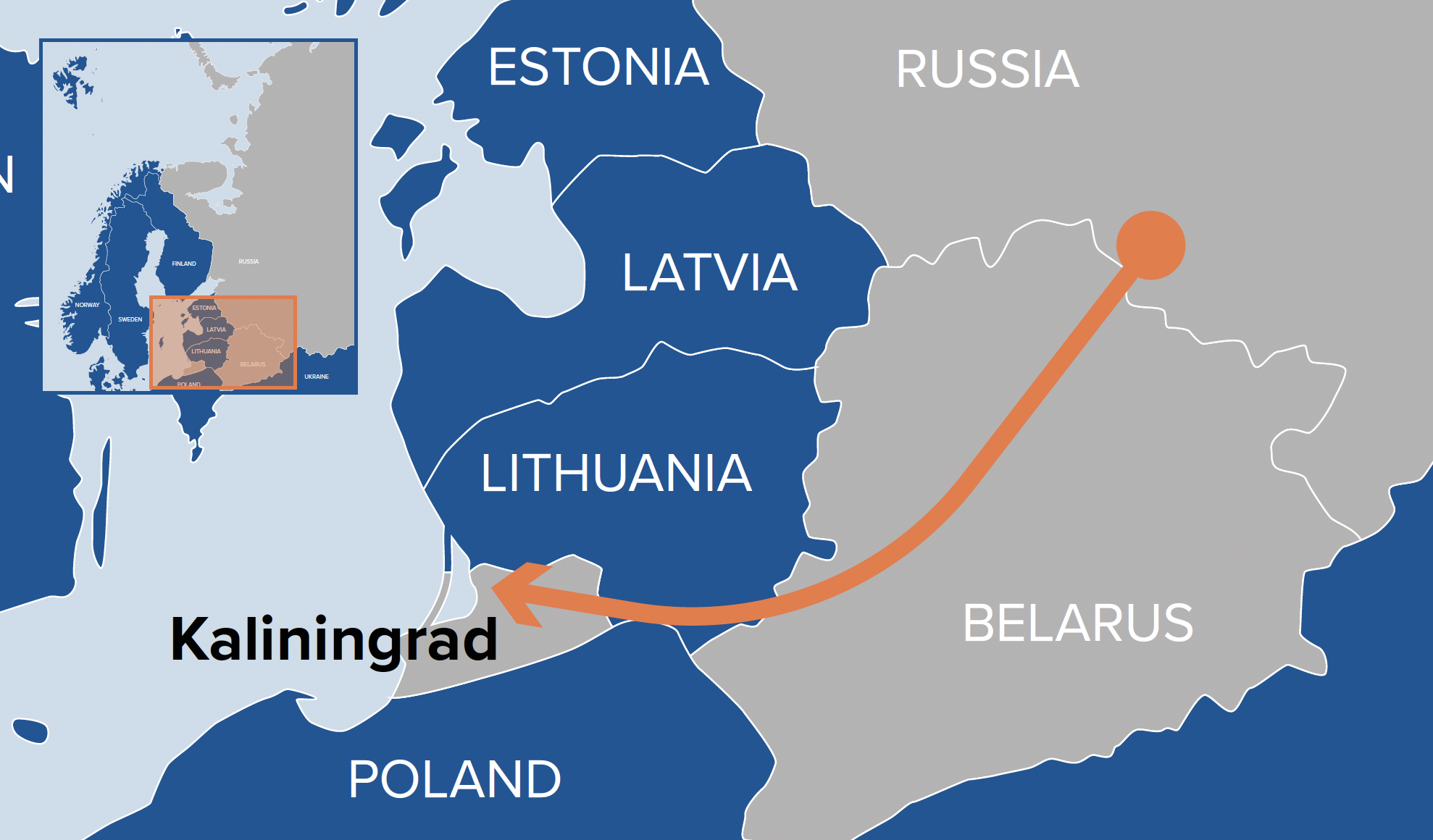
With a population of 2.9 million and a surface area of 65,000 square kilometers, Lithuania borders Latvia to the north, Poland to the south, Belarus to the east, and the Baltic Sea to the west. The largest country in Europe in the fourteenth century, Lithuania occupied Moscow in 1410 as part of the Lithuanian-Polish Commonwealth in the Livonian War, but was absorbed into the Russian Empire in the late 1700s. Except for a brief period of independence between the world wars and German occupation from 1941–1944, Lithuania was a Russian and later Soviet possession, regaining its independence in 1991 (the United States, however, did not recognize its loss of sovereignty at any time). With modern transportation and industrial infrastructure, Lithuania is a prosperous, stable democracy, a member of the European Union, and a NATO ally. Its terrain is generally forested and rolling, or flat with few large urban centers. The capital, Vilnius, is located only 38 km from the Belorussian border.
Lithuania’s modest defense budget of $2.1 billion supports two regular brigades (one mechanized and one motorized), a reserve brigade, and a number of territorial defense battalions. Current plans call for this force to increase to divisional strength over the next few years.166Milena Andrukaitytė, “Lithuania’s State Defence Council Backs Proposal to Create Army Division,” LRT, May 8, 2023, https://www.lrt.lt/en/news-in-english/19/1983472/lithuania-s-state-defence-council-backs-proposal-to-create-army-division. At present, Lithuania has no tanks or fighter aircraft, and no frigates, destroyers, or submarines in its navy. A German-led NATO battalion battle group is forward deployed in Lithuania and Germany has announced plans to increase this force to brigade strength by 2027, though internal political challenges might curtail this initiative.167Lukas Mugele, “Speed Bumps on the Road for German Brigade in Lithuania,” International Centre for Defence and Security, March 18, 2024, https://icds.ee/en/speed-bumps-on-the-road-for-the-german-brigade-in-lithuania/. A US tank battalion and artillery battalion, drawn from the “heel-to-toe” rotational heavy brigade deployed to Poland, are also present and headquartered in Pabrade.168“Steadfast Commitment: Next Rotation of the U.S. Armed Forces Begin Tour of Duty in Lithuania,” Ministry of Defence, Republic of Lithuania, January 29, 2025, https://kam.lt/en/93452/. Swedish and Finnish air, maritime, and special operations forces might operate against Russian forces in the Baltic littorals but would probably not participate in strength on the ground.
Russian leaders make no secret of their desire to reincorporate the Baltic states into the Russian Federation. On multiple occasions, Putin has asserted the right to intervene using military force to “protect” ethnic Russians living abroad, citing the return of the Baltics and other former Russian territories as a matter of “historical justice.”169Marek Menkiszak, “The Putin Doctrine: The Formation of a Conceptual Framework for Russian Dominance in the Post-Soviet Area,” Centre for Eastern Studies, March 27, 2014, https://www.osw.waw.pl/en/publikacje/osw-commentary/2014-03-27/putin-doctrine-formation-a-conceptual-framework-russian; Nathan Hodge, “Restoration of Empire Is the Endgame for Russia’s Vladimir Putin,” CNN, June 11, 2022, https://www.cnn.com/2022/06/10/europe/russia-putin-empire-restoration-endgame-intl-cmd/index.html. Such talk is no mere rhetoric. Since Putin’s strident presentation at the Munich Security Conference in 2007, Russia has invaded Georgia (where Russian troops remain), occupied the Donbas, annexed Crimea, and invaded Ukraine, leading to hundreds of thousands of deaths and the destruction of entire cities.170Daniel Fried and Kurt Volker, “The Speech iIn Which Putin Told Us Who He Was,” Politico, February 18, 2022, https://www.politico.com/news/magazine/2022/02/18/putin-speech-wake-up-call-post-cold-war-order-liberal-2007-00009918.
What conditions could entice Putin to contemplate a sudden strike into Lithuania? US disengagement from NATO or withdrawal of troops from Europe, major conflict or tension with China that diverts US resources, an assessment that NATO would not respond, or internal challenges to the Russian regime requiring an external enemy could all factor into a decision to invade. The rise of right-wing, nationalist governments in Europe and a calculation that Russia should strike before NATO can harden its defenses in the Baltic region are also considerations. At least from the Russian perspective, some or all of these might apply in the near term, leading to a risk assessment that the potential gains of the venture outweigh the costs. At present, the war in Ukraine appears to be at a stalemate, with neither side likely to achieve a decisive victory. Should it harden into stasis, Russia can rearm and reequip its armed forces as Putin looks elsewhere in pursuit of his imperial ambitions.
An invasion of Lithuania would probably be conducted by the 1GTA, based in western Russia, with perhaps 7–10 days of strategic warning (probably masked as an exercise). 1GTA consists of two tank divisions, one motor rifle division, an independent motor rifle brigade, and supporting aviation, artillery, air defense, electronic warfare, and other enabling units. An airborne division and special operations (Spetsnaz) brigade would precede the main force. Marshaling in the vicinity of Minsk, the main effort would be a rapid attack across the Lithuanian border with two divisions along improved roads through Vilnius and Kaunas to link up with Kaliningrad, cutting off the Baltic states altogether and preventing NATO reinforcements from entering the region. A supporting effort with one division and one independent brigade would deal with Latvian forces, perhaps in tandem with elements of the Russian 6th Combined Arms Army (based in St. Petersburg), pinning down Estonian forces. These attacks would be supported by heavy ballistic missile strikes. The powerful Kaliningrad garrison is a grave concern as it is well postured to attack Lithuanian forces from the rear.171The bulk of the Kaliningrad garrison (11th Army Corps, consisting of the 18th Motorized Rifle Division, 336th Naval Infantry Brigade and supporting units) was deployed to Ukraine in 2022 and was badly damaged. It is currently reconstituting, with some units still in Ukraine. See: David Axe, “12,000 Russian Troops Were Supposed to Defend Kaliningrad. Then They Went to Ukraine to Die,” Forbes, October 27, 2022, https://www.forbes.com/sites/davidaxe/2022/10/27/12000-russian-troops-once-posed-a-threat-from-inside-nato-then-they-went-to-ukraine-to-die/.
Together, these forces represent less than 20 percent of Russian force structure, leaving substantial forces for Ukraine and other contingencies. Intense Russian disinformation, subversion, and cyberattacks would complement kinetic operations. Many experts assume that Russian forces will attack from jumping-off positions in Belarus and pass through the 64-mile-wide Suwałki Gap in northeastern Poland, the shortest and most direct path to Kaliningrad.172Matthew Karnitschnig, “The Most Dangerous Place on Earth,” Politico, June 20, 2022,https://www.politico.eu/article/suwalki-gap-russia-war-nato-lithuania-poland-border. However, that route will ensure that Russian forces take on the Polish Armed Forces, among the best in NATO, with their hundreds of tanks and dozens of fighter aircraft. The alternate route through Vilnius, the Lithuanian capital, avoids Polish territory and might well limit Polish participation inside the Baltic states.
Here geography favors Russia. As a virtual satellite state, Belarus is an ideal staging ground for Russian operations against Lithuania. Meaningful NATO reinforcements must come from hundreds of kilometers away and are far from ready (Germany, France, Italy, and the UK cannot deploy a single division to Lithuania in less than 60–90 days—far too slow to affect the outcome). The remaining option is to rely on host nation solutions and in-place NATO forces. This approach will require significant security assistance to the Baltic states and strong support from key allies, but the Baltics themselves must step up first. Although small in population and GDP, they are capable of much more than they are doing now. With a combined population of some 6 million, only twenty-two thousand Baltic citizens are under arms. Most are contract soldiers who serve short tours of duty. Thirty thousand partially trained and equipped reservists are also on the books. In comparison, with a similarly sized population, Finland fielded more than five hundred thousand troops in the 1941 Continuation War. Tiny Latvia fielded a seventy-thousand-man army during its War of Independence in 1919. The Estonian army at the same time fielded eighty thousand. Today, Israel, with a mobilizable population of some 7 million, fields an active army of 170,000 with another 465,000 upon full mobilization.
These examples show that the Baltic states can do much more to increase their own defense potential. Universal conscription of males aged 18–24 for a period of two years, with fair compensation and incentives for those who choose to become career soldiers and officers, would yield an order of magnitude improvement in size and quality and provide the basis for expanding Baltic ground forces at lower cost than expensive professional soldiers.
A reasonable goal is for each of the Baltic states to field one active and one reserve division with enablers such as artillery, air defense, engineer, logistics, electronic warfare, and signal battalions—about 10,000–12,000 soldiers. (Lithuania, with its larger economy and population, should also field an additional independent heavy brigade.) At least one brigade in each division should be a heavy or mechanized formation with one tank and two mechanized battalions. The others should be motorized to allow battlefield mobility. Each brigade should include a direct-support field artillery battalion (ideally self-propelled 155-mm howitzers), air defense battery, engineer company, logistics company, electronic warfare company, reconnaissance company, and signals company. A general-support 155-mm artillery battalion with attached multiple-launch rocket system (MLRS) battery should be provided at division level. Maneuver units should be liberally supplied with modern drones as well as fire-and-forget anti-tank and man-portable air defense systems. Reserves should be organized to provide combat replacements (recently discharged soldiers are best for this task) as well as territorial defense units to secure critical infrastructure.
These formations should be supported by NATO mechanized or armored brigades in each of the Baltic states, as promised at Madrid in 2022.173Germany has promised to station an armored brigade in Lithuania by 2027. See: Chris Lunday, “Germany Launches Permanent Troop Deployment to NATO’s Eastern Flank,” Politico, April 1, 2025, https://www.politico.eu/article/germany-launch-permanent-troop-deployment-lithuania-nato-eastern-flank-russia-ukraine. Forward defense is critical, as US and UK naval units will likely not operate inside the Baltic Sea and, in the opening stages, NATO airpower will struggle to reduce Russian air defenses and gain air supremacy, making air-to-ground operations and close air support largely unavailable.174Phillip A. Petersen. et al., “Baltic Security Net Assessment,” Potomac Foundation, January 2018, 91, https://media.voog.com/0000/0051/2796/files/BalticSecurityNetAssessment2018.pdf. Poland is the best candidate to provide this brigade for Lithuania, as it is closest, more ready than others, and will be in great peril should Lithuania be overrun. High-altitude air and ballistic missile defense and fighter aviation are all-important and must also come from NATO, as small Baltic defense budgets cannot support them. These enhancements would yield a ground force of thirteen active brigades (seven of which are heavy), adequate to initially defend against the anticipated Russian first echelon—that is, 1GTA—and to impose significant costs on an attacking force. Given the enormous expense and long lead times required, the Baltic states should not attempt to procure fighter aircraft or major surface combatants, which must come from larger NATO allies.
The Russian garrison at Kaliningrad is, of course, a major concern in this scenario as it poses a direct threat to the rear of Lithuanian and NATO forces and to supporting allied air and naval activity. (Much of the garrison was deployed to Ukraine in 2022, where it was badly damaged. It has not yet been reconstituted.175Axe, “12,000 Russian Troops Were Supposed to Defend Kaliningrad.”) Here there are two challenges. The first is to eliminate the air defense threat, which extends for hundreds of kilometers over the operational area, to reduce or nullify NATO air operations.176Russian air defenses in Kaliningrad are dense and include S-300v4, S-400, and TOR-M2 systems. Some are currently in Ukraine. See: Anders Puck Nielsen, “A Look at the Baltic Fleet and the Defense of Kaliningrad,” Romeo Squared (blog),April 6, 2020, https://romeosquared.eu/2020/04/06/a-look-at-the-defense-of-kaliningrad/. Only a well-executed aerial campaign, mounted in strength and supplemented by land, sea, and air-based missile strikes, can achieve this aim.177Timothy M. Bonds, et al., “What Role Can Land-Based, Multi-Domain Anti-Access/ Area Denial Forces Play in Deterring or Defeating Aggression?” RAND, May 22, 2017, https://www.rand.org/content/dam/rand/pubs/research_reports/RR1800/RR1820/RAND_RR1820.pdf; Alex Vershinin, “The Challenge of Dis-integrating A2/AD Zone: How Emerging Technologies Are Shifting the Balance Back to the Defense,” Joint Force Quarterly 97 (2020),https://ndupress.ndu.edu/Media/News/News-Article-View/Article/2106488/the-challenge-of-dis-integrating-a2ad-zone-how-emerging-technologies-are-shifti. The second is dealing with Russian ground forces based there.178Steve Willis, “Kaliningrad: Impregnable Fortress or ‘Russian Alamo’?” Center for Naval Analyses, May 15, 2023, https://www.cna.org/our-media/indepth/2023/05/kaliningrad-impregnable-fortress-or-russian-alamo. As sovereign Russian territory since 1945, any direct assault on Kaliningrad would probably elicit nuclear threats from Moscow, but actual use is problematic. The solution is likely a Polish-led operation to either mask or defeat the Kaliningrad garrison, in concert with strong NATO air operations to degrade the air defense threat, with or without an actual takeover.179Here the term “mask” means to conduct military operations to hold the Kaliningrad garrison in place so that it cannot attack Lithuanian or NATO forces in the rear, without attempting to overrun the exclave. In this way, Lithuanian and forward-deployed NATO forces are left free to confront attacking Russian forces at the border.
While the Baltic states can certainly field larger forces demographically, they will need help financially from wealthier allies such as the United States, Germany, France, the UK, and Italy (these contributions can, and should, be counted against NATO defense spending goals).180The US European Deterrence Initiative includes $2.9 billion for 2025 to “enhance the capability and readiness of U.S. Forces, North Atlantic Treaty Organization (NATO) Allies, and regional partners of the U.S., to enable a faster response to any aggression within the U.S. European Command (USEUCOM) Area of Responsibility.” See: “European Defense Initiative,” US Office of the Under Secretary of Defense (Comptroller), March 2024, https://comptroller.war.gov/Portals/45/Documents/defbudget/FY2025/FY2025_EDI_JBook.pdf. There are other innovative ways to help. For example, the US Army maintains a large stockpile of excess equipment—including M1A1 tanks, M2 Bradley fighting vehicles, and many other items—in storage.181Scott R. Gourley, “Sierra Army Depot (SIAD): The Home Base Providing a Second Life for Army Equipment,” Defense Media Network, January 24, 2011, https://www.defensemedianetwork.com/stories/the-home-base-providing-a-second-life-for-army-equipment/. With minor refurbishment, some can be quickly returned to full operational status and transferred to the Baltic states as excess defense articles through the Defense Security Cooperation Agency (DSCA).182“Programs,” Defense Security Cooperation Agency, last visited November 3, 2025, https://www.dsca.mil/programs/excess-defense-articles-eda. For the first few years, US contract advisers can be provided to train new crews on maintenance and operations. Sustained funding would be required to ensure a regular pipeline of spare parts and ammunition.
These steps will go far to improve the ability of the Baltic states to defend themselves, but more is required. Like West Germany during the Cold War, the Baltic states should organize the national territory for defense. This means pre-chambering key bridges and overpasses for demolition; stockpiling munitions and developing plans to emplace minefields in key locations in accordance with a national obstacle plan; hardening command posts and logistics storage areas; constructing field fortifications; and preparing anti-tank obstacles along avenues of approach.183All three Baltic states have withdrawn from the Ottawa Treaty banning landmines and are fortifying their borders, although completion of the current obstacle plan is projected to take up to a decade. See: Iona Cleave, “The Baltics Are Building a Defensive Line against Russia. Can They Do It Fast Enough?” Telegraph, April 7, 2025, https://archive.ph/2025.04.07-052219/https://www.telegraph.co.uk/world-news/2025/04/07/baltic-secret-defensive-line-keep-russia-out-europe/. Civil defense preparations such as stockpiling food and medical supplies, potable water, oil, and natural gas will be needed. Such measures need not unduly disrupt civilian life, but they will go far to enhance deterrence and defense.
The existing solution is the NATO Multinational Corps Northeast (MNC-NE), a German-Polish-Danish formation located in Szczecin, Poland, on the Oder River near the German border. However, MNC-E is separated geographically from the area of operations (it is 900 km from Szczecin to the Lithuanian border and more than 1,200 km to Tallinn) and does not currently possess a trained battle staff closely linked to the Baltics. The corps also lacks many of the enablers required. MNC-E can play a vital role in organizing the reception, staging, and onward movement of reinforcing NATO forces in Poland and, with augmentation, can provide a corps-level headquarters to command Polish forces should Poland itself be attacked.
To provide C2 for Baltic ground forces, a Baltic corps headquarters with NATO-trained Baltic commanders and staff officers and NATO augmentees is probably the best solution. This formation should be commanded by a Lithuanian lieutenant general with a two-star deputy and chief of staff, respectively, from Estonia and Latvia. Enablers are essential and should include corps artillery, air defense, engineer, signal, logistics, medical, intelligence, and electronic warfare units. Importing one of NATO’s many lower-readiness corps headquarters is not a realistic option.
Recommendations
- Conduct public diplomacy to reinforce Lithuania’s determination to defend its sovereign territory and NATO’s commitment to assist when threatened; state clearly that if attacked, Kaliningrad will not enjoy sanctuary if Russia attacks a NATO ally.
- Establish declaratory policy that Russian aggression on NATO territory in the Baltic region will result in closure of the Baltic straits to all Russian commercial maritime traffic.
- Increase active and reserve Baltic forces to divisional strength.
- Equip these forces with tanks, infantry fighting vehicles, self-propelled artillery, air defense, and electronic warfare units.
- Establish a combined Baltic corps headquarters with NATO advisers and appropriate enablers.
- Solicit increased security assistance from wealthier allies and partners in the form of needed equipment and funding.
- Revise Baltic conscription laws to expand military manpower and extend service commitments.
- Prepare the national territory for defense with fortifications and obstacles.
- Increase in-place NATO forces from battalion to brigade strength with enablers.
- Conduct detailed contingency planning and rehearsals, along with regular NATO exercises, to practice rapid reinforcement, with emphasis on Polish participation.
- Stockpile supplies of fuel, ammunition, and spare parts.
- Strengthen Baltic naval establishments with anti-ship missiles and coastal patrol craft.
- Strengthen national cyber defense and resilience measures.
- Establish NATO defensive counter-air patrols if Russian aggression is imminent.
- Coordinate with NATO on measures to deal with Kaliningrad in time of war.
Observations
The foregoing discussion suggests that, while steps are being taken to strengthen deterrence in the Nordic-Baltic region, much remains to be done.184“[The] chasm between imagined readiness and actual readiness presents Russia with an excellent opportunity.” See: Jan Kallberg, “Code Red: How Russia Conquers the Baltics,” Center for European Policy Analysis, January 30, 2024, https://cepa.org/article/code-red-how-russia-conquers-the-baltics. Current trends indicate a reduced US presence in Europe, which must embolden Putin as he considers next steps in executing a broader agenda to reincorporate former Russian imperial territories, fracture NATO and the EU, position Russia as a world power, and improve Russia’s geostrategic posture.185“Russia’s Vladimir Putin Will Attack 3 More Nations Soon, Claims NATO Ex-Commander,” Economic Times, March 10, 2025, https://economictimes.indiatimes.com/news/defence/russias-vladimir-putin-will-attack-3-baltic-nations-soon-claims-nato-ex-commander/articleshow/118848098.cms?from=mdr. The Nordic-Baltic region is a high priority for Russian planners for several reasons: its prosperous democracies present a deadly threat to Putin’s regime as thriving examples of what the Russian people might aspire to without Putin; gaining Russian possession would add strategic depth that is now lacking, particularly with respect to high-value locations like the Kola Peninsula, St. Petersburg, and Kaliningrad; successful military operations offer opportunities to damage or collapse the NATO Alliance at lower risk than direct confrontation with the major powers; and the prospect of reincorporating former territories can, from the Russian perspective, only enhance the stability of the regime and Russia’s standing as a world power.186Lincoln Mitchell, “Putin’s Orange Obsession: How a Twenty-Year Fixation with Color Revolutions Drove a Disastrous War,” Foreign Affairs, May 6, 2022, https://www.foreignaffairs.com/articles/russia-fsu/2022-05-06/putins-orange-obsession. A clear Article 5 scenario that does not result in a strong, unanimous NATO reaction could mean the end of the Alliance.
One area that deserves special mention is the advent of drones—unmanned or uncrewed air and maritime vehicles. As the conflict in Ukraine clearly demonstrates, they have come to dominate the battlefield. From large weapons that can strike over hundreds of kilometers with large payloads, to small commercial drones that can be used to attack individual soldiers, drones are superseding, though not replacing, other forms of combat power.187“Attack drones are now responsible for 80 per cent of all battlefield casualties in the Ukraine war, Western officials have revealed.” See: “Drones Have Become the Dominant Killers in the Ukraine War,” National Security News, April 9, 2025, https://nationalsecuritynews.com/2025/04/drones-have-become-the-dominant-killers-in-the-ukraine-war/.
As technology advances at speed, microprocessors become both smaller and more powerful, increasing range, accuracy, explosive power and endurance, and doing so at lower cost. Both Ukraine and Russia employ, and lose, tens of thousands of drones per month.188David Hambling, “New RUSI Report: Drones Now Inflicting Two Thirds of Russian Losses,” Forbes, February 18, 2025,https://www.forbes.com/sites/davidhambling/2025/02/18/new-report-drones-now-destroying-two-thirds-of-russian-targets/. Their prolific use enables dynamic, real-time targeting and situational awareness to a degree unknown before. Very soon, autonomous drone swarms that can acquire and attack targets without operator control (and therefore downlinks that can be jammed) will appear.189Kateryna Bondar, “Inside Russia’s Plan to Build Autonomous Drone Swarms,” Breaking Defense, January 8, 2025, https://breakingdefense.com/2025/01/inside-russias-plan-to-build-autonomous-drone-swarms. They will be used to attack enemy targets and to counter enemy drones, as well as for persistent surveillance.190Emma Bates and S. Ryan Quick, “Drones Aren’t Swarming Yet — But They Could,” War on the Rocks, August 4, 2025, https://warontherocks.com/2025/08/drones-arent-swarming-yet-but-they-could/. To cope with this emerging reality, all NATO allies—but particularly those most threatened—must embrace drone and counter-drone warfare as a matter of urgency. That means fielding capable electronic warfare units in all tactical formations; acquiring commercial, off-the-shelf unmanned platforms at scale and integrating them into training and doctrine programs; investing in cutting-edge technology to stay abreast of rapid advances in capability; and fostering organizational cultures that can support and exploit these extraordinary changes. In so doing, allies should avoid the trap of buying large, costly platforms in favor of cheaper, more readily available, easier to replace systems that can be employed by the average soldier.191Franklin D. Kramer and Kristen Taylor, “NATO Needs a ‘Hellscape’ Defense at ‘Replicator’ Speed,” Atlantic Council, November 4, 2024, https://www.atlanticcouncil.org/in-depth-research-reports/report/nato-needs-a-hellscape-defense-at-replicator-speed.
This study identifies numerous shortfalls, such as air and ballistic missile defense, lack of reserves, low readiness, inadequate force structure, and others. At the Alliance level, one capability is glaring for its absence: the lack of a genuinely high-readiness, air-transportable combat force that can project meaningful combat power to threatened areas on short notice. Through 2002, that force existed in the form of the Allied Command Europe Mobile Force or AMF, a formation manned by fourteen troop-contributing nations commanded by a NATO major general and battle staff. Built primarily around parachute battalion battlegroups from major allies such as the United States, France, the UK, Germany, and Italy, the AMF included light artillery, antitank, engineer, and air defense units and could deploy with as little as 48–72 hours’ notice. The intent was to provide a credible force that could move rapidly to threatened areas to demonstrate Alliance resolve. As these units still exist in many NATO countries, maintained at high readiness and able to move quickly using national air transport, it makes sense to recreate the AMF to provide rapid response options for SACEUR that are now lacking. Such a force could play a major role in all of the scenarios addressed in this study.192Richard D. Hooker, Jr., “A NATO Rapid Reaction Force,” Atlantic Council, November 2024, https://www.atlanticcouncil.org/wp-content/uploads/2024/11/A-NATO-Rapid-Reaction-Force.pdf.
Relatedly, the current NATO command structure is also not optimized for today’s threat environment and invites revision. At present Svalbard is in Joint Force Command (JFC) Norfolk’s area of responsibility (AOR). Located more than 6,000 km away in Virginia and commanded by a US three-star admiral, JFC Norfolk is primarily a maritime headquarters whose chief responsibility is securing the sea lanes of communication in the North Atlantic. A better solution would be to establish a “JFC North” command under a Swedish or Finnish four-star, perhaps supported in this scenario by NATO’s Maritime Command, with responsibility for the Nordic region. Similarly, scenarios two through five fall under JFC Brunssum, located in the Netherlands and also far from the scene. Commanded by a German or Italian four-star, JFC Brunssum lacks a fully manned battle staff and is commanded by an officer whose parent nation would not provide the bulk of the forces needed to resist Russian aggression. A more optimal arrangement is to establish a “JFC East” in Poland—perhaps in Szczecin—under a Polish four-star. Ideally, for all scenarios the NATO command structure should align with the principles of geographic proximity (to ensure a fuller understanding of local conditions), preponderance of force, and national sensitivities.193Richard D. Hooker, Jr., “A New NATO Command Structure,” Atlantic Council, May 2024, https://www.atlanticcouncil.org/wp-content/uploads/2024/05/A-New-NATO-Command-Structure.pdf. These commands should be fully staffed with officers with strong expertise in the region.
Summary
Future Russian military operations in the Baltic and Nordic regions are not certain but could well occur in the near to medium term, given recent examples of Russian aggression and repeated Russian claims to former and disputed territories. The prospect of US withdrawal or disengagement from Europe can only serve to encourage such aggression. Russian leaders have made clear that they consider the war in Ukraine to be a conflict with NATO and the West, and that they aspire to recover former Russian lands.194Hal Brands, “Putin Is Already Escalating His War on the West,” Bloomberg, September 26, 2024, https://www.aei.org/op-eds/putin-is-already-escalating-his-war-on-the-west/; “Reclaiming Empire: How Vladimir Putin Seeks to Build on the Legacy of Ivan the Terrible,” Brewminate, May 13, 2025, https://brewminate.com/reclaiming-empire-how-vladimir-putin-seeks-to-build-on-the-legacy-of-ivan-the-terrible. NATO and host nation planners and leaders should prepare accordingly to deter and, if necessary, defend these areas to preclude escalation and preserve NATO solidarity and cohesion, as well as the sovereignty and territorial integrity of member states. These measures should assume limited US participation. Should certain allies block an effective Alliance response based on Article 5, contingency planning for coalition-based responses is prudent. The UK-led Joint Expeditionary Force, which includes the Nordic and Baltic countries as well as the Netherlands, is one example.195“Joint Expeditionary Force Activates UK-Led Reaction System to Track Threats to Undersea Infrastructure and Monitor Russian Shadow Fleet,” UK Ministry of Defence, Foreign, Commonwealth, and Development Office, press release, January 6, 2025, https://www.gov.uk/government/news/joint-expeditionary-force-activates-uk-led-reaction-system-to-track-threats-to-undersea-infrastructure-and-monitor-russian-shadow-fleet.
The steps described herein are well within the capabilities of NATO allies. Essential factors are a shared understanding of the threat and the political will to deter or counter Russian aggression. In the recent past, Russia has demonstrated repeatedly that perceived weakness invites aggression. Accordingly, this project is intended to provide specific, realistic, and practical options for policy and military planners to deter potential Russian aggression against NATO members in the Nordic and Baltic regions. The danger is immediate and real, and effective solutions are urgent and imperative.
The author acknowledges review and comment from the following experts in the preparation of this study:
Field Marshal Lord Richards; Field Marshal Lord Houghton; General Phil Breedlove; Admiral Jamie Foggo; General Sir James Everard; Ambassador Doug Lute; Ambassador Sandy Vershbow; Frank Kramer; Ian Brzezinski; Ambassador Tomasz Szatkowski; Professor Sir Hew Strachan; Giedrimas Jeglinskas MP; Karolis Aleksa; Vaidotas Urbelis; Janne Kuusela; Major General Pekka Toveri; Rasmus Hindren; Fredrik Lindvall; Kate Hansen Bundt; Marius Endsjø; Dr Hans Binnendijk; Dr. Fiona Hill; Nina Borgen; Vice Admiral Sir Martin Connell; Lieutenant General Arne Dalhaug; Lieutenant General Rick Waddell; Lieutenant General Ben Hodges; Lieutenant General Michel Yakovleff; Lieutenant General Sir Nick Borton; Air Marshal Sir Chris Harper; Liis Mure; Steve Shapiro Esq.; Professor S. Neil MacFarlane; Major General Gordon Davis; Brigadier General Peter Zwack; Air Commodore Carl Scott; Dr. Tormod Heier; Colonel Seth Johnston
About the author

Related content

Explore the program
The Transatlantic Security Initiative aims to reinforce the strong and resilient transatlantic relationship that is prepared to deter and defend, succeed in strategic competition, and harness emerging capabilities to address future threats and opportunities.
Image: US Marines with Alpha Company, 2d Light Armored Reconnaissance Battalion, 2nd Marine Division, and Portuguese Navy service members conduct a simulated amphibious raid during exercise Baltic Operations 2025 (BALTOPS 25), June 12, 2025 in Liepaja, Latvia. BALTOPS 25, the premier maritime-focused exercise in the Baltic Region, provides a unique training opportunity to strengthen combined response capabilities critical to preserving freedom of navigation and security in the Baltic Sea. Photo courtesy of NATO