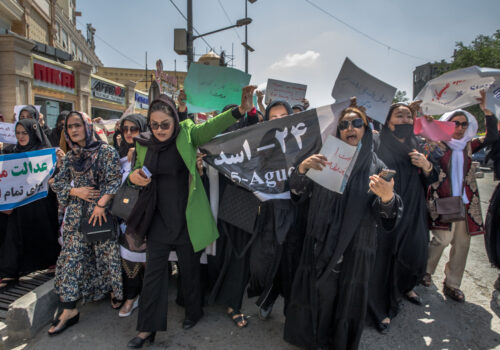
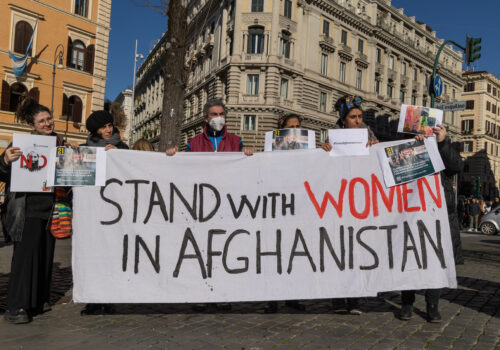
After the Taliban’s return to power on August 15, 2021, women in Afghanistan are treated as second-class citizens, systematically stripped of their rights. Over eighty decrees issued by the Taliban confine women to their homes and ban girls from attending school, turning Afghanistan into a prison for women and girls.

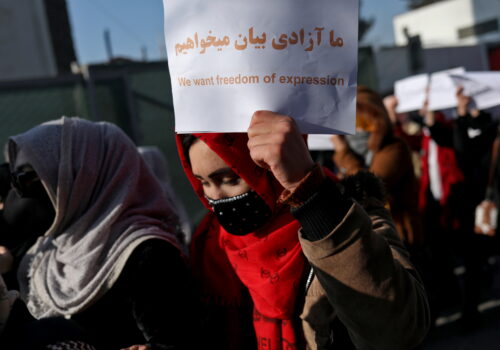
This gender apartheid is reinforced by new educational curricula and severe restrictions on women’s participation in every aspect of society. Women’s protests against these injustices have been met with harsh repression, including imprisonment, torture, and accusations of being influenced by foreign entities.

Inside the Taliban’s gender apartheid, a joint project of the Civic Engagement Project and the Atlantic Council’s South Asia Center, highlights the stories of women who have courageously resisted these injustices—women who have endured imprisonment and brutality for their peaceful demands for basic rights. By refusing to remain silent and shedding light on the violence they face, their testimonies serve as evidence in the fight for justice.

The women who have survived this regime are now calling for international recognition of the Taliban’s gender apartheid as a crime against humanity. This recognition would not only validate their suffering but could also challenge the Taliban’s grip on power and pave the way for transitional justice, offering a potential path to healing and justice for Afghan women and girls. 
The South Asia Center is the hub for the Atlantic Council’s analysis of the political, social, geographical, and cultural diversity of the region. ​At the intersection of South Asia and its geopolitics, SAC cultivates dialogue to shape policy and forge ties between the region and the global community.

Content

In the News

Aug 23, 2021

Nasr joins the Asia Society to discuss the end of America’s forever war and the return of the Taliban

By Atlantic Council

Afghanistan
Crisis Management

In the News

Aug 23, 2021

Wieslander quoted in New York Times on Afghanistan

“The withdrawal fiasco will revive the strategic autonomy argument, but the best result, she said, would be ‘a European pillar in NATO’ that could — with major investment — provide some of the strategic airlift, surveillance, reconnaissance and command and control that only the Americans now provide. ‘If we want more capacity and burden-sharing,’ Ms. […]

Afghanistan
Europe & Eurasia

In the News

Aug 22, 2021

Samad quoted in The Global Herald on the Taliban rule in Afghanistan

By Atlantic Council

Afghanistan
China

In the News

Aug 22, 2021

Samad quoted in DW on the Taliban’s next possible steps

By Atlantic Council

Afghanistan
Conflict

In the News

Aug 22, 2021

Samad quoted in Al Jazeera on the mounting challenges ahead as the Taliban retakes power

By Atlantic Council

Afghanistan
Crisis Management

In the News

Aug 22, 2021

Alam in Asharq Al-Awsat: Ahmed Massoud Says Willing to Forgive for Peace in Afghanistan

By Atlantic Council

Afghanistan
Conflict

In the News

Aug 22, 2021

Kamal Alam with BBC Somali: Reconciliation of war: “How will the Taliban deal with resistance in the Panjshir Valley?”

By Atlantic Council

Afghanistan
Conflict

In the News

Aug 22, 2021

Katz quoted in BBC News on the US not learning lessons from the Soviet defeat in Afghanistan

By Atlantic Council

Afghanistan
Conflict

In the News

Aug 22, 2021

Sales quoted in The New York Times on Afghanistan’s permissive environment for numerous terrorist groups

By Atlantic Council

Afghanistan
Conflict

Inflection Points

Aug 22, 2021

Afghanistan threatens Biden’s shot at being a historic foreign-policy leader

By Frederick Kempe

At the end of the worst week of US President Joe Biden’s young presidency, this is the question he must urgently answer: Of all the problems that his Afghanistan troop withdrawal decision has generated, which is most significant?

Afghanistan
Conflict

Experts