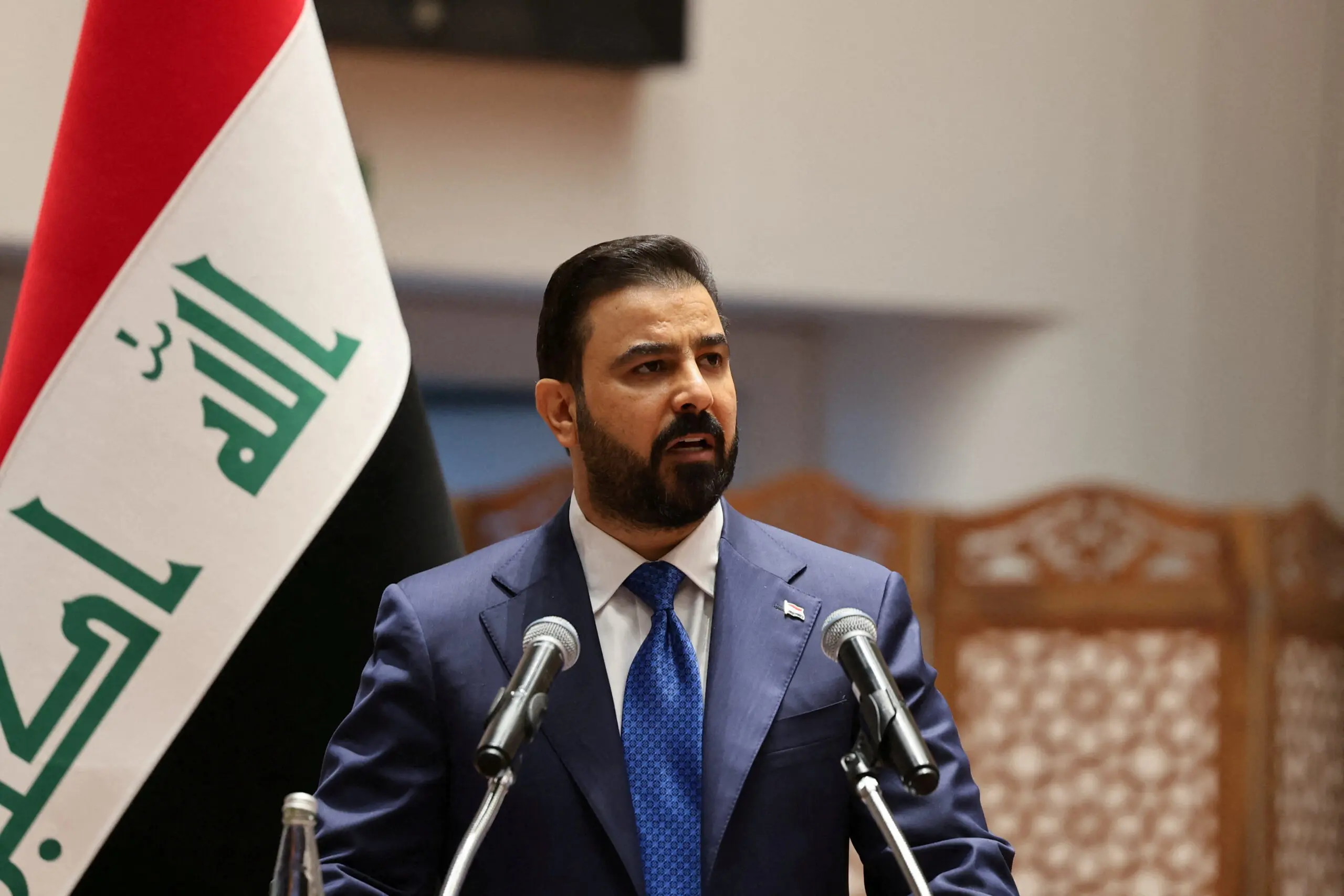
WASHINGTON—This week, newly appointed Iraqi Prime Minister Ali al-Zaidi arrives for his first visit to Washington and a highly anticipated meeting with US President Donald Trump. Buoyed by early, strong US support for his premiership, al-Zaidi is expected to emphasize his readiness to disarm Iran-backed militias in Iraq and to sign a flurry of deals with US energy companies. Both elements are core to a Trump administration agenda in Iraq, which is not motivated by historical obligation and is more narrowly scoped to near-term US security and economic goals.
In the wake of the Iran war and its disastrous impact on Iraq, al-Zaidi leads a country facing perilous security and economic challenges at home and a fraught foreign policy landscape abroad. As a businessman with no prior political experience, he is branding himself as a political outsider and a tycoon—“the Trump of the Middle East,” as Iraqi insiders have described him to me. Yet, as he attempts to address US demands and keep Iraq on the right course, he is likely to confront blowback both from Iran and from the very Iraqi political system that elevated him to office.
The United States can either remain a supportive partner to Iraq’s stability or a source of unremitting pressure on the Iraqi state. Al-Zaidi must not only convince Trump that he is willing and able to meet several important US demands, but also that Iraq remains critical to US national interests and is worthy of continued partnership with Washington.
High expectations
Al-Zaidi was nominated by the Coordination Framework, a loose coalition of Shia parties, in late April, and he and his partial cabinet were confirmed on May 14. He was a surprise compromise candidate, the first non-politician to become prime minister in Iraq. He emerged as the pick following the gridlock created by the effective US veto of former Prime Minister Nouri al-Maliki’s nomination.
In Iraq, Al-Zaidi has publicly touted his visit to Washington as his first foreign trip, an attempt to signal the importance of the US relationship to Iraq, but also to solidify his support from the Trump administration. Already in his short tenure, he has been granted several early boosts from the Trump team, including calls from Trump and Secretary of War Pete Hegseth, as well as a positive statement from Special Envoy Tom Barrack that praised al-Zaidi’s “fresh leadership” and “bold new agenda.”
An impossible balancing act
As al-Zaidi attempts to pitch his premiership as representing a new and potentially more pro-American direction in Iraqi foreign policy, his visit comes only days after public funeral proceedings in Iraq for former Iranian Supreme Leader Ali Khamenei. Al-Zaidi himself and a coterie of Iraqi politicians—Shia, Sunni, Kurd, and Christian—took part in the funeral proceedings, traveling to Najaf to meet the casket of the leader killed in the opening moments of the US and Israeli war against Iran. They were joined by throngs of Iraqi mourners, demonstrating the deep religious and cultural power Iran continues to wield within the country.
The awkward juxtaposition of these events is emblematic of the competition for influence in Iraq. Successive prime ministers have attempted to balance Iraqi foreign policy between the country’s symbiotic relationship with Iran and its continued strategic cooperation with the United States. The Iran war this year has made that balancing act—always a precarious one—increasingly untenable. Undermining Iran’s grip is the animating motivation of US policy in Iraq, meaning al-Zaidi will face tough choices.
A transactional agenda
Most immediately, Al-Zaidi faces the high-risk, high-reward meeting with Trump that has confounded a number of other world leaders. For this particular meeting, form may matter more than substance. Al-Zaidi needs to charm Trump and give him the confidence that the United States is putting its weight behind the right leader.
The Trump administration agenda in Iraq is defined by its broader Iran agenda, even more so after Iraq descended into violence at the onset of the Iran war. Al-Zaidi’s predecessor, Mohammed Shia’ al-Sudani, quite dramatically lost US support during the tail end of his premiership, beset by the war’s fallout, which included persistent militia attacks on US diplomatic and military sites as well as the kidnapping of American journalist Shelly Kittleson.
Undermining Iranian influence in Iraq is core to the Trump administration’s goals, with the disarmament of Iran-backed militias the priority, followed closely by a focus on reducing Iraqi reliance on Iranian gas. The administration has already demonstrated its resolve and readiness to use its pressure to advance its goals. In April of this year, the United States withheld US dollar shipments to Iraq and paused security cooperation.
The business agenda is another arena for the Iraqi government to stay in the good graces of the Trump team, and al-Zaidi and his delegation are expected to sign several memorandums of understanding and other deals with major US energy firms. These deals—some long in the works—will benefit US companies and help maximize the potential of Iraq’s energy sector.
Washington should keep pushing for business-friendly reforms that would facilitate both foreign and domestic investment and help power the Iraqi economy. This could include Baghdad reducing red tape, improving dispute resolution and contract enforcement, strengthening the financial sector, and removing the 49 percent cap on foreign corporate ownership.
Cautious optimism
Al-Zaidi is likely to point to some early successes, which he and his government hope will develop into sustained progress. Since al-Zaidi took the helm, the leaders of three major militia groups—Asaib Ahl al-Haq, Kata’ib Imam Ali, and Saraya al-Salam—have pledged that they are ready to disarm. The Iraqi government has set a deadline of September 30 for all militias to hand in their weapons to the state, matching the deadline for the departure of the US-led Operation Inherent Resolve military presence in Iraq.
Al-Zaidi has also promised to confront Iraq’s pernicious corruption. A June 27 wave of forty-seven anti-corruption arrests, which included politicians and other government officials, was a dramatic launch to this effort, even if the targets appeared limited to a few political circles.
Even with a mix of US support and pressure, al-Zaidi will confront serious obstacles in his path. Although disarming the militias is in the clear Iraqi national interest, the militias’ deep entrenchment in both the political and economic system may thwart meaningful progress. The most hardline of the militias have vowed to continue fighting and continue to wield significant power, including through the parliament. Even though al-Zaidi is not a politician, he was still selected by the same system that put Sudani in place and will face many of the same constraints.
He will also face an Iran that is militarily weakened in certain aspects but strategically strengthened in others. Far from dislodging Iran’s influence in Iraq, the recent war demonstrated—both to Iran and the Iraqi state—that the militias are a potent tool against the United States and Iraq’s neighbors. An April visit by Islamic Revolutionary Guard Corps Quds Force Commander Esmael Qaani delivered another reminder that Iran will not relinquish its influence voluntarily.
What’s at stake
More broadly, al-Zaidi must convince the Trump administration that the US relationship with Iraq is one that serves American interests. Successive Iraqi governments have taken the US partnership for granted, assuming that the history of the US invasion and longstanding bilateral commitment to Iraq would continue unabated.
Al-Zaidi faces a new and difficult reality in Washington: an administration that is prepared to walk away from the relationship if it is not satisfied that it delivers for the United States. He must demonstrate continued progress on key administration priorities to keep the US engaged and to stave off the substantial pressure that the Trump administration is prepared to use as leverage.
Years of military involvement and billions of dollars in investment have contributed to Iraq fatigue in Washington and have pushed Iraq off the top of the policy agenda. There is a prevailing narrative in some circles in Washington that the United States has already lost Iraq to Iran, so US engagement is not worth it.