
Turning early alignment into a durable US-Colombia partnership
Bottom lines up front
- One month into President Abelardo de la Espriella’s administration, early alignment with the Trump administration creates an opportunity to reset US-Colombia cooperation around trade, regional stability, and Venezuela’s recovery.
- A durable strategy will require pairing renewed military cooperation with rural development, economic growth, human rights safeguards, and support for earthquake recovery.
- To turn presidential alignment into a lasting partnership, both countries would benefit from strengthening bipartisan support in the US Congress, and expanding cooperation with Colombia’s regions and cities.
Drawing on the discussions and work of the Atlantic Council’s US-Colombia Strategic Alignment Coalition over the course of the year, this brief examines how early alignment can be translated into a durable bilateral partnership.
One month since President Abelardo de la Espriella took office in Colombia, his administration has been challenged by the need for disaster response following the strongest earthquake in decades, while also having to prioritize a foreign policy strategy where the United States is front and center.
Colombia and the United States share over two hundred years of diplomatic relations. Despite both close and difficult periods, the relationship is among the most important and valuable to both countries. US President Donald Trump and de la Espriella have expressed strong interest in working together, creating an opportunity to update bilateral cooperation around the priorities that now matter most to both countries: security, counternarcotics, trade and investment, regional stability, and Venezuela’s recovery.
The close relationship has experienced unusual strains over the past six years, with tensions emerging during the Biden and Trump administrations and intensifying under former Colombian President Gustavo Petro. Given the worsening of transnational crime, Petro’s failed Total Peace program, which the Biden administration was initially receptive to, caused the United States to run out of patience. The frictions between Trump and Petro are well known, notwithstanding an insubstantial, even ersatz, rapprochement earlier this year. Nonetheless, throughout this fractured period, institutional links among the security, law enforcement, and intelligence entities of both nations remained strong.
Plan Colombia, developed by Presidents Bill Clinton and Andrés Pastrana, and then adjusted by Presidents George W. Bush and Álvaro Uribe, was later reframed as Peace Colombia under Presidents Barack Obama and Juan Manuel Santos. The evolution of these efforts across successive administrations in both countries demonstrated the durability of the partnership and its capacity to adapt to changing circumstances. More than two decades after Plan Colombia was launched, Colombia faces new challenges in many of the same areas the partnership has historically tried to address, including territorial control, coca cultivation, illicit economies, rural development, and the fragmentation of illegal armed groups. This requires taking a fresh look at the challenges Colombia faces today, and where US support can help address them.
Security as the starting point for the next four years
Colombia’s armed forces have been weakened by the purge of senior commanders during Petro’s four years in office. Meanwhile, transnational criminal organizations have expanded their territorial control, adopted new technologies such as drones, and diversified their activities beyond narcotics into illegal gold mining and human trafficking.
Under de la Espriella, security will be the bilateral center of gravity. Colombia has already joined the Shield of the Americas and the Americas Counter Cartel Coalition (ACCC), new multilateral militarized efforts led by the United States to confront transnational crime. The Trump administration’s national security focus in the hemisphere is based on the belief that transnational criminal organizations are best defeated by force. This fits well with de la Espriella’s insistence on renewed military operations against Colombian illegal armed groups. Given that Petro’s complacency with these groups caused a profoundly deteriorated security situation, a new combined effort makes sense. That said, military force alone will not prove a durable solution, which requires addressing the underlying economic and social conditions that allowed illegal armed groups to flourish.
Building on a quarter century of US support for Colombia, the United States has already pledged to provide $1 billion in security assistance. What remains undetermined is what kind of resources will be provided, and when they will be delivered. New military operations will cost money at a time when Colombia is already facing a difficult fiscal situation, with the new government projecting a fiscal deficit of 7.8 percent of gross domestic product for 2026. The August 10 earthquake has added further pressure, creating significant humanitarian and reconstruction needs.
Technical assistance and cooperation between the two countries in terms of training, mobility, and intelligence-gathering among security institutions would result in more effective, strategic, and tactical measures to counter these new challenges that are a priority for both countries.
Creating the economic conditions for lasting impact
To address Colombia’s security and illicit drug challenges successfully, the response must also target rural development and economic growth. Colombia, with the support of the US and its institutions, such as the Development Finance Corporation, Export-Import Bank, and multilateral banks, can develop programs to build infrastructure, increase digitalization, and develop areas for critical minerals, new energy sources, and additional agricultural and industrial investments. Together, both countries can create alternatives to illicit economies and employment that foster quality livelihoods, a more integrated country, and lasting impact.
Colombia is a strong nearshoring candidate for the United States given the countries’ existing economic ties and Colombia’s physical proximity by sea to US ports. Creating ways for more US companies to invest and operate in Colombia would therefore be in both countries’ interests.
However, as the United States is Colombia’s largest export market, addressing the negative consequences of US tariffs on Colombian businesses will be key to deepening the economic relationship and enjoying the mutual benefits of investment. Early signs of this include de la Espriella’s request for an emergency interim relief from tariffs as an economic response to the earthquake and a vote of confidence in the ties between both administrations. De la Espriella’s election presents the Trump administration with unique opportunities to advance its interests. Politically, Colombia joins the growing group of nations with consonant governments that embrace the approach of the ACCC, including expanded intelligence sharing, maritime interdiction, and coordinated military operations against transnational criminal organizations.
Economically, gains from a stronger US-Colombia partnership can also extend beyond Colombia and support other US priorities in the region, particularly in neighboring Venezuela. As conditions allow, Colombia can play an important role in supporting Venezuela’s recovery and democratic transition in coordination with the United States. Venezuela was once Colombia’s second-largest trading partner, and Colombians have deep knowledge of its economic potential. Strong private-sector ties also persist. The United States and Colombia can work together to support growth and development in Venezuela through Colombian investment, expertise, and partnership.
Structuring the next phase of US-Colombia cooperation
The fact that Trump and de la Espriella seem to share similar views on how to address some of the major issues facing Colombia will facilitate collaboration. But after six years of strain in the relationship, rebuilding cooperation will require constant dialogue based on trust and effective outcomes.
Defining the approach, expectations, and channels for cooperation as clearly as possible will be fundamental. Structured dialogue should include related issues such as human rights concerns, environmental standards, and conditions affecting trade and investment. Maintaining secure channels of conversation and openness to finding solutions will also be essential.
A clear bilateral program, working groups with measurable responsibilities, and constant communication at senior levels of government are important tools. The respective ambassadors in Washington and Bogotá can play an especially important role in identifying solutions and preserving cooperation across areas, particularly after a prolonged period without a confirmed US ambassador in Colombia.
Furthermore, the relationship should be built to withstand future shifts in political priorities, reinforcing the importance of grounding it in bipartisan support rather than presidential alignment alone. Building and maintaining strong bipartisan relationships in the US Congress—and sustained engagement with Colombia’s congressional champions—can reinforce continuity, trust, and strategic perspective throughout the de la Espriella presidency and beyond.
Particularly on security, questions remain as to how, what forces, and under what conditions the renewed military actions against transnational criminal groups will be undertaken. Colombia’s adhesion to the ACCC has raised the question of whether US forces would actually be present and operate in Colombia. During the long and effective alliance between both countries, such action would be unprecedented. This could generate domestic political sensitivities for the de la Espriella administration, particularly as it works to build broad support for its partnership with Washington. Regardless, it should not be necessary for US forces to operate in Colombia, especially since the country has the most effective and professional military force of any ACCC member.
The Colombian administration’s security push must be done in a manner consistent with the high standards of international humanitarian law that Colombia has long aspired to. This will help sustain broader support among US stakeholders and reinforce the human rights standards that remain central to US assistance and oversight decisions.
The earthquake adds an important humanitarian and economic dimension to the bilateral relationship. Potential areas for US support could include facilitating resources for reconstruction and reviewing tariffs on Colombian exports, consistent with the priorities identified by de la Espriella.
Finally, the Colombian administration would do well to recognize that, even with the two leaders and their policies well aligned at present, both governments will look for concrete returns from the relationship. For the United States, that means visible gains on investment and regional stability, as well as progress in reducing transnational criminal activities; for Colombia, it means support that helps improve security, finance reconstruction, and foster economic growth. Sustaining the alignment will depend on showing that cooperation advances both countries’ interests.
Recommendations
1. Strengthening Colombia’s relationships with both parties in the US Congress
The US Congress is likely to focus on three areas when it comes to Colombia: how the administration implements its renewed security approach against transnational crime; how relief and reconstruction move forward in the wake of the devastating earthquake; and, particularly if the Democrats win one or both houses in the November midterms, how the administration engages with minority communities and supports human rights.
The new Colombian administration must recognize that the traditional bipartisan consensus on Colombia exists mainly in memory. It should be a priority for the de la Espriella administration to create a new consensus, tapping the deep well of affection and connection between the nations, centered on present-day realities. This could be possible by regaining ground with all stakeholders in Washington, particularly lawmakers of both parties in Congress, the media, thought leaders, the business community, and more.
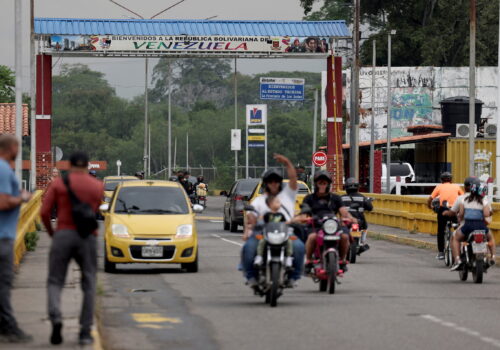
Colombia has long shown its capacity and willingness to partner with the US to confront regional challenges. A key US regional priority is stabilizing Venezuela economically and politically so that it can become a positive force in the hemisphere. Colombian and US interests align in seeking a more stable and productive Venezuela—including because there are nearly three million Venezuelan migrants in Colombia, straining social services. For Colombia, Venezuela’s stability is also especially important because illegal armed groups operating from Venezuela carry out activities on both sides of the border, particularly in the Catatumbo area. Moreover, no nation in the hemisphere is better positioned than Colombia to help Venezuela, potentially on security matters but also in the oil industry. Colombia has significant human and financial capital to devote to helping restore key sectors of the Venezuelan economy.
2. Expanding cooperation with Colombia’s departments and cities
The geographic breakdown of the recent presidential election results in Colombia underscored a territorial divide between perceptions in the more prosperous center and those in the surrounding regions where deficiencies in infrastructure, public services, and economic opportunity persist. De la Espriella has promised to address this divide and to govern from and for the regions. In his inaugural speech, he stressed that “the regions have a clearer vision of their needs, capacities, and necessary solutions.” In addition to the president’s seat of office in Bogotá, he has also designated offices in Barranquilla, Medellín, and Cali, while proposing that Barranquilla be formally recognized as an “alternate capital.” He has also pledged to travel regularly throughout the country.
These promises address two related problems: Colombia’s historically centralized decision-making in Bogotá and a governance structure in which the national government retains considerable authority while departments and municipalities have limited powers and resources. Governors can clearly assume greater responsibility for regional infrastructure, transportation, security coordination, economic development, higher education, specialized health services, and projects involving several municipalities, but often lack the mandate or resources to do so effectively.
Decentralization could also give the US-Colombia relationship a territorial dimension. Bilateral cooperation has traditionally been managed between national governments, but greater authority for departments and cities would allow more direct engagement with governors and mayors. This is particularly relevant for security and counternarcotics, as well as infrastructure, energy, digital connectivity, agriculture, tourism, workforce development, and private investment. Strengthening departmental planning units and municipal project-preparation offices, with support from the United States Trade and Development Agency, the Inter-American Development Bank, and Colombia’s National Planning Department, could improve planning and execution and create stronger pipelines of bankable projects.
Effective decentralization requires transferring real authority, resources, and decision-making power. One important step is working on and advancing the pending legislation on competencies and decentralization, which seeks to ensure adequate funding for the new responsibilities of governors and municipalities, and clarifying functions across levels of government.
Colombia has important regional cities such as Barranquilla, Cali, Bucaramanga, and Medellín. Cities have revenues from the property tax and industry and commerce tax, and, as all municipalities, receive transfers from the national government. These major cities can borrow and have strong technical and administrative capacities. Medellín’s resilience, public-private cooperation, universities, and research centers make it well suited to support the Shield of the Americas program. Broader partnerships among US and Colombian cities, states, universities, research centers, and chambers of commerce could further strengthen bilateral cooperation.
3. Opening new opportunities for trade and investment
The US-Colombia Trade Promotion Agreement (CTPA) was negotiated in 2006 and approved by Congress in 2012. The results of this decade show success for both Colombia and the US in terms of growth and diversification of exports to and from both countries, making Colombia less dependent on mining and strengthening the development of rural areas with greater agricultural integration.
According to a recent report by the Colombian American Chamber of Commerce, bilateral commerce has reached $53.3 billion, with an export basket including eight hundred new products from Colombia, more than two thousand new Colombian companies that have gained access to the US market, and more than one hundred agricultural products with secured US approval. Colombia has also become the largest South American market for US agricultural products.
For the US, with the introduction of the CTPA, 80 percent of US industrial and consumer exports to Colombia immediately became duty free. US agricultural exports to Colombia reached a record $4.5 billion in 2024. Services such as distribution and digital commerce advanced. With the de la Espriella government, there will be new areas of interest in the energy sector, digital connectivity, and physical infrastructure as well as investment in social services and tourism, among other areas.
The CTPA has also improved the conditions for investment by addressing access to government procurement, legal employment, and regional supply chains. It has created a more predictable environment by establishing protections concerning nondiscrimination, capital transfers, intellectual property, transparency, and dispute settlement. There are pending concerns relating to taxation rates, labor laws, and investor confidence that would benefit from clear information, stable implementation, and legal certainty for new projects.
The CTPA has been beneficial for the US and for Colombian economic development. Investment has generated, and can continue to generate, significant benefits for Colombia’s regions, creating jobs and economic opportunities that can reinforce state presence and legitimacy while supporting greater development and well-being.
As the two governments work together on projects of mutual interest, the benefits of a dependable CTPA are clear. It has mechanisms and provisions to solve problems that may arise. Political differences also have institutional mechanisms for resolving issues that could be used through the traditional diplomatic channels to continue enhancing the progress and mutual benefit of the US-Colombia alliance.
4. Defining priorities for cooperation with regional partners
Plan Colombia was a bilateral assistance program to defeat narcotics-fueled insurgency in Colombia. The problem set now is far more complex. Illegal armed groups seek territorial control to engage in transnational criminal activities, rather than government overthrow. They are diverse and increasingly transnational, with Mexican, Albanian, and Israeli criminal networks present. And their reach is more expansive, including Ecuador, Colombia, and Venezuela.
Current political realities permit these three nations, with the US, to stand up a new multinational response. The Ecuadorian and Colombian governments are strongly committed to working collaboratively with the US, and Venezuelan authorities have incentives to cooperate where conditions allow. The combination of US support through intelligence, planning, and maritime capabilities, with Colombia’s unique security capabilities, and the cooperation and goodwill of the Ecuadorian and Venezuelan authorities, opens the door for a combined regional security effort to defeat the international crime syndicates operating in the region.
There are real challenges to making this happen. Colombian forces were hurt over the last four years by officer purges, reduced budgets, and low operational tempo. The Ecuadorian security forces have the will but not currently the capacity to serve as a frontline force. Venezuelan security forces face significant corruption and operational-capacity challenges. Colombia, with its greater capacity and long experience in partnering with the US to advance shared agendas, most notably on security and law enforcement through the US-Colombia Action Plan on Regional Security Cooperation, is well positioned to take a leading role in this effort.
Interdiction and addressing growing illicit activities will likely become a growing priority for the region. Colombia’s Operation Orion, a multinational maritime interdiction operation, should be discussed and expanded beyond Caribbean and Central American partners to include Chile, Peru, and Argentina, which have substantial naval assets and interest in fighting growing illegal activities in their countries. Colombia has deep experience in port security, including technical inspection, intelligence collection and exploitation, and search techniques, which can be shared with regional partners.
Conclusion
Colombia and the United States are facing again a remarkable moment of coinciding interests. Much as twenty-five years ago, both countries see the urgent need for a more kinetic response to a newly grave security situation. Different from then, but no less impactful now, is the political consonance between the Trump and de la Espriella administrations. Their shared emphasis on security, economic growth, and regional leadership can help sustain strong cooperation at the executive level. This could mean that bilateral relations through the Trump administration remain strong and cooperative.
To make the most of this moment, the de la Espriella administration would benefit from keeping two considerations in mind. First, there are a variety of US stakeholders, including in Congress, who care deeply about the relationship, and who have strong views on matters like human rights and support for the Afro-Colombian community. Second, as the United States’ NATO allies and South Korea can attest, the Trump government can be particularly demanding with the closest traditional friends and allies. Colombian leaders will need to ensure that activities undertaken with the US are consistent with Colombian interests and values.
There is much work to be done, and Colombia and the United States have proven for a quarter century that they can be effective, complementary, and respectful allies. That history gives both countries a strong foundation to turn this moment of alignment into sustained cooperation that advances security, economic growth, reconstruction, and regional stability for both partners.
About the authors
Carolina Barco served as Colombia’s minister of foreign affairs from 2002 to 2006 and as ambassador of Colombia to the United States from 2006 to 2010. She is a member of the Atlantic Council’s US-Colombia Strategic Alignment Coalition.
Kevin Whitaker served as US ambassador to Colombia from 2014 to 2019. He is a nonresident senior fellow at the Atlantic Council’s Adrienne Arsht Latin America Center and a member of the Atlantic Council’s US-Colombia Strategic Alignment Coalition.
Related content

Explore the program
The Adrienne Arsht Latin America Center broadens understanding of regional transformations and delivers constructive, results-oriented solutions to inform how the public and private sectors can advance hemispheric prosperity.
Image: Colombian President Abelardo De La Espriella salutes next to US Secretary of State Marco Rubio as Rubio’s wife Jeanette Rubio and Colombia’s first lady Ana Lucia Pineda look on, at the Batallon Paraiso military complex in Barranquilla, Colombia, September 8, 2026. Fernando Vergara/Pool via REUTERS