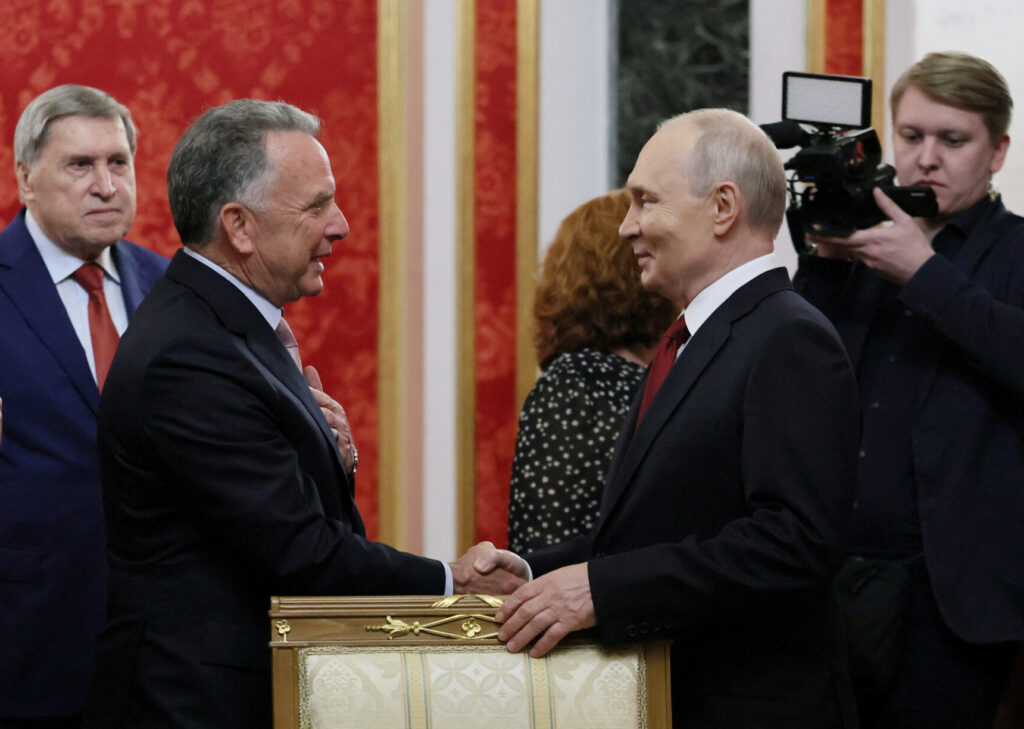
United States envoys Steve Witkoff and Jared Kushner arrived in Kyiv on Sunday for the second leg of a two-stop tour that also included a trip to the Kremlin as the US attempts to revive stalled peace talks between Russia and Ukraine. This latest round of shuttle diplomacy was symbolically significant as it was the first time the American duo had visited both Moscow and the Ukrainian capital. However, despite upbeat assessments from all participants, there was no sign that the US delegation’s meetings with Russian and Ukrainian leaders resulted in any meaningful progress toward peace.
Ukrainian President Volodymyr Zelenskyy has repeatedly invited Trump’s peace envoys to Kyiv and is already calling for a second visit as he seeks to build momentum. “We agreed with Steve and Jared that they will come again. It’s important not to have long pauses. They have been to Moscow many times, and this was the first time in Kyiv,” he noted. The Ukrainian leader commented that some of the proposals presented by Witkoff and Kushner were “actually very good, very worthy,” and indicated that details will be announced following further discussion. These proposals are thought to include deescalation measures to limit attacks on energy infrastructure and grain shipments.
At the same time, Zelenskyy appears to be under no illusions regarding the current prospects for peace. Following talks with the US envoys, he acknowledged that the war is likely to continue into 2027. With this in mind, Zelenskyy stressed the importance of enhanced support from the country’s allies during the coming winter months. The Ukrainian President’s winter wish list includes interceptor missiles for Ukraine’s Patriot air defense systems and increased energy supplies, with Kyiv hoping to secure additional LNG deliveries from the United States.
Stay updated
As the world watches the Russian invasion of Ukraine unfold, UkraineAlert delivers the best Atlantic Council expert insight and analysis on Ukraine twice a week directly to your inbox.
Zelenskyy’s pragmatic approach is easy to understand. While no detailed account of the talks in Moscow has been released, Russian President Vladimir Putin seems to have left Witkoff and Kushner in no doubt over his continued commitment to victory in Ukraine. Speaking after the meeting, Kremlin foreign policy adviser Yuri Ushakov said Putin had told the US envoys that Russia was making “real progress” on the battlefield and was confident of achieving its military objectives, while stressing the necessity of addressing “all the root causes of the conflict.”
This emphasis on the “root causes of the conflict” is a reminder that Russia’s objectives in Ukraine extend far beyond the limited territorial demands at the heart of the current negotiations. Moscow has never provided a definitive version of these “root causes,” but Putin and other Kremlin officials have consistently indicated that they seek to reassert Russian dominance over Ukraine and aim to erase the entire notion of a separate Ukrainian national identity.
When Putin first announced the full-scale invasion of Ukraine, he identified the “demilitarization” and “denazification” of the country as his two main war aims. So far, Russia’s bid to demilitarize Ukraine has backfired disastrously, with the country emerging since 2022 as the strongest fighting force in Europe and a world leader in drone warfare. Nevertheless, the Kremlin has continued to signal that any peace deal must include extensive restrictions on the size and capabilities of the Ukrainian military. It is not difficult to imagine what Putin has in mind for Ukraine if he succeeds in disarming the country in this manner.
Eurasia Center events

Putin’s vow to “denazify” Ukraine is even more central to Russia’s war aims than his threat to “demilitarize” the country. While the Kremlin dictator is notorious for branding all opponents as “Nazis,” his longstanding vilification of Ukraine has taken this toxic trend to new extremes, with the entire Ukrainian state demonized as a Nazi regime. As a result, the “denazification” of Ukraine has come to be understood as the complete eradication of Ukrainian sovereignty and national identity. The Kremlin media has made this clear, with frequent genocidal language directed at Ukrainians and high-profile content confirming that the process of “denazification” will inevitably mean “de-Ukrainization.”
In summer 2025, Russia’s vision for addressing the “root causes” of the war was spelled out in a memorandum produced by the Kremlin ahead of peace talks in Istanbul. Alongside sweeping territorial concessions, military restrictions, and a ban on international alliances, this document also called on the Ukrainian authorities to grant the Russian language the status of official state language, reinstate the privileges of the Russian Orthodox Church, and adopt a Kremlin-friendly version of Ukrainian history.
Crucially, all so-called “nationalist” Ukrainian political parties would be banned, paving the way for the installation of a pro-Russian puppet regime. If implemented, these measures would reverse decades of nation-building progress and signal the end of Ukrainian statehood, even if the Kremlin chose to maintain the charade of sovereignty.
Putin’s uncompromising stance during Saturday’s Kremlin talks sent a clear message that he has no intention of ending his invasion and remains committed to maximalist goals that are incompatible with Ukraine’s survival. This does not mean that further negotiations are futile, but it should serve as a wake-up call for anyone who is still in any doubt over the extent of Putin’s imperial ambitions or his refusal to accept the post-1991 emergence of an independent Ukraine.
Trump’s envoys continue to discuss win-win scenarios, whereas Putin is playing a zero sum game. His invasion of Ukraine is not a land grab or a geopolitical real estate deal. It is an attempt to reverse the Soviet collapse and revive the Russian Empire. Peace will only be possible when diplomatic efforts reflect this reality.
Peter Dickinson is editor of the Atlantic Council’s UkraineAlert service.
Further reading


The views expressed in UkraineAlert are solely those of the authors and do not necessarily reflect the views of the Atlantic Council, its staff, or its supporters.

The Eurasia Center’s mission is to enhance transatlantic cooperation in promoting stability, democratic values, and prosperity in Eurasia, from Eastern Europe and Turkey in the West to the Caucasus, Russia, and Central Asia in the East.
Follow us on social media
and support our work
Image: Russian President Vladimir Putin greets US Special Envoy Steve Witkoff during a meeting at the Kremlin in Moscow, Russia. September 5, 2026. (Sputnik/Mikhail Metzel/Pool via REUTERS)