Featured analysis

Latest analysis

EconoGraphics

Apr 14, 2015

Who is Investing Abroad?

By Global Business & Economics

While the US still leads the world in outflowing Foreign Direct Investment (FDI), the emerging markets are catching up quickly. Chinese outflowing FDI, in particular has grown tremendously: since 2005, it increased more than 30-fold in 8 years from $5 billion to $166 billion. While initial Chinese foreign investments focused on natural resource industries, over time the investments have spread to diverse industries like agriculture, manufacturing, and professional services. BRIC FDIs are emerging as key growth drivers for low income countries, improving their business environment, building infrastructure, creating jobs, and adding much-needed revenue to government coffers.
China
Russia

EconoGraphics

Apr 7, 2015

Is Europe still vulnerable to a Greek default?

By Global Business & Economics Program

Private banks throughout Europe have significantly reduced their exposure to Greek debt (bank, public, and non-bank private sector debt) over the last five years. After Greece came under market pressure and eventually obtained ECB and IMF financial assistance in 2010, most European banks started to rapidly reduce their exposure to Greece. For instance, between 2010 and 2014 French banks’ holdings decreased from $63 billion to $2 billion.

Economy & Business
Eurozone

EconoGraphics

Mar 31, 2015

The IMF’s Changing Role in Europe

By Global Business & Economics

The International Monetary Fund’s purpose and scope of work have changed since its founding after World War II. Whereas at first the Fund aimed to maintain monetary and exchange-rate stability among its members who were primarily advanced economies, today it faces its first credible challenge to its status as the world’s lender of last resort.

Economy & Business
Financial Regulation

EconoGraphics

Mar 24, 2015

How Much Does it Cost for Cubans to Access Information?

By Global Business & Economics

When President Obama announced his landmark policy shift towards Cuba, easing the 54-year-old embargo, one of the first companies to announce they would begin operating in Cuba was Netflix. The online video company’s decision was surprising, if only because Cuba’s internet is one of the slowest in the world.

Americas
Cuba

EconoGraphics

Mar 17, 2015

Who Will Finance Public Debt?

By Global Business & Economics Program

Today, the cap on US government spending (or the “debt ceiling”) is officially reinstated, and with it, the threat of another clash over the national debt. Policymakers will have a runway of just months before they must decide to lift the cap on borrowing or temporarily allow it to be raised

Brazil
China

EconoGraphics

Mar 11, 2015

The Benefits of a Strong Dollar: Where Should You Go on Your Next Vacation?

By Global Business & Economics

There’s never been a better time to be a tourist—as long as you’re paying in dollars. Major currencies worldwide have plunged in value, meaning each US dollar buys more euros and renminbi today than it did one year ago.

Americas
Economy & Business

EconoGraphics

Mar 3, 2015

Who Will Collapse First?

By Global Business & Economics

Both the Ukrainian and Russian economies are suffering from recent events. While weak domestic institutions and a fight with insurgents in the country’s East plague Ukraine, sanctions and low prices for oil and gas are hurting the Russian economy.

Economy & Business
Europe & Eurasia

EconoGraphics

Feb 24, 2015

Is the US Still Leading in Global Trade?

By Global Business & Economics Program

In the last two decades, the Asia Pacific region has signed sixty-five free trade agreements. South America, Eurasia, and Europe combined have signed over one-hundred and fifty agreements. Over the same period, the US has signed twelve agreements.

Americas
East Asia

EconoGraphics

Feb 17, 2015

EconoGraphics – EU Energy Dependency

By Global Business & Economics Program

A great part of Europe is highly dependent on Russian energy, which helps to explain many of the concerns Europeans have over the developments in Ukraine.

Economy & Business
Energy & Environment

EconoGraphics

Feb 10, 2015

Is Austerity to Blame for the Collapse of the Political center in the European Union?

By Global Business & Economics Program

Radical political parties in the Eurozone—including Syriza in Greece, Podemos in Spain, and Sinn Féin in Ireland—are riding a wave of popularity. The continent’s debt crisis has pitted the creditor countries, most importantly Germany, against debtor countries like Greece. On an international level, the northern European creditors have managed to implement policies that are forcing […]

Economy & Business
European Union

Content

Econographics

Jan 19, 2024

The IMF’s perspective on CBDCs

By Tobias Adrian

Tobias Adrian outlines the IMF's view on CBDCs' potential for payment systems, financial inclusion, and cross-border payments, emphasizing innovation and collaboration for effective implementation.

Digital Currencies
Digital Policy
China, In the center of the capital in a new commercial building construction

Econographics

Jan 10, 2024

China’s local government debts are coming due

By Jeremy Mark

China's economic slowdown brings local government debts into sharp focus, threatening infrastructure and social services.

China
Economy & Business
The view of boats on the red Sea.

Econographics

Jan 8, 2024

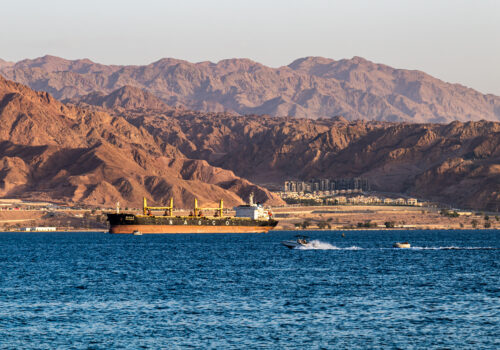
The long shadow of the Red Sea shipping disruption

By Alex Mills

Recent attacks on shipping moving through the red sea have exposed broader risks around international maritime commerce. Policy makers must use this wake-up call to build a more resilient international shipping ecosystem.

East Africa
Economy & Business

Econographics

Jan 3, 2024

Five under-the-radar economic trends that could define 2024

By Josh Lipsky, Sophia Busch

We picked five under-the-radar trends that will matter for the global economy in 2024. Each shows the potential weak spots in the global economy alongside the forces that could stabilize growth.

China
Economy & Business
Building with EU flags

Econographics

Dec 19, 2023

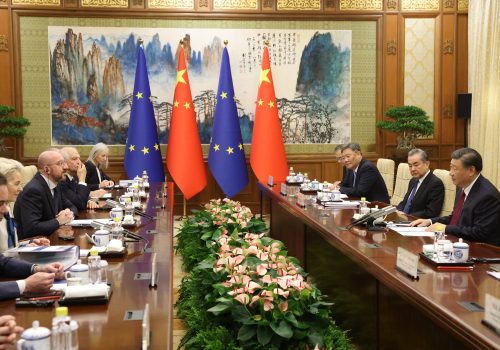
Three next steps for the EU’s approach to economic security

By Elmar Hellendoorn

The EU’s Strategy on Economic Security, published this summer, was the first official effort to present a more coherent view on the European policy approach at the intersection of economics and geopolitics. In the end, however, the EU's approach to economic security can only be successful if it is tied to Europe's long-term political objectives.

European Union
Eurozone
Ships on Red Sea

Econographics

Dec 18, 2023

What attacks in the Red Sea could mean for the global economy

By Hung Tran

Recent missile attacks on ships in the Red Sea by Iran-backed Houthi rebels have escalated regional tensions and disrupted global trade. Large shipping companies are now avoiding the route, causing significant costs and delays, which is impacting the the already fragile economy.

Economy & Business
Macroeconomics

Econographics

Dec 11, 2023

China’s manufacturing overcapacity threatens global green goods trade

By Niels Graham

Chinese lending is exacerbating a growing glut in its green manufacturing sector. Beijing is increasingly looking abroad to absorb excess capacity. This may have devastating effects for the global trading system as economies move to protect their own domestic industry.

China
Economy & Business

Econographics

Dec 7, 2023

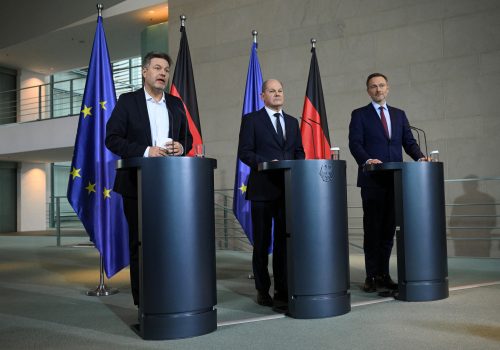
Germany’s debt brake isn’t working

By Hung Tran

Germany’s coalition government was dealt a fiscal crisis when the country’s Constitutional Court ruled that repurposing €60 billion of unspent money from the pandemic emergency support facility to the Climate and Transformation Fund was unconstitutional.

Economy & Business
Financial Regulation

Econographics

Dec 1, 2023

Financialization has increased economic fragility

By Hung Tran

Since the 1980s, financial activities and assets have played an increasingly dominant role in the global economy. At the same time, underlying economic activity as measured by global GDP has been growing more slowly. The result has been an ever-larger gap between the volume and value of financial activity relative to the real economy. And […]

Financial Regulation
Macroeconomics

Econographics

Nov 30, 2023

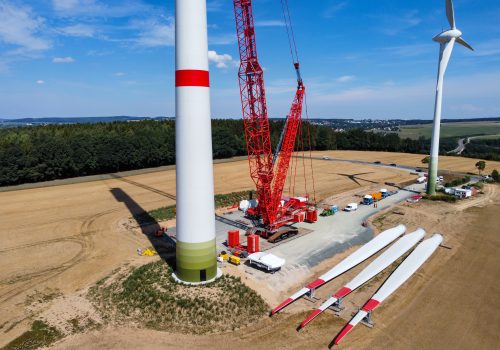
Geoeconomic fragmentation is threatening the green energy transition

By Amin Mohseni-Cheraghlou

The energy transition depends on trade—and on China. Geoeconomic fragmentation could impact global climate targets.

Africa
China