Featured analysis

Latest analysis

Econographics

Jun 17, 2024

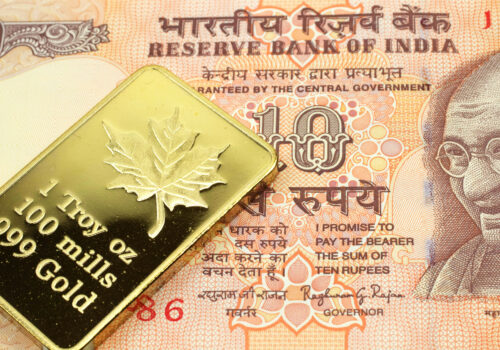
India outpaces the rest of the G20 in gold purchases

By <span class="gta-embed–tax–expert gta-post-embed–tax–expert">Josh Lipsky</span>, <span class="gta-embed–tax–expert gta-post-embed–tax–expert">Alisha Chhangani</span>

In the last four months alone, India has added over twenty-four metric tons to its reserves—more than what the country had purchased in all of 2023.

Economy & Business India

Econographics

Jun 14, 2024

Designing a blueprint for open, free and trustworthy digital economies

By <span class="gta-embed–tax–expert gta-post-embed–tax–expert">Carole House</span>

US digital policy must be aimed at improving national security, defending human freedom, dignity, and economic growth while ensuring necessary accountability for the integrity of the technological bedrock.

Artificial Intelligence Cybersecurity

Econographics

Jun 13, 2024

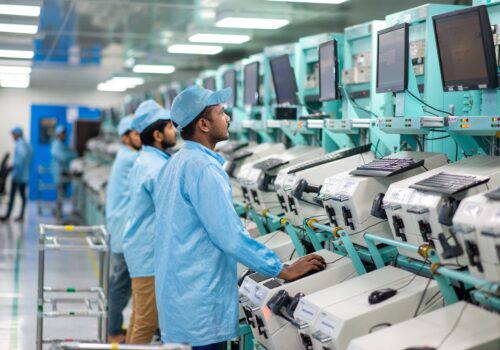
Low employment: The Achilles’ heel of Modi’s economic model

By <span class="gta-embed–tax–expert gta-post-embed–tax–expert">Hung Tran</span>

The challenge to Modi in the next five years is to carry out a balancing act between maintaining the recent growth momentum and making it more inclusive by providing regular employment.

Economy & Business Inclusive Growth

AfricaSource

Jun 3, 2024

In a Congolese mining case, Biden can secure a win for US sanctions policy in Africa

By <span class="gta-embed–tax–expert gta-post-embed–tax–expert">Benjamin Mossberg</span>

Easing sanctions on Dan Gertler gives Washington the opportunity to show that its sanctions policy toward Africa can be effective.

Africa Corruption
BYD electric vehicles

Econographics

May 23, 2024

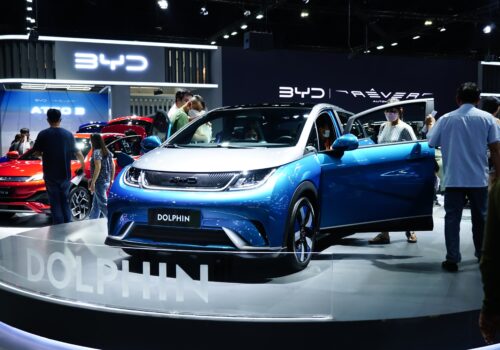
Biden’s electric vehicle tariff strategy needs a united front

By <span class="gta-embed–tax–expert gta-post-embed–tax–expert">Sophia Busch</span>, <span class="gta-embed–tax–expert gta-post-embed–tax–expert">Josh Lipsky</span>

President Biden has announced 100 percent tariffs on Chinese electric vehicles. The challenge is developing a united strategy with G7 allies.

China Economy & Business

Econographics

May 22, 2024

There’s less to China’s housing bailout than meets the eye

By <span class="gta-embed–tax–expert gta-post-embed–tax–expert">Jeremy Mark</span>

Beijing’s property measures are a drop in the ocean

China Economy & Business

Econographics

May 21, 2024

The Euro’s share of international transactions is likely smaller than it looks 

By <span class="gta-embed–tax–expert gta-post-embed–tax–expert">Hung Tran</span>

And the renminbi’s is larger.

China Economy & Business

Econographics

May 21, 2024

Russia Sanctions Database: May 2024

By <span class="gta-embed–tax–expert gta-post-embed–tax–expert" >Kimberly Donovan, Maia Nikoladze, Ryan Murphy, and Alessandra Magazzino</span>

The Atlantic Council’s Russia Sanctions Database tracks the restrictive economic measures Western allies have placed on Russia and evaluates whether these measures are successful in achieving the stated objectives.

China East Asia

Econographics

May 14, 2024

What to do about ransomware payments

By <span class="gta-embed–tax–expert gta-post-embed–tax–expert">Carole House</span>

And why payment bans alone aren’t sufficient.

Artificial Intelligence Cybersecurity

Econographics

May 8, 2024

‘Creative solutions’ with Russia’s immobilized assets must rise to the challenge Ukraine now faces

By <span class="gta-embed–tax–expert gta-post-embed–tax–expert" >Oleg Dunda</span>

$280 billion of Russian reserves can be used more strategically–without crossing red lines–to get funding to Ukraine.

Financial Sanctions and Economic Coercion International Financial Institutions

Content

EconoGraphics

Oct 30, 2018

SWIFTly Disconnecting Iran

By <span class="gta-embed--tax--expert gta-post-embed--tax--expert" >Ole Moehr</span>

With the snapback of significant US sanctions against Iran fast approaching on November 5th, speculation is mounting over how the Trump Administration will enforce the sanctions, and how its European allies might attempt to bypass them. The previous EconoGraphic outlined how a Special Purpose Vehicle (SPV) may facilitate trade between European small and medium-sized enterprises (SMEs) and Iran after US sanctions go back into effect. This edition of the EconoGraphic provides a primer on the Society for Worldwide Interbank Financial Telecommunication (SWIFT) and explains why sanctioning the financial messaging service would likely cause more harm than good.

Economy & Business Financial Sanctions and Economic Coercion

EconoGraphics

Oct 9, 2018

JCPOA in Peril – EU SPV to the Rescue?

By <span class="gta-embed--tax--expert gta-post-embed--tax--expert" >Ole Moehr</span>

The European Union’s (EU) foreign policy chief, Federica Mogherini, recently announced that the EU will set-up a special purpose vehicle (SPV) “to facilitate legitimate financial transactions with Iran and allow European companies to continue to trade with Iran.” In response, our visiting senior fellow, Samantha Sultoon, argued that this SPV will not provide a reliable path around US sanctions, and may undermine the effectiveness of US and EU sanctions in the long-run. This edition of the EconoGraphic explains how the SPV would work in practice and outlines why this mechanism is unlikely to offer Iran enough economic upside to keep the Joint Comprehensive Plan of Action (JCPOA) alive.

Economy & Business European Union

EconoGraphics

Sep 17, 2018

Turkish Outbreak: Risk of Emerging Market Contagion?

By <span class="gta-embed--tax--expert gta-post-embed--tax--expert" >Christina Gay and Ole Moehr</span>

With the strengthening of the US dollar in the wake of continued interest rate increases by the US Federal Reserve and brewing pressures in a number of emerging market (EM), portfolio flows into EM countries slowed from $13.7 billion in July to just $2.2 billion in August. Companies and banks in both Argentina and Turkey borrowed heavily in dollar denominated debt while interest rates were low and are now faced with mounting debt burdens, which, if not backed by sufficient reserves puts them at risk for default if investors lose confidence. The Turkish lira has fallen over 40 percent in 2018. Its sharp decline in August raised concern of contagion to other markets, as the Indonesian rupiah, the South African rand, and the Indian rupee have also come under pressure. This edition of the Econographic compares situation in Turkey with the Asian financial crisis in 1997, analyzes root causes of the current pressures in Turkey, and assesses the broader implications for EM economies.

Economy & Business European Union

EconoGraphics

Aug 8, 2018

JEEPA – Japan-EU Free Trade Agreement Leaves the US Out in the Cold

By <span class="gta-embed--tax--expert gta-post-embed--tax--expert" >Cecilia Pan and Ole Moehr</span>

While President Trump is pursuing a protectionist trade agenda – halting negotiations for the Transatlantic Trade and Investment Partnership (TTIP), pulling out of the Trans-Pacific Partnership (TPP), and threatening trade wars against adversaries and allies – Japanese Prime Minister Shinzo Abe has been doing just the opposite. As part of Abenomics’ third arrow, the Prime Minister is forging global partnerships between Japan and other leading economies to foster economic growth. Case in point, the Japan-EU Economic Partnership Agreement (JEEPA) signed on July 17, 2018. This edition of the EconoGraphic will review this ambitious bilateral free trade agreement, assess its impact on the US economy, and explore the consequences of the United States’ retreat from its role as the global leader for free trade.

Economy & Business European Union

EconoGraphics

Jul 19, 2018

US Iran Sanctions Could SpOIL the Global Economy

By <span class="gta-embed--tax--expert gta-post-embed--tax--expert" >Ole Moehr</span>

The Trump Administration’s “maximum pressure” approach against Iran to reduce Iranian crude oil exports to zero as soon as possible is expected to rattle markets and could undermine the credibility and effectiveness of US sanctions. This edition of the EconoGraphic outlines how re-imposed US sanctions against Iran will affect the global oil market, the price of oil, US consumers, and the American economy.

China Economy & Business

EconoGraphics

Jun 22, 2018

There’s a New Tariff in Town: Implications of Trump’s Steel Tariffs

By <span class="gta-embed--tax--expert gta-post-embed--tax--expert" >Ole Moehr</span>

Economists consider tariffs a tax on consumers. Case in point, President Trump’s former chief economic advisor Gary Cohn. He recently warned that the administration’s twenty-five percent tariff on steel and ten percent tariff on aluminum combined with threatened duties on Chinese goods could cancel out the 2017 tax cut. This edition of the EconoGraphic provides an overview of how the Trump Administration’s steel tariffs might impact the US economy.

Economy & Business Trade and tariffs

EconoGraphics

Jun 4, 2018

GDPR’s Quest for World Domination

By <span class="gta-embed--tax--expert gta-post-embed--tax--expert" >Ole Moehr</span>

On May 25, the European Union’s (EU) sweeping new data privacy regulation came into force. The General Data Protection Regulation (GDPR) provides EU residents with more control and protection of their data.

Brazil Economy & Business

EconoGraphics

May 18, 2018

US Sanctions’ Global Impact – A Case Study of RUSAL’s Supply Chain

By <span class="gta-embed--tax--expert gta-post-embed--tax--expert" >Ole Moehr</span>

On April 6, 2018, the Trump Administration imposed stiff economic sanctions on 37 Russian oligarchs, oligarch-owned companies, Russian government officials, and state-owned companies.

Economy & Business Financial Sanctions and Economic Coercion

EconoGraphics

Apr 12, 2018

Africa Embraces the Promise of Free Trade

By <span class="gta-embed--tax--expert gta-post-embed--tax--expert" >Ole Moehr, Zachary Coles, and Alexatrini Tsiknia</span>

Africa Embraces the Promise of Free Trade

Africa Economy & Business

EconoGraphics

Mar 20, 2018

Venezuela’s Cryptocurrency: Should OFAC Be Petrofied?

By <span class="gta-embed--tax--expert gta-post-embed--tax--expert" >Ole Moehr, Zachary Coles, and Alexatrini Tsiknia</span>

Venezuela's Cryptocurrency: Should OFAC be Petrofied? The short answer is no.

Economy & Business Financial Sanctions and Economic Coercion