Featured analysis

Latest analysis

Stablecoins

Fintech Frontlines

Jul 8, 2025

Stablecoins are trending, but what frictions and risks are getting overlooked?

By Ashley Lannquist

Stablecoin usage is complex for consumers, and large-scale adoption could introduce new challenges for financial stability and regulatory oversight.

Digital Currencies
Economy & Business

Econographics

Jul 7, 2025

Building BRICS

By Bart Piasecki

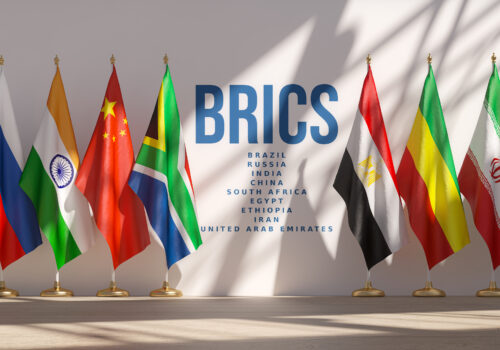
Fifteen years after its founding, BRICS has evolved into a formidable counterweight to Western dominance in global economic governance. Yet despite its growing influence, the bloc’s ability to translate bold rhetoric into concrete results remains uncertain.

Brazil
China

Econographics

Jun 23, 2025

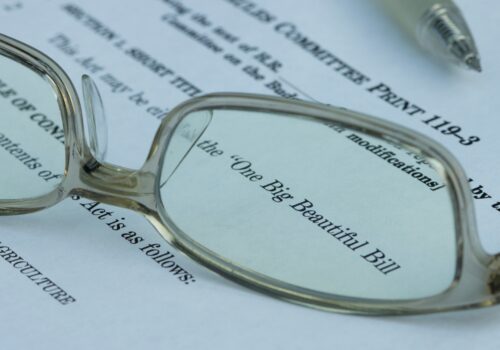
From trade wars to capital wars: Section 899 could rattle global capital markets

By John Satory

Section 899 of the One Big Beautiful Bill Act plans to tax certain foreign investors, testing investor confidence in America’s financial leadership and market stability.

Economy & Business
Financial Regulation

Econographics

Jun 19, 2025

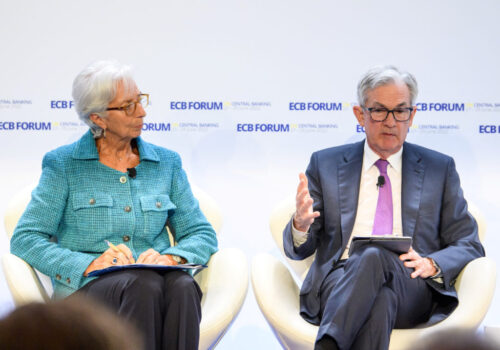
Hawks vs. doves: The split between the Fed and the ECB

By Bart Piasecki

While the ECB signals an end to its rate-cutting cycle, the Fed hesitates. This article explores the macroeconomic and policy reasons behind it.

Economy & Business
European Union

Econographics

Jun 17, 2025

Anonymous shell companies pose a threat to US national security. Here is how to address it.

By Julie Brinn Siegel

On March 26, the Department of the Treasury scrapped critical federal rules that would have made most anonymous shell companies illegal. The rules would also have prevented them from being abused by drug cartels, human traffickers, foreign adversaries like Iran and China, terrorist groups, and other bad actors.

China
Economy & Business

Econographics

Jun 12, 2025

The objectives of transatlantic financial services regulation and the future of international cooperation

By Matthew L. Ekberg

Much has been written in recent weeks about heightened geopolitical tensions and the impact of policy changes concerning international trade on global markets. Less has been said about the growing shift in focus on both sides of the Atlantic—and across the English Channel—on the next stage of development for financial services regulation.

Economy & Business
European Union

Econographics

Jun 6, 2025

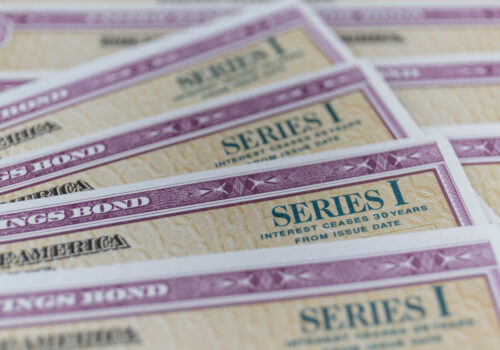
The search for safe assets

By Hung Tran

The deterioration of the US fiscal outlook has put international investors, especially foreign central banks, in a quandary. There is no good alternative to US Treasuries as safe reserve assets.

Economy & Business
Europe & Eurasia

Sinographs

Jun 2, 2025

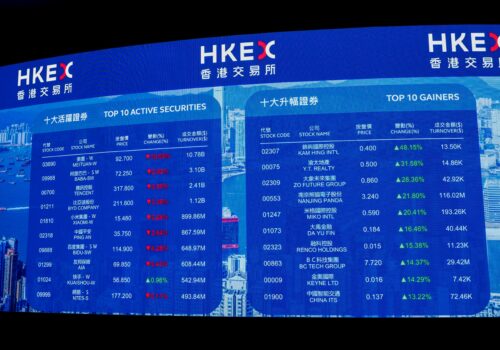
Hong Kong highlights China’s policy of decoupling from US financial markets

By Jeremy Mark

The political benefits of an international financial center with Chinese characteristics will outweigh the pain that decoupling inflicts on China’s private sector.

China
Economy & Business

Econographics

May 29, 2025

After partial relief, what’s next for Syria sanctions?

By Alex Zerden

Syria remains a high-risk jurisdiction due to years of conflict, endemic corruption, state institution collapse, narcotrafficking of captagon, insufficient anti-money laundering efforts, and inadequate financing of terrorism controls.

Economy & Business
Financial Sanctions and Economic Coercion

Econographics

May 27, 2025

Dispatch from London: Engaging Trump without alienating the rest

By Josh Lipsky, Charles Lichfield

The GeoEconomics team traveled across the pond for a series of meetings and events to determine if the recent US-UK trade deal could be a template for other countries seeking accords with the United States.

Economy & Business
Trade and tariffs

Content

Bremain vs Brexit

Mar 24, 2016

A Costly Goodbye

By Alvaro Morales Salto Weis & TK Spandhla

On June 23, British citizens will decide on a referendum whether the UK stays or leaves the EU. The consequences of a vote to leave, or Brexit, could decide the UK’s place in the world for generations.

Economy & Business
European Union

EconoGraphics

Mar 24, 2016

The French Way of Reforms

By Alvaro Morales Salto Weis & TK Spandhla

France’s economy has struggled to grow in recent years, expanding by a mere 1.1% in 2015. Meanwhile its unemployment rate has stubbornly lingered around 10%, with a slight upwards trend.

Economy & Business
Fiscal and Structural Reform

EconoGraphics

Mar 14, 2016

A Tale of Two QE’s

By Alvaro Morales Salto Weis & TK Spandhla

On March 10, the European Central Bank (ECB) announced an expansion of its Quantitative Easing Program (QE), increasing the amount of government bonds it buys monthly from €60 billion to €80 billion. It also extended the range of assets it purchases to include investment grade non-bank corporate bonds. On top of that, the ECB lowered already negative deposit interest rates further down, to -0.4%, and its main interest rate to 0%. So, why have Central Banks embraced QE?

Economy & Business
European Union

EconoGraphics

Mar 4, 2016

TTIP: Window of Opportunity is Closing

By Alvaro Morales Salto Weis & TK Spandhla

The 12th round of negotiations for the Transatlantic Trade and Investment Partnership (TTIP) concluded last week in Brussels on an optimistic tone. The Chief Negotiator for the EU announced significant advances in most negotiating areas, including on the Investor-State-Dispute Settlement (ISD), which had been frozen for months. His US counterpart expressed confidence in reaching an ambitious deal in the second half of the year, rejecting calls for a “TTIP lite”.

Economy & Business
European Union

EconoGraphics

Feb 25, 2016

TTIP: Cutting the Red Tape

By Global Business and Economics

The 12th round of negotiations for the Transatlantic Trade and Investment Partnership (TTIP) unfolded this week in Brussels between the EU and their American counterparts. At a time when both parties are stuck with weak growth (and persistent high unemployment in Europe), the importance of TTIP cannot be understated.

Economy & Business
European Union

EconoGraphics

Feb 23, 2016

Tug of Budget War in Brussles

By Global Business and Economics

In the past weeks, the Portuguese government and EU authorities have engaged in a tug of war over the Portuguese budget proposal for 2016. The European Commission (EC) warned the newly elected anti-austerity government that it risked “serious non-compliance” with the EU’s fiscal rules. Finally, Lisbon narrowly avoided becoming the first Eurozone country to have its budget rejected by Brussels, as it agreed to additional tax hikes and spending cuts.

Economy & Business
European Union

EconoGraphics

Feb 16, 2016

Dreaming Big: Size Matters

By Global Business and Economics

Why are Google, Apple or Facebook American-born but not European? Concerns about Europe’s lack of innovative start-ups prompted the European Commission (EC) to launch the Entrepreneurship 2020 Action Plan, aimed at bolstering entrepreneurship culture.

Economy & Business
Europe & Eurasia

EconoGraphics

Feb 8, 2016

Juncker Has a Plan

By Global Business and Economics

Europe's fragile recovery has been ailing from low levels of investment. While GDP and consumption have surpassed their pre-crisis levels, by the end of 2014 gross capital formation was still around 15% below its 2007 peak (€230 billion to €370 billion less than the EU's long term investment average). That is why the EU launched an ambitious investment plan, the European Fund for Strategic Investments (EFSI).

Economy & Business
European Union

EconoGraphics

Feb 1, 2016

Young Arrivals for an Ageing Europe

By Global Business and Economics

Refugees are pouring into the European Union (EU) at a scale not seen since the Second World War. In 2015 alone, 893.695 applied for asylum, up from around 250.000 in 2010, according to Eurostat. The magnitude of these influxes has rocked the EU boat, prompting yet another consequential crisis on top of last year’s Greek bailout and the incoming referendum on the UK’s permanence.

Economy & Business
European Union

EconoGraphics

Jan 21, 2016

Feeling the Oil Crunch

By Global Business and Economics

Oil prices have fallen to their lowest since 2003, sitting under $30 a barrel in recent days. Declining expectations of global growth plus the addition of post-sanction Iranian supply don’t spell a substantial price recovery in the immediate future. Under this new market realities, oil-exporting countries come in different form to weather the storm.

Economy & Business
Financial Sanctions and Economic Coercion