Featured analysis

Latest analysis

Econographics

Dec 3, 2021

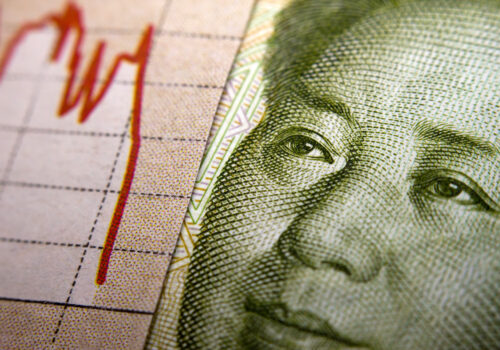
The RCEP ratification and its implications

By Niels Graham

On January 1, 2022 the Regional Comprehensive Economic Partnership (RCEP) trade agreement will go into effect. When it enters into force, the partnership will be doubly historic: it will be both China’s first multilateral trade agreement and the world’s largest free trade agreement.

China
Economy & Business

Timely Commentary & Analysis

Nov 19, 2021

AC GeoEcon Explores the Sanctions Response to the Belarus-Poland Border Face-Off

By Daniel Fried, Hagar Hajjar Chemali

Distinguished Fellow and former State Dept. Sanctions Coordinator Ambassador Daniel Fried participated in a discussion with Hagar Chemali, Senior Fellow and host of Oh My World, about the state of sanctions from the US & EU toward Belarus in light of the migrant crisis on Poland’s border

European Union
Eurozone

EconoGraphics

Nov 2, 2021

Goodbye for now, 232: Breaking down the G20 US-EU agreement on steel and aluminum

By Julia Friedlander, Clete R. Willems

During the G20 summit the US and EU announced an agreement over steel and aluminum tariffs. Julia Friedlander and Non-resident senior fellow Clete Williams react to its implications.

European Union
Eurozone

EconoGraphics

Oct 29, 2021

G20 Balance Sheet

By GeoEconomics team

Asset purchases by the Federal Reserve, European Central Bank, and the Bank of Japan, are driving most of the more than $17 trillion increase in the “G20 balance sheet”.

Inclusive Growth
International Financial Institutions

EconoGraphics

Oct 29, 2021

G20 risks becoming G7 + G13

By Mrugank Bhusari, Niels Graham

This year’s Summit priorities of people, planet, and prosperity seem to have forgotten another P — pandemic — that most of the world is still dealing with.

Economy & Business
G20

EconoGraphics

Oct 22, 2021

Global Sanctions Dashboard: Halloween edition

By Julia Friedlander, Michael Albanese and Castellum.AI

US’s evolving approach to cryptocurrencies, Pandora Papers; sanctions against Iran, Myanmar, and Russian authorities in Crimea.

Belarus
China

EconoGraphics

Sep 17, 2021

Global Sanctions Dashboard: Summer edition

By Julia Friedlander, Michael Albanese and Castellum.AI

Current state of sanctions against the Taliban, China’s use of its Anti-Foreign Sanctions Law, and combating corruption through sanctions.

Afghanistan
Belarus

EconoGraphics

Sep 7, 2021

ASEAN’s COVID spike

By Niels Graham

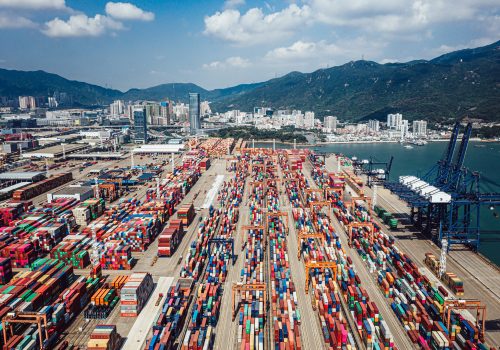
Since April, Asia has experienced a wave of COVID suppressing growth throughout the region. The key question to watch is: will supply chain contagion once again follow the virus west?

East Asia
Macroeconomics

EconoGraphics

Aug 23, 2021

IMF delivers fiscal firepower

By Niels Graham and William Howlett

On August 23 the IMF released a historic $650 billion allocation of Special Drawing Rights (SDRs)

Inclusive Growth
International Financial Institutions

EconoGraphics

Jun 29, 2021

Global Sanctions Dashboard: 5th edition

By Julia Friedlander, Michael Albanese and Castellum.AI

China’s anti-foreign sanctions bill, mapping Belarusian KGB sanctions, and building an anti-kleptocracy playbook.

Belarus
China

Content

EconoGraphics

Jun 16, 2015

Does ISDS Tip the Scales in Favor of Investors?

By Global Business and Economics

Looking at over 400 cases that have been decided through 2014, the rate of success for US and EU investors is 30% and 34%, respectively. Foreign states win against US claimants 42% of the time, and 36% of the time against EU-based firms, with the remainder being settled.

Economy & Business
European Union

EconoGraphics

Jun 9, 2015

Where Do Trillion-Dollar Asset Managers Hail From?

By Global Business and Economics

Of the 16 investment firms in the world that hold more than $1 trillion in assets, the US leads with 12 representatives, including well-known firms like BlackRock, Vanguard Group, and the asset management arms of Goldman Sachs and Bank of New York Mellon.

Economy & Business
France

EconoGraphics

Jun 2, 2015

How big is the opportunity to increase US exports in the Transpacific Partnership?

By Global Business & Economics

Data from 2014 shows that while American exports to the 11 other TPP nations totaled more than half a trillion dollars in absolute terms, there remains considerable room for improvement in relative terms

Americas
Australia

EconoGraphics

May 26, 2015

Who Will Finance Ukraine?

By Global Business & Economics Program

Ukraine's economic stability is uncertain as the conflict with Russia endures. Alongside the negative impacts to growth, exports, and investment, the level of Ukraine's debts are especially worrisome.

Economy & Business
Europe & Eurasia

EconoGraphics

May 20, 2015

Who’s Buying European Companies?

By Global Business & Economics

Who is purchasing European companies? Looking at the five biggest foreign acquisitions of European corporates since 2011 shows that the US are the biggest buyers by a considerable margin, with the China, Hong Kong, Brazil, and Japan following behind.

Brazil
China

EconoGraphics

May 12, 2015

Two Decades of Sovereign Debt

By Global Business & Economics

Sovereign default is considered to be a rare event. But as the lessons of the past two decades show, they are far from extraordinary. According to the IMF, the main sovereign debt restructurings from the period spanning 1998 – 2010 totaled $117.6 billion. When Greece’s 2012 default is added to that sum, it means that […]

Economy & Business
Fiscal and Structural Reform

EconoGraphics

May 5, 2015

Creating the Digital Single Market

By Global Business & Economics Program

European E-Commerce is still largely confined within national borders.

Economy & Business
Europe & Eurasia

EconoGraphics

Apr 28, 2015

Do Sanctions Work After All?

By Global Business & Economics

International Relations scholars disagree about whether economic sanctions are an effective tool to coerce countries to follow a certain course of action.

Economy & Business
Europe & Eurasia

EconoGraphics

Apr 21, 2015

Exit, or Voice?

By Global Business & Economics

In March, the UK, Germany, Italy, and France decided to join the China-led Asian Infrastructure Investment Bank (AIIB), shocking the Obama administration.

Brazil
China

EconoGraphics

Apr 14, 2015

Who is Investing Abroad?

By Global Business & Economics

While the US still leads the world in outflowing Foreign Direct Investment (FDI), the emerging markets are catching up quickly. Chinese outflowing FDI, in particular has grown tremendously: since 2005, it increased more than 30-fold in 8 years from $5 billion to $166 billion. While initial Chinese foreign investments focused on natural resource industries, over time the investments have spread to diverse industries like agriculture, manufacturing, and professional services. BRIC FDIs are emerging as key growth drivers for low income countries, improving their business environment, building infrastructure, creating jobs, and adding much-needed revenue to government coffers.

China
Russia