Featured analysis

Latest analysis

EconoGraphics

May 20, 2015

Who’s Buying European Companies?

By Global Business & Economics

Who is purchasing European companies? Looking at the five biggest foreign acquisitions of European corporates since 2011 shows that the US are the biggest buyers by a considerable margin, with the China, Hong Kong, Brazil, and Japan following behind.

Brazil
China

EconoGraphics

May 12, 2015

Two Decades of Sovereign Debt

By Global Business & Economics

Sovereign default is considered to be a rare event. But as the lessons of the past two decades show, they are far from extraordinary. According to the IMF, the main sovereign debt restructurings from the period spanning 1998 – 2010 totaled $117.6 billion. When Greece’s 2012 default is added to that sum, it means that […]

Economy & Business
Fiscal and Structural Reform

EconoGraphics

May 5, 2015

Creating the Digital Single Market

By Global Business & Economics Program

European E-Commerce is still largely confined within national borders.

Economy & Business
Europe & Eurasia

EconoGraphics

Apr 28, 2015

Do Sanctions Work After All?

By Global Business & Economics

International Relations scholars disagree about whether economic sanctions are an effective tool to coerce countries to follow a certain course of action.

Economy & Business
Europe & Eurasia

EconoGraphics

Apr 21, 2015

Exit, or Voice?

By Global Business & Economics

In March, the UK, Germany, Italy, and France decided to join the China-led Asian Infrastructure Investment Bank (AIIB), shocking the Obama administration.

Brazil
China

EconoGraphics

Apr 14, 2015

Who is Investing Abroad?

By Global Business & Economics

While the US still leads the world in outflowing Foreign Direct Investment (FDI), the emerging markets are catching up quickly. Chinese outflowing FDI, in particular has grown tremendously: since 2005, it increased more than 30-fold in 8 years from $5 billion to $166 billion. While initial Chinese foreign investments focused on natural resource industries, over time the investments have spread to diverse industries like agriculture, manufacturing, and professional services. BRIC FDIs are emerging as key growth drivers for low income countries, improving their business environment, building infrastructure, creating jobs, and adding much-needed revenue to government coffers.
China
Russia

EconoGraphics

Apr 7, 2015

Is Europe still vulnerable to a Greek default?

By Global Business & Economics Program

Private banks throughout Europe have significantly reduced their exposure to Greek debt (bank, public, and non-bank private sector debt) over the last five years. After Greece came under market pressure and eventually obtained ECB and IMF financial assistance in 2010, most European banks started to rapidly reduce their exposure to Greece. For instance, between 2010 and 2014 French banks’ holdings decreased from $63 billion to $2 billion.

Economy & Business
Eurozone

EconoGraphics

Mar 31, 2015

The IMF’s Changing Role in Europe

By Global Business & Economics

The International Monetary Fund’s purpose and scope of work have changed since its founding after World War II. Whereas at first the Fund aimed to maintain monetary and exchange-rate stability among its members who were primarily advanced economies, today it faces its first credible challenge to its status as the world’s lender of last resort.

Economy & Business
Financial Regulation

EconoGraphics

Mar 24, 2015

How Much Does it Cost for Cubans to Access Information?

By Global Business & Economics

When President Obama announced his landmark policy shift towards Cuba, easing the 54-year-old embargo, one of the first companies to announce they would begin operating in Cuba was Netflix. The online video company’s decision was surprising, if only because Cuba’s internet is one of the slowest in the world.

Americas
Cuba

EconoGraphics

Mar 17, 2015

Who Will Finance Public Debt?

By Global Business & Economics Program

Today, the cap on US government spending (or the “debt ceiling”) is officially reinstated, and with it, the threat of another clash over the national debt. Policymakers will have a runway of just months before they must decide to lift the cap on borrowing or temporarily allow it to be raised

Brazil
China

Content

Econographics

Jan 28, 2026

China’s property slump deepens—and threatens more than the housing sector

By Jeremy Mark

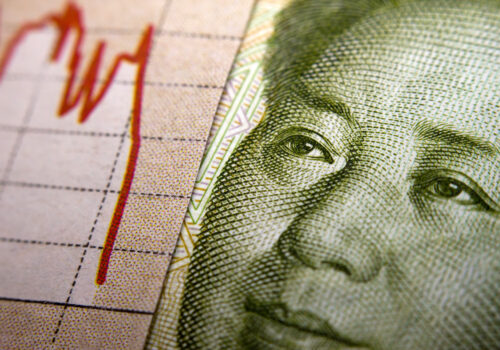
China's property sector slump is in its fifth year, with no end in sight. This poses real risks to the banking system and the country's financial stability.

China
Economy & Business

Econographics

Jan 26, 2026

Africa enters 2026 facing a debt crisis. The answer lies in regional solutions.

By Juliet Lancey

The solution to debt crises in African nations lies in global and regional cooperation.

Africa
Financial Regulation

Econographics

Jan 22, 2026

When will Wall Street’s tolerance for uncertainty run out?

By Jessie Yin, Josh Lipsky

In a decade of geoeconomic shocks, few events have truly shaken investor confidence. But Wall Street may be too complacent to political volatility.

Economy & Business
Macroeconomics

Econographics

Jan 22, 2026

As markets turn volatile, leverage is back in the spotlight

By Hung Tran

Market turmoil has returned, highlighting how rising leverage plays a part in making the global financial system more fragile and vulnerable to shocks.

Economy & Business
Financial Regulation

Econographics

Jan 15, 2026

What to watch as China prepares its digital yuan for prime time

By Alisha Chhangani

The changes China is implementing around the e-CNY signal a more mature phase for the digital yuan—and an overall shift toward a much broader geopolitical ambition.

China
Digital Currencies

EconoGraphics

Jan 12, 2026

Rare earth mining could solve, not worsen, Central Asia’s water troubles

By Andrew D’Anieri

States in the region can capture a net “water dividend” by reinvesting mining revenues in water-saving infrastructure and technologies.

Central Asia
Critical Minerals

Econographics

Nov 25, 2025

Why the Millennium Challenge Corporation is vital to the future of US competitiveness

By Sohan Dasgupta

The United States is leveraging its unmatched economic power to reshape global partnerships, secure critical resources, and counter adversaries. Through a retooled Millennium Challenge Corporation, Washington is forging strategic alliances, strengthening supply chains, and opening billion-person markets for American companies.

Economy & Business
United States and Canada

Econographics

Nov 25, 2025

On critical minerals, the US needs more than just supply. It needs refining power.

By Bart Piasecki

Expanding global processing capacity remains a crucial—and currently missing—step in strengthening US supply-chain control and export competitiveness.

Critical Minerals
Economy & Business

Econographics

Nov 13, 2025

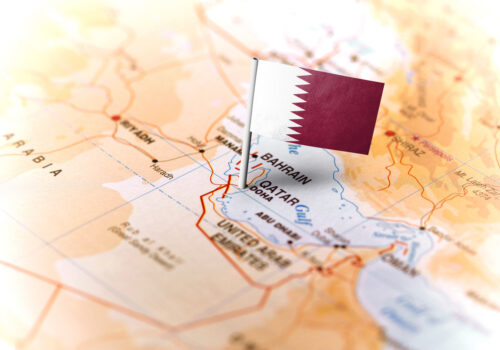
How the US can balance Qatar’s mediation role with the fight against terrorist financing

By Lesley Chavkin

Qatar has achieved an outsized role on the global stage, but the spotlight has come with persistent scrutiny of the tiny Gulf country’s efforts to counter the financing of terrorism.

Economy & Business
Financial Crimes & Illicit Trade

Econographics

Nov 12, 2025

Yes, tech stocks have taken a hit. But the real danger lies elsewhere.

By Hung Tran

Tech stocks’ sharp selloff has grabbed headlines, but the real risk may be in tightening US dollar funding. As the Fed drains liquidity and repo rates surge above policy benchmarks, hedge funds and foreign banks—holding trillions in dollar assets—face rising pressure. The danger isn’t just market volatility, but whether global finance can withstand a squeeze in the world’s core funding system.

Economy & Business