GET UP TO SPEED
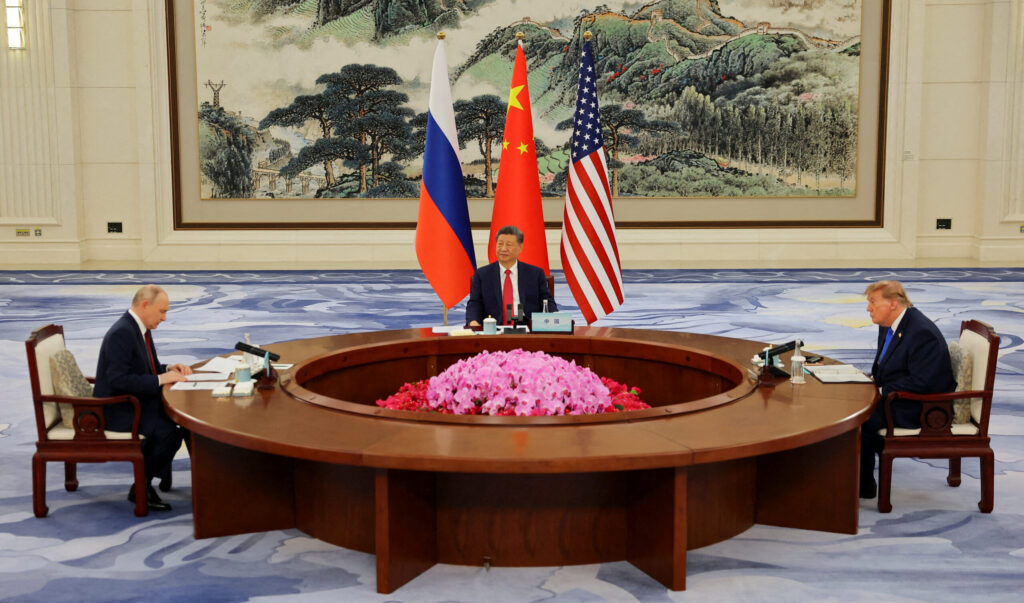
The images tell the story. On Thursday, US President Donald Trump, Russian President Vladimir Putin, and Chinese President Xi Jinping met for the first time as a trio in Shenzhen, where every element down to the oversized circular table seemed designed to present the leaders as geopolitical titans. But what was achieved beyond the photo opportunity? Below, Atlantic Council experts delve into what was discussed and what it means for each leader.
TODAY’S EXPERT REACTION BROUGHT TO YOU BY
- Melanie Hart: Senior director of the Global China Hub and former senior advisor for China at the US State Department
- Daniel Fried (@AmbDanFried): Weiser Family distinguished fellow and former US assistant secretary of state for Europe
- Gissou Nia (@GissouNia): Director of the Strategic Litigation Project who previously worked on war-crimes and crimes-against-humanity trials at international criminal courts in The Hague
- Jeremy Mark (@jedmark888): Nonresident senior fellow at the GeoEconomics Center and former International Monetary Fund official
Four points
- “The trilateral summit was all image, no substance,” Melanie tells us, having just returned from an Atlantic Council trip to China. And it was “Beijing shaping the narrative,” which included the post-meeting release of a four-point “declaration toward peace.”
- The most promising of the four points, Dan says, is the “reaffirmation” of past US-Russian language that a “nuclear war cannot be won and must never be fought.” The inclusion of China, he adds, “counts as a modest advance in bringing China into nuclear-arms issues and could be something to build on.”
- But Melanie warns that “China is building its nuclear arsenal at a pace the world has never seen.” Beijing has “no intention” of slowing down, she adds, and its “agreeing to empty dialogue is just another way to buy time.”
- The leaders also agreed that the International Criminal Court (ICC) must require state consent and ensure immunities for state officials. Gissou says this line of argument “threatens the ICC’s very raison d’être,” and it “represents the starkest departure yet from the United States’ long-standing support for the protection and promotion of human rights and accountability.”
- In addition, the leaders called for reform at the United Nations, which Melanie says is part of Beijing’s “initiative aimed at weakening Western values.” While some UN reforms are needed, Gissou adds, they should “promote and support accountability and ensure equity and equal voices among states,” rather than the further consolidation of power that Putin, Xi, and Trump appear intent on.
- The final point calls for increased petroleum production, which appears to benefit Russia the most, Dan argues. The language suggests that “the US will work to undermine sanctions and other restrictions on Russian oil sales” along the lines of the Trump administration’s recent diesel deal with Russia.
Three men
- Xi secured his desired image of “China presiding over the United States and Russia,” Melanie says, “not only as a peer competitor but… in the driver’s seat, with the US and Russia along for the ride.”
- For Trump, Dan argues, appearing alongside two authoritarians was “a missed opportunity for a US president to advance a US and free-world agenda.” At the same time, he adds, “Putin comes out ahead simply by being treated as a great power equal to Xi and Trump.”
- Gissou sees the leaders’ joint statement as emblematic of something larger: “A shared desire from Trump, Xi, and Putin to shield themselves from accountability” and a return to a system in which “great powers and spheres of influence ruled the day.”
Sign up to receive rapid insight in your inbox from Atlantic Council experts on global events as they unfold.
Two other meetings
- The trilateral “thoroughly overshadowed” the annual Asia-Pacific Economic Cooperation (APEC) forum, which was also taking place in Shenzhen, Jeremy notes. “That is par for the course for APEC, which thrives by offering a venue for high-profile diplomacy,” including last year’s meeting between Xi and Trump in Busan, South Korea.
- Despite the many world leaders who attend the APEC summit, the meetings themselves tend to “sidestep some of the biggest challenges,” Jeremy explains. Still, he adds, this year’s gathering did highlight artificial intelligence–fueled digital risks like data breaches and online fraud.
- Also today, in Berlin, the “Coalition of the Willing” gathered to discuss European support for Ukraine. Trump called in from Air Force One heading home from China, reportedly telling European leaders that Putin is serious about peace talks. “The US president should be backing that [Berlin] meeting,” Dan argues, “not scrambling for photo ops and flattering the aggressive tyrant Putin, who is no friend.”
Related Reading
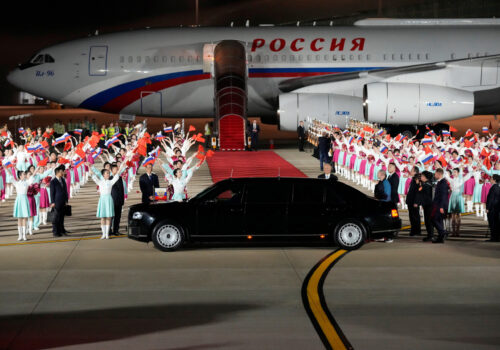
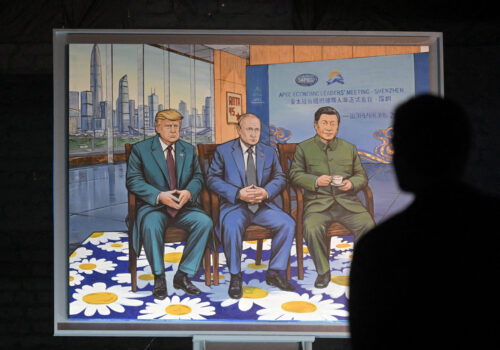
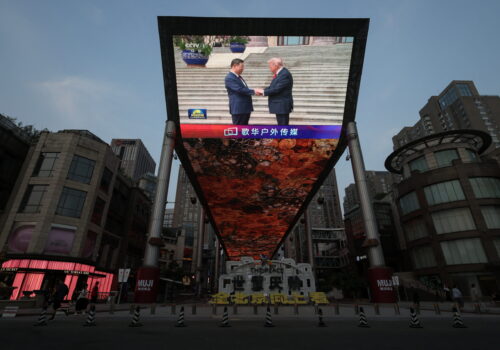
Image: US President Donald Trump, China's President Xi Jinping, and Russia's President Vladimir Putin participate in a trilateral meeting during the APEC Economic Leaders' Meeting in Shenzhen, China, November 19. (Carlos Barria via Reuters Connect)