
Outer Russia: How the war has sent culture into exile

Russia’s full-scale invasion of Ukraine in February 2022 challenged much of the common Western understanding of Russia. How can the world better understand Russia? What are the steps forward for Western policy? The Eurasia Center’s “Russia Tomorrow” series seeks to reevaluate conceptions of Russia today and better prepare for its future tomorrow.
Table of contents
Speaking at the 24th Congress of the Communist Party in 1971, Leonid Brezhnev, the general secretary of the Communist Party of the Soviet Union Central Committee, articulated a famous formula: a new historical community had emerged on the territory of the Soviet Union—a “multinational Soviet people.” With a certain degree of irony, however, a different kind of community has taken shape in the four years since Russia’s invasion of Ukraine: a multinational, extraterritorial one. It consists of Russian-speaking people originating from the former Soviet republics who now belong to a shared cultural space that did not exist previously but has emerged quite literally over the past four years. (I am deliberately leaving the Ukrainian and Belarusian communities out of consideration because it is clear that most of them do not see themselves as part of the Russian-speaking cultural space.)
I will refer to this phenomenon as “Outer Russia,” although many included in this category might reject the term—not least because many are not Russian citizens. Another tongue-in-cheek label is “virtual South Korea”: a unified, globally dispersed Russian-speaking community that functions as a counterweight to Vladimir Putin’s increasingly isolated Russia—as Russia is sometimes compared to North Korea—and serves as its moral and cultural antipode.
The mass exodus of Russian citizens has been widely documented, yet much remains uncertain. Estimates vary sharply—from about seven hundred thousand people who left after the invasion of Ukraine, according to Russian authorities, to as many as 30 million Russian-speaking people living abroad worldwide, including earlier waves of emigration from Russia, the Soviet Union, and neighboring states.
The current wave, which began in early 2022, represents something fundamentally new in Russian history. Unlike earlier waves, including that of 1918–1922, it marks the first time in centuries that Russian culture’s center of gravity has shifted beyond the Russian state. Contemporary Russian culture is no longer tied to a single territory; many of its leading writers, filmmakers, actors, musicians, thinkers, and scholars now live abroad.
Its audience is also outside Russia: a Russian-speaking intelligentsia that reads, watches, attends, and sustains stable demand for this culture. This study examines why this shift occurred after 2022, how Russian culture effectively moved abroad over four years, and how it became cosmopolitan in both substance and geography. It also considers how this transformation shapes “Outer Russia”—a dispersed community without a shared territory but united by a common informational and cultural space.
The study is based on interviews with journalists and media managers from major Russian outlets in exile, as well as theater figures, film directors, writers, critics, and stand-up comedians. Some interviewees live in Russia and therefore remain anonymous.

Media
On March 22, 2024, a terrorist attack took place in Moscow: gunmen seized the Crocus concert hall and opened fire, killing 151 people. Russian television channels reacted as they usually do—by doing nothing. Without instructions from the Kremlin, they did not interrupt regular programming but continued broadcasting evening shows, comedies, and concerts. There was no breaking news coverage.
The only channel that immediately switched to special coverage was TV Rain (Dozhd), broadcasting from Amsterdam. Thousands of viewers in Moscow tuned in, recognizing that an independent channel is the only reliable source of information in such moments. The irony was striking: viewers in Moscow watched a channel broadcasting from Amsterdam to learn about events in Moscow.
By 2022, online media in Russia were highly developed. It is no exaggeration to say that digital platforms had become the backbone of Russian journalism. As the Russian state adopted increasingly repressive laws and systematically suffocated independent media, many of the country’s best journalists migrated online. As a result, by the eve of the full-scale invasion of Ukraine, Russia had arguably become one of the most advanced digital media ecosystems in the world.
An enormous number of online outlets were producing high-quality journalism: investigative reporting, documentaries, talk shows, long-form interviews, and entertainment formats that enjoyed massive popularity with Russian audiences. This content was produced by private, independent companies and distributed primarily via YouTube, as well as through media websites and mobile applications. Over the course of two decades, journalists who had previously depended on legacy media infrastructure—cable networks, printing presses, television studios, satellite platforms, and other technologies of an earlier era—had deliberately restructured their work to become as independent as possible from both state control and political pressure.
In February 2022, following the invasion of Ukraine, Russian authorities adopted the so-called “fake news” law, which effectively criminalized independent journalism overnight. What followed was an extraordinary phenomenon: an entire industry found itself unable to function on Russian territory. Most of the country’s leading independent media outlets relocated abroad almost simultaneously.
This has become the new norm. In Putin’s Russian Federation, independent media no longer exist. At the same time, hundreds of Russian-language independent media outlets operate outside Russia and their content continues to be consumed by millions of people inside the country and by millions living abroad.
A symbolic moment in this transformation came on March 1, 2022, when TV Rain announced it was ceasing operations in Russia and nearly its entire editorial staff left the country. Within months, it resumed broadcasting from abroad—first from Latvia, then from the Netherlands.

Dozhd was part of a broader exodus of independent media. Echo of Moscow was shut down and most of its leading journalists relocated to Europe, where they launched new projects, primarily on YouTube or in collaboration with foreign outlets. Notable examples include Aleksandr Plyushchev’s Breakfast Show and the channel Zhivoy Gost, a de facto continuation of Echo still associated with Alexei Venediktov, who remains in Moscow.
A similar split occurred at Novaya Gazeta: most of its staff now publishes Novaya Gazeta Europe from Latvia under Kirill Martynov, while a smaller group led by Dmitry Muratov continues limited online work from Moscow without official status.
Meduza stands somewhat apart, having been founded in exile in Latvia in 2014 after the destruction of Lenta.ru. Since 2022, it has operated entirely without contributors inside Russia.
Leading Russian-language YouTube journalists—including Yury Dud, Ilya Varlamov, Irina Shikhman, Maxim Katz, and others—also left the country. Working from abroad, they continue to expand their audiences, collectively reaching tens of millions.
Other influential actors include media projects linked to Mikhail Khodorkovsky, which have significantly expanded in audience and popularity in recent years, and the Anti-Corruption Foundation (FBK), whose investigations and broadcasts make it one of the largest Russian-language media platforms despite its formal status as a political organization.
Despite severe repression of these exiled media outlets and journalists—“undesirable” and “extremist” designations, “foreign agent” labels, criminal cases, and sentences in absentia—their audiences remain stable. With YouTube and major social networks blocked in Russia, access increasingly depends on virtual private networks (VPNs).
According to estimates by media executives I interviewed in exile, audiences inside Russia now account for no more than 50 percent of total consumption. The remaining majority consists of Russians who have left the country. Their geographic distribution is broad: approximately 9–10 percent live in Ukraine, 7 percent in Germany, 4 percent in the United States, and about 3 percent in Belarus, followed by the Netherlands, Latvia, Kazakhstan, the Czech Republic, Uzbekistan, the United Kingdom, Israel, and Poland (around 2 percent each), and then France, Spain, Canada, Moldova, Georgia, Finland, Estonia, Italy, Lithuania, Serbia, and Turkey (around 1 percent each).
The existence of such a dense and influential network of independent media is arguably the single most important factor shaping contemporary Russian culture. For decades, independent media were perhaps the only consistently functioning institution of civil society in Russia—operating in the absence of real separation of powers, without an independent judiciary, and amid chronically falsified elections. Their survival signaled that Russian society still aspired to democracy and continued to resist authoritarianism.
Today, this same institution has become the connective tissue of “Outer Russia.” Unlike earlier waves of emigration, many Russian-speaking people across the United States, Europe, Australia, and Latin America inhabit a shared informational space. They consume the same information, watch the same programs, and follow the same debates. In this sense, independent media play a uniquely unifying role for the global Russian-speaking diaspora, transforming what might otherwise be a scattered population into a coherent cultural community. Independent media are not the only force binding this community together, but they remain its central pillar.

Theater
In January 2025, following the death of Igor Zolotovitsky, head of the Moscow Art Theatre School, the Ministry of Culture appointed Konstantin Bogomolov—a former prominent director turned outspoken pro-war propagandist, known for attacking émigré artists and the opposition—as acting rector. He had previously called the war in Ukraine “an astonishing stroke of luck” for his generation.
The appointment provoked a major scandal and came to symbolize the broader dismantling of Moscow’s theater world. Opposition was unusually unified: both those who had left Russia and those who remained spoke out against Bogomolov. Faced with this backlash, the ministry reversed its decision. Bogomolov withdrew and the position went to the more moderate Konstantin Khabensky, who has taken a cautious stance and preserved some work by émigré anti-war directors in the repertoire.
In the decades preceding Russia’s invasion of Ukraine, Russian culture experienced a genuine theatrical boom. Theater became one of the country’s most dynamic, intellectually relevant, and internationally connected art forms. Unlike cinema, it largely operated below the radar of state censorship while receiving support from private business. Major festivals brought leading international companies to Moscow and other cities, embedding Russian theater in the global cultural process and allowing it to compete with major European stages.
For more than a decade, theater was also a visible battleground between a liberal majority and a pro-government, ultrapatriotic minority. One striking development was the political transformation of Bogomolov and Eduard Boyakov. Both once associated with liberal and opposition circles but later aligned themselves with the regime. Liberal directors also faced growing pressure. The symbolic turning point was the 2017 “theater case” against Kirill Serebrennikov, who spent several years under house arrest in what was widely seen as political punishment disguised as a financial case.
The war transformed Russian theater almost as dramatically as it transformed journalism. Several leading figures left Russia or stopped working there, including Serebrennikov, Dmitry Krymov, Yuri Butusov, Mindaugas Karbauskis, Maxim Didenko, and Alexandr Molochnikov. Andrey Moguchy was dismissed from the Tovstonogov Bolshoi Drama Theater (BDT), major theaters were effectively dismantled, and the festivals that had connected Russian theater to the international scene needed to shut down.
Other central figures were broken or displaced in different ways. Rimas Tuminas, artistic director of the Vakhtangov Theater, was dismissed after pranksters publicized his sympathy for Ukraine; he died of lung cancer in 2024. In 2025, Boris Yukhananov died of a heart attack and Yuri Butusov drowned in Bulgaria. Evgeny Mironov, once seen as one of Russia’s most progressive artistic directors, was pressured into traveling to Mariupol and organizing a performance on the ruins of the bombed Mariupol Drama Theatre. Key figures also left the Theatre of Nations in Moscow, including Chulpan Khamatova, Ingeborga Dapkunaite, and Roman Dolzhansky.
Many actors also left Russia. Virtually the entire Gogol Center ensemble relocated to Berlin with Serebrennikov. Yet many productions created by directors who were dismissed or exiled, or have since died, continue to be performed in Russia and still attract large audiences.
Perhaps the most devastating blow to the theater world was the prosecution of director Evgenia Berkovich and playwright Svetlana Petriychuk. In 2023, they were charged with “justifying terrorism” regarding Finist, the Brave Falcon, a 2021 play that won the Golden Mask in 2022. The government declared the play, about Russian women who fall in love with militants, to be propaganda supporting terrorism. Many sources suggest that the case was also driven by Berkovich’s anti-war poetry, which had gone viral online and reportedly drew the attention of influential figures, including Nikita Mikhalkov. Once an Oscar-winning film director, honored with the 1993 Academy Award for Best Foreign Language Film, Mikhalkov has since reinvented himself as one of the Kremlin’s most influential propagandists.

Despite all these challenges, Russian theater inside the country remains extraordinarily vibrant. Auditoriums are full and tickets sell out quickly. Despite enormous pressure, the theater community has largely avoided becoming an instrument of propaganda. Open protest is impossible, but collaboration with propaganda would mean professional and moral ruin. As a result, almost no productions explicitly glorifying the war have appeared on Russian stages; the few that exist have failed with audiences and critics. Instead, even state theaters continue to stage works that allegorically condemn dictatorship and fascism, such as the recent production of Cabaret at the Theater of Nations.
Meanwhile, artists who left Russia have built new careers abroad. Serebrennikov has become a major European figure, staging opera and drama across the continent; Krymov, Didenko, and Molochnikov continue to create new work. A new phenomenon has emerged of international Russian-language theatrical touring, with productions traveling between cities worldwide and drawing large Russian-speaking audiences from “Outer Russia.”
Any discussion of Russian-language theater abroad must also include Ivan Vyrypaev. Before the invasion, he was arguably the most frequently staged playwright in Russia, surpassing even Anton Chekhov in the number of productions. Vyrypaev left Russia in 2014 for Warsaw and, in 2022, banned Russian theaters from staging his plays. He still lives in Poland, where he runs his own theater, tours internationally, and leads the independent theatrical and humanitarian project Teal House.

Cinema
The summer of 2026 promises to be an important one for filmmakers of Russian origin. Major international festivals will feature numerous films made in Russian or by émigré directors, none of them connected to Russia itself. Andrey Zvyagintsev’s Minotaur (shot in Latvia) and Kantemir Balagov’s Butterfly Jam (shot in the United States in the Circassian language and starring Barry Keoghan and Monica Bellucci) premiered at Cannes. The trend will likely continue in Venice, where at least two Russian-language films produced abroad are expected to premiere.
Over the past two decades, Russian cinema was rarely seen as dominant globally and had only occasional international success. Among its most prominent figures, Andrey Zvyagintsev—now based in France—stands apart as the most internationally recognized director, a two-time Oscar nominee, and a multiple Cannes prizewinner. Alexander Sokurov, who remains in Russia, also holds a significant place, as does Serebrennikov, now working from Germany and already discussed in the theater context. The directing duo Natalya Merkulova and Aleksey Chupov, now based in the United States, also achieved festival success in Venice.
Producer Alexander Rodnyansky, a Ukrainian who worked in Russia for more than two decades, played an important role in shaping this milieu. From his circle emerged younger directors such as Balagov (now working in the United States) and Kira Kovalenko. A singular figure is Ilya Khrzhanovsky, now based in Germany, known for the DAU project and later for launching the Babyn Yar initiative in Kyiv.
Since the invasion, nearly all major filmmakers have continued their work abroad. Serebrennikov has released three films during the war years, all premiering at Cannes, while Zvyagintsev received a Grand Prix in Cannes this year and Khrzhanovsky is finishing post-production on a new project. Sokurov remains the exception: his 2023 film Fairy Tale was screened at Locarno but effectively banned in Russia, and in 2025 he publicly criticized censorship, repression, and the crisis in higher education.
Filmmakers who remain in Russia are effectively excluded from major international festivals, while the country’s main independent festival, Kinotavr—long led by Alexander Rodnyansky—has shut down.
In this context, the domestic film market is revealing. For the past four years, box office leaders have been fairy tales or live-action remakes of Soviet animated classics, suggesting a mix of escapism and audience infantilization. One notable exception was The Master and Margarita by Mikhail Lokshin, based on the classic novel and released despite the director’s anti-war stance and relocation to the United States.
By contrast, films explicitly devoted to the war or patriotic mobilization consistently fail. The clearest example is 2025’s Tolerance, widely seen as both a critical and commercial disaster. Despite a budget of more than $2 million, it grossed around $1,000 and received one of the lowest ratings on the movie rating site Kinopoisk, the Russian equivalent of the Internet Movie Database (IMDB), with just two out of ten. Its grotesque plot—centered on violence against a transgender character in a fictional European country and framed as a denunciation of tolerance—highlights the gap between propagandistic intent and audience demand.
The atmosphere in cinema resembles that in theater: most filmmakers avoid overt propaganda and try not to associate themselves with the war, even at the cost of working within narrow, apolitical genres. The result is clear. Despite state pressure, the market prevails—audiences reject propaganda and participation in such projects increasingly damages professional reputations. Meanwhile, filmmakers who have left Russia remain in demand and continue to succeed abroad.

Literature
This spring, the publishing house Novaya Gazeta released my new book, The Dark Side of the Earth, in Russia. This is highly unusual—and important—because for more than a year books by anti-war authors labeled “foreign agents” have neither been printed nor sold there, and all my previous books disappeared from libraries and bookstores in early 2025.
Dmitry Muratov, the Nobel Prize laureate who remains in Russia and serves as editor-in-chief of Novaya Gazeta, decided that this new book on the collapse of the Soviet Union is important for a Russian audience. As it has not been officially banned, he believes it should be published. While this could set a precedent, the consequences remain unclear, including whether it will actually be available for purchase in Russia. For now, the Russian edition, printed in Latvia, is being sold worldwide outside Russia.
Even more profound changes have taken place in Russian literature. Virtually all major contemporary writers—the most widely read and influential authors—spoke out against the war and left Russia. Their books were banned, the authors labeled “foreign agents,” and their works removed from bookstores, making them effectively unavailable inside the country.
Those affected include Vladimir Sorokin; Boris Akunin, declared a terrorist and sentenced in absentia; Lyudmila Ulitskaya; Dmitry Bykov; Maria Stepanova; myself, sentenced in absentia to 8.5 years; Dmitry Glukhovsky; Vera Polozkova; and Fyodor Svarovsky. Also effectively banned is Nobel laureate Svetlana Alexievich, a Belarusian writer in Russian who opposes both the war and the regimes of Alyaksandr Lukashenka and Vladimir Putin and now lives in Germany.
In the first year of the war, books by exiled anti-war authors remained legally available. However, as more writers were designated “foreign agents,” restrictions tightened: their books were first sold in opaque packaging and have since become virtually impossible to purchase in Russia.
Another pivotal episode was the so-called “publishers’ case.” In spring 2025, two employees of Popcorn Books were arrested in Moscow and charged with “LGBT propaganda” and creating a criminal LGBT (lesbian, gay, bisexual, or transgender) organization over the publication of Summer in a Pioneer Tie—a novel about a same-sex relationship between two teenagers in a Soviet youth camp, originally released in 2020. Five years later, the book’s publication became the basis for criminal prosecution.
The consequences were immediate and far reaching. The case signaled that publishers were no longer operating below the radar and that the state would monitor all publications. De facto self-censorship followed: books by politically unreliable authors ceased to be published and works by “foreign agents” effectively disappeared from the market even without court convictions.
This trend was reinforced on September 1, 2025, when a new law on “educational activities” came into force, requiring state licensing for any form of public enlightenment. Although its interpretation remains unclear, publishers drew a clear conclusion: authors designated as foreign agents could no longer write or teach.
Despite these new laws, Russian-language literature has not disappeared. Forced into exile, it continues beyond Russia’s borders. Several independent publishing houses have emerged, producing uncensored books in Russian for global distribution, including Meduza Publishing, Vidim Books, Freedom Letters, Babuk (founded by Akunin), and One Book Publishing, launched by Yulia Navalnaya, which released the late opposition leader Alexei Navalny’s memoirs—arguably the most significant and widely read Russian-language book of the wartime period.
This external literary infrastructure continues to expand: the number of Russian-language bookstores worldwide is growing, annual output is now measured in hundreds of titles, and major authors—including Sorokin and Stepanova—continue to publish works grappling with the war and the transformation of Russian society.
By contrast, the literary process inside Russia has taken increasingly distorted forms. The Soviet-era Union of Writers has been revived and in 2025 was headed by former culture minister Vladimir Medinsky, underscoring its renewed propagandistic and restrictive role.
Among writers who remain, Zakhar Prilepin stands out—not only as a novelist but as an active and aggressive advocate for the war, participating in combat in eastern Ukraine in 2014–2015 and later becoming a central figure in the literary propaganda ecosystem.
The artistic significance of contemporary literature inside Russia is difficult to assess. One heavily promoted “bestseller” is Margarita Simonyan’s novel In the Beginning Was the Word—in the End Will Be a Number, whose sales were largely driven by bulk purchases by RT for distribution abroad. A more characteristic phenomenon is so-called “Z-poetry”: its leading figure, Anna Dolgareva, has herself acknowledged that pro-war Z-culture is now in crisis.

These examples reflect a broader shift. Since the invasion, thousands of cultural figures—writers, journalists, artists, and directors—have left Russia. Unlike the emigration of 1918–1922, however, almost no major figures inside the country have embraced or artistically legitimized the new reality. Propagandistic works, whether in literature, music, or film, consistently fail to achieve artistic or public success.
Even their proponents acknowledge this lack of demand. Poet Alexey Shmelev, for example, has noted that audiences for patriotic poetry have not grown despite official support. Pro-regime figures often explain this failure through conspiracy theories about liberal obstruction, but the explanation is simpler: such works do not resonate. They are aesthetically weak, opportunistic, and disconnected from lived experience—and therefore fail to attract readers.

Education
In March, Russia’s Ministry of Justice designated the University of California, Berkeley, as an “undesirable organization.” This marked the third time Russian authorities have effectively declared war on a US university. Previously, George Washington University was labeled undesirable in December 2025 and Yale University received the same designation in July 2025.
Speculation has long surrounded Yale. Navalny took part in the Yale World Fellows program in 2010. Three years earlier, Elvira Nabiullina—now the head of Russia’s Central Bank—was also close to joining the same program but did not travel to New Haven because in September 2007 Putin appointed her minister of economic development. According to Russian Forbes, Yale was one of the most popular destinations for Russian oligarchs to send their children before the war in Ukraine.
Before the invasion of Ukraine, Russia’s education system was one of the clearest achievements of post-Soviet democratization. It combined relatively high quality with integration into the global academic system. Since the 1990s, Russia participated in the Bologna Process, enabling student mobility and making Russian degrees broadly competitive internationally. This was especially evident in technical fields, as graduates of elite institutions such as Moscow Institute of Physics and Technology (MIPT) and Bauman Moscow State Technical University became part of the global technology workforce.
In 2022, Russia withdrew from the Bologna Process, effectively isolating its higher education system, and also launched a comprehensive education overhaul. The changes were most visible in the humanities: a new “unified” history textbook promoted by Medinsky radically rewrote the past, minimizing Stalinist repression and justifying Joseph Stalin’s policies.
Since the start of the war, the prestige of Russian education has declined sharply, including within Russian society. This erosion extends to primary schools, where mandatory patriotic education classes such as “Conversations about What Matters” and a militarized patriotic culture have become standard. Public displays involving children in military imagery have become widespread, provoking outrage from many families.
Higher education has also been transformed into an instrument of political control. In 2026, it became public that Konstantin Malofeev—a controversial ultranationalist businessman linked to the 2014 war in eastern Ukraine—would lecture about “imperial history” at Moscow State University. Repression of liberal faculty has also intensified. In 2021, thirty-two university rectors were dismissed, several of whom were also arrested; by 2025, criminal cases against university leaders had become routine.
High-profile examples include Vladimir Mau, rector of the Presidential Academy (RANEPA), who was placed under house arrest in 2022 before leaving Russia, and the Moscow School of Social and Economic Sciences (Shaninka), which was effectively shut down and has started relocating its activities abroad.
At the same time, new forms of Russian higher education have emerged outside the country. One example is the Free University, an independent initiative based in Riga and designated an “undesirable organization” in Russia. Many scholars have quietly left Russia and now teach or conduct research at foreign institutions. Sergei Guriev, former rector of the New Economic School, is one of the most prominent: he has taught at Sciences Po in Paris since 2013 and became dean of London Business School in 2024.
Both living Russian Nobel laureates in the natural sciences—physicists Andrei Geim and Konstantin Novoselov—also reside abroad.

Music
In fall 2025, one of Russia’s most prominent new singers was seventeen-year-old Naoko (Diana Loginova), a street musician from St. Petersburg. She rose to fame online performing songs by banned anti-war artists. Videos went viral of her band StopTime drawing large crowds with covers of Noize MC and Monetochka, with people traveling from other cities to hear them. StopTime’s popularity showed both the continued demand for anti-war music inside Russia and the strong influence of émigré artists on young audiences.
Soon after, denunciations were filed and Naoko and her fellow musicians were arrested. Initially detained for thirteen days, they faced repeated extensions, raising fears of imprisonment. The case drew international attention. After a month of “carousel” arrests, they were allowed to leave Russia and relocate to Lithuania. Many saw this as a relatively positive outcome: the state chose not to destroy the life of a seventeen-year-old for performing music.
Russia’s war against Ukraine produced a clear split at the top of the music scene. Many artists, especially younger rap and rock musicians, left Russia and openly opposed the war while much of the mainstream chose silence.
The most emblematic figures in exile are Noize MC and Monetochka, who have become central to Russian musical life abroad and symbols of intellectual resistance. Other major Russian-language artists in exile—including prominent examples such as Kasta, Aigel, and Ivan Dorn—have likewise continued to produce work reflecting on the war while remaining first-rank figures. Oxxxymiron and Zemfira also left Russia rather than support the war.
A singular case is Alla Pugacheva, the seventy-five-year-old icon of Soviet and Russian pop music. Though no longer performing, she remains a key moral authority for several generations. In 2025, she publicly declared her opposition to the war and her support for Ukraine. She and her husband, Maxim Galkin, left Russia after he was designated a “foreign agent.”
Beyond these figures, a wide circle of anti-war musicians continues to tour internationally, including Bi-2, Splin, Pornofilmy, and Vasily Oblomov, as well as Soviet-era legends Boris Grebenshchikov and Andrey Makarevich, who also oppose the war and now live abroad.
Music is arguably the only cultural sphere still developing inside Russia, largely because it can remain commercially viable by avoiding politics altogether. At the start of the war, the state promoted the “patriotic” pop singer Shaman as a symbol of wartime propaganda. But by the fourth year, he had acquired a largely comic image, reinforced by his marriage to pro-government activist Ekaterina Mizulina, which widely seen as a public-relations move.
It has become clear that overtly patriotic pop music lacks genuine popularity, especially compared to the sustained demand for nonpolitical or anti-war music among Russian-speaking audiences.
A particularly revealing case is the Intervision contest, created as a domestic alternative to Eurovision after Russia’s exclusion in 2022 and framed as a platform for “traditional values” with participants from the Global South. Russia was represented by Shaman but the outcome was ironic: the winner was a performer from Vietnam who openly identified as a member of the LGBT community.

Comedy
At the beginning of 2026, Russia’s most popular comedian, Nurlan Saburov—the host of “What Happened Next?” and a citizen of Kazakhstan—was stopped at Moscow’s Vnukovo Airport and later banned from entering Russia for fifty years, shocking the entertainment industry. In effect, he was punished for trying to remain apolitical: someone of his stature is expected not just to avoid criticism but to actively support Putin and the war.
Only one colleague, Alexey Shcherbakov, spoke out in support, traveling to Kazakhstan to perform with Saburov—after which all of Shcherbakov’s concerts in Russia were canceled. The signal was clear: on Russian television, only approved targets—such as European politicians and exiled opposition figures—may be mocked; everything else must remain unspoken.
Comedy has long been a central part of Russian mass culture, and the war exposed a familiar split. Some leading comedians—especially those tied to state television—chose to remain in Russia and preserve their positions.
The case of Ivan Urgant, the country’s most popular host, is particularly revealing. After posting an anti-war message in the first days of the invasion, he left for Israel, his show on Channel One was immediately canceled, and he was publicly labeled a traitor. He later attempted to return and restore the program, but without success. Today, Urgant occupies an ambiguous position: effectively banned from federal television yet still living in Russia, and avoiding open criticism of the war while successfully touring abroad—illustrating the growing importance of “Outer Russia” as a market.
Maxim Galkin took a contrasting path. He openly opposed the war from the outset and has maintained this stance. Designated a “foreign agent” in 2022, he left Russia with his family and settled abroad. Since then, he has consistently criticized the authorities while becoming one of the most in-demand Russian-language performers globally, touring across Europe, Asia, Australia, and North America.
Galkin’s trajectory is striking. Once associated with apolitical, pro-Kremlin entertainment, he has become both a principled critic of the regime and a commercially successful comedian abroad, though his case is not unique.
The mass exodus of Russian stand-up comedians since 2022 is striking; like journalists, they left the country en masse. Major figures such as Semyon Slepakov, Danila Poperechny, Ruslan Bely, Slava Komissarenko, Aleksandr Dolgopolov, and Alexander Nezlobin now live abroad—in Los Angeles, Europe, or Israel—and tour globally, consistently filling large venues.
Crucially, their humor is overtly political—explicitly anti-war and anti-Putin—and they do not avoid reacting to events. On the contrary, they speak with a sharpness and moral clarity comparable to independent journalists. In this sense, their role makes the broader cultural situation more resilient.
Stand-up comedians are idols for a younger generation that often does not follow political news closely. Through a steady flow of humorous, openly anti-war content, they help sustain an emotional environment within “Outer Russia,” enabling audiences to cope with despair and maintain a sense of distance and optimism.
This contrasts sharply with comedians who remain in Russia. There, limits are defined by pervasive self-censorship. Political humor is effectively impossible, satire disappears, and comedy retreats into safe, apolitical topics while political reality becomes an unspoken taboo.
Repression against those who cross these boundaries continues. The most striking case occurred in 2026, when comedian Artemy Ostanin was sentenced to six years in prison for two jokes—one about a war amputee, another involving Jesus Christ—on charges including inciting hatred and offending religious feelings. After attempting to flee, he was detained in Minsk, beaten, extradited to Russia, and imprisoned.
This case was clearly intended as a warning: in Russia, even humor can be treated as a serious crime.

Politics
In November 2026, parliamentary elections are scheduled to take place in Russia. For many years now, everyone has understood that any voting in Russia is a fiction, and it is difficult to imagine that Russian politicians in exile will have any meaningful influence on the outcome. Nevertheless, per tradition, Kremlin officials are stoking paranoia. They are expecting provocations and mass protests, and they are therefore preemptively trying to ban Telegram—the most popular messaging app in Russia and the only source of independent information.
The broader cultural picture is clear. Since the invasion of Ukraine, Russian culture has undergone a radical transformation: entire spheres have been destroyed, others were dismantled as leading figures were forced into exile, and those who remain are constrained by self-censorship, fear, or the need to retain audiences. Even without openly opposing the war, most avoid supporting it and distance themselves from state propaganda.
Compared to the prewar period, the cultural landscape inside Russia has entered a state approaching silence. As Bogomolov—one of the most outspoken conformists—has argued, this has created opportunities for previously marginal figures to gain visibility and state support after the departure of established artists. For the small minority willing to endorse the war, career prospects have indeed expanded.
Yet this dynamic has not produced new major cultural figures. Instead, creative vitality has shifted to “Outer Russia”—a transnational cultural space where free artistic work remains possible. In this context, physical location has become less important and might over time prove largely irrelevant to the development of Russian culture in this period.
After all, Nikolai Gogol wrote Dead Souls while living in Italy; Fyodor Dostoevsky wrote several of his novels while in Germany; Ivan Turgenev produced most of his major works in France; Alexander Herzen lived and wrote in England; Ivan Bunin wrote in France; and many of the most significant works by Pyotr Tchaikovsky, Nikolai Rimsky-Korsakov, Sergei Prokofiev, and Sergei Rachmaninoff were composed in Europe or the United States.
The primary aim of this study is to examine the cultural space of “Outer Russia.” Because this external reality is a continuation of internal political processes, politics cannot be avoided. Yet from this perspective, the political situation remains fragmented and incoherent.
Millions of people across continents consume the same media, music, and literature but lack political cohesion or a shared understanding of leadership. The Russian political segment of Facebook illustrates this vividly: a space dominated by constant, toxic conflicts among self-appointed opinion leaders.
Ongoing disputes among exiled political groups—especially those linked to Navalny and Khodorkovsky—further undermine trust in any meaningful political process. Even attempts at consolidation around figures such as Navalnaya, Vladimir Kara-Murza, and Ilya Yashin failed to produce constructive outcomes. Initiatives like forming a delegation to the Parliamentary Assembly of the Council of Europe appeared opaque and only deepened skepticism.
Many in “Outer Russia” do not see exiled politicians as their representatives, partly because these figures remain distant and poorly understood. While troubling, this reflects a longer pattern: for at least fifteen years, genuine political life had already been absent in Putin’s Russia. In this sense, political culture in “Outer Russia” might still be in a formative stage.
In practice, the most influential figures are not politicians but widely followed public voices—independent journalists, musicians, YouTubers, and stand-up comedians—who serve as moral reference points and connect dispersed communities.
Whether they will translate this influence into formal political power is secondary. What matters is that they are already creating a new kind of unity: a multinational Russian-speaking community and a cultural space that functions as an alternative to Putin’s Russia.
In doing so, they have effectively disproven the central propagandistic claim associated with Vyacheslav Volodin—“no Putin, no Russia.” By the fourth year of the war, it has become clear that there are now two Russias and that the country’s cultural life is unfolding in an “Outer Russia” where Putin has no presence.
Read the full issue brief
about the author
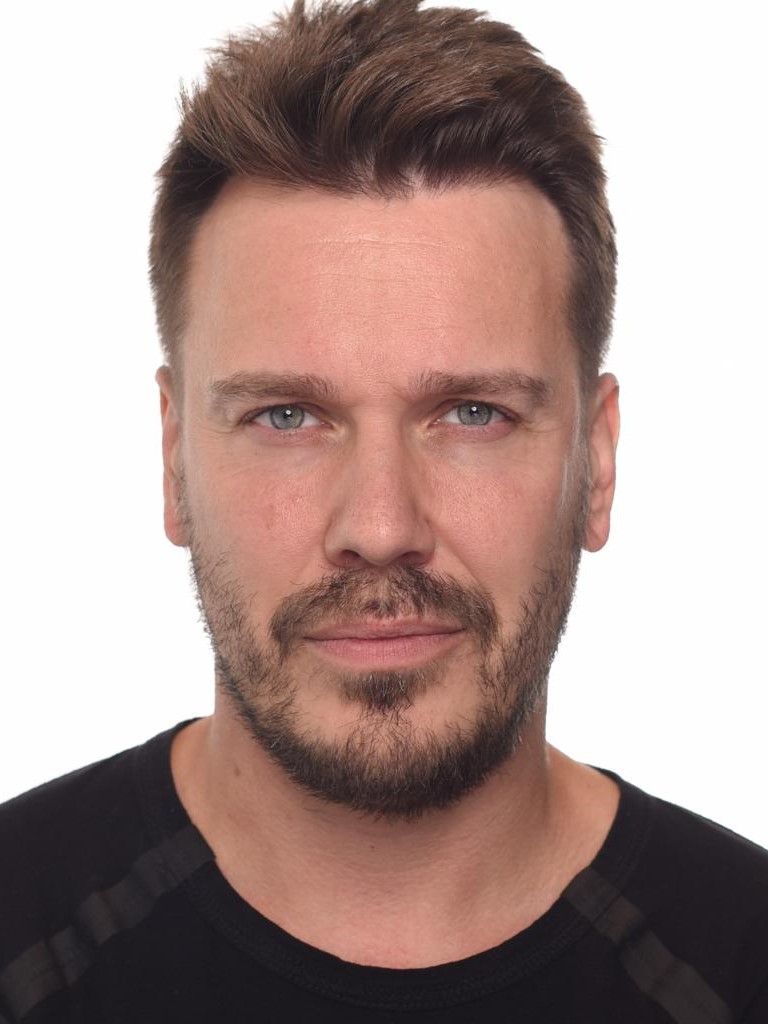
Mikhail Zygar is a nonresident senior fellow at the Atlantic Council’s Eurasia Center. He is a journalist, writer, and filmmaker, and the founding editor-in-chief of Russia’s only independent news television channel, Dozhd (TVRain).
Under Zygar’s leadership, Dozhd provided an alternative to Kremlin-controlled federal television channels by focusing on news content and giving a platform to opposition voices. The channel’s coverage of politically sensitive issues, like the Moscow street protests in 2011 and 2012 as well as the conflict in Ukraine, has been dramatically different from the official coverage by Russia’s national television stations. In 2014, Zygar received the CPJ International Press Freedom Award.
Zygar’s bestseller All the Kremlin’s Men (2015) is based on an unprecedented series of interviews with Russian President Vladimir Putin’s inner circle, presenting a radically different view of power and politics in Russia. Time named it “one of nine books to understand Russia.” His book The Empire Must Die (2017) portrays the years leading up to the Russian revolution and the vivid drama of Russia’s brief and exotic experiment with civil society before it was swept away by the Communist Revolution. It was named a Kirkus Reviews Best Nonfiction Book of the Year. His latest book, War and Punishment: Putin, Zelensky, and the Path to Russia’s Invasion of Ukraine, was published in 2023 and was featured on the New Yorker’s list of the best books of the year.
In February 2022, after Russia’s invasion of Ukraine, Zygar authored a petition against the invasion cosigned by Russia’s most prominent writers, artists, and scholars. In March 2022, he organized the only interview of Ukrainian President Volodymyr Zelenskyy for the independent Russian media. He has also started his own Substack, where he writes regularly.
In 2023, Zygar moved to New York. He’s now a press freedom fellow at the City University of New York’s Craig Newmark School of Journalism and is a visiting professor at Princeton University’s School of Public and International Affairs.
Zygar is openly gay and is married to African-Russian journalist Jean Michel Shcherbak.
Related reading
Explore the program

The Eurasia Center’s mission is to promote policies that strengthen stability, democratic values, and prosperity in Eurasia, from Eastern Europe in the West to the Caucasus, Russia, and Central Asia in the East.