

WASHINGTON—Four and a half years after launching its full-scale invasion, Russia continues to wage a prolonged war against Ukraine. Just this week, Russian drones struck apartment buildings, offices, gas stations, and the National Academy of Sciences of Ukraine in downtown Kyiv, killing seven people and wounding more than eighty others. Despite its failure to meaningfully advance on the battlefield in recent months, its dwindling resources, and its significant personnel losses, Russia has shown no willingness to halt its aggressive war and related atrocities, such as attacks against densely populated cities and civilian targets.
But the war machine is not powered by Moscow alone. It draws on a network of states, companies, intermediaries, and individuals who supply weapons, components, labor, money, and sanctions-evasion channels. While Ukraine has exhibited incredible resilience, meaningful support for Kyiv requires additional action from the international community to halt ongoing Russian aggression. Considering the Russian military’s dependence on its partners, this action must include confronting Russia’s enablers.
Russia’s support is global and spans sectors
In recent years, Russia has strengthened cooperative relationships with third-countries, including Belarus, the Islamic Republic of Iran (IRI), China, and North Korea. These relationships have supplied Moscow with weapons, weapons components, ammunition, troops, and other military support. Beyond these direct cooperative agreements, the Ukrainian government has identified thousands of foreign-made parts in Russian weapons used against Ukraine, and it has traced these components to production in at least eleven countries. The shipment to Russia of these components—some of which originate in countries supporting Kyiv, such as the United States and Germany—defies sanctions and is sustained by a network of intermediaries. Russia, in turn, has supplied its partners with equipment and support, fueling other conflicts, including those involving Iran, in Myanmar, and across the African continent.
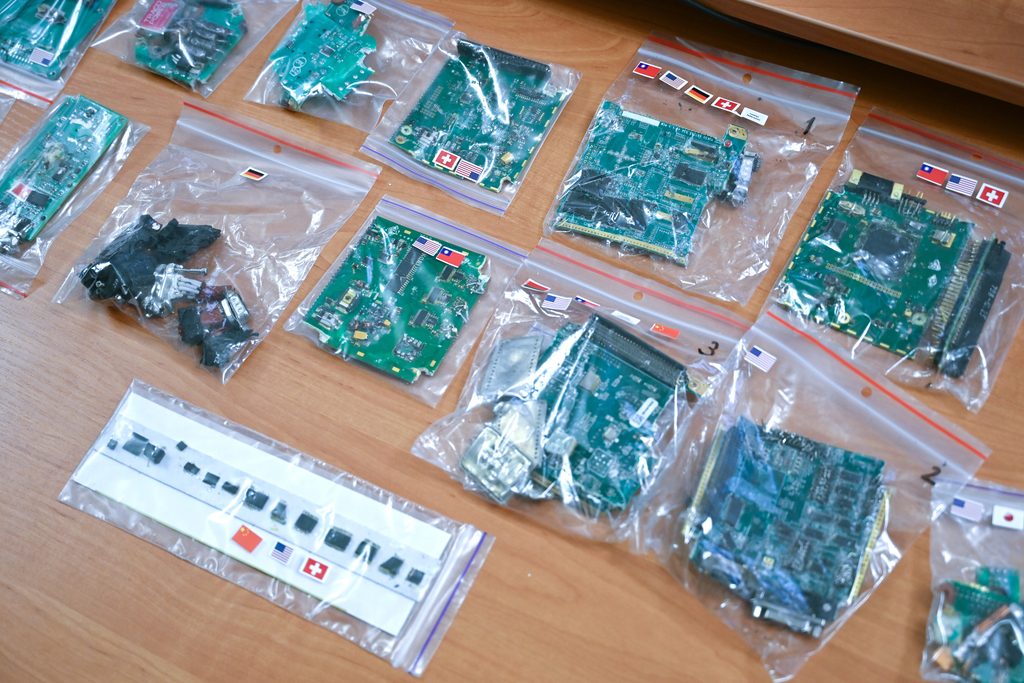
Critically, military support for Russia extends beyond equipment. Responding to dwindling domestic support for the war and an insufficient domestic fighting force, Russia has increasingly turned abroad for fighters and labor. Recent reporting indicates that the Russian government has recruited foreign nationals from Africa, South Asia, South and Central America, and beyond to fight on the front lines or serve as manual labor in facilities that support the war effort.
Russia also relies on illicit revenue streams. Artifacts looted from occupied territories have been diverted to Russian museums; stolen grain, coal, and minerals have been shipped globally to fund Russia’s costly war. This doubles the harm to Ukraine: Russia is robbing the country and using the proceeds to finance further attacks.
Finally, the Russian government partners with foreign governments, companies, and individuals to evade sanctions and other economic isolation tools that the international community has imposed. None of the above occurrences are isolated, random transactions. Instead, they form a complex global network supporting Russia’s well-documented atrocities in Ukraine.
Expanding and adapting legal efforts
Russia’s full-scale invasion initially produced immediate and diverse responses. By early March 2022, the International Criminal Court’s Office of the Prosecutor opened an investigation into the situation in Ukraine. The establishment of a Special Tribunal for the Crime of Aggression Against Ukraine followed in 2025. Domestic and regional investigative and legal bodies opened structural investigations into Russia’s crimes, issuing sanctions and export controls. Concurrently, some states have sought to isolate Russia by sanctioning individuals and entities involved in the sale and transfer of weapons to Russia, the procurement of restricted components, and other forms of support. For example, recent US legislation grants new tariff authorities to target major importers of Russian oil and gas, as well as facilitators of sanctions evasion.
Ukrainians have been at the forefront of this pursuit of justice and accountability. The Ukrainian government has condemned Russia’s enablers and compiled evidence on a webpage identifying key actors; it also offers recommendations to disrupt the transfer of weapons components. Civil society has led the charge in documentation and advocacy, and has recently launched landmark cases against Western tech companies. Yet accountability measures against these third parties have failed to keep pace with the scale of the network.
Existing tools can be strengthened and used in ways that increase pressure on Russia and its enablers. Ongoing international and domestic investigations into Russia’s crimes in Ukraine can be expanded beyond direct perpetrators and commanders to consider the role of third parties. Considering the role of aiders and abettors of international crimes is consistent with existing jurisprudence and could help address current complicity while deterring future enablers.
States can help facilitate such investigations by dedicating resources to the relevant departments and ensuring procedures are in place for both inter-department and inter-state evidence sharing. They can also work to update laws to address the behavior of those knowingly enabling core international crimes. And they can put procedures in place to redirect the proceeds of crime to the victims.
Where do we go from here?
In recent years, third parties have been implicated in the commission of international crimes across the globe. For example, several investigations into atrocities committed in Sudan have found evidence that the United Arab Emirates has facilitated the transfer of weapons, mercenaries, and related support to the Rapid Support Forces, fueling a conflict that many, including the United States, have determined to be rife with war crimes and crimes against humanity. Meanwhile, the role of third-state actors in enabling the commission of international crimes in Gaza has been at the forefront of accountability discussions. These and other enablers must be firmly condemned and subject to legal action.