
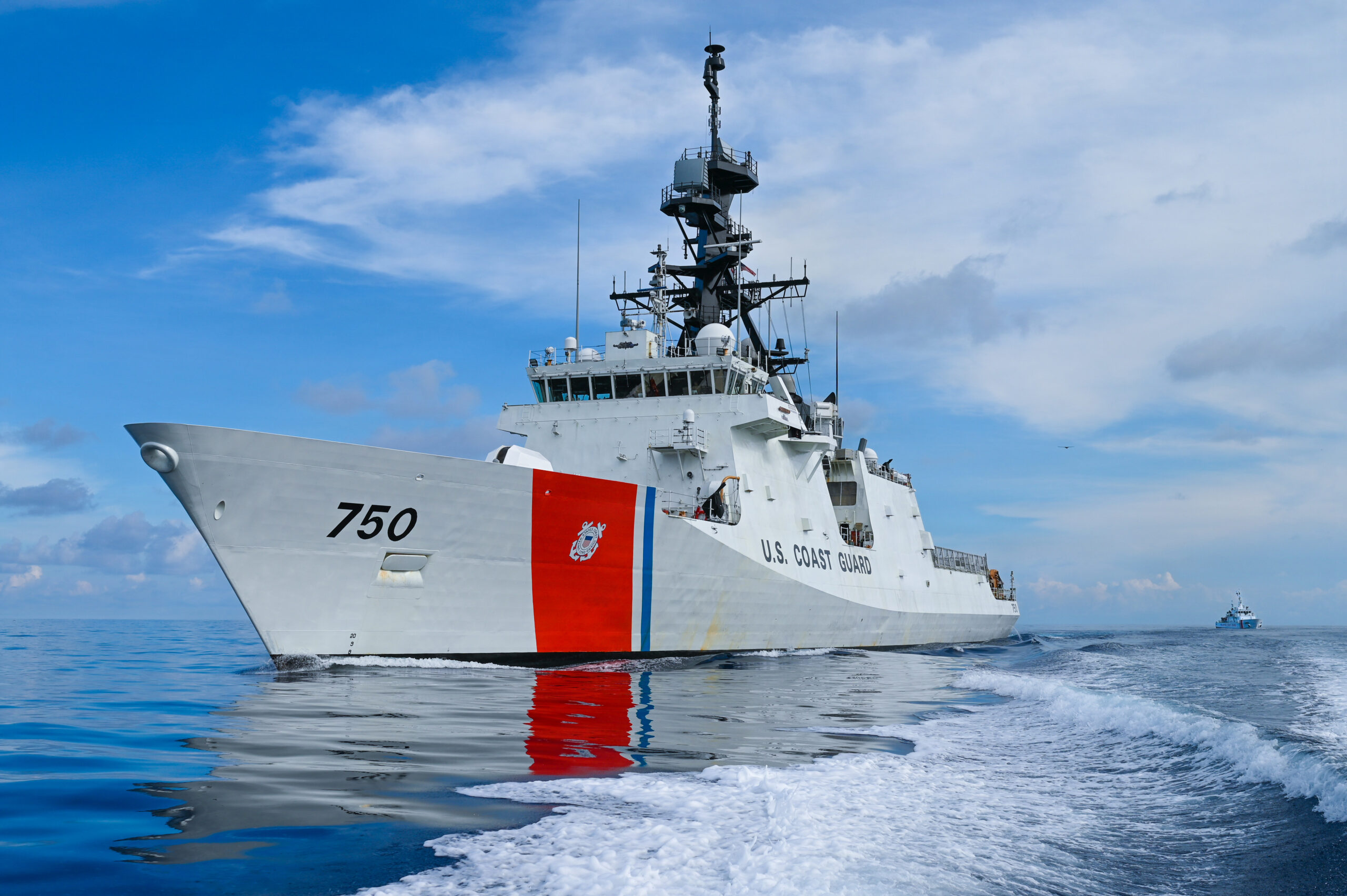
WASHINGTON—When ships lose their ability to maneuver, the result can be catastrophic. The March 2024 collapse of Baltimore’s Francis Scott Key Bridge, after it was struck by the container ship Dali, and the capsizing this month of a New Orleans riverboat, which had been rammed by an asphalt tanker, are two dramatic examples. Neither incident was caused by a cyberattack, but both point to what could happen should a cyberattack disable a ship at a crucial moment.
In fact, cyberattacks have targeted ships and the port facilities that handle them, and the number of attacks appears to be increasing. Just yesterday, reporting surfaced that the US is investigating Iran’s involvement in cyberattacks against as many as fifty tankers. This news follows an incident in August, when two Texas-bound oil tankers were reportedly hacked. That same month, a cyber intrusion disrupted operations at three North Carolina ports. In the Texas-bound and North Carolina cases, the Coast Guard responded to assess the threats and prevent attacks from harming the broader maritime system, highlighting the service’s growing importance on the front lines of US cyber defense.
Beyond imposing economic costs and supply chain delays, a successful cyberattack could render a hacked vessel unable to maneuver, threatening ports and waterways. In a dramatic example, Russian-origin malware crippled Danish shipping giant Maersk in 2017, slowing operations at seventeen ports worldwide, including the Port of Los Angeles. It is clear why the maritime sector is a particularly appealing target: trillions of dollars in commerce flow through US ports annually.
Like other critical infrastructure sectors, the maritime sector is growing more reliant on cyber-enabled networks, broadening its cyber vulnerabilities and the consequences of successful attacks. The Marine Transportation System is increasingly interconnected, and a single point of failure, especially in systems that run port operations, could cripple a company’s operations. Maritime transportation also depends on other critical infrastructure, such as electrical grids and water systems, whose disruption can bring port and vessel operations to a halt. Now, with rapidly advancing artificial intelligence models exposing vulnerabilities and empowering attackers, the need for stronger cyber defense is more urgent than ever.
Such trends prompted the Coast Guard to begin bolstering its cyber capabilities more than a decade ago. As a longtime steward of maritime safety and security, the Coast Guard has cultivated a close and cooperative relationship with the maritime industry. The Coast Guard also occupies a unique position as a branch of the armed forces operating under the Department of Homeland Security. It is vested with regulatory and law enforcement authorities, belongs to the US intelligence community, and is authorized to provide assistance to civilian asset owners. This powerful combination of authorities and capabilities enables the Coast Guard to work effectively across the maritime industry, which operates almost all US maritime infrastructure, as well as with civil agencies and the joint force to protect ships and port facilities from cyber threats and respond to incidents when necessary.
As a result, when it comes to cybersecurity, maritime transportation is arguably the most comprehensively governed of all US critical infrastructure sectors. The Coast Guard’s approach relies primarily on voluntary collaboration with maritime industry partners, but it is reinforced by regulatory requirements. Maritime transportation is one of the few critical infrastructure sectors subject to mandatory cybersecurity standards: Coast Guard rules published in 2025 require covered US-flagged vessels and maritime facilities to develop cybersecurity plans, designate cybersecurity officers, and implement minimum cybersecurity hygiene measures. A 2024 executive order expanded the Coast Guard’s authority to intervene when cyber threats compromise vessels and marine facilities, reducing downstream risk to ports and waterways. This has subsequently enabled action, for instance, on the hacked tankers sailing toward Texas, which were boarded and secured at sea by the Coast Guard and Federal Bureau of Investigation.
Mindful of increasing maritime cyber risk, the Coast Guard has built a cybersecurity-focused workforce, establishing an enlisted specialty for cyber and developing specialized Cyber Protection Teams (CPTs) trained to US Cyber Command standards. But its greatest strength is its relationship with the maritime industry, fostering threat information sharing and collaboration that has led companies to request CPT assessments of their network vulnerabilities. CPTs offer capabilities distinct from the Coast Guard’s regulatory role, working with private operators to examine vulnerabilities on private networks. In 2025, CPTs working with industry performed more than 150 operations, cracking 4,605 passwords and detecting 273 known exploitable vulnerabilities.
Most critical infrastructure sectors lack this kind of cybersecurity governance and would benefit from emulating it. A first step is to prioritize a standardized process for incident reporting. A 2022 law, the Cyber Incident Reporting for Critical Infrastructure Act (CIRCIA), mandated cyber incident reporting requirements similar to those already in place for maritime-related incidents. In 2024, the Cybersecurity and Infrastructure Security Agency (CISA) published a draft regulation implementing the law, and it should complete its final rule implementing these requirements without delay.
Cybersecurity is a collective responsibility, and methods of conveying real-time cyber information between the government and private sector need strengthening. For example, on a day-to-day basis, the National Security Agency, through its Cybersecurity Collaboration Centers, provides intelligence-driven cybersecurity information to defense industrial base stakeholders. Policymakers should consider broadening these partnerships beyond only defense-related companies to include all critical infrastructure-related parties. Additionally, the Cybersecurity Information Sharing Act of 2015, a law that facilitates information sharing by providing companies with legal protections when they share qualifying cyber threat information with the government, is set to expire on December 11. This law should be renewed by Congress to address industry concerns that any lapse in those protections can make companies more reluctant to share information about intrusions.
In addition, CISA plays a critical role as the nation’s primary cyber defense coordinator, but it has faced structural cuts, leadership vacancies, and deep workforce reductions that have eroded its capabilities. Action by the administration and Congress to affirm CISA’s crucial mission, install a capable Senate-confirmed director, and restore its resources would be a sound investment as foreign cybersecurity threats continue to grow.
Close coordination between government and infrastructure owners is especially important during significant cyber incidents. In a crisis, federal agencies should have the authorities and expertise to direct infrastructure owners to mitigate the consequences of incidents that threaten broader national security or public safety. The government also needs to be able to bring its best technical expertise to bear without delay. Like Coast Guard CPT engagement during maritime incidents, a streamlined process to enlist US Cyber Command capability should be available in the most serious incidents.
Work should begin now to address the complexity of applying military cyber capabilities to domestic infrastructure during crises. One option could be the creation of a joint interagency task force that could coordinate and operationalize military and civil cyber authorities and capabilities in support of a lead federal agency such as CISA. Until then, an existing memorandum of agreement that enables forces to flow between US Cyber Command and the Coast Guard’s Cyber Command may be a short-term solution.
Looking ahead, leaders should consider additional government regulation. Ultimately, federal cyber rules can level the playing field, strengthen protection, and spur necessary cybersecurity investment, especially in under-resourced sectors. Regulation can mandate strong authentication, segmentation between business and control networks, and regular vulnerability testing, all of which infrastructure owners should already be doing. Regulatory measures could require private sector entities to maintain cyber liability coverage and contracted response capabilities. Analogues exist: after the 1989 Exxon Valdez oil spill, the Coast Guard required oil tankers and terminals to carry liability insurance and develop on-call spill response capacity.