Click to read the transcript
This transcript is AI-generated. Check against delivery.
Aubrey Hruby:
Hello and good afternoon. It’s my honor to welcome you to the Atlantic Council in New York during UNGA. My name is Aubrey Hruby, and I am a senior advisor at the Africa Center at the Atlantic Council. And we are so pleased today to be hosting an event to discuss how we can ensure national value in global mining value chains in African markets. As you’ve all followed, critical minerals has become the critical agenda when it comes to discussions here in New York this week, but also in Washington as President Xi comes on Thursday.
And we’ve been discussing for some time how this new flow of investment in African projects can result in broad-based prosperity. So we’re here to discuss that today.
I lead the task force at the Africa Center on critical minerals and energy and infrastructure. It’s graciously supported by Benedict Peters of Aiteo, Managem of Morocco—I see the honorable ambassador from Morocco with us today—Gerald Trading, and others. We have a robust group of US and African companies looking for ways to partner, and that’s really going to be some of the themes today. So it’s my pleasure now to introduce the United States’s brand new assistant secretary for Africa, Frank Garcia.
He brings a deep background in defense and intelligence in the region. I’m impressed by his energy. I’ve seen him on the continent. I’ve seen him in meetings. He brings a lot of energy to a very challenging task. He has to manage more countries than any other assistant secretary. And so that means a lot more meetings, a lot more running around. And please join me in thanking him for making time today. Frank, welcome to the podium.
Frank Garcia:
Thank you so much. I hope I don’t put you all to sleep with that kind of an energetic introduction. I really appreciate it. We were talking back in the green room, and so I usually like to start off with a little bit of a joke. And what I was told was that I don’t really have any rare earth critical mineral jokes yet.
But I do invite those of you that can think of puns that work well with rare earth critical minerals to please reach out to me or my staff because I’m looking for new material in case this one is an epic fail for me. But thanks so much for bringing us all together today.
Ambassador Yade, this is great to be here, and I commend you for your leadership in the African Center and work on this issue, including the Critical Minerals Task Force, which you launched in Mining Indaba.
It’s an honor to join this conversation alongside President Obasanjo, and President Boko, who’s slipping in here soon, as soon as traffic clears a little bit, and other distinguished leaders and partners in this room.
I want to use my time this afternoon to offer the United States perspective on questions this task force has rightly placed at the center of the conversation: how do we move from extraction to value creation on the African continent?
So let me start with the urgency of the moment. Less transparent operators have spent years distorting critical mineral markets using opaque business practices to build dominant positions that are now being weaponized.
That has created real vulnerabilities for producer and consumer countries alike, and it has too often meant that African countries have not captured the full value of their own resources.
This is the model we intend to change. The United States approach rests on three commitments: one, transparent investment; two, competitive markets; and diversified supply chains that let resource-rich countries move up the value chain, not just export raw material, but also build the industrial base around it.
For example, in terms of building the industrial base around it and avoiding market manipulation, US President Trump and Secretary Rubio’s leadership on the FORGE and Project Vault initiatives address both international supply chain and domestic reserves concerns that we have.
With 30 percent of the world’s mineral reserves, Africa is not simply a source of inputs for someone else’s industrialization. It’s a partner in building supply chains that are secure, transparent, and mutually beneficial from the mine to the end user. This means serious government-to-government partnerships, and I would add government-to-industry and industry-to-government partnerships, and working on policy frameworks that—like FORGE—to make sure that there are local content requirements, clear subcontracting rules, and investment terms that determine whether mineral wealth translates into jobs, industry, and long-term growth, or simply flows out of the country in Africa.
This partnership is required to ensure that this is done in a way that remains commercially viable and for transparent investment. And I think the commercial viability and transparency, as well as technology innovation, are really three of the things that the United States brings to the game when it comes to working with our partners on the continent.
We’ve seen what the framework can produce. The USDRC Strategic Partnership Agreement signed by Secretary Rubio and Foreign Minister Wagner in December 2025 shows how diplomacy can open the door to real commercial transactions.
We’re also deploying our foreign assistance tools differently through the State Department’s US-Africa Strategic Investment Program, using assistance deliberately to accelerate commercial projects that serve both Africa’s development priorities and America’s strategic interests.
But the deeper point, and the reason that I’m glad that I’m able to be part of this conversation that includes President Obasanjo and President Boko—who’s still not here but will be, I guarantee you—is that this only works country by country through the specific choices each government makes about local content, subcontracting, and terms—the terms it sets for investors.
Nigeria, Botswana, the DRC, Mozambique, Zambia—each is writing its own version of this policy, and each partnership looks a little bit different. Our job on the US side is to bring transparent capital, technical expertise, and a level playing field for American-aligned companies to invest under those terms.
This is a model we want to build with African governments. Not extraction, but partnership, mobilizing investment, supporting local processing and infrastructure, creating jobs, and helping resource-rich countries capture more value from what they produce.
I look forward to hearing from President Obasanjo and President Boko, who will be here, about how their countries are approaching these choices, and to a candid conversation about what real partnership on critical minerals should look like going forward. I’m excited to be here today and look forward to follow-on discussions. Thank you so much.
Aubrey Hruby:
Thank you so much, Assistant Secretary Garcia. You know, one of the themes that what came across loud and clear when I was in Nairobi for the AmCham Business Summit just a week and a half with you and your colleagues is how much the US government is supportive of the African vision of local value addition.
And, you know, the local processing theme is one that is not new. I see His Excellency Obasanjo here. It was just yesterday that I heard Alhaji Aliko Dangote speak, and he had mentioned that it was in your administration, sir, that there was such a focus on processing Nigeria’s oil, and now the refinery is a reality. And it’s that local addition of natural resources that can be transformative because, you know, to quote many of my Nigerian friends, you can’t eat potential.
And so while it’s in the ground, and not out and not being processed, the vision of broad-based prosperity remains aloof. So it’s my pleasure now to introduce Miguel Katemb. He is the former head of the regulatory authority for subcontracting for the private sector in the Democratic Republic of the Congo (DRC), and he’s recently released a brand new book on development through local content, with looking at the case of the DRC so that it can be a case not only for future actions in the DRC but for the continent as a whole.
So, Miguel, please.
Miguel Katemb:
Thank you very much. Thank you very much, ladies and gentlemen. So before I start my speech, this is my book. And this book is Africa’s Development Through Local Content. And this book was prefaced by one of the big leaders of Africa. I can say we call him the Baba of Africa, His Excellency Olusegun Obasanjo, if we can applaud him.
And the book was post-faced by His Excellency the President Nana Akufo-Addo, the former president of Ghana. So you can find the book on Amazon because the book is explaining local content in Africa and the case of the Democratic Republic of Congo.
Your Excellency, Olusegun Obasanjo, former president of the Federal Republic of Nigeria. Your excellencies, heads of government. Your Excellency, Frank Garcia, US secretary for African affairs.
Madame Aubrey Hruby, CEO of Times Africa, distinguished business leaders, investors, and economy stakeholders. Dear partners of Africa, distinguished guests, ladies and gentlemen in your respective title, rank, and capacity.
I would like to thank the organizer for giving me this opportunity to speak in this conference under the theme “Africa’s Time Has Come: for Extraction, Enhanced Value, Local Value Creation in the Global Mining Economy.”
Two key concepts emerge from this theme: global mining economy and local value creation. The mining industry is highly capacity-intensive and globalized. It mobilizes capital, science, technology, equipment infrastructure, expertise, and international partnership. Local value creation, on the other hand, refers to our ability to ensure that a growing share of the wealth generated by our natural resources is creating capacity and reinvested in Africa.
This is the essence of local content. This is precisely the central issue addressed in my book, Africa’s Development Through Local Content: The Case of the Republic Democratic of Congo, inspired by President Félix-Antoine Tshisekedi Tshilombo’s determination to enable the Congolese people to participate more fully in the wealth generated by their own resources.
I advocate in this book for local content as an instrument for economic sovereignty. My conviction is that the struggle of our fathers was for political freedom; the struggle of our new generation must be for economy development, economic power.
It’s important in this regard to reorganize the profound movement taking place across the African continent. After achieving political independence, Africa has embarked upon a second struggle: the struggle for economy sovereignty through local content.
This movement progressively took shape in Nigeria in 2021 under the leadership of His Excellency, former President Oluṣẹgun Ọbasanjọ. In South Africa, in 2004, under the leadership of President Thabo Mbeki.
In Ghana, in 2013, under the leadership of President John Dramani Mahama and [former President] Nana Akufo-Addo. In Senegal, in 2019, under the leadership of [former] President Macky Sall.
In Zambia, in 2025, under the leadership of President Hakainde Hichilema. In the Democratic Republic of Congo, in 2026, under the leadership of President Félix-Antoine Tshisekedi. Different paths, but one common ambition: the transformation of African resources into value to create jobs, to transform resources in Africa, to create business and economic power for Africa.
The mining industry: So today, as a former authority of the local content in DRC, we appreciate and we salute the partnership that was done by America and DRC under the leadership of President Tshisekedi and the President Donald Trump.
This is a very big partnership for Africa, and all Africans, they are watching. And this partnership was a very good partnership for developing local business, and for local people.
But to invest in Africa, you must understand the mindset of Africa. We cannot just to say how much we have done on extraction. No, we can say how much we have transformed together. We can’t just say how many people you have paid a salary, but we must say how many subcontractors and small companies we have created, because beyond those small companies, there’s another job that is being created, and those small companies a few years later became big companies. So the mindset today in Africa has changed, and we can see to adjust the partnership, the win-win partnership, and to share the cake.
Local content is not closing Africa to the world. But local content is to make the cake bigger for everyone, because when the cake is big, we can share it. If it’s small, we can eat, and the cake will disappear.
So I think this is the new model under which we can do partnership in Africa. Local content, as I say, is therefore meant to develop countries, to reduce poverty—because one of the things that we have seen in Africa, especially for the countries that are producing minerals around those areas where there is mining, you can see very big poverty.
And this is the reason that African leaders have [sought] to make local content the power for sovereignty for the economy. Investment must reduce poverty. Investment must create jobs and must also exchange expertise, because it’s not good when you are doing extraction, and the day the mining or the product finishes underground, you go, and you go with the technology. No, you don’t go with the technology. You leave the technology.
The reason that to exchange expertise with local people is to develop Africa, develop our industries, develop the world. Thank you very much, and God bless you.
Aubrey Hruby:
Thank you, Miguel, for sharing that bold vision. It’s clear that it is shared and it’s not a one-way process. As much as investors have to give to Africa in terms of investment, resources, technology, Africa has also given to the US. I see our presence has been blessed with Bismack Biyombo, who has joined us here, and is a perfect example of Africa’s best and brightest enriching the US, enriching the global experience in sports and other things. The Atlantic Council’s Africa Center has a rich sports program in addition to our critical minerals and energy work, because we like to take a 360-degree view. And also one of our board members here, Mary Yates, who’s been a leader in so many ways. So really, thanks for making time today.
It’s now my honor to welcome Gemma Fox to the stage. She is a news director at Time Magazine with a global remit, and she will have a conversation with His Excellency, the former President of Nigeria, Obasanjo.
Gemma Fox:
Good afternoon, everyone. Can you all hear me? Thank you so much for joining us here today in person, on the livestream. Thank you, of course, to President Obasanjo for joining me and to the Atlantic Council for hosting this conversation.
Let’s begin, and I will leave some time at the end for questions. President Obasanjo, I read in a recent interview of yours, you said Nigeria has no business with poverty in relation to the wealth of natural human resources.
So in your view, what is still standing in the way of that wealth translating into tangible benefits for ordinary citizens of Nigeria?
Oluṣẹgun Ọbasanjọ:
Yeah, thank you very much. I repeat what you said, you read. Recently, I’ve been very consistent about this. Nigeria has no business with poverty, with the resources, natural and human, that God has given to us. Then why are we still where we are? That is the question.
I would say four major reasons why we are still where we are. One is—well, I won’t call it ignorance. I will call it lack of knowledge. I think that is very important. And I will, of course, try to explain what I mean by each of these.
There’s lack of knowledge. There’s greed. Greed. There’s corruption. Corruption. And there is what I would call competence.
If I can take them one by one. Lack of knowledge. Let me take my own personal experience. I wanted to diversify Nigeria’s economy beyond oil and gas, and I was focusing on three areas: agribusiness, solid minerals, and manufacturing or industrialization, if you like.
So agribusiness, not much of a problem from land preparation to food on the table. What you have to do—industrialization, of course—we have some handicaps on infrastructure and all that, and technology, if we can take care of those, not much of a problem. Solid minerals, part of which are what we now call strategic minerals. And I came to a friend of mine in this country, and I said, look, you made money from solid mineral. Why can’t you come and invest in Nigeria?
And he looked at me and he laughed. And I said, why are you laughing? He said, I’m laughing because of your ignorance. He said, where is your law?
And we had no law about solid mineral at that time. He said, where is your regulation? He said, where is your map that shows satellite image of what you have?
All this we didn’t have. So I said, you know, and then he went on. He said, those of us who sit in New York, in Frankfurt, in London, in Paris, and take decision to invest, we normally have more than 50 percent assurance that our investment will come back before we invest.
And what we go by are the things that I’ve asked you now—your law, your regulation, your map, what do you have? I’ve said, then what do I do?
He said, go and get all those things. Well, my lack of knowledge did not make me know what I should get. But when I was instructed, and when I learned, I got those things. And I thought we were prepared to have investors that will be able to do what we want them to do. So that’s the issue on lack of knowledge.
But again, I can substantiate or clarify the issue on, on greed and the issue on corruption, and the issue on competence. These are the four main issues that I believe have adverse effects on turning what I call the resources that we have into riches for our people.
Gemma Fox:
I wanted to I wanted to ask, if I may, if you were back in office, what would you do in your first thirty days? Are there particular investment opportunities in Nigeria outside of oil and gas that you think people should really be focusing on?
Oluṣẹgun Ọbasanjọ:
I told you that that’s what I really wanted to do. But at this point in time, I think the issue of knowledge is taken care of. And then I will want to work on the issue of greed, and I will want to work on the issue of corruption, and of course work on the issue of competence.
Let me give an explanation on the issue of competence. We had three refineries in those days. And they were not performing competently as they should perform.
So I called Shell. I said, look, come and help us operate our three refineries. They said, no, we won’t touch it.
Why? Okay, all right. First of all, I said, take equity participation. They said they are not interested in equity participation. I said, all right, if you are not interested in equity participation, now come and help me without equity participation. Come and operate it for me. They said no.
You are not interested in equity participation. You are not interested in operating. Now they said they won’t touch it. They left. Then I called the head of the team one-on-one. I said, tell me, why are you not interested in operating, in helping us?
And he gave me four reasons. One, he said, well, look, even we make the majority of our profit from upstream, not from downstream.
Of course, we don’t run downstream at a loss, but it’s not as profitable as upstream. I didn’t know that. So, part of knowledge.
Then he said, as at that time, the average size of a refinery is about 200,000 barrels to 250,000 barrels a day.
Gemma Fox:
Wow.
Oluṣẹgun Ọbasanjọ:
Our refineries are sixty thousand, one hundred thousand. He said, your refineries are too small. I didn’t know that. He said, two and three, you have never maintained your refinery well. You have a local quack man who put together some engineers from Poland and Czechoslovakia. He said your refinery has not been well maintained.
Number four, he said there’s too much corruption around your refinery. We don’t want to get involved in that issue of corruption. So you see a bit of competence, you see corruption in that, and that has not disappeared. If anything, it’s gotten worse. That is the truth.
So if I had the opportunity today, what I would first want to do is to get rid of incompetence. I would have to fight corruption in such a way that, well, it is greatly minimized. There’s no country where there’s absolutely no corruption. But there are many countries where corruption is not a way of life. We must not make corruption a way of life, and you must not get away with it. It must not be condoned. Now, these are the things. And then, of course, I would improve technology.
Technology today has improved compared with what even was the situation when I left government some twenty years ago. Technology has advanced. I would bring modern technology.
And I believe that would be—and of course, my brother from DRC was talking of local content. And he quoted me starting local content in Nigeria in 2022, and now it has moved around Africa. I will go from local content now to partnership.
We have done a lot in local content, but we now must be talking of partnership and value addition locally.
Gemma Fox:
Thank you. You’ve highlighted some of the challenges in Nigeria, but like you said, Nigeria is not alone in this—corruption, infrastructure, technology. So I wonder, especially as we’re at the Atlantic Council, where do you see foreign governments and the investment opportunities that they can bring, perhaps Nigeria, and across the continent. When you look at the US, China, and the investment they’re bringing, do you see that as an opportunity? And when governments are in these talks, how can they ensure that the benefits with jobs, skills stays in the country?
Oluṣẹgun Ọbasanjọ:
Thank you. I listened very attentively to the introductory speech of the assistant secretary. One of the words that I picked up quickly is talk of competition, and I believe that that is why the market economy is of interest—and it’s something that we all cling to because if there’s competition, there’s no monopoly, and then you have choice as well.
And that is very important. And I would say that one of the things that we have in our part of the world is that we were used to things from the West, whether it’s from America or from Europe. A long time ago, we were used to this.
And now we have new friends coming from the East. I like that.
Gemma Fox:
You like that?
Oluṣẹgun Ọbasanjọ:
Competition. Market economy. So we have old friends. We keep our old friends. And we have new ones coming. Let’s make new friends as we keep old friends, and then let the competition be high.
Let us have a market economy. Let us have choices. I believe that is something very important that we must do. We must not say, here are new friends, so we abandon old friends, or we have old friends, we will keep only to old friends, we will not make new friends.
But we must be even-handed in dealing with our friends, whether from the West or from the East. That’s the first thing. The second thing is that now, what do we want? We want fairness, equity, and justice.
Fairness, equity, and justice. Win-win for all. Now, the history of Africa with the developed part of the world has not been a fair one, and that is the truth.
Now, let us at this point in time make it fair—fair for the investor and fair for us on the continent of Africa. And that can be done.
And that’s why I use the word “partnership.” In partnership, you get, I get. We have a saying in my part of the world that when Christ gives to me, and I give to you. Give you, and you give me.
So in this relationship, it should be a win-win for all. What is it? What is the common good? What is the common security? And what is the shared prosperity?
And that to me is—well. My brother was talking of local content. At that time we had not had the technology. So what can we do that we can make contribution to? Extraction.
Now we have done local content, transportation, what we can provide, and all that. And we even went beyond that in Nigeria to what we call marginal field in oil and gas. Marginal field, which is too low in production for the international oil companies, let’s give that to local people. Now we are saying, okay, we’ve gone beyond that. Let’s now have partnership. We still haven’t got the technology. Bring the technology. We will bring whatever we have. And one thing that we have is these resources on our land.
Now, God doesn’t make a mistake. He put those resources on our land first of all for us to benefit from it. But it’s not meant for us alone. It’s meant for us and the rest of the world. But we should not be denied the major opportunity, the major advantage, of what God has given to us.
Now, if you help us and we work together, then let’s share it together.
Aubrey Hruby:
Thank you, President Obasanjo, for that wisdom and inspiration. And thank you, Gemma, for leading that conversation. And thank you all for making time today. It’s busy. We know it’s trafficky. We know it’s a challenge to get around, but really it’s an honor that you’ve spent time with us. We look forward to hosting you at more Africa Center events in the near term, and thank you very much.
On Tuesday, September 22 at 1:00 p.m. ET, the Atlantic Council’s Africa Center hosted a high-level discussion featuring former Nigerian President Olusegun Obasanjo to explore how resource-rich countries can move beyond simply exporting raw minerals. Panelists discussed how governments can design effective local-content and subcontracting policies that create meaningful opportunities for African businesses while remaining attractive to international investors.
With 30 percent of the world’s reserves, Africa plays a central role in the global search for critical minerals as they become increasingly essential to the energy transition, advanced manufacturing, defense, and digital technologies shaping the world.
This event is part of our #ACinNY series, happening on the sidelines of the United Nations General Assembly. See the rest of the line-up and register for more events here.

Welcome remarks
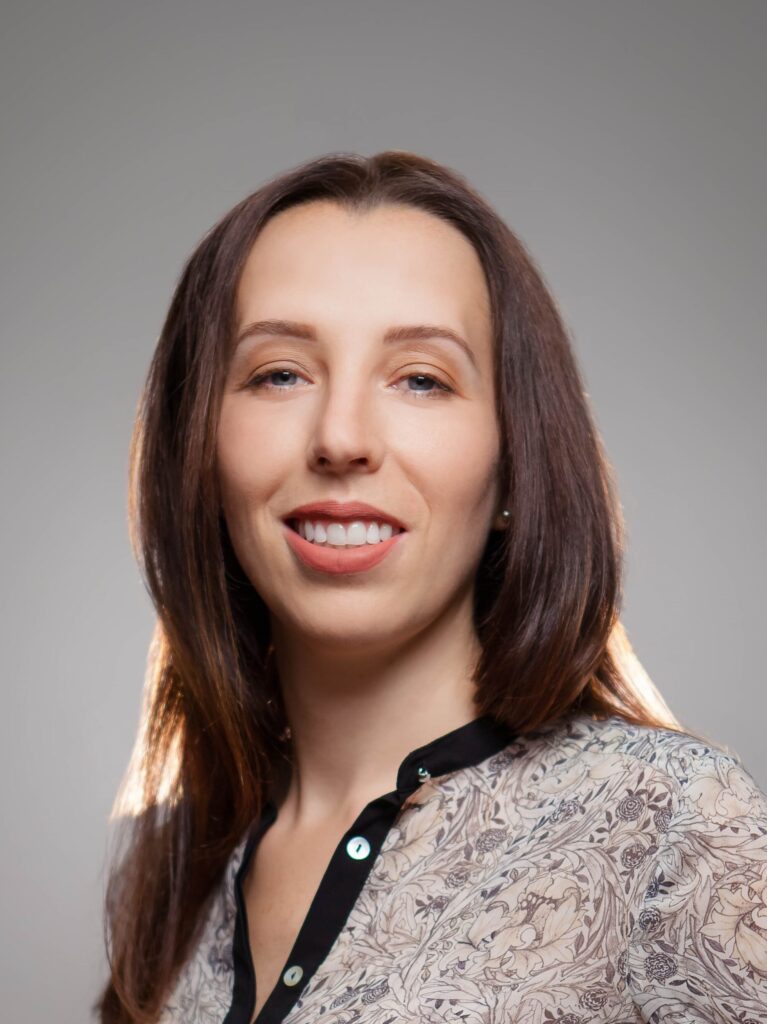
Aubrey Hruby
Senior Advisor, Africa Center,
Atlantic Council
Speakers

Olusegun Obasanjo
Former President,
Federal Republic of Nigeria

Frank Garcia
US Assistant Secretary,
Bureau of African Affairs

Miguel Kashal Katemb
Former head of the Regulatory Authority
for Subcontracting in the private sector,
Democratic Republic of the Congo
Moderated by

Gemma Fox
News Director,
Time Magazine
Explore the program
The Africa Center works to promote dynamic geopolitical partnerships with African states and to redirect US and European policy priorities toward strengthening security and bolstering economic growth and prosperity on the continent.
Atlantic Council TV
Watch this event and more content on ACTV
Follow the conversations shaping our world. Available on all major platforms.