On Tuesday, June 9 at 2:00 p.m. ET, the Atlantic Council hosted an AC Front Page conversation with Andrew Giuliani, executive director of the White House Task Force on the FIFA World Cup 2026. Featuring forty-eight teams playing across three host countries, the tournament is slated to open up opportunities across business, development, collaboration, influence, and diplomacy. Giuliani joined the Atlantic Council to discuss what’s in store for the 2026 World Cup, how the hosts have prepared, and what hosting the tournament means for the United States.
This conversation is part of the Atlantic Council’s Power of Sports initiative, which leverages major global events to advance diplomacy and development during the broader US “decade of sports,” as the country prepares to host the 2026 FIFA World Cup, the 2028 Summer Olympics, and the 2034 Winter Olympics.
TRANSCRIPT
Expand to read
Frederick Kempe:
Welcome to this special World Cup edition of Atlantic Council Front Page, our premier platform for global leaders. I’m Fred Kempe. I’m president and CEO of the Atlantic Council and I’m delighted today to welcome Andrew Giuliani, the executive director of the White House Task Force for FIFA World Cup 2026 to talk about the games. Welcome here.
Andrew Giuliani:
Fred, thank you so much for having me. I mean, it’s amazing to think that we are now 48 hours and 51 minutes until kickoff at this point. So maybe a few seconds I missed in there, but yeah.
Frederick Kempe:
So I want to welcome your wife, Živilė. Where’s Živilė?
Andrew Giuliani:
She’s coming in right now.
Frederick Kempe:
Oh, she’s coming in now.
Andrew Giuliani:
Yeah.
Frederick Kempe:
Okay. And your daughter will be coming in as well. Grace, we’ve got the ambassador from Morocco. We’ve got representatives from various other embassies, a few board members, our executive vice chair Adrienne Arsht, who is so incredibly into sports that we even nicknamed one of the projects that she was in charge of the Lindsey Vaughn project, because you want to be in her slip stream instead of in front of her being flattened by the skis. So we love sports here. And the Africa Center, Ambassador Rama Yade, who was the ambassador for sports for President Sarkozy in France, as a great leader in this world and across the Atlantic Council, we’ve been doing more work on this.
Last September, as you know, we honored Gianni Infantino, and he was introduced by Tom Brady and they had a disagreement on stage about what should be properly called football.
Andrew Giuliani:
Yeah, I think I know where this is going.
Frederick Kempe:
And I’ll ask your answer to that. I mean, do you like the word soccer or football? But Tom Brady conceded on stage that he had only kicked the football six times in his entire career.
Andrew Giuliani:
The footballers have a pretty strong case here. I mean, with that being said, we are stubborn Americans over here and I must say I grew up playing American football. President Trump has been consistent throughout this that we’re going to continue to call it soccer.
Although the last time that Gianni Infantino was in the Oval Office with President Trump, Mr. Infantino made the case saying, “Wait a second, you guys play football and we play football with our feet. What’s going on here?” And I could tell the president thought about it for a minute said, “This is actually a pretty good point.” Thankfully he didn’t bring somebody over for an executive order to write that. So I think we’re still calling it soccer at this point, but we’ll just say it’s a dynamic situation. How about that?
Frederick Kempe:
And so you will use the term soccer.
Andrew Giuliani:
Yes, yes. It’s still US Soccer organization, but I think these are some of the fun debates that we get to have around football, soccer, but it’s obviously a great time to bring the world together over what really is the world’s game and a great opportunity for America to, I think, continue to see the growth of soccer here in the United States.
Frederick Kempe:
So let’s get right to that Thursday. The opener is Mexico and South Africa. We will have the big screen here. We’ll have chairs here for people in our office, like people around the world. There will be a productivity loss at the Atlantic Council for a while.
Andrew Giuliani:
For about 40 days, I think.
Frederick Kempe:
But look, this is a big deal. It’s a really big deal. So you were here about six months ago?
Andrew Giuliani:
Yeah. December 4, the day before the draw with the ambassador had a great conversation about what the World Cup was looking like at that point. It’s amazing. It feels like it was minutes ago, but it also feels like years ago from our perspective too.
Frederick Kempe:
Well, let’s talk about that years ago, but we talked about the country’s readiness at that time. How would you assess it now compared to where preparations stood when you were here?
Andrew Giuliani:
I think preparations have been fantastic, and I’ll point to a few different things first and foremost. So my role as executive director of the White House Task Force on the World Cup is simply to make this the greatest sporting event in world history. No pressure or anything. But in assessing that, we’ve looked at a couple of different areas in particular. The first being safety and security. We’ve realized that this World Cup will be a success, will be a massive success as long as fans feel safe, secure, whether you’re American citizens, whether you’re visiting for the World Cup.
Now if you look at the seventy-eight matches within the United States, every single one of them will be set up like a Super Bowl. So what does that mean? That means the perimeters in terms of what you’re getting, and something Tom Brady knows very well about, by the way. Those Super Bowls, ten of them that he was in. But you’ll have multiple perimeter checks from security. You’ll have checks while you get onto public transportation to make sure that you’re a valid ticket holder. Again, if you were in San Francisco for the Super Bowl this last year, it will be very similar. Soccer fans or football fans, they generally like to come to stadiums late in the fifteen, twenty minutes or so before the game and come to the stadium.
What we’re telling fans are gates open three hours before FIFA is going to be doing activations within the stadium. Come. You paid a premium for these tickets. Come early, get into the stadium. We want you to really be able to enjoy this experience. Watch your team warm up. Also, from a security perspective, this is an amazing story that we have to tell. I know we were talking a little bit about this back in December, but since December, what we’ve been able to ensure from a Counter-UAS perspective is that all seventy-eight of the matches will have Counter-UAS mitigation coverage. What that means is counter drone coverage from coming into the stadiums.
On top of that, one fan festival in all eleven host cities will be covered by Counter-UAS mitigation throughout the duration of the tournament. How did we do that? Okay. Go back 368 days. President Trump signed an executive order called the Air Sovereignty EO. That created the Air Sovereignty Task Force run by a man with many hats, Marco Rubio, who in that instance was the NSA advisor, our Secretary of State, of course, who then also delegated to my good friend, Dr. Sebastian Gorka, to run the day-to-day of the Air Sovereignty Task Force.
What that did, they ended up looking through a whole bunch of different measures, but one in particular was they worked to pass a bill called the Safer Skies Act through Congress. Actually, the day before I spoke at the Atlantic Council, I ended up speaking with all the Republican senators at their lunch telling them that, “Hey, look, as we look at the World Cup, we need counter drone coverage.” But as you look beyond that, think of all the college football, the NFL games that you all have in your states, we need state and locals to be able to have drone mitigation coverage, understanding that this is an emerging threat.
That bill got passed on December 18, I should say signed on December 18. Since then, the FBI stood up a schoolhouse, a training center for state and local law enforcement to be able to go through the Department of Justice then just as they would in a task force model, was then able to deputize them. So that allows us to have the coverage in all eleven of these cities in their fan festivals. It’ll be the federal government that’s covering all of the stadiums for seventy-eight games and it will be that joint task force model between the FBI and state and local law enforcement that will be able to do that.
One other thing I want to just point out on the drones too, there was also a $500 million Counter-UAS grant that the federal government underwrote so that way state and locals could be reimbursed. The first 250 million in that for fiscal year 2026 was delegated for those with major special events. Think the Washington Capital Region, the National Capital Region because of America 250, all those great things that we have around our semiquincentennial and then the eleven host states that are hosting FIFA or FIFA adjacent events. So that’s just the Counter-UAS perspective. We have a whole lot to talk about with transportation and everything else.
Frederick Kempe:
Well, you’ve already answered my second question, but I’ll ask it anyway, which is FIFA World Cup 2026, it is the largest and most complex sporting event we’ve had in the United States. Fair to say that. Seventy-eight Super Bowls, you said. Can you compare this to anything that the federal government has had to do before? Is this totally new terrain for the federal government? What’s the complexity look like and what was the biggest challenge in putting all of this together?
Andrew Giuliani:
Yeah, this is unique, completely. I mean, you think about the last time we hosted a major global sporting event like this, you go back and it had pre-September 11 security procedures. It was the 2002 Salt Lake Games. Now those procedures didn’t come in until 2003 once Department of Homeland Security came in. So it was a real last-minute overlay to make sure that those games were safe. So this is really, really unique. To the point we were making before though, you think about those seventy-eight matches. When we think about a Super Bowl, you have state and local law enforcement along with the federal government that descends upon one place, whether this year it was Santa Clara and San Francisco for a week, they descend there, the circus leaves town the Monday after the Super Bowl and they go back.
This is seventy-eight of those over the course of thirty-nine days. You add Canada and Mexico, you’re talking about 104 of those over a forty-day stretch. This is completely unique. Then add on top of that Sail4th 250 in five of our cities across the United States that started in New Orleans recently that ends in Boston. I know we’ll go through New York on July 3 and all the tall ships that we’ll be going through New York Harbor. I think between July 1 and 9, you add all the semiquincentennial events from Freedom 250, America 250, a small fight that’s going to be on 1600 Pennsylvania Avenue here in a couple of days, which I’m sure you guys have heard about as well. And then IndyCar. This summer is truly unique to celebrate our 250th birthday, but there are certainly challenges that come with that, Fred.
Frederick Kempe:
Yeah, I can imagine a host of them. So first of all, let me remind people listening virtually, those here in person, the way to submit questions and we’ll get to those as we go along, is on Zoom using the Q&A function or on X using /ACFrontPage. And for those here with us in the studio, raise your hand and our staff will bring you an iPad to submit questions for the guests.
We really have to do it this way this time and we’ll get to those a little bit later on. That is a segue to a question that’s actually online that is the next one I was going to ask anyway, which is what are the advantages and challenges of first-time multi-country hosting of the World Cup? Only once before 2002 was a men’s World Cup co-hosted by more than one country of South Korea and Japan. And so talk to us about the complexities of that.
Andrew Giuliani:
Sure. I think this is a model if you go look forward at the 2030 World Cup and I see many of my friends in the audience here between Morocco and Spain and Portugal. I know that that World Cup will also have a game in Argentina, I think Uruguay and Paraguay as well. So when you think about games played over three continents descending upon Spain, Morocco, Portugal, again, you realize that this World Cup really, really is becoming global, not just in who’s participating, but in who’s hosting this. So it’ll be fascinating to see over the next decade or two what this evolves to.
But at least in terms of the first iteration of this, I think the United States of America is as positioned, probably better positioned than anybody to be able to host the first forty-eight team World Cup along with Canada and Mexico. I think the work that we’ve done with those countries, think about some of the health restrictions recently that we’ve had to put in place because of some of the issues with Ebola in DRC and Uganda. We work very closely with Canada, with Mexico to make sure that all three of our countries, the entire continent, had the same health restrictions. So then that way we were not risking North Americans, Mexicans, Americans, Canadians, or any of our international visitors potentially becoming contagious with Ebola.
I can tell you on a Counter-UAS front, I went down there, led the US delegation for the very first trilateral on Counter-UAS back in July of last year. And so thank you to Mexico for hosting that. It’s been-
Frederick Kempe:
First trilateral in general or first trial …
Andrew Giuliani:
Sorry, I apologize. First trilateral on Counter-UAS on counterdones.
Frederick Kempe:
That’s what I’m…
Andrew Giuliani:
Exactly.
Frederick Kempe:
Interesting.
Andrew Giuliani:
And the World Cup was really kind of the push on that. I mean, we’ve seen a lot of policies both domestically and internationally between our three countries that have been able to be advanced with the World Cup being that short target here in front of us, understanding how unique it is to have an entire continent. And by the way, that’s going to make it so exciting and so incredible for fans, right? I mean, you’re going to get a very different feel and culture, let’s say, in Toronto than you might in Miami than you may in Guadalajara.
I mean, it’s really sixteen different events. And from my perspective even, being a New Yorker, thinking about the difference between New York and Dallas and then Kansas City and Los Angeles, I mean, it’s really, really going to be an unbelievable opportunity over our 250th birthday to just throw one heck of a birthday party with the World Cup being the major event there in the middle of it.
Frederick Kempe:
So those are the advantages. What’s the challenge or disadvantage of three countries?
Andrew Giuliani:
I think probably some of just getting in line some of the entry procedures, making sure that the coordination is there. I will say, and a credit not just to our team at the White House Task Force, but also to the Mexican and Canadian governments that coordination on this front has really, really been fantastic. It’s been great working with my counterparts in Canada and Mexico, Gabby and Adam. We actually just did a great handoff event at the United Nations just a couple of weeks ago that was really a great honor.
Somebody who lived, who grew up two miles away from the United Nations and probably is past that building 10,000 times to see the American flag on the back there … I see my wife and daughter. I’m trying to not get choked up there, but they were able to come to that as well. It was a very prideful moment for me as somebody who’s a New Yorker and who’s an American and understands the global significance of this World Cup. It also reminds me as a kid going back to the 1994 World Cup, I remember being an eight-year-old when the World Cup was here, obviously the USA is my team, but with a last name like Giuliani, you root for the Italians as well.
Italy and Ireland played this incredible match in the Meadowlands. Italy was favored to win by a couple goals and Ireland ended up upsetting the Italians. I remember back at Gracie Mansion, there was a joint event that was going to have the Irish and the Italians and everybody going into it was expecting, okay, Italy will win. It might be a close match, but Italy will win. The Irish won, it was like a St. Patrick’s Day celebration all over again. I think the bagpipers came in the last minute. Italy then ended up making this incredible run on the shoulders of a gentleman by the name of Roberto Baggio, who ended up scoring five goals over the three knockout games to get them to the final.
A lot of people remember Baggio because at the very end of the final match he missed a penalty kick. But what I remember Baggio for is the fact that he was able to put a country, a national team on his shoulders, take them there and the perseverance we learn in sports through failure, right? I mean, it’s one of those things that we in life have to deal with failure. And I see my four-year-old daughter there. It’s so important as a father to be able to instill that in her and be able to learn that, hey, if you fall down, you get yourself back up and you go and figure out what you can go accomplish next. And I think that Baggio is an incredible, incredible example.
But I guess this is me rambling on as an eight-year-old, but I really hope that everybody gets to look at this World Cup through a child’s eyes because it’s such an incredible, incredible moment for the world and for the United States.
Frederick Kempe:
And Živilė and Grace, we greeted you both before you got in here. So it’s really wonderful to have the two of you here.
Andrew Giuliani:
Fred, if anybody knows my history, my daughter’s much more behaved than I am because she’d be up on stage right now if she were me. So good job to her mother on that one.
Frederick Kempe:
There we go. So I also want to … I recognize the ambassador from Morocco. I also want to recognize the Panamanian ambassador to the OAS. Thank you so much for being here as well. Again, a question has come up on screen. I’m going to push it and that way you’ll all see it, but that really was in my questions as well.
So the 2026 World Cup is often discussed in terms of sports and economics. From your perspective, this is from Sayed, from your perspective, what is the most important diplomatic or strategic opportunity that this tournament presents for the United States?
Andrew Giuliani:
I would say more than anything, and I’ve kind of addressed this earlier, but this is not just happening in a vacuum, right? This is happening over our 250th birthday. From a United States perspective, what an amazing opportunity to the largest platform you can imagine. We make the Brady and soccer reference, but the truth is 130 million people watched the last Super Bowl. 1.6 billion watched the last World Cup final. We’re expecting over two billion people to watch this World Cup final. It is unbelievable when you think about the global reach of soccer, especially when you’re dealing with the World Cup.
What an incredible opportunity to be able to show off American exceptionalism, the true greatness of the United States of America to the largest platform that you can imagine, and also the hope and promise of the United States as well.
Frederick Kempe:
So I’m seeing people raise their hands, but you’re going to have to grab a iPad to submit questions in this instance for the guests. I think we have our team around that can provide that for you. There’s something there, yep. … Okay. Then let me just ask one or two more questions and I’ll go to mics. I misunderstood. This was what was in my notes. So millions of fans, I think 6.5 million fans traveling to the United States for the World Cup?
Andrew Giuliani:
Yeah.
Frederick Kempe:
How does the federal government prepare for that?
Andrew Giuliani:
Well, it’s been a whole of government effort and really incredible work by the State Department Consular Affairs team as well as Department of Homeland Security, CBP and USCIS in terms of the work that they’ve done. I’ll go back and highlight some of the work right from the very start of the task force as I was appointed executive director. On the second or third day, I went over to the State Department, met with the Consular Affairs team since then. Assistant Secretary Namdar has been confirmed and leads that, but I wanted to get a real understanding for what the visa process was going to be like, understanding that that was going to be a real, real key part of this tournament.
I can tell you some of the amazing statistics that have happened over the last year alone. They’re really nothing short of incredible. First off, the nineteen ESTA countries that have qualified, right? So England, Scotland, France, Portugal, all the ESTA countries that have qualified. The nineteen ESTA countries that have qualified in the first half of this fiscal year, so from October 1, 2025, to March 31, 2026, Consular Affairs has processed … I’m sorry, CBP has processed over five million ESTAs for this World Cup alone. Unbelievable, unbelievable effort in terms of what they’ve done, unbelievable to try to make sure that people can come here and enjoy this World Cup.
Then I’ll also point to some of the great work that we’ve done in reducing visa wait times. Let’s particularly highlight Argentina and Brazil. They’re both pretty good at soccer, they tell me. They even call football there. I think for good reason considering … Let’s start with the defending champions Argentina. In Buenos Aires, back a few years ago, if you were to go for your B1, B2 visa appointment wait time, it would take you three hundred days just to get an appointment. Today where we’re sitting, that wait time is two days, two days in order to go and get your B1, B2 visa appointment. In Rio de Janeiro, Brasilia, those wait times in Brazil, the five-time champions, of course, were seven hundred days back a few years ago. Those wait times are now less than two weeks.
You guys can go on the Consular Affairs website and see that, but understanding just how many Brazilians, how many Argentinians would travel to the United States and then looking also across the world and saying, “Okay, where will soccer fans predominantly travel from? How can we create legal pathways for people to come in here and enjoy the World Cup?” This is always striking that balance between making sure the country is safe, making sure we understand that there are no bad actors that are trying to come in and harm us while also trying to welcome the world and make sure that those people that are coming here to enjoy the World Cup, maybe they’re coming for a game, maybe they’re not even coming for a game.
Maybe they just want to come and enjoy a fan festival or be around the Brazilian team in Morristown or be around Messi in Kansas City. By the way, I don’t know if you guys saw this a couple days ago and this wasn’t us, supposedly Messi’s room number got released. I can’t believe this. Something tells me he’s not in the same room. I actually know he’s not in the same room anymore, but really, really is amazing. Great work I think by the entire federal government in terms of making this possible and really great work by the State Department and Consular Affairs in terms of trying to surge people.
To this point, we’ve had thirty-five teams that have come into the United States. No players, no coaches have been denied. There have been some officials that have been denied and for good reason. Again, we’re striking that balance between making sure that any bad actors that come into the country or try to come into the country under the guise of the World Cup will not get access to the United States of America.
Frederick Kempe:
So with that, let me ask one tough question that’s here and then I’ll turn to the audience. From Jose Lebena. There’s a lot of talk abroad about how the United States blocking the entry of referees from Africa, Iranian coaching staff, national team fans. What are the actual reasons for these measures and is it a bureaucratic error?
Andrew Giuliani:
Sure. We’ll take these one by one. So there’s been one referee who has not been admitted, and I can’t go into the details, what I can tell you high level is it was for very good reason. I support that decision. I was speaking directly with the secretary of Homeland Security and the commissioner of CBP on Sunday. The days are blending together, a couple days ago on this, and it was for very good reason that ultimately this referee did not get in the country. So only one referee, not multiple. Iranian coaching staff, all the Iranian coaching staff is coming in. There are some Iranian officials that are not coming in. Again, for very good reason, can’t get into the particulars on that.
But as you can imagine, there are some people that claim that they are coaches that may not be coaches. And for the national team, all thirty-one players have had their visas issued, twenty-six plus the five additional players as well. They’re going to be able to come into the country the day before their match. They’re basing in Tijuana, which is about a twenty-five-minute flight to Los Angeles. So it’ll be a real quick flight for them to be able to get up there. If they were to drive up LA, it might take eight hours. So I definitely recommend that they end up flying, but they’ll be able to get in.
Look, the president has been clear on this one and Secretary Rubio, I know, has made multiple public statements just in the last six weeks on this one, that he wants to make sure that they have every opportunity to compete on a level playing field here, while also making sure that people that are directly working, let’s say with the IRGC have no ability to access the United States of America and we are completely supportive of that.
Frederick Kempe:
Thanks for that answer. So I’ve got a few people who’ve asked questions. I saw you first, so the first two here, and then we’ll go to the gentleman in the back of the room.
Question:
Thank you so much, Mr. Giuliani. Thank you for this. I’m Raquel TV Global from Brazil. Two questions if I may. The World Cup happens at a time at the US is at war with Iran as we know. And is there any security threats that the administration has identified right now? What is the level of alert? And going back to the Iranian team, you just say they’re allowed to come one day before the game and they have to leave the same day. I would like for you to explain why is this necessary, and also if the White House has agreed with the terms that are the term in the contract with FIFA regarding the visa, because apparently some delegation has more strict security than others like Senegal, Uzbekistan. So I’d like to understand that why. What is the criteria if it’s different from different countries?
Andrew Giuliani:
Could you say the last part again? Sorry. I just wanted to make sure I got that.
Question:
Yeah. Some teams are going through strict security checks like Senegal at airports and Uzbekistan before getting into the stadium would like to understand the criteria as what is different for these different teams.
Andrew Giuliani:
Yeah. Well, look, all the players have gained access. It doesn’t mean that potentially you might not have some players or some coaches that do get pulled into secondary screening. We want to make sure that, again, this is a safe World Cup for all the fans, for all the players that are here. You referenced the conflict in Iran. I think that’s why you see the heightened measure there. We’re supportive of the heightened measured measures. We want to make sure that they have the opportunity to compete. That’s why they’ll be able to come to Los Angeles more than thirty-six hours before game time.
I think the US is actually coming the day before their game. If you look, they play on Friday, they’re coming, sorry, the morning of their game. So they’re coming in Friday morning actually to Los Angeles. And in terms of the contracts with FIFA, we are absolutely executing what’s going on with the contracts. Also understanding in there in those contracts, there are provisions for making sure that the country is safe and making sure that the nation and all those visitors have a safe experience here at the World Cup.
So for us, when we look at this, I think we’re doing everything in terms of striking that balance to make sure that this is a great event for all the players, all the fans that have the opportunity to come here, while also making sure and understanding the most important part of that and going home with the story to tell about how great this World Cup is going to be, is in fact safely being able to go home. And that’s really the key to all this.
Frederick Kempe:
In regards to the other question on security alert, what is the level of alert in security? The administration identified any kind of a security-
Andrew Giuliani:
Right now there are no credible threats, so we continue to monitor. I can tell you that a big part of my day gets spent in a SCIF, and the intelligence community is tripled down looking at this World Cup, and we’ll continue to monitor it between now and whenever the final goal is scored on July 19th.
Question:
Thank you. My name is Guadalupe, I’m originally from Ecuador. So Ecuador is going to participate in the football, and I going to refer towards yes, we say football because if we touch the ball with the hand, it’s penalty. But anyway, we are talking about the team, that the fans, they are the massive of people go to the stadiums to support the team. And the people, they ask me to ask the question because they do the budget for four years to attend the team. And we don’t know, due to the magnitude of the events, the prices are getting way too high that a group of people who ask me to ask you this, they are frustrated not to come to support the team. Is there any way how to give the answer to them? Thank you.
Andrew Giuliani:
Sure. Well, first and foremost, I want to point out too with the soccer-football debate, we actually got “soccer” from the British. I mean, they were the ones that came up with soccer back in, I think it was 1913 or something like that. So, the early part of the twentieth century.
But in terms of that, certainly understanding, and the president said it about a month and a half ago or so, the prices are high. There’s no doubt about it. You look at the World Cup that had the most tickets ever sold was actually the 1994 World Cup. Even though there were only twenty-four teams then, the last six have had thirty-two teams. Right now, we’re over six million tickets that have been sold for this World Cup, per FIFA. And so the demand is just absolutely through the roof.
While we don’t believe in government price controls, we are happy that FIFA released a thousand tickets for each game for $60. I also am very happy that we were able to announce last week with FIFA and with Bank of America, that 4,547 tickets would be made available to our military veterans and first responders, including 250 for each of the US men’s national team games. So really, really an amazing work by the 45th and 47th President of the United States to be able to make this happen to honor our veterans. But I think that’s ultimately what happens when you get an event that’s as in demand as the World Cup, and then you add the United States of America to that. It really, really is amazing seeing that.
I know I’ve seen some stories on, well, people don’t want to come to the United States because they feel this way, they don’t want to come that way. But then I see the metrics and I say this in politics all the time, right? Politicians, we have our narratives. It’s the data that ultimately tells you whether that narrative is true or fictional. The narrative that people don’t want to come to the United States, you see it in the ticket prices, you see it in the tickets sold, it’s just false. There are over six million tickets that are sold, you can see the demand for these games. When you add the leadership of the president with this incredible, incredible World Cup and the golden age of, we’ll call it the golden age of sports in the United States of America, you get what’s going to be truly, I think, an incredible, incredible event.
Frederick Kempe:
And the price of attending an Atlantic Council event and listening to Andrew Giuliani. And look at this pitch.
Andrew Giuliani:
And you got it right, it’s a pitch right there. That took me a couple of days to make sure I got that right. But I would also point out there are games that are still available for less than $200, you can go out there and find some. Now, as you know, as you might imagine, Portugal, Columbia, Morocco, Brazil, some of the teams that have a very long tradition of football, the Englands, the France obviously, have a ton of demand for those games. Whereas maybe some of the smaller countries that are newly qualified have a little bit less demand, but it will give people the opportunity to be able to go and enjoy the World Cup. And good luck in Philadelphia on Sunday, is it, right? Is that where we kick off?
Question:
Ecuador and Germany.
Andrew Giuliani:
Yeah, that’s right. Okay, that’s a tough matchup, but it’s going to be a good game, so.
Frederick Kempe:
So I mean, I’m going to try to get all the questions. We’re running a little bit short on time. I’m going to go here in the front, back, and then here in the front, then the gentleman right behind him. Maybe I’ll pick up two or three questions here.
Question:
Thank you, Fred. And thank you, Mr. Giuliani. I see you recognize-
Frederick Kempe:
Can you introduce yourself, please?
Question:
My name is Muhammad Said Wafi, I’m producer with the Medi 1 TV, Moroccan international TV. I see that you recognize the presence of his excellency, the ambassador of Morocco, and the other distinguished guests. Speaking of which, Morocco, a US security team visited Morocco last December, January during the African Cup tournament. And Morocco is part of your team, the task force at the White House. He was invited, as I know, if I’m not mistaken. So, what did Morocco bring in cooperation with the US and security wise, and why Morocco?
Andrew Giuliani:
Yeah. So the IPCC, where we end up having basically representation from every country that is qualified, security representation for every country that is qualified, that’s something that has been done for multiple Olympics now. It’s been done for multiple major sporting that’s relatively new, within the last four to six years, but found great value in being able to do that. Just understanding that there are some cultural differences, let’s say, that may exist between, let’s say, American football, what we know as football, right? Tom Brady football versus let’s say African soccer or European soccer and what that looks like. Maybe a fan march might look a little bit differently to a cop on the beat in Philadelphia that’s maybe not trained with soccer fans as often as they are. That’s really where a lot of that value comes in and that’s how we’ve really been able to work.
And I know the great value that we’ve been able to get from going to Morocco, having the opportunity to go to Milan to see ultimately how Italy was able to deal with the Olympics. Going to Qatar, be able to see how they dealt with the Arab Cup as well. We’ve really had the opportunity in just the last year to be able to see how these world events really take place, whether it’s anything from a joint address or a State of the Union to the UN General Assembly, we’ve looked at all of this. And the Super Bowl national championship game, and realized, okay, this is going to be all of this at the same time. We’re going to need as much expertise as many people that have worked Super Bowls, have worked Olympics, as possible to be able to figure out what the CONOPS plan is for the United States of America over this time.
But I have to say, specifically with Morocco in looking at the next World Cup, it’s going to be amazing. Obviously, everybody knows the soccer prowess of Portugal and Spain, but seeing Morocco in their run to the semifinals last time, amazing. And that stadium, which sounds unbelievable. I think 120, 130,000 people, can’t wait to see what that looks like when that’s finally built.
Question:
Thank you, Andrew. James Matthews from Sky News.
Andrew Giuliani:
Hi, James.
Question:
Already, people from Haiti, Senegal, and Ivory Coast cannot come to this country to support their team in the World Cup, given that and given the people who are having complications getting into the United States, players, staff among them, and given their skin color, is it a danger that racial discrimination is seen to run through this tournament?
And second of all, a Somalian referee, a man at the very peak of his profession has been banned from the United States. Are we really expected to believe that he poses a security threat? And what do you say to people who would associate his rejection with Donald Trump’s, President Trump’s particular problem with Somalia and Somalians?
Andrew Giuliani:
I would first and foremost say, the premise to the question is wrong. The president, and we can see this by the numbers in terms of what he’s done to create access for people of all different backgrounds, all different religious backgrounds, all different racial backgrounds. The president leans in on this stuff, and he’s very, very excited to welcome the world, whether it’s from Africa, whether it’s from Europe, whether it’s from South America, here for this incredible World Cup.
But what the president has been consistent on, and what I really support the president on is, we are not going to let bad actors into the United States for this World Cup or for any other reason. He has a commitment not just to American citizens, but all those international visitors that are coming for this World Cup, that are coming for this great America 250 celebration, to make sure that it’s a safe and great time in the United States. And he continues to execute on that mission every single day, and I’m very, very proud to be his executive director of this White House task force. Thank you.
Frederick Kempe:
Thank you for the answer. So, let me just take these last… Oh, I’m sorry. Ambassadorial rank, we’re going to take three 30 second questions. Is that right?
Andrew Giuliani:
It’s a lightning round. I like it.
Frederick Kempe:
Please, Mr. Ambassador. This will be a lightning round.
Andrew Giuliani:
These are quick touches they call in soccer.
Question:
I’m not going to ask a question, I’m going to testify. Last week I was in Newark airport when the Moroccan team came. I was astonished and surprised by the quality of the security in the airport.
Andrew Giuliani:
Thank you.
Question:
One, it was a 7-7… It’s good to give these details, it’s important. This whole operation took 90 minutes and people are out. They brought two trailers next to the plane in order to have the people, players go through security. It was amazing. We didn’t ask for that, we found it there. And the whole operation lasted 90 minutes, and 777 left. So I wanted to say that because, and I said that to the press and here also, that I don’t know, maybe the organization was perfect.
So I think that football is a game, there’s always some problems of security, but we need to handle these issues I think with transparency, and this is good. But the game, and I will say another word, 90 minutes of football and I’m a diplomat, 45 of diplomacy, 90 minutes gives results bringing people together more than four years for diplomat. Thank you.
Andrew Giuliani:
Thank you, Ambassador.
Frederick Kempe:
Yeah. Thank you for that intervention.
Andrew Giuliani:
Thank you.
Question:
Thank you. former sports journalist from when I was at ESPN. Fred, I was actually here during the 2018 World Cup, working at the Atlantic Council. So, it’s a pleasant deja vu. I just wanted to ask, one of the good things about the World Cup and FIFA is about soft power diplomacy. As a New Yorker, what does that mean to you in terms of. Sorry. … I just wanted to ask as the World Cup and FIFA particularly is about soft power and soft power diplomacy. As a New Yorker, even though it’s a citadel of capitalism, it’s also about a lot of soft power stories. So, I want to know what this World Cup means to you for soft power. And the other thing is, just many countries that hosted the World Cup have always had economic costs.
Andrew Giuliani:
I’m sorry, I didn’t hear the last part of the-
Question:
Many countries I’ve hosted the World Cup have always felt a cost of building new stadiums except for the United States in 1994. So, what does this World Cup mean economically in terms of for the bottom line as well for the United States?
Andrew Giuliani:
Yeah. I mean, I would argue the first part of your question, not argue, I’m sorry. I would say that the first part of the question, you’re absolutely right. The fact that we get, again, I know I sound like a broken record on this, but that’s how excited I am about this, that we get to host this over this incredible milestone birthday is such a great opportunity to be able to show the US off in its best light.
In terms of the economic cost, I would look and say the US has done it more efficiently than maybe anybody before. I mean, when you think about the fact that it’s cost us a fraction of what other hosts are because we have the infrastructure in place to be able to do it, whether it’s rail system, whether it’s stadiums. Other countries have hosted great in the past building it themselves, right? But those costs are certainly higher than what it is in the United States when you have existing American football stadiums. Now, I know they need to widen some things out for the pitch.
We’ve definitely gone and looked into some of the security costs. The US government has been involved in three major grants, the safety and security grant, $625 million for additional security for law enforcement in the eleven host cities. The $500 million counter UAS Grant, and the $100 million transportation grant, which has helped underwritten many of the costs for transportation in these eleven cities. So we’ve looked at, tried to make sure that the dollars that the federal government spends—spends them efficiently, it’s targeted, and that ultimately there is a real, real economic boost that comes out of it. I believe there will be.
Frederick Kempe:
And last question before my own. Oh, no, please. I’m sorry. This lady was… Wait, she was way in front of you. Sorry, sorry. I really apologize.
Question:
Hi, thank you Atlantic Council and Mr. Giuliani. My name is Manar Al Mahmood. I’m a public diplomacy researcher from Saudi Arabia, a future host country of the World Cup.
Andrew Giuliani:
2034, congratulations.
Question:
Thank you. My question is, what advice would you give future host countries on maximizing the impact of these tournaments beyond the games themselves, so diplomatically?
Andrew Giuliani:
Well, I’m going to give a bit of a different answer. For anybody who’s in my position, whether it’s in Morocco, Spain, Portugal, I have a lot of coffee. That’s the first thing that you need. Tell your wife that you love them and that you’ll see them on July 20th, basically.
But look, I think there’ll be an opportunity after this to really go through and figure out what we got right, maybe some of the things that we’ll do better. And that’s what I’m really excited about, not just for future hosts, but also for the United States going forward. Right? In 2034, earlier that year, we’ll be hosting a Winter Olympics. So you think it’ll be that kind of handoff of major event from a Winter Olympics to Saudi Arabia there for the World Cup later that year. Same thing with obviously LA 2028, which is going to be incredible as well, maybe a 2031 Women’s World Cup to look forward to as well. So afterwards, we’ll have to do a debrief in terms of what we did well, what we could do better.
And the way that we look at it is, previous World Cups have been very successful. We hope to build upon that and surpass that, and we hope that future countries can take the lessons that we’ve learned and make them even better and better, which I’m sure both Morocco, Spain, and Portugal and then Saudi Arabia will.
Frederick Kempe:
So I see four or five other questions. I’m sorry, we really ran out of time. I’m going to end with this. When the final whistle blows next month, what for you will success look like? What will success look like for the White House, and who will be the winner?
Andrew Giuliani:
Oh man, okay. I’m going to save the best for last over here. Some people might think I’m crazy, but I do believe in miracles. So if that’s any hint. Success will look like if we’re talking about great plays on the pitch. That’s what success will look like. If we are encapsulated by the beautiful game on the field, then that’s what successes look like. This story is not about anybody off the field. This is about that great play that ends up happening on the field. I mean, you think about it, I don’t know how we’re going to top the final from Qatar in 2022, that incredible back and forth between Argentina and Messi and Mbappé and France. I mean, that is the greatest, certainly half of football, half an extra time and penalty kicks of football.
Oh my God, you got me saying football over here. Oh my goodness. Wow. We must be getting close. Soccer that I’ve ever seen in my life. So really, really amazing. I think success from the US standpoint is giving people the opportunity to see the United States, not in a new light, but really be able to see what I believe is the truth about the United States, is that we represent incredible ideals of freedom, not just for our country and our people, but for people around the world. And we’re very, very proud of it in this golden age to be able to show that off to the world and enjoy it with the rest of the world as well. And my prediction is the US national team winning the World Cup on July 19 in penalty kicks. How about that one? I do believe in miracles. That’s the answer.
Frederick Kempe:
So since you’ve gotten that far, what’s the count on penalty kicks?
Andrew Giuliani:
Whatever has to happen to make that the result. I don’t care.
Frederick Kempe:
So I apologize to the people I didn’t get to. I’m really sorry about that. Thank you for giving us so much of your time. Živilė, Grace, thank you for being here today. It really means a lot to us that you’re here, and enjoy the games. Join the Atlantic Council throughout, and we’ll continue looking at the power of sports as time goes on.
Oh, by the way, September 23 in New York, last year we honored Gianni Infantino and FIFA. This year we’re honoring Stefano Domenicali, the CEO of Formula One. So we’ll move from one sport to another. Thank you for being with us.
Andrew Giuliani:
Thank you very much. Appreciate you.
Frederick Kempe:
That was great.
Andrew Giuliani:
Thank you so much.
Featuring

Andrew H. Giuliani
Executive Director,
White House Task Force on the
FIFA World Cup 2026
Moderated by
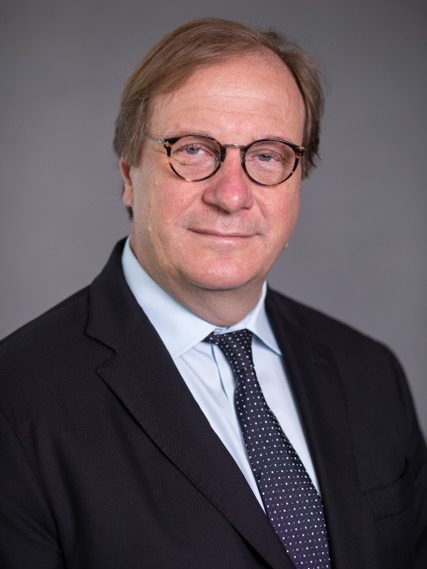
Frederick Kempe
President and CEO,
Atlantic Council
An #ACFrontPage Event
Atlantic Council Front Page is our premier live ideas platform for global leaders to discuss the defining challenges of our time. #ACFrontPage is a high-level event series featuring top newsmakers across multiple digital platforms. #ACFrontPage harnesses the convening power and expertise of the Council’s programs and centers to spotlight the world’s most prominent leaders and the most compelling ideas across sectors and to engage new audiences eager for nonpartisan and constructive solutions to current global challenges.
Explore the programs
The Africa Center works to promote dynamic geopolitical partnerships with African states and to redirect US and European policy priorities toward strengthening security and bolstering economic growth and prosperity on the continent.
Atlantic Council TV
Watch this event and more content on ACTV
Follow the conversations shaping our world. Available on all major platforms.