Click to read the transcript
John Herbst:
Good morning. My name is John Herbst. I run the Eurasia Center at the Atlantic Council. I am coming to you from New York. And good morning in the United States and good evening in Europe, including in Ukraine.
We have an absolutely outstanding panel for you today to talk about Russia’s war in Ukraine and more specifically attacks on trains, including trains including former and current senior officials, Western officials. Our panelists today are former Prime Minister of the UK Boris Johnson; Clara Kaluderovic, who is not just a fellow at the Eurasia Center, she has done extraordinary work on both humanitarian and defense issues in Ukraine and been there much of the last year; we have President Aleksander Kwaśniewski of Poland, former president, also the chairman of the board of the Yalta European Strategy, a partner of the Eurasia Center at the Atlantic Council; and we have General David Petraeus, former director of the Central Intelligence Agency, the chairman of the KKR Global Institute. So we’ll launch immediately into questions because you’ll want to hear what our panelists have to say.
So, Prime Minister Johnson, you understood clearly and early the threat posed by Putin’s aggression in Ukraine, and you were also the first G7 leader to visit Kyiv after the big invasion. This year you took a daring trip to the front line, and most recently you were on a—on a train out of Kyiv into Polish territory shortly before Russian jet-powered drones attacked a train near the border. What do you make of this new Kremlin tactic to strike at trains near Poland? Is this connected with Ukraine’s success in repelling Kremlin advances on the frontlines and in striking ever deeper into Russia against hydrocarbon and military targets? Please.
Boris Johnson:
Thank you very much, John. Well, thank you. It’s a great honor to be with such distinguished colleagues and friends on this panel.
And, yeah, look, I mean, I’ve got to admit, unlike the great General Petraeus, David there, I wasn’t evacuated from my train. If it was an assassination attempt on anybody on my train or any other train, it was a uniquely incompetent effort. I didn’t even know about it until I got back to London and my phone started going off.
But look, what’s clearly going on is that the ability of the Russians to target trains has changed. When I first—as you mentioned, that first trip to Ukraine in April 2022, the train was a relatively safe way of going. They couldn’t easily hit a moving—the Russians couldn’t easily hit a moving train. And that’s changed, and they’re much more aggressive towards Ukrzaliznytsia, the heroic Ukrainian railways, who have suffered. I think, you know, 1,700 of their staff have been killed now in attacks on the railways. The Russians are brutally attacking innocent civilian passengers as well as people working on the—on the railways.
And yes, John, I think you’re right that is a function of Putin’s desperation. He is—he’s ratcheting it up. He wants to increase the terror levels. He wants to try to intimidate the Ukrainian people by going for their transport networks.
And that is a—reflects the nightmare he’s experiencing on the frontline, where President Trump—I think Aleksander and I have just been watching President Trump’s great address to the—to the UN. He said there were 25,000 dying on both sides every month. That’s—I’m afraid that’s an underestimate. There are—in the last couple of months, there have been 40,000, 42,000 Russians alone dying, right?
And it is not going well for Putin. His economy has got real problems. The Russian population themselves—notwithstanding this election result he’s obtained over the last couple of days, the Russian population are experiencing the effects of Ukrainian tactical attacks on their infrastructure, and quite rightly on their—on their oil and gas industry, and so he wants to ratchet up the pressure.
And look, you know, I just got—I just got to say to my—you know, just I’ll conclude my opening thought: This is not the moment to try to put more pressure on Ukraine by depriving them of the ability to strike Russian oil and gas refineries. It is absolutely absurd that we’re having a conversation now. You know, this is a David-and-Goliath struggle. David’s got a slingshot that is able to take out Russian refineries, Russian assets. Why are we taking David’s slingshot or trying—why are we asking the Ukrainians to put down their sling? It’s absolutely insane. We should be putting the pressure on Putin to get this war over. And you know, colleagues will know my views on that. You know, there is much, much more I think that we could do collectively.
Back to the trains and the attacks that the Ukrainians are now—they need those interceptor rockets, right? They need the kit, the seeker technology in the—in the warheads. They need stuff. If they—if we won’t give them the Patriots, we have to give them the technology to make the Patriots. I’m sure they can do it, their own Patriots. I’m sure they can do it very fast. We should give them the Starlink access to Russian territory. And of course, we should give them the money.
And you know, I was hoping that the president would say something today about his great move in signing the Lindsey Graham bill. That, you know, it was an open goal, it seemed to me. The whole UN would have stood up and cheered him if he—or, quite a lot of them—if he’d said that. But, sadly, you know, he didn’t even mention that. I think he should put those sanctions into effect. The only way to get this war over is to get Putin to stop it. He’s the guy who started it.
John Herbst:
Thank you.
General Petraeus, you’ve been a frequent visitor to Ukraine since the big invasion, including numerous trips along the frontlines. And again, as we already mentioned, it was your train stop near the Polish border that was targeted on September 14th. We’d welcome your impressions on that attack, but more importantly your view of the current state of the war. How are the technology and AI continuing to evolve and change the battlefield? And how does this latest Russian tactic fit into the Kremlin’s broader approach to the war?
David Petraeus:
Well, thanks, Ambassador, and great to be with you all.
Let me address the train attack. Our train had already gone through Ukrainian customs and it was just a few kilometers from the Polish customs, so it was very close to the Polish border. The train was halted in that location and evacuated three times due to warnings of drone threats before a nearby gas station and the locomotive of the train halted on the adjoining track were hit by Russian drones. Thankfully, no one was injured, but it was a close call. And I would nonetheless be cautious about concluding that members of my team and I were targeted or that Westerners were targeted, as our train car was just added onto a normal passenger train. To be sure, the train carrying former Prime Minister Johnson and the other dignitaries had rolled through there about fifteen minutes ahead of when our train was first halted at that location.
Regardless of what happened there, as part of a much broader Russian campaign Russia is increasingly attacking Ukraine’s entire transportation and economic system. Railways and hundreds of locomotives have been struck; border crossings, bridges, warehouses, energy facilities, factories, gas stations, ports, port infrastructure, and even ships in those ports. Odesa and the other Black Sea and Danube ports have been under particularly relentless attack, as have the bridges and crossings that connect them with Romania and Moldova. Russia essentially is trying to degrade Ukraine’s ability to function as a country and to move people, commercial goods, military supplies, and so forth by rail, road, and sea.
And the air threat is becoming more formidable. Russia has substantially increased its use of ballistic missiles, against which Ukraine has limited numbers of missile interceptors. And Russia has also dramatically increased its use of jet-powered drones, from only a few hundred in June to over 2,800 in August. They’re much faster, fly much higher, and therefore are much more difficult to intercept than the earlier piston-powered Shaheds. One of those jet-powered drones appears to have been what struck the locomotive next to us. Ukraine is now beginning to field its own jet-powered interceptor drones to defeat them, but scaling their production will take some time.
Ukraine is, though, pummeling Russia’s air and missile defenses, oil refineries, logistics networks, military industrial facilities, airfields, and drone infrastructure. Ukrainian forces have struck over three hundred major Russian air defense, radar, and electronic warfare systems this year alone, opening corridors in the federation for subsequent deep strikes. They’re also systematically isolating Russian-occupied Crimea by attacking its air defenses, rail links, bridges, and maritime logistics. Meanwhile, closer to the front, they’re expanding drone kill zones and interdicting Russian logistics as far as 120 kilometers behind the frontlines.
The frontline fighting is fierce, as the prime minister noted, and Russia has considerable capabilities there but continues to sustain extraordinary casualties—again, way, way over 1,000 killed and wounded each day because, of course, in the last two months over 40,000. That’s more than they can replace. Ukraine also continues to adapt rapidly, and recently it has demonstrated something particularly important, the possibility of restoring maneuver on a battlefield where that was not possible because of the extraordinary transparency of it.
The Ukrainian counteroffensive around Lyman is instructive. Ukrainian forces attacked the system that makes Russia’s drones and precision strikes so effective—reconnaissance, electronic warfare, command and control, logistics, communications, and even the drone operators themselves. They thus isolated the battlefield and created temporary windows in which Ukrainian forces could move. So there’s an important lesson emerging from this stage of the war, that the transparent battlefield does not always mean the end of maneuver. Maneuver can be restored temporarily if a force can blind, disrupt, isolate, and overwhelm the enemy’s sensing and strike network.
And that brings us to technology and AI. What we are seeing is an extraordinary progression from manned systems to remotely piloted systems to systems with increasing degrees of autonomy, ultimately heading toward fully autonomous systems and what might be termed agentic battle networks. AI is increasingly helping process sensor data, identify targets, navigate electronically contested environments, shorten the sensor-to-shooter cycle, and enable unmanned systems to execute more of a mission without constant human control.
But the most important feature is arguably the speed of adaptation. Russia develops a new drone or EW capability; Ukraine develops a countermeasure. Russia counters the countermeasure; Ukraine modifies the software, frequencies, tactics, and hardware again. So the decisive question increasingly is not who invents something first; it’s who can develop it, scale it, integrate it, learn from battlefield experience, and modify it faster than the enemy develops a countermeasure. This is adaptation warfare.
There’s another increasingly important development. Again, Russia’s casualties have exceeded its ability to recruit replacements in each of the past two months, suffering more than forty thousand casualties—killed and wounded—in both July and August, while Western officials assess that Russia is now losing six thousand more personnel each month than it is recruiting. And that helps explain reports that Russian generals are pressing for additional mobilization in the next few months.
Putin does have his theory of victory. He believes that Russia can outlast and out-suffer Ukraine and Ukraine’s supporters. Hence, the pressure simultaneously at the front against cities and energy infrastructure, against ports and shipping, against rail, and so forth. All of this is ongoing and ongoing on a very substantial scale.
Ukraine, meanwhile, is pursuing its own theory of victory: hold and increasingly contest the front; impose casualties that Russia cannot indefinitely replace; isolate Russian forces from their logistics; make Crimea untenable; strike Russia’s military, industrial, and energy base; and demonstrate that time is not on Moscow’s side.
Ultimately, wars end when one side concludes that continuing the war will not achieve a better result at an acceptable cost, and the Western objective should be to help Ukraine bring the Kremlin to that conclusion. If we do all that we can to assist the Ukrainians, I’m confident that they can do that. Thanks. Back to you, John.
John Herbst:
Thank you, General.
Ok, President Kwaśniewski, as president of Poland you played a critical role in promoting a peaceful outcome during the Orange Revolution when I first met you. You remained very active in Ukraine as chairman of the board of the Yalta European Strategy. We would appreciate your view regarding Putin’s aims in Ukraine, the state of negotiations to end the war, and growing Russian provocations against NATO states, including the Baltic states and Poland.
Aleksander Kwaśniewski:
Well, first, thank you very much, Ambassador, to invite me for this meeting.
And I agree with my colleagues Prime Minister Johnson and General Petraeus. And, well, the aims or the goals of Putin I have no doubts. His goal, and I—when I met him 2002 in Kremlin, we spent four hours for a very lengthy conversation in Russian language, and he told me that his main goal as a new president, new elected president—he was only second year in the office—is to rebuild, to restore great Russia. And because we—in Poland we know the history quite well, so we know that great Russia can exist only together or having Ukraine in Russian hands, not without Ukraine.
So I remember my impression after this meeting. I thought—and I was mistaken—that is a dream of young president. But after 2004, after Orange Revolution, what you mentioned, I understood that that is not a dream; that is the real fear for Putin, that Ukraine can go to the West and Ukrainians can be—can want to create a really democratic country. And that was existential threat for Putin and his regime, his political system in Russia. So, since 2004, this to have—to keep Ukraine on the Russian side was not a dream, but was a plan.
After 2014, after annexation of Crimea and support for separatists in Donetsk and Luhansk, he started—in my opinion, this started to be some kind of obsession of Putin. And now we have obsessed Putin about Ukraine, which should be the part of zone of Russian influence. I’m speaking about it very shortly, but it’s necessary, in my opinion, to understand this—Putin’s understanding, this Putin approach, because it means that he is fighting not for peace—absolutely not—not for some kind of ceasefire. His real goal is to have entire—I repeat, entire—Ukraine in the zone of Russian influence, because if he thinks seriously about restoration of great Russia, Velikaya Rossiya, that is impossible to do without Ukraine, without Belarus, without Caucasus, without Central Asia. And that is his main aim.
Therefore, my opinion from the beginning of this war was, unfortunately, right that this war is for years—we have fifth years of this war—but the conflict between Ukraine and Russia is for generations, because the level of hatred, the level of this split is so, so big that even if one day we’ll have in Moscow quite democratic government it will take a lot of time of years to make this process of reconciliation.
So that is my first point, that this is a war which will be continued with some, of course, different element of tactics, of reaction of the—of the situation, and that’s it. But the strategy, Russian strategy, for me—for me is quite clear. They want to have entire Ukraine in own zone of influence using different methods—hard methods, military methods, soft methods, political provocation, political influence, et cetera, et cetera.
Second point is negotiations. I’m very, let’s say, disappointed because, in my opinion, America, it was—I’m very much in favor of negotiations. I’m in favor of diplomacy, of compromise, et cetera, et cetera. But Trump’s administration, at least President Trump said that he will solve this problem in twenty-four hours. Now we know that was impossible. That was from the very beginning impossible. But concerning negotiations, it was a main mistake.
In first steps of the negotiations was a mistake to say that Ukraine will be never member of NATO because, in my opinion, if we want to speak about this reality, the reality means that Donetsk, Crimea are on the Russian side. If we want to propose serious security guarantees for Ukraine, the NATO is our guarantee number one, NATO membership. And America resigned of this guarantee from the very beginning.
Today, to speak about security guarantees is extremely complicated because what it means for Ukrainians if the ceasefire, what is probably achievable in coming months will be not only the pause for Putin to rebuild own potential, to produce more missiles, to exercise better North Korean soldiers, and to organize better mobilization on the Russian side. So I think that was—that was from the very beginning the crucial mistake for these—for these negotiations. And frankly speaking, today, when I am listening to Mr. Witkoff or Mr. Kushner, I’m very much afraid because everything what they speak is in favor of Russia with full respect to Mr. Putin and with absolute lack of understanding Ukrainian side and all this Ukrainian interest and determination which Ukraine shows.
And last point, these provocations. So I have no doubts that one of the elements of this Russian strategy is to make NATO weaker, and they are very happy that Mr. Trump has a lot of doubts about NATO future. But Putin will test NATO in coming days, weeks, and months. And I think that is not only the problem of Poland or Baltic states, because we should be prepared for some provocations and especially for some, let’s say, accidents, because sometimes the drone which is coming from Russia and is landing in Poland, that is not a(n) element of the war; that is a(n) accident. That’s this element of some mistakes.
But during our conference in Kyiv, where you, Ambassador, and Boris Johnson and General Petraeus, we were presented, I think the minister from Estonia told us important thing, and I agree with him, that today Putin will try to make more provocations vis-à-vis Western European countries, not this neighborhood here, because here the anti-Russian or understanding of Russian policy is quite strong. But if you have such Leipzig provocation, what happened some weeks ago; if you have similar provocations in in France or UK or some—or Italy, et cetera; that can provoke not only the difficult political situation, but they will establish some new approach from this. And that is, I think, on what Putin counts. It will make this peace party, let’s say, or such thinking about public opinion in these countries that let’s stop this war, we need peace, and everything—all this support for Ukraine creates more dangers, more war, et cetera, et cetera.
That’s the problem. That is something what can we—can we will see, I think, next month, because this let’s say lack of understanding for the real situation, the real Russian strategy against Ukraine, is not so very popular. It’s not so common for many, many Western—these far Western European countries as here in this closer neighborhood of Russia.
So, finally, I want to repeat this war is four years, what we see, five years, and this conflict is for generations. And we should be prepared for that. Thank you.
John Herbst:
Thank you, Mr. Prime Minister.
Ok, Clara, you spent a great deal of time in Ukraine working on both high-tech and humanitarian issues. You visited the front many times. You’ve been evacuated from trains at least twice now. September 14 was your second evacuation. You’ve also played cat-and-mouse with Russian drones across Ukraine. Please share your firsthand experience of these attacks. What was it like to evacuate from the train into the woods alongside Ukrainian civilians, including many children, while watching drones circling overhead? And I have another question after you answer that.
Clara Kaluderovic:
Well, firstly, I have to point out the incredible professionalism of the Ukrainian railway workers. As you said, this was my second time in the last four to five weeks being evacuated from a Ukrainian train. The first was under threat of ballistic missile attack near the Kyiv station and the second was near the Polish border. The staff is incredible, and operate much more calmly than I think most of us would in terms of guiding terrified civilians and trying to walk them through the safety processes that they need to do.
So when we were past the Ukrainian checkpoint, we were paused on our train and we were evacuated three separate times from the train. The first time we were all a little bit, you know, probably not taking it as serious as we should be because we figured, you know: We’re close to Poland. This is unusual. More than likely, nothing’s going to happen. So we were a little bit slow in our offtake process. We were reboarded onto the train.
And the second time as we were evacuated, around three or four a.m., we actually heard something hit on the far side of the station. After that, we all picked up the pace quite a bit more. It was quite dark. Everyone’s trying to get as far away from the train station as they can.
The third time we were evacuated, around nine a.m., was, you know, we’re all off the train; we’re a lot faster now because we realize that the Russians really are targeting this far west. And we see one of the new Geran-5 Russian drones go right over our heads and slow down and hit on the far side of the train station, at which point everybody starts running much faster. Our train was primarily women and children—women that are, you know, in their late teens, and then grandmothers who are kind of escorting their family through. So this was very much not a military target; this was Ukrainian civilians.
Everyone starts running into the field to try to get as far away from something that would create shrapnel in case it were hit again. We kind of took cover under a tree, a woman named Mitzi Perdue (ph) and myself, with a mother and her ten-year-old son. Everyone is shaking. They are crying, terrified. This woman is trying to calm her child down. And you can hear the Ukrainians shouting to each other to please, for the love of God, hide under something because the Russian drones can see you and they hunt civilians. And so they’re all trying to remind each other to lay flat, to take it seriously.
I have to say I’ve spent a lot of time visiting the front. I’ve heard, you know, how it is to be hunted by drones, and I have seen it happen in the command stations. But actually hearing the Shaheds flying overhead and this lawnmower buzzing, knowing that this can see you and you can’t really do anything about it, is really quite a terrifying first-person experience with the future of war, something for us all to think about as we do plan our own defenses and what the Ukrainian experience is.
John Herbst:
Thank you.
As the general mentioned, we’ve seen increasingly effective Russian attacks on trains enabled by the greater deployment of jet-powered drones. How is Ukraine coping with this?
Clara Kaluderovic:
So the Ukrainians are doing what they do best, which is they go back to the drawing board and try to innovate and piecemeal and quickly run through mistakes as much as they can to get to a solution that works. But with the speed and the distance and the increase of payload that the Russians have achieved with these new drones, it really is a complex issue that the Ukrainians are trying to solve for.
Russia has achieved a massive scale with which they’re able to make these and to hit Ukraine with them. They’re doing now, I think, close to two thousand of these a month, and they are no longer as discriminatory in what they’re targeting within Ukraine because they are able to achieve such a scale and just throw them daily at the Ukrainians.
I would say from what we saw firsthand this new drone resembles a cruise missile much more than it does a drone in terms of what it can carry, what it can hit. And as far as we’re aware, the Russian plans are to continue to innovate to increase the distance with which these jet Shaheds can hit. I think the goal is to reach the Lviv area and as far west as they can by the end of 2027.
The Ukrainians are working on a solution, but these jet Shaheds are still mostly defeated by jet aircraft and small rockets that are deployed against them. So this is very much something that is still being looked for as a solution. And I think the Ukrainians could use all the help they can get from allies right now—the United States, from Europe—for, you know, jet engine innovation, for faster solutions, for maneuverability, for actually getting these up and scaled, because Russia is actively sharing this technology with Iran, it’s sharing it to China, it’s sharing it to other allies. And we would be quite naïve to think that these new jet Shaheds aren’t coming soon to a theater near us if we are not able to solve them ourselves.
Quick, cheap, scalable solutions is something that we all need as well. So I think closer cooperation with the Ukrainians to be able to achieve this is needed across the board.
John Herbst:
Thank you.
David Petraeus:
John, if I could very quickly interject here, one of the developments that has enabled the Russians to attack so far west is that it appears the Belarusian repeaters have been turned on once again. They were off for a period of time. And so these drones actually come in and they are in Ukraine, but hugging the Belarus border because they’re able to communicate with them to maintain the command link with the repeaters that have been turned on back there. And that enables them to go all the way out into the west, out to areas such as where our train was halted just short of the Polish border.
John Herbst:
As usual, you anticipated what I was about to say, so I’ll ask you this question. Zelenskyy basically told Lukashenko, the dictator in Minsk, to shut down these towers, like, a month ago, and Lukashenko said he would. Now it’s up. What do you think of the possibility of Ukraine removing those towers themselves?
David Petraeus:
Well, this is a serious problem for them. They have ways of going after this kind of system that are not necessarily kinetic as well. I’m sure that they’re weighing the possibilities of a widened war. So far they’ve been successful, really, in keeping Belarus from bringing its troops into the fighting. They have certainly allowed the Russians to use it, as they did during the early stages, including the offensive against Kyiv which the Ukrainians have ultimately repulsed. So I think they’re probably trying to figure out how is it that they can deactivate these systems either by diplomatic pressure or, if necessary, by other initiatives that they can pursue and are pursuing very effectively, for example, in the Russian Federation.
John Herbst:
Thank you.
Ok, Mr. Prime Minister.
Boris Johnson:
Yes. Could I just—I really want to—first of all, to you, Clara, and David, I hadn’t realized how scary it was, and I feel very guilty of having sounded so kind of blasé at the—at the beginning. I had—you know, I didn’t see any of this, and it sounds like you had a—you’ve been incredibly brave there.
Look, I think that it’s vital that we help the Ukrainians militarily, and the military success of the Ukrainians certainly determines the geopolitics. The better they do, the more willing people are to support them. But it’s the other way around too, right? We need to talk about the politics of the situation and the geopolitics.
And I want to really go to what President Kwaśniewski said because, Aleksander, you’re completely right in your—that we cannot hope for a solution to this thing, for an end to this war, unless we understand what Putin’s objectives are. Putin wants the whole of Ukraine. He wants to win. And that’s all there is to it.
So, at the moment, we’re really talking at completely cross purposes with the Russians or the—or, Steve Witkoff and Jared Kushner are, because they genuinely think that this is still some sort of New York real estate play where you can kind of divide it up. And they—and I’ve talked to President Trump about this many times, and he genuinely thinks that Putin doesn’t want the whole of Ukraine and that there’s a deal to be done. And you could hear it in in what Jared said to the YES conference. You know, he said: Look, it’s all there. It’s all done. The security guarantees, blah, blah, blah, it’s all ready to go. All we need is the Ukrainians to pull back from the rest of Donbas, and then—and we’ve got a deal.
Well, the—for starters, the Ukrainians would find it almost impossible, I think, to accept that. But the only way they could possibly do such a deal is if they understood what the future for Ukraine was going to be. And it’s precisely because of what you said, Aleksander, that we’ve made it—by ruling out NATO membership, by ruling out a real future for them in the West, we’ve made it impossible for them to accept those terms. They can’t divide their territory. They can’t accept a surrender when Putin can simply do it again and launch another attack. And that is the flaw in the—in the current situation. You’re right, this thing will go on and on for decades, and for years and years, until the West gets its act together and honors what it originally told the Ukrainians in 1991. And that is the only way we’re going to get out of this mess.
And you know, I would just say that all—you know, anybody with—in European—this thing’s been going on for almost five years. Five years or four-and-a-half years ago, it really was the stated policy of the United Kingdom that Ukraine should join NATO, and that was emphatically articulated repeatedly. And it was the policy of many other governments in NATO. It wasn’t the policy of the United States, and it wasn’t the policy of Germany or France, but they soft-pedaled it. It was up for grabs. And we should have argued that case. As it is, we’re now in an absolute mess where all the Ukrainians can see is the prospect of the Poles blocking it, darling Poland making it difficult for Ukrainian accession to the—to the EU, and no ultimate NATO membership.
So we’re not going to fix this thing and we’re not going to get Putin to desist until he understands that geopolitically he’s on a loser. At the moment, he thinks he could still be on a winner. That’s the problem. And he thinks that wherever he—wherever it ends, suppose—you know, as you say, suppose there is a ceasefire along the line of contact or wherever. He’s going to be able to say to the Ukrainians—you know, we think, oh, it’s going to be great; we’ll be able to have a free, sovereign, independent Ukraine. No, no, no, no. He’ll say to the Ukrainians: Look what you did. The West allowed you to fight, encouraged you to fight, because they cynically wanted to bleed Russia, they cynically had their motives for wanting to weaken Russia. They used you. They cruelly used you to fight this conflict, but they were never sincere about your ultimate destiny in the West. And, look, you know, this is what he will say, and I think that’s the real problem.
And you’ve heard me say this before and I’m sorry to repeat it, but until European—Western governments get their act together and renew those pledges to Ukraine, I don’t see a military solution. The politics—you know, the military drives the—the war drives the politics, but the politics is also going to shape the war. And that’s the—that’s the problem at the moment.
John Herbst:
Thank you.
We have one more round of questions, but I’d like to get to excellent audience questions, so if I could ask if we could try to do it—each speaker tries to answer in three minutes. And Mr. Prime Minister, for you, what are the prospects for the Freyja initiative, in which Ukraine and European states combined efforts to create a better air defense system, especially against ballistic missiles?
Boris Johnson:
I think that it’s vital that we do this. And I went to see Fire Point, as I’m sure all colleagues—friends have been—and I know you have—to see Fire Point. And we need to give the Ukrainians very rapidly either the Patriot technology, as Donald Trump advertised but which is—you know, he’s then gone cool on that, or we need to give them the stuff they need. I think it’s called the seeker device in the cone of the interceptor rocket. They can do everything. So Fire Point can get the thing up into the air, they can—they can get it into the ballpark of the oncoming fast Shahed or ICBM, but they haven’t got enough—they haven’t got good enough targeting yet.
Europe—I think this this this initiative, this Freyja initiative, is completely right. But it needs to happen now, because I think it was it was General Petraeus or Clara who pointed out the sheer number of missiles that the Russians are now making. They’re going into a kind of Stalin, you know, Red Star factory mania in in making—have I got the right historical allusion? I can’t remember. Iskra, whatever it was, you remember, in the—in the Second World War, when Stalin really turned up the volume on the—on the munitions and the tank production. I think that’s what Russia is now trying to do.
We’ve got to give the Ukrainians the means to—we’ve got to help them to protect themselves because, you know, this thing can seesaw. This thing, it seesawed—the first half of this year, it seesawed very much in Ukraine’s direction. It can go back again, tragically.
John Herbst:
Thank you.
Ok, General Petraeus, you wrote a terrific piece in The Washington Post about the state of war.
Boris Johnson:
Yes, I agree.
John Herbst:
What should the US do now to help make sure that Ukraine makes it through the winter and for the longer term prevents Putin from taking control of the country? In connection with that, what is the impact of the Graham sanctions bill now that Trump has signed it?
David Petraeus:
Well, John, for the winter, the immediate requirement is air defense and energy resilience. Russia is deliberately exploiting Ukraine’s shortage of Patriot interceptors and other munitions while increasing its use of ballistic missiles and jet-powered drones. So Ukraine does need additional Patriot interceptors. I think Germany is sending some of those. Anywhere else they can be found would be great. They need help with jet-powered drone interceptors, as we’ve discussed, the production of which is being ramped up but will need additional means. And then there are some other air defense system needs as well as, of course, the means to repair, harden, disperse, and protect its energy system, which is already under attack.
Ukraine has to close its defense financing gap of about $27 billion. That matters enormously because the decisive issue now is not simply innovation; it’s innovation at scale. Ukraine can invent an extraordinary interceptor or long-range drone, but it only changes the battlefield when tens of thousands can be produced, improved, and replaced.
But while surviving the winter is critical, obviously, the larger objective has to be enabling Ukraine’s theory of victory, and that’s what I laid out in that Washington Post piece. That means helping Ukraine deny Russia meaningful gains; continue imposing enormous casualties on Russia at the frontlines; isolate Russian forces at the front from their logistics, make occupied Crimea untenable; and sustain the long-range campaign against Russian air defenses, logistics hubs, military industrial facilities, ammo depots, and the energy infrastructure that helps finance Putin’s war. And they’re achieving considerable success in all of that. When a country needs a crowdsourced app to help its citizens find a gas station that actually has gasoline or diesel you know they’ve got a problem, and that’s the situation in Russia right now.
The purpose is cumulative pressure. Ukraine doesn’t have to march on Moscow; it has to demonstrate that Russia cannot achieve its objectives at an acceptable cost, that Ukraine can continue fighting and adapting, and that Western support will endure. In other words, Russia has to be convinced that time is not on their side, and that’s where the sanctions legislation can be important.
President Trump signed the Lindsey Graham Sanctioning Russia and Iran Act on September 18th. It expands substantially sanctions against Russian officials, financial institutions, energy networks, and the shadow fleet; and provides authority for tariffs up to 100 percent on the largest purchasers of Russian oil and gas in countries facilitating sanctions evasion. But the effect will depend, obviously, on implementation. It creates considerable leverage, particularly with purchases of Russian energy. And if this is used to materially reduce Russia’s energy revenues and make sanctions evasion more expensive, it reinforces the pressure Ukraine is trying to generate militarily. But the consequences, again, will depend on how major buyers respond and on conditions in global energy markets.
Ultimately, the military and economic effects have to reinforce each other. So, help Ukraine survive the winter, enable its theory of victory, and steadily increase the cost to Putin of continuing the war. Only when he realizes that he cannot continue the war will a cessation of hostilities and serious negotiations become possible.
John Herbst:
Thank you.
President Kwaśniewski, Putin is hoping that Western aid to Ukraine will dry up, especially if the AfD eventually comes to power in Germany or Le Pen in France. What are your views on this?
Aleksander Kwaśniewski:
Well, first, I fully agree with my colleagues. I think it’s necessary to continue these attacks against Russia and support Ukraine, and I will not repeat the arguments of Prime Minister Johnson and General Petraeus.
But speaking about European situation, so we have some challenges next year because we have the raising position of AfD in Germany, we have a presidential election in France, and also what is necessary to mention October next year we have election in Poland. What is—Poland still is one of the biggest European countries.
I said challenges because still the situation is not decided. I think in Germany it’s possible to stop AfD and not to give them the chance to be in the—in the government. Le Pen is going—what I see after last statement of Madam Le Pen, she wants to go a little bit more to the center, but I don’t believe her. But the election is open. It’s not decided that Le Pen will be next president. In Poland also the situation is 50/50. I think the democratic, pro-Ukrainian forces, pro-European forces, they have a good chance to win. It’s not easy. It needs a lot of efforts. But it’s possible.
But generally speaking, Russia will play such game. They want to support this—what I mentioned before, this so-called peace party or peace movement, which means stop support for Ukraine; let’s understand the necessity of some kind of ceasefire agreement, something like that; and let’s rebuild the good relations with Russia because it means cheaper prices for gasoline, for diesel, and for industry. And I think these simple arguments, they will be used by Russians and they will play some role in coming elections in Europe.
The task for our part of political landscape is to explain the Russian strategy, Ukrainian determination and efforts, Ukrainian rights to be sovereign/independent and to decide what direction of the future they want to have, because—we speak about NATO membership. I repeat, it was a mistake that America said from the very beginning that no chances for NATO. But I tell you more: Putin says many times in his statements in last 20 years Russia is against NATO membership of Ukraine, but they have nothing against European Union membership, for Europe. That is not true. I am a witness. I am a part of the story. He is very much against of all kinds of Westernization of Ukraine. He is very much against European Union membership for Ukraine. And he did a lot to blackmail Yanukovych when we discussed association agreement, et cetera, 2012-2013. So that is absolutely lie. He will stop all kinds of formal inclusion of Ukraine into Western structures. That is necessary to understand.
So, last point. What we have to do? We have to support Ukraine, because, I’m sorry what I will tell you now, but in my opinion this war, this five—this long-lasting war, five years, that is war in favor for our values, for democracy, which Ukraine is doing instead us. They are fighting instead us, they are suffering instead us, and they are ready to continue instead us because we Europeans, we—it’s good if you are ready to support that, but to go on the frontline, we are totally not prepared. And that is why it’s so necessary to continue political support, financial support for Ukraine, and military support, and to use this huge potential that Ukraine has, because what—Ambassador, we were in the same conference. What they did in these modern technologies on the battlefield, this is unbelievable. They are so good. They are so flexible. They are so, so, so inventive. That is something what we have to do if we want to finally to stop this imperial politics of Putin and to support independence and sovereignty of Ukraine.
Boris Johnson:
Hear, hear!
John Herbst:
Thank you, Mr. President. Fantastic.
Boris Johnson:
Totally agree.
John Herbst:
Clara, last question for you. We’ve been talking about the major Ukrainian breakthroughs on drone and other military technology. Washington can certainly use some of this. There have been talks between Ukraine and the United States about a possible drone deal. What’s the status of these talks? And will we eventually see such a deal?
Clara Kaluderovic:
Well, currently what exists is a preliminary document that they signed in July. It’s a bilateral statement of intent, which made a formal framework for US-Ukraine drone cooperation. It has opened the way for Ukrainian combat drones to be exported to the US, but for testing primarily. It very notably does not authorize any procurement contracts, technology transfer, or acquisition timelines for the Ukrainians to actually send stuff to the U.S. for us to be purchasing and using. I think that the, you know, status currently is not fast enough, and we should really be doubling down to improve and increase the, you know, partnership that we have with Ukraine because we need to increase our own capabilities for national security purposes.
If you look at the results of the first phase of the Drone Dominance Program, it was a Ukrainian company in partnership with a British company called Skycutter that actually placed first, and I think by a margin of ten points to the nearest competitor. The Ukrainians are testing in extreme EW environments—jamming, spoofing—and their drones are working. We have nothing comparable that is being, really, deployed and tested in such harsh conditions, and it’s something we should be factoring into all of the products that we are building and exporting around the world and using our subs, whether it’s in the Middle East or in the Taiwan/Indo-Pacific area.
Frankly, I think the progress is currently not very optimistic. I think we really need to step up the scale and the speed with which we are testing with the Ukrainians, co-producing with the Ukrainians, and allowing them to enter our ecosystem. Some of this is on the Ukrainian side, as they do still have to navigate their export laws and make internal changes to be able to do this. But hopefully, with more serious push from the US and more serious intent to include the Ukrainians in this ecosystem, then the Ukrainian side will adapt faster to make these changes.
John Herbst:
Thank you for that brief reply.
OK, we have audience questions. We might get two in if we’re lucky. The first one is for the prime minister and for the general. It’s from a journalist from Forbes, Kevin Holden Platt. He wonders if there’s a chance that Moscow might have been specifically targeting those trains—in your case, General Petraeus, for assassination purposes—to escalate hybrid war against the West, and especially in light of the recent threats against the UK issued by the Russian envoy in London. Comments?
David Petraeus:
Well, you know, I am certainly sanctioned by Russia, was sanctioned early on. I’m sure that the prime minister was early on as well, and probably most of the people on his train were.
Again, as I mentioned at the outset, our train car was added to a normal passenger train. I’m just not that confident that the Russians would have known that we were on that one. I think there’s a higher chance that they might have known that there was a train full of, again, former and serving government officials, the one that had Prime Minister Johnson on it. But that one had rolled through 15 minutes earlier, and the final attack was many hours later. So, again, I just want to be very careful about jumping to a conclusion that this was a targeted operation against what they thought was his car or what they thought may have been carrying me and my team of fellow travelers.
John Herbst:
OK.
Mr. Prime Minister?
Boris Johnson:
Yeah, I agree completely with what David—General Petraeus has just said. If it was an attempt to get us, it was extremely incompetent. I don’t think they were trying to do that. I think at the outer limit they might have been trying to make a gesture towards the YES conference. You know, we all go there. We behave in a very kind of—with great sangfroid. We treat it as though there isn’t a war on. And maybe Putin felt it was time to send a little message. I don’t know. I don’t have any evidence for that.
But you know, it’s certainly not going to deter us or stop—it’s certainly not going to stop me, I don’t think anybody on this call, from wanting to go and support Ukraine. I think it was—it was showing how rattled Putin is getting. That’s all it was. You know, it’s a very uncool thing to do to start to attack civilian railways. That what he’s now doing. And it’s desperate and it’s pathetic.
David Petraeus:
You know, again, this is one of—there have been hundreds of locomotives struck over the last year or two. And again, it’s part of the overall effort to degrade Ukraine’s ability to send people and goods and so forth around the country. This is really the key sinew of logistics for them, for civilian logistics as well as for the military as well. And it’s also why they’re going after gas stations and so on, to make the road system less capable as well. So all part of that overall effort, I think.
John Herbst:
OK.
We have another question. This also from a journalist, Jeff Trimble. The question is: Isn’t it time to cover at least western Ukraine with a NATO-enforced no-fly zone, especially as Russian missiles have sometimes fallen into NATO countries, and to shoot down Russian drones and even missiles over Ukrainian territory, again that could threaten NATO countries as well as Ukraine? Pros and cons. Prime Minister—excuse me, President Kwaśniewski, you want to take a first shot at that, and then we’ll let the others jump in?
Aleksander Kwaśniewski:
Well, I think that in my opinion yes, that is politically much more complicated, because I think from the very beginning of this war we have such idea that we are ready to support Ukraine but we go not farther. And I think if Russian attacks will be continued and the—or even accidentally will be on our territory, it’s necessary to do something.
But I want to underline what General Petraeus said. That is element—I think the symbol of this winter, coming winter, will be many, many Russian attacks against Ukrainian cities. Why? Because Putin wants to use this winter, which is normally not very nice in this part of the world, to make such psychological war, to make the life of the people extremely difficult. If you are living in Kyiv in the big house on the 20th floor, you have no lift, you have no energy, you have no electricity, you have nothing, well, that is—that is a real problem. And if this situation is lasting some weeks or months, that is extremely difficult.
What, for example, in the case of Poland can be very, very dangerous is because of these permanent attacks against Kyiv and other cities, because of this exhaustion of the people in in Ukraine, we will have a next wave of refugees. What is quite likely? The next wave of refugees, not hundreds but hundreds of thousands. And I think that can be politically the problem for many European countries and be the chance for Russians to use this atmosphere—oh, we have a next wave of refugees; what to do, what to do—to use this anti-Ukrainian mood which is, unfortunately, existing.
So I don’t know how to react. General Petraeus is much better in this case. But politically, I tell you that is my main fear—two fears: Putin will continue these attacks during the winter and this situation can create some quite huge number of Ukrainian refugees on the border of European Union again.
John Herbst:
Thank you.
From a military point of view, General Petraeus, how do you look at this?
David Petraeus:
Well, the truth is that the Ukrainians are actually vastly better at this right now than any of the Western countries. Even those that have been experiencing these violations of their airspace are generally responding with manned aircraft, with very expensive air-to-air missiles, and this kind of thing.
Remember, exchange ratios really matter here. And the Ukrainians are vastly, vastly better at this. So, arguably, we should be helping them to deal with this more rapidly by providing the additional resources, particularly to help close that $27 billion defense gap that they have. And the European Commission is already pledging certain amounts. So are a number of European countries who have very much been stepping up on this issue.
Now in—to build a bit on what Clara talked about earlier when asked about the United States, what all of our countries actually need is an entire new concept of warfare that can then drive what’s termed institutional change in our militaries where you look at this new concept, you completely overhaul your force structure, how you train your forces, how you educate your leaders, what you buy and how you buy it. The military industrial base has to change dramatically to do that.
Keep in mind that Ukraine this year will manufacture 10 million drones. By the way, so will the Russians. We in the United States will manufacture about 500,000, and only a subset of that is actually due to demand from—for defense needs. And then you’ve got to change personnel policies and facilities and bases and everything else.
We absolutely have to get on with that. We absolutely should be better at actually protecting the airspace of our individual countries in NATO. But for right now, the expertise and capability really resides in Ukraine with the Ukrainians. And I think helping them is probably the best course of action in this particular case.
John Herbst:
And perhaps also would help us.
Boris Johnson:
I totally agree with that, that throughout this war they’ve shown that they’re the best defenders of their own country by a long way. I think Aleksander is right about the—I think if we told—you know, when I was prime minister and I thought about this, would I order, you know, UK fast jets to take out, you know, Russian assets or—you know, that’s a—that’s a big—a big thing to do or ask our forces to take out Russian fast jets. You know, that’s NATO at war with Russia, right? That’s exactly what we don’t want to happen. That’s how Putin wants to frame it. The Ukrainians have done brilliantly.
I think one thing, in addition to all the kit we should—you know, the helping them with the interceptors and the cash—I agree totally about the cash—don’t forget Starlink and the importance of—the importance of them being able to take out the bases that are being used to hit these targets in Ukraine over the winter. We should really ramp up pressure on that.
John Herbst:
That’s a very nice summary.
We’re over time. Thank you all for joining us today. Thanks to everyone for tuning in.
On Tuesday, September 22 at 11:00 a.m. ET, the Atlantic Council’s Eurasia Center will host a discussion on Russia’s strikes against Ukraine’s railways and escalating attacks against Europe.
On September 13, a Russian jet-powered Geran-5 drone struck a passenger train in a Ukrainian station two kilometers from the Polish border, concentrating global attention on Moscow’s latest attack. A diplomatic train carrying former British Prime Minister Boris Johnson had just passed through, and former CIA Director David Petraeus was aboard another train close to the station. The near miss highlights the Kremlin’s increasingly reckless strikes on civilian infrastructure in Ukraine and its expanding campaign of violence against NATO countries.
This conversation will explore why Moscow feels it can attack civilians with impunity and how the United States and Europe can more effectively counter Russian aggression.
Please complete the form below to register for this event.
Join the conversation
Send our speakers a question—it may be featured during our event.
Speakers
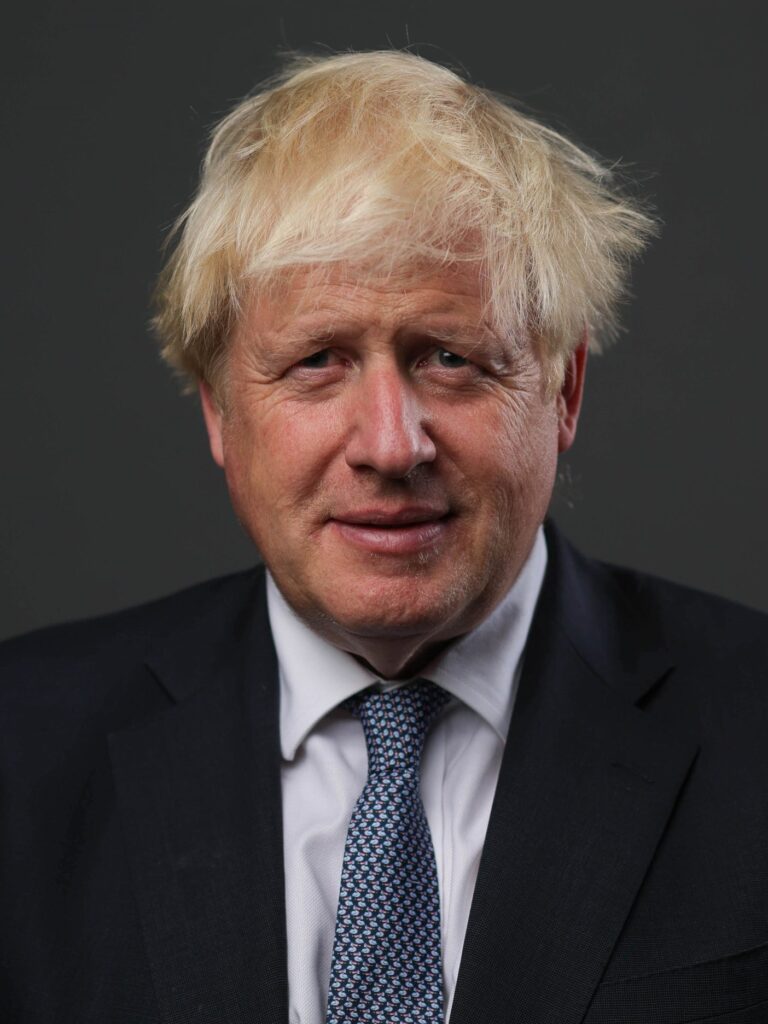
Prime Minister Boris Johnson
Former Prime Minister of the United Kingdom
of Great Britain and Northern Ireland

Clara Kaluderovic
Nonresident Fellow, Eurasia Center,
Atlantic Council

President Aleksander Kwaśniewski
Former President of the Republic of Poland;
Chairman of the Board,
Yalta European Strategy
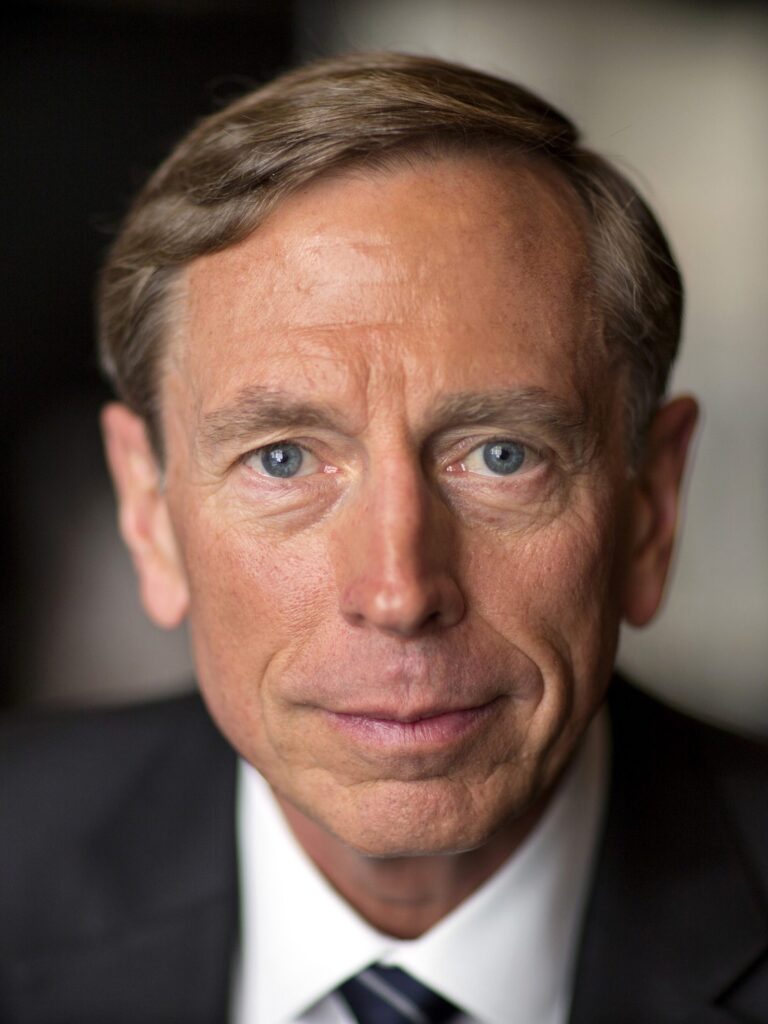
Gen. David Petraeus
Former Director,
Central Intelligence Agency;
Chairman,
KKR Global Institute
Moderated by

Amb. John Herbst
Senior Director, Eurasia Center,
Atlantic Council
Stay connected
Related content


Explore the program

The Eurasia Center’s mission is to promote policies that strengthen stability, democratic values, and prosperity in Eurasia, from Eastern Europe in the West to the Caucasus, Russia, and Central Asia in the East.
Atlantic Council TV

Watch this event and more content on ACTV
Follow the conversations shaping our world. Available on all major platforms.
Stay connected with the Eurasia Center on X and LinkedIn