Transcript
Expand to read
Frederick Kempe:
Good afternoon. I’m Fred Kempe, president and CEO of the Atlantic Council. And we welcome you all to this edition of Atlantic Council Front Page, our premier platform for global leaders.
Today we are delighted to welcome Mark Rutte, the secretary general of NATO, who joins us to discuss the state of the alliance while laying out his objectives for the upcoming NATO summit in Ankara, Turkey. His contents follow his high-profile meetings in Washington this week, including with President Trump.
We’re honored to be joined here by a number of ambassadors and officials from NATO countries and Atlantic Council board members. Among them are ambassadors from Albania, Finland, Greece, Hungary, Iceland, Lithuania, Luxembourg, North Macedonia; the charge d’affaires from Bulgaria, Montenegro, and Poland; and deputy chiefs of mission from France, Sweden, and the host country for the summit, Turkey. So, Secretary General Rutte, just like the North Atlantic Council; just making you feel at home.
Secretary General Mark Rutte:
I feel at home.
Frederick Kempe:
Welcome also to board members Ambassador Paula Dobriansky and Andrew Levy, and then many other board members listening online from all around the world.
Sixty-five years ago, in 1961, the Atlantic Council was founded on a simple but powerful idea, that America’s security and prosperity are strongest when we’re working alongside our allies. And while our remit has certainly grown since those early days—we’ve got centers on Africa, Latin America, the Middle East, on energy, on technology, on geoeconomics—transatlantic security remains a central tenet of our mission here at the Council, which is worded simply with five words: Shaping the global future together. We work from the conviction that the Atlantic Council and the United States are always stronger on the international stage when working with allies and partners.
We’re deeply honored to welcome NATO Secretary General Mark Rutte to the Atlantic Council today. I had the immense privilege of hosting Secretary General Rutte when he served as prime minister of the Netherlands both in Washington and in New York where we presented him with our highest honor, the Global Citizen Award, in 2019. In presenting him the award, the World Economic Forum founder, Klaus Schwab, said, and I quote: “I would say there are two categories of politicians. The first category are those driven by a radar system, which means they send out signals to set the determinants of behavior according to the signals they get back. But you are not a radar man,” he said to then-Prime Minister Rutte, “you are a compass man, someone who has clear values, who follows his values. So you are a real statesman.” Klaus could not have known several years ago that you would follow the footsteps of the first NATO secretary general, General Dwight D. Eisenhower, at a moment of historic challenge and historic consequence for the alliance.
And with that, Mr. Secretary General, the floor is yours.
Secretary General Mark Rutte:
Yes. Well, Fred, thank you so much for that—for that introduction. And good afternoon, everyone here in this room. It is great to be back in Washington and here with you at the Atlantic—at the Atlantic Council.
Let me first say that the Atlantic Council has been an indispensable intellectual partner to the alliance for over six decades now. When we need rigorous, honest debate and analysis, the Atlantic Council delivers. It doesn’t just study the alliance; it strengthens it. So, really, Fred, thank you for your leadership.
It’s wonderful to have the chance to connect with you and with so many old friends today, and to take stock of where the alliance stands less than two weeks ahead of the NATO summit in Ankara. At Ankara, we are going to show the world that we are delivering on the commitments we made in The Hague last year. We will breathe life into the concept of NATO 3.0, a stronger Europe and a stronger NATO. We are going to show just how powerful NATO is, and how ready and determined we are to defend all our citizens and every inch of our territory. And today I will describe what I expect out of this summit.
First, I expect an incredible transformation in defense investment. As those looking to spend an afternoon at the Atlantic Council well know, last year in The Hague we agreed to invest 5 percent of GDP in defense by 2035—a historic decision and a daunting, if essential, undertaking. The direction of travel is clear and allies are stepping up. Several nations—including Estonia, Latvia, Lithuania, and Poland—are already spending well over the agreed targets and they are moving with speed to continue investing more. That is conviction.
Others are making remarkable strides, like Germany, which is on track to double its investment in defense by 2029 from just a few years ago. This will amount to over 150 billion euros per year. That is magnitude. These countries are leading by example, and it is just the beginning. In Ankara, allies will put forth concrete plans for increased investment. Those of you who have been following NATO for a while now understand just how profound a change this is. After years and years and years of underinvestment, we have seen a sea change in the approach to defense spending.
Over the last decade, from 2016 to 2026, European allies and Canada have spent an extra US $1.2 trillion on defense—1.2 trillion, with a “T”—and in 2025 alone they increased their defense investment by nearly 20 percent. That equates to 139 billion additional dollars invested in one year. That is transformative. Who would have imagined a decade ago that we would get this far? We couldn’t even have had the conversation. And yet, here we are, allies united around the imperative to invest in our security, committed to fairly sharing the responsibility, strong and getting stronger.
The threats we face are a key factor in this mindset shift. But I am also convinced that we would not have made such an astounding leap without President Trump’s leadership. Every US administration since President Eisenhower’s called on America’s allies to invest more and take burden sharing seriously, and one president got them to do it. I understand that some chafe at this observation. But the reality is that European allies and Canada are now on a trajectory to equalize their defense spending with the United States, and not just that.
They are taking on more leadership within NATO’s command and control structure, stepping up on conventional defense, including on efforts to bolster our deterrence and defense along the eastern flank, in the Baltic region, and in the Arctic, and spearheading support to Ukraine, and this is NATO 3.0.—a stronger Europe and a stronger NATO, conviction of purpose, magnitude of investment. True transformation. Now we need supply to meet demand, and this brings me to my second point.
In Ankara, I expect to see industry and innovation engaged to help us deliver the capabilities that credible deterrence and successful defense demand. Allies are investing a whole lot more. The budgets are there. But the assets we need, the capabilities to deter and defend, simply aren’t available at the skill or speed that our security requires. Now, it’s true that our industries on both sides of the Atlantic have already added production lines to accelerate supply. That’s important, but we need a whole lot more.
And it is not just only about inventory. It is also about innovation. It’s about delivering effects, finding novel solutions to deal more efficiently and effectively with the security threats we all face. What we need and what we are working to foster is a real transatlantic defense industrial revolution. Here, allow me to again thank the Atlantic Council for its thought leadership in this space. The team at the Reimagining European Defense and Innovation, or REDI, Task Force are helping us to navigate these complex challenges, to scale up production, spark innovation, and outsmart our competitors.
And who is our competition? Russia remains our current and long-term threat. It is investing more than 40 percent of its budget in defense, churning out military equipment around the clock and learning quickly from the war it’s waging against Ukraine. China continues to modernize its forces and to expand its nuclear capabilities without any transparency, investing massively in military technology and innovation. North Korea persists in growing its nuclear program and is gaining valuable experience from supporting Russia’s war against Ukraine.
And then there is Iran. For well over a decade, allies have agreed that Iran can never possess a nuclear weapon. Recent US action has severely degraded Iran’s nuclear and ballistic missile program, but we must remain vigilant. On their own it’s already an issue, but these countries are working together. And we can easily agree that they don’t have our best interests in mind. That’s what we are up against. And there’s absolutely no doubt that we collectively have everything we need to succeed.
But we need to ensure that we are translating our economic might into military capabilities. This means overcoming fragmented national defense industries on basically the other side of the Atlantic, cutting red tape here in Washington, and keeping innovation front and center. Across the alliance, I can see that we are finally beginning to take those steps.
For example, last year I visited a new Rheinmetall ammunition factory in Germany. This is a factory that went from blueprints to brick and mortar in just over a year. That is speed. That factory will soon produce 350,000 artillery rounds per year. That is scale. This spring I spoke with talented young engineers at Aselsan, Türkiye’s largest defense electronics company. They are driving Türkiye’s defense industrial revolution, which will benefit every member of our alliance.
And here in the United States, spurred by President Trump’s leadership, we see household names like Lockheed, RTX, Northrop Grumman, Boeing, and General Dynamics massively ramping up their production to meet this moment. We also see newer firms like Anduril, Palantir, and divergent technologies innovating on tech and production methods at pace and with purpose. That is revolution.
Bottom line: The prospects are plentiful, and in Ankara we will provide the platform to showcase how we are seizing the opportunities and making this revolution a reality. We will announce tens of billions of dollars of new contracts. And when our industries from Arlington to Ankara combine their strengths and step up supply, the result is not only improved security. We are in the early stages of a defense industrial revolution that will help grow our economies and support hundreds of thousands of jobs on both sides of the Atlantic. And this is the defense dividend.
My third point is Ukraine. Five years into Russia’s war, Ukraine is not only standing strong but it is reminding us all of the power of principle—that freedom is worth fighting for, no matter the odds. President Zelenskyy will join us in Ankara, and I expect to show him and all Ukrainians that our support endures and remind President Putin that we are not going anywhere.
Earlier this month, I was back in Kyiv. I was there with the entire North Atlantic Council for the first iteration of the NATO-Ukraine Council ever held in Ukraine, a strong message of the enduring bond between NATO and Ukraine. We arrived in Kyiv in the wake of yet another massive Russian missile and drone attack. This time, Russians struck a shopping center. And more recently, they hit a historic monastery, a UNESCO World Heritage site. These are the brutal acts of a weakened Russia. They hurt, of course, but they don’t deter Ukrainians, who are fighting relentlessly to defend their freedom. And we must be just as relentless in supporting them.
And for this, all allies need to pull their weight. America’s allies and partners have contributed billions of dollars’ worth of essential equipment to Ukraine through the PURL program, which President Trump and I launched last July. It’s the initiative through which Ukraine received nearly 90 percent of its air defenses, including Patriot interceptors. These are essential to counter the ballistic missiles that Russia uses to target Ukraine’s cities and civilian infrastructure. This support continues to flow, and PURL is just one avenue through which allies support Ukraine.
There’s the Czech ammunition initiative, defense industrial partnerships, the list goes on. And as we continue to support Ukraine, we are also learning essential lessons from their battlefield experience, especially when it comes to the use of drones and counter-drone technology. This is a threat we all face. And no one has better experience here than Ukraine. So we will continue to stand with Ukraine. Our security is interlinked. Ukraine has shown that we won’t be deterred by Russia’s aggression. We will continue to show that we, as an alliance with Ukraine, won’t be either.
So that’s the overview—transformation in defense investment, revolution in defense industry, affirmation of our enduring support to Ukraine. This is foundational. Now the implementation of NATO 3.0, like any major change, comes with uncertainty as we pave a new path, an alliance that is less dependent on the United States but in which the US remains firmly rooted. Ankara is about recognizing that we are committed to this truly transformational way forward. It takes heart. It takes guts. Allies have made clear that they are fully in. And as a European, let me say I’m particularly proud to see this step change to a stronger Europe and a stronger NATO—NATO 3.0. Thank you so much.
Frederick Kempe:
That was powerful. Sorry. That was a powerful and important speech. Thank you so much for making it here at the Atlantic Council.
So I’m going to ask a couple of initial questions and then turn to the audience. You can either catch my eye and ask a question from the audience, or you can go to on—if you’re online, you can go to AC.org—or even here in the audience if you’d rather ask that way—you can go to AC.org.
First of all, I started in my introduction looking at history. You’re talking about in really dramatic terms defense industrial revolution, NATO 3.0. And we have to remember, 1.0 was General Dwight D. Eisenhower. And so I wonder if you could first start with the broad sweep of history. The Atlantic Council has been around for sixty-five years. It’s the 250th anniversary for the United States this year. How crucial, in your view, is the current moment, and why?
Secretary General Mark Rutte:
It’s absolutely crucial. And we have to really meet this moment. So NATO 1.0 was the NATO I was born in, in the Netherlands. Absolutely realizing that without the United States the Netherlands would probably never have been liberated. Of course, the Canadians, and the Poles, and others very being very much involved, and the Brits. But the US really being crucial here. And NATO being there to defend ourselves collectively—the US, and Canada, and Europeans—against communist Soviet Union.
Then we had NATO 2.0, which basically was a period of lowering investment, less spent on defense. But also a NATO which tried, after 9/11, to do whatever was necessary, for example, in Afghanistan. But it was generally speaking a period of lesser defense investments.
And then, since a couple of years, there is this new realization. And of course, the full onslaught of Russia and Ukraine has really triggered this. But even after that, we have not seen the money spent in Europe really go up. It was a little bit more, but not enough. And I would credit also President Trump for again pushing the Europeans and Canada to do more. And what we are now seeing are a numbers of investments which are incredible.
So NATO 3.0 is our spending more. It is about a stronger Europe and a stronger NATO. Don’t forget Europe is 600 million people. European NATO territory is 600 million people, very rich countries defending themselves against Russia; and being still overly dependent on the United States, which is 350 million people. But as last time I flew from Europe to the US, it’s about eight hours’ flight. So why are we so overly dependent?
But we need, as US and Europe, to stay together, because this is also about the defense of the United States—preventing these nuclear submarines from Russia ending up at the shores here, Europe being a platform of power projection for the United States. Look at Epic Fury, between four and five thousand flights taking off from European bases in support of Epic Fury, the action—the war against Iran. And of course, it provides the US with industrial depth, the fact that we work together.
So we all have invested interests. This is NATO 3.0—more European-led, equalizing defense spending, but still with the US firmly rooted in NATO.
Frederick Kempe:
And thank you so much for that.
So, as you know, Mr. Secretary General, the Atlantic Council was in Brussels recently with a delegation. Thank you for your compliment of our work, [Reimagining European Defense and Innovation Task Force]. Torrey Taussig here at the Atlantic Council of our Transatlantic Security Initiative, which is hosting this event, is the leader of that, with General Chris Cavoli as the co-chair with Minister Landsbergis as his co-chair. And we really want to—really want to contribute.
In Brussels, though—I know Europe pretty well, and I lived there for twenty, twenty-five years, and I did not expect the level of tension I felt when I was there, where The Hague was a high point, but you have President Trump, as you know, very unhappy—despite what you’ve said about the flights, very unhappy with several European allies and what they did not offer or give with Iran. And I think some of that was also some of the rhetoric. Europeans unhappy after Greenland, after tariffs, some of the defense reductions.
So you’re talking about a revolutionary vision to bring the Atlantic alliance perhaps to its strongest point yet. How do you do it in this atmosphere? And am I right that I’m seeing also some tricky tensions, or you sometimes have to be a marriage counselor?
Secretary General Mark Rutte:
No, no, it’s not that. But I mean, I see your analysis. And listen, when an organization like NATO, our collective transatlantic alliance, goes through a transformation like this, hey, you will have some debates. You will have some discussions. You will have some tensions. These are democracies working together. It would be strange if it would not be the case. And the president of the United States being disappointed with as he sees it a lack of European support when it comes to Epic Fury, hey, I said I understand it. But I said also yesterday in the White House—you saw this in the public remarks—these are isolated cases when you look at the whole picture of Europe, all these European nations living up to their bilateral agreements with the United States when it comes to the use of bases and other support for the United States. This number of between four and five thousand US planes taking off from European bases in support of Epic Fury, I mean, this was crucial and important for the US to be able to conduct that whole operation, and this is one of the reasons why we have this transatlantic cooperation. This is not strictly speaking NATO, but these are all NATO allies. So, hey, that means that, of course, the NATO name is involved here, even despite the fact that these are individual agreements, so.
And then when countries have to really step up their defense spending, yes, of course there will be discussions. Look at the United Kingdom. Look at Italy. Look at the Netherlands. Look at all countries in NATO, because you have to maybe find the money elsewhere or you have to make savings to be able to spend on defense. But this is the first task of every government, to keep the nation safe. So in the end it happens. And all the big economies now have reached that 2 percent, including Belgium, Italy, Spain, Canada, who were not on 2 percent, all of them, before the NATO summit in The Hague reached the 2 percent. It’s all targets from Wales, which they were far from at the beginning of last year.
Frederick Kempe:
What’s most important at this period of time to navigate these tensions to this incredibly positive outcome that I think we all know we could achieve right now if the European allies really come up to 3.5 to 5 percent, if the US really does stay devoted as a leader of NATO? Then NATO turns out to be stronger than ever before. But there’s another scenario as well. What does each side have to do to get to the scenario that you hope would—we would be able to reach?
Secretary General Mark Rutte:
Well, first of all, don’t be afraid of some discussions and sometimes some tensions. I’m never afraid of those because from these tensions and discussions, good things evolve and come from that. So let’s not be too scared if, hey, sometimes we fight each other a bit. That’s normal. We are democracies. Again, this is the difference between us and—about dictatorships. They give the impression that everybody agrees. Well, they don’t. We know this. But because of the total control of the media in Russia or in North Korea, you will never see this.
This is the strength of NATO. We are an alliance—of course, a defensive alliance, but also an alliance of values where we have democracies, the free media. We have parliamentary debates. We fight each other sometimes at the top of our lungs, and then in the end we always come together for seventy-seven years now, and now we go through this transformation.
And one of the things I’m constantly reminding my American family, my American friends here, is NATO is not only there to protect Europe. NATO is also there to help to protect the US mainland and to make sure that the United States can place its impressive crucial role on the world stage in terms of projecting American power, which is so crucial to keep the whole world safe.
Frederick Kempe:
So do you think—I was impressed by your meeting with President Trump yesterday, the statistics about the flights for Epic Fury, the charts showing the new investments in Europe, which I don’t think are entirely appreciated in the United States. Do you think that there are some misconceptions that need to be corrected not just across the United States but, perhaps, inside the administration about the value of the alliance for Americans?
Secretary General Mark Rutte:
I think the administration realizes this, but what I tried to do yesterday is directly also address the American people and say, hey, I know you guys in the United States feel sometimes that it’s not a fair deal that Europeans, being so rich, do not spend the same on defense as you are spending in the United States.
Hey, guess what? We are going to, and we are on a trajectory and look at—we are now at the max you can spend extra in one year. Growing by almost 20 percent in Canada and Europe, you’re really at the max absorption capacity because you need to hire the men and women in uniform, you have to make sure the defense industrial output is there. So there’s a max on what you can do year on year. But it also shows you that we will get there. So that’s one.
Then when it comes to, for example, inside the alliance, the fact that Europeans are taking over the combatant commands, air, land, and sea, over the next twelve to eighteen months is, again, evidence of Europe stepping up, Europe now paying the bill when it comes to crucial industrial output and industrial—defense industrial support for Ukraine like the PURL—sorry, like, the PEC-3 interceptors. Still the US supplying this, Europeans and Canadians paying for this—again Europe, Canada stepping up.
So this is my message. The deal is fair. It is also—NATO is also there for the United States itself, not only to protect Europe but, again, also to protect this country and to make sure that the US can play its role worldwide.
Frederick Kempe:
NATO 3.0—so many people in this audience will know this term, but a lot of people in our broader worldwide audience, 1.0, 2.0, 3.0, you know, what does this all mean? A senior Pentagon official gave the speech that introduced this term—Elbridge Colby—and I was really encouraged to talk to many of my own contacts in Europe who were very encouraged by that speech. You’ve now adopted this language as well, NATO 3.0. In short, what does it mean? And then is the concept that’s growing out of the Pentagon and the Trump administration identical to the concept as it’s emerging in Europe and in NATO? Or where do you see that there might be some differences that need to be sorted out?
Secretary General Mark Rutte:
NATO 3.0, as I said, is that the Europeans are really stepping up, taking more responsibility for the collective defense, particularly when it comes to the conventional defense of Europe, with the US still having a conventional presence, long term, in Europe. Of course, providing the nuclear umbrella as the ultimate guarantor of our freedom. It means Europeans, when it comes to the crucial roles, taking more responsibility, when it comes to the support for Ukraine. Really stepping up on all these fronts, creating a NATO which is a fair deal across the transatlantic community and family.
And when it comes to the administration, this is what President Trump has argued for, when he was Trump 45, when he was Trump 47. And this is what I showed yesterday, that under his leadership all the extra spending coming in from Canada and Europe, now reaching—basically going over $1.2 trillion—it was about $50 trillion—between $40 and $50 trillion dollars in 2018, and now it is over $1.2 trillion. It is a staggering amount of extra money spent this year and last year combined. So it will be about $250 billion extra spent on defense by Europeans and Canadians, in nominal terms. It is staggering.
Frederick Kempe:
So, as I pick up this—and obviously you know much more about 3.0 than I do—Europeans worry that the US will stop providing things like Patriot air defenses, tankers, long-range fires before they are ready to fill in. This is called simultaneity. Americans are fearful that the Europeans will move so slowly that they’ll have to put more and more pressure on because they won’t actually fill the gaps that they really need to fill as quickly as they need to fill it. Does that describe a little bit the tension right now, and trying to achieve that?
Secretary General Mark Rutte:
Well, I think it’s a way to describe it. I would argue that when you look at the numbers, Europeans are really now stepping up. So from an American perspective, that success is there. This was argued since Eisenhower that this needed to happen, and now it is happening. And the numbers are such that there is a max to what you can invest in one year extra. This is the almost 20 percent extra defense spending, because you also have to spend it. So you have to find the people, you have to find the defense industrial output, et cetera. So that’s there.
And at the same time, of course, we all have—nobody should be naïve. So we always have to keep each other to account. But when I look at the numbers, I would think, hey, keep the pressure on. But there is a limit, because at the moment you could argue that the Europeans are delivering this NATO 3.0, are delivering a stronger Europe, and a stronger NATO. This is exactly what the American administration wanted. And I am also convinced that long term, next to the nuclear, the conventional presence of the United States in Europe is essential.
But, hey, listen, the US has to take care of more than one theater. There is also the Indo-Pacific and other interests the US has to take into account. And that means that when it comes to spreading the US resources, and the risk that they are spread too thinly, it’s only right that Europeans take over some of those responsibilities. We have to do it in a way that no gaps emerge, that the deterrence and defense stays strong. And this is the sort of structured process we are working on.
Frederick Kempe:
Thank you for that excellent answer. So two more quick questions for me, then I’ll turn to the audience. Ukraine. The president’s comments on Zelenskyy, President Zelenskyy, and Ukraine yesterday were a long way from February 2025, where Zelenskyy was in the Oval Office with no cards. And I just wonder, how important—give us your assessment. Obviously, the Ukrainians are making gains. President Putin is in some trouble. How big of a shift are we seeing? And how should both the US, its North American allies, Canada, it’s European allies—should we be ramping up even more than we’re doing right now for Ukraine, because of this historic moment?
Secretary General Mark Rutte:
Well, first of all, I have no complaints about the US, because you guys are still providing this essential antiballistic missile equipment, particularly the PAC-3 missiles for Patriot system, but also other essential gear only the US can provide. I think it’s only just that the Canadians and the Europeans are paying for it. And all the other support the US is still providing. And it is true that Ukraine is doing well. It is doing extremely well.
They are still ahead of the Russians when it comes to innovation, for example, in the drone and the counter-drone technology. They are more and more successful in hitting essential energy infrastructure in Russia, defense-supporting infrastructure in Russia. We see the overall output from refineries in Russia down by a third, which is massive. We know that Russia is in severe economic difficulties. Their state fund is getting depleted. They spend now over 40 percent on defense, even close to 50 percent, which means that about—more than 70 percent of the tax intake in Russia is now spent on defense. So that’s not sustainable.
I think in Europe we can—we really have to make sure that there is fair burden sharing, because when it comes to all the support it now comes down to a couple of countries who are really doing the heavy lifting. It’s Canada outside Europe. And in Europe it is the Germans and the Dutch and the Swedes and the Danes and the Norwegians are really doing the heavy lifting. And then a lot of other countries also are helping, but really to a lesser extent. So we need better burden sharing within Europe. That’s really crucial.
But I’m really impressed with the Ukrainians. And the president yesterday, in the public part of the meeting, was acknowledging that because he’s fair. He says: Hey, this guy there, my colleague, President Zelenskyy of Ukraine, he is doing well. He is—he is courageous. And he is, and I think this is important. But their main issue is to prevent their vital infrastructure and cities coming under attack again from Russian ballistic missiles and generally from drones or whatever from Russia. So that’s why we need to support them with all the air defense systems we can give them.
Frederick Kempe:
No, you’re right. I thought the president’s comments were very important yesterday.
My last question, and then others will chime in. I’ve always wanted to ask you this question. Coalition politics is tough in the Netherlands. Coalition politics in NATO is pretty challenging as well. And then you add to that China, Russia, North Korea, Iran. How are you—how are the jobs different?
Secretary General Mark Rutte:
I mean, in that sense it is all about—it’s always about coalitions in the world. Even if you have systems like in the US or in the UK where one party is governing, then these big parties are by themselves coalitions. We know this. So either you have coalitions of smaller parties which are more single focused or you have very big parties, big-tent parties like the Republican Party or the Democrats here or the Conservatives or Labour Party in the United Kingdom. But then they are coalitions in themselves.
What I have learned over the years is the most important thing when it comes to politics is that you try to speak maximum 10 percent of the time and listen 90 percent of the time. Because you have to understand what the other person needs, what the problems are, and then you have to be consistent and don’t be double-faced. And if you try to do that—it’s not always easy, but when you try to do that you can together come to joint conclusions.
Frederick Kempe:
I like the 10 percent/90 percent. I think all of us would—
Secretary General Mark Rutte:
And here I’m 90 percent speaking. Sorry for that. But this is not—
Frederick Kempe:
Well, I mean, 40/60 is a good outcome.
But in any case, let me turn to—thank you for all of that, and let me turn to questions from the audience. Please. And then here, please. Yes. And please identify yourself and put a question mark at the end of whatever you want to say.
Liana Fix:
Absolutely. Secretary General, thanks so much. Liana Fix. I’m a senior fellow at the US-based Council on Foreign Relations.
A quick question. You talked about the structured process towards NATO 3.0. Obviously, as you know, there are many European capitals that are concerned it’s all but a structured process but more of a chaotic process. They’re concerned about strategic gaps. Do you think it is time for a mutually agreed roadmap between the United States and the European allies about when does the United States withdraw what and how can Europeans fill that? Wouldn’t that be the logical path forward for the alliance to make this less in reaction to frustrations and more as a strategic exercise?
Secretary General Mark Rutte:
Thank you for that important question. And I would argue that we are doing it in a structured way.
When you look at the NATO force model—which is basically, as you know, a planning tool, so what can you count on in case of an emergency? And it doesn’t mean that if it is not previously committed it might not be there in case of a crisis. But what it basically says is, and particularly for the United States, having to think of a situation in which you have two theaters to attend to at the same time, if something happens in the Indo-Pacific and in Europe, then it is only fair that the US says, hey, that means that we can only commit so much to the European theater because we also have to take care of the Indo-Pacific theater, so that Europeans can then step up. And this is done in a very structured manner.
This is about, yeah, basically understanding and agreeing what do we need to do as Europeans to step up. This is why we spend more—one of the reasons why we spend more as Europeans and Canadians, to make sure that we can take over some of those capabilities and essential support from the US.
But again, it is a planning tool. It doesn’t mean that it’s exactly what’s there in case of war, but at least it’s fair. And this is why Grynkewich, the supreme allied commander, said it makes us stronger that the US is now so clear on what—and particularly when there is a threat of spreading your resources too thinly what the US can deliver.
Frederick Kempe:
So I’m going to go back and forth because we’ve got some incredibly important people listening to us from around the world.
Secretary General Mark Rutte:
These are your questions—
Frederick Kempe:
No, this one comes from Kay Bailey Hutchison. And I’m putting it up so people can see it. And: Thank you for your great leadership, Mr. Secretary General. Ambassador Kay Bailey Hutchison, NATO ambassador, former senator, member of the board of the Atlantic Council. Was the G7 a positive—was positive in showing easing of economic tensions with many allies, including Europeans? And does that bode well for easing of tensions between US and NATO allies in Ankara? So, essentially, the impact of the G7 on the Ankara summit.
Secretary General Mark Rutte:
Well, I think the G7 was a great success because there was a joint declaration with clear language on all the main issues, including Ukraine. So this was very important.
But I think it also shows you something else, and that is that in the end the United States, being so big and so powerful, is the leader. And that means that the president of the United States is the leader of the free world. This is what you saw at the G7. This is what you will see again, is my absolute conviction, when it comes to Ankara.
In Ankara, we will have forty-two countries coming together, including the European Union, and most of them at the highest level, the thirty-two allies plus all the guests which will come from the Middle East and from the Indo-Pacific. And again, this will be a gathering—when you look at the combined economy of all these countries coming to Ankara, you know how big it is? Seventy trillion. Seven-zero trillion. The US is thirty trillion. So you will have a gathering of a combined economy two-and-a-half times the size of the US economy. And who is the most powerful man in that room? Who is in the end leading that whole team? That’s the president of the United States.
And this is what I said yesterday to him: Hey, you are the president of United States, but for me first of all you are the leader of the free world.
Frederick Kempe:
Thank you for that answer.
So many great people. I’m going to take one here and then I’m going to go to these two. And actually, I’ll combine two because they both have to do with defense.
One from the Mwamoyo Hamza, Voice of America: You’ve talked about making real progress. You’re also asking countries to come to the summit with credible plans. Here’s the question—if you had to give a scorecard today, how many allies are truly meeting NATO’s goal not just politically but in terms of actual capabilities and readiness? And I assume you get that question from your American counterparts as well.
Secretary General Mark Rutte:
Yeah. When I look across the board now, Europe and Canada, I must say they’re doing well across the board. Of course, you always have some difference between one and the other country in terms of the credible path to the 5 percent, and that’s one of the issues we will discuss in Ankara. But when you look at the—at the money coming in and the overall defense spend—and of course, we agreed last year at the defense ministers before The Hague Summit what to spend it on, the capability targets. So this is not just saying the 5 percent including the 3.5 percent core defense spending is just some number of plucked from the air, no—like we did in Wales in 2014, that was a bit plucked from the air. This is deeply rooted in the capability targets.
My predecessor, Jens Stoltenberg, started that whole process, and that means that there is rigor. And we know that to deliver on all these capabilities you need to spend between 3.4 and 3.67 percent, ballpark 3.5 percent. And all these countries are busy now and making sure that they over time will deliver on all these—on all these targets. This is why we do this.
So I think we are in pretty good shape. And if there are one or two who need a bit of encouragement, I will do that discreetly. And I can assure you that is tough but discreet.
Frederick Kempe:
Tough but discreet.
So Tom Goffus, who you know I think—
Secretary General Mark Rutte:
Yeah.
Frederick Kempe:
Very important—
Secretary General Mark Rutte:
Hey, Tom. Great to see you listening.
Frederick Kempe:
So a very important official in NATO for very many years, and now—
Secretary General Mark Rutte:
Amazing guy, yeah.
Frederick Kempe:
And now part of our task force that you complimented earlier. I’ll cut to his question because it just grows off of what you just said. And he’s talking—essentially, what you’re talking about, the production versus capabilities versus spending and the fear that you could just get more expensive capabilities. So could you talk more specifically about what NATO is doing to increase defense production capacity? What’s NATO doing specifically? And where have you seen actual success to date that can be emphasized at Ankara?
Secretary General Mark Rutte:
Well, what we need to do here is a couple of things. First of all, we have to understand that you still need the big-ticket items like your fighter jets and tanks, whatever. But you also need to make sure that you figure in the latest technologies, starting with AI and everything resulting from that. So that’s one thing, which we are really focusing on within NATO.
And then it’s about each nation taking responsibility to really ramp up the defense production from their own defense industrial base. Here, the EU plays a big role, because the European Union is really making sure that the twenty-three countries overlapping between NATO and the European Union make sure that they use the EU as a power tool to ramp up the defense production. So that’s two.
Three, it is crucial that this is transatlantic. So what we are seeing is companies like Thales, and so many other companies, massively investing here in the United States, responsible for supporting more than eighty thousand jobs in this country. But we also have to realize that—
Frederick Kempe:
European companies responsible for eighty thousand—or, Thales alone for—
Secretary General Mark Rutte:
No, no. So, no, Thales as an example, but European companies investing here in the United States are support more than eighty thousand jobs here.
Frederick Kempe:
They’re creating eighty thousand jobs, yeah.
Secretary General Mark Rutte:
And then more than 110,000 jobs directly supported by all the investments Europe is making into the United States. When you look at last year, $54 billion was spent by Europeans in the US buying industrial output. And the full order book is now $300 billion.
The problem is that the defense industrial base in the US is producing too slow. You have seen the president working with the big primes, saying you have got to quadruple. I spoke with one of these CEOs. He was still trembling two weeks later. So I think the president was effective in getting his point across. I love that. But it’s also a problem in Europe. This is a problem we both have. So not controversial within NATO, but still a problem for all of us. So that’s two.
And we have to make sure that we do this really transatlantic, and realize that this industrial base is from California up to and including Türkiye. Türkiye has about three thousand defense industrial companies which work all over NATO—all over NATO territory. So what we will do at the summit, we will have a big defense industry day on the first day. And you will see a massive amount of new contracts, MOUs, a letters of intent, but also big contracts being signed which will give a clear signal to our one billion citizens in NATO territory we are really doing what is necessary. But also, a signal to the Russians that, hey, we know what you guys are doing, and we are better at it.
Frederick Kempe:
You are a very popular man, Mr. Secretary General. I have dozens of questions online. But let me turn now, first, the second row, and then behind her after that. Please.
Andrea Shalal:
Thank you. Andrea Shalal with Reuters. Hi. I have two equipment-related questions for you. One is the—when you were with the president yesterday there was discussion about the F-35, which has been a sore point, obviously, for Turkey, but also a detriment for the NATO alliance to not have that equipment there in that corner of the world. So wonder if you can shed some light on what you think might happen with that and how that would impact the alliance.
And then, secondly, there’s been discussion about coproduction of Patriots in Ukraine. And, you know, this is not an easy thing, to produce these missiles. How quickly could that happen? You know, did you get a chance to talk with the president about that? And then, finally, can’t let you go without a question about your—you seem to have touched off a bit of a firestorm in Italy with your comments about the flights out of Italy. If you could just address that. Thanks.
Secretary General Mark Rutte:
Yes. On Italy, what I said is not that Italy is doing more than they committed in the bilateral agreements with United States, but that they are living up to the bilateral agreements. So not more than that. And when you look at the whole of Europe, between four and five thousand sorties from European bases.
When it comes to your questions, I’m a bit hesitant in getting into detail because these are primarily bilateral issues—United States deciding on which deals they’re going to make into, for example, Türkiye. And you heard the president also comment on that yesterday in the Oval Office. So if I’m involved, it is always discreetly. I cannot comment on it in public. But you clearly hear the president and also the vice president commenting on that yesterday.
When it comes to the Patriot production, you’re right. It is an extremely complex system. But already we see—not so much Ukraine—but, for example, cooperation when it comes to missiles—antiballistic missiles in, for example, the factory being built now in the south of Bavaria, in the south of Germany in Bavaria, which will produce massive amounts of interceptors. This is, I think, a relation with a German company building that. And you see many of these initiatives now emerging. And this is really testimony to the fact that this is a transatlantic defense industrial base, really. And this is one of the strengths of NATO.
And we have to produce more because we see countries now—to be honest, we have some allies—and this is all public knowledge—for example, Romania and Poland and Estonia buying in Korea, which is fine. I mean, Korea is a partner country. But I’d rather see those dollars and euros spent within NATO territory. But they can’t because the production from Europe and the US is not big enough.
Frederick Kempe:
Thank you. Please?
Alexandra Sharp:
Thank you. Alexandra Sharp, Foreign Policy magazine.
I wanted to touch a little bit about NATO’s way to address the Iran war and specifically the threat that Iran poses. To what extent do you expect ongoing US-Iran negotiations and the memorandum of understanding to impact the upcoming summit in Ankara, and will NATO finally become involved in operations to keep Hormuz open?
Secretary General Mark Rutte:
Thank you for that question.
So, of course, Iran is not within NATO territory but, of course, it is still an issue we debate amongst allies, and NATO has a longstanding position that Iran should never get its hands on a nuclear capability, and the president of the United States with his team being able to degrade severely that capability is fantastic news for the whole world—of course, for the region, for Europe, but for the whole world. Iran is an exporter of chaos and of terrorism so—and there’s always this risk that one day they have that capability. We know they were close, and you’ve seen with North Korea that there is this moment when it is too late.
So, and here the United States—really, I want to commend the US for making sure that the world stays safe from Iran with a nuclear capability. Then when it comes to the strait itself, you’ve seen massively European allies pre-positioning, for example, minesweepers close to theater in Djibouti and other ports and places close to theater. As you know, the US is almost better in everything except icebreakers and minehunters. Now, icebreakers you don’t need in the Middle East and minehunters we do need, and there Europe is having excessive capacity so Europe can help there.
How this exactly will play out over the coming weeks, I cannot predict. If NATO can be helpful somehow, we will be helpful. But, hey, if it can be done in other ways that’s fine, as long as we make sure that we restore the freedom of navigation. That’s, of course, important here and that’s what the US is working on.
Frederick Kempe:
Thank you for that. Please?
Szabolcs Ferenc Takács:
Thank you very much, Mr. Secretary General. Thank you for your remarks and thanks to the Atlantic Council for organizing the event.
I think we have heard a very clear roadmap to Ankara, NATO 3.0, and the ambitions—how to increase defense industrial production, cooperation between the two sides of the Atlantic, how you can ease the US president, we can ease as EU member states. And I think we talk a lot about new technologies, how we can draw lessons from the Ukraine war, drone technology, and so forth. There is one thing that I feel we talk a little less about. While we talk about new technology and capacities, what about the human capacities?
Do we talk about the number of soldiers? Are there any commitments from the NATO member states or do they talk about that? Are there any expectations from you as NATO secretary general that they should make commitments how to increase the number of their armies? Because somebody has to operate the modern technology.
Secretary General Mark Rutte:
Obviously, when you talk about the capabilities, there are two sides to it. One is the men and women in uniform and the other is the defense industrial output you need in terms of the gear they need to have to be able to do their work, and on both there is a limit on what you can spend extra in one year.
This is what I would call the absorption capacity, and I think spending almost 20 percent more is probably the max you can do because you still have to find the men and women in uniform and hire them—select them and hire them—and then, of course, to make sure that your defense industrial base can deliver. What we see all over Europe is massively expanding military. The armies and the navies and air forces are massively expanding. Look at Germany. The numbers are huge.
But also, when it comes to—basically almost every NATO ally in Europe and Canada is increasing the number of men and women in uniform, and a lot of the extra defense spend will go to the salaries and rightly so because they need to earn a fair amount to be able to maintain, to be able conduct their work.
Frederick Kempe:
Last question that I’ll pick out from—
Secretary General Mark Rutte:
You can go till 2:50 or so.
Frederick Kempe:
Oh, OK.
Secretary General Mark Rutte:
Yeah.
Frederick Kempe:
Then then we’ll do that. But there’s—
Secretary General Mark Rutte:
There are—there are instructions here on this screen.
Frederick Kempe:
Then 2:50 in the morning—no, it’s the—North Macedonia. People tune in from all over the place—
Secretary General Mark Rutte:
Amazing. Skopje.
Frederick Kempe:
—to the Atlantic Council. And the and I think this might be a former minister in the government. But: As NATO moves toward what you’ve called NATO 3.0 framework, how do you ensure smaller frontline and strategically exposed members such as North Macedonia are not reduced to merely meeting benchmarks but are meaningfully integrated into NATO’s new defense industrial and deterrence architecture? I think that’s a good question.
Secretary General Mark Rutte:
Absolutely. And Radmila, the deputy secretary general, is from North Macedonia. She’s a former defense minister. And she will remind me every day of the importance of this.
And the system works like this. It works like this, that we have a NATO defense planning process which basically, when you break down, is about what happens if war breaks out—who will do what, and what is the contribution. So it is not just one country next to the other country ramping up its defense spending and just meeting the targets; no, it is about what to invest it in.
So the Dutch know in my—in my country what to invest in in terms of being able to deliver to the overall NATO effort what the overall NATO effort needs to deliver, so that Grynkewich, General Grynkewich, the supreme allied commander, is able to successfully fight a war if that would break out. That also includes North Macedonia. So all NATO nations know what they need to do in terms of the capability targets, and which add up to the collective endeavor. So it is not just one nation after another spending more. No, it is they know what to spend it on, and that’s crucial.
Frederick Kempe:
So a couple of questions here touch on the whole relationship of NATO and the European Union. I found it very interesting talking to senior officials in the Pentagon. Previous officials in the Pentagon haven’t been so excited about Europe taking on a bigger defense role and bigger defense spending role. This Pentagon seems to be OK with it, but people are nervous about, quote/unquote, “the European preference” of the big budget coming out of the EU. How do you see the dynamics also yourself with Ursula von der Leyen and the EU, and then the dynamics across the Atlantic with the European Union and NATO as we go forward?
Secretary General Mark Rutte:
Oh, Ursula von der Leyen is a former defense minister and she is a personal friend. We work extremely well closely together and we agree on the division of labor. So, for NATO, it’s clear we have to make sure that the command and control is there, that we have the capabilities, that we have the standards. But then, of course, the EU is crucial, but also the wider European endeavor, and also together with Canada. But when you look at the EU, it has to do with making sure the defense industrial base has the output it needs, that we have the societal resilience we need to have, that the money is there. The EU, of course, is also there to make sure that all the nations in terms of what they could do collectively within an EU setting, that they make sure that they spend enough and also on the right issues when it comes to defense.
So we have a clear division of labor. There is absolutely no doubt. We work very closely together. We don’t want overlaps of doing things double. It doesn’t—that doesn’t work. And she and I agreed that whenever there will be an issue we will call each other and we will only hang up when we have solved it, even if we have to go to the bathroom. It has not happened so far, because we totally agree.
It is important, however, that we make sure that this is brought, including Norway and UK and Türkiye and other countries like North Macedonia who are not in the EU, that the whole of Europe works together. But the EU playing a crucial role here, because it is such an—such an important project.
Frederick Kempe:
And the Trump administration—US view toward the Europe piece of this, the EU piece of this—
Secretary General Mark Rutte:
I think it’s positive because you have seen that the president and Ursula von der Leyen have an excellent relationship. They’ve worked very well together. There’s a lot of mutual respect. So I can only see that it’s very positive.
Frederick Kempe:
So let’s close with this. Ankara Summit is coming up. Some of us look at summits across time—which summits make a great difference, which summits make less difference, why. How big is this summit in the panoply of NATO summits? And when you come away from it the days after the day it ends, what for you is success and what for you would not be?
Secretary General Mark Rutte:
Well, success here is that we will deliver. So it was amazingly important that in The Hague we agreed on the 5 percent and to support Ukraine and to ramp up defense production. This summit is about delivery. The credible trajectory and the fact that we—last year we spent almost 20 percent more is already the evidence that this is happening. And now we have to make sure that we have the credible path to the 5 percent, and I’m seeing it absolutely happen; and when it comes to defense production, ramping it up, keeping Ukraine strong.
But the most important thing is that in Moscow they get a message: Hey, we can fight you today, and we will make sure that whenever you would make a silly move against us we are ready to defend ourselves. And that is the main outcome.
And staying together, staying strong—I mean, many people talk about unity. I love unity, but I also love debate and sometimes sharp discussions. I am not afraid of those. But in the end, this alliance always comes together and finds its unity.
Frederick Kempe:
And, historical perspective, how important is Ankara?
Secretary General Mark Rutte:
Well, let’s—I would say really important, and maybe even more important than The Hague. Because it’s great to have the commitments and The Hague was a big success, but then to deliver on the commitments—and that’s what I’m seeing is going to happen in Ankara—is even more important. Because in the end, Putin is not afraid of commitments; he is afraid of implementing those commitments. And that is exactly what we are doing, Vladimir. We will defend ourselves.
Frederick Kempe:
What a terrific place to close, could be more important than The Hague because it’s not about commitments; it’s about delivering on commitments. So, on behalf of the audience, on behalf of everybody online, everyone here at our headquarters, thank you, Mr. Secretary General, for your leadership and for taking so much time with us.
Secretary General Mark Rutte:
Thank you so much for doing this.
Read highlights

On Thursday, June 25, at 1:45 p.m. ET, the Atlantic Council hosted NATO Secretary General Mark Rutte for an online Atlantic Council Front Page conversation previewing the agenda for the 2026 NATO summit in Ankara.
The secretary general will lay out his priorities for the summit, touching on issues from defense spending, to defense production, to NATO’s support to Ukraine.
Please complete the form below to register for this event.
Join the conversation
Send our speakers a question—it may be featured during our event.
Featuring

H.E. Mark Rutte
Secretary General of NATO
Moderated by
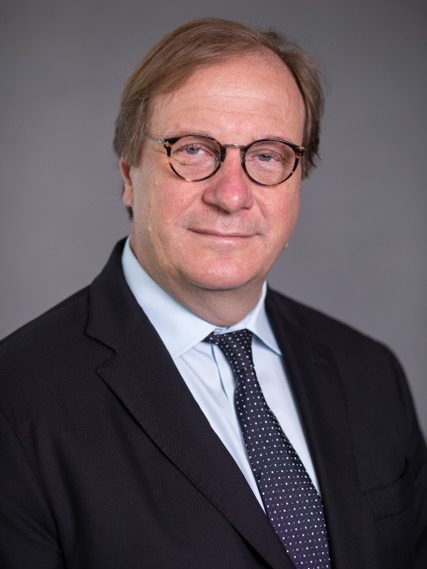
Frederick Kempe
President and CEO,
Atlantic Council
Explore the program
The Transatlantic Security Initiative, in the Scowcroft Center for Strategy and Security, shapes and influences the debate on the greatest security challenges facing the North Atlantic Alliance and its key partners.
Atlantic Council TV
Watch this event and more content on ACTV
Follow the conversations shaping our world. Available on all major platforms.