TRANSCRIPT
Expand to read
Josh Lipsky:
Welcome to the Atlantic Council. I’m Josh Lipsky, vice president and chair of international economics at the Council. And today we are honored and pleased to welcome Christian Mumssen, director of the IMF Strategy, Policy, and Review Department, to the Atlantic Council for a special event on “Navigating a Fragmenting World.”
SPR, as it’s known inside the Fund, leads the IMF’s institutional strategy and oversees the critically important Article IV consultations, where the IMF examines each member’s economy and offers policy advice. Christian joins us today to walk through the five institutional reviews now underway at the Fund, spanning surveillance, financial stability, lending conditionality, debt sustainability, and external imbalances. All aim to be completed by the end of the year. Good luck, Christian, and good luck to the IMF.
Our commitment at the Council will be to help in this process in any way we can. The questions the Fund is seeking to answer are the exact reason we built our Bretton Woods 2.0 Project at the Atlantic Council. Every spring and fall, our center hosts finance ministers and central bank governors from around the world to give their perspectives on these challenges. We complement that work throughout the year with cutting edge research, analysis, and data visualization. This October, we take that work to Bangkok, where our team will be on the ground at the annual meetings in Thailand. But before we all get to Thailand, there’s a lot of work to be done.
As the global economy faces deep structural shifts and transformations—from geoeconomic fragmentation, to the rise of AI, to climate change, to debt, to demographics—few questions matter more than how the institutions built to manage global economic stability should themselves adapt. There is no one better than Christian to help us walk through that process today. Christian brings three decades of experience at the Fund to this work. He previously served as chief of staff in the Office of the Managing Director, deputy director of the Finance Department, and director of the IMF Europe Office, and senior resident representative to the European Union. Prior to the IMF, he served as principal economist in the Office of the Chief Economist at the EBRD.
Christian, welcome to the Atlantic Council. The floor is yours.
Christian Mumssen:
Thank you, Josh. Good morning, everybody. It’s a real pleasure to be here. And let me jump right in and give you a few sort of opening remarks. And then I’ll be very happy to answer questions and have a conversation.
So I think we all would agree that the world economy is changing in profound ways. There has been a rapid succession of major shocks, a pandemic, a cost-of-living crisis, trade frictions, and wars in Ukraine and in the Middle East. At the same time, the world is undergoing major transformations. And I want to highlight four of them. Demographics, with rapidly aging societies in advanced and many emerging economies and at the same a youth bulge in Africa and in South Asia. Secondly, environmental, with continuing climate change and more frequent extreme weather events. Thirdly, technological, with the rapid advance of artificial intelligence and also digital finance innovation. And, of course, as you will all know here, geopolitical, with the postwar global order being replaced by a more fragmented, multipolar world.
Now, while the global economy has proved remarkably resilient so far, in fact we just published our WEO update and project for this year still 3 percent global growth, it is also true that the force of these changes that are highlighted creates an exceptionally high level of uncertainty. And, as our managing director likes to often say, is expect the unexpected. Of course, we all have seen big changes before. For example, the move to floating exchange rates in the 1970s, the acceleration of globalization, including the integration of China and then later on of Eastern Europe and the former Soviet Union in the eighties and nineties, the global financial crisis in 2008, the euro area crisis, et cetera. But the scale and complexity of the challenges we face today may well exceed anything we have experienced since the creation of the postwar system.
And what’s different today is that these transformations are all happening at the same time and they are interacting with each other. So the central problem is just when shocks and structural challenges and a technological revolution would call for greater international cooperation, we have the global governance system fragmenting, to some extent. So what is to be done? Let me highlight four general principles before I then talk about—a bit about what the IMF is doing. For me, the central question today, as an official at the Fund, is how can countries and how can the Fund promote stability and growth, and remain agile in this fragmenting and fast-changing world?
Let me offer four principles. First, and this would not be surprising for anyone who knows the IMF, preserve macroeconomic stability. We can’t say for certain how the world will look like in a few years, but it’s safe to assume that the basic rules of economics will continue to hold. In fact, maybe this is a bit of a founding mantra of the IMF, is that stability is a precondition for prosperity. Because when an economy is unstable or unbalanced, private investment and growth will suffer. So we, governments and the IMF, will continue to pay close attention to debt and fiscal deficits, sound public finances, inflation, growth and jobs, global balances and imbalances, and financial stability.
This is particularly important now because policy buffers have eroded. Fiscal deficits are now larger and are about 1.5 percent of GDP above the pre-COVID levels.
Global public debt is on a trajectory to reach 100 percent of GDP by 2029, according to our forecasts. Debt service has climbed, interest rates are higher and, for example, for low-income countries interest payments on public debt have doubled over the last decade.
So recent shocks have also shown that price stability cannot be taken for granted including in advanced countries because of these frequent supply shocks. Policymakers must pay greater attention also to external sustainability.
We are seeing large and rising global imbalances both in surplus and in deficit countries that will need to be addressed in order to avoid disorderly adjustment.
Responding to future shocks means being prudent and targeted. There are limits to what monetary and fiscal policy alone can do to offset shocks and accommodate structural shifts. So that brings me to the second principle, which is to enhance resilience. Recent supply shocks and geopolitical tensions have highlighted the importance of economic security. Trade relationships are changing. Between 2023 and 2025, there were more than 10,000 trade-distorting industrial policy interventions worldwide. And of course, we have wars and conflicts that are risking to disrupt energy supplies. So countries are placing much greater emphasis on securing supply chains, diversifying economic relationships, and enhancing energy security.
Another question will be how to ensure a robust international monetary system. There is rapid innovation in finance, in particular the growth of non-bank financial institutions and advancements in digital finance. This creates opportunities for efficiency but also introduces new channels of shock transmission and new sources of risk, so adequate regulation, supervision, and risk monitoring will remain critical.
Now, fortunately, we have seen that countries do tend to learn from crises, which helps them build resilience and navigate the next shock better.
Now, the third principle is really about what I said at the outset, is this is now a very uncertain world, and in an uncertain world, from the narrow point of view of those of us in the business of economic forecasting—well, projecting economic developments like growth, employment, inflation, the fiscal position, interest rates, becomes harder and this has real implications for policymaking.
Recently, we had a panel that I chaired at the spring meetings here in Washington with the question do we need to rethink fiscal and monetary policy frameworks in a shock-prone and changing world.
And to summarize, I think, is to say that we had a great panel. There are no easy answers, but a few things are very clear.
One, agility and adaptability are key to manage shocks and structural change.
Two, it is very important to retain policy credibility. Even if shocks throw off an economy temporarily, it is critical to preserve credible medium-term fiscal frameworks and also a credible commitment to price stability.
And three, we need to consider different scenarios, plan for contingencies, and respond with agility.
And then finally, the fourth principle I would highlight is to enable the private sector.
As I said, fiscal and monetary policy can’t do everything, and on private sector, I would say while governments always have an important role to provide public goods, to provide adequate social protection, and creating a stable and enabling environment for the private sector, what I would highlight here is that today embracing innovation is really critical.
Technology, if well-managed, clearly has the potential to raise productivity and growth significantly, and possibly offsetting some of the negative impacts from the other forces and from shocks. As an example, digital finance is clearly here to stay. And everybody is talking about artificial intelligence, which some think may be as consequential as the industrial revolution, with profound implications for growth, employment, wealth distributions, and geopolitics even. But countries also need to pay close attention to the macro financial impacts of technological transformations to ensure that the benefits really do generate inclusive growth.
So let me close by just saying a few words about what the IMF is doing, and I’m happy to answer questions about this in our discussion. So how is the IMF preparing for this changing world? Well, this year we are in a process of a very comprehensive update and upgrade of our toolkit and policies so that we can better help our member countries in this shock-prone and transforming world. We are taking a very broad view, focusing on managing shocks and uncertainty, building resilience, reducing external imbalances, identifying and addressing debt risks, guarding financial stability, financial innovations, and then tailoring our financial support to countries that are facing balance of payments challenges.
So let me give you a few examples from the five reviews that we are undertaking, and we can elaborate further. So the comprehensive review of surveillance is really focused on the IMF’s core strengths of ensuring macroeconomic stability. What does it mean in today’s world? Well, one important aspect of that is in today’s world we need to think more in scenarios and more about what are the right policies under different circumstances—so contingent policy advice. We have already started doing this in the World Economic Outlook, our flagship.
Some of you will have seen that in April we came out with no less than three scenarios for our forecast. And now what we are trying to do in our comprehensive surveillance review is to have a more consistent application of scenario analysis in our bilateral surveillance consultations. And, of course, in surveillance we also need to be cognizant that the shocks we are experiencing and the transformations have a very differential impact on our membership. So tailoring our advice to specific circumstances will have a premium in surveillance.
As regards lending, we have really gone through an exceptional period since 2020, when the pandemic started, with one shock following closely on the heels of another shock. The review of program design and conditionality, first of all, found that in this context the Fund has responded pretty well in an agile way, adapting a program, midcourse where necessary, and also focus on rebuilding buffers. Going forward, what the review is highlighting is that it is important that we introduce tailoring, agility, and also rebuilding buffers in our—in our programs, with a premium, again, on contingency planning and on being very selective about which structural reforms are the highest priority and which ones can be done later.
We have also a review of our debt sustainability framework here, to highlight that for low-income countries there is really a very profound change in the financing landscape with the decline of official development assistance and rise in borrowing from local banks. So the update of our debt sustainability framework for low-income countries aims to better integrate domestic debt into the analysis, but also to more deeply analyze longer-term trends and tradeoffs, particularly on demographics, potential climate shocks, and development-related needs for low-income countries.
The review of the financial sector assessment program is essentially focused on sharpening our early warning capacity with stronger coverage of emerging risk, including those related to changes in the financial sector, cybersecurity, and then integrating the findings from these financial sector assessments into our bilateral surveillance. And then finally, we are looking very carefully at external sector assessments as well. This has become significantly more important in recent years because of rising global imbalances between current account surplus and current account deficit countries.
This has been also a priority for the presidencies of the G20, with the US presidency, and the French presidency of the G7, because of the risks these imbalances create for unbalanced growth, but also potential disorderly adjustment. So we have a series of updates and upgrades that will strengthen the Fund’s ability to assess what are excess imbalances, but also to look at what trade industrial policies do to interact with imbalances, as well as capital flow and stock imbalances.
So, to sum up, the Fund is preparing to play its part in this changing world. But I should also say, we don’t have all the answers, of course. Our institution has to navigate the uncertainty, just like everybody else in an evolving geoeconomic context. But I think our greatest institutional strength is that virtually every country in the world, 191 in total, has a seat at the table. And this provides a common platform for identifying problems and thinking about shared solutions. At the end of the day, it is the countries who need to anticipate, formulate, and implement the right macroeconomic policies, and get domestic buy-in on these decisions. The Fund’s role is to be there to help, to convene, and to provide guidance.
So let me end here. And I very much look forward to our conversation.
Josh Lipsky:
Christian, thank you so much for that thorough review of what’s happening inside the Fund, and also the macro trends outside the Fund which are weighing on how you think about this review process. And I want to really commend the Fund for coming here at the Council and sharing this work while it’s in process. We know it’s not done. You are still working on it. And then the only downside of coming to us while it’s in process is we’re going to stress test it a little bit now, and then open up to Q&A from the audience, also online. So if you’re watching online, use AskAC.org, and we’ll get to as many questions as we can in the time we have.
But let me start where you ended, on the membership. If you’re a member of the IMF, in the years to come after these reviews are done, what will feel different for you? I understand internally at the IMF what you’re doing, but in terms of the relationship between the membership—Article IV, FSAP, CSR—how will it all interact differently with the membership as you roll out these new processes?
Christian Mumssen:
Yeah. So maybe let me start with the membership being a key part of the reviews themselves. So what are these reviews? They are not just a bunch of Fund staff sitting around and writing a report. It is really an interactive process with all of our members, represented through our executive board but we also have very intensive discussions with the capitals, with the policymakers. So in fact, we are asking them, what would be most useful for you? So that is a big part of doing these reviews. So that’s the first point.
Second point is, what will feel differently? I think it is really across—there is a cross-cutting theme through all the five reviews. And what is that about? It’s really about the different world. It is really about trying to think through—we have more uncertainty, we have more shocks, and there are these massive transformations. And everything is interacting. And it’s interacting in a world where international cooperation has become more challenging.
So I think what will feel different is that we will pay more attention to other scenarios, to the unknown. How can we think about this? How can we make ourselves prepare better for two different scenarios? One—to pick an example, one where a certain conflict goes away quickly, or one where a certain conflict takes another six months to resolve? So, how should we think about this as a monetary policy maker, as a central bank, as a fiscal policy maker? These are difficult questions.
So I think what we will try to do is provide expert analysis, but really also listen to our members in the process. Maybe one thing that I would also highlight is surveillance is a sort of interesting concept. Sometimes from the outside, it looks like surveillances is that on every country we have a paper that we publish once a year. We would like this to look different from the point of view of the member. Because, yes, there is the paper, but the paper is the outcome of a long series of discussions. And developments happen in between these annual reports. So what do we do?
We should really leverage our special access to country authorities to interact with them and to advise them, often behind closed doors in a trusted advisory capacity, how to navigate shocks and how to be agile in a fast-changing world. So I think a more continuous type of surveillance is a big part of what will look different.
Josh Lipsky:
Would that have a public component to it as well? Could there be interim check-ins, shorter publications, around the year-long cycle?
Christian Mumssen:
So, I think in terms of publications, we are certainly—we have a sort of a year-round process, especially for cross-country work. You will see that we also come out often with blogs and short pieces that are topical. So I think on country-specific issues, it depends a bit. So for many countries, what we are doing behind the scenes is not published. And that is part also of why we are, in a sense, looked upon by our members for trusted advice, because some of it is confidential. So I would think that, in terms of the more continuous surveillance, you will see more at the multilateral, more at the regional level. At the country level, I would still expect that we have these annual publications. They don’t go away. It is just that the interaction with members we would like to be a bit more responsive and a bit more continuous.
Josh Lipsky:
As a research institution that relies on publicly available information, you could understand our vested interest in that answer. OK. Let me talk about imbalances. You mentioned this as a focus for the US G20 presidency, the French G7 presidency which just concluded. We understand where the US is on this. Europe has their position, which came out during the G7 presidency. China has their view on imbalances. I’m curious about the rest of the membership. Is there a demand from the rest of the membership, other emerging markets, to address this issue? Do you hear a variety of viewpoints on how they want to address it? Because from a US perspective we hear a lot about the big players. And I’m curious from the IMF’s perspective what the rest of the world is thinking.
Christian Mumssen:
Yeah. So, first of all, the big players really matter here on global imbalances. So if you look at stock imbalances, for example, that have built up, it’s really the major players that are part of the conversation. That’s why it’s so high on the agenda. Clearly, US, China, European Union, Japan, and so on, these big countries, they really do matter. But it’s a very important question, what does it mean for the rest of the world? For the rest of the world, it is—definitely it creates risk to have these imbalances building, because when there’s disorderly adjustment among the group of very large economies that does have spillovers to the rest of the membership.
So that’s why obviously the entire membership cares. And we had very good discussions in our executive board with all members being very engaged on the issue. For example, in the spring there was the question of how trade policies and industrial policies affect these global imbalances. So traditionally, at the Fund we look at global imbalances as sort of a macro issue. So a country’s savings, aggregate savings, and aggregate investment. But then, what do tariffs do? What do industrial policies do? So that was a discussion that was very rich. We published a paper on it. And very, I think, important also for other members.
Another aspect that will be very important, and we are planning to come out with a paper early next year on this, is what do capital flows and shock imbalances—what does it mean? What kind of risks are they creating? What does it mean for global financial stability?
So there are many angles to the issue of global imbalances. And that’s the reason why one of the big themes for our surveillance review is to raise, in a sense—or, to raise the profile, but also to go much deeper and much more comprehensively on the question of the linkages between your domestic policies and the external sector linkages and spillover to other countries.
Josh Lipsky:
Is currency potentially something you’ll look at as you do the review? This has been an ongoing debate on the imbalances issue, the role of currency.
Christian Mumssen:
Yeah. I mean, we are—that is really our mandate, is to look at exchange rates and at the international monetary system. That will always be a big topic.
I think in the specific issue of the global imbalances, we look at the imbalances more from a medium-term perspective. So it is very difficult to comment on today’s exchange rate and what should be the exchange rate tomorrow; that we generally do not do at the Fund. Markets are, obviously—you know, they respond to very short-term forces. We take more the medium-term perspective.
The imbalances have been pretty persistent lately and the stock imbalances are growing. So, again, I would emphasize more the issue of what it means for capital flows and the risk of reversals.
Josh Lipsky:
Thank you.
Let’s talk about debt. So I’m curious what drove the review of the framework on, when we think of LIC-DSF, how you’re driving that. Is it fiscal pressures in economies, it’s broader macro forces going on? This is something that’s been talked about a long time in terms of reviewing the debt framework. What’s driving the review now?
Christian Mumssen:
Yes. So the—well, first of all, we update both for emerging or for the—for the market access countries and for the low-income countries, we update our frameworks quite regularly. So it was a planned review. We are doing it—the Low-Income Country Debt Sustainability Framework, we are doing it completely jointly with the World Bank. It’s a very important element also for donors to have a good sense of the debt vulnerabilities. So, at some sense, it was always planned. However, it is very, very timely because of the changing financing landscape for low-income countries.
As I mentioned, ODA has declined significantly. It’s now about 3.5 percent of GDP, significantly down from before. At the same time, we have seen a significant increase in low-income countries of domestic borrowing. So the domestic debt has—or, domestic borrowing has increased from 15 percent about ten years ago to now 25 percent of GDP. So that has become significant.
New borrowers have come on the scene. They are not—sorry, new creditors have come on the scene as well in the past. But what is interesting is when you talk to low-income country authorities their main concern is how to attract private capital from abroad, and that’s really where many of them are still falling short. While there is some issuance of bonds, net external borrowing is very, very low for low-income countries. And this is really an area where they could do a lot better in terms of attracting affordable capital from abroad.
This is also why having a good assessment of debt vulnerabilities is so important. So what we are trying to do on debt is we are trying to enhance the depth of analysis of the risk from domestic debt and we will also look at what longer-term trends mean. For example, the issue of susceptibility to climate shocks, which is a longer-term issue for many countries, how does it interact with debt sustainability? And the question of development needs. So, if there is a certain investment today that accumulates some debt, how do we build this into the debt sustainability framework?
So it is really important because of this shifting financing landscape for low-income countries. We came out with a paper in March on this, and I think it will allow us to have a more robust analysis of the debt risks.
Josh Lipsky:
And we’re six years in, it’s hard to believe, to the G20 debt restructuring process. I’m wondering your view, separate from the review process that’s going on, on how that process is going, what’s worked, what hasn’t, and whether that will be part of how you look at the broader debt restructuring picture in the Fund’s work.
Christian Mumssen:
Yeah. So I would probably see this as a—as a budding success story, actually, the Common Framework. So there were some questions at the beginning—is it too slow, is it too complicated, and so on. I think we are seeing the system is starting to work.
But let’s also remember it’s just a handful of countries, right? The Common Framework is if you look at the universe of low-income countries, we have seventy countries. They are extremely diverse. Some of them are close to being emerging markets. We have seen that in our debt sustainability analysis for low-income countries. In fact, the average debt vulnerability rating has improved over the last few years. So, on debt restructuring, it’s a small number of countries. They, I think, have been well-served by the debt restructurings. And of course, we are continuing to—trying to improve the process. For example, we are—we have created this Global Sovereign Debt Roundtable where we bring together borrowing countries, traditional donors, new creditors, and private creditors around the table to really think through what are the key issues on debt restructurings and on other issues related to debt.
So I think it’s a—it’s a framework that is continuing to evolve. But I’m actually pretty optimistic that it will continue to serve those members well that do need debt restructuring. Again, it’s a small group.
Josh Lipsky:
And the membership, you feel the same—China, others, they feel invested in this process? Because that’s been a concern in the past.
Christian Mumssen:
Absolutely. Absolutely. I think this Global Sovereign Debt Roundtable is working extremely well. We meet at the principal levels, at the ministerial principal level, every spring and annual meeting. We will do so again in Bangkok. There are constant technical discussions ongoing. So it’s a process that’s working well, and I think everybody has an interest in debt problems being managed well.
Josh Lipsky:
So a few more questions for me before I turn to the audience. But we can’t have an event in Washington and not talk about AI. It’s contractually obligated to talk about it, especially on macroeconomics.
So Fed Chair Kevin Warsh was testifying to Congress yesterday. He talked about the productivity gains that can come from AI. We’ve certainly heard this in the US. I think it’s safe to say the US is bullish on AI from an economic perspective.
But I want to come back, as I asked you before, about the rest of the world’s views on AI. You deal with every country in the world, essentially—every emerging market, every developing economy. We hear so much on the advanced economy bull case for AI. How is the rest of the world feeling about these transformations?
Christian Mumssen:
Yeah. It’s a very important question. And let’s start first with the advanced economies because I think there’s a complete difference between—so I’m German and I tend to listen to German news in the morning. And when the German news talks about AI, they talk about the US. They don’t talk about Germany.
Josh Lipsky:
That’s interesting.
Christian Mumssen:
So US is very sui generis, very much at the frontier in terms of investment, in terms of development, talent, et cetera. Clearly, there’s a lot happening in China. But the other advanced economies, it’s a very mixed picture. Some countries are extremely advanced. They have made great progress on digitalization. Not always the countries you would expect. But other advanced countries, they are really not doing yet that much on this topic.
What I would say is this is a topic the Fund will focus on simply because it is transformational for the world economy. It will affect different countries differently. Clearly, it will have a complete—AI will play a very different role in the US from a macro perspective just in terms of the sheer volumes of finance/investment that we see here compared to other countries. And really, what we will try to do is look at the macroeconomic linkages.
So one is what does it mean for the labor market. We have—we have recently come out with a paper that showed that AI is likely to affect around 60 percent of jobs positively or negatively both in advanced countries and about 40 percent in emerging and low-income countries. So we already see some differential effect where AI is even affecting jobs in some way.
Of course, there’s a huge debate whether AI is labor-replacing or labor-enhancing. And that really depends, at the end of the day, about the productivity gain from AI. You know, some people refer back to the Industrial Revolution, where really that that generated so much growth that, at the end of the day, it didn’t displace—it didn’t displace labor.
Now, we just don’t know what will happen, but we know we have to look at the macro effects. Labor was one. Another very important one will be financial stability including because of AI’s ability to affect cybersecurity. So that will be important.
Then, clearly, we have an issue related to distribution. So both within countries and across countries there will be distributional effects of AI that we need to think through.
And even in bread-and-butter topics that we deal with in the IMF—let’s take taxation—it may well be that AI has an impact on how efficient people become at, let’s say, making their tax bills efficiently low and then ministries of finance will become very good at, you know, broadening the tech space—
Josh Lipsky:
Found a great use case for AI here.
Christian Mumssen:
So who knows? We don’t know, but it’s certainly something that our members are super interested in and we will definitely have to look carefully at these macro linkages.
Josh Lipsky:
When you think about the time horizon, this always seems to be where some of the gap is, and Chair Warsh talked about this a little yesterday. The markets are somehow pricing in that it’s today but the transformation, the gains, could be much further off. Does the IMF think about that trajectory as you try to analyze the macro effects?
Christian Mumssen:
Yeah. So I tend to stay away from commenting on markets and movements in those.
So I think my personal view is that AI will be transformational. I think it’s one of the potentially biggest forces that we will see in the global economy. But we simply don’t know where exactly we will land, if we will really land anywhere. So it is highly uncertain.
So I think it goes back to what I said earlier as a policymaker, as a—for Treasury, for central banks, you just have to keep an open mind and think in terms of different scenarios. Think where things could be headed including with markets. We don’t know what will happen to stock markets. We have to be prepared for different scenarios.
Similarly, we don’t know what will happen to jobs, et cetera. So thinking in scenarios and thinking of what you can do to better prepare yourself for the different scenarios, that will be critical and that’s where we will try to help.
Josh Lipsky:
So one more question for me before we go to the audience questions and I want to come back to something you said in your speech about this era we live in, in geoeconomics. Obviously, we care a lot about that at the Geoeconomics Center.
How does the Fund measure industrial policies, tariffs, financial sanctions, things that were not as core, especially in advanced economies, a few years ago but are now rising and at least from my perspective not going away anytime soon?
Because they can be very unpredictable in terms of when they’re put out. So how do you factor that into macroeconomic analysis?
Christian Mumssen:
Yeah. So it is—one aspect of the fragmentation is certainly the frictions we see in trade, and we had this paper that tried to integrate trade restrictions and industrial policies into our framework of thinking of—thinking about external imbalances.
So, clearly, there is—when these policies are deployed at the macro level—not at the sector-specific level but at the macro level—it does have an impact on imbalances. It’s not always straightforward so it’s very nuanced. There’s short-term versus long-term impact, and there’s also growth-enhancing and growth-restraining impacts.
But it is an important factor and it comes back to the question of, well, what do you really do to manage an economy when there are all these frictions, when there are these supply chain risks, when there are risks of changing regimes on trade policies and on industrial policies, how can you make your economy more resilient.
And I think here maybe the old answer would have been, well, we have some sort of, let’s say, global compact managed at the level of an institution that is really global.
But I think countries now need to navigate this in different country groupings. The IMF is certainly one institution that will, hopefully, remain global. It has a universal membership, and I think we are definitely monitoring these policies that are creating frictions.
We are analyzing what kind of spillovers they create. And we are certainly committed to our mandate to advise all countries on what they can do to foster their own stability and growth but also to monitor what countries can do to maintain global stability.
Josh Lipsky:
Thank you for that. We will, as always, share our research on these issues with the Fund and help in any way we can. Let’s turn to the audience. So raise your hand if you have questions. We’ll get to as many as we can. And I also have a lot online. So we’ll do as much as we can. Sir, here first to you. And please introduce yourself.
Imran Khan:
Hello. This is Imran Khan. I am from Bangladesh, a senior vice president at Citibank there, and also member of Chatham House in London.
So my point is we all know about South Asia, recent uprisings. There were four uprisings in middle of Sri Lanka, Bangladesh, Maldives, and also Nepal. And more specifically, all of them is because of—the one and only thing is economic instability. So they are suffering balance of payment deficit, very high inflations, and also, you know, pressure on currency devaluation which they couldn’t take, absorb, because they are a very low-income country, you know. So at this point of time, there is—IMF is only the last resort, we all know. And the IMF is always doing help for there for a long time.
But solutions of IMF is always not politically comfortable for them because the pressure on reducing subsidies, currency controlling, the liberalization of currency. So for these pressures in this geopolitical tension—period of geopolitical tension they are leaning towards China, naturally, because their borrowing is very high, their private sector credit growth is very low. So they are very much leaning towards China. So for my question is, for coming days what would be the bespoke solution for these specific countries, which are still in very tough time? Thank you.
Christian Mumssen:
OK. So, no, thank you for this question. I think you are highlighting a very important point, is that we live in these volatile times but there are some countries that are particularly hard hit by certain shocks. In fact, we found that when—after the conflict in the Middle East broke out, the impact was worst on many of the low-income and lower-income emerging market economies, because they are very dependent not only on the fuel products but also on fertilizer, et cetera. So what we are trying to do in these cases is two things.
One is to help countries over time become more resilient by strengthening their macroeconomic institutions. So in some countries, that means surveillance and capacity development. But in some countries where we have programs, for example, Sri Lanka, Nepal we have programs, in Bangladesh we had a program. So our programs, yes, they are about providing financial support, et cetera, what people know well, but they are also about capacity building on macroeconomic institutions because that is critical to be, let’s say, agile and resilient to the next shock. Because the next shock surely will come. And I think what we can do is we can help with the macroeconomic institutions.
Josh Lipsky:
So I’m going to go to one question online. And we’ll try to put this up on the screen here. And you can see it in front of you. And I’ll read it for the audience.
There’s been a sense for some time that IMF conditionality in loan programs has been somewhat less strict, perhaps to accommodate the challenges of difficult adjustment. But it means that some countries never really achieve sustainable imbalances or find themselves continually coming back to the Fund. What’s the remedy for this? Easy question for you, Christian.
Christian Mumssen:
Yeah, no, it is actually a great question. So let me go back to what happened right after the COVID pandemic broke out. What did we do? We actually very quickly increased our access under emergency financing and provided to a very large number of especially low income and emerging markets, emergency financing, which means without a program. It’s basically one disbursement of a good amount. That provided a lifeline to many countries at a moment when there was a huge amount of uncertainty how the pandemic would unfold.
But that was then followed by a concern. Well, how will countries use that money? And, secondly, what will countries do to really adapt their economies to this particular shock? So it was very good to see that the vast majority of countries that received emergency financing then transitioned to a full-fledged program. And in this program, as I said, this came often at a time when there was still a lot of uncertainty. Fiscal deficits had risen significantly in some countries in order to respond to COVID. So, yes, initially IMF programs did allow for larger deficits than we would see in normal stable times. So the key question then is, after the shock wanes, how do you rebuild buffers? So that is important.
And we have, in fact, in the review of program design conditionality, that’s one of the key questions, is how do we encourage the rebuilding of buffers after the shock? There is, of course, a complication here. After the COVID shock ended, we had the war in Ukraine that created another shock, a cost-of-living crisis, et cetera. So it is not an easy question. And I think the adaptability of programs will remain very important. And maybe also, coming back to the point I made earlier, is it means when we think about structural reforms that are an important part of IMF programs, but we have to be very selective of what is really a priority because there’s only so many things, from a political economy point of view, that a country can do in a difficult situation.
Josh Lipsky:
OK, let me come back to the room. We have limited time left so please be short in the questions. Do two together. So you and you, and then we’ll do one more round.
Jorgelina Do Rosario:
Hi. Jorgelina Rosario with Bloomberg News. Thank you so much for your time.
I was wondering, when you refer to the low-income country EDSA, and the way the countries have been looking for more borrowing from local debt, how will EDSA change the gross financing needs threshold in a way that could become more possible for countries in the future looking for a debt restructuring plus an IMF program, finding themselves with the need that they do need to restructure also domestic debt, and the complexities that that also brings to the debt restructuring discussion? Thank you so much.
Josh Lipsky:
And let’s also get the question here, and then we’ll do both together.
Vasuki Shastry:
Vasuki Shastry, formerly with the Fund.
So, Christian, just wondering, how is the Fund thinking about climate in the context of CSR? Both in terms, you know, of climate as a lending instrument, as well as policy advice to countries, particularly in the front line of distress? I mean, I recognize this space is politically turbulent, but how are you going about thinking about this in terms of design?
Christian Mumssen:
OK. Two super important topics. So, on the debt sustainability, it is very interesting that, first of all, we are updating the whole, let’s say, infrastructure behind our debt sustainability analysis. Which means data updates, which means methodological refinements, and so on. And what is interesting is to see there has been quite a bit of improvement. So, for example, the percentage of low-income countries that are currently rated at a high risk of debt distress, which really means they have high debt vulnerabilities, is down to about a third of countries. So that was higher before. So that is positive. And we are also making our analysis more granular to show that there is a big difference even within this group of one third. There are some countries that are really not in a situation where they have to worry about debt sustainability. It’s more about—it’s more about liquidity.
Which links then to your other point about domestic debt. Yes, domestic debt has been a key offset to the decline in ODA. But domestic debt does create vulnerabilities, and you mentioned debt restructuring. Domestic debt restructuring is super complicated. So it has to be done very, very carefully. And hence, the preference for many low-income countries will be foreign direct investment and things that flow into the country from abroad, affordable private finance that also generates growth, because domestic bank borrowing, there’s only so much that you can do on that as well.
On climate, this is a very important question. So I think the comprehensive surveillance review, what we are trying to do here is to really focus again on what is really the Fund’s, if you want, comparative advantage? For the economists in the room, the comparative advantage of the Fund are really our core mission, which is about macroeconomic stability. So we have always aimed to look at climate through a lens of macroeconomic stability. It was a new topic to the Fund. And so we did invest quite a bit in the last few years in developing tools. And in fact, coming back to the debt sustainability framework for low-income countries, so there is now a longer-term module that we will introduce that allows both analysis of the longer-term effects of repeated extreme weather shocks, as well as the development side.
So we are developing tools to better understand the linkage between a climate issue on the one hand and macro stability on the other hand. So we have invested a lot in that. And now we are in a phase where we have, more or less, the tools that we need. And now climate is just becoming like many other structures issues we are looking at—digital finance, let’s say demographic changes, issues like pension reform. It’s a structural topic. It has important macroeconomic linkages for many countries. And we will look at it from the macro lens and in a—let’s say, in a periodic, selective way.
Josh Lipsky:
We’ll do quick two rounds. I haven’t come over to this side, so I want to make sure I get anyone over here, and then we’ll come back over here, and that’ll be it. You, ma’am; and then you; and that’ll be the end of our event. And, Christian, you’re very generous with your time. And we’ll do those together.
Sang eun Lee:
Hi, my name is Sang eun Lee from The Korea Economic Daily newspaper.
My question is, the Trump administration has, at times, threatened to withdraw from supranational bodies, like the IMF. And last year’s criticism of the IMF’s mission led to a substantial scaling back of its work on climate crisis response and gender issues, I think. And what do you make of this criticism that the IMF has effectively capitulated to pressure from the Trump administration? And do you actually believe the climate crisis is no longer an important issue, because judging from today’s remark it does not really seem that’s what you think right now.
Josh Lipsky:
One final question here, and then we’ll wrap.
Andrea Shalal:
Thank you. Andrea Shalal with Reuters.
I want to bring us to today’s events. Your forecast that you gave just in the WEO was linking the, you know, sort of relatively moderate decline, just a 0.1 percentage downgrade in the outlook to 3 percent, to the conflict ending in mid-July. Today is July 15th, aptly scheduled. So I want to—you know, we’ve seen, of course, massive escalation in the conflict in recent days. Your previous approach had been to have those scenarios. So in April, you had the three scenarios. Some of those were pretty dire, looking at global growth of 2.5 percent, and in the severe scenario 2 percent. Where do you see us now? And also, if you could just say a word about inflation expectations. Thus far you have expressed confidence that inflation expectations will remain anchored, but there are signs, including in the United States, that that is starting to shift. Just appreciate your update. Thanks.
Christian Mumssen:
Yeah. So on the issue of climate, well, I did highlight it as one of the four really big structural transformations that members will have to deal with. And I just would say that, again, our focus here is on the macroeconomic linkage. And it is, as we like to say at the IMF, macro-critical for many countries. Many countries will need to think through adaptation on climate. And our role here is simply to point out the linkages to the public finances, and growth prospects, and so forth. So it does remain something we look at. We have not rolled back from the core mission, but it is also true that, again, there was a phase when we invested a lot in developing new tools. But this has—this has been done for us now, and we will continue to monitor the climate macro linkages on a country-by-country basis.
On the forecast, well, as I said before, forecasting becomes a lot harder in this new world. And you’re right that in April we had three scenarios. One of them was dire. And, of course, if you have a very long disruption of energy supplies in the world, it will definitely have an impact. In fact, the 3 percent forecast, also let’s remember that there are differential forces here. There is, of course, already an impact from the disruption, but then at the same time we have some economies that are just growing very, very strongly for completely different reasons. In particular, US, China, also India, for example. So we have offsetting forces, and that I think will remain the case.
Very difficult to say where we will be with our October World Economic Outlook. I cannot predict it. It’s also maybe a question to one of my colleagues who will be in charge of it. There’s a new chief economist coming in. So we will—we will discuss with her when she’s there. Just it’s fair to say that internally—whatever the World Economic Outlook will have—internally we will have to think in scenarios. And for some countries, the question of energy prices, fertilizer prices, is, of course, extremely important. And we will keep on looking at that in our bilateral surveillance as well.
Josh Lipsky:
Christian, I want to thank you and all your colleagues at the IMF for this important work, and coming to us, as I said at the beginning, during this process, not at the end of it, to share where you are, hear our questions. And we look forward to continuing to work with you and all colleagues at the Fund on this important work.
On Wednesday, July 15, at 10:00 a.m. ET, the Atlantic Council’s GeoEconomics Center will host a conversation with Christian Mumssen, director of the Strategy, Policy, and Review Department at the International Monetary Fund (IMF).
The global economy faces slowing growth, depleted policy buffers, and deepening structural shifts from geoeconomic fragmentation, artificial intelligence, climate change, and demographic pressures. Against this uncertain backdrop, the world’s policymakers must make trade-offs.
The IMF is now in the midst of a review of its core frameworks, spanning economic surveillance, lending programs, assessment of debt sustainability for low-income countries, financial stability, and external balances. In this conversation, Mumssen will examine how the IMF is adapting its tools and thinking to support countries in an era of uncertainty, shocks, and major transformations.
New policy: In-person attendees will be required to show photo ID upon arrival, and no on-site registration will be permitted. Guests will not be admitted later than twenty minutes after the event’s start time.
Please complete the form below to register for this event.
By registering to attend in-person, you agree to abide by the Atlantic Council’s Event Code of Conduct.
join the conversation
Send our speakers a question—it may be featured during our event.
Featuring
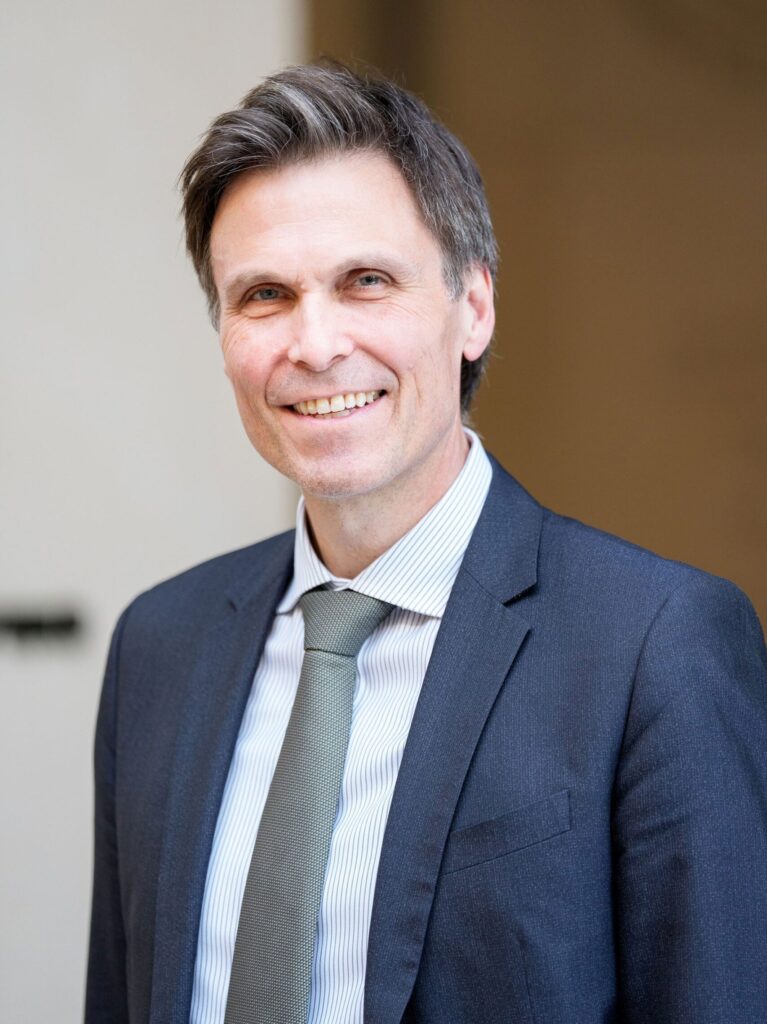
Christian Mumssen
Director of the Strategy, Policy and Review Department,
International Monetary Fund
Moderated by
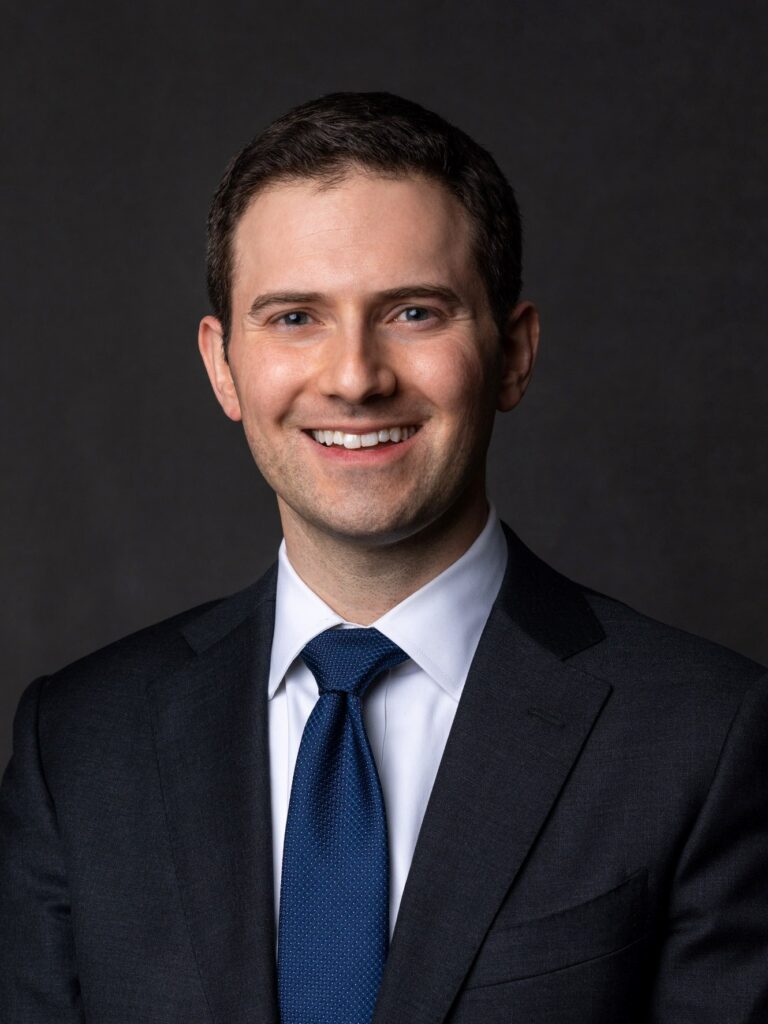
Josh Lipsky
Vice President & Chair, International Economics,
Senior Director, GeoEconomics Center,
Atlantic Council
Explore the programs

At the intersection of economics, finance, and foreign policy, the GeoEconomics Center is a translation hub with the goal of helping shape a better global economic future.
Atlantic Council TV
Watch this event and more content on ACTV
Follow the conversations shaping our world. Available on all major platforms.