Click to read the transcript
This transcript is AI-generated. Check against delivery.
Jenna Ben-Yehuda:
Well, welcome everybody to the Atlantic Council in New York. Thank you for joining us here at the St. Regis and to everybody joining online. I’m Jenna Ben-Yehuda, Executive Vice President at the Atlantic Council. It is my real pleasure to welcome all of you today for this conversation on European security and the transatlantic alliance with José Manuel Albares, Spain’s minister of foreign affairs, European Union and cooperation, and the World Cup champions. Congratulations.
José Manuel Albares:
Thank you. That’s not me, it’s the national team, huh?
Jenna Ben-Yehuda:
That is your triumphant return to New York following the final match. Felicidades. That’s really exciting. Y bienvenidos al Council. We’re really delighted to welcome you back for what I think has become an annual tradition. You joined us on this stage last year. Thank you for joining us again.
Last year, as you laid out in the just-released Foreign Action Strategy, Madrid remains committed to a stronger Europe, a stronger Spain, and a Spain that strengthens peace and security. Spain, of course, has confronted challenges in recent months. We’ll talk about a number of these challenges and opportunities. The Trump administration has not hidden its frustration with Madrid’s stance on the war in Iran or its approach to defense spending. And this summer, the migration crisis in Ceuta highlighted Spain’s vulnerability to instability in North Africa and broader migratory pressures.
Nevertheless, Spain’s role as an outspoken advocate for democracy, human rights, and cooperation is exceptionally important in today’s fraught geopolitical environment. And for all of these reasons and more, I’m really delighted to be joined by Minister Albares. He has served as the foreign minister since July 2021, and as a result, has witnessed a tremendous amount of geopolitical change and history. He has a distinguished career in foreign affairs, including previous roles as Spanish ambassador to France, and as secretary general for international affairs of the European Union, G20, and global security at the Office of the President of the Government.
He is a career diplomat and has been posted to Colombia, France, and the OECD, where he was elected vice chairman of the Development Assistance Committee. And as Foreign Minister, his work has spanned rebuilding key relationships with Morocco, negotiating the EU-UK agreement with respect to Gibraltar, and ushering in a new Foreign Action Strategy, which sets out Spain’s vision for a stronger Europe and its role in supporting democracy, peace, and security around the world.
Thank you for joining us back in New York. So, Mr. Foreign Minister, it’s a pleasure to have you here. When you spoke at this event last year, you had just released the Foreign Action Strategy, Spain’s foreign policy. Articulated your kind of national security strategy, if you will, for foreign affairs. And a lot has changed in the last year. This strategy emphasized Spain’s role as a leading EU member state, a NATO ally, the importance of multilateralism.
A lot has happened. There’s a war in Iran. There has been a new US national security strategy. How would you assess progress against your strategy one year on?
José Manuel Albares:
Our strategy remains as important as one year ago, and the three pillars that we have stated are even more important than they were last year: multilateralism, making Europe stronger, and trying to build peace. It’s very clear today that there is no solution to the big, big global issues if it’s not through multilateralism. We cannot manage a multipolar world if we don’t have a multilateral method. And this is something that it’s more important today than it was one year ago.
It’s very clear that Europe, in front of all the different crises that we have, the existential one in Ukraine, this aggression of Russia to Ukraine that has no justification, and we see that the aggressiveness of Vladimir Putin continues, makes Europe and the need to have a strong Europe even more valid. Also, the new views of the American administration when it comes to trade, to the security of the transatlantic relation, where even the current American administration invites us, the Europeans, to invest more in our own security means that Europe has to make a bigger step forward in its own sovereignty.
That means having the deterrence more and more in our own hands. That means completing the single market, having also a better sovereignty when it comes to energy or to the digital market. So on all those issues, we need a stronger Europe. Also, when we are confronted to the extreme right-wing forces outside European Union, and also inside each one of our countries, that wants to divide us, to make us weaker, and to make the European project, that is the one that really protects our citizens, weaker.
And finally, building peace. I will never accept, and the Spanish foreign policy will never accept, that war can be a tool of foreign policy in order to achieve objectives of foreign policy. And certainly, war cannot be a way of settling disputes among states. This is true in Ukraine when it comes to the war of aggression of Russia. This is true in the Middle East, where I will never accept that the natural way of relationship between the different people of the Middle East is through war.
And we, Spain, will continue having a coherent voice in the world in which will stay always the same in front of anyone based on the same principles.
Jenna Ben-Yehuda:
Thank you for laying out that really bold and ambitious strategy at a time when it’s been a little rocky between the US and Spain over the last six months. It’s been an unusually difficult year. Madrid denied US forces the use of Spanish bases during the February strikes on Iran, and President Trump threatened on a few occasions to cut off all trade, though that hasn’t happened, things have cooled since the summer, and described the bilateral relationship as a wasted cause. Strong language for a longstanding bilateral partnership.
So tell us a little bit about how you view the US-Spain relationship today, and where do you see room to stabilize it and to build upon that and to recall to a stronger, closer time?
José Manuel Albares:
One thing must be clear, and I always put it forward, I consider the United States to be the natural ally of Spain and the natural ally of Europeans. And I really believe and stick—and I want a stronger transatlantic relationship. I think the transatlantic relationship has been good for both parties, certainly for us, for the Europeans. I think that for the Americans as well, when it comes to prosperity and trade, or when it comes to security.
We have a very strong bilateral relationship with the United States. When you look to our trade, there is a big surplus for the Americans, for the United States, which is not something that happens with every country. We are a big importer of LNG from the United States. When it comes to security, we have two bases in Spain under Spanish sovereignty, but that are of common use by the United States at zero cost for the United States for many, many decades.
So I think that all that creates a real relationship. And what’s more important, when you see the level of investment, our companies in both countries, when you see the exchanges between our universities, the students, you see that the human bonds between the United States and Spain are really, really strong. And this, now that we are celebrating the 250th anniversary of independence, goes back to day one of this country. Spain was one of the very few countries helping the Americans to become independent.
Our common language between Spain and the United States, the Spanish and the Hispanic culture, is present in this country since independence and even before. So I would say it’s normal when you have such a strong relationship to have differences. But I think that what unites us is much more than what can conjuncturally divide us.
Jenna Ben-Yehuda:
Well, thank you for rooting us in that rich history. You talked a bit about the nature of our strong defense and security partnership, including, of course, the critical naval base of Rota and the air base in Morón de la Frontera. So how do you protect this kind of essential operational cooperation from broader ruptures?
And let me also add, we’re at this moment of NATO 3.0, defining the nature of security cooperation. There are assessments being done in the Pentagon around US force levels in the region. Have you had conversations with the Pentagon about the nature of those talks? And how do you think about the future of US presence in Spain?
José Manuel Albares:
I don’t know what the American government can decide. That’s up to the American government. But so far, there is no indication that there is going to be any change in the two bases, that’s for sure. The two bases have been running very successful for everyone and for the transatlantic security for many decades. They are of Spanish sovereignty. There is an agreement under which rules they can be used. And I think this has been successful and I don’t see why we should change that.
And from the American side, we have not had any indication that that is going to change in the future.
Jenna Ben-Yehuda:
Okay. So let’s look a little bit south. This summer, Spain, of course, faced an urgent migration crisis with approximately seventy thousand people crossing from Morocco into the Spanish exclave of Ceuta on the African continent. Can you tell us a little bit about how you think about this moment and what it means for Spain’s role and responsibility in safeguarding European external borders. You’re on the front lines of the African continent. What did the experience of this summer tell you about the nature of demography, of Africa, of instability, and how you move forward?
José Manuel Albares:
It has been a very shocking and traumatic moment for the life of the Spaniards in Ceuta and for everyone in Spain and in Europe, of course, all those images.
We are talking about the land borders of Spain and European Union in Africa. And when you see that those are the borders that separate Europe, the European Union on one side, Morocco and Africa on the other side, you must realize that we are talking about the most unequal border in the world, whatever criteria you take. Nineteen years of average age on one side, fory-four on the other. $2,000 per capita on one side, $66,000 on the other side. If you look at education or birth mortality rate, whatever, unemployment, it’s the most unequal. And therefore the most complex border in the world to be managed. And this is not going to change in the future. It’s going to get worse if we believe all the projections that the United Nations is doing concerning Africa. So we will always have this migratory pressure there.
So what we have to think is how to better manage that border, how to better state Ceuta and Melilla better in all the instruments that European Union and institution that did exist. That’s why we are given a permanent seat to Ceuta and Melilla in the Committee of the Region, a very important institution for local entities in European Union. We have fully integrated Ceuta and Melilla in the Customs Union of European Union. We are creating a financial package for the southern land borders of EU as the eastern borders have, because Europe has understood finally that the southern borders of Europe are as important as the eastern border.
And there are challenges, different challenges. We have different challenges coming from the east than from the south, but as complex as we have. And this is a moment of unity of all political forces in Spain around Ceuta and Melilla and all European countries.
Without solidarity, Europe will not exist.
Jenna Ben-Yehuda:
I want to come back to the comment you made about the southern flank in just a moment, but I want to return to some of the uncomfortable moments from the summer, some tough language from European leaders, calls from Italy, Denmark, and Sweden to exclude Spain from Schengen. Is there lingering damage that exists there? Has there been a moment of repair? How do you feel some months on from that crisis about where things stand?
José Manuel Albares:
I was very clear starting that day, the position of Italy, for instance, Denmark as well. I think it’s a shame for, for Europe. Europe is all about solidarity.
And without solidarity, you don’t have European project. And when you are a European partner, if one day you are in trouble, what you expect is the other one say, hey, can I help you? Not blaming you without not even knowing what’s going on.
In 2021, when there was a hybrid attack with migrants coming from Belarus to this country, Spain was there showing solidarity, and they are very far from us. In 2022, when Russia did the aggression to Ukraine, we took as many refugees from Ukraine as we could. We are the fourth country in Europe to take refugees. Italy is the fifteenth, for instance.
In 2023, when there was the migrant crisis in Lampedusa in Italy, Italy was overflowed. They couldn’t handle it. We even took migrants from Lampedusa to our own country. When Denmark, was pushed and challenged on their territorial integrity. We were there, so in solidarity, we expect the same thing.
The southern large borders of the EU are as important and should matter as much to European Union as the eastern border. So after those very first days, all European Union partners mostly, there is one that is still hesitating for internal political reasons, are showing solidarity to Spain. And when it comes to helping your partner in Europe, you must always think like a statesman. You must always think like the leader of a country. You cannot do it as the leader of a political party for internal political reasons.
Jenna Ben-Yehuda:
So let’s turn to NATO then. You’ve talked about the importance of the attention to the south. We hear a lot in NATO about the eastern flank. the threat, obviously, from Russia all the way up to the Arctic.
Tell me a little bit more about how you think about southern flank security issues. Have you had conversations with NATO about the nature of this? How is Spain leading the alliance in confronting these challenges and what else needs to be done?
José Manuel Albares:
We are completely leading all the thoughts and the reflection on the southern flank. Actually, the southern flank came into the strategy of NATO for the first time in the summit in Madrid in 2022. And it was because of us, we were leading that. We have a NATO that must be protecting us, giving deterrence 360 degrees around. It doesn’t matter where it comes from. And we have to identify the threats and the challenges. And they are very different.
I acknowledge that today the main threat, the existential threat for Europe is coming from the eastern flank, and that the war of aggression against Ukraine is threatening us, all of us. And we see the aggressiveness of Russia is not going down. They don’t want not just a genuine peace, not even a ceasefire, a genuine ceasefire. We don’t have such a threat coming from the south. But when you see the inequality at one side and other of the border of Ceuta and Melilla, when you see the migratory pressure, when you see how all that can be manipulated by the social networks, as it happened July 30th in Ceuta, there are challenges that we have to meet with different capabilities in a different way.
But that doesn’t mean that we don’t have those challenges. So that’s the reflection that we are doing. For the first time, NATO has appointed a special envoy for the southern flank. And we continue discussing and making sure both in European Union and in NATO that everyone looks also at the south as Spain does to the east. We have a historical deployment of troops on the eastern flank, even if, except Portugal, we are the farthest country in Europe from the eastern flank.
So we are asking for the same solidarity and for the same commitment for the south.
Jenna Ben-Yehuda:
So you talked about the 360 piece. Of course, you’ve talked about Russia and the threats that you perceive there. I wonder, certainly Spain has not been immune from dangers to Europe broadly stemming from Russia and other malign actors, though gray zone activities are being felt across Europe in particular. Can you describe how that threat of Russia is perceived in southwestern Europe? Does the war in Ukraine feel real in Spain?
José Manuel Albares:
Everyone understands that what is at stake in Ukraine goes well beyond Ukraine, that of course there is the sovereignty and independence of a country that is at stake. But at the end, everyone feels that what really Putin doesn’t forgive Ukraine is that one day they want to be one of us, another part of European Union, a democratic society. A plural society, a society that really embraces everyone with tolerance. That’s what they really want to prevent. And of course, that talks, that speaks to all the Spaniards.
And there is broad support since day one to the Spanish government, to I, like foreign affairs minister, for the support that we are giving to Ukraine, for as long as it takes.
Jenna Ben-Yehuda:
So, Minister Albares, you talked about your strong and steadfast support to Ukraine. And also, as we reflect back to the NATO summit in The Hague a year ago this past summer, Spain was the only ally not to sign up for that 5 percent threshold. And Spanish contributions to the alliance have been under something of a spotlight in this environment. So can you tell me how you reconcile that reality, this desire not to meet up to that 5 percent defense threshold and also the attention that you’re giving to Ukraine through support directly and your own security posture within your strategy.
How do you define Spain’s posture and security in Europe if you see yourself as outside of that 5 percent threshold?
José Manuel Albares:
I would say we are a key ally for transatlantic security. Look, I wish all the NATO allies were today where Spain is. Spain has reached 2 percent.
Not all the allies can say that. Spain has already delivered all the capacities that have been asked by NATO. Not all the allies can say that. So I would say when all the allies get to where Spain is, we can start talking about going beyond. But today, at the minute I’m speaking, that’s not the reality.
And the second thing, the way we see things is not about putting a figure. It’s more about what are the threats that we have. When we have a consensus and we have it in NATO, let’s decide what are the capacities that we need to meet those threats. Do we have a consensus? We have it. What is asked to Spain? And we deliver it. And that’s a reality. The secretary general of NATO is saying it all the time. We have a historical deployment everywhere where NATO is. We are in the Baltics, we are in Slovakia, we are in Romania, we are with troops, we are with aeroplanes, when needed we are with ships, we are in the NATO mission in Iraq.
Never has been so many soldiers deployed under NATO flag, almost three thousand. There are these two military bases, Spanish sovereignty but used by the United States, States for many decades. I don’t think there are many allies that can say that. So I don’t understand all this thing around Spain when I say, well, if all the allies were half of what Spain is doing, we would go better.
Jenna Ben-Yehuda:
So let’s go a little deeper on that. What do you think Spain needs at this moment that it doesn’t have for its defense strategy? Do you feel like you have access to the weaponry, the capabilities to generate a deterrent effect? You talked about the threat certainly from the southern border of a very different nature. But as you think about Spain’s own growth and modernization over time, certainly the advent of drone technology and attritable systems, do you feel that Spain is where it needs to be in its defense posture?
Or do you—is there a, you know, something más hacia adelante that you’re striving for, that you have not yet attained?
José Manuel Albares:
We are delivering all the capacities that NATO is asking us for. And it’s not Spain, it’s all of us. We are seeing Ukraine war and we see how warfare is also evolving and changing, not only for Spain, but for everyone. We see that the war is much more today in the space than on the field, that there is technology that is very much involved, and that there are all these hybrid threats and actions that goes around in the social networks and with the responsibility of the platforms, that’s for sure.
But it is not only to Spain, it’s to all of us, to all the allies that we have to do that reflection. And when it comes to the South, there are two things that are very clear. One, we need to think about the migratory pressure, and that’s why we heavily invest in development and development aid. And I think that is a mistake to cut development aid. When you are a neighboring country to Africa, because unless we give opportunities to those people, there will be that pressure.
And the second thing, we really have to think all together how to fight against disinformation. Disinformation is what pushed all those thousands of people July the 30th, telling lies and telling the people to believe what is said, in the social network. Social networks are a big challenge to our democracy, amplifying disinformation. Artificial intelligence also, that is a great opportunity that we must use, but it’s also something that we have to think how to manage it. So all those things are the new security challenges that we have.
Jenna Ben-Yehuda:
Certainly. And also we find ourselves at this moment where development assistance globally has dropped dramatically. And so you maybe are feeling a little bit lonely as an advocate for development assistance in the current moment, I think almost by half globally now. And so how has that experience changed the way that you think about your own priorities?
José Manuel Albares:
We are not only reducing but increasing our development aid. Since I’m minister of foreign affairs, I’m also minister of development. I have tripled the budget dedicated to Western, Sub-Saharan Africa. They are our African neighbors. There is no way that we can have a high-level dialogue with those governments if we only talk to them about what interested us. We have to talk also about their needs, and we have to give opportunity to all those young people in Africa.
We must make migration a choice and not an obligation in order to have a better life. And also, we have to realize and to confront all that fake narrative today that is really pushing forward the extreme right-wing parties and dividing Europeans. There is nothing more divisive today than migration, and there is nothing that fuels more the vote of the extreme right than migration. And we have to tell the people the truth. And the truth is most of the people that go into Europe do it legally.
When there are people that enter irregularly, either they have right to international protection, and it’s right that Europe protects those that need it, or they are sent back to their country. And we need migrants in order to continue our style of life and to keep up our economy. Without migrants, without all those people that have come legally in the last few years, we wouldn’t be able to run our economies.
Most of the restaurants in all our cities would have to close. How some sectors of the economy would go on? Impossible. Just to give you some examples. And everyone knows that. So we have to tell the truth to our citizens about migration and not allow the extreme right to instrumentalize it.
Jenna Ben-Yehuda:
Thank you for that. We’re going to have time for one question from the audience. A question ends with a question, and it’s tight and succinct. So think about it, and I’ll come to you in a moment. I’ll look for hands.
Mr. Minister, I do want to come to an important deadline that’s coming up in January, which is the deadline for LNG exports from, rather importing from Russia. Spain is one of the largest consumers of liquefied natural gas from Russia. This deadline is approaching. How is your progress going?
José Manuel Albares:
We are going, of course, to fulfill that delay. Actually, those sanctions wouldn’t have been able to be enforced without Spain being positive. There are some Spanish companies that have contracts, you know, contracts of LNGs go back for many years. They are very long contracts. It’s not something that you do in the last minute. So they go back for decades. And of course, we are going to fulfill that new sanctions because we really want to lower any, anything that gives resources to Russia to continue with their war effort. And Spain has one of the largest capacity to stock and to transform LNG gas. And that’s also an opportunity for the rest of Europe. We can help them bringing gas and LNG from good partners like the United States, for instance.
Jenna Ben-Yehuda:
I’m looking for questions. Sir, a quick question, please. And can—wait for the mic. And if you could stand and introduce yourself and tell us your affiliation.
Alan Solomon:
My name is Alan Solomon. I served as US ambassador to Spain from 2009 to 2013, and I’m currently the chairman of the Spain-US Chamber of Commerce. Mr. Foreign Minister, I’m curious how you experience the hollowing out of our State Department. I mean, I served as a diplomat. We had regular ongoing contact with your government then, and today there are just fewer diplomats. It’s—the State Department really has been reduced, and I’m curious how you experience it in terms of your day-to-day work with the United States diplomatically.
José Manuel Albares:
Happy to see Ambassador Solomon today. We have a diplomatic dialogue that is fluid with the State Department. Today, I’ve been in the State Department invited by Secretary Rubio. Both our embassy here in Washington and the American embassy in Madrid works without any problem. I have regular contact with the American ambassador there. So I would say that in that sense, there is no difficulty to continue with this diplomatic dialogue.
Jenna Ben-Yehuda:
I have room for maybe one quick question at the end. There’s a gentleman with your hand. Sorry, tell us your name and your organization.
John Kavalec:
John Kavalec with the US-Cuba Trade and Economic Council. During the last nine months, the Trump administration has targeted Cuba, and specifically Spain-based companies, hotel companies, financial exporters, airlines have left, abandoned their operations or cessation.
And we haven’t heard much from the Spanish government. We’ve heard absolutely nothing from the European Union. And so I was interested to find out why there’s silence from the Spanish government with respect to what’s happening to those companies. And then some of those companies also since 2019 have been subject to LIBERTAD Act Title III lawsuits, about fifty of them. And nothing’s been done, EU or really Spanish government at all.
José Manuel Albares:
Well, if you have that perception, it’s because I haven’t talked too loud. So I have to do it more because I have said many, many things about it bilaterally, like Spain, and also jointly with, for instance, Mexico and Brazil, where we have made the three of us communiqués all together.
I’m always very clear when it comes to Cuba because the Cuban people, like all the different people in Latin America, this is not only foreign policy for Spain. They are our brothers and sisters, and we really feel very close to the Cuban people and to the situation.
First, the Spanish government is always going to defend its companies, the Spanish companies that are doing business anywhere in the world. And we don’t accept extraterritoriality of law and sanctions. This is something very clear and it’s supported by the European Union Commission. Anything that has to do with Cuba must respect the sovereignty of Cuba, their territorial integrity, must be respectful of international law. And of course, the use of force when it comes to any country in Latin America, but including Cuba, it’s something that we exclude completely.
We try to help the Cuban people and we are sending both foodstuff and medicines. And also we are sending solar panels in order to help them with the electricity shortage.
And we have, a dialogue with them to make sure that the interests of Spain, but also the whole Ibero-American community, is respected. So yes, I follow that very closely. I say the things, but I can only speak on behalf of the Spanish government. I cannot speak on behalf of the American government, of course.
Jenna Ben-Yehuda:
Minister Albares, as we close, I am reflecting as we spoke in the green room before our session that this—you’re entering your sixth year as foreign minister. That is the second-longest tenure, you told me, of any in Europe. Any guesses from our audience here—this is a very good trivia question—the longest serving foreign minister is Croatia.
José Manuel Albares:
Yes.
Jenna Ben-Yehuda:
So that’s—you’ve seen a lot of change in your tenure. You came in during COVID. You’ve seen Russia’s full-scale invasion of Ukraine, the war in Iran, so much. How has the world changed? What lessons do you take away from so much instability and flux?
José Manuel Albares:
The big change I’ve seen, as you said, I came towards the end of COVID and I saw the airport of Kabul falling down. I saw the Russian aggression. I’ve seen Gaza, Hormuz, many, many things.
War is becoming more and more something normal in foreign policy. It’s almost not the substitution, the horrible substitution of foreign policy, but another way of carrying out foreign policy. You can do it through diplomacy or you can do it through war. That’s a huge change. Because that’s going back into the darkest time of history. And there is a challenge, there is a challenge to things that the day I was appointed, and it’s not that long ago, I’m entering my sixth year, it could be boring things. If I would be in front of you the day I was appointed saying, I really believe in development cooperation, or I stand for international law, you wouldn’t believe it. You say, why are you saying? Of course. Say something interesting.
And today looks almost like if I was saying something rebellious and challenging the big powers of the world because they say, I will stick for international law. I believe in development cooperation. That’s how much it has changed.
Jenna Ben-Yehuda:
Well, I hope what does not change is that you rejoin us here next year, maybe as foreign minister. Vamos a ver. Please join me in thanking Minister Albares.
José Manuel Albares:
Thank you. Thank you very much.
On Tuesday, September 22, at 4:15 p.m. ET, the Atlantic Council’s Transatlantic Security Initiative hosted a conversation with José Manuel Albares, the Spanish minister for foreign affairs, European Union, and cooperation.
Spain has been an active voice in shaping Europe’s response to continued instability on the European Union’s and NATO’s eastern and southern flanks. Madrid sits at the intersection of Europe’s most pressing security questions, and its approach will shape the debate across the transatlantic community.
With wars ongoing in Ukraine and the Middle East and the transatlantic relationship under strain, Albares discussed Spain’s vision for European security, allied burden-sharing, and the future of the alliance.
This event is part of our #ACinNY series, happening on the sidelines of the United Nations General Assembly. See the rest of the line-up and register for more events here.

Featuring

H.E. José Manuel Albares
Minister for Foreign Affairs, European Union, and Cooperation,
Kingdom of Spain
Moderated by
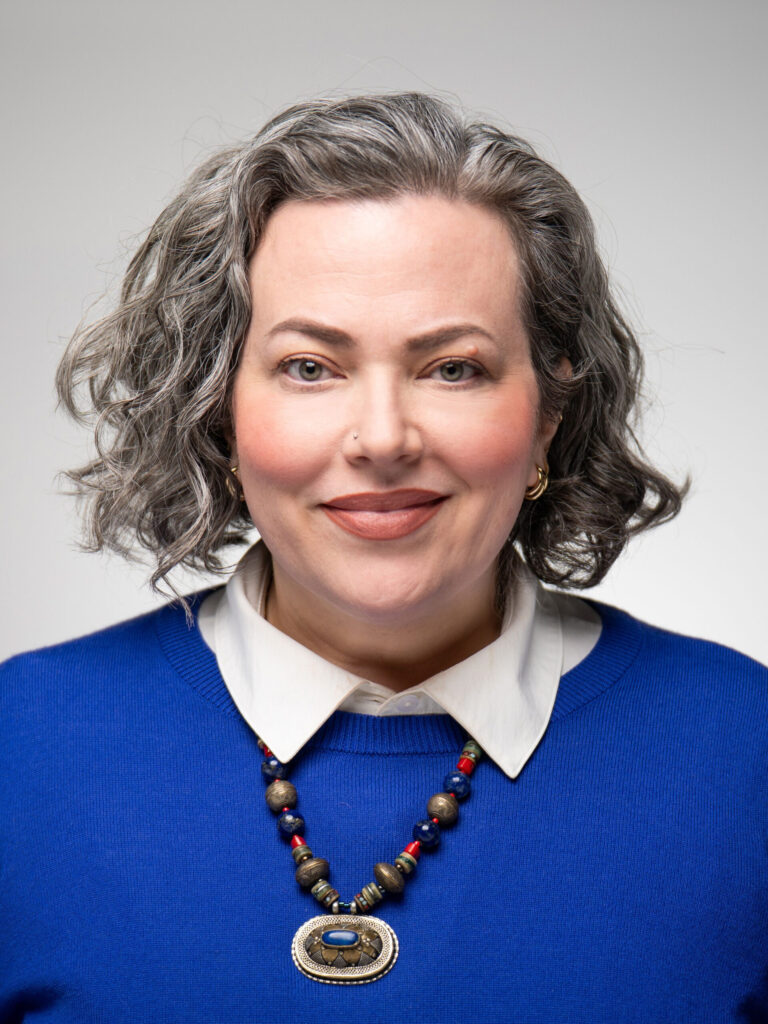
Jenna Ben-Yehuda
Executive Vice President,
Atlantic Council
Explore the program
The Transatlantic Security Initiative aims to reinforce the strong and resilient transatlantic relationship that is prepared to deter and defend, succeed in strategic competition, and harness emerging capabilities to address future threats and opportunities.
Atlantic Council TV
Watch this event and more content on ACTV
Follow the conversations shaping our world. Available on all major platforms.