
WASHINGTON—Since German Chancellor Friedrich Merz took office in May 2025, he has gained respect for his handling of foreign and security policy and his success in strengthening Germany’s international clout. In contrast, he has been less successful at home. His governing coalition—consisting of his Christian Democratic Union (CDU), its Bavarian sister party Christian Social Union (CSU), and the Social Democratic Party (SPD)—has often appeared divided on how to reform Germany’s social welfare system and has yet to provide a convincing program to restore economic growth.
Now, a little less than a year later, the government’s troubles are deepening. With record-low public approval and a still sluggish economy, Merz’s coalition faces a series of state elections that could further erode its standing.
On March 8 and 22, voters in the western German states of Baden-Württemberg and Rhineland-Palatinate, respectively, will head to the polls, kicking off the so-called Superwahljahr (super election year), during which five state elections will take place between early March and late September. While the extreme-right Alternative for Germany (AfD) and, to a lesser extent, the Left Party are likely to gain support in the March elections, they could also create openings for Merz, his CDU, and the SPD. The CDU has a solid chance of regaining the minister-presidencies of either or both of these former CDU strongholds, while the SPD is making a strong comeback to try to keep control of Rhineland-Palatinate.
In September, however, Merz’s government will face an even greater challenge in the eastern German states of Saxony-Anhalt and Mecklenburg-Vorpommern, where the AfD has a good chance of winning a plurality of the vote. AfD gains—coupled with increased Left Party support—could force the CDU and SPD into unwanted and unwieldy alliances or minority governments intended to keep the AfD out of power. This, in turn, could make it even harder for the parties to deliver on their platforms, reinforcing skepticism about how effectively German democracy functions.
If the AfD wins a parliamentary majority in one or both of the states—currently unlikely but not impossible—its control of a state government could pose the most serious challenge to German politics since reunification.
Centrist dominance fades, populists are on the rise
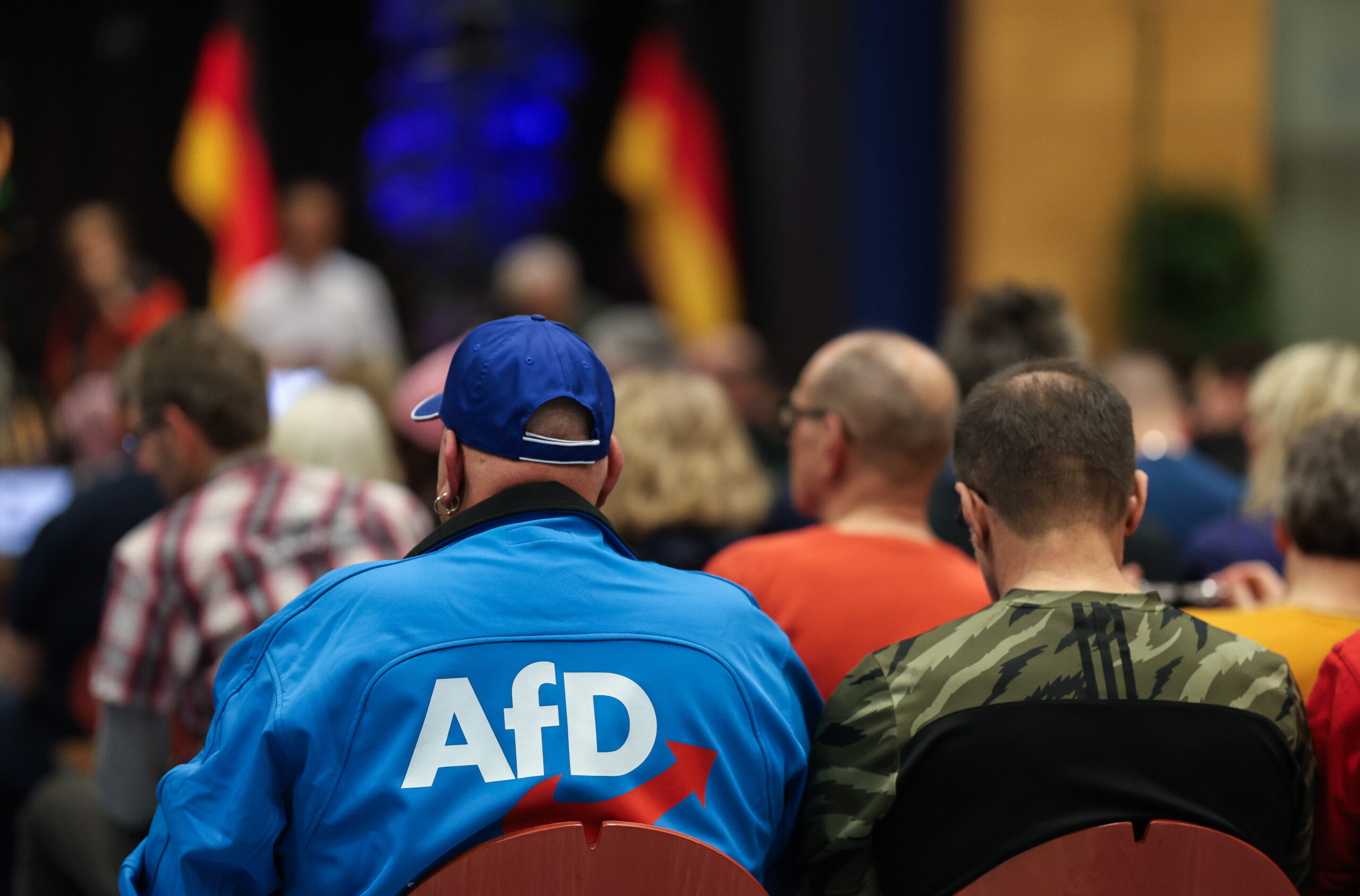
This year’s election results will almost certainly deepen the fragmentation and polarization of German party politics. Across the country, support for the established centrist parties of the pre-unification Federal Republic—the CDU and its Bavarian sister party, the CSU, the SPD, the liberal Free Democrats, and the Greens—continues to decline. At the same time, the extreme-right AfD and, to a lesser extent, the post-communist Left Party are on the rise.
East-west differences also persist. In the west—home to about 80 percent of the national electorate—the established parties still draw on a larger reservoir of party loyalists (mainly older voters), and the FDP and Greens benefit from a sizable educated middle class. Moreover, the increasing personalization of German politics often leads to late-breaking support for incumbents and the reelection of minister-presidents.
Though party fragmentation has led to more frequent coalition reshuffling, the AfD remains frozen out of government. This is mainly due to the concept of the Brandmauer, or “firewall,” against the far right. None of the major German political parties will work with the AfD at either the state or federal level. However, some eastern German Christian Democrats have expressed unhappiness with this approach, arguing that it forces them to make policy compromises with leftist parties that are at odds with CDU preferences and that they view as being out of step with a more conservative public.
The smaller Left Party, which since unification has been in a number of coalitions with the SPD and the Greens, has also been sidelined by the Christian Democrats. Since late 2024, however, the CDU is in a coalition with the left-wing populist Sahra Wagenknecht Alliance (BSW)—a Left Party breakaway—in the eastern state of Thuringia. This cooperation has sparked considerable unease within the CDU because of stark policy differences, but it was deemed necessary to block the AfD, which had won a plurality of the vote, from taking power.
The upcoming series of state elections marks the third such electoral cycle since the AfD was founded in 2013, initially as a protest movement against eurozone bailouts. By 2014, the party had seized on dissatisfaction with mass migration as its signature issue. Since then, it has radicalized as its support has grown, now espousing a full spectrum of extreme-right identity politics: anti-migration, anti-Green, anti-LGBTQ, anti-“woke,” pronatalist policies favoring ethnic Germans, as well as nationalist historical revisionism.
The AfD’s rise has not been linear. In 2021, the party’s support declined in all five state elections and in that year’s federal vote. However, amid rising inflation, stagnating economic growth, and renewed migration debates, the party reached new highs in the 2024 state elections and the May 2025 Bundestag election. Several state security agencies, along with the Federal Office for the Protection of the Constitution (Verfassungsschutz), have deemed the AfD or parts of the party as extremist, although the Federal Constitutional Court is reviewing the federal designation.
What the March elections mean for Merz and his party
State elections typically reflect a mix of national and state-level dynamics, though in recent years they have often served as referenda against the federal government. Popular minister-presidents, however, can sometimes buck national trends.
In March, attention will focus on contests between the CDU and the Greens in Baden-Württemberg and between the CDU and the SPD in Rhineland-Palatinate. In both states, the incumbent party trails in polling but is relying on well-known and popular candidates or incumbents. An electoral plurality does not automatically translate into government leadership if a party cannot assemble a parliamentary majority. By convention, however, the largest coalition party leads the government.
Baden-Württemberg is the only state led by a Green minister-president. Incumbent Winfried Kretschmann (in office since 2011) heads a coalition with the CDU but is not seeking reelection. Instead, former Federal Minister of Agriculture Cem Özdemir—a well-known figure in German politics—is leading the Greens’ ticket. Özdemir enjoys greater name recognition and favorability than CDU candidate Manuel Hagel.
Hagel, who lacks executive experience, has framed the Greens as a threat to the state’s export-driven economy and calls for a return to more conservative policies. Even if he leads the CDU to victory, he will likely still need the Greens to secure a parliamentary majority.
SPD support is likely to slip even further from its 2021 record low, as its opposition status and slim prospects of leading the government leave it struggling to gain media attention or voter traction. The Left Party is likely to benefit from the SPD’s weakness and may surpass the five-percent threshold to enter the state parliament for the first time. Meanwhile, the FDP, which has been represented in the state parliament continuously since its founding in 1952, is fighting to remain above that threshold.
In Rhineland-Palatinate, the SPD has governed since 1991 and is currently in a coalition with the Greens and FDP. Although initially trailing the CDU in the polls, Minister-President Alexander Schweitzer remains popular and hopes to replicate the SPD’s 2021 come-from-behind victory. A poll published on February 26 now shows the race in a statistical dead heat.
If the SPD cedes first place, blame would likely fall on the party’s unpopular federal leadership, potentially weakening Vice Chancellor and Finance Minister Lars Klingbeil’s already fragile standing within the party. Even if the SPD finishes first, it will probably need to put together a new coalition, particularly if the FDP fails to clear 5 percent. In that case, the Left Party could emerge as a first-time coalition partner. However, a CDU-SPD coalition—led by whichever party wins the most votes—remains the most likely outcome.
Fall votes could redraw Germany’s political map
Although the western German states are larger and economically stronger, elections this fall in the eastern German states of Saxony-Anhalt (September 6) and Mecklenburg-Vorpommern (September 20) carry greater political weight. In eastern Germany, the AfD has scored its strongest electoral results and polls in the mid-30s to 40 percent in the two states. If enough smaller parties fail to clear the 5 percent threshold, the AfD’s vote share could translate into a parliamentary majority—giving it full control of a state government and the chance to implement its far-right agenda.
Even without a clear victory, combined AfD and Left Party strength could force the formation of a minority coalition, as already seen in three other eastern German states.
Still, late campaign shifts are possible, and fear of an AfD victory may spur at least some countermobilization and tactical voting, favoring the CDU in Saxony-Anhalt and the SPD in Mecklenburg-Vorpommern.
In Saxony-Anhalt, Minister-President Sven Schulze assumed office only in late January after his CDU predecessor stepped down to improve the party’s electoral prospects for September. Schulze heads a CDU-SPD-FDP coalition, but polls still give the AfD a lead of more than 10 percentage points.
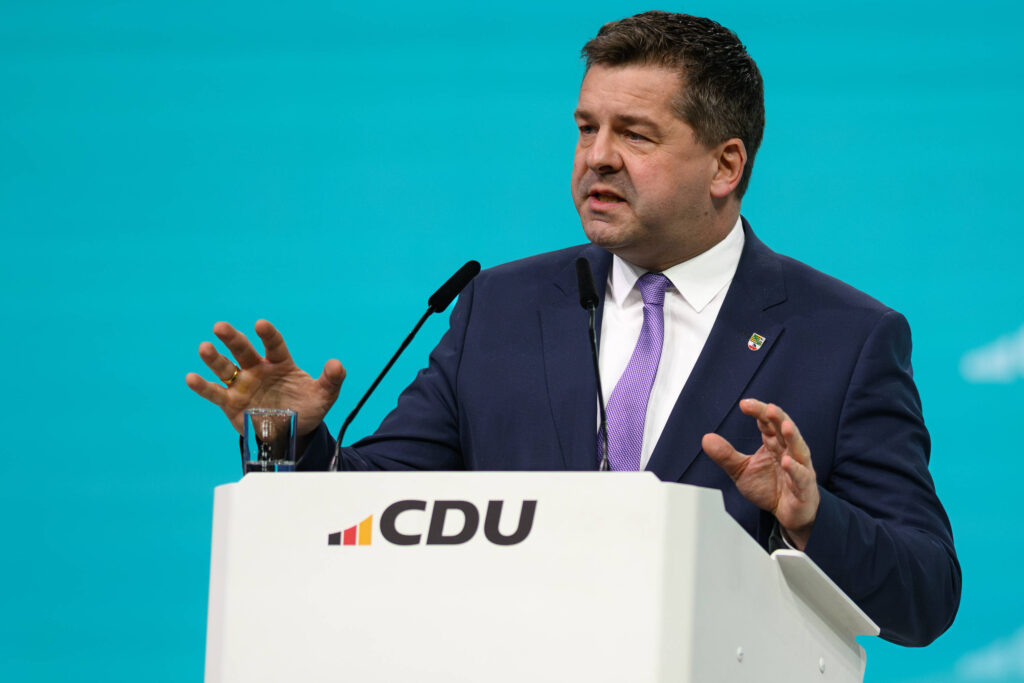
The 150-plus-page draft of the AfD’s party program outlines a vision fundamentally at odds with Germany’s current political system and constitutional order. The party’s minister-president candidate, Ulrich Siegmund, is directly implicated in its burgeoning nepotism scandal, and the AfD’s response to the issue may prove decisive in the election. In 2021, fears of an AfD victory triggered a late CDU surge. Given the CDU’s refusal to cooperate with the AfD, the Left Party, and the BSW, a minority government appears most likely unless the AfD secures a parliamentary majority—particularly since the FDP and Greens are likely to win enough votes to remain in the state parliament.
The AfD currently holds an even bigger lead in Mecklenburg-Vorpommern, where Minister-President Manuela Schwesig, in office since 2017, heads an SPD-Left government but has seen her popularity decline. AfD candidate Leif-Erik Holm is trying to project a more moderate image than some of his colleagues, openly distancing himself from Siegmund and the Saxony-Anhalt AfD. With the Greens and FDP unlikely to reenter parliament, forming an anti-AfD coalition could prove difficult. A minority government is the most plausible outcome.
Berlin, both Germany’s capital and a federal state, will also hold state elections on September 20. Governing Mayor Kai Wegner leads a CDU-SPD coalition but has faced criticism for his handling of a prolonged power outage that left parts of the city without electricity for over a week in December. Recent polling shows support split among five parties—CDU, SPD, Greens, Left Party, and AfD—making it less challenging to form a coalition without the AfD.
The stakes go beyond the states
Note: All statements of fact, opinion, or analysis expressed are those of the author and do not reflect the official positions or views of the US government. Nothing in the contents should be construed as asserting or implying US government authentication of information or endorsement of the author’s views.