
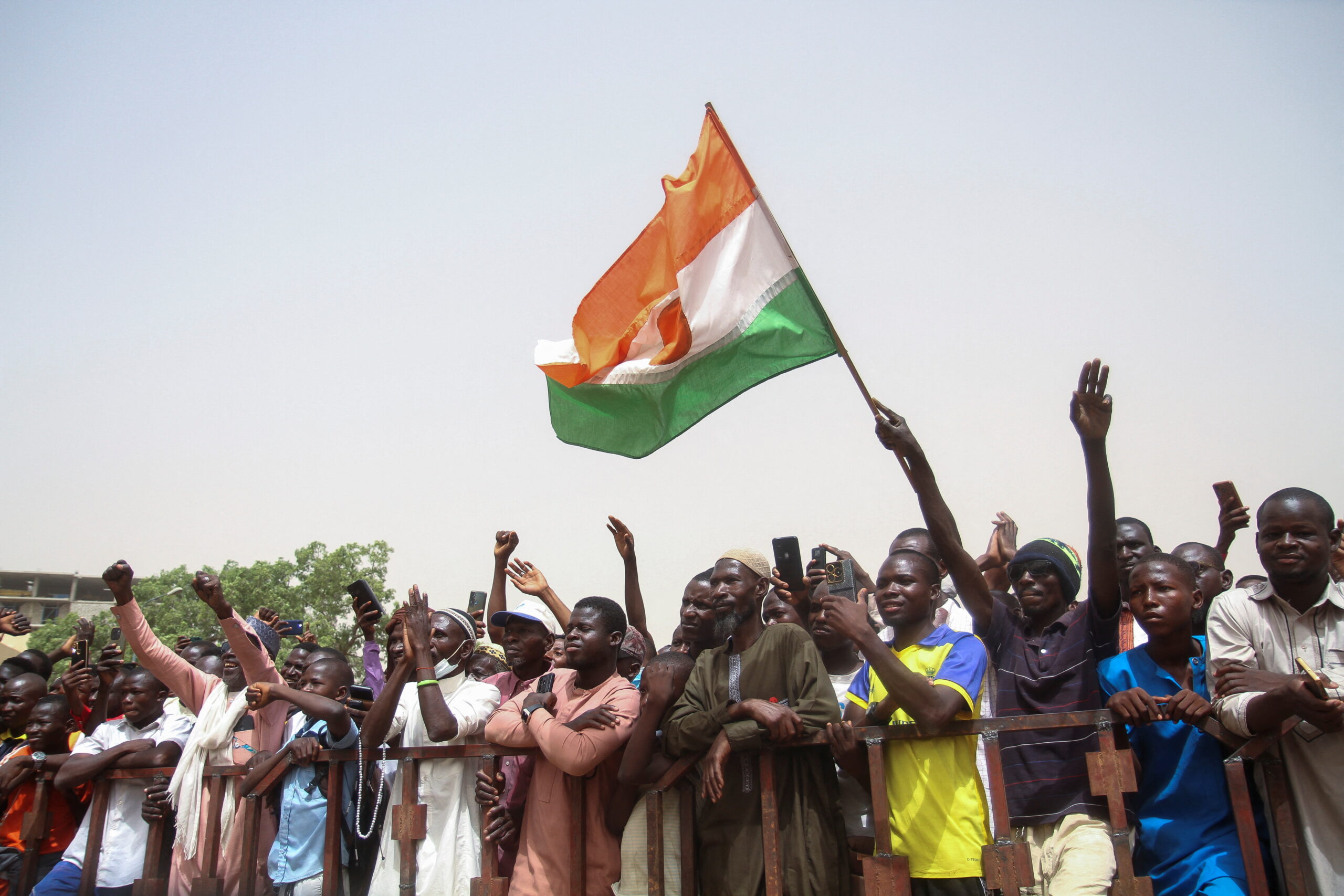
The failed coup attempt in Benin on December 7, 2025, represents a pivotal moment for US policy in the Sahel. In the immediate aftermath, regional attention focused on Nigeria’s swift military intervention and the Economic Community of West African States’ (ECOWAS) rare success in defeating putschists. But the coup’s failure has also created an unexpected and important diplomatic opening for the United States to engage with Niger’s military government.
Niamey is diplomatically isolated, and the failed coup in Benin has reinforced its isolation. Meanwhile, Niger’s government has been unable to find a way out of an impasse over the stockpile of uranium it seized from the French company Orano. Quiet US mediation on this issue could help resolve it, and in so doing, Washington could advance US interests in the region as well.
For the United States, this is potentially an opportunity to regain Niger as a counterterrorism partner. Terrorist groups in the Sahel, such as Boko Haram and al-Qaeda in the Islamic Maghreb, continue to destabilize the region and pose a threat well beyond West Africa. Before the 2023 coup, the United States had roughly 1,100 military personnel in Niger operating from the $110 million Air Base 201 in Agadez and an air base in Niamey, monitoring terrorist threats across the region. But for Washington to revive this relationship with Niamey—and to offset Russian influence—it must act quickly.
Why the Benin coup failed—and what it reveals
The rapid defeat in Benin of Lt. Col. Pascal Tigri’s Military Committee for Refoundation coup attempt was unprecedented in recent Sahelian history. Within hours, Nigerian fighter jets struck coup positions and ECOWAS troops arrived in the country. Within twenty-four hours, the coup had collapsed, with Tigri reportedly fleeing to Togo.
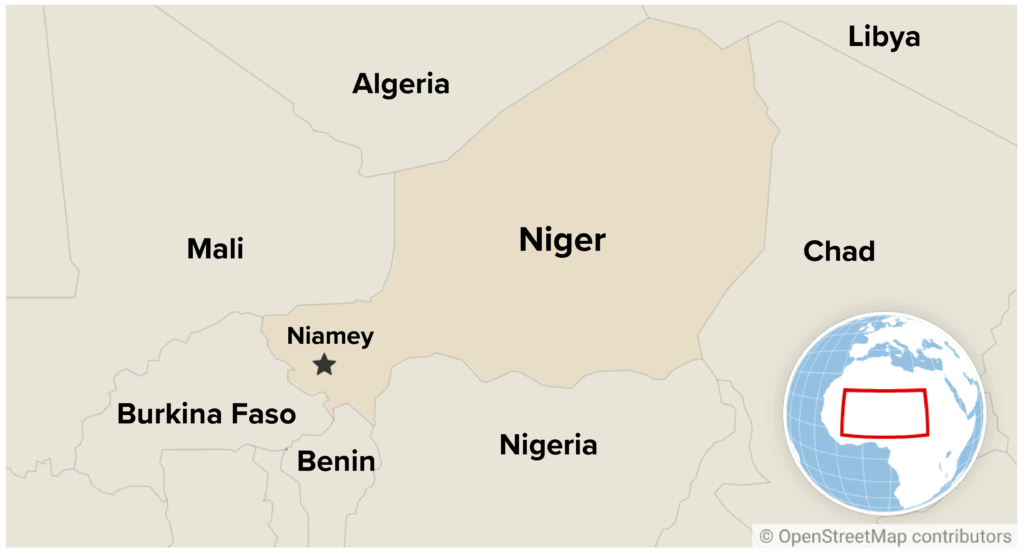
The coup’s failure is especially significant considering the deteriorated state of Niger-Benin relations. Since Niger’s July 2023 coup, the country’s military leader, General Abdourahamane Tchiani, has repeatedly accused Benin of hiding French military bases and preparing to invade Niger. These accusations poisoned bilateral relations, causing Benin to block Niger from accessing its ports. A successful coup in Benin would have improved Niger’s strategic position. A Military Committee for Refoundation government in Cotonou would likely have aligned with the Alliance of Sahelian States—known by its French acronym AES and comprising Burkina Faso, Mali, and Niger—which could have led to a reopening of the border between Benin and Niger and restored Niamey’s southern trade corridor.
The coup’s failure, then, represents a significant setback for any such regional realignment, exposing Niger’s growing isolation and vulnerability.
The uranium crisis: Niger’s radioactive political trap
At the heart of Niger’s current dilemma sits approximately one thousand tons of uranium yellowcake immobilized at Niamey’s international airport. The junta nationalized the Somair mine—Orano’s principal uranium subsidiary, in which the French company held a 63.4 percent stake—in June 2025, at which point the yellowcake already transported to Niamey came under the junta’s direct control. Tchiani announced plans to sell and transport this material via Lomé port in Togo to unknown buyers. However, following a discreet visit by Togolese President Faure Gnassingbé to Niamey on December 9-10—just days after the Benin coup failed—the shipment was frozen and remains at the Niamey airport.
Then, on January 29, the terrorist group Islamic State Sahel Province opened fire near the airport—further evidence of the intensifying risk that possession of the uranium poses for the junta. This yellowcake has become a hot potato that is causing significant problems for the Nigerien government, prompting Tchiani to consider returning the uranium to Orano.
First, the uranium cannot practically be returned to the mines in Arlit, one thousand kilometers north of Niamey. The logistics of reversing such a massive shipment would be prohibitively expensive and politically embarrassing, essentially advertising the junta’s failure to execute its economic strategy.
Second, the material cannot be transported through Benin or Nigeria. The failed coup ensures that Niger’s border with Benin will stay closed and relations between the two countries will remain hostile. Transit through Nigeria faces similar obstacles given Nigeria’s strong opposition to the Niger junta and Abuja’s decisive intervention in Benin.
Third, there are international legal barriers complicating Niger’s intention to export the uranium. In August 2025, French uranium processing company Orano filed a complaint, prompting French authorities to open an investigation into Niger’s government for “organized theft for the purpose of serving the interests of a foreign power.” An international arbitration tribunal ruled in September 2025 that Niger cannot sell, transfer, or facilitate transfer of the uranium. This legal action makes any third country or company facilitating the uranium’s transport potentially liable.
Fourth, Niamey cannot openly negotiate with Orano without suffering significant loss of face. The junta’s legitimacy rests on its anti-French rhetoric and claims of economic sovereignty over Niger’s resources. A public capitulation to French terms would undermine the very foundation of the military government’s rule.
And the longer this uranium sits immobilized, the more acute Niger’s geopolitical pressures become. This stalemate is unsustainable, forcing the junta to seek alternative ways to exit the crisis—but its options are narrowing by the day.
The broader Sahelian pattern
Niger’s uranium dilemma reflects a broader dynamic affecting military governments across the Sahel. The longer that juntas remain in power, the more political pressure they face to deliver tangible improvements in security, governance, and economic conditions. Initial revolutionary rhetoric inevitably meets the hard reality that military takeovers do not solve complex governance challenges.
In Burkina Faso, junta leader Captain Ibrahim Traoré has proven effective at articulating governance challenges and projecting responsiveness to popular demands. However, concrete benefits to citizens—improved security, economic opportunity, and public services—remain elusive under his government’s rule. The gap between rhetoric and results continues to widen.
Mali faces similar contradictions, with Russian security partnerships failing to reverse jihadist gains while economic conditions deteriorate.
These governance failures risk spurring leaders to make destabilizing decisions as the juntas become increasingly cornered by international isolation and pressure from jihadist groups. Such actions threaten not only regional stability but also US counterterrorism objectives as ungoverned spaces expand and extremist groups exploit the chaos.
The AES has proven equally ineffective in addressing Niger’s uranium crisis, revealing clear asymmetries in how member states navigate their anti-ECOWAS posture. The original plan to route yellowcake through Burkina Faso to Togo collapsed not only due to Lomé’s reluctance to risk international legal complications, but also from fundamental safety and security concerns: Any overland convoy would traverse vast territories controlled by jihadist groups, making the route commercially and politically untenable.
More significantly, while Niger rigidly adheres to AES’s confrontational rhetoric toward ECOWAS, its partners maintain pragmatic flexibility. For instance, Mali has preserved relatively good relations with its coastal neighbors—such as Senegal and Guinea—ensuring access to maritime trade routes. Burkina Faso similarly sustains working relationships with Togo (which recently extradited Lieutenant Colonel Paul-Henri Sandaogo Damiba, the former Burkinabè head of state) and Ghana.
Niger, meanwhile, finds its primary sea access through Benin severely constrained, trapped by an ideological rigidity that its AES partners pragmatically avoid. The burden of the AES’s confrontational stance thus falls disproportionately on Niamey, where anti-ECOWAS solidarity costs more than it delivers in tangible economic cooperation.
The US policy window: Seizing the mediation opportunity
The uranium crisis creates unprecedented leverage for constructive US engagement because the junta knows that it cannot resolve it alone. The United States should therefore quietly engage in mediation on the uranium impasse. A potential approach might include:
- Facilitating face-saving negotiations between Niger’s junta and Orano that allow both sides to claim success. This could involve US backing for financial arrangements that meet Niger’s revenue needs while satisfying Orano’s contractual concerns.
- Mediating a transit solution, potentially involving coordinated arrangements with Benin or alternative routes that don’t require Niger to publicly capitulate to French demands.
- Providing diplomatic cover that allows Niamey to frame any resolution as negotiated with US support rather than French pressure, preserving the junta’s domestic legitimacy.
If successful, resolving the uranium crisis could unlock multiple strategic benefits for the United States:
- Renewed bilateral counterterrorism cooperation, including intelligence-sharing and coordinated operations against extremist groups threatening both Niger and its neighbors.
- A reinforced multinational commitment to the security and safeguards of nuclear material.
- Initial steps toward improved governance frameworks, as reduced economic pressure gives the junta space to consider longer-term political transitions.
- A constructive model for engaging other Sahelian juntas, demonstrating to both the junta leadership and Nigerien people that Washington can be a problem-solving partner rather than merely a critic.
- A counter to the Russian government’s narrative that the United States abandoned the Sahel and a demonstration of Washington’s continued relevance and constructive role in the region.
