
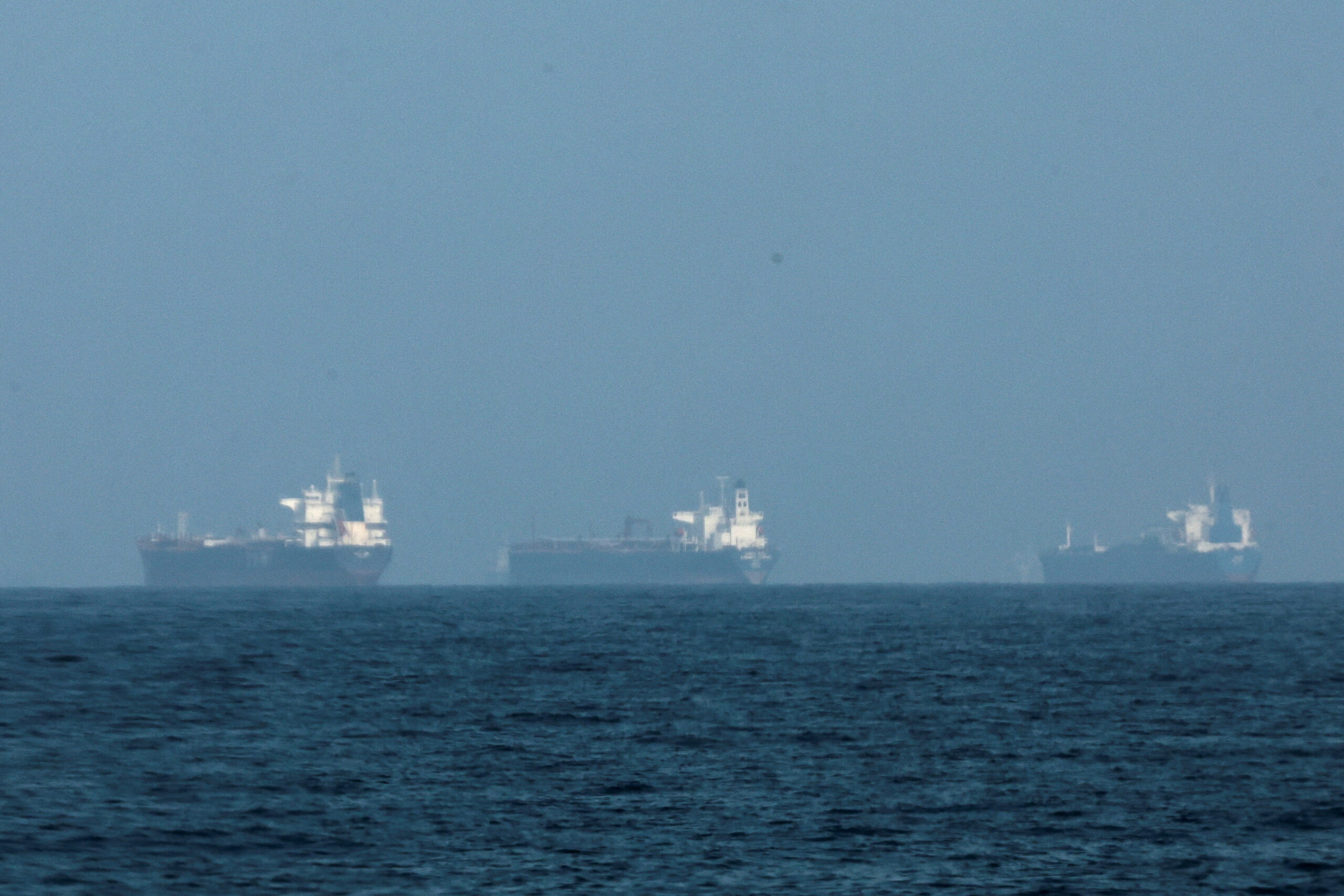
WASHINGTON—After weeks of uncertainty, a seemingly perfect storm has formed in the Persian Gulf—one that energy security analysts and risk assessors have long feared. Amid ongoing joint US-Israeli strikes targeting Iranian senior leadership and critical infrastructure, Iranian regime threats are resulting in an effective closure of the Strait of Hormuz.
With vessel traffic down 70 percent in the past week, voluntary delays for seaborne vessels, and insurers rapidly recalculating their premiums, matters are tense in the passageway through which more than 30 percent of the world’s seaborne crude oil is shipped. Warnings of unsafe conditions in the strait, in combination with missile barrages throughout the Gulf region, suggest that the situation could intensify and persist for days or even weeks—even if Iranian naval forces cannot shut down the waterway by conventional force alone.
Since the strikes began, prices for crude oil have spiked by more than 8 percent, surpassing seventy-five dollars per barrel, following steady price increases in the lead-up to the US-Israeli strikes on February 28. There are several profound uncertainties at play: the risks to future marine transit, the duration of the disruption, the potential for commercial inventories to replace disrupted supply, the demand response to higher prices, and the behavior of governments. All are top of mind for traders and policymakers alike across the world’s major economies.
Despite the relatively moderate oil price impacts so far, there is a real prospect of further escalation in and around these key oil trading zones. Fresh market volatility on Tuesday underscored traders’ concerns. US leadership cannot afford to wait for the worst-case scenario—major supply displacement that could cause prices to soar into the triple digits per barrel. Working with like-minded allies, Washington should leverage the available tools to address the disruption risks immediately, well before uncertainty devolves into catastrophe.
A history of coordinated responses
Fortunately, a review of relevant history offers a helpful guide. The Arab Oil Embargo of the early 1970s spurred the creation of the International Energy Agency (IEA) in 1974, quickly followed by the passage of the Energy Policy and Conservation Act in the US Congress, which created the Strategic Petroleum Reserve (SPR). Together, these mechanisms enabled the United States to assert global leadership on crisis supply management and created forums for collaboration and measured responses.
The IEA, for example, required its members to hold strategic reserves of at least ninety days of crude oil supply, to be drawn on under specific circumstances and by consensus, and it facilitated voluntary demand-side response measures. The IEA thus became a cornerstone of a US-led coordinated emergency response mechanism. The defensive system that emerged from this collaborative mindset meant that time could be bought in an emergency: The market could be assured that there would be a bridge until a given crisis resolves, with the ability to substitute displaced oil supplies or release additional stockpiles as needed. This reassurance has helped to prevent sudden, dramatic price spikes that the markets, as well as the the oil and gas industry, cannot possibly respond to before they induce severe economic and inflationary consequences.
The need for speed
But speed matters as much as collaboration. In the past, the United States has sometimes delayed its decision to utilize its SPR, such as during the first Gulf war, when prices spiked 140 percent between July and October 1990. The failure to immediately signal to global markets that additional supplies would be released had real consequences for how oil markets responded.
It is easy to see why: Traders need to know whether a release is coming so they can accurately calculate the amount of anticipated disrupted supply. Traders don’t just consider the given day or week; they look significantly further ahead. Likewise, holders of commercial inventories may not release them if they are uncertain about when a drawdown will occur. The vicious cycle thus feeds itself: Uncertainty creates fear, fear incentivizes protection of available resources, and the potential for a supply crunch elevates prices even if real barrels are not yet displaced.
Today, the prevalence of electronic trading and robust futures markets also means that a quick and significant announcement of available strategic stocks (if needed) can have a multiplier effect in mitigating price spikes or preventing them in the first place. For now, the Trump administration has downplayed any role for the SPR in the current conflict, and it has suggested that markets remain well supplied for now. That may well be true—but it may not remain so should the conflict persist for weeks.
What the US can do
The Trump administration has opted for a preemptive strike on Iran, presumably to preclude a national security crisis. It must now act quickly to prevent an oil security crisis.
First, the administration should immediately reengage the IEA and leverage its influence and coordination authorities to reassure markets. Specifically, the IEA can help galvanize members around a consensus agreement: that if the obstruction of the Strait of Hormuz (either from the lack of insurance coverage or an actual physical risk) is not resolved quickly, then they will implement a maximum drawdown of available crude resources for sixty days to ensure that global markets are well supplied.
After all, oil market traders “buy the rumor and sell the fact.” This proactive approach would ensure immediate price moderation, even if the drawdown never takes place or is not fully subscribed. However, a failure to coordinate quickly risks paralyzing market participants who are trying to ascertain the administration’s posture and the likely consequences—elevating the risk of painful price inflation.
This effort will demand serious and thoughtful diplomacy given the uncertain relationship at present between the IEA and the White House, as well as the lack of notice to allies in advance of the US attack on Iran. But the United States’ fellow members of the IEA will have their own economic self-interest implicated in whatever happens next with oil markets. Importantly, the leadership of the IEA on this effort could offer critical neutral ground for multilateral engagement. Moreover, agreeing to address the economic ramifications of the Trump administration’s attack does not itself constitute an endorsement of that act—a point worth underscoring, as it might help bring any wary European partners on board.
Even those major economies outside the IEA would have incentive to be aligned in spirit with this endeavor. Notably, China has built significant strategic reserves over the years and, as the primary buyer of Iranian crude, has a great deal at stake if Iranian production is wholly shut in or other Middle Eastern cargoes are unable to transit to Asia safely. By engaging in quiet diplomacy and leveraging the IEA’s neutrality and convening power, China might be inclined to tacitly participate in a collective drawdown if a formal decision were made to release strategic stocks.
Hope for the best, expect the worst
The history of international coordination on global energy security offers multiple important lessons for the present moment: One need not wait for a crisis to prepare for a crisis and—ideally—to avoid one. An expeditious and coordinated response may not be sufficient to avoid the full consequences of a spiraling regional war for oil markets. However, it can certainly ease sudden inflationary pressure on available supplies and buy time for markets to respond and adjust, as well as for producers to locate alternative supplies.