
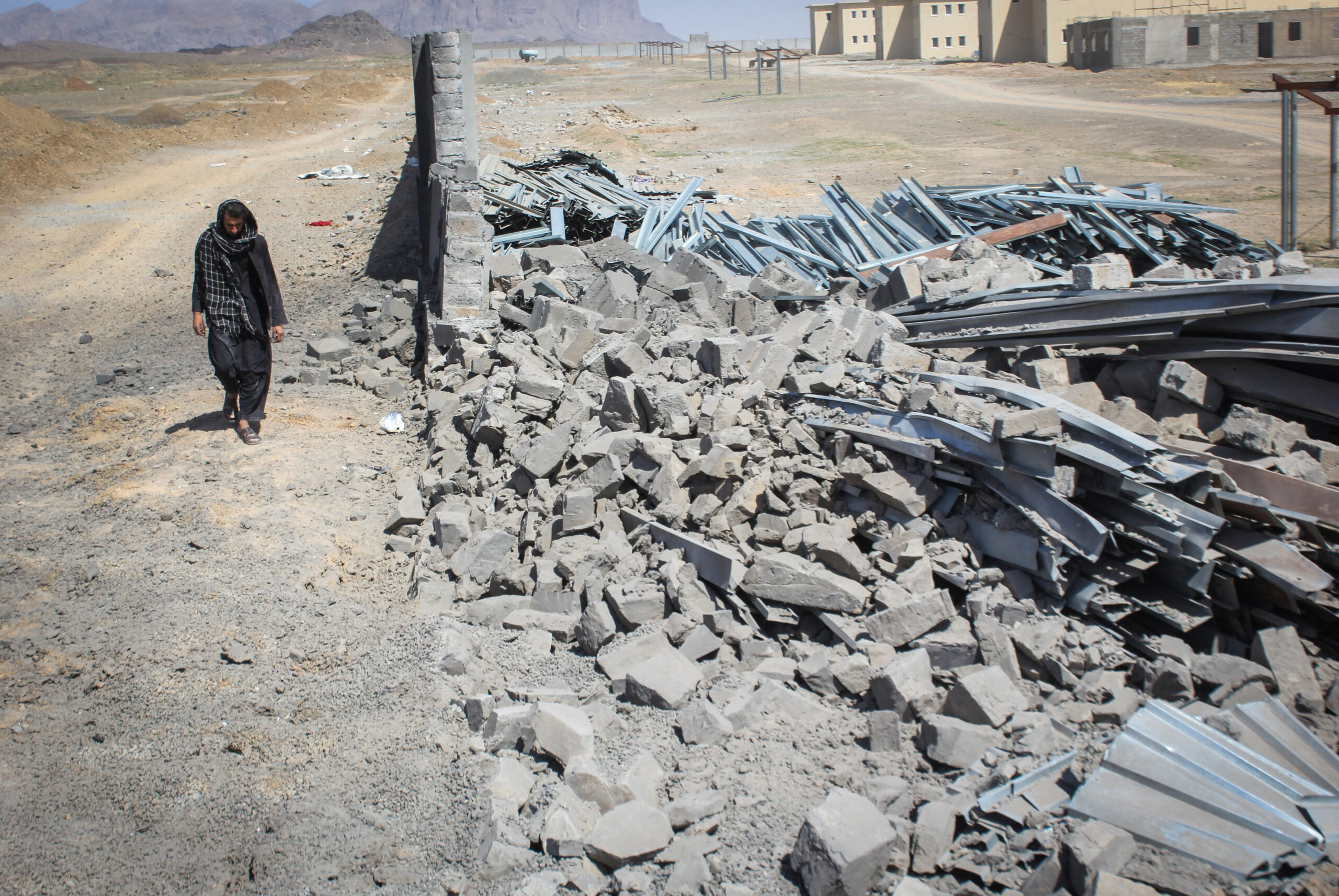
This past weekend, Afghanistan and Pakistan suffered their most intense clashes in years. On Friday, Pakistan carried out air strikes in more than twenty locations across Afghanistan, including Kabul and Kandahar, two of its largest cities, while the Taliban targeted dozens of Pakistani border posts. The violence continued on Sunday, as Pakistani airstrikes hit Kabul. Pakistan claims its strikes targeted terrorists and Taliban military facilities, but the Taliban claimed that the strikes hit civilians.
The fighting broke out before Saturday’s US and Israeli strikes on Iran, which have sparked what is becoming a major war in the Middle East. But the crisis to Iran’s east should not be forgotten, as South Asia threatens to spiral, too. Moreover, South Asia’s conflict could be exacerbated by the war in the Middle East.
Relations between Afghanistan and Pakistan have been tense since the Taliban returned to power in 2021—even though the Taliban was a Pakistani ally during the US-led war in Afghanistan, with Pakistan providing a cross-border sanctuary. The main reason for the current bilateral strain is Pakistan’s contention that the Taliban is sheltering Tehreek-e-Taliban Pakistan (TTP), a terrorist outfit that’s carried out increasing numbers of attacks in Pakistan since 2021. It also waged a massive campaign of terror across Pakistan between 2007 and 2014, until the military carried out operations along the border that killed many militants—but also displaced many others into Afghanistan.
Taliban leaders deny that they shelter the TTP, but they’ve long been allied with it. The two previously carried out joint operations in Afghanistan, and the TTP’s first supreme leader, Baitullah Mehsud, was once part of the Haqqani Network, one of the Taliban’s most brutal factions. The Taliban are known for not turning on their terrorist allies; most famously, after the 9/11 attacks, the Taliban refused to give up al-Qaeda even when faced with the threat of a US military invasion. The Taliban has additional reasons not to expel or curb the TTP: Doing so could stoke rebellion within Taliban ranks, or drive TTP fighters into the arms of Islamic State Khorasan Province—the Islamic State’s South Asia affiliate and a Taliban rival that periodically attacks Taliban targets.
More broadly, the Taliban has little incentive to help Pakistan. Despite their former wartime alliance, the Taliban has long mistrusted the Pakistanis. And with the conflict having ended in Afghanistan, it no longer needs Pakistani sponsorship. This deprives Pakistan of leverage over the Taliban.
Meanwhile, the war in Iran could destabilize Pakistan if unrest across its Iranian border spills over into Balochistan province, which could embolden separatist insurgents that operate there. And the TTP, which has stepped up its attacks in recent years, might view this as an opportunity to attack, too. Consequently, Pakistan could face a worsening conflict on its northwestern border and ever-increasing unrest on its southwestern frontier. And Pakistan would need to contend with all these dangers even as it continues to grapple with its tense eastern border with India, especially since the two fought their worst conflict since 1971 this past May.
For these reasons, diplomatic efforts—including several rounds of talks mediated by Turkey, Saudi Arabia, and Qatar after Afghanistan-Pakistan clashes last October—have largely failed to ease tensions, resulting only in tenuous cease-fires that are now shattered.
Consequently, it’s hard to envision any outcomes that are stabilizing. The best-case scenario would be for the two sides to agree to new internationally mediated talks that result in a fresh cease-fire. But that would merely amount to a loose band-aid, as it would only be a matter of time until there’s another terrorist attack in Pakistan, followed by Pakistani strikes and Taliban retaliations. Not to mention, two of the countries that have previously served as mediators—Saudi Arabia and Qatar—will likely be too bogged down with the fallout from the war in Iran to intercede in the Afghanistan-Pakistan conflict.
The mid-range scenario is that the two reject talks, and Pakistani airstrikes and Taliban ground operations continue, but each side’s desire to avoid all-out conflict prompts them to tone down the intensity of hostilities. Still, given that the most recent unrest was highly escalatory—the targeting, geographic scope, and overall intensity was much greater than during previous rounds of violence—even reduced hostilities would ensure tensions remain dangerously high.
The worst-case scenario would be if Pakistan decides to go all in, waging relentless air strikes across Afghanistan, targeting TTP terrorists and the Taliban regime it claims is harboring them. This could prompt the Taliban to ramp up border operations and mobilize the TTP and other radicals loyal to the group, ordering them to carry out terrorist attacks across Pakistan, including in major cities. Such a scenario, which would directly threaten US interests and lives, may prompt the Trump administration to intervene—though its bandwidth has shrunk significantly now that it’s embroiled in a much larger war in the Middle East. But Trump, as much as he would want to claim to have ended another war, would struggle to succeed. After all, the Saudis and Qataris have failed even though—unlike the United States—they have warm ties with both Pakistan and the Taliban.