The urgency is not abstract. The drone strikes on civilian infrastructure, the missiles fired toward populated coastlines, the tankers seized in open water, the deliberate targeting of the arteries on which the world depends—these are not distant conflicts. They are live attacks on the living standards of every continent. And they are, to a significant degree, risks manufactured by a handful of state and non-state actors who have shown neither regard for the region’s stability nor any reckoning with the global consequences of their actions. The instability threatening the Gulf today is not some natural condition of the area—it is a political choice made by the few, at the expense of the many. To understand why it touches everyone—and what the world stands to lose—requires understanding what the Gulf actually represents.
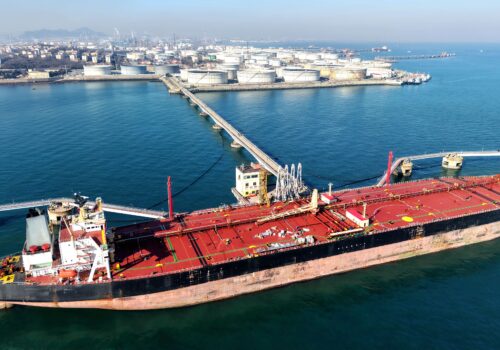
The world has a category for things that many people depend on and cannot afford to lose. Power grids. Undersea cables. Financial clearing systems. When these fail, the consequences cascade across borders and sectors, reaching people who never knew they were exposed. The Gulf belongs in that category. The Strait of Hormuz moves a fifth of the world’s oil and a fifth of its traded gas every single day. The region’s fertilizer exports underpin food production for billions. Its sovereign wealth funds have steadied Western financial markets in moments of acute crisis. Its aviation hubs are the connective tissue of intercontinental travel. Gulf stability is critical global infrastructure—and like most critical infrastructure, it has no adequate backup and no governance framework to match its importance.
What that means is best understood through lives, not statistics. The woman in Detroit filling her tank before the early shift. The rice farmer in Thailand watching fertilizer prices eat through his margin for the third season running. The nurse in Nairobi whose hospital MRI has been out of service for weeks—because Qatar supplies a third of the world’s helium, the element that keeps those machines running. And consider a family in Middlesbrough—one of England’s most economically pressured towns—already stretching a budget that has no slack, heating a home on a grid that runs, in part, on Qatari gas. I know that route and project well. I was part of the team that helped bring the South Hook liquefied natural gas (LNG) project into being—one of Europe’s largest import facilities, purpose-built to carry Qatari gas into British homes. The gas warming that family’s house began its journey in the North Field off the Qatari coast, was liquefied, loaded onto a tanker, shipped through the Strait of Hormuz, and piped into their boiler thousands of miles later. The chain is direct, and it is fragile at exactly one point: that 33-kilometer strait. When it is threatened, they pay in heating bills, food prices, delayed diagnoses.
This ripple effect reflects a structural failure in how the world manages its own dependencies. Mature democracies have built governance frameworks around their critical infrastructure—protocols, doctrines, contingency plans. No equivalent exists for Gulf stability. The Strait of Hormuz carries more economic consequence per nautical mile than any comparable geography on Earth, yet no international framework treats its security accordingly. Bypass pipelines cover barely twenty percent of Hormuz oil flows. For liquefied gas, there is no bypass at all. When analysts describe a Hormuz closure as the worst supply shock in history, they are not being dramatic. They are doing arithmetic.
That gap is visible from the Gulf in ways it is not from Washington or Brussels. Qatar has built LNG infrastructure that now supplies gas to European homes and Asian industry. Gulf states have hosted the military facilities from which coalition operations across the region have been coordinated for two decades. Sovereign wealth funds from the GCC have deployed capital into Western markets at moments of acute instability, when private capital had withdrawn. These are not gestures—they reflect a clear-eyed understanding of what regional stability produces for the world. The reasonable expectation in return is that the world’s governments apply the same clarity: that Gulf security is a shared interest, not a regional favor, and that it be treated accordingly in policy and in practice.
The system is broader than energy alone. A quarter of all long-haul flights cross Gulf airspace—Dubai and Doha function less as destinations than as hinges connecting South Asia to Europe, East Africa to North America. Gulf ports move pharmaceuticals, electronics, and consumer goods across three continents; when they seize, shelves empty in cities that rarely appear in foreign policy discussions. The region’s sovereign wealth funds are now among the most consequential long-term investors in clean energy, artificial intelligence, and healthcare infrastructure globally. Strip away any one of these threads and the damage is significant. Combine them in a single disruption and the world confronts something without modern precedent.
The policy implication is straightforward, even if acting on it is not. Governments that accept Gulf stability as critical global infrastructure must engage with it that way—consistently, multilaterally, and not only when oil prices spike. The frameworks the world has built around cyber security, pandemic preparedness, and nuclear risk did not emerge from goodwill alone. They emerged from a shared recognition that certain vulnerabilities are too consequential to manage bilaterally or reactively. Gulf security belongs in that conversation. This means treating Gulf stability as a standing agenda item in global security institutions—from NATO energy security planning to Group of Seven economic coordination—rather than a crisis discussed only when tankers are burning. Reckless acts in the Gulf, pursued for narrow political ends, carry a global price. It is the woman in Detroit, the family in Middlesbrough, the farmer in Thailand who pay it. The international community has both the standing and the obligation to say so plainly. Gulf security is not a courtesy extended to a wealthy region. It is a condition of the world’s own stability—and it is time the world governed it that way.
Omran Al-Kuwari is CEO of Forta Advisors, a nonresident senior fellow at the Atlantic Council’s Global Energy Center, and a senior fellow at the University College London’s Institute for Sustainable Resources.
About the author
stay connected
Sign up for PowerPlay, the Atlantic Council’s bimonthly newsletter keeping you up to date on all facets of the energy transition
related content
our work
The Global Energy Center develops and promotes pragmatic and nonpartisan policy solutions designed to advance global energy security, drive economic opportunity, and foster a sustainable energy future.
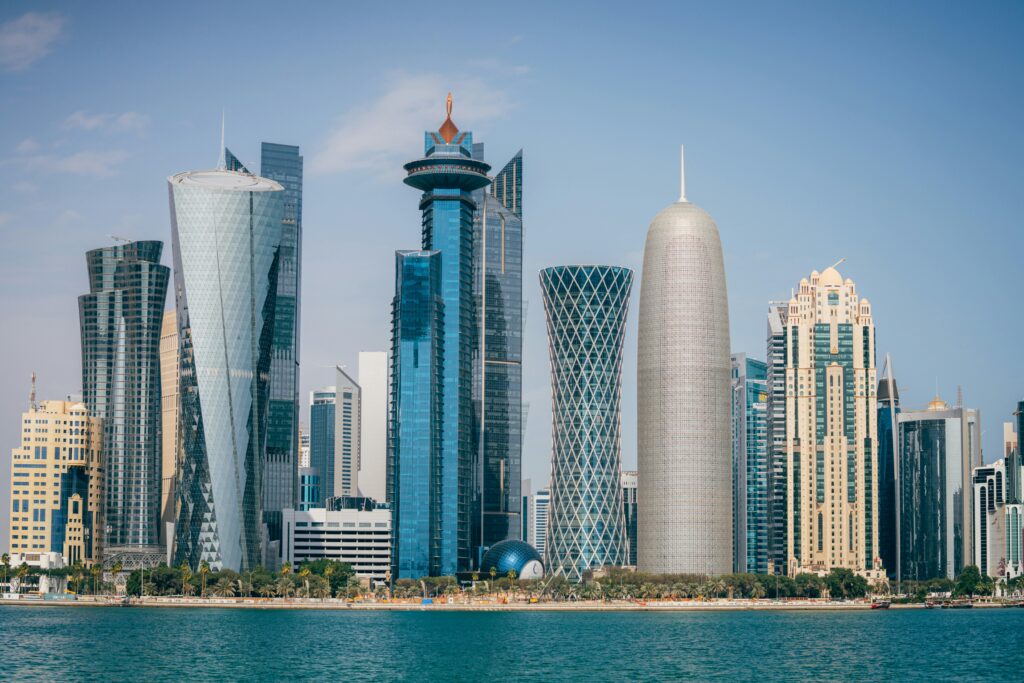
Image: (Qatar, Unsplash, https://unsplash.com/photos/a-group-of-tall-buildings-sitting-next-to-a-body-of-water-ggB-yB154qM)