
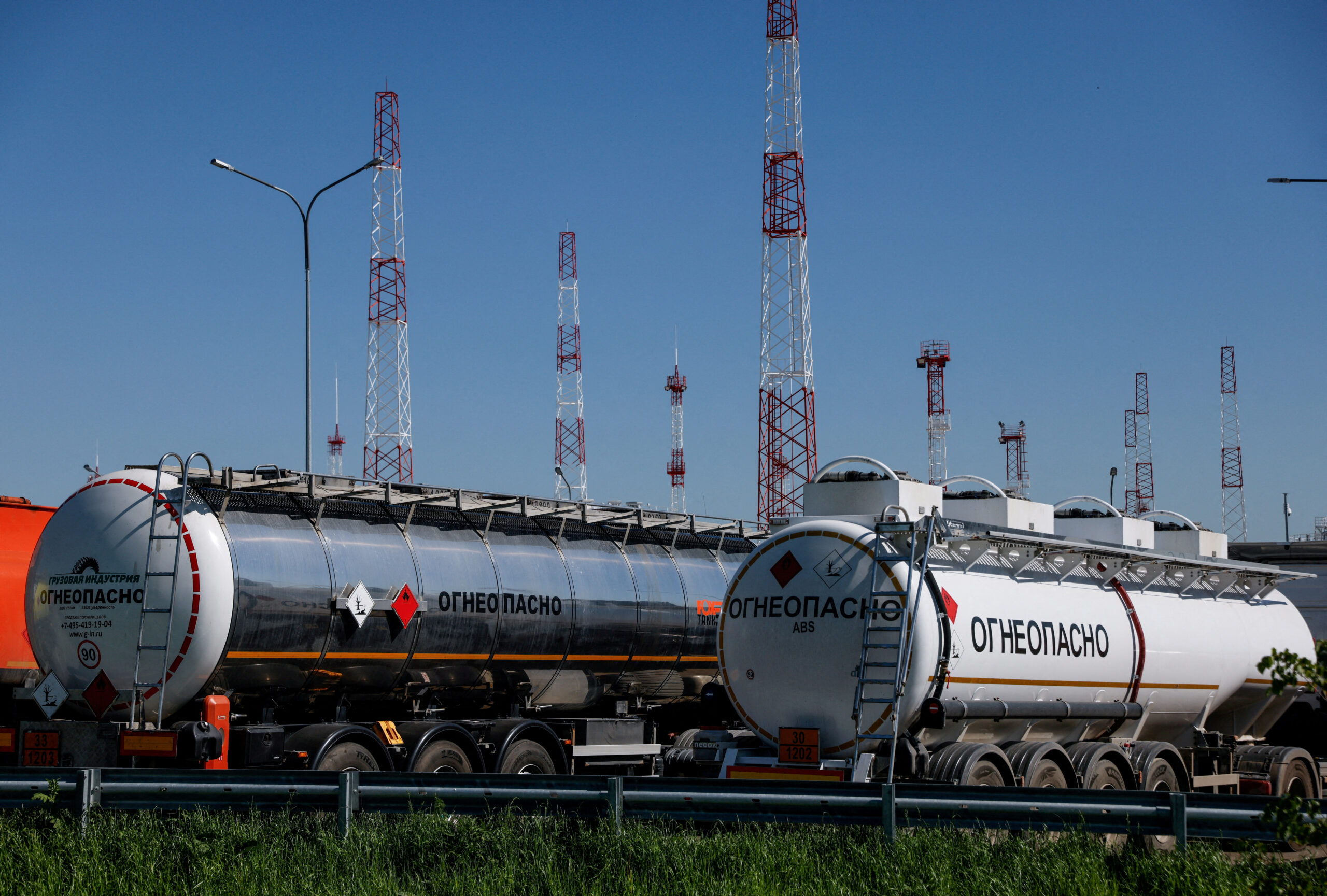
VILNIUS—On March 12, US Treasury Secretary Scott Bessent announced that the Trump administration would ease some US sanctions on Russian crude oil. The Treasury Department issued a general license allowing the purchase and delivery of otherwise sanctioned Russian oil already loaded on vessels as of March 12, and it will apply until April 11. In doing so, the Trump administration has made it easier for Moscow to keep barrels moving at a moment when the war in the Middle East has pushed oil markets into turmoil. Bessent described the move as “narrowly tailored” and “short-term.” But it is still sanctions relief for Russian oil.
This announcement did not come out of nowhere. On March 5, the White House first gave India a thirty-day waiver allowing it to buy Russian oil already at sea. It has now widened that relief to other cargoes loaded before the new cut-off. The aim is to get more supply onto the market fast and limit the shock from the Iran war on global energy markets.
That matters because in oil markets, signaling is often nearly as important as regulation. Once the United States shows flexibility, traders, insurers, and refiners start recalculating risk. Indian refiners have responded quickly, buying at least twenty million barrels of Russian oil since being granted the first waiver.
Make no mistake, the United States loosening its sanctions helps Russia, which is looking for additional funds to finance its war on Ukraine. Before the recent decision, economic pressure on Moscow was biting. The Oxford Institute for Energy Studies calculated that Russia’s 2025 oil and gas federal budget revenues fell to 8.5 trillion roubles, or about $101.4 billion, accounting for only 23 percent of total federal revenues, the lowest share in roughly two decades. Most of the revenue was oil-related.
Make no mistake, the United States loosening its sanctions helps Russia, which is looking for additional funds to finance its war on Ukraine.
In fact, Russia’s overall budget picture was worse than Moscow admitted. Officially, Russia said its 2025 federal deficit was 2.6 percent of gross domestic product. Germany’s Federal Intelligence Service, the BND, put the real figure closer to 3.6 percent. And this year looked worse still for Russia’s economy. Its oil and gas revenues halved year-on-year in January to 393.3 billion roubles. In February, according to the International Energy Agency, Russia’s oil and fuel export revenues fell to the lowest level since the start of Moscow’s full-scale invasion of Ukraine. Sanctions were constraining Russia’s current cash flow, which is essential for its war effort.
The Iran war has changed the equation. Brent crude was trading above $100 a barrel on March 13 and headed for roughly a 9 percent weekly gain despite the US waiver. Russia is benefiting both from the higher oil prices and from the US sanctions waiver, which lowers the commercial risk of Moscow’s energy exports. Russia does not need a full rollback of sanctions to feel relief. It only needs a short-term mix of firmer prices, more willing buyers, and less fear among intermediaries.
Temporary emergency measures to stop an oil panic are understandable. But they must remain exactly that—temporary, narrow, and clearly tied to cargoes already afloat. Turning them into a broader easing of sanctions would reward Russia just as financial pressure was beginning to constrain its room for maneuver in its war against Ukraine. The International Monetary Fund forecasts Russia’s 2026 economic growth at just 0.8 percent, with the fiscal deficit staying elevated because of weaker export revenues. That pressure should be maintained, not diluted.
The danger is not confined to Washington. Once the United States starts loosening the screws, some Europeans will argue that Brussels should do the same. That pressure is already visible. The European Union (EU) is looking into emergency options to contain energy prices, even as European Commission President Ursula von der Leyen has warned that returning to Russian energy would be a “strategic blunder.” Hungary and Slovakia are already testing how far they can push on sanctions, demanding, inter alia, Ukraine renew the flow of oil through the damaged Druzhba pipeline. Because EU sanctions require unanimity among member states, even a limited US waiver might shift the political calculus in Europe. That is why any relief for Russian oil must remain short-term and exceptional. Otherwise, it will make it easier for Europe’s weakest links to argue for a broader review of sanctions on Russia.
Beyond the technicalities, any relief granted—even if temporary—risks triggering a vicious circle: It inevitably influences the debate toward renewing a broader political dialogue with Moscow. And any such dialogue naturally invites further talk of lifting sanctions. Ultimately, these two tracks begin to sustain one another, making it increasingly difficult to break free from the circle.
