
How the West lost the post-Cold War era
Three decades ago, the West seemed unassailable. The Soviet Union had collapsed and for the third time in the twentieth century, the United States and its allies had emerged victorious in a global struggle against an authoritarian foe—and for the first time in generations, Western liberal democracy did not have an ideological or geopolitical adversary. It was a giddy moment when anything and everything seemed possible.
Today, that heady optimism feels like a distant dream. Thirty years after the Soviet empire ended, Russia launched its invasion of Ukraine, the largest land war in Europe since World War II. The liberal democratic model of governance that appeared so triumphant and invincible three decades ago is today beleaguered and on the defensive as populism, xenophobia, and authoritarian attitudes sweep Europe and North America. The world today seems as dangerous, if not more so, than during the long twilight struggle of the Cold War.
So what happened? How did we fall from the heady optimism of 1992 to the peril, malaise, and danger of today? What lessons can we learn from the post-Cold War period? Shortly before the outbreak of World War II, the British historian E. H. Carr published his seminal book The Twenty Years Crisis: 1919-1939, which examined the lessons of the interwar period. Carr argued that this era was a crisis of the international system, resulting from the failure of the old liberal order to adapt to and understand new and emergent political, economic, and military realities.
This report argues that a similar dynamic played out in the contemporary West in our own thirty-year crisis between the end of the Cold War and Russia’s invasion of Ukraine. The liberal order failed. But how? And why? The author interviewed dozens of policymakers, analysts, and experts in Europe and North America to distill the lessons of the post-Cold War era.
Read the full report
About the author
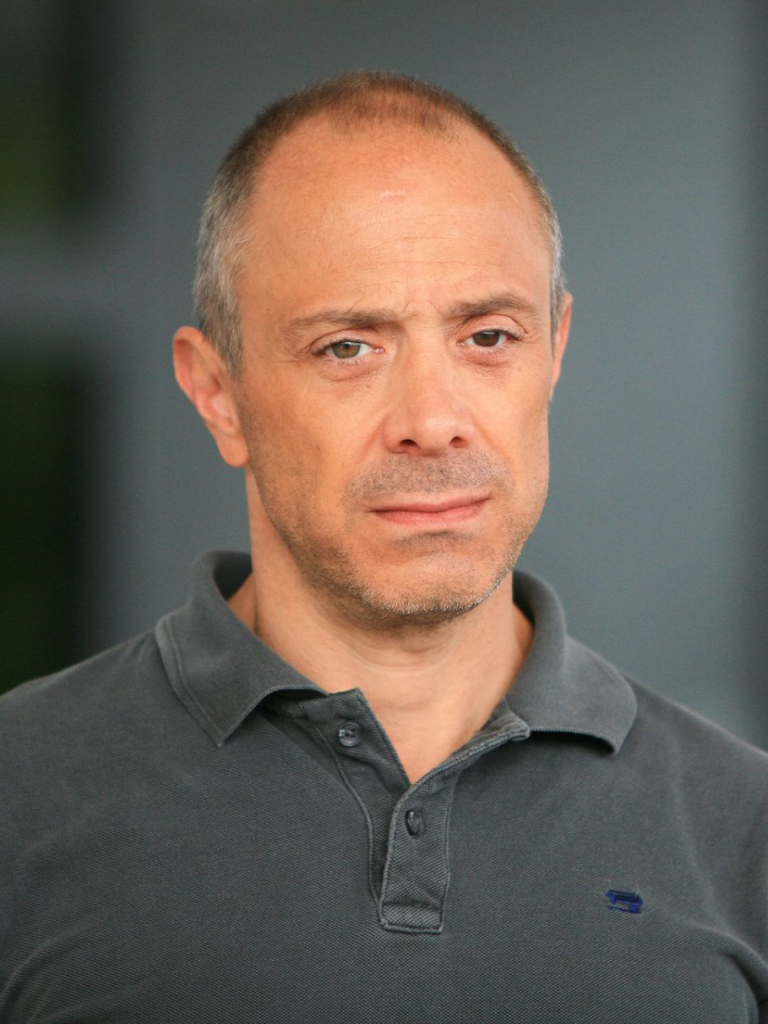
Brian Whitmore is a nonresident senior fellow at the Atlantic Council’s Eurasia Center and assistant professor of practice at the University of Texas-Arlington.
He is also the founder and author of the Power Vertical Blog and host of the Power Vertical Podcast, both of which focus on Russian affairs. Whitmore was previously a senior fellow at the Center for European Policy Analysis (CEPA) from 2018 to 2020 and senior Russia analyst for Radio Free Europe/Radio Liberty (RFE/RL) from 2007 to 2017. Prior to joining RFE/RL, Whitmore worked as a foreign correspondent for the Boston Globe in Moscow and Prague.
He also worked as a graduate lecturer with the Department of Government and International Studies at the University of South Carolina as a visiting lecturer with the History Faculty at Mechnikov National University in Odesa, Ukraine, and the International Relations Faculty at St. Petersburg State University in Russia.
His work has appeared in the Washington Post, the Atlantic, the New Republic, Foreign Policy, World Politics Review, Newsweek, and elsewhere. He has appeared as a guest commentator on CNN, the BBC World Service, NPR, Bloomberg, and various other media.
A native of New Haven, Connecticut, Whitmore earned an MA in political science from Villanova University in 1987 and BA in politics from St. Joseph’s University in Philadelphia in 1986.
Related content
Explore the program
The Eurasia Center’s mission is to promote policies that strengthen stability, democratic values, and prosperity in Eurasia, from Eastern Europe in the West to the Caucasus, Russia, and Central Asia in the East.
Image: UKRAINE-CRISIS/DONETSK REGION
