Bottom lines up front
- Europe needs investment in sectors where it is falling behind, and Gulf sovereign wealth funds have mandates to diversify into many of the same sectors
- Ukrainian defense tech, data center redundancy, and energy resilience are key areas to prioritize
- Success isn’t guaranteed: Investments in the strategic sectors most in need are subject to extra screening, and the US market is still a powerful draw
Geopolitics and regional insecurity incentivize strategic alignment between the European Union and the Gulf Cooperation Council. Both Europe and the Gulf states face a sharp deterioration in security in their immediate neighborhoods and share an interest in mutual investment in defense and dual-use technologies and energy and digital resilience. To counter Iranian aggression, the Gulf states aim to learn from Ukraine’s prowess in unmanned systems and invest in Europe’s wider re-armament.
For its part, Europe has been deeply impacted by the shutdown of the Strait of Hormuz and stands to benefit from investments that bypass the strait and which support a transition away from imported fossil fuels. In both cases, rapid shifts in global trade dynamics and US foreign policy accentuate the urgency for Europe and the Gulf states to take a greater responsibility for their defense and to rebalance global trade and investment flows to ensure supply chain resilience and economic security.
In addition, Europe has an investment and competitiveness gap—and Gulf sovereign wealth funds (SWFs) need to diversify and hit investment targets in the sectors where Europe most needs investment. Turbocharging industrial and digital competitiveness sits alongside defense at the top of the agenda for Brussels. Former European Central Bank head Mario Draghi’s 2024 report for the European Commission identifies a gap of €750 to €800 billion per year required to support Europe’s energy transition, defense reinvestment, and technological development. Each of these three segments offer areas of complementarity
with sectors in which Gulf SWFs are currently investing or where the Gulf states have growing industrial expertise. Gulf SWF capital can fill this gap at a speed Europe’s own stalled reforms—only 11 percent of Draghi’s recommendations have been implemented—cannot.
Read the full policy brief
About the author
Jeff Lightfoot is senior director for strategy and impact at the Center for International Private Enterprise (CIPE) and led CIPE’s Europe office in Bratislava from 2021 to 2025. He is a nonresident senior fellow with the Atlantic Council. The views represented here are his own.
Related reading

About the Europe Gulf Forum
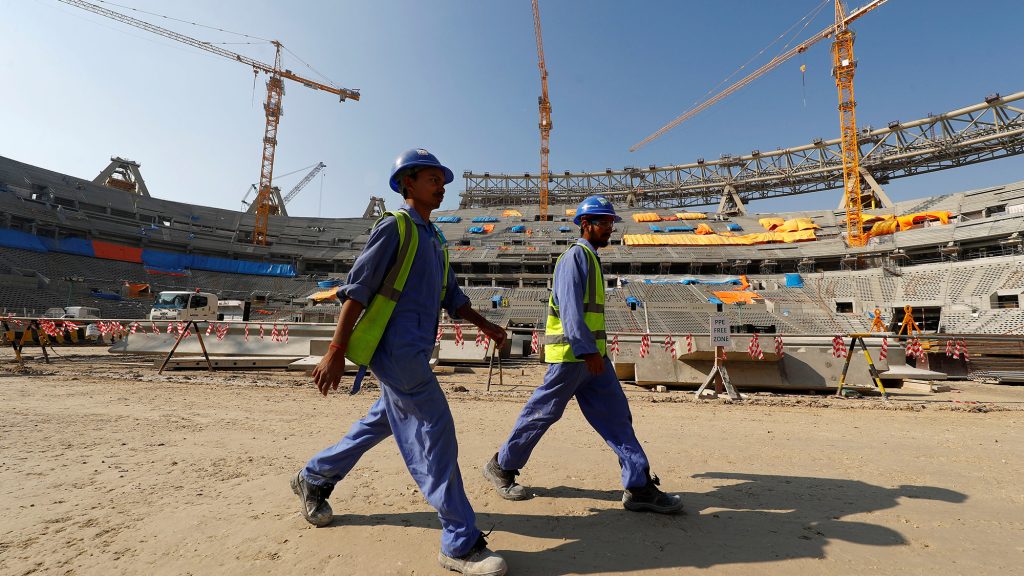
Image: Workers are seen inside the Lusail stadium which is under construction for the upcoming 2022 Fifa soccer World Cup during a stadium tour in Doha, Qatar, December 20, 2019. Photo via REUTERS/Kai Pfaffenbach.