Bottom lines up front
- The Strait of Hormuz crisis opened a window to move stalled connectivity projects forward
- These include the India-Middle East-Europe Economic Corridor and the EU-Gulf Cooperation Council free trade agreement
- The priority should be to turn crisis-driven innovations into permanent, well-financed institutional frameworks
The Gulf Cooperation Council (GCC) is the EU’s sixth-largest trading partner, while the EU ranks as the GCC’s second-largest trading partner. Bilateral trade in goods reached €165.7 billion in 2025, with €110.3 billion in EU exports and €55.4 billion in imports. The United Arab Emirates and Saudi Arabia account for over three-quarters of EU–GCC trade, making them the EU’s principal economic partners in the region. Trade in services totaled €84.4 billion in 2024, having more than doubled over the past decade.
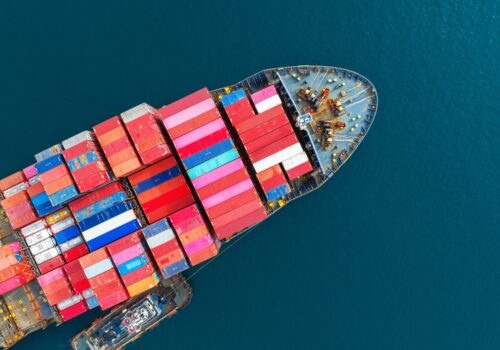
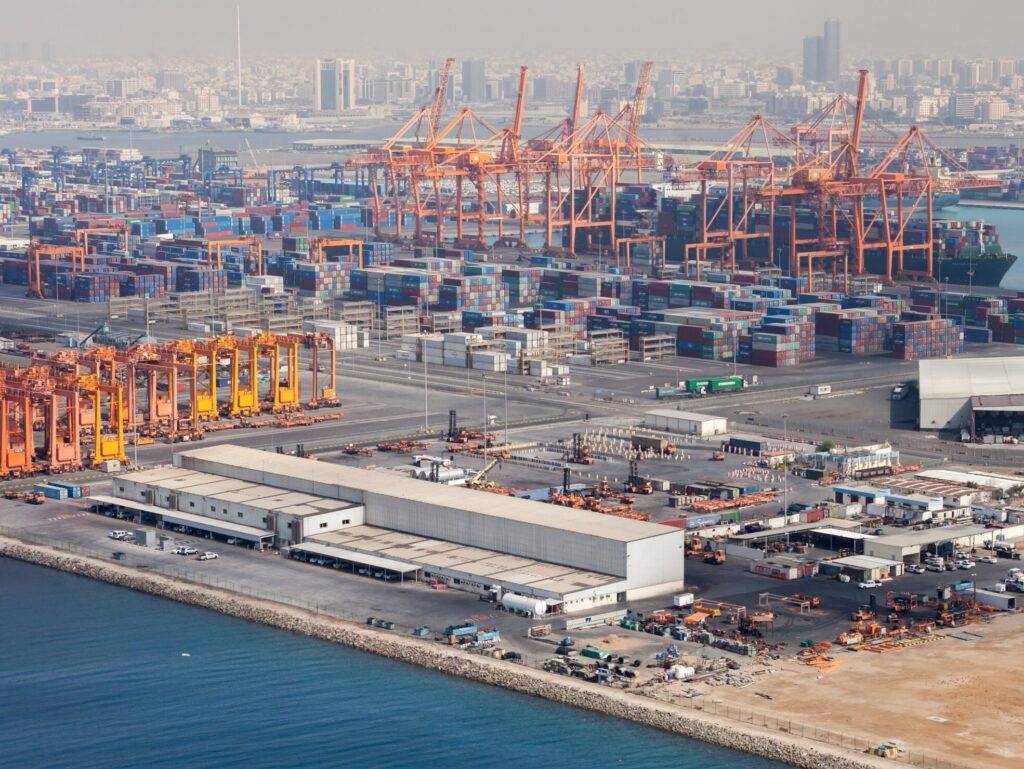
The 2026 US-Israeli war with Iran exposed the vulnerability of the Strait of Hormuz and the Red Sea, transforming Gulf-Europe connectivity from a commercial priority into a strategic instrument of resilience and security. Global oil demand has reached 105 million barrels per day, and the Gulf’s “bypass infrastructure” was built for a much smaller market, leaving limited capacity to mitigate a prolonged disruption in the Strait of Hormuz. For the EU, which consumes 10.6 million barrels of oil per day and imports 97 percent of its crude, secure access to Gulf energy supplies and maritime routes remains a strategic imperative.
Despite renewed political momentum, flagship initiatives to build more resilient connectivity such as the EU-GCC Free Trade Agreement and India-Middle East-Europe Economic Corridor (IMEC) have yet to move beyond political declarations. While Gulf investment and infrastructure development often outpace Europe’s decision-making and regulatory processes, the priority should be to turn crisis-driven innovations, alternative transport corridors, bypass infrastructure, and regional supply-chain coordination, into permanent, well-financed institutional frameworks.
Read the full policy brief
About the author
Valbona Zeneli, PhD, is a nonresident senior fellow at the Atlantic Council’s Europe Center and Scowcroft Center for Strategy and Security, specializing in transatlantic relations, economic security, and geopolitics.
Related reading

About the Europe Gulf Forum