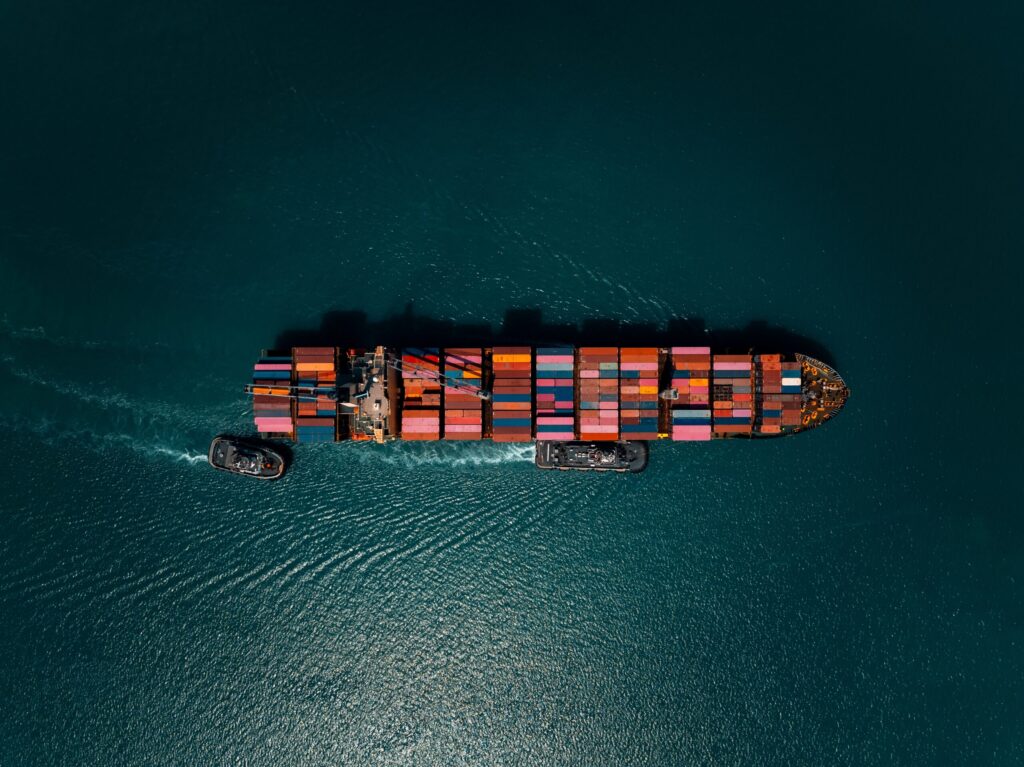
The world’s key waterways and traditional shipping routes are under severe pressure.
In the Middle East, the Strait of Hormuz remains effectively blocked, while the resumption of Houthi attacks along the Bab al-Mandab Strait is seriously limiting transit. At the same time, Russia’s war in Ukraine is disrupting shipping in the Black Sea, and climate change is increasingly constraining waterways from Europe to Central America.
The economic fallout has not yet fully materialized. But it will hit the global economy soon enough—and when it does, markets will be scrambling to catch up.
From Hormuz to Panama, pressure on waterways is mounting
In terms of sheer trade volume, the near-complete closure of the Strait of Hormuz has been the most consequential disruption. Maritime trade through the strait accounts for 19 percent of global liquefied natural gas (LNG), 25 percent of global oil trade, and 30 percent of fertilizer trade. And the closure has already pushed up prices for all three commodities.
But the situation at the Bab al-Mandab Strait is equally concerning. The strait’s location between the Horn of Africa and the Arabian Peninsula makes it the primary route connecting the Mediterranean to the Indian Ocean and markets farther east, with more than 10 percent of global trade passing through. This includes a significant amount of global petroleum products that travel to and from Red Sea ports and onward to other locations. The resumption of Houthi attacks on vessels has effectively created an informal blockade, putting ships—and the goods they carry—at significant risk.
In Europe, repeated heatwaves have triggered widespread drought conditions, leaving continental waterways at their lowest levels in decades. The Rhine has reached the lowest water levels ever recorded, and the Danube has fallen to a thirty-year low, exposing sunken Nazi warships and unexploded munitions for the first time since World War II. These waterways are major arteries of European trade, with the Rhine serving as a key route for oil and LNG. And with drought conditions worsening, transport disruptions are likely to persist in the coming weeks.
Meanwhile, Russia’s continued aggression in Ukraine has made commercial shipping in the Black Sea increasingly hazardous, with numerous vessels coming under attack. This is further limiting maritime trade in an area that has already faced serious restrictions throughout the four-year war. Routes across the Black Sea transport petroleum, fertilizer products, and up to a quarter of global wheat supplies. Though trade has faced continued challenges throughout the war, the deteriorating security environment is adding to the uncertainty surrounding these routes.
On the other side of the world, the Panama Canal is facing a different kind of constraint. Around 6 percent of global trade passes through the canal between the Atlantic and Pacific, making it critical to maritime trade and supply chains. This is especially true for the US, with over 70 percent of vessels traversing the waterway either bound for or departing from a US port. Yet falling water levels in Gatun Lake, the canal’s main source, combined with a historically strong El Niño season has prompted the Panama Canal Authority to limit vessel drafts—how low ships can sit in the water—in July. Despite continued assurances by the authority, further restrictions will begin in late August and again in early September, potentially further limiting both cargo volumes and vessel size.
The next three months will bring higher costs and longer delays
As waterways around the world face growing risks and restrictions, vessels can quickly find themselves caught out, whether on the wrong side of a strait as access rules change during negotiations or on a river whose water levels have fallen sharply. This continued uncertainty will affect delivery times, contracts, and operating costs for shipowners and charterers. Vessels will be forced to take longer routes to their destinations, while those willing to use risky routes will face higher insurance premiums.
The resulting rise in maritime transport costs, which accounts for more than 80 percent of the world’s goods, will inevitably filter through to consumers. Rerouting around Africa, for example, can add up to two weeks to a voyage while also increasing fuel and labor costs. Land-based routes may not be ready or available as alternatives. For ships serving the European Union (EU), longer routes will increase emissions, potentially raising shipping costs under the EU emissions trading system. As a result, the price of goods, especially essentials such as energy and fertilizer, will remain elevated.
And even if routes reopen, these price increases are likely to be sticky. Vessels may not be able to resume operations immediately because berths are full, while suppliers may have already booked alternative routes. Carriers that continue operating may charge more to offset the additional costs, and insurance rates will likely remain high as insurers assess the risk of renewed hostilities and further climate-related disruption to waterways.
In the medium term, expect shortages to deepen and inflation to rise
Any potential truce in the Middle East will still require a lengthy and complicated demining process, which could take months. During this period, vessel passage will remain restricted, with ships forced to use select secured routes. In South America, El Niño weather pressures are likely to bring tighter restrictions on the Panama Canal, requiring vessels to reduce their weight and cargo loads.
The longer maritime routes remain impassable, the more secondary impacts will emerge. For instance, limited vessel capacity will push up maritime transport premiums, as the ships able to operate on certain routes are finite and may already be booked. Any available capacity is likely to be snapped up by the highest bidder.
Those able to reroute via alternative modes of transport, such as rail, air, and road, will face similar pressures. Since these modes have capacity constraints of their own, a surge in demand will quickly translate into higher prices. Road and rail operations have already seen sharp price increases around the Rhine, and previous Panama Canal closures led to major competition for rail capacity.
Continued disruption to routes supplying essential goods, such as petroleum products and fertilizer, will inevitably create acute shortages. Prices will remain high, and countries will continue to draw on reserves to fill supply gaps. For many of them, however, reserves can provide only a temporary buffer. With alternative sources difficult to secure, access will increasingly favor those with money or domestic resources to compete for scarce supplies.
This spring, farmers in the Northern Hemisphere faced a surge in fertilizer prices—a trend that could spread to the Southern Hemisphere if routes through the Middle East remain blocked. Reduced access to fertilizer can severely impact crop yields, while lower production and continued demand will drive up food prices and trigger major food insecurity. At the same time, persistent heatwaves will raise energy demand just as countries prepare for higher consumption during winter.
Wider supply chain pressures will also become more pronounced as the year draws to a close. Many cargo shipments made in late summer contain goods destined for holiday sales, traveling from Asia to fill store shelves ahead of Christmas. Delays and higher transport costs—especially those caused by Panama Canal draft restrictions—could leave retailers facing higher prices and tighter delivery windows.
But businesses can absorb higher maritime transport costs for only so long. Eventually, they will pass them on to consumers, turning the immediate shipping shock into a more persistent source of inflation—and policymakers will face growing supply chain pressures across the economy, from essential commodities to everyday consumer goods.
If disruptions persist, they could reshape global trade for good
For maritime markets, insurance providers will increasingly price war and climate risks into coverage. Although existing policies already account for some of these risks, rising geopolitical uncertainty and more frequent climate-related disruptions will likely be reflected in higher premiums. Certain trade routes could therefore become more expensive to operate, particularly those most exposed to conflict or climate change. Ultimately, this could determine which routes remain commercially viable.
Sustained high energy costs will make energy-intensive goods more expensive to produce. This includes major industrial products such as steel, chemicals, cement, and paper. Greater maritime disruption could shift demand toward domestic suppliers. Yet domestic supply chains are not immune to higher energy costs either, making local production more expensive. Companies will therefore face difficult choices, including passing higher costs on to consumers or scaling back operations. Pressure on the bottom line, particularly efforts to reduce energy costs, could also affect employment through lower wages or layoffs.
The combination of higher consumer prices, weaker economic productivity, and employment pressures could further entrench inflationary challenges for policymakers. And unfortunately, the disruptions to maritime trade may be difficult to resolve.
Securing maritime trade is becoming an economic imperative
Various actors will continue to compete for control of strategic geographical bottlenecks, and climate pressures will continue to reshape trade routes and patterns of demand. As these pressures mount, maritime trade is becoming increasingly vulnerable.
The effects will extend far beyond ports and shipping companies, affecting commodity prices, supply chains, inflation, and economic growth. While markets have yet to fully price in these risks, policymakers should not make the same mistake. Maritime trade routes often provide the first warning signs of broader disruption. They are not a single pressure point but a deeply interconnected web that can transmit shocks across the global economy. Treating the resilience of maritime trade as a priority will be essential to strengthening economic security.
Alex Mills is an international trade expert specializing in financial services and maritime law. They have a decade of experience across the private and public sectors, including in UK and US government.
Related Reading


Image: Bird’s-eye view of a container ship. Source: Shutterstock.