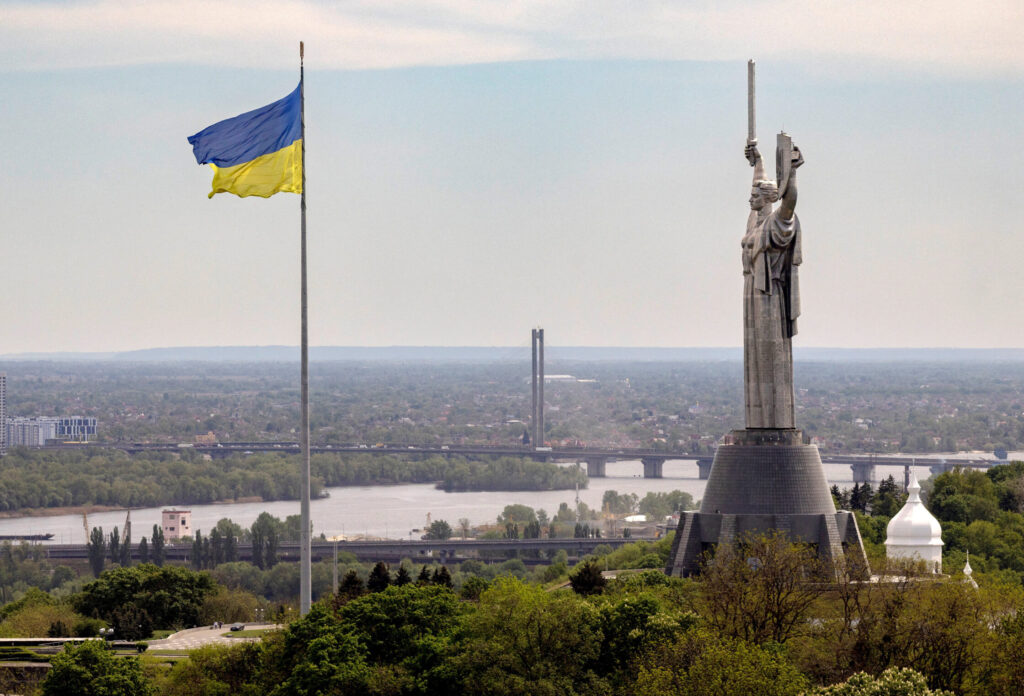
All European Union member states have now agreed to open talks with Ukraine on the first cluster of the EU accession process, Ukrainian Prime Minister Yulia Svyrydenko reported on June 4. This is timely news, with Ukraine’s membership bid expected to be high on the agenda when EU leaders convene in Brussels on June 18 for the European Council summit.
Progress is crucial in order to bring Ukraine in from the grey zone and end the geopolitical uncertainty that is fueling Russia’s ongoing invasion. However, numerous bureaucratic barriers and potential political obstacles remain. It therefore makes good sense for Ukraine and the country’s European partners to adopt a creative approach to accession.
German Chancellor Friedrich Merz clearly had this in mind recently when he proposed associate EU membership for Ukraine as an interim step. Merz’s vision would see Ukraine offered a fast track to institutional access, gradual budget integration, and security guarantees, but would leave Kyiv without voting rights.
Ukrainian President Volodymyr Zelenskyy quickly rejected the Merz proposal as unfair, insisting that Ukraine deserves full and equal membership. Zelenskyy’s reluctance to accept anything less than full membership is understandable, given the incredible sacrifices his country has made in pursuit of its European aspirations. However, the Ukrainian leader’s rapid rejection of EU associate member status is politically short-sighted.
No country has acceded to the EU since Croatia in 2013. Meanwhile, numerous other nations have the same candidate status as Ukraine but have failed to advance further. Rather than adopting an uncompromising stance on the issue, Kyiv should view the recent suggestion of associate membership as a serious attempt to break a decade-long deadlock and prioritize Ukraine’s integration. Germany knows that under the EU’s existing institutional framework requiring unanimity and endless box-ticking, full membership for Ukraine may never come.
Stay updated
As the world watches the Russian invasion of Ukraine unfold, UkraineAlert delivers the best Atlantic Council expert insight and analysis on Ukraine twice a week directly to your inbox.
In today’s increasingly challenging international environment, Europe must either become a serious geopolitical player or risk irrelevance. In this context, Ukraine’s current ambiguous status is no longer a mere administrative inconvenience. It now serves as a key source of European insecurity that Moscow is determined to exploit.
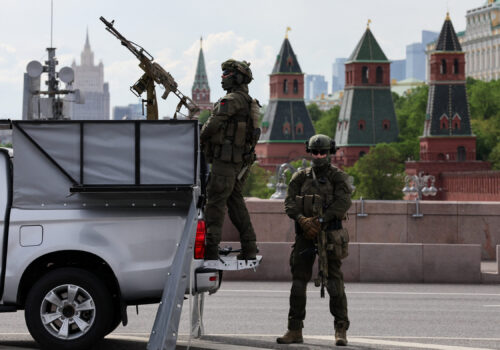
Today’s full-scale war on Europe’s eastern frontier is the latest stage in a long process of escalating Kremlin aggression against Ukraine that has mirrored the country’s EU integration efforts. In late 2013, Moscow intervened to prevent Ukrainian President Viktor Yanukovych from signing a long anticipated Association Agreement with the European Union. This Russian interference sparked the Revolution of Dignity, which culminated in February 2014 with the fall of the Yanukovych regime. Days later, Russian troops began the seizure of Ukraine’s Crimean peninsula, marking the start of a Russian invasion which continues to this day.
Russia’s use of military force in 2014 failed to derail Ukraine’s European aspirations. The country’s EU Association Agreement was duly signed by Yanukovych’s successor. This was followed three years later by the advent of visa-free EU travel. With Moscow seemingly unable to prevent Ukraine’s historic turn toward Europe, Putin made the fateful decision to launch a full-scale invasion.
Since 2022, Ukraine has advanced significantly toward the goal of EU membership, acquiring official candidate country status and beginning negotiations. However, there is still no realistic road map toward full membership. Kyiv wants to be given a specific timeline within the next few years, but many believe the process could take at least a decade.
As long as Ukraine’s EU bid remains shrouded in uncertainty, Russia has both the motive and the narrative to keep fighting. Putin has sought to justify his invasion by insisting that Ukraine is “an inalienable part” of Russia’s own history, culture, and spiritual space. Until Ukraine’s place within the EU is confirmed, he will continue to argue that the country’s European identity is contested and can still be reversed.
This uncompromising Russian stance is one of the key reasons why the idea of associate EU membership deserves further serious consideration. While skeptics have noted that the German proposal falls short of Kyiv’s ambitions, the associate format could secure Ukraine a seat inside the EU within a short space of time, whereas negotiations over full EU membership are likely to take many years and come with no guarantee of eventual success.
Eurasia Center events

Ukrainian officials should avoid the temptation to view EU integration in black and white terms as a straight choice between full membership or nothing. Countries like Norway and Switzerland are part of the single European market and are bound by European rules without having any voice in the European Parliament. In recent years, they have also deepened cooperation with EU partners in the defense sector.
Meanwhile, post-Brexit Britain is moving closer to Europe as the UK seeks to play a key role in efforts to counter the Russian threat. The British-led Coalition of the Willing initiative, which brings together dozens of Western nations in a shared commitment to safeguarding Ukraine’s long-term security, exists because the NATO and EU frameworks couldn’t respond fast enough to the challenges presented by Russia. A multi-speed Europe is already a reality and may be the most practical way to advance Ukraine’s integration.
Ukraine’s insistence on full membership is a recipe for potential political deadlock. Opposition is likely to come from multiple EU member states, including pro-Kremlin governments. Meanwhile, farmers throughout Europe will lobby their governments to block Ukraine’s membership bid or impose restrictions on Kyiv’s access to agricultural markets. Associate EU membership does not mean surrendering to these opponents. Instead, it could allow Ukraine to bypass them.
If Zelenskyy decides to pursue the idea of associate status, he has plenty of cards to play and does not have to accept second class status. Crucially, Ukraine is now widely recognised as indispensable to European security. Kyiv currently possesses Europe’s largest army and a defense industry ecosystem that is capable of constraining the Kremlin. This represents serious leverage if Ukraine chooses to move forward with talks over possible interim EU membership.
Kyiv could use the upcoming European Council summit to aggressively shape Merz’s offer. Rather than rejecting the entire idea of associate EU membership, Ukrainian diplomats could seek to secure clear legal commitments regarding eventual membership while pursuing practical gains.
Associate status should not be viewed as an institutional demotion, but as a framework for short-term progress. The alternative is a highly militarized, technologically advanced, battle-hardened, and deeply aggrieved Ukraine stranded permanently in the geopolitical grey zone. This would be great news for Russia and disastrous for Europe.
Merz is attempting to open a door for Ukraine that the current EU accession rules might otherwise keep locked for decades. Zelenskyy should walk through this door and help build the multi-speed Europe that is already taking shape. He now has a real chance to lead Ukraine out of the grey zone and toward a European future. The terms on offer may not be ideal, but they still represent an unprecedented opportunity that must not be missed.
Maksym Beznosiuk is a strategic policy analyst whose work focuses on Russia, Ukraine, and international security. He is an associate fellow at GLOBSEC. William Dixon is a senior associate fellow of the Royal United Services Institute and an associate fellow at GLOBSEC. He specializes in cyber and international security issues.
Further reading


The views expressed in UkraineAlert are solely those of the authors and do not necessarily reflect the views of the Atlantic Council, its staff, or its supporters.

The Eurasia Center’s mission is to enhance transatlantic cooperation in promoting stability, democratic values, and prosperity in Eurasia, from Eastern Europe and Turkey in the West to the Caucasus, Russia, and Central Asia in the East.
Follow us on social media
and support our work
Image: The Ukrainian national flag flies near the Motherland monument at the National Museum of the History of Ukraine in the Second World War, amid Russia’s attack on Ukraine, in Kyiv, Ukraine. May 8, 2026. (REUTERS/Thomas Peter)