Featured analysis

Latest analysis

EconoGraphics

Apr 14, 2015

Who is Investing Abroad?

By Global Business & Economics

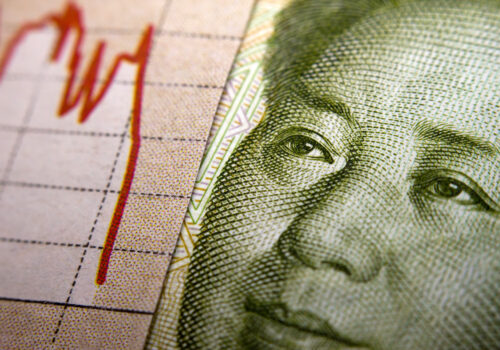
While the US still leads the world in outflowing Foreign Direct Investment (FDI), the emerging markets are catching up quickly. Chinese outflowing FDI, in particular has grown tremendously: since 2005, it increased more than 30-fold in 8 years from $5 billion to $166 billion. While initial Chinese foreign investments focused on natural resource industries, over time the investments have spread to diverse industries like agriculture, manufacturing, and professional services. BRIC FDIs are emerging as key growth drivers for low income countries, improving their business environment, building infrastructure, creating jobs, and adding much-needed revenue to government coffers.
China
Russia

EconoGraphics

Apr 7, 2015

Is Europe still vulnerable to a Greek default?

By Global Business & Economics Program

Private banks throughout Europe have significantly reduced their exposure to Greek debt (bank, public, and non-bank private sector debt) over the last five years. After Greece came under market pressure and eventually obtained ECB and IMF financial assistance in 2010, most European banks started to rapidly reduce their exposure to Greece. For instance, between 2010 and 2014 French banks’ holdings decreased from $63 billion to $2 billion.

Economy & Business
Eurozone

EconoGraphics

Mar 31, 2015

The IMF’s Changing Role in Europe

By Global Business & Economics

The International Monetary Fund’s purpose and scope of work have changed since its founding after World War II. Whereas at first the Fund aimed to maintain monetary and exchange-rate stability among its members who were primarily advanced economies, today it faces its first credible challenge to its status as the world’s lender of last resort.

Economy & Business
Financial Regulation

EconoGraphics

Mar 24, 2015

How Much Does it Cost for Cubans to Access Information?

By Global Business & Economics

When President Obama announced his landmark policy shift towards Cuba, easing the 54-year-old embargo, one of the first companies to announce they would begin operating in Cuba was Netflix. The online video company’s decision was surprising, if only because Cuba’s internet is one of the slowest in the world.

Americas
Cuba

EconoGraphics

Mar 17, 2015

Who Will Finance Public Debt?

By Global Business & Economics Program

Today, the cap on US government spending (or the “debt ceiling”) is officially reinstated, and with it, the threat of another clash over the national debt. Policymakers will have a runway of just months before they must decide to lift the cap on borrowing or temporarily allow it to be raised

Brazil
China

EconoGraphics

Mar 11, 2015

The Benefits of a Strong Dollar: Where Should You Go on Your Next Vacation?

By Global Business & Economics

There’s never been a better time to be a tourist—as long as you’re paying in dollars. Major currencies worldwide have plunged in value, meaning each US dollar buys more euros and renminbi today than it did one year ago.

Americas
Economy & Business

EconoGraphics

Mar 3, 2015

Who Will Collapse First?

By Global Business & Economics

Both the Ukrainian and Russian economies are suffering from recent events. While weak domestic institutions and a fight with insurgents in the country’s East plague Ukraine, sanctions and low prices for oil and gas are hurting the Russian economy.

Economy & Business
Europe & Eurasia

EconoGraphics

Feb 24, 2015

Is the US Still Leading in Global Trade?

By Global Business & Economics Program

In the last two decades, the Asia Pacific region has signed sixty-five free trade agreements. South America, Eurasia, and Europe combined have signed over one-hundred and fifty agreements. Over the same period, the US has signed twelve agreements.

Americas
East Asia

EconoGraphics

Feb 17, 2015

EconoGraphics – EU Energy Dependency

By Global Business & Economics Program

A great part of Europe is highly dependent on Russian energy, which helps to explain many of the concerns Europeans have over the developments in Ukraine.

Economy & Business
Energy & Environment

EconoGraphics

Feb 10, 2015

Is Austerity to Blame for the Collapse of the Political center in the European Union?

By Global Business & Economics Program

Radical political parties in the Eurozone—including Syriza in Greece, Podemos in Spain, and Sinn Féin in Ireland—are riding a wave of popularity. The continent’s debt crisis has pitted the creditor countries, most importantly Germany, against debtor countries like Greece. On an international level, the northern European creditors have managed to implement policies that are forcing […]

Economy & Business
European Union

Content

Econographics

Nov 11, 2022

The target of limiting global warming to less than 1.5 degrees is practically dead. Why do emissions per capita matter?

By Amin Mohseni-Cheraghlou

Achieving the target to limit global warming to below 2, preferably 1.5 degrees Celsius, by the end of the century seems more unfeasible than ever. The reason is simple. The most critical of greenhouse gases have continuously risen in the past decade and CO2 emissions are only expected to grow more in 2022 and for the foreseeable future. COP27 needs to pave the path for a renewed international cooperative and enforceable framework to reduce global greenhouse gas emissions by the world’s top emitters both in absolute terms and in per capita terms.

Climate Change & Climate Action
Economy & Business

Econographics

Nov 8, 2022

What US outbound investment screening means for Transatlantic relations

By Elmar Hellendoorn

Whether the EU follows through with new outbound investment controls and what those might look like will also depend on the evolution of American national security policy and transatlantic diplomacy.

China
Economy & Business

Econographics

Oct 31, 2022

The global infrastructure financing gap: Where sovereign wealth funds and pension funds can play a role

By Amin Mohseni-Cheraghlou and Naomi Aladekoba

Having more than $65 trillion in assets, institutional investors such as SWFs and pension funds are uniquely positioned to bridge low-income economies’ infrastructure financing gap in the coming decades. The Bretton Woods Institutions (BWI) can encourage investment in developing countries’ infrastructure through providing various guarantee and insurance mechanisms, thereby reducing risk for private investors.

Economy & Business
Inclusive Growth

EconoGraphics

Oct 28, 2022

How the US compares to the world on unionization

By Jeff Goldstein

Explore how US unionization rates compare to other economies and what that means for US labor markets going forward.

Economy & Business
Inclusive Growth

EconoGraphics

Oct 24, 2022

Dual circulation in China: A progress report

By Hung Tran

Faced with a challenging international environment and hostile efforts by the United States to restrict China’s access to high technology and its products, China has adopted a dual circulation strategy to make its economy more balanced and resilient. Dual circulation means reducing the role of foreign trade in driving the Chinese economy while improving the quality of trade.

China
Economy & Business

Econographics

Oct 12, 2022

Companies on the front line: Trends in overseas Chinese listings

By Maia Nikoladze

Delisting more than 150 Chinese companies is a bigger hit than Chinese private sector can take at this time. However, we don’t yet know whether Beijing will follow through on its side of the audit-sharing deal. 

China
Economy & Business

Econographics

Sep 8, 2022

Global Sanctions Dashboard: Sanctioning soars across the board

By Charles Lichfield, Maia Nikoladze, and Castellum.AI

Iran nuclear deal negotiations; Russia's domestic sanctions against terrorism and extremism; Latin America drug trafficking sanctions.

Europe & Eurasia
European Union

Econographics

Sep 8, 2022

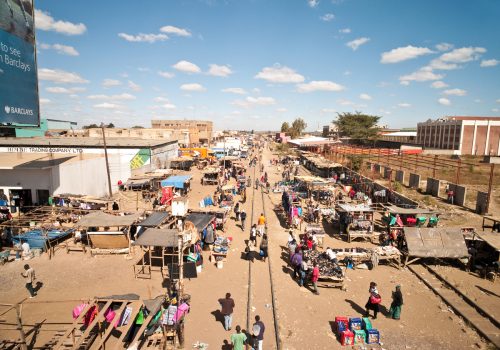
Zambia: A template for debt restructuring?

By Hung Tran

Zambia shows that progress can be made to render the Common Framework more workable. However, more needs to be done to refine a comprehensive, efficient, and effective sovereign debt restructuring procedure.

Africa
China
Dollar Currency Exchange rate

Econographics

Sep 7, 2022

Don’t expect a Plaza Accord 2.0 to reverse the dollar’s surge

By Mrugank Bhusari

Neither China, nor the original participants of the Plaza Accord, are willing to engage in such market intervention to return a soaring dollar to normal levels.

China
Economy & Business

Econographics

Aug 25, 2022

Delisting Chinese companies from the New York Stock Exchange: Signs of decoupling

By Hung Tran

China’s decision to delist five companies from the NYSE is motivated by its unwillingness to comply with US regulations.

China
Economy & Business