Featured analysis

Latest analysis

Econographics

Feb 24, 2026

In Munich, a reminder that economic security is national security

By Kimberly Donovan, Lize de Kruijf

Policymakers at this year's MSC raised economic security as an issue that they cannot cordon off separately from traditional security issues.

Economy & Business European Union

Econographics

Feb 24, 2026

The European Central Bank’s next president may decide the fate of the digital euro

By Alisha Chhangani, Jacopo Pastorelli

The four frontrunners don't oppose the digital euro, but their positions differ on pace, framing, and the risks they're most concerned about.

Digital Currencies Economy & Business

Econographics

Feb 20, 2026

To bridge the transatlantic productivity divide, Europe needs structural reforms—and AI

By Hung Tran

Policymakers and investors should actively incentivize laggard firms to adopt productivity-enhancing practices and technologies.

Economy & Business Europe & Eurasia

Econographics

Feb 12, 2026

Despite US exemptions, the show goes on for a global minimum corporate tax

By Jeff Goldstein

The United States may have carved out protections for its multinationals, but the global minimum tax continues to move forward. With more than sixty-five countries implementing the OECD framework, policymakers are betting imperfect progress will prevent a relapse into corporate tax competition.

Economy & Business Europe & Eurasia

Econographics

Feb 10, 2026

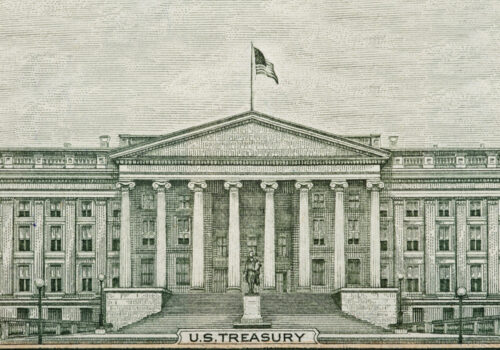
China’s warning on US Treasuries—and why its timing matters

By Jeremy Mark, Josh Lipsky

Beijing has joined the conversation on the dollar. It was leaked this week that Chinese regulators have been urging domestic financial institutions to cut back on US Treasuries, and this timing is no coincidence.

China Dollar Dominance

Econographics

Feb 6, 2026

Iran can still normalize its economy—but the path will be painful and slow

By Bart Piasecki

Iran’s inflation crisis is driven by persistent exchange‑rate instability, entrenched fiscal dominance, and international sanctions. Despite these structural challenges, there remains a clear—but difficult—path toward economic normalization.

Dollar Dominance Economy & Business

Econographics

Feb 4, 2026

What the data shows—and doesn’t show—about the future of the dollar

By Hung Tran

Is there genuine demand to “sell America,” or does the recent dollar weakness fall within historical fluctuations? More data will be needed to answer that question.

Dollar Dominance Economy & Business

Econographics

Feb 4, 2026

Understanding the vibe shift on the dollar

By Daniel McDowell, Bart Piasecki, Jessie Yin

Gold prices surged to record highs last week, driven by trade tensions, tariffs, and dollar uncertainty. For some, the rally signals rising skepticism about the greenback’s stability—even as policymakers insist the US remains committed to a strong dollar.

Dollar Dominance Economy & Business

Econographics

Jan 28, 2026

China’s property slump deepens—and threatens more than the housing sector

By Jeremy Mark

China's property sector slump is in its fifth year, with no end in sight. This poses real risks to the banking system and the country's financial stability.

China Economy & Business

Econographics

Jan 26, 2026

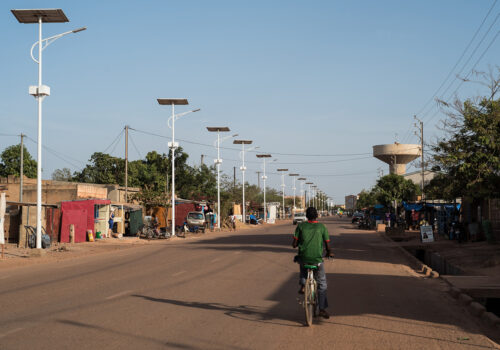
Africa enters 2026 facing a debt crisis. The answer lies in regional solutions.

By Juliet Lancey

The solution to debt crises in African nations lies in global and regional cooperation.

Africa Financial Regulation

Content

EconoGraphics

Sep 25, 2017

Crude Awakening

By Ole Moehr

On August 2, 2017, US President Donald J. Trump signed into law H.R.3364, a new set of economic sanctions aimed primarily on Russia (with additional measures adopted against Iran and North Korea). Essential to the success of any sanctions regime is its alignment.

Economy & Business European Union

EconoGraphics

Jul 25, 2017

The Apprentice

By Samuel Weitzman

On June 15, 2017, US President Donald J. Trump issued Executive Order 13801, which sought “to promote affordable education and rewarding jobs for American workers” by increasing the number of apprenticeship opportunities. Trump’s stated goals are ambitious. With a proposed ApprenticeshipUSA budget of $200 million (roughly double the previous amount), the president wants to increase the number of US apprenticeships from 505,000 in 2016 to 5 million by 2022.

Economy & Business United States and Canada

EconoGraphics

Jul 6, 2017

The Big Chill(ing effect)

By Samuel Weitzman

In March 2014, the United States and the European Union (EU) issued the first in a series of sanctions against the Russian Federation for its destabilization of Ukraine and annexation of Crimea. These restrictions, which initially focused on senior Russian government officials and private individuals, have expanded to include large corporations, financial institutions, and even entire economic sectors. In retaliation, Russia has adopted counter-sanctions of its own.

Economy & Business European Union

EconoGraphics

Jun 20, 2017

Balancing Act

By Samuel Weitzman

On June 12, in US President Donald J. Trump’s first full cabinet meeting, the new US Trade Representative Robert Lighthizer briefly encapsulated the young administration’s philosophy on international trade: “Deficits do matter, and ours are coming down.” This is not a particularly partisan view; Trump’s opponent in the 2016 presidential election, former Secretary of State Hillary Clinton, spoke out against the Trans-Pacific Partnership (TPP) during her campaign despite supporting it previously.

Economy & Business Trade and tariffs

EconoGraphics

Jun 9, 2017

A Vital Foreign Policy Tool

By Ole Moehr

This is the first EconoGraphic as part of our recently launched Economic Sanctions Initiative. The initiative aims to promote dialogue between the public and the private sector to investigate how to improve the design and implementation process of economic sanctions.

Economy & Business European Union

EconoGraphics

Apr 19, 2017

The European Stability Mechanism

By Lu Ding & Ole Moehr

The global economic and financial crisis, which originated in the United States in 2008, ultimately triggered a sovereign debt crisis in Europe in 2010. As a result of sky high debts, economies lacking in competitiveness, and over lenient banking regulations, the credit ratings of the Eurozone members Cyprus, Greece, Ireland, Portugal, and Spain plummeted. These countries began facing prohibitively high interest rates when they attempted to borrow from international credit markets.

Economy & Business European Union

EconoGraphics

Mar 17, 2017

The United States Needs Europe And Vice Versa (Pt. 3)

By Lu Ding & Ole Moehr

This EconoGraphic is the final edition of a three-part series on why the United States and Europe need each other. The series highlights excerpts from the EuroGrowth Task Force’s inaugural report on European economic growth and why it matters for US prosperity.

Economy & Business Europe & Eurasia

EconoGraphics

Mar 7, 2017

The United States Needs Europe And Vice Versa (Pt. 2)

By Lu Ding & Ole Moehr

US economic ties with the European Union (27) generate the largest global bilateral trade flows, worth an estimated $2.4 billion per day. The massive volume of US-EU (27) bilateral trade promotes prosperity on both sides of the Atlantic.

Economy & Business Europe & Eurasia

EconoGraphics

Feb 22, 2017

The United States Needs Europe and Vice-Versa

By Lu Ding & Ole Moehr

The United States is the world’s largest recipient of global foreign direct investment (FDI). On a current-cost basis, the US FDI stock was more than three times larger than that of the second largest destination country in 2014, the most recent year from which statistics are available. Despite the current fragile global economy and great political uncertainty, foreign investment in the United States remains strong.

Economy & Business European Union

EconoGraphics

Dec 12, 2016

Refer-Ending Renzi’s Government

By Filippos Letsas

On December 4, Italian voters rejected former Prime Minister Renzi’s constitutional reform referendum. The result of the referendum renewed concerns about the economic recovery in Italy, stability of the Euro, broader European economic integration, and rising populism across Europe. In the week following the referendum, global markets have focused their attention on the ailing Italian banking sector.

Economy & Business Europe & Eurasia