Featured analysis

Latest analysis

EconoGraphics

Dec 5, 2018

Trade Disrupted: US and China Need More Than a Truce

By Ole Moehr

At this year’s G20 summit in Buenos Aires, the trade dispute between China and the United States took center stage. Chinese President Xi and his US counterpart President Donald Trump agreed to avoid further escalations of the ongoing bilateral trade war for the next 90 days. The temporary deal does not assuage the escalatory measures already taken, leaving the existing tariffs in place. This edition of the EconoGraphic explores how the brewing trade conflict is impacting manufacturing supply chains, soybean cargo routes, and trade flows of liquefied petroleum gas (LPG) among the United States, China, and the rest of the world.

China
Economy & Business

EconoGraphics

Oct 30, 2018

SWIFTly Disconnecting Iran

By Ole Moehr

With the snapback of significant US sanctions against Iran fast approaching on November 5th, speculation is mounting over how the Trump Administration will enforce the sanctions, and how its European allies might attempt to bypass them. The previous EconoGraphic outlined how a Special Purpose Vehicle (SPV) may facilitate trade between European small and medium-sized enterprises (SMEs) and Iran after US sanctions go back into effect. This edition of the EconoGraphic provides a primer on the Society for Worldwide Interbank Financial Telecommunication (SWIFT) and explains why sanctioning the financial messaging service would likely cause more harm than good.

Economy & Business
Financial Sanctions and Economic Coercion

EconoGraphics

Oct 9, 2018

JCPOA in Peril – EU SPV to the Rescue?

By Ole Moehr

The European Union’s (EU) foreign policy chief, Federica Mogherini, recently announced that the EU will set-up a special purpose vehicle (SPV) “to facilitate legitimate financial transactions with Iran and allow European companies to continue to trade with Iran.” In response, our visiting senior fellow, Samantha Sultoon, argued that this SPV will not provide a reliable path around US sanctions, and may undermine the effectiveness of US and EU sanctions in the long-run. This edition of the EconoGraphic explains how the SPV would work in practice and outlines why this mechanism is unlikely to offer Iran enough economic upside to keep the Joint Comprehensive Plan of Action (JCPOA) alive.

Economy & Business
European Union

EconoGraphics

Sep 17, 2018

Turkish Outbreak: Risk of Emerging Market Contagion?

By Christina Gay and Ole Moehr

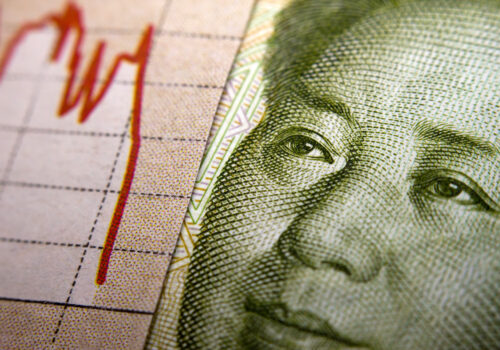
With the strengthening of the US dollar in the wake of continued interest rate increases by the US Federal Reserve and brewing pressures in a number of emerging market (EM), portfolio flows into EM countries slowed from $13.7 billion in July to just $2.2 billion in August. Companies and banks in both Argentina and Turkey borrowed heavily in dollar denominated debt while interest rates were low and are now faced with mounting debt burdens, which, if not backed by sufficient reserves puts them at risk for default if investors lose confidence. The Turkish lira has fallen over 40 percent in 2018. Its sharp decline in August raised concern of contagion to other markets, as the Indonesian rupiah, the South African rand, and the Indian rupee have also come under pressure. This edition of the Econographic compares situation in Turkey with the Asian financial crisis in 1997, analyzes root causes of the current pressures in Turkey, and assesses the broader implications for EM economies.
Economy & Business
European Union

EconoGraphics

Aug 8, 2018

JEEPA – Japan-EU Free Trade Agreement Leaves the US Out in the Cold

By Cecilia Pan and Ole Moehr

While President Trump is pursuing a protectionist trade agenda – halting negotiations for the Transatlantic Trade and Investment Partnership (TTIP), pulling out of the Trans-Pacific Partnership (TPP), and threatening trade wars against adversaries and allies – Japanese Prime Minister Shinzo Abe has been doing just the opposite. As part of Abenomics’ third arrow, the Prime Minister is forging global partnerships between Japan and other leading economies to foster economic growth. Case in point, the Japan-EU Economic Partnership Agreement (JEEPA) signed on July 17, 2018. This edition of the EconoGraphic will review this ambitious bilateral free trade agreement, assess its impact on the US economy, and explore the consequences of the United States’ retreat from its role as the global leader for free trade.

Economy & Business
European Union

EconoGraphics

Jul 19, 2018

US Iran Sanctions Could SpOIL the Global Economy

By Ole Moehr

The Trump Administration’s “maximum pressure” approach against Iran to reduce Iranian crude oil exports to zero as soon as possible is expected to rattle markets and could undermine the credibility and effectiveness of US sanctions. This edition of the EconoGraphic outlines how re-imposed US sanctions against Iran will affect the global oil market, the price of oil, US consumers, and the American economy.

China
Economy & Business

EconoGraphics

Jun 22, 2018

There’s a New Tariff in Town: Implications of Trump’s Steel Tariffs

By Ole Moehr

Economists consider tariffs a tax on consumers. Case in point, President Trump’s former chief economic advisor Gary Cohn. He recently warned that the administration’s twenty-five percent tariff on steel and ten percent tariff on aluminum combined with threatened duties on Chinese goods could cancel out the 2017 tax cut. This edition of the EconoGraphic provides an overview of how the Trump Administration’s steel tariffs might impact the US economy.

Economy & Business
Trade and tariffs

EconoGraphics

Jun 4, 2018

GDPR’s Quest for World Domination

By Ole Moehr

On May 25, the European Union’s (EU) sweeping new data privacy regulation came into force. The General Data Protection Regulation (GDPR) provides EU residents with more control and protection of their data.

Brazil
Economy & Business

EconoGraphics

May 18, 2018

US Sanctions’ Global Impact – A Case Study of RUSAL’s Supply Chain

By Ole Moehr

On April 6, 2018, the Trump Administration imposed stiff economic sanctions on 37 Russian oligarchs, oligarch-owned companies, Russian government officials, and state-owned companies.

Economy & Business
Financial Sanctions and Economic Coercion

EconoGraphics

Apr 12, 2018

Africa Embraces the Promise of Free Trade

By Ole Moehr, Zachary Coles, and Alexatrini Tsiknia

Africa Embraces the Promise of Free Trade

Africa
Economy & Business

Content

EconoGraphics

Oct 21, 2015

TTIP in Europe

By Global Business and Economics

On October 10th, hundreds of thousands of concerned German citizens marched in Berlin to protest the proposed Transatlantic Trade and Investment Partnership (TTIP). TTIP's critics argue it benefits corporations at the expense of ordinary citizens, while its proponents argue it provides significant economic growth.

Economy & Business
European Union

EconoGraphics

Oct 13, 2015

Breaking Down Walls: How Will American Agricultural Producers Fare Under TPP?

By Global Business and Economics

On October 5th, Trans-Pacific Partnership (TPP) trade negotiations were concluded in Atlanta. The deal faced criticism from some on a lack of transparency, but details are now beginning to emerge on the settlement. Even with TPP's lack of transparency, there were clear tension points between negotiators on topics such as biologics, dairy products, and rules of origin for the automaking industry. This week's Econographic looks specifically at one of the potential winners of the trade deal, the American agricultural sector.

Economy & Business
Indo-Pacific

EconoGraphics

Oct 6, 2015

How Can We Bridge Automaking Standards for Growth?

By Global Business and Economics

The recent Volkswagen scandal has refocused consumers on automaking standards and CO2 emissions. These differences have also been one of the sticking points in TTIP negotiations. Both the American and European automaking sectors have rigorous standards, and as might be expected hold similar regulations.

Economy & Business
European Union

EconoGraphics

Sep 29, 2015

How Does The Most Recent Greek Bailout Deal Compare With The Past Two Agreements?

By Global Business and Economics

The latest Memorandum of Understanding between the EU Institutions and the Greek Government passed in August, leaves Tsipras only one additional month to implement eighty-five initiatives. These reforms cover a diverse range of topics, from consolidating taxation policies to health and education reform.

Economy & Business
European Union

EconoGraphics

Sep 22, 2015

Migrant Flows and the Future of Europe

By Global Business and Economics

As Europe confronts the migrant crisis, much of the current coverage remains fixed on short run trends, but in order to have a comprehensive perspective it is necessary to project these trends into the future. In spite of commonly held concerns of migrants' effect on European identity, many of these nations' birthrates and outflows of migrants will actually be higher than their intake of migrants. Negative flows of migrants could further weaken pension plans, as aging European populations struggle to balance social welfare models with demographic realities.

Afghanistan
Economy & Business

EconoGraphics

Sep 15, 2015

Has the Renminbi Arrived as an International Currency?

By Global Business and Economics

As China slowly transitions from an investment and export based economy to a consumer based economy, the Chinese must also liberalize both their monetary affairs and the management of their currency. By increasing the wealth of Chinese consumers via their currency's value, domestic demand will supplant the role of exports. For this process to be completed, the Chinese currency, the Renminbi, must assume its place in the package of globally dominant currencies.

China
Economy & Business

EconoGraphics

Jul 28, 2015

Where Are US Sanctions Imposed?

By Global Business and Economics

On July 14, the United States, along with the P5+1, struck a deal with Iran to ease the heavy financial and banking sanctions that starved the country's economy. Over the next decade, financial and trade sanctions will gradually be lifted, giving Iran the ability to export its plentiful oil and gas reserves and to purchase goods from abroad.

Economy & Business
Financial Sanctions and Economic Coercion

EconoGraphics

Jul 22, 2015

Has Greece Been Effective at Downsizing Its Public Sector?

By Global Business and Economics

Greece and its EU counterparts made progress last week on negotiations, but some policy makers question whether Greece will truly adopt the measures necessary to recover economic stability.

Economy & Business
Fiscal and Structural Reform

EconoGraphics

Jul 14, 2015

Should Greece’s Request for Additional Debt Relief Be Dismissed?

By Global Business and Economics

Unsatisfied with the proposed austerity measures, Greece has been pushing for a comprehensive debt relief package from its creditors. In public, Greece has appealed to the 1953 London Conference when Western Germany was forgiven over half of its debt. One of Germany's creditors then: Greece.

Economy & Business
Eurozone

EconoGraphics

Jul 7, 2015

How Does Greece’s Public Debt Compare to Puerto Rico’s?

By Global Business and Economics

As Greece reaches crisis over its debts to Europe, Puerto Rico's public debt has reached an impressive $72 billion, nearly 70% of its economic output. Meanwhile, Greece has slashed the growth of its debt since 2012.

Economy & Business
Greece