Featured analysis

Latest analysis

Econographics

Jul 13, 2022

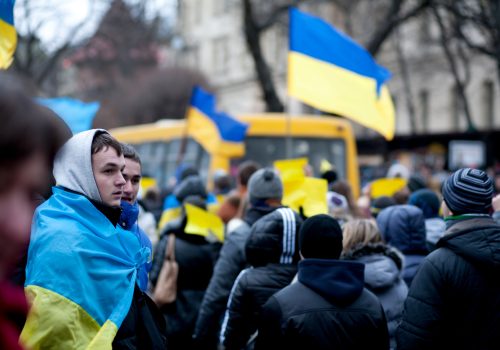
Ukraine needs more international support

By Hung Tran and Charles Dallara

As the war in Ukraine becomes severely protracted, the international community by advancing Ukraine’s proposed roadmap to end the war and clarifying its economic policies in response to Russian aggression.

Economy & Business
European Union

Econographics

Jul 13, 2022

Emerging markets need new engines of growth

By Niels Graham

External tailwinds such as trade, interest rates, and commodity prices propelled emerging market growth throughout the 2000s. However, as the global macroeconomic backdrop shifts these conditions are increasingly becoming headwind risks.

Economy & Business
Macroeconomics

EconoGraphics

Jun 30, 2022

Global Sanctions Dashboard: Russia default and China secondary sanctions

By Charles Lichfield, Maia Nikoladze and Castellum.AI

Russia’s default on sovereign debt; EU oil ban; China secondary sanctions threat; Middle Eastern illicit networks

China
East Asia

Diversity, Equity, and Inclusion

Jun 29, 2022

Trouble for Emerging Markets could spell trouble for all

By Jeff Goldstein

With emerging markets in a difficult position, they should be encouraged to use capital controls in some circumstances, develop more effective debt resolution programs, and acquire funds from advanced economies and international financial institutions.

Economy & Business
Financial Regulation

Econographics

Jun 17, 2022

Where do the “fence-sitters” sit on trade with Russia?

By Josh Lipsky, Sophia Busch

At least in terms of trade, seemingly neutral countries aren’t enabling Russia as much as their public positions might suggest.

China
Economy & Business

Econographics

Jun 17, 2022

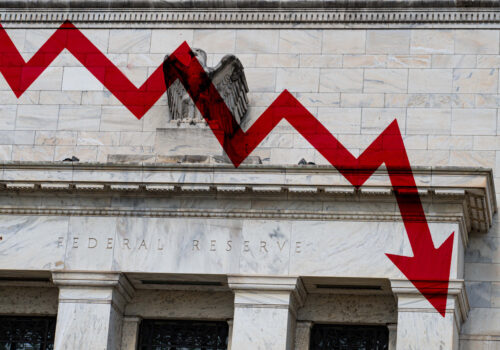
The Fed has regained the initiative, but at a cost

By Hung Tran

The Fed may well have been right in taking forceful actions now to fight inflation after failing to control it, but such actions add to the challenges experienced by economies around the world.

Economy & Business
Financial Regulation

Econographics

Jun 13, 2022

Quasi-state financial institutions and the Bretton Woods: A case for collaboration?

By Amin Mohseni-Cheraghlou

The emergence of new regional entities in global finance means the Bretton Woods Institutions are no longer the sole flag-bearers of economic development and financial stability.

Africa
Americas

Econographics

May 25, 2022

A new type of global recession

By Josh Lipsky

For the first time, it’s China’s pronounced slowdown which could be the single largest factor in creating a global recession.

Americas
China

Econographics

May 16, 2022

Trade facilitation and the Indo-Pacific Economic Framework

By Niels Graham

At the end of May, US President Joe Biden is expected to formally launch the Indo-Pacific Economic Framework (IPEF). The framework is the United States’ first attempt to create a large-scale, multilateral, Asia-focused economic strategy since 2017. For the framework to achieve broad participation, trade facilitation ought be a key component.

Economy & Business
Indo-Pacific

EconoGraphics

May 9, 2022

Deploying QT – The Fed readies its new tool to fight inflation

By Ole Moehr

June 1 onwards, the Fed will begin to reduce the size of its balance sheet, i.e., conduct quantitative tightening. But how does QT work, what are its goals, and are there potential risks of the policy?

Economy & Business
Europe & Eurasia

Content

EconoGraphics

Apr 21, 2015

Exit, or Voice?

By Global Business & Economics

In March, the UK, Germany, Italy, and France decided to join the China-led Asian Infrastructure Investment Bank (AIIB), shocking the Obama administration.

Brazil
China

EconoGraphics

Apr 14, 2015

Who is Investing Abroad?

By Global Business & Economics

While the US still leads the world in outflowing Foreign Direct Investment (FDI), the emerging markets are catching up quickly. Chinese outflowing FDI, in particular has grown tremendously: since 2005, it increased more than 30-fold in 8 years from $5 billion to $166 billion. While initial Chinese foreign investments focused on natural resource industries, over time the investments have spread to diverse industries like agriculture, manufacturing, and professional services. BRIC FDIs are emerging as key growth drivers for low income countries, improving their business environment, building infrastructure, creating jobs, and adding much-needed revenue to government coffers.
China
Russia

EconoGraphics

Apr 7, 2015

Is Europe still vulnerable to a Greek default?

By Global Business & Economics Program

Private banks throughout Europe have significantly reduced their exposure to Greek debt (bank, public, and non-bank private sector debt) over the last five years. After Greece came under market pressure and eventually obtained ECB and IMF financial assistance in 2010, most European banks started to rapidly reduce their exposure to Greece. For instance, between 2010 and 2014 French banks' holdings decreased from $63 billion to $2 billion.

Economy & Business
Eurozone

EconoGraphics

Mar 31, 2015

The IMF’s Changing Role in Europe

By Global Business & Economics

The International Monetary Fund's purpose and scope of work have changed since its founding after World War II. Whereas at first the Fund aimed to maintain monetary and exchange-rate stability among its members who were primarily advanced economies, today it faces its first credible challenge to its status as the world's lender of last resort.

Economy & Business
Financial Regulation

EconoGraphics

Mar 24, 2015

How Much Does it Cost for Cubans to Access Information?

By Global Business & Economics

When President Obama announced his landmark policy shift towards Cuba, easing the 54-year-old embargo, one of the first companies to announce they would begin operating in Cuba was Netflix. The online video company's decision was surprising, if only because Cuba's internet is one of the slowest in the world.

Americas
Cuba

EconoGraphics

Mar 17, 2015

Who Will Finance Public Debt?

By Global Business & Economics Program

Today, the cap on US government spending (or the "debt ceiling") is officially reinstated, and with it, the threat of another clash over the national debt. Policymakers will have a runway of just months before they must decide to lift the cap on borrowing or temporarily allow it to be raised

Brazil
China

EconoGraphics

Mar 11, 2015

The Benefits of a Strong Dollar: Where Should You Go on Your Next Vacation?

By Global Business & Economics

There’s never been a better time to be a tourist—as long as you’re paying in dollars. Major currencies worldwide have plunged in value, meaning each US dollar buys more euros and renminbi today than it did one year ago.

Americas
Economy & Business

EconoGraphics

Mar 3, 2015

Who Will Collapse First?

By Global Business & Economics

Both the Ukrainian and Russian economies are suffering from recent events. While weak domestic institutions and a fight with insurgents in the country's East plague Ukraine, sanctions and low prices for oil and gas are hurting the Russian economy.

Economy & Business
Europe & Eurasia

EconoGraphics

Feb 24, 2015

Is the US Still Leading in Global Trade?

By Global Business & Economics Program

In the last two decades, the Asia Pacific region has signed sixty-five free trade agreements. South America, Eurasia, and Europe combined have signed over one-hundred and fifty agreements. Over the same period, the US has signed twelve agreements.

Americas
East Asia

EconoGraphics

Feb 17, 2015

EconoGraphics – EU Energy Dependency

By Global Business & Economics Program

A great part of Europe is highly dependent on Russian energy, which helps to explain many of the concerns Europeans have over the developments in Ukraine.

Economy & Business
Energy & Environment