Why Trump’s newest tariffs are made to stick
JUST IN
Call it Tariffs-giving. Citing unfair trading practices, the Trump administration unveiled new tariffs this morning on more than a dozen trading partners, including China, Japan, India, and the European Union. The measures, targeted at excess manufacturing capacity, constitute one of the most significant US tariff actions since the Supreme Court in February struck down many of the administration’s tariffs based on the International Emergency Economic Powers Act (IEEPA). Below, our experts examine how the new duties could impact trade relations and whether there are more to come.
TODAY’S EXPERT REACTION BROUGHT TO YOU BY
- Josh Lipsky (@joshualipsky): Vice president and chair of international economics at the Atlantic Council and former International Monetary Fund advisor
- L. Daniel Mullaney: Nonresident senior fellow with the Europe Center and GeoEconomics Center, and former assistant US trade representative
- Madeline Chalecki: Assistant director at the GeoEconomics Center and lead on the center’s tariff work
The China factor
- There’s much talk about President Donald Trump rebuilding his “tariff wall” after the Supreme Court ruling, but Josh tells us that today’s complicated announcement, including many carve-outs for specific products, looks “much more like a tariff web—one meant to stick past this administration.”
- The announcement may not be as disruptive as it first appears, as Dan notes that the new tariffs replace “the overturned IEPPA tariffs up to the levels already agreed with many trading partners, including the EU.” They were communicated in advance and will not take effect until January following public input. In these respects, Dan says, “they are relatively ‘friendly.’”
- But the hammer comes down much harder on Beijing. When the new tariffs come into effect early next year, imports from China could face a 40 percent tariff if the current trade truce—which expires in January—lapses. That could take the two largest economies back to the trade wars of 2025. “That’s not what Trump wants,” Josh tells us, suggesting that the president is betting on an extension of the truce, even though it is “far from a sure thing.”
- For other trading partners, the administration appears to be using the tariffs to get more deals across the finish line. Madeline points to the higher rates threatened on Vietnam and Singapore, along with offers to lower them if agreements are reached. Meanwhile, Mexico was “notably spared,” with goods not covered by the United States–Mexico–Canada Agreement (USMCA) subject to just a 10 percent tariff.
The do-over
- In contrast with last year’s IEEPA-based, “Liberation Day” tariffs, which the Supreme Court struck down, the administration has been more methodical in its approach this time. Moreover, Josh explains, its “focus on China means congressional pushback may be muted,” since even Trump’s political foes would be hard-pressed to dispute that China engages in forced labor or unfair trade practices.
- “What’s ironic about today’s announcement is that if Trump had started here instead of the ‘Liberation Day’ tariffs of the world two years ago, he might have found a much more receptive audience for this trade policy,” Josh says. There was already agreement on addressing China’s trade practices and established legal authority to do so.
- The administration needs like-minded partners to address Chinese nonmarket excess capacity, Dan argues, and “punishing allies almost as much as China on excess capacity will not facilitate this cooperation.”
Sign up to receive rapid insight in your inbox from Atlantic Council experts on global events as they unfold.
The timing
- Josh points out that President Xi Jinping and Trump are planning to meet at the Group of Twenty (G20) summit in December, before the tariffs go into effect in January. That could make for a tense meeting.
- The timing is also notable in ongoing legal fights. These tariffs rely on Section 301 of the Trade Act of 1974, and the Court of International Trade is expected to decide soon on a challenge to previous Section 301 tariffs. This announcement shows an administration “comfortable with the 301 authority used in this way,” Dan says, and it likely does not expect the court decision to pose a problem.
- The timing matters for Mexico, too. Washington’s decision not to extend USMCA in July triggered annual reviews of the trade pact. Madeline says that the administration could use its outstanding excess capacity investigation into its southern neighbor to extract concessions without immediately escalating trade tensions: “The threat of additional tariffs may be a better negotiating chip than the duties themselves.”
- After today’s announcement, the administration does not have any major tariff investigations currently open. So does that mean tariffs will settle at these levels for the next two years? Says Josh: “I wouldn’t bet on it.”
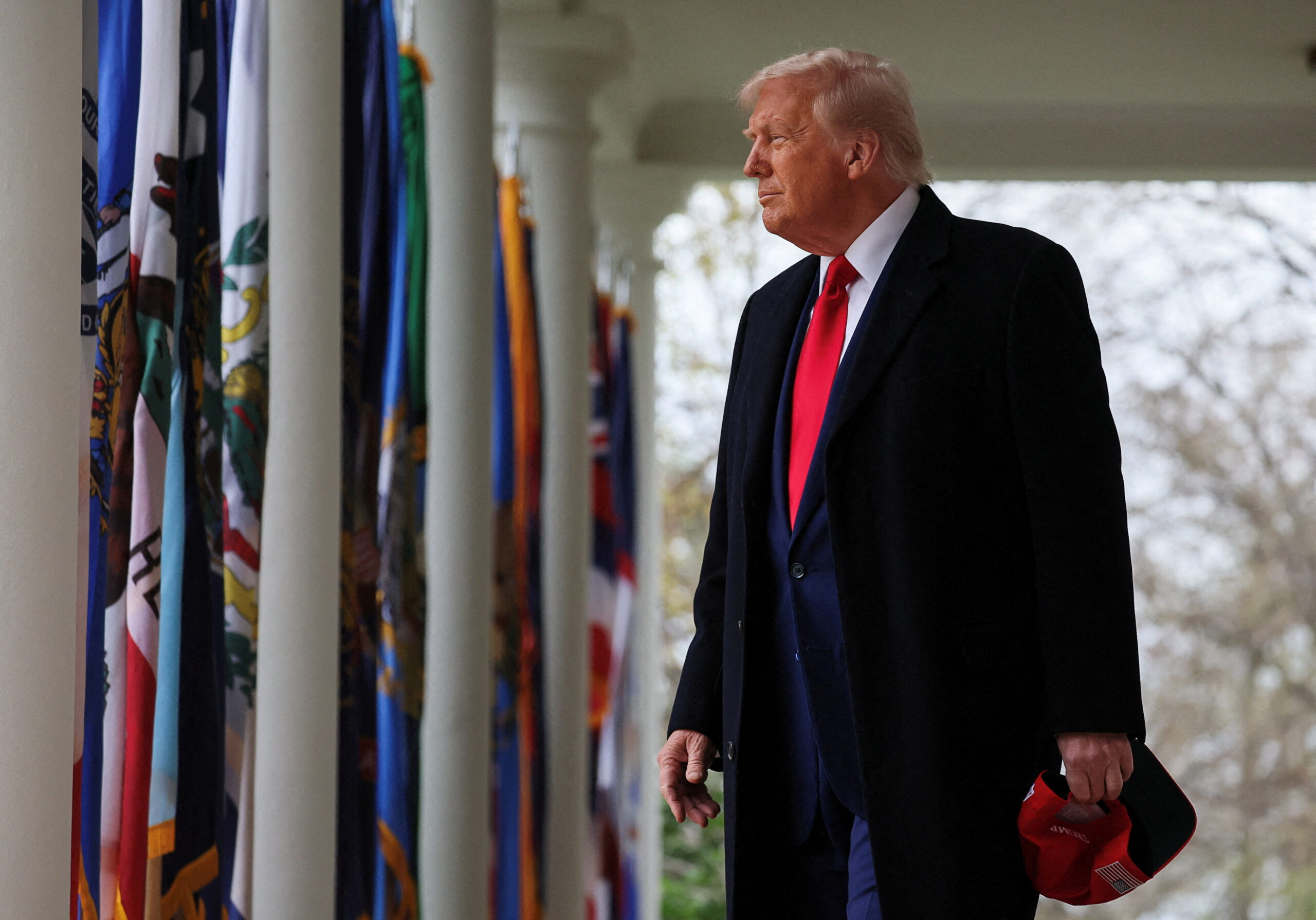
Image: US President Donald Trump walks to deliver remarks on tariffs in the Rose Garden at the White House on April 2, 2025. (REUTERS/Leah Millis)