Our programs and centers deliver in-depth, highly relevant issue briefs and reports that break new ground, shift opinions, and set agendas on public policy, with a focus on advancing debates by integrating foundational research and analysis with concrete policy solutions.
When major global news breaks, the Atlantic Council’s experts have you covered—delivering their sharpest rapid insight and forward-looking analysis direct to your inbox.
Reports from the front lines of global policy—by the experts shaping it.
A weekly column by Atlantic Council President and CEO Frederick Kempe, Inflection Points focuses on the global challenges facing the United States and how to best address them.
UkraineAlert is a comprehensive online publication that provides regular news and analysis on developments in Ukraine’s politics, economy, civil society, and culture. UkraineAlert sources analysis and commentary from a wide-array of thought-leaders, politicians, experts, and activists from Ukraine and the global community.
MENASource offers the latest news from across the Middle East, combined with commentary by contributors, interviews with emerging players, multi-media content, and independent analysis from fellows and staff.
Econographics provides an in-depth look at trends in the global economy utilizing state-of-the-art data visualization tools.
Translate this site
Translate the page or open accessibility tools from the same menu.
Choose a language for this page.
No matching languages found.
Current language: English
Adjust text size, contrast, link visibility, and motion from the same menu.
Accessibility tools are set to default.
MENASource
By Emily Milliken
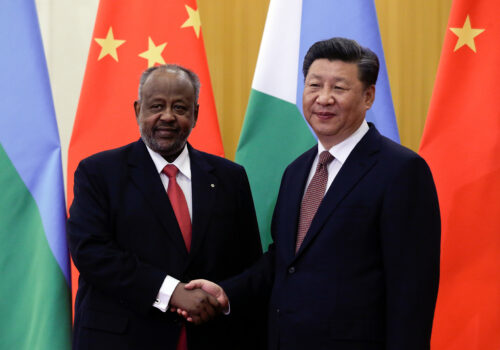
Washington could upgrade its Djibouti relationship and secure its foothold along some of the world’s most important waterways.
By Ibrahim Al-Assil
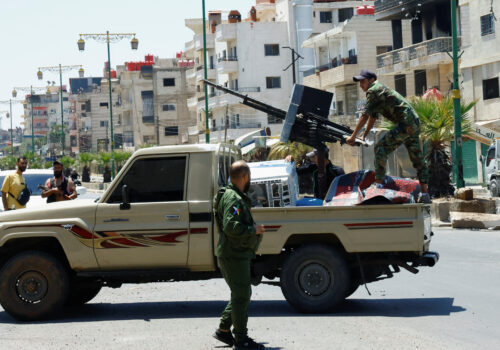
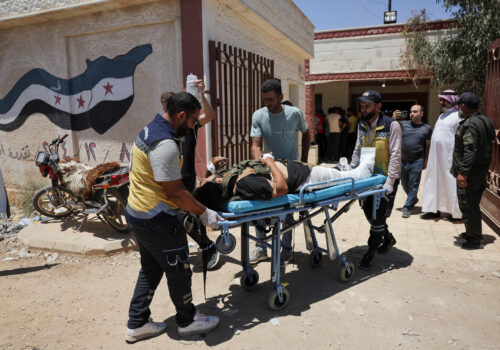
What comes next in Syria will not be determined by battlefield victories or summit declarations, but by the evolving realities on the ground.
By Arwa Damon
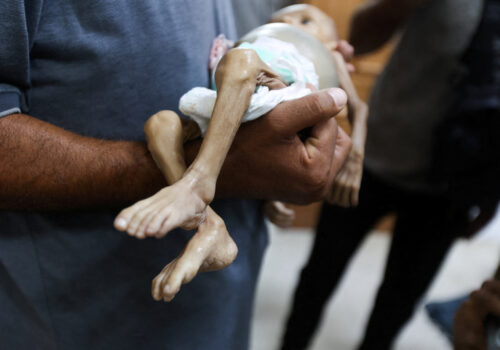
Israel has systematically denied aid entry into Gaza, and perpetuated false narratives intended to discredit the humanitarian community.
By Marie Forestier
To avoid the complete supremacy of HTS-supporting Sunnis, it is crucial to adopt power-sharing mechanisms ensuring inclusiveness
By Pari Ibrahim and Murad Ismael
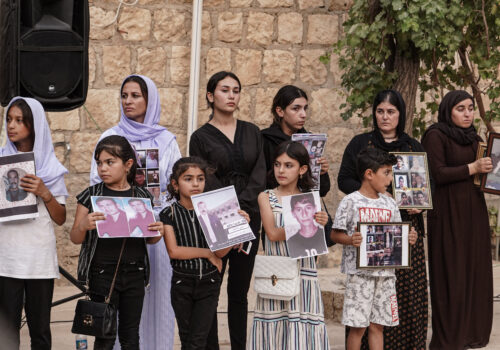
One consequence of the Middle East's shifting landscape has been an erosion of international attention on Yezidi issues.
By Fatima Abo Alasrar
Multiple powers now patrol with different mandates, different rules, and increasingly different interpretations of acceptable behavior.
By Majd AlGhatrif
US officials described the events as “a rivalry” between Syria's Druze and Bedouins. But this framing strips the crisis of its historical and political context.
By Hany Ghanem
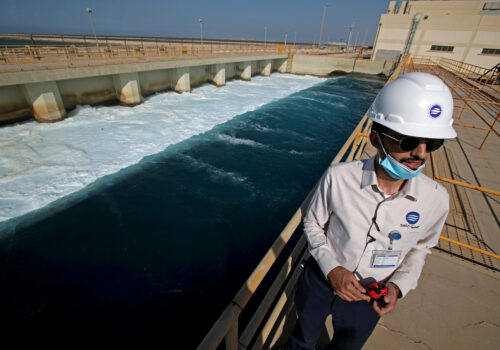
Desalination-enhanced regenerative data centers can help tackle the challenges of limited water resources and the post-oil economic shift.
By Joseph Epstein
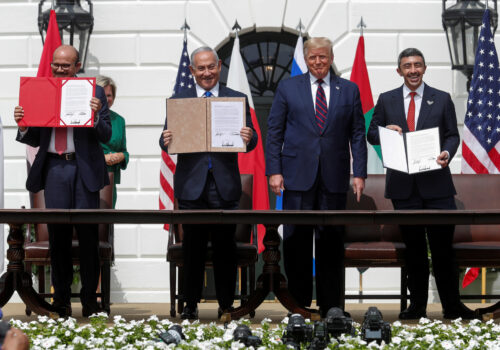
As the Trump administration pushes for “commerce, not chaos” in the region, the Abraham Accords ideology is the most powerful tool to achieve that goal.
By Sarah Zaaimi
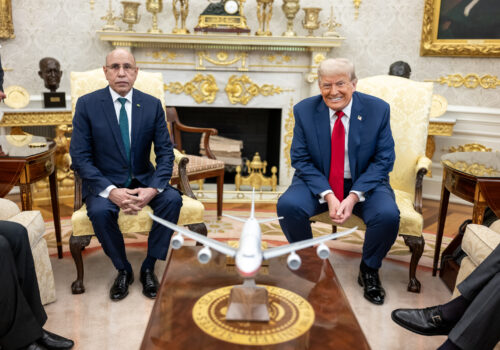
If Mauritania is nearing a deal with Israel, this could be the beginning of a wider re-engagement with Sahel countries.
Fellow
Nonresident Senior Fellow, North Africa Program
Rafik Hariri Center & Middle East programs
If refreshing the page doesn't resolve the issue you could try clearing the sites browser cache.