

WASHINGTON—Thirty years ago, Colombia was teetering on the brink of becoming a failed narco-state. Today, Colombia is a functioning democracy and a regional security partner of the United States. That outcome was not inevitable. It was the product of patience, institutional investment, and bipartisan support sustained over four US presidential administrations—two Republican, two Democratic—through Plan Colombia.
The United States’ commitment to Plan Colombia stands as one of the most successful and least heralded foreign policy achievements in American history. It is also precisely the model that the situation in Venezuela demands now.
It’s been nearly a hundred days since the January 3 US raid on Caracas that captured dictator Nicolás Maduro and left his vice president, Delcy Rodríguez, in charge. The danger now is that Washington treats a diplomatic and political breakthrough in Venezuela as an end state rather than the starting line for the hard, patient work of institutional rebuilding.
Between us, we bring more than four decades of direct engagement with this challenge, from the diplomatic and military perspectives. We have seen what works. We have seen what collapses. And we are writing this together because we are convinced that Venezuela represents both the most urgent and the most winnable strategic challenge in the Western Hemisphere today. But only if the United States acts with the same seriousness of purpose it once applied in Colombia.
What happened in Colombia
When the Clinton administration launched Plan Colombia in 1999, Colombia was as close to a failed state as any country in the Western Hemisphere. Roughly half of its national territory lacked a government security presence. The Revolutionary Armed Forces of Colombia (FARC) numbered an estimated 18,000 fighters and had encircled Bogotá, controlling a demilitarized zone the size of Switzerland. The country recorded nearly three thousand kidnappings and close to sixty homicides per 100,000 people in a single year. Decades of narco-violence had penetrated and corrupted virtually every institution—military, police, judiciary, and government alike. There was no recent institutional memory to recover, no professional security tradition to restore. Colombia had to be rebuilt from near nothing, and Washington still chose to make the commitment.
Plan Colombia involved massive investments to professionalize, train, and equip the Colombian security forces. But the plan succeeded because it was fundamentally balanced across all instruments of national power: diplomatic, informational, military, and economic. The security component was indispensable, but it was never the whole picture. What distinguished Plan Colombia from lesser efforts was that the Colombian military grew into a force of exceptional capability—and capability produced restraint. That transformation—from a force penetrated by narco-traffickers and guerrillas into one that could conduct precision operations under the rule of law—was as much a moral achievement as a military one. Alongside it came a rebuilt justice system, reformed prisons, and institutions that earned public trust. It restored confidence in the state’s ability to protect—not prey upon—its citizens, and it expanded that state’s presence into previously ungoverned spaces.
Venezuela today faces a similar moment. Maduro is gone, but his regime’s apparatus is not. The intelligence agencies, colectivos, and criminalized units that terrorized the population still exist, often with the same commanders and the same incentives. Armed groups such as the National Liberation Army (ELN) and other designated foreign terrorist organizations have entrenched themselves in key economic corridors—particularly in mining regions—taxing and terrorizing communities while siphoning off the very resources Venezuela needs to rebuild. In that environment, you can sign all the oil and mining contracts you like; investors will remain wary and ordinary citizens will not feel the benefits.
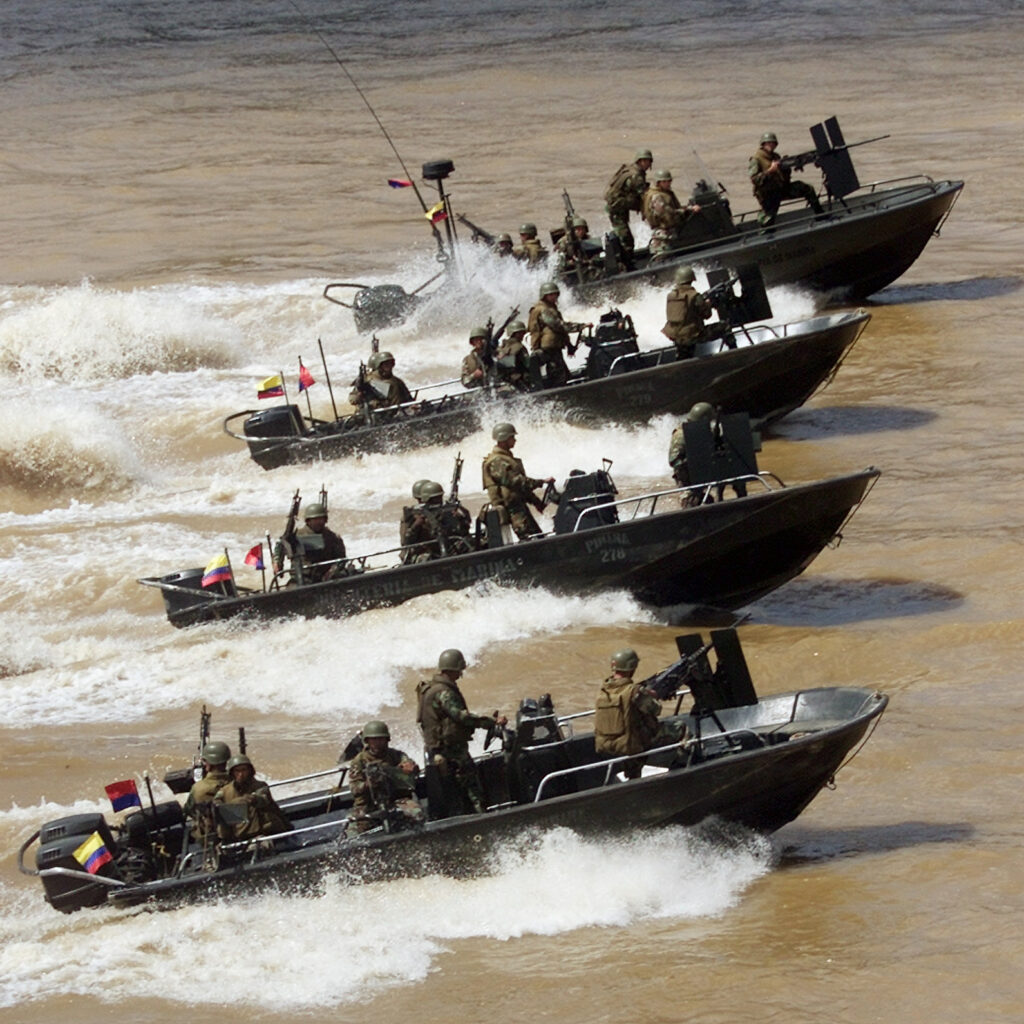
The core lesson from Colombia is simple: No democracy can be rebuilt on the ruins of discredited security and judicial institutions. Elections alone will not do it. Nor will macroeconomic stabilization. People need to believe that when they call the police, someone competent and incorruptible will come; that a judge will hear their case fairly; that prison is for criminals, not dissidents. Without that confidence, every political agreement is fragile, every reform reversible.
This is where Colombia becomes not just an example but an indispensable partner in the effort. Colombian police and military forces are uniquely positioned to help rebuild Venezuela’s security institutions because they walked this road themselves—and they did so with US support.
Plan Colombia professionalized a force that had not only lost on the battlefield but had been penetrated by those seeking to subvert the state. US trainers created vetted units, embedded internal-affairs mechanisms, and established a culture of operational planning and accountability. Plan Colombia built a justice system that could process complex organized-crime cases, with prosecutors who knew how to build dossiers; public defenders who ensured due process; and courts and prisons capable of handling high-profile defendants. It helped the Colombian military plan and execute precision operations against the FARC, ELN, and other illegal armed groups while gradually reducing abuses.
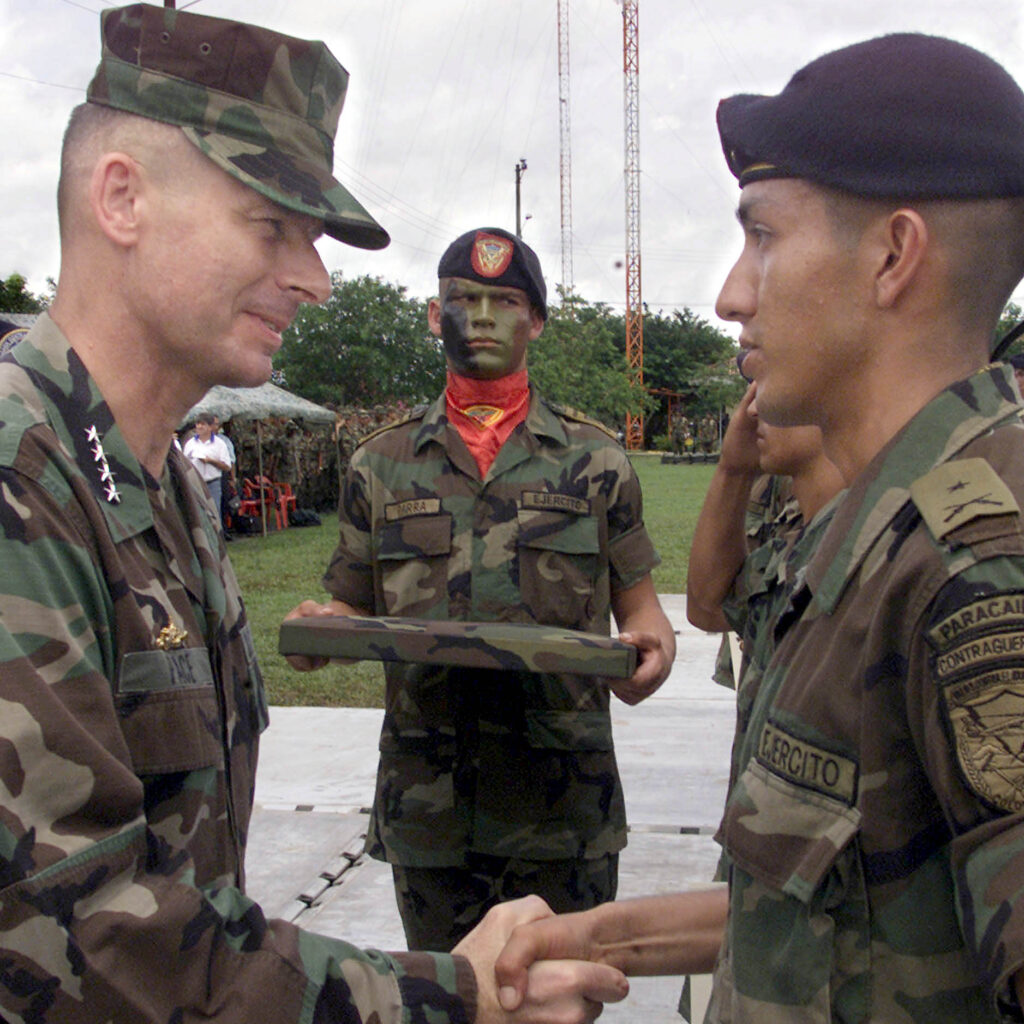
Colombian officers and noncommissioned officers who came up under that system are now senior leaders. They know the difference between a “war on drugs” slogan and the hard work of reform. They have dealt with demobilization, reintegration, territorial stabilization, and the politics of negotiating with armed groups without surrendering the state. And over the past decade, they have already exported that expertise—to Central America’s police academies, to Mexican security forces, to joint exercises across the region.
In Venezuela, that experience is precisely what is missing. The national police, intelligence services, and many military units were consciously built as tools of regime survival, not public security. Courts were politicized and starved. Prisons became recruitment centers for criminal organizations.
What a “Plan Venezuela” could look like
As recently as the 1990s, Venezuela was the United States’ cornerstone partner in South America. It was a functioning democracy with professional security forces, an independent judiciary, and a state apparatus that, while imperfect, operated within recognizable norms. That institutional memory has not been erased; it has been suppressed. Many of the people who served in those institutions, or who were educated in them, are still alive. The traditions exist. They require restoration, not invention.
Based on the Plan Colombia model, Washington should work with both Bogotá and Caracas on the following straightforward blueprint:
- A multiyear program to recruit, vet, and train a new generation of Venezuelan police, using Colombian doctrine and mentorship, coupled with robust internal-affairs and human-rights mechanisms;
- A justice reform initiative to rebuild courts, prosecutors’ offices, public defenders, and prisons together, so that cases move, rights are protected, and impunity declines; and
- A security-forces program that helps the Venezuelan armed forces identify, prioritize, and dismantle illegal armed groups and designated foreign terrorist organizations—especially in mining regions—under clear rules of engagement and civilian control.
The United States is not starting from zero on the institutional side. There are judicial training platforms in Puerto Rico and South Carolina designed to host Latin American judges, prosecutors, and police for intensive, Spanish-language training and exchanges, as well as the International Law Enforcement Academy in El Salvador. Those facilities can become hubs for teaching Venezuelan cohorts about case-building, financial investigations, human-rights standards, and the nuts and bolts of running courts and prisons that serve the law rather than the ruling party.
Still, Washington needs to put serious money behind this. Congress should make a decade-long commitment to the International Narcotics and Law Enforcement Affairs (INL) budget, which would shield it as much as possible from the mood swings in Washington. Under Plan Colombia, sustained funding over many years signaled to both Colombians and their enemies that the United States was not going to walk away after the first bad headline or the next election cycle. It gave reformers inside Colombia the confidence to take risks, and it convinced armed groups that they could not simply wait out Washington.
A Plan Venezuela will not be cheap, and it will not be quick. It will require Colombians to partner with the United States to take on a demanding, politically sensitive role inside a traumatized neighbor. It will require Venezuelan reformers to accept tough conditionality and intrusive oversight. It will require the United States to commit, up front, to at least a decade of steady institutional investment through INL and related accounts, regardless of which party controls Congress.
So what does that cost look like? The United States contributed nearly $10 billion to Plan Colombia between 2000 and 2016—roughly $540 million per year on average. In today’s dollars, that would be a total of $15-$16 billion. A comparable decade-long commitment to Venezuela would likely fall in the range of $15-20 billion, reflecting Venezuela’s larger population and the added complexity of rebuilding institutions that were deliberately destroyed rather than merely allowed to atrophy.
Critically, the United States would not be paying that tab alone—and a meaningful portion of seed capital already exists, waiting to be unlocked. The International Monetary Fund (IMF) is barring Venezuela from accessing its holdings of approximately $5.1 billion in special drawing rights until its government is recognized by a majority of IMF member states. Those are Venezuela’s own reserves, not new loans. With a recognized government in place, those funds could be released immediately for economic stabilization and institutional investment. Separately, the Bank of England holds approximately $4.8 billion in Venezuelan gold reserves that have been frozen since 2020 for the same reason. Those funds could be redirected toward Plan Venezuela the moment the recognition and governance conditions are met. That would reduce the net direct US commitment to between $5 billion and $10 billion over a decade, offering a compelling return on investment for the stability of a Western Hemisphere neighbor sitting atop the world’s largest proven oil reserves.
Why now
If the United States pretends that diplomatic normalization and oil deals are enough, it will wake up five years from now to a Venezuela where the same security services, the same armed groups, and the same corrupt networks still rule the streets—only now with fresh revenue streams. That is not stability; it is a more profitable authoritarianism.
Venezuela’s power brokers already appear to be gaming out the US midterm elections and quietly telling their own cadres that if they stall, if they concede tactically while keeping the repressive machine intact, then a possible future Democratic majority in Congress will hem in US President Donald Trump and dilute the pressure on Venezuela. In the power brokers’ minds, this is a contest of endurance, not of legitimacy. They firmly believe they can outlast the United States.
That is precisely why there is an urgent need for a Plan Venezuela. The more institutional victories that are won quickly—retrained police units, functioning courts, early successes against the ELN and other armed groups in key corridors—the harder it will be for any future administration in Caracas or Washington to unwind them.
There is a second strategic reason to act with urgency. Venezuela is not just another fragile state. It sits on some of the world’s largest oil reserves. Plus, the Orinoco Mining Arc contains confirmed deposits of gold, diamonds, coltan, nickel, and copper, the full extent of which has never been independently audited. These are the critical minerals of the twenty-first century economy—the building blocks of batteries, semiconductors, and defense systems.
If legitimate state institutions do not establish control over those resources, someone else will—ELN fronts, Russian or Iranian networks, transnational organized crime. That would undermine not only Venezuela’s recovery, but US energy and security interests for a generation. The strategic stakes for Plan Venezuela are not comparable to Plan Colombia. They are categorically higher.