Click to read the transcript
This transcript is AI-generated. Check against delivery.
Adrienne Arsht:
Good afternoon, everyone, and welcome to the Atlantic Council in New York. Brief, not on my script and probably not proper, but let’s call this—we’re starting on, as I said it, learned it in Miami, Cuban time.
And in fact, I learned that, when I lived in Miami, that if you were invited to an event, let’s say a wedding, the Anglos were invited for six o’clock and the Cubans were invited for five.
And maybe you got started at 6:30 and the thing to do was to ask the bride’s mother or abuela, what time will the bride walk? Because it was no relation to what was on the invitation.
So thank you. And I guess the real reason we’re running a little late is because the panel before this stayed on and asked lots of questions. So no fear here. We have extended our time at the other end. And the panelists have all agreed to stay around. So you will not get shortchanged.
I’m Adrienne Arsht, the executive vice chair of the Atlantic Council and founder of the Adrienne Arsht Latin America Center. Today’s conversation centers on a simple but important question: How can Latin America turn available capital into investments that create growth, jobs, and prosperity?
Across the region, new governments have an opportunity to establish the conditions investors seek: predictability, strong institutions, greater security and confidence that companies can invest for the long term.
The capital is there. The challenge and the opportunity is to attract it while ensuring that the United States plays a larger role in the region’s investment future.
At the Atlantic Council, in partnership with our friends at Coca-Cola Latin America, the Adrienne Arsht Latin America Center has been examining how to do just that.
The center’s latest report, “Mapping US Investment in Latin America and the Caribbean,” underscores an important point: The United States remains the region’s largest foreign investor, and US investment has a particularly strong record of creating jobs.
Peru is an essential part of this story and a country that has been personally meaningful to me since I first visited in 1963. My connection to Peru has only deepened since then, and last July I was profoundly honored to receive Peru’s Order of the Sun. Having witnessed Peru’s extraordinary promise across so many decades, I am especially hopeful about the opportunity before the country today.
After a decade of political turbulence, President Fujimori’s administration has an important chance to restore predictability, strengthen investor confidence, and build a new foundation for Peru’s economic future.
You can count on us at the Atlantic Council to help advance these opportunities. We are therefore honored that Minister of Economy and Finance Elmer Cuba is with us today.
He speaks on behalf of President Fujimori and delivering his first remarks abroad to an audience of foreign investors. Minister Cuba brings extensive experience in economic policy and public service, including as a board member of Peru’s Central Reserve Bank and as an advisor to leading international institutions.
I would also like to recognize two members of Peru’s delegation joining us today: Minister of Foreign Trade and Tourism Roger Martín Valencia Espinoza and Minister of the Environment Vladimiro Waroc.
Minister Cuba, we are eager to hear your visions for Cuba’s economic future and for this next chapter in its relationship with the United States.
Following the minister’s remarks, Jason Marczak, vice president and senior director of the Adrienne Arsht Latin America Center, will moderate a conversation on bringing US investment into Latin America’s growth agenda.
Minister Cuba, the floor is yours.
Elmer Cuba:
Thank you. Adrienne Arsht, executive vice president of the Atlantic Council, distinguished panelists and entrepreneurs, diplomats. It’s an honor to be here in New York, a city that for decades has represented the power and initiative of business and international relations.
As one of the major financial centers of the world, economic progress depends on trust and free exchange of ideas. Those same principles have inspired us over the last thirty years and are a priority for us. This is an important point in history. The international government—the international scene is changing.
The ministries are being redesigned. Artificial intelligence is changing our lives. Energy and food security are important components of national security, and all countries are looking for trustworthy partners at a time like this. Geography is important.
Trust matters, and alliances matter. The relationship between the US and Peru is based on that. Today, our issue in the hemisphere is not whether change will arrive—it’s here already. And the question is, will our continent be able to take advantage of that opportunity? Will we be able to create the infrastructure, the supply chain, the institutions necessary to compete in the twenty-first century? The government of President Fujimori is convinced that the answer is yes.
We have an important role to play. Our country has a special position in convergence in today’s world. Peru is one of the main producers of critical elements for the energy transition. It’s an emerging power that can contribute to food security, and it’s one of the most open economies in the world. We don’t have tariffs right now. And it’s committed to democracy, economic freedom, the rule of law. In a word, we are prepared to be a reliable partner where reliability has become one of the most important assets in the world.
Trust begins with solid building blocks. Peru is growing at 3.1 percent this year. In the midst of the worst El Niño phenomenon in the last thirty years, that’s remarkable. Before, it would have been zero or negative. And we continue to be one of the most dynamic economies of Latin America. This reflects decades of prudent economic management.
In a world lacking certainty, we offer stability with opportunity. I want to present the priorities of the Peruvian government and to explain how our two nations can work together to build a more prosperous and competitive hemisphere, because the future should not be defined by what we’ve done over the last couple of decades. It goes beyond commerce and it must be defined by what we can build together. This relationship is yet to be written.
Our relationship goes beyond trade. We have a common conviction in individual liberty, economic opportunities, and private initiative, along with the rule of law, which are fundamental pillars for prosperity.
We worked together for over decades to strengthen institutions, enlarge markets, and increase opportunities for our citizens. Today, Peru and the US are not just trade partners; we’re also strategic partners. And the opportunities are extraordinary. The economic relationships between our countries—one of the most successful alliances in the Western Hemisphere—the basis is our commercial agreement since 2009. Since then, Peruvian exports have increased over 100 percent. And today, this country is the second most important—the US’s second most important trading partner for Peru, not only in trade but how the Peruvian productive structure has changed.
Many of our exports are blueberries, asparagus, textiles. They’re not traditional projects which appeal to consumers throughout the US market. In 2025, blueberry exports were increased two billion dollars.
Ninety percent of Peruvian imports are intermediate inputs—improvements in productivity in our economy. Our trade relationships produces value for both parties, investment as a pillar for growth. That’s important for our bilateral relationship. US companies have contributed in mining, energy financing, manufacturing, logistics, and services. In 2025, foreign direct investment from the US was beyond four billion dollars, generating employment, knowledge, and enhanced the economic possibilities of our entire country. And we want more.
Our answer to response to investors is clear. We welcome investments. We respect contracts. We respect the rule of law. And we will continue to be one of the most attractive investment destinations in Latin America.
Today, economic security has become a central component in national security. The global evolution has shown how important it is to have resilient supply chains and reliable alliances. We’re an essential trade party for the future. We’re one of the main producers of critical elements. We have an extensive supply chain, and we are committed to international cooperation. This creates opportunities for greater cooperation between us in sectors that will define world competitiveness in the future.
The energy transition is generating unprecedented demand for critical minerals, copper for transmission networks and digital structure. Peru is one of the main world producers of copper and continues to have important strategic resources. We don’t just want to extract minerals but also strengthen value chains and increase the economic safety of the hemisphere.
What are the priorities of our government? Ladies and gentlemen, the priorities of the Fujimori administration have been defined by our 2025-2031 five-year plan.
This roadmap has clear objectives: reestablish safety, guarantee public policies that will guarantee and will result in clear benefits for the citizenry. Our society can achieve sustainable prosperity only if—if our people do not live under the menace of organized crime. If there’s no trust, there’s no investment, and without investment, there’s no sustainable growth.
Our second priority is increase the productivity and increase the formal sector’s role in the economy. We want to support small and medium-sized companies and increase opportunities for workers throughout Peru.
Increased growth means better jobs and better opportunities for all Peruvians. Legal certainty for investment—we want to increase legal certainty and the foreseeability of the rules of the game. Investors invest for the long run. They need trust in institutions and the rule of law. We are committed to macroeconomic stability and transparent public management. We want investors to know that Peru is open for business.
Infrastructure and connectivity: our fourth priority is to increase the infrastructure gaps and improve connectivity. We need efficient ports, airports, robust energy structure, and high-quality digital structures. On the Pacific Coast and our investments in infrastructure and ports and airports have made our country an entranceway to South America. The investments in infrastructure increase productivity, reduce logistics, and foment international trade. We welcome the participation of investments from the US in this area.
Climate resilience and preparation for the El Niño phenomenon: Another fundamental pillar is to increase Peruvians’ resilience in the face of natural disasters and climate change. We are a country that’s exposed to the El Niño effects. We understand that resilience is not just an environmental issue, it’s an economic, social, and national security priority. The general policy of the government from 2026 to 2031 reflects this vulnerability as a central axis for political action. That’s why our administration is prioritizing investments in infrastructure to control the flow of the rivers, drainage throughout the Peruvian territory.
We have low levels of public debt. Among the lowest in the emerging world, we have the necessary fiscal capacity to invest in resilience and to effectively respond to emergencies with countercyclical policies. And not every country in the region can say that. Resilience is becoming a competitive measure, and we want to be one of the most resilient countries in Latin America. Trade and international integration—we want to strengthen Peru’s integration in the world economy.
We continue to be committed to open markets, to promote exports, to promote international cooperation and a greater integration in international value chains. New opportunities for investment. Peru doesn’t offer only stability, it offers opportunities.
Our country has a portfolio of sixty-six mining projects with a value of more than $64 billion, the most important copper projects on the planet. Beyond mining, we offer extraordinary infrastructure opportunities. Between 2026 and 2030, we’re going to grant $34 billion in projects and private-public partnerships in transport, electric transmissions, health, sewage, and sanitation, billions of dollars in projects that have been launched over recent years.
And it’s an opportunity to strengthen economic integration, improve our competitiveness and create a more prosperous hemisphere. We’re ready for that association. Innovation and the digital economy—the future of prosperity depends on innovation and technology.
AI, cybersecurity, cloud computing are transforming the world economy. We want to increase our cooperation with the US in innovation, competitiveness, and technological development. The future belongs to countries that can create knowledge and transform knowledge into opportunities. That is our mission. That is our vision. That is our future view.
Our country offers extraordinary opportunities. We have fantastic resources. We have dynamic entrepreneurs. If we increase the cooperation between our countries and we invest in infrastructure, we will increase trade and cooperation, and we will create a future which is more prosperous. Peru is ready to contribute to that vision.
It seems like I’ve been going fast. Here’s my conclusion. Peru is a very well macroeconomically country. We’ve had—our inflation over the last twenty-five years is comparable to that of the US. Yes, and we have the same goals as the Fed. That’s why the dollar hasn’t changed in value over the twenty-five years. On the other hand, we have fiscal solvency.
A Peruvian can build his house with a 7 percent increase over decades. We share that with Chile and a few other countries in the region. Unfortunately, other countries cannot say that they have that stability for the building of their houses. And this is a reflection of the confidence in our fiscal confidence—solvency, not only in our central bank.
Let me conclude with a simple vision. The future of the relations between Peru and the United States should not be measured just by the volume of trade between our two countries, but also by our capacity to build together a more prosperous hemisphere that is more innovative and more resilient and safer.
We are prepared to be a trustworthy partner of the US with investment, with food security, and driving forward technological progress. We have responsible institutions. We have over one billion dollars in reserves. And one of the lowest debts in the region.
We are operating from a position of strength. The Peruvian economy is open to the world and we have a free economy. And the Constitution of our republic, we guarantee the capacity to hold foreign currency, and you can’t find that practically anywhere else on the continent. We have a promising economy. Thank you so much.
Jason Marczak:
Well, good afternoon, everyone, and again, welcome. I’m Jason Marczak, vice president and senior director here at the Atlantic Council, Adrienne Arsht Latin America Center. Mr. Cuba, thank you so much for those comments that really set the stage. Really excited for you to be able to do so and to do so as well on behalf of President Fujimori and your government. And Adrienne, thank you so much for setting the tone for today’s conversation.
You know, what I took from the minister’s remarks is his real sense of optimism: Optimism not just about the US-Peru relationship, but also optimism that the US moment of focus on—and the hemisphere right now can really translate into incredible opportunities for Peru, but for the broader hemisphere. And that’s what we’re going to talk about today as part of this panel. I’m joined by four incredible speakers. We can actually spend the rest of the afternoon talking here until 5:00 p.m., but I know other—because these speakers are so rich in their content, we won’t do that, but we could.
And I’ll introduce them more formally in a moment, but next to me is Minister Indiana Trejos. We’re also joined by Sergio Londoño. We’re joined by Susana Cordeiro, and José Antonio González Anaya. And I’ll introduce them all more formally in a moment. But let me also just start by thanking Coca-Cola Latin America, Sergio, for all of your support of our work on US investment in Latin America and the Caribbean. This is a partnership that we’ve had for a number of years, and it allows us to do this work seriously and also to be able to sustain it over time for the conversation that we’re going to have today.
As part of this, we launched a new report called “Mapping US Investment in Latin America” this past summer. You have a, just a little handout on your seats. I’ll tell you on the backside you can scan the QR code for everything. Pepe Toño is a co-author of this along with my colleague Martín. And what we did was we mapped more than two decades of US investment at the project level.
And the headline finding is that the the United States remains the largest foreign investor by a wide margin, that—but also that the US creates more jobs per dollar invested, but also that this is not a position that we can take for granted. It’s not necessarily self-sustaining. In fact, I’ll also share that I was in Buenos Aires last week. We had a roundtable in partnership with Coca-Cola at the US ambassador’s residence with the foreign minister and finance minister—Susana was in Argentina at the same time I was—and one point that drew significant attention is the fact that US investment creates double, double the amount of jobs as does Chinese investment per dollar created.
Here’s what I also find really revealing. The interesting question is not which countries attract the largest absolute volumes, but it’s also how much investment a country attracts relative to its own GDP. And we’ll talk with the minister about Costa Rica’s incredible success in doing so as part of this panel. So measured that way, policy choices like what we’ll talk about with Costa Rica, policy choices become visible. Some countries are significantly outperforming relative to their size, and they’re doing it because of decisions that governments are making.
So the question for this panel is really, it’s going to be a practical one. It’s what are the decisions and what does it take to make them stick? And really important to be having this conversation as world leaders are meeting here as part of the UN General Assembly because of the moment that we’re in and the incredible opportunities that I believe are on the horizon—are there right now across Latin America and the Caribbean. How do we really capture those with the right decisions?
So our four incredible speakers. Right next to me is Indiana Trejos Gallo. She is the minister of foreign trade of Costa Rica, a position that you’ve held since May, since being appointed by President Fernandez after serving since February 2023 as deputy minister of foreign trade and president of the National Trade Facilitation Committee.
The minister is a career trade expert. She sat at the table for some of the most important trade negotiations with partners including the US, European Union, China, Singapore, and was also instrumental in leading Costa Rica into the OECD. And we also found out in the green room that we also overlapped. We were at Tufts in the exact same years as well. But that’s a different conversation.
We’re also joined by Susana Cordeiro. She is the vice president for Latin America and the Caribbean at the World Bank since September of last year, just going on just over a year in your position. Susana, for anybody who hasn’t works with Susana, she is fantastic, doing absolutely incredible work at the World Bank. She manages the bank’s engagement across thirty-one countries, a portfolio of over forty billion dollars in ongoing operations, with a focus—really focusing on job-driven development and stronger public-private collaboration that she seeks to continuously advance.
Sergio Londoño, senior vice president of public affairs, communications, sustainability at Coca-Cola Latin America. This is a company that all of you know has been investing heavily in the—in our region for more than one hundred years. And so great to be able to partner with Sergio as part of that. He is also importantly a member of the Advisory Council for the Adrienne Arsht Latin America Center. So Sergio, again, thanks to you and to Coca-Cola.
And then finally rounded out by José Antonio González Anaya, otherwise known as Pepe Toño among all of his friends. He is the former minister of finance of Mexico and also has held a number of positions, head of Pemex, but also importantly for this conversation, a member of the Advisory Council of the Adrienne Arsht Latin America Center, and as I mentioned, the co-author of the report we’re discussing today. So he knows this data better than anyone else in this room. Any data questions, I’m going to refer them to Pepe Toño as part of this, as part of this conversation.
But with that, let me go ahead and start with you, Sergio. So you represent a US company that’s frankly an icon. And a company that’s been investing in the region, as I mentioned, for over one hundred years.
You know, as you know, the region goes, has been through a number of cycles over the decades. Companies that kept building have been doing that with a perspective the—that you—of this long-term need for growth and opportunity. And what sustains some of this long-term commitment is worth also understanding and what governments can do to facilitate this type of long-term commitment.
What has kept Coke Latin America confident in the region in the long run? And also, how can regional governments act to make that case even stronger going forward? And this important message for those—all of those in the room and those over flowing in the back, but also all of our audience on ACTV.
Sergio Londoño:
Thank you, Jason, and thanks to the Atlantic Council and the Adrienne Arsht Center for the invitation. It’s really amazing to have a partnership with such an important institution. And at Coke, we value precisely that, partnerships. And I think it’s a perfect segue for your question. Coca-Cola has been a part of Latin America for the past 120 years. We started in Panama 120 years ago. And then we moved on to Mexico. This year we’re celebrating one hundred years in Mexico.
And the next country on the line to celebrate the one hundredth year is Colombia. So we’ve been really a part of the region for the past decades. And we’re really proud of that. And I think the word partnerships is key in making that a success story. We are a global company. However, we go deeply local when we invest in countries. And we go so local that we join hands with communities as we, as we go in the markets.
And for Coca-Cola, that means that for these 120 years, we are now 1.7 percent of the region’s GDP. We are creating almost three million jobs.
And also we have very important numbers in relation to the goods that we purchase from local producers, almost sixteen billion dollars a year. And that is true for every country in the region, the thirty-nine markets. But I’m particularly proud today because we have two exceptional hosts of Coca-Cola’s investment in the region, which are Peru and Costa Rica. I was talking with Minister Trejos, and we have our largest concentrate facility in Costa Rica, Coke’s largest concentrate facility in the region in Costa Rica, because of that stability of investment and the way that the Costa Rican government has for the past years inspired us into economic security and stability, but also legal security and stability.
And in Peru, we just announced with President Fujimori a one-billion-dollar investment for the next four years. So it’s all about the trust that we have in the region, in the countries, and in the markets where we operate. And we want to continue being a long-term partner for Latin America.
Jason Marczak:
Fantastic, Sergio. And I think you’ve helped to cue up my question to the minister. And minister, I think as I mentioned earlier, you know, you, Costa Rica, and again, congratulations to you a few months into the position. Costa Rica is really one of the success stories for US investment in the hemisphere. And we saw that again through the report that we recently put out. In the last ten years, it Costa Rica attracted US greenfield investment equivalent to about 0.99 percent of GDP annually, which is actually the highest in the region. It’s also more than double the regional average of 0.48 percent.
A lot of sectors that allow you to be able to do some. And what this record also suggests is that outcome is a function of policy, not just economic size. And that’s my question for you. What are some of the decisions that got Costa—has gotten Costa Rica to this point? And what are some of those decisions that you think are most replicable, especially if you’re talking to a counterpart from another country and they’re looking at from a similar-sized country and the economy and say, where do you start and what would you prioritize for us?
What pays off the fastest to be able to attract investment? What’s your answer to that?
Indiana Trejos:
Okay. Thank you, Jason. Good afternoon, everyone. I want to begin by thanking the Atlantic Council for the invitation, and thank you for joining us. I’m sure we’re competing with several other events this afternoon in the city.
I must say that Costa Rica is a success story in terms of attracting foreign direct investment, and the reason behind it is not due to a single policy. Been consistent policies regarding several aspects. I would have to say that number one, it has been stability, as it was mentioned before.
Costa Rica is the longest-standing democracy in Latin America, and the respect for the rule of law. And we know that predictability and stability are very important today.
Because we take that so seriously, a few years back we decided that it was important for Costa Rica to become a member of the Organization for Economic Cooperation and Development, the OECD. So it was a process that took us a few years, but we’ve been OECD members for the past six years, and it has to do with our aim to conduct public policy that’s done taking into consideration data and facts and driven decisions.
Of course, the second policy decision that has been very important has been trade openness. We have pursued trade openness for the past last thirty years, and it has contributed to our transformation, economic transformation. Today, Costa Rica, of course, also exports bananas and pineapples, but our main export product to the world are medical devices. Forty-eight percent of what we export to the world are advanced—is in advanced manufacturing in the medtech industry and services. Our services sector today is as important as the export of goods.
And we’re involved in sophisticated services, including—well, we’re doing research and development, cybersecurity, data analysis. And that brings me to the third most important policy decision. It has to do with education. We have for many decades invested in our people.
And through our education system, technical schools, public and private universities, we’ve been delivering the talent that industry requires. And so that’s why we see an increase in terms of FDI, as you well mentioned.
Last year, we brought close to $5.2 billion, which was the same as the previous year. And this year, we will reach close to $8 billion, which may seem not that big, but relative to our economic sizes, it’s very big.
And so, during 2023 and 2025, we managed to have 175 new companies invest in our country and 500 reinvestments in Costa Rica. So we’re not only good at bringing companies, but once they get to know Costa Rica, they reinvest in our country, not once, but twice and repeatedly. And going back to the last question, that what would be my recommendation to other countries and why I think that people decide to come companies decide to invest, reinvest in Costa Rica, it’s because we have a very close communication, government and private sector.
We’re constantly talking to you, understanding what are your needs, what needs to be improved, and how we need to move forward in order for you to continue trusting Costa Rica and seeing us as a partner for the mid and long term.
Jason Marczak:
That’s fantastic, Minister. Stability, rule of law, trade openness, education, the importance of services, critical. And that dialogue, that constant public-private dialogue, something that we do so much at the, at the Atlantic Council. So thank you for that. Susana, the World Bank projects the region growing just a little over 2 percent this year, but also sees investment as a—there’s also investment as a potential weak link there.
Your own framing is the region has the assets, it has the reform capacity to achieve much, much more, and that the central ambition should also be to create quality jobs and quality jobs that power growth and also lift productivity.
How do you see the World Bank helping countries in the region position themselves further to attract US investment, which you talked about is so fundamental? And, and also maybe when you talk to finance ministers, which you do very frequently, what do you hear is the real—is a real constraint in attracting that investment?
Susana Cordeiro Guerra:
Thanks, Jason. But thank you to the Atlantic Council and to Adrienne for the opportunity to be here today in this very interesting panel. And thrilled to be here with the fellow panelists as well.
So I think that we—first, a note on the growth number, because there’s so much that is said about that 2 percent growth.
And particularly where we are in Latin America, I think there’s a lot of heterogeneity in the region that sometimes is overlooked when we look at this very low growth number. That should not be the ambition at all in the region. And you see that the reformers are actually really excelling in terms of getting the fundamentals right and having the stability and the consistency that the minister just mentioned has been really critical for those reformers. And you see that, for example, in the Dominican Republic and Panama that have had like very strong growth rates over the past decade and you see that now with Argentina, very important reforms underway that are yielding results.
El Salvador is following the same kind of reform agenda. So I think it’s just interesting to point at this heterogeneity because it has much to do with the way in which multilaterals approach, and in particular the bank, approach our portfolio in the sense of trying more and more to reward the reformers.
We want to be able to, through our policy and regulatory work, to double down on those contexts where we see this consistency and this commitment to reform. And that’s what I hear from finance ministers in the sense that there are three areas that the bank can add more value, I’d say.
And this really resonates with these conversations. And one is in the regulatory environment and the business—enabling business environment. And it was touched upon already here, but it boils down to the predictability of rules and contracts. I think global investors really want to look at the region and see that a contract that is signed one day is respected despite the result of elections. That is the real issue in the region. But I think not much has been said about that. And I wanted to add a point, which is oftentimes it’s not a binary condition, right? It’s not a binary context. But perhaps the road to this predictability may require incentive regimes or a like a different set of circumstances that will attract more investment.
And I think here, Argentina is doing a very interesting case with the RIGI, with the Investment Incentive Regime, which provides that kind of predictability for investors and is yielding very interesting projects. Because what I see happening in the region is we all know opportunities are there. The assets are extremely appealing. They’re exactly what the US investors are looking for. The challenge is that the opportunities are thick, but the pipeline is thin, the pipeline of bankable projects.
And here is where the bank can add value, both in terms of its regulatory and policy work, that’s one, but also two, in terms of helping the feasibility studies, the permitting arrangements, the infrastructure necessary to turn really these opportunities into bankable projects. And I think the third area, and we’re trying more and more and excelling that as a one World Bank group, both with the public and private side, is to really de-risk these investments.
And both through our MIGA, IFC, and World Bank guarantees, Find ways in which every public investment dollar yields a greater amount of private sector investment. That should be our measure of success, whether we are effectively crowding in the private sector through our public sector investment. So I think these three areas really land us in a place where it resonates with the counterparts and really also attract the kind of investment that will not only yield physical capital but will really transform into better and more quality jobs and productivity for domestic firms.
Jason Marczak:
That’s excellent. I think that really dovetails with all the research, the work that we’ve done at the Atlantic Council over the years as well. Predictability, regulatory environment, but also consistently, especially like, especially in the Caribbean, the importance of bankable projects, the importance of that pipeline, because much more difficult to be able to have the feasibility studies that go into that, the technical skills, which requires money to be able to build out those pipelines where the World Bank comes in so important.
Pepe Toño, so you are—I’m going to ask you all the hard questions about the report since you’re the co-author. But the report, when you looked at all the data across the report, when you look at the data more generally, What does it tell us about which policy choices actually do in fact move US capital? We’ve been getting it. And what are, what are you also seeing insofar as the trends more broadly in US investment and how that looks to be flowing again, especially at this critical moment where the US is hyperfocused on the importance of the region?
Jose Antonio Gonzalez Anaya:
Well, thank you. I also want to thank the Atlantic Council for the invitation. It’s an honor to be with all these panelists. And I think, Jason, what, you know, the minister’s words and then everybody who has participated is that this sounds easy, but it’s actually very difficult. You know, oh, stability, Costa Rica has been the longest-running democracy, sure, it’s easy to have a long-running democracy. You have to have stable macro. Sure, that’s easy.
All of these things are very, very, very difficult things to do. And I think what comes out of it, even though it sounds like, oh, let’s try to have an investment and promote, you have to do a lot of things. There’s not a single thing that you can do for your country to try to—there’s not a magic or a silver bullet to get this going.
And everybody has said it in a slightly different way. And I think we see that in the data. There’s no doubt the United States is the largest investor and that’s very clear. There’s no doubt that it is—it has the biggest breadth among sectors in all—almost all of the sector.
There is no doubt that it promotes the biggest amount of growth in jobs. There is no doubt that it promotes the biggest amount of R&D.
But the report also finds an equally contrasting remark. China is catching up awfully quick, very, very fast. And it’s doing it in a slightly different way than the United States. The United States focused mainly on manufacturing, now on energy, and, slowly but surely, digital.
China is doing it in parts that there was a critical gap for the United States, which is mining. And mining is not as sexy as everything else. But now it’s becoming important because of all the digital—for all the digital needs that come from rare earths. So that’s a notable gap. Manufacturing seems to be peaking.
It’s not growing as fast. So that’s a challenge for the rest of us. And I think one of the interesting questions that comes out, and to add one ingredient that was not mentioned, and I’ll give you an anecdote from Mexico, which is bureaucracies are bad for investment. And they’re bad for domestic and for foreign investment. In 1990, getting a permit for foreign direct investment in Mexico took a very long time. And the minister of the economy at that point said, well, you know, when companies are going to invest like Coca-Cola, they look at five different countries and we’re getting about a third, so that’s not bad.
So then we did a little—we looked a little more and we found out that the good countries, the ones Susana called reformers, they have a one-stop shop. You go, you get all your permits, you get it done, and you have a time limit. So the time limit limit for Korea and Thailand was six weeks. So Mexico said a month, end of story.
I don’t need to tell you, in those days, foreign direct investment doubled within a year and quadrupled within six years. So is that easy? No, it’s not easy. But that’s the way to bring these things home.
Jason Marczak:
Thanks, Pepe Toño. Now we’re compressed for time. If there’s a question from the audience, raise your hand and we’ll come around with a microphone. We’ll take one question. We’ll bring that into my final round. I know we’re going to go just a few minutes over. And we’ll do a lightning then final round of maybe a minute per response from the question.
And I think we’ll go to Mike McKinley here. We’ll bring a mic over to him. And just state your name and then just—and then the question. I’ll bring it to my last round.
Michael McKinley:
Well, thank you very much and terrific presentation in the short time. And Michael McKinley, former American ambassador to Peru, Colombia, Brazil, and the region.
And I just wanted to ask a question. You know, FDI flows globally, except for last year, have been slowing or rather stagnant. And among the top emerging markets, places like Brazil and Mexico have actually done quite well compared to other countries. And then there’s the issue of a lot of the FDI redirecting itself because of the focus on critical technologies and minerals back to the United States or to more mature economies.
I was really intrigued by what the minister said about Costa Rica’s experience on this. Costa Costa Rica has sort of headed into the new technologies, the new industries going forward. Do the panelists, any of you think there’s some, you know, the macroeconomic framework is there, but is there something that can provide more of an inducement or a sense of certainty? So that the changing dynamic on investments in critical minerals, data centers, and so on can take off in places like Argentina, Peru, Colombia.
Jason Marczak:
Thank you so much for that question. So how did the investment certainty—how do you do that over the longer term? And maybe I want to bring that into my last lightning round, maybe a quick response from each of the panels. We’ll start with you, minister. That question was directed at you. How are you seeking to bring about that investment certainty, especially as you’re looking to move up the value chain as well?
Indiana Trejos:
Yes, of course. Predictability, as you well mentioned, is essential. So we do value having eighteen free trade agreements in place. We have two more coming up, one with Israel, and where I’m supposed to sign the accession protocol to the Trans-Pacific Partnership Agreement, to CPTPP, in November in Vietnam. So we continue to expand our partnership with the Asia-Pacific region and just offering more preferential opportunities for the companies operating in Costa Rica that can reach to the world. In the sophistication that we’re seeking, we see medtech will continue to grow in Costa Rica. The level of sophistication that we have achieved, with more than one hundred multinational companies doing advanced manufacturing in medtech has taken us to technology transfer, to more and more companies doing investment in research and design in Costa Rica. And this specialization is bringing more companies in, in this sector, also in advanced electronics that go into aerospace as well.
But for all of that, we have to continue investing in our people. So talent, stability.
Jason Marczak:
Education, absolutely.
Indiana Trejos:
Education is the number one value proposition for Costa Rica, and that’s why the companies continue to reinvest in our country, and that’s why we take it so seriously.
Jason Marczak:
I’ve been told that we have to wrap up here. I want to give Sergio from Coke a last opportunity to share any final thoughts from Coca-Cola as you’ve been hearing this conversation.
Sergio Londoño:
Well, I think that if we want to continue for the next 120 years, there are things that, for example, Argentina is doing, ambassador, with the agreements that Susana was mentioning that are really important because it gives you a runway for the next ten, fifteen, twenty years in predictability and in rule of law that are absolutely critical. And also, one thing that I would say is not taking for granted the investment. What the minister was saying about reinvestment is as important as the new investments that come in.
That sort of scenario that we value and that we’re a part of for the past decades is really important. Being able to reinvest in the territories and not taking companies for granted is really important. And also, one of the things that make me really proud of working at Coca-Cola is that we not only establish relationships with governments, but with communities. And when we establish ourselves in Mexico, in Brazil, in Argentina, in Colombia, we look at things like water access in public schools, for example. And that allows us to bridge a gap and to understand how partnerships mobilize society.
So it’s not only investing in talent, but also investing in the communities where we operate. That, that’s a key differentiator from investments from other parts of the globe.
Jason Marczak:
Well, wonderful. I know we could continue this conversation, and there’s a lot more to hear from all four of our panelists. I thank you so much for being here and spending the time with us. as well as Minister Cuba and Adrienne for opening today’s conversation. And stay tuned for more “Mapping US Investment in Latin America and the Caribbean.” It’s available on our website. Go there, read the full report, and stay tuned for more work from the center. So thank you all for being here today.
On Tuesday, September 22, at 2:00 p.m. ET, the Atlantic Council’s Adrienne Arsht Latin America Center hosted a virtual conversation with government officials from Latin America and the Caribbean and US investors in the region.
As the US government looks at the Western Hemisphere as an investment priority, the discussion examined the policy choices that determine how the region can attract US capital to achieve its development goals: from macroeconomic credibility to credit fundamentals to regulatory reform.
This event continues the center’s work on expanding US investment in the hemisphere following the launch of its new report “Mapping US investment in Latin America and the Caribbean.”
This event is part of our #ACinNY series, happening on the sidelines of the United Nations General Assembly. See the rest of the line-up and register for more events here.

Welcome remarks
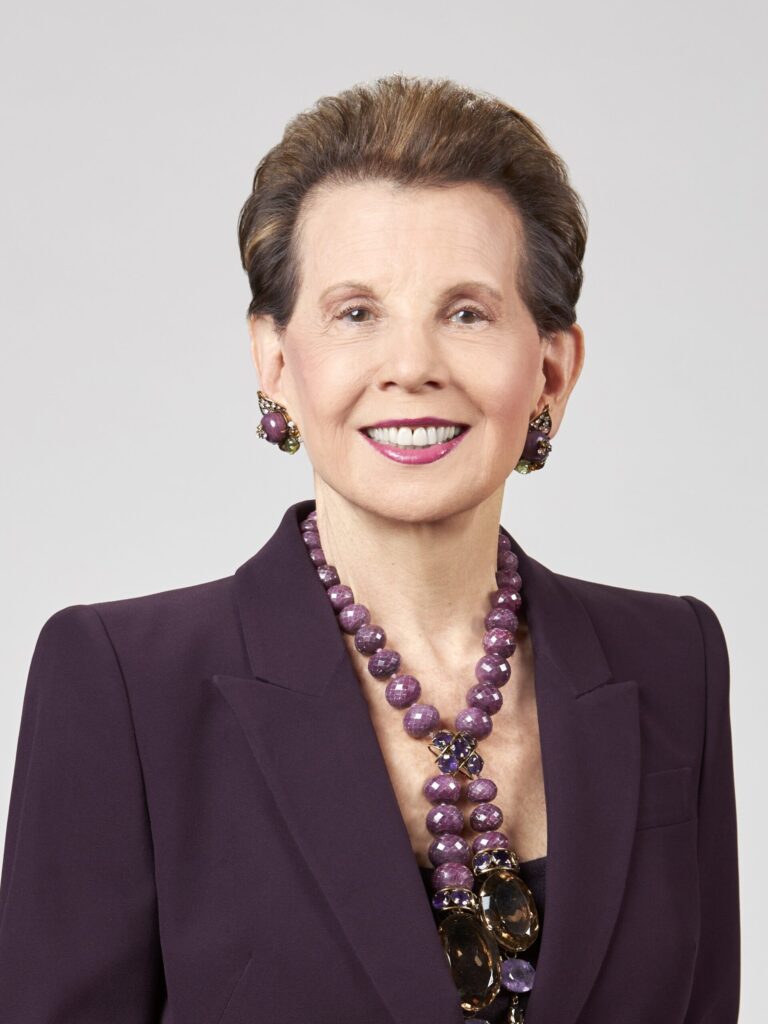
Adrienne Arsht
Executive Vice Chair and Founder, Adrienne Arsht Latin America Center; Adrienne Arsht National Security Resilience Initiative, Scowcroft Center for Strategy and Security,
Atlantic Council
Speakers

H.E. Elmer Cuba
Minister of Economy and Finance,
Republic of Peru

H.E. Indiana Trejos Gallo
Minister of Foreign Trade,
Republic of Costa Rica

Susana Cordeiro Guerra
Vice President, Latin America and the Caribbean,
World Bank
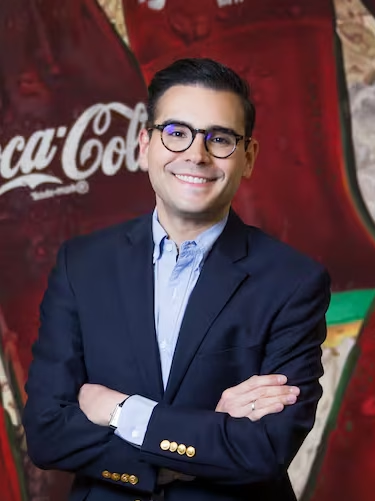
Sergio Londoño
Senior Vice President of Public Affairs,
Communications and Sustainability,
Coca-Cola Latin America;
Member, Adrienne Arsht Latin America Center Advisory Council,
Atlantic Council

José Antonio González Anaya
Former Minister of Finance,
United Mexican States;
Member, Adrienne Arsht Latin America Center Advisory Council,
Atlantic Council
Moderated by
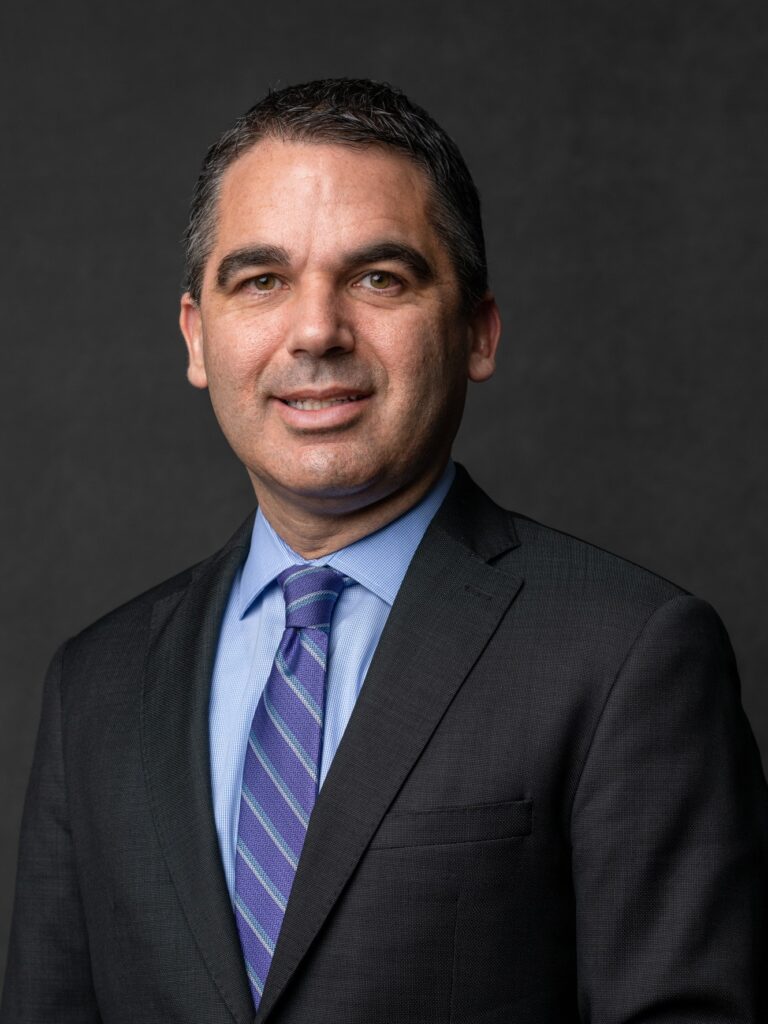
Jason Marczak
Vice President and Senior Director,
Adrienne Arsht Latin America Center,
Atlantic Council
Stay connected
Supported by
Coca-Cola Latin America is a supporter of the Adrienne Arsht Latin America Center.
Explore the program
The Adrienne Arsht Latin America Center broadens understanding of regional transformations and delivers constructive, results-oriented solutions to inform how the public and private sectors can advance hemispheric prosperity.
Atlantic Council TV
Watch this event and more content on ACTV
Follow the conversations shaping our world. Available on all major platforms.
Follow the conversation on X with @ACLatAm using #ACLatAm