On Thursday, May 14 at 8:30 a.m. ET, the Atlantic Council hosted Ecuadorian President Daniel Noboa for an Atlantic Council Front Page conversation on Ecuador’s security priorities, the role of the United States in achieving them, and how countries in the hemisphere can work together to address shared challenges.
Ecuador is on the front lines in the fight against transnational crime, and it has led coordinated security operations to tackle the issue. Those operations also include joint efforts with the United States against narco-terrorist organizations, as Washington places a greater focus on security cooperation in Latin America and the Caribbean.
Transcript
Expand to read
Adrienne Arsht:
Good morning, everyone, and welcome to this Atlantic Council Front Page event. I’m Adrienne Arsht, executive vice chair of the Atlantic Council and founder of the Adrienne Arsht Latin America Center. We normally try to begin events after 9:00, but when we have the opportunity to host a president of an allied country, we are happy to make an exception, and we invite you all to have breakfast later.
President Noboa, thank you for joining us this morning. It’s a genuine honor to welcome you to the Atlantic Council, and congratulations on your well-deserved recognition from the Hispanic Leadership Institute. Today’s conversation comes at a critical moment for Ecuador, for the region, and, frankly, for all of us watching from the hemisphere. For well over a decade, long before you took office in November 2023, Ecuador began facing a deepening security crisis.
Your country, once regarded as an island of stability and one of the more peaceful nations of South America, is now confronting the expanding reach of transnational organized crime, narcotrafficking, prison violence, and extortion. Reversing that trend is not only one of your top priorities; it is also a defining challenge for your presidency and your legacy.
Organized crime is not just a local problem. It’s a challenge that demands a regional and hemispheric response. The world was reminded of that with stark clarity when armed individuals stormed a live television broadcast in Guayaquil two years ago: Not just shocking for Ecuador, but sending a warning, a warning shock waves across every country of the Americas.
Since taking office, President Noboa, you have made restoring public security one of the defining priorities of your administration. Ecuador has strengthened cooperation with the United States to combat illicit networks, improve intelligence sharing, and deepen security coordination. You have also played an active role in advancing regional dialogue on these critical issues, including through participation in the Shield of the Americas Summit.
The message has been unambiguous. No country can confront these threats alone. At the Atlantic Council, we continue to work closely with your government, hosting several of your ministers here in Washington, writing about the country’s trajectory, and last year, the Latin America Center traveled to Quito to help advance the US-Ecuador trade relationship. This is a partnership we take seriously and one we are committed to deepening.
I have also been personally committed to this special relationship since the day I founded the center, which is why I was deeply honored to receive Ecuador’s National Order Honorato Vasquez, which is the special here, and I’m basically dressed in the colors of your country. I’ve got yellow shoes, blue suit, and red glasses.
And so, Mr. President, please consider your home and my home, your home in Washington. We’re eager to hear about your vision for Ecuador’s future and for the future of security cooperation across the Americas with that, it is my pleasure to pass the floor to Courtney Kube, national security correspondent at NBC, to moderate today’s conversation.
Courtney Kube:
Thank you so much, Adrienne. And Adrienne just laid out two of the reasons that journalists like me love the Atlantic Council. Number one, you always serve food at your events. That will always bring reporters to a location, and then number two, you have fascinating conversations including with the president here today. So I want to remind everyone in the room we’re not going be able to take questions from the room, but we are taking questions on AskAC.org. I have this cool iPad here that is already bringing a bunch of questions so I promise we will take audience questions via online.
Mr. President, thank you so much for your time today. I do want to talk quite a bit about security, as Adrienne mentioned. But I’d like to start with sort of a scene setter about Ecuador and the politics there. You govern a country right now that has a long tradition of left-leaning politics. You won your re-election in April by over 10 percentage points, but in November, Ecuadorians rejected all four questions in your referendum. It included foreign military bases, a constituent assembly, reducing the national assembly, and international arbitration. So what did you take away from that, from what your people said in that, and how are you moving forward after that with the efforts to reframe your priorities.
Daniel Noboa:
Well, it’s your decision, every election, including referendums, to respond to a specific moment in time. They respond mostly based on recent events; unfortunately it is like that. In this case, people decided, no. We respect that and we’re a democracy. But we continue working on several reforms.
People still want a judicial reform. We have too many cases where judges give substituted measures to criminals, to drug kingpins, even to murderers. Also the population wants better social security, so we will need to reform social security. But like I mentioned yesterday in a meeting at the White House, people don’t eat reform and people don’t eat bullets. So we need to work on what’s urgent so that we can move forward and slowly move forward to what’s important.
Courtney Kube:
Do you think you can accomplish judicial reform during your term?
Daniel Noboa:
Yes, yes, we are on our way. We have a majority in our assembly. We only have one chamber, so it’s not Congress and Senate, it’s only the assembly, and we have a simple majority which is enough for judicial reforms.
Courtney Kube:
Ecuador’s security situation has deteriorated quite a bit, specifically since the pandemic. You’ve made that a real centerpiece of your priorities during your time in office. And you’ve also declared an internal armed conflict in 2024, and I believe that you’re still under a nationwide state of emergency right now, correct?
Daniel Noboa:
Yes, we are.
Courtney Kube:
And that is until June at this point?
Daniel Noboa:
Until June.
Courtney Kube:
Do you expect that will be extended again?
Daniel Noboa:
It won’t be extended. If we have another period where we will have special operations, we’ll need to have a new one, have a new state of emergency. It’s usually for sixty days, you can extend it for thirty days additional to that. But we are at war.
Sometimes I talk to reporters and media and they say, well, ‘the war on gangs.’ This is not war on gangs. This is war on narcoterrorism, war on illegal mining, and human trafficking, war against organ trafficking. And the number of people, of armed men and women in these organizations, is huge. Los Lobos is close to fifty thousand strong. Choneros is close to thirty thousand, so just those two are about eighty thousand. Our military’s 36,000, our police is 57,000. So we needed to establish an internal conflict so that we—so that the military could work hand in hand with the police to establish peace. If not, the numbers just wouldn’t add up.
Courtney Kube:
The Trump administration declared both of those terrorist organizations in the last several months. Has that made any difference on the situation in Ecuador?
Daniel Noboa:
Oh, absolutely.
Courtney Kube:
How so?
Daniel Noboa:
They don’t want to be extradited, so they fear extradition. But now we’re seeing a new phenomenon. Some want to be extradited because they don’t want to be in the Cárcel del Encuentro, which is our maximum security prison. They think they’re going to do better or have a better stay at prison in the US.
That is pretty important, and it has changed the dynamics. Even family members of drug kingpins, of mass murders, of illegal minors are much more careful, you’d say now because we have an expedited extradition model, and we’re working hand in hand with the US in extraditing all the top criminals, not only in Ecuador but they are regional.
Courtney Kube:
How are you cracking down on their financial networks? Is that even possible? And how do you get at that? It’s so permeated in society, right?
Daniel Noboa:
It is possible and it’s not only the economies. It’s a very complete structure. They have allies with our politicians, they have allies that are judges.
At the same time, they have economic structures. They launder money through gold, which is the most liquid market in the world, $34 trillion. And they don’t have currency exchange in Ecuador because we’re a dollarized economy. So how can you tackle that?
First you go to the most significant nerves that could affect them. Number one, illegal mining. When you seize gold or gold materials or copper, you can easily resell it. If you seize, you know, seven tons of cocaine, which is $210 million in the market, we cannot resell that or tax it. So we have to be creative on eliminating the drugs because we cannot use them, of course. But also seizing gold and using that what the price of gold of $4,600, which it is today, to tackle these organizations.
Also, for the first time in history, we’re going after the judges and proving, of course, that they are involved in criminal activity. Suddenly you see a judge, that him and his wife have a couple million dollars in a bank account that they cannot prove where the hell that came from. That’s significant. Before it didn’t happen. So judges were helping, politicians were helping. Now the structure is being weakened because they believe that they could be included in the accusation.
Courtney Kube:
Do you have any sense of how many judges or politicians have actually been, I guess, unearthed or has there been any kind of adjudication against them?
Daniel Noboa:
I can give a rough percentage, but close to 30 percent.
Courtney Kube:
A group of lawmakers wrote to the Pentagon this week, I think it was just yesterday, asking that the joint Ecuadorian and US military operations be suspended amidst concerns about allegations of human rights violations, specifically that there was a raid or a series of raids in early March, the 3rd and the 6th, that there’s been some reporting that, in fact, they targeted civilian facilities. Are those joint military operations continuing today?
Daniel Noboa:
Specifically those, no. But other military operations, yes. And that’s another discussion.
The narcos and ex guerrillas and Lobos and Choneros, they don’t hide in a fortress with a sign like Times Square that would say ‘here we are, the narcos.’ So what they do is that they hide in civilian facilities, they hide in hospitals, they hide in civilian facilities, in farms, and they transport drugs in fishing boats.
We were talking with The Washington Post about this, and it’s like, yeah, there’s word that they’re targeting fishing boats and it’s like please, show me what’s the perfect model or design of narco boat. Can you find one? I said no, they use fishing boats. They put big motors on them, so they have a couple thousand horsepower. and they move through the Pacific.
So it makes it very difficult to identify, also because we have to be very careful. Why do we have to be very careful? Because of these allegations. That’s going to be the result. If we’re not as careful as we should be, then it’s going to be very easy to attack us. And now we’re targeting a cattle farm in the border with Colombia that happens to have a few hectares of coca, but just a few, and we’ve found a couple dozen rifles, but that’s OK. It’s just a little bit.
Courtney Kube:
So you’ve looked into the, the allegations about the early March military operations and you believe that they’re unfounded? Or your government has or your security operations?
Daniel Noboa:
I believe that they are unfounded. We acted based on intelligence, and also they cannot prove in these allegations that they were all civilians that had nothing to do with narcoterrorism or with hosting ex guerrilla fighters.
Courtney Kube:
So do you see the US military and Ecuadorian military cooperation continuing or even potentially expanding going forward when it comes to going after narcotrafficking?
Daniel Noboa:
Well, I hope so. I hope so. Forty percent of the drugs that come out of the region end up in the US, another 40 percent end up in Europe. So it’s a problem that’s a continental problem. It’s not only an Ecuadorian problem, and it’s cheaper, better, safer for Americans to solve the problem in origin—and better for us too to solve it in origin—than to wait till it crosses the border with Mexico or it goes through to the coast on the east and the west coast, on a fishing boat.
Courtney Kube:
American politicians love to talk about intelligence sharing, so I’ll ask you about that—I’m just kidding, they don’t like to talk about it at all. Is that an area where there could be either continued or maybe even enhanced cooperation between the US and Ecuador, is intelligence sharing when it comes to some of these trafficking groups. Or cartels, we’ll call them cartels, right?
Daniel Noboa:
Yeah, they’re transnational organizations. I mean, they work in thirty, forty different countries, they move tens of billions of dollars. Just last week, we seized from Los Lobos seven tons of cocaine. That’s $210 million of cocaine at wholesale. If you go to New York, it’s probably eighty million a ton. That’s in a week. So that gives you an idea of the size of the threat.
We do share intelligence with the US. That’s something that we’ve been discussing, especially recently, that we cannot make the mistakes of the past. Reform and security operations have to be durable and sustainable, and to be sustainable, you need people to back it up, civilians and in local populations to back it up. If their neighborhoods are safer, their towns are safer, they’ll be happy. They’ll support it. If violence continues in areas where there’s a lot of civilians and where there’s poverty, where there’s misery, then you won’t have the people to back it up. They’ll probably support the other side, which gives them, you know. a few hundred dollars a month for just helping them out.
Courtney Kube:
Or threatens them and their families.
Daniel Noboa:
Or both.
Courtney Kube:
Or both. Ecuador has become a cocaine transshipment area in large part because of its geography, right, and the dollarized economy. Is there anything that you can point to in your time now in office of the last three years now that you feel has been particularly successful in combating cocaine trafficking in Ecuador?
Daniel Noboa:
Yes, we follow the money. that’s number one. Before this government—and I think he’s here, it’s my secretary of integrity or anti-corruption secretary, he has like fifteen jobs.
Courtney Kube:
He’s like Marco Rubio.
Daniel Noboa:
Yeah, he’s the Marco of Ecuador. But he’s part of the financial police. And we’ve been, in the past, the financial police just used Excel and gave a spreadsheet to the president. You can’t fight narcos with that. Now we have systems. Now we’re working with Palantir. Now we’re working with international financial cooperation, that has changed significantly. So now, even when there’s riots or protests, we’re able to identify how money from Venezuela, from illegal miners, or from narcos were financing the protesters, so we freeze the accounts. Boom, over. Suddenly, no protest.
Courtney Kube:
Has that been effective?
Daniel Noboa:
It’s been extremely effective. At the same time, we are seeing transfers to their lawyers. coming from narcos. Transfers to judges in some cases. So the financial control and systems in the fight against narcoterrorism is extremely important. If not, you’re just chasing someone with a gun and that won’t work. Ports are safer. We have to spend, I mean, we’ve been spending a lot more money than before on border control, because our northern neighbor just doesn’t believe that he should put the military in the border, and the satellite imagery in our coasts. We’ve been able to identify routes, control also the traffic of cocaine that comes mainly from Colombia through roads and then to the ports, and the origin of the weapons.
Courtney Kube:
It’s coming from where? Where are you primarily finding the weapons are coming from?
Daniel Noboa:
A lot of them are American weapons with modified code or modified ID per weapon. A lot of that comes from Mexico, some from the Caribbean, and some from Peru.
Courtney Kube:
The ports in the borders have been, as you mentioned, have been particularly difficult. How is that improving? Are you able to get more control over the specifically the northern border and then control over those ports to stop drugs from transiting and other things—people, human trafficking.
Daniel Noboa:
Yes, when you reduce smuggling, you reduce also drug trafficking. That that’s another thing that there’s a misconception or there used to be a misconception that people believe that cocaine came through the border on the back of a condor and then that someone went in their canoe and crossed to Ecuador and then magically it appeared on a fishing boat, a civilian fishing boat, and then it ended up, you know, in California.
It doesn’t work that way. Sometimes it’s a TV importer.
Courtney Kube:
That’s a fantastic visual, by the way, a condor…
Daniel Noboa:
Of course. A condor, a canoe, then it teletransports to a civilian fishing boat and ends up in California.
Courtney Kube:
I mean, the movie writes itself.
Daniel Noboa:
Yeah. But it’s not like that. Sometimes, most of the time, it comes through importers of TVs, of jet skis, of chemicals—also because when you package chemicals in a certain way, the dogs can’t sniff it. So you say, no, I’m bringing chemicals for the chemical industry in Ecuador or for whatever: for fumigation or fertilizers. The smell cannot be really identified if it’s packaged in a certain way. So the controls on the border and in ports with technology—we’re using Palantir, for example—it’s helping a lot. That affects their economy.
Courtney Kube:
This was actually something that came up in that letter I mentioned from the members of Congress, I think it was nineteen Democratic members. But we have a question here from Daniel Narona. Does the administration see the Constitutional Court as a threat or an ally? Are they willing to respect the rulings of the court, and do you think their actions threaten judicial independence and checks and balances? That was one of the concerns in this lawmakers’, was was your administration potentially cracking down on the court? How do you answer those allegations?
Daniel Noboa:
We were complaining. One thing is cracking down, the other thing is complaining. Everyone is allowed to complain.
Courtney Kube:
We get a lot of it here in DC too.
Daniel Noboa:
Yes, but you know what’s the difference? With two-thirds of the Senate, you can impeach a Supreme Court judge. In Ecuador they’re saints. There’s no checks and balances. The Constitutional Court cannot be impeached by anyone, cannot be controlled by anyone, cannot be judged by anyone. So when there are no checks and balances like there are here in the United States, then it becomes a problem because if you have an activist court that has no checks and balances, it becomes a very politicized court.
I’m all in favor of checks and balances. Two-thirds of the assembly, they can impeach me. Two-thirds of the assembly, they can impeach a senator; two-thirds of the assembly, they can impeach a minister. In the case of the Constitutional Court, no. They are in another planet, but here in the US, there’s real checks and balances. Two-thirds of the Senate can impeach a Supreme Court judge. In Ecuador, doesn’t exist.
Courtney Kube:
You brought up the strikes on the alleged drug boats by the US military, that have been ongoing for several months now. I just want to ask you about one specific one. It was the early March one that there’s been some reporting on that Ecuadorian fishermen are, some of them, speaking out to the press saying that they were struck by at least two drone strikes. Then they alleged that they were taken into custody by US forces of some sort, bags over their heads, and that they were held for several days. Do you know what actually happened there? Do you have ground truth of what occurred in that, and have you spoken with your American counterparts or American officials about it?
Daniel Noboa:
We haven’t received a report. It wasn’t in Ecuadorian waters. And it’s strange, just as a piece of information, that a small fishing boat of that size is—often an international waters, fishing, when that size of boat, it’s usually, it’s fishing much closer to the coast because of the type of fish that they go after. So it’s like a whaler, the opposite of a whaler. But they are actually in in international waters, in an area that doesn’t make any sense that they were fishing, so we need to investigate. We need to know what they were carrying, the characteristics of the boat, the evidence. I mean there should be—
Courtney Kube:
Was the boat turned over to Ecuador after the US officials—
Daniel Noboa:
No.
Courtney Kube:
Do you know where it is?
Daniel Noboa:
We don’t know where the boat is. We know about the civilians or accused at this moment, they are not guilty, and we’ve asked them to be sent back to Ecuador.
Courtney Kube:
There will be an investigation and potentially charges?
Daniel Noboa:
Of course, we don’t have evidence, we can’t charge them. I mean, it’s as simple as that. If we have evidence, we can charge them. If there’s no evidence, we cannot.
Courtney Kube:
Is that the only one that you’re aware of where Ecuadorian citizens were involved, or have there been others?
Daniel Noboa:
Oh, in the last ten years?
Courtney Kube:
No, no, just in this—
Daniel Noboa:
A few thousand—
Courtney Kube:
—during this more recent of these US drone strikes.
Daniel Noboa:
A few thousand. I don’t see reports of the few thousand, but I can show you. And this, we have data, clear data, of thousands of boats, thousands of fishermen boats that have been intercepted from Ecuadorian coast all the way up to El Salvador transporting drugs because that’s the method—that’s the main method to transport cocaine to the US is through the Pacific. When it goes to Europe or the Albanian mob, it’s mainly in containers that cross the canal and end up in Europe. So yes, we have hundreds, hundreds of fishermen involved in drug trafficking. And many, many boats that have been going through the Pacific and some of them are in jails in El Salvador, in Costa Rica, in Panama, and in Ecuador as well.
Courtney Kube:
Since you brought up jails, the prisons in Ecuador have become a flashpoint for violence. There’s been massacres, hundreds of inmates killed recently, and they are seen as a potential almost incubator for gang recruitment now. Can you talk about any efforts that you or your administration could make to bring back control over the prison system? And if you’ve found any methods that might have been successful in those efforts?
Daniel Noboa:
I mean, we have reduced deaths in prisons to one-fifth of what used to be in 2021, 2022, and 2023. That was the peak. They controlled prisons at that point. We started with taking over the prisons in January of 2024. The only riots that we had were in January 2024. There were no deaths.
Courtney Kube:
How have you been able to do that?
Daniel Noboa:
And we had about eighty prison workers that they were kidnapped. And while that happened, the head of the sicarios of Los Lobos called Palanqueta, sent a threat to me and sent me a picture of my daughter, seven-year-old daughter, going to school, which I didn’t take lightly. And after forty-eight hours, he surrendered, and everyone in that prison surrendered, and everyone in every other prison surrendered.
After that, we haven’t had any riots in our prisons, and deaths are down to one-fifth. So prisons right now are not the problem. We built also according to international standards, which it’s a beautiful prison, Cárcel del Encuentro. The thing is that they can’t do anything in that prison. Before, they had internet, some had even pork as pets. They had marble floors. Palanqueta, the one that was the leader of the riot and threatened my daughter, he had a duplex in Turi, in Cuenca. He had a beautiful apartment there.
That doesn’t happen anymore. We took all, all the guns, put cameras, no radio signal, no cell phone signal. Now they are prisons finally, and Cárcel del Encuentro, which is our maximum-security prison, hosts the worst of the worst there, so now they’re afraid of Cárcel del Encuentro. That’s to the point that some want to be extradited to the US because they don’t want to be in that prison.
Courtney Kube:
We only have a few minutes left and I want to ask about the Shield of the Americas. The US has said that Ecuador is one of the most cooperative partners in that. What are some of the objectives that you hope that you can achieve during your time in office when it comes to the Shield of the Americas.
Daniel Noboa:
Well first, we need to understand the structure. The Shield of the Americas trying to, you know, shield our nations and the US wants to shield its own nation and protect its nation from drugs, from human trafficking, from fentanyl, from illegal activities. So where’s the origin? Where does 70 percent of world’s cocaine—comes from, is from southern Colombia all the way through Ecuador to northern Peru. You control the origin, you control the ports in origin, the roads, border control between the countries, then more than half of the total problem is solved.
We need to understand how these organizations operate. They have connections in the US, they have connections in Mexico. They have companies, transnational companies that finance the whole operation. European companies as well. So we need to focus on origin. We need to go where the problem starts. Once we solve that, we solve most of the issues in our continent.
Courtney Kube:
I do want to ask one more from, or maybe two more if we have time, from the audience and remember, there’s still a couple of minutes left. AskAC.org, if you have any questions that you’d like to ask. Let’s see—to all the young Ecuadorians who want to help improve the country and enter the political realm, what advice would you give to us and what’s the most important lesson you learned during your time as president? It’s from Juan Massu.
Daniel Noboa:
Listen. First, understand your population. Most candidates think that what they learned in class or what they see in a poll is the reality, and that’s the biggest mistake. If they want to run for office and whatever post, first thing is understand your people, understand your voters, and understand the families, understand the single mothers, their struggle, understand the youth. What’s the issue?
If you listen, if you know your country, if you know your population, you’ll have a much better chance of truly helping, because you can have the intention. You can want to help, but if you want to give ponchos in Santa Elena at 100 degrees, you just don’t understand your population. Or if you want to give rain boots to parts of Manabi where it’s the driest part of the country, then you don’t really understand what you’re running for and what your purpose is.
Courtney Kube:
It seems like a lot of politicians prefer to speak rather than listen in this country. Perhaps they could take a lesson from that as well.
Daniel Noboa:
Listen, and also work on data. Both. You need to listen and you need to work on data, which is a form of listening. Sometimes, you have your perception, you think you’re super intelligent and super bright and you have an idea of something, and suddenly the numbers say something else. And you need to focus on that. A bit more humble, and focus on that.
Courtney Kube:
You do have a couple of other just regional issues I want to hopefully get to in the next minute or two. One is Venezuela, obviously big changes there with the capture of Nicolás Maduro on January 3rd. The US has moved to this more collaborative relationship with Caracas. President Trump tweeted that it’s going to be the fifty-first state. So will Ecuador do the same? Do you see the relationship changing there now with Delcy Rodriguez in charge?
Daniel Noboa:
I mean, from what I’ve heard from her in the last few years, she doesn’t really like me. Which I think it’s a good thing. I just hope that there’s free elections in Venezuela and in the next couple years, people deserve that—they’ve been oppressed for way too long. They just needed a chance to decide their own future. That’s democracy.
Courtney Kube:
Also Cuba, which has been a big priority for the Trump administration. It seems like it might be increasingly so going forward. In early March, your government declared the Cuban ambassador and his staff persona non grata and gave them forty-eight hours to leave the country. Cuba has closed the embassy in Quito. What are some of the steps you see going forward in the relationship between your two countries? Do you see the possibility for real change in Havana in the coming months or years in leadership?
Daniel Noboa:
Yes.
Courtney Kube:
How so? How will that come about? How do you think that that happens?
Daniel Noboa:
Well, it won’t be easy.
Courtney Kube:
It will be easy?
Daniel Noboa:
It won’t be. When people oppress their own population, it means that they don’t want to leave, and if they don’t want to leave, they’ll do whatever it’s in their power to stay. So I think that today’s leadership, they won’t leave in a—I hope they leave in a peaceful way, but I don’t—I’m not too optimistic on that. And I think that the international community needs to be stronger on that.
And just, one thing is to respect the way of doing politics in another country. The other thing is just to do nothing when people are dying of hunger.
Courtney Kube:
Last night saw some of the biggest protests ever, recently anyway, in Cuba. Do you think that the people could actually be what forces the—
Daniel Noboa:
Yes.
Courtney Kube:
Do you think that actually could take hold there?
Daniel Noboa:
But they need the help of the international community.
Courtney Kube:
What, military help or humanitarian or what?
Daniel Noboa:
Both. Political help. Because the humanitarian, you’re keeping the same regime. Military, I don’t think is the solution either. So I would say political help. It’s right in the middle. And yes, if you have tens of thousands of people, you know, just with flags and the others have guns, it’s kind of difficult. We saw it in Iran with over thirty-thousand students, younger than me, most of them, that died in a peaceful protest.
Courtney Kube:
Well, we are out of time, but before we go, I want to turn things back over to Jason Marczak. He’s the vice president and senior director of the Adrienne Arsht Latin America Center at the Atlantic Council.
Jason Marczak:
OK well thank you so much, Courtney, President Noboa. In just forty-five minutes, you’ve outlined an important vision regarding Ecuador’s security posture, and frankly the important strides that you’ve taken and the war on trafficking and importantly here in Washington, the strong bilateral ties with the United States and with President Trump in areas of mutual concern where you stand out for your leadership, both at home as well as across the region from citizen security to economic security. Please note to count on the Atlantic Council and the Adrienne Arsht Latin America Center to continue to advance new ways to deepen the US-Ecuador relationship, especially on the topics you’ve laid out, alongside Adrienne Arsht, you heard from the beginning, our executive vice president Jenna Ben-Yehuda is here today, I want to thank you Mr. President.
Featuring

Daniel Noboa
President,
Republic of Ecuador
Welcome Remarks
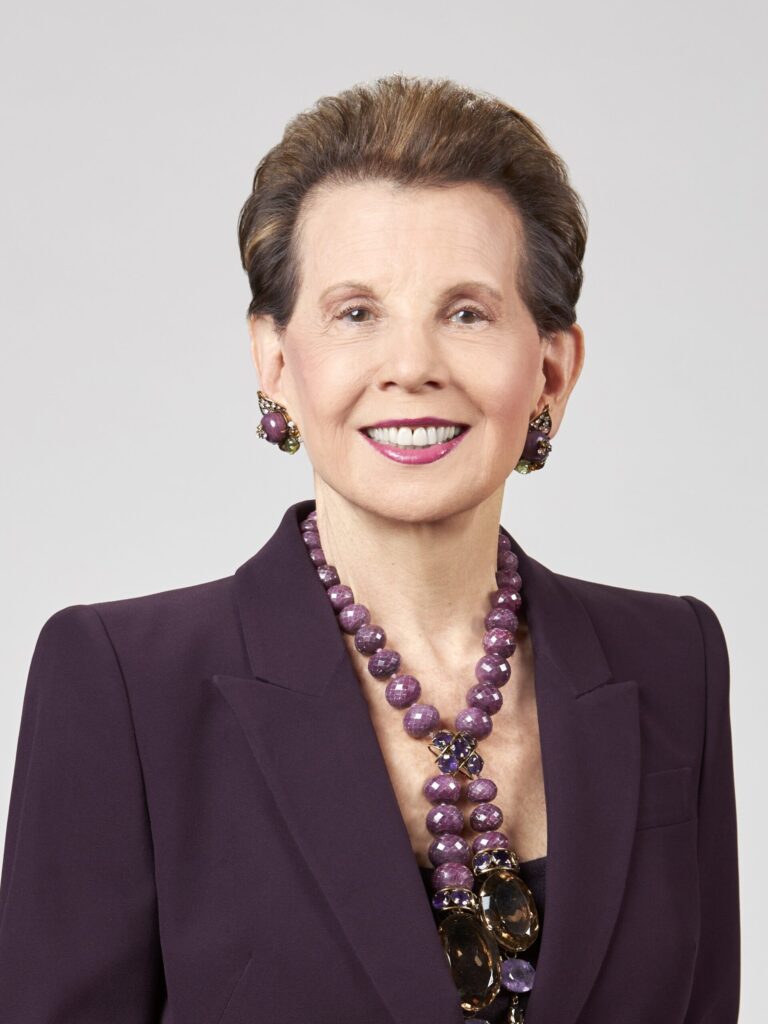
Adrienne Arsht
Executive Vice Chair,
Atlantic Council
Closing Remarks
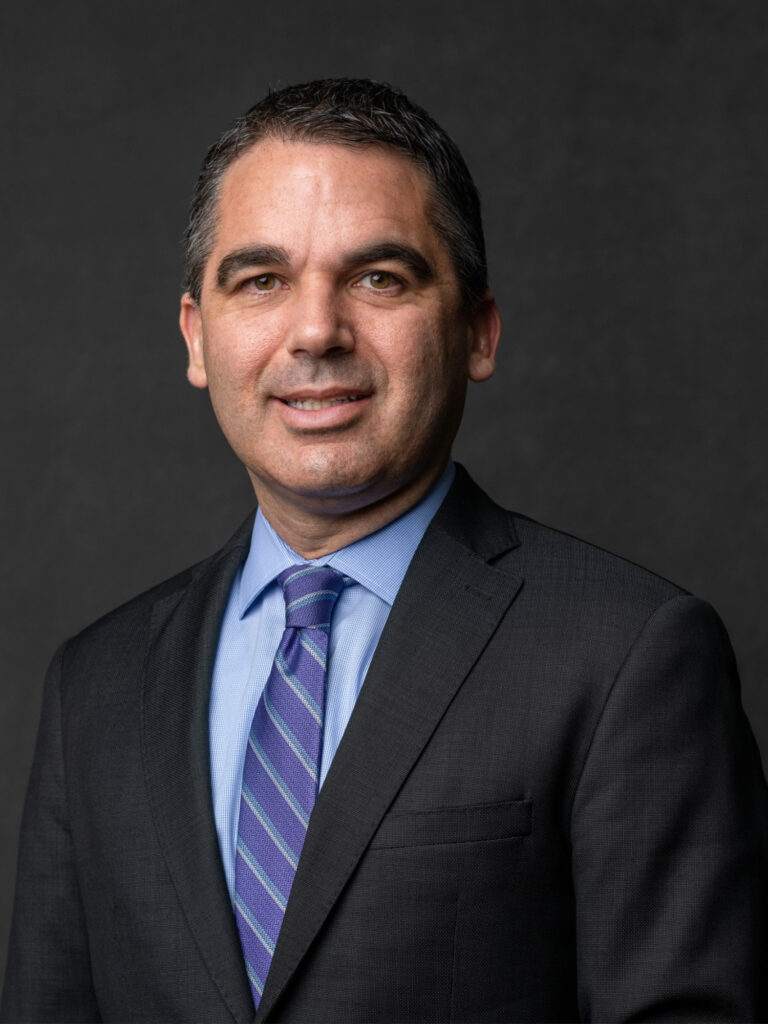
Jason Marczak
Vice President and Senior Director, Adrienne Arsht Latin America Center,
Atlantic Council
Moderated by
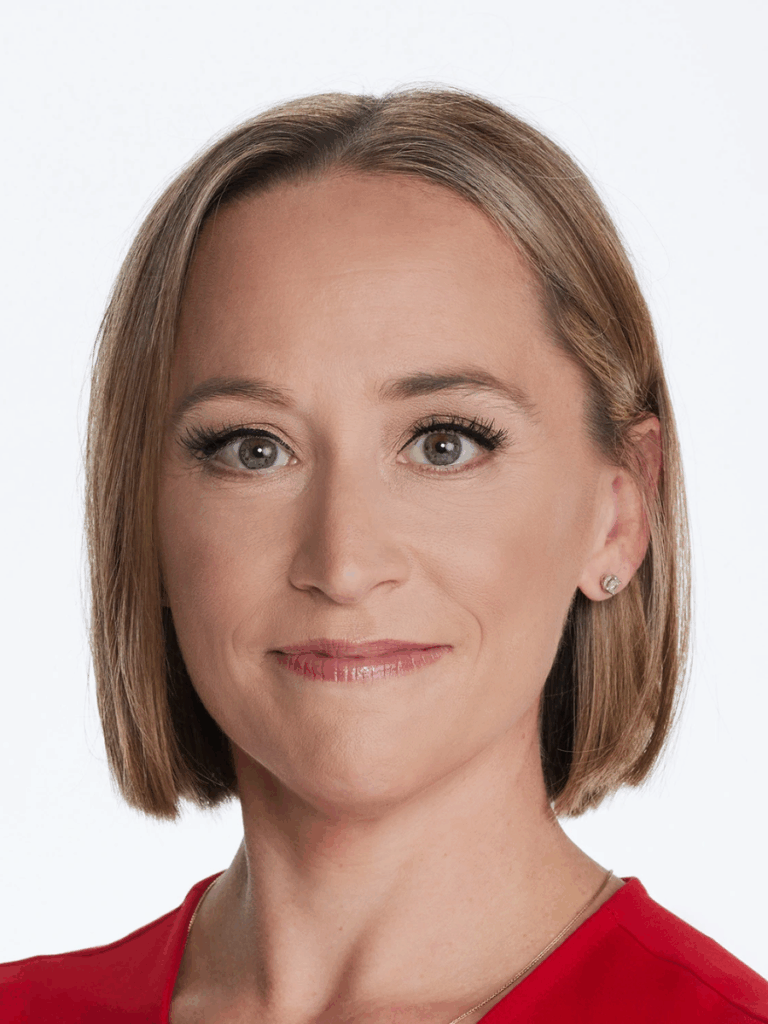
Courtney Kube
Senior National Security and Pentagon Correspondent,
NBC News
An #ACFrontPage Event
Atlantic Council Front Page is our premier live ideas platform for global leaders to discuss the defining challenges of our time. #ACFrontPage is a high-level event series featuring top newsmakers across multiple digital platforms. #ACFrontPage harnesses the convening power and expertise of the Council’s programs and centers to spotlight the world’s most prominent leaders and the most compelling ideas across sectors and to engage new audiences eager for nonpartisan and constructive solutions to current global challenges.
Stay connected
Explore the program
The Adrienne Arsht Latin America Center broadens understanding of regional transformations and delivers constructive, results-oriented solutions to inform how the public and private sectors can advance hemispheric prosperity.
Atlantic Council TV
Watch this event and more content on ACTV
Follow the conversations shaping our world. Available on all major platforms.
Follow the conversation on Twitter with @ACLatAm and @AtlanticCouncil using #ACLatAm