On Tuesday, May 12 at 9:15 a.m. ET, the Atlantic Council hosted Lloyd’s of London Chair Sir Charles Roxburgh for an AC Front Page conversation on how the global insurance marketplace assesses and mitigates risk at a fraught geopolitical moment.
Lloyd’s of London, which has long serviced the United States and other markets around the world, insures economic activity across an increasingly complex landscape. In this exclusive conversation, the Lloyd’s chair discussed how insurers are navigating rising geopolitical tensions. The discussion also considered how the insurance sector is innovating with its business models to address global uncertainty.
Transcript
Expand to read
Jenna Ben-Yehuda:
Good morning everyone, and thank you so much for joining us. I’m Jenna Ben Yehuda, executive vice president here at the Atlantic Council, and I’m delighted to welcome you today to our AC Front Page event and to introduce our distinguished guest, Sir Charles Roxburgh, chair of Lloyd’s of London. Welcome to you, sir.
Our AC Front Page event series provides a really essential for navigating the economic, political, and technological changes defining the twenty-first century, and we have with us today an institution that has been operating since the seventeenth century and has come to underpin the global insurance market. At the Atlantic Council and at our Geoeconomics Center, we often ask ourselves whether our major institutions are still fit for purpose in a world that is defined by rapid technological change, economic fragmentation. and shifting geopolitical alignments. And when they’re not, we ask what meaningful reform should look like, and that is part of what makes Lloyd’s such a fascinating case study.
Here is a marketplace that has endured for centuries by continuously adapting through industrial revolutions, world wars, financial crises, and now the increasingly complex challenges posed by climate change and geopolitical instability. There are important lessons in that resilience. And of course Lloyd’s today insures far more than maritime trade, with customers on more than two hundred countries and territories around the world.
And shipping insurance has returned to the headlines in recent weeks following the closure of the Strait of Hormuz during the Iran war. Even amid those heightened tensions, insurers at Lloyd’s have continued to provide coverage for vessels transiting the strait, a reminder of the critical role insurance markets play in sustaining global commerce, particularly during periods of uncertainty. And this is far from the first time Lloyd’s has had to navigate difficult geopolitical terrain. Since 2022, Lloyd’s has also worked with governments and regulators to support compliance with sanctions regimes targeting Russia and its oil tanker fleet.
These issues sit squarely at the intersection of finance, security, and geopolitics, which are exactly the kinds of challenges that the Atlantic Council’s Geoeconomics Center and Economic Statecraft initiative examine every day, making today’s conversation especially timely and relevant. Sir Charles has been chair of Lloyd’s since May of last year. Prior to his current position, he served as second permanent secretary of the Treasury of the UK. And while at Treasury, Sir Charles also supported one of the geoeconomic center’s first flagship conferences on the future of UK banking and finance in 2022. So we’re very pleased to welcome him back to the council community today.
Sir Charles, of course, is no stranger to Washington until recently. He was a frequent visitor here as the husband of the much missed and beloved, legendary British Ambassador Dame Karen Pierce. Dame Karen was a wonderful and remains friend of the Atlantic Council and joined us often during her posting in Washington. So we’re especially pleased that you chose the council on this visit. And after your remarks, Sir Charles, we will enjoy a fireside chat moderated by our Charles Lichfield, director of economic foresight and analysis at the Geoeconomic Center and the C. Boyden Gray senior fellow. Sir Charles, thank you again for being with us. And with that, let me turn it over to you, Charles, for our conversation. Thank you.
Charles Lichfield:
Thank you, Jenna, thank you, Sir Charles for choosing the Atlantic Council for this public event in Washington. We have a little bit of time to delve into some slightly more technical questions. Our audience at the Geoeconomic Center is very erudite, very influential, but sometimes needs help from leaders like yourself to tell them just how things work. We found this on all sorts of things from banking to finance and insurance is also a very important angle through which the Atlantic Council Geoeconomics Center is trying to appreciate changes around the world, changes in the global economy. So before we delve into some of those questions, I thought I’d just give you a chance to tell us why you’re here in Washington and what you’re trying to achieve.
Charles Roxburgh:
Great, well, I’m delighted to be here at the Atlantic Council and delighted to be in Washington again on such a beautiful spring day. Really miss these days in Washington. I’m here, in my role as chair of Lloyd’s to see influential people in Washington and meet leaders on the Hill to talk about what Lloyd’s is doing today and to really stress the importance of our commitment to the American economy.
Maybe I could just start a little bit by saying what Lloyd’s is because it’s not always obvious to people who don’t work in the insurance market and a little bit about our really long standing and important relationship with America.
Lloyd’s is sometimes described as the world’s most famous insurance company, which it is not, because it’s not an insurance company. It’s a marketplace, and its origins, as you just heard, really do date back to the 1680s in Edward Lloyds’s famed coffee house, and many elements of that way of doing business exist today. So if you walked into the Lloyd’s underwriting room on Lime Street, you would see underwriters sitting at their boxes, being presented with risks by brokers. And it’s a marketplace in which we have over fifty competing businesses that compete for business, it’s still mainly a face to face marketplace, and so brokers bring risks into the room and they get underwriters to compete to lead the risk, and then other underwriters will choose whether to follow it or not.
And it’s a unique way of approaching insurance. No one has ever replicated it, and it has proved incredibly effective over the centuries at insuring difficult, complex, hard to insure risks. And so the areas that we really specialize in today are the areas that many other insurance companies find difficult: So they are the complex, very large catastrophic losses in property; large, complicated liability risks; large, complicated new risk areas like cyber, nuclear, new forms of energy. So risks that are difficult and complex, really well suited to the Lloyd’s market.
Now our relationship with America is very long standing. In fact, we recently confirmed that Benjamin Franklin did actually go and visit and sit in Edward Lloyds’s coffee house. It wasn’t his favorite coffee house in London, which was the Georgian Vulture just down the road. But he did go and visit Lloyd’s Coffee house because Benjamin Franklin himself was an insurance entrepreneur and founded an insurance company in Philadelphia.
But we started writing business in America in 1897. And really the Lloyd’s brand was established after the catastrophic earthquake and fire in San Francisco in 1906, which was a terrible loss, horrible human loss and terrible destruction of property. And a lot of American insurance companies couldn’t pay their claims. And a famous Lloyd’s underwriter, Cuthbert Heath, instructed his agents to pay all claims immediately regardless of the terms.
Now that may not be best practice to pay policy claims without checking the terms and conditions, but it was a master stroke because it meant that Lloyd’s established its reputation for paying claims, and that brand of paying all valid claims continues to this day. It’s something that we are very proud of and that brand reputation for Lloyd’s in America has been true. So now Lloyd’s is the market leader in what’s called the excess and surplus lines market here in America. Those are the difficult risks that can’t be insured at a state level and pop up into what’s called the excess and surplus lines market, and there’s a complex, difficult risks and Lloyd’s underwriters are the market leader in that, and we’re very proud of that. And we provide a lot of reassurance to American insurance companies as well.
So it’s a very important relationship for Lloyd’s, but we also think we have a very important part to play in supporting American businesses and communities when disaster strikes. We pay about $14 billion a year in claims, and that’s our job is to pay claims when disaster strikes and we’re keen to continue to maintain that very deep, long standing relationship with America. So why don’t I pause there.
Charles Lichfield:
Thank you very much. We’ll come back to your role in the United States, we’ll also come back to the fraught geopolitical environment we’re in currently. But I thought I’d ask you just a few more questions on how Lloyd’s actually works. You’re a marketplace, you’re not an insurer. How has it come about that you are a marketplace for different syndicates who write lines. How does, that come into being?
Charles Roxburgh:
It really has evolved from those very first days in the coffee shop where the underwriters, people who are willing to take the risk sat in what you’d call booths in your restaurants here—booths, we call them boxes—and people present the risks to them. And if one of those people willing to take the risk like the risk and say “oh I’ll insure your ship for whatever the rate would be,” he would put a line at the top to say I will take 10 percent of your ship’s value for this voyage, and other people would write their names underneath it, that’s why they’re called underwriters because they write their name underneath the name at the top of the slip. And that’s the concept today.
Now what makes Lloyd’s really unique and has been a part of our sort of distinctiveness is that although it’s a competing marketplace with over fifty businesses that compete for business, they all ultimately write a Lloyd’s policy, and that Lloyd’s policy is backed by our central resources. And that means that once you’re admitted to right business at Lloyd’s, you have a common rating, which these days is a very strong rating—AA minus for most of the rating agencies, A plus and best, so very, very strong rating, we have a very strong balance sheet—and that backs any policy written by a syndicate at Lloyd’s.
And that allows them to trade globally. We have global licenses. And so that gives someone starting up a syndicate at Lloyd’s instantly, a really top-quality rating and global distribution. And that’s attractive both for entrepreneurial startups, and we’ll talk about some of the really exciting entrepreneurial startups we have in the market, but it’s also interestingly important to some very established large insurance companies. Most of our syndicates these days are owned by large global insurance companies and about a third of our syndicates are owned by American insurance companies, big household names like Chubb, Travelers, the Hartford, AIG, Berkshire Hathaway, they all have very successful syndicates at Lloyd’s.
But even for a really well established company, we may have a license in one territory that they don’t have, and that can be really valuable for them, and so this has been a unique evolution of the way we write business, our incredibly strong balance sheet that backs everybody, even though they all compete with each other, and our global license network, which is unmatched, gives us a unique competitive advantage.
Charles Lichfield:
Thank you. You have a very long history, dating back to the late seventeenth century. I was wondering if you could give us some examples or one example of a very old risk class and then conversely, some of the newest classes of risk that you’ve been dealing with, and I understand that because you provide this market, you may not be just the initial provider of insurance, but you do play a key role in establishing and finding out where the new risks are and bringing people together to price them. So, an old risk and a new risk.
Charles Roxburgh:
Can I actually give you an old and medium and newest? The old one, marine war insurance goes all the way back to our first days and it’s very current today. I got out of our archive the 1776 loss book the other day, and I can assure you that our marine underwriters took a lot of losses in 1776. It was not a good year for Lloyd’s. It was a great year for America and a great year for the world, I should hasten to add. But it wasn’t a great year for Lloyd’s underwriters.
So marine war is one that has really been involved for years. An intermediate risk, I’d use nuclear. Lloyd’s has an important role in insuring the nuclear industry, and that evolved in the 1950s as this new risk of civil nuclear was emerging, and Lloyd’s underwriters worked with governments to help frame how can we insure civil nuclear risk, and that continues to this day.
We have a very successful nuclear syndicate that is very influential in the nuclear world, and we not only insure traditional nuclear; we’re also at the forefront of insuring some of these new advanced modular reactors, and I was delighted to see a Lloyd’s syndicate now offering a policy for fusion reactors. Although fusion may be a ways off—debate about how long it is. People are beginning to build demonstrator reactors now, and Lloyd’s syndicates will insure nuclear fusions. That’s more a medium one.
And then more recent risks and areas of innovation have been around things like cyber insurance and AI insurance where Lloyd’s underwriters pioneered in cyber insurance over the last twenty years, and now insuring against all these new risks from AI is an area of growth, great interest, and it’s a classic new risk category that’s evolving where Lloyd’s underwriters are willing to help shape it and do the early work to make those risk categories insurable.
Charles Lichfield:
OK, just a few more questions on your role in the US and then I promise to our viewers online who are already impatient for us to discuss the geopolitics, we are getting there. So on the US, I think it may seem surprising still to some Americans that an insurance company in Missouri might be working directly with Lloyd’s of London rather than through a provider in New York or Chicago, so how do you think that has come about? I mean, you mentioned your, your good brand that you’ve established over a long time, but it still may seem quite surprising that the US with the deepest pool of capital is not necessarily at the forefront in dealing with local insurance companies in the US.
Charles Roxburgh:
Well, it’s this expertise and this difficult complex risks, and what we do at Lloyd’s is by bringing together the world’s best underwriters, many of which are now parts of American groups, and we work with the leading world brokers, again, most of the leading world brokers were American. That concentration of underwriting talent sitting in London means that when you get a difficult complex risk, you get a better result by bringing it into that concentration of expertise. And so we have great long standing relationships with our distributors in America, and we have a lot of support from the capital providers in America, both companies and the institutional investors, and it makes sense for all of them to pool that expertise in one place to get the competitive tension and the sparking off one another and it’s a classic concentration effect that that works really well in London.
And because it’s done efficiently and we have a very good set of long-standing relationships that company you talk about in Missouri can still get a better risk, a better price for that risk, and a better service from concentrating that expertise globally in one place. But also, we know that we will only maintain that position if we continue to innovate and if our underwriters continue to provide new interesting solutions that to stay one step ahead of what the local markets can provide.
Charles Lichfield:
And are there any examples of US companies that you’re supporting? I mean you tantalizingly mention some startups that you’re working with, so if there are any examples…
Charles Roxburgh:
One of the really exciting recent innovations is something we call Lloyd’s Lab, which is a one of the world’s leading insurance tech laboratories and incubators. It sits on the fourth floor at Lloyd’s and we have a contest to admit people into that, and once they are admitted in, they work closely with live underwriting businesses.
And just to give you a couple of examples, there’s one recent alumni of that program called Wildfire Defense Systems. It was set up by some people who had experience actually as firefighters, and they advised insurance companies and thought they could do it for themselves. And so they came through the lab.
And what they do is they, the clue is in the name, they work with property owners on how to reduce the risk of losing the property from wildfire, and then they would insure it. And they have a syndicate at Lloyd’s, which has started up as a startup syndicate, as I say, licenses globally. It has a top rating because it’s on the Lloyd’s platform, and they are doing a lot of work, as you can imagine, in the Western United States using their innovative technology-based tools and advisory services to reduce the risk, but also insure the risk for property owners from wildfire.
Another one, that I like in this area is a similar startup that was using advanced sensors to manage the risk of sensitive cargoes. And that’s very important to the life sciences industry. It’s also important to the Maryland crab industry. So they insure a lot of the Maryland crab from the docks to the restaurants here. So next time you’re having a crab cake, it may well have been insured in transit by a Lloyd’s startup that can trade here on our licenses, even though it’s a brand new innovative startup operating on the Lloyd’s platform.
Charles Lichfield:
Thank you very much. Before I go to the next question, I would remind the audience both here and online that you can submit questions to Sir Charles via me, via this iPad in front of me. So you need to go to askAC.org. That’s ask AC.org to submit your thought provoking questions.
So we’re now onto a question or a series of questions which I think many people have been looking forward to: insurance in not just a geopolitically fraught environment but also an environment that’s bringing all sorts of new types of risk, climate risk, etc. But I thought we’d start with marine insurance. The Strait of Hormuz is currently basically blocked, but you have also been a very important participant in other insurance where things are working a little bit better despite geopolitical difficulties, so I’m thinking of the Black Sea, I’m thinking of the Red Sea.
So before we go into those specific cases, just could you tell us how marine insurance fits into your book currently and how you figure it out when there is a there is a new source of risk, be it geopolitical or otherwise?
Charles Roxburgh:
It’s an important area for Lloyd’s market, but it’s only one of many, so it’s one of our lines, and there are a number of leaders in that area, so, as I say, fifty or so businesses in Lloyd’s, about ninety syndicates some businesses have more than one syndicate. And then individual syndicate specialize and they’ll be in any particular line, a number of well established, well recognized leads where the lead underwriter will be seen as having the skills and expertise to do that. And there are a number of syndicates that specialize in what’s called marine war insurance and so they do provide cover for ships in areas that are at risk of war.
And it’s a long standing area of expertise for Lloyd’s syndicates. There’s also a very well-established ecosystem in London around the brokers, specialist brokers. There are other parts of the insurance market, not part of Lloyd’s, but the mutuals owned by the ship owners, the so-called PNI clubs, and they provide really important complimentary insurance to what we can provide in the Lloyd’s market. So the marine market is a much broader market in London than just Lloyd’s, but it’s a very well-established ecosystem with also all the associated professional and legal services that you need to make an insurance market really effective.
And so when there is a major event, and maybe I could use the Ukraine Black Sea, example, where the Black Sea was closed and that was causing very significant risk to world food supply, then there was a negotiated pathway through that, and then that broke down. Then there was another agreed safe pathway along the coast.
So Lloyd’s insurers worked with the authorities on what the conditions for safe passage would look like, and once those were in place, Lloyd’s insurers were willing to step up and right the risks and provide the insurance for the grain passageway through the Black Sea.
It’s important to note that what you have to have is safe passage, ship owners are concerned for the safety of their crews and their ships, and they don’t want to sail through dangerous waters, unless there’s a safe passage. So the situation we have in the Gulf at the moment is that, as you well know, there are a lot of ships that are in the Gulf, and the Lloyd’s market has remained open, quoting business throughout this period.
On the whole, very, very few ships have made the transit. There been sort of ebbs and flows of that depending on the security situation, but at the moment, very, very few ships are willing to make the transit. The issue is about security. I met some ship owners recently in Singapore, and they explained their priority was to protect the safety of their crews and their vessels, and so they would not be making any transit until there was a safe passage.
But we stand ready to provide that capacity when there are conditions to allow for that safe passage, and there’s a lot of capacity in the market already, and they have been very active quoting, but the ship owners haven’t taken up the quotes because they don’t want to make the transit. But when it does reopen, and I think we all hope very soon that it will reopen, there’ll be a huge demand for that insurance to help all the ships that need to leave, and all the ships that need to come in to resupply and help with the important resumption of trade with the Gulf. And so Lloyd’s underwriters stand ready to provide that capacity.
One of our leading businesses, Beasley, has arranged an additional source of capacity on top of what’s already in the market, and that was a helpful innovation too. So, when it reopens, that will be a big source. And then there’s a facility led by Chubb here in the US with DFC support, and we welcome that as an additional source of capacity too, once the conditions are right to enable ships to make the transit. But it’s a good example I think of where we, we will be very keen to be supporting the resumption of trade as soon as it is safe to do so.
Charles Lichfield:
And just to make sure everyone understands, my impression from what you’re saying is that an international agreement for the overwhelming majority of ship shipping providers is sort of a precondition. The insurance market is working currently, but it’s not the availability or lack of insurance that’s determining whether ships flow.
Charles Roxburgh:
Correct, that’s absolutely the situation as we see it, which is that the reason ships aren’t transiting is a concern about security, not about the availability or pricing of insurance coverage. And that the minute the ship owners decide it is safe, and that is their decision, ultimately—well, the ship’s captains actually technically finally make the decision, but the ship owners and the captains will be obviously in close collaboration there—there are a number of ways that could unfold, but, at the moment, the ship’s owners and ship’s captains aren’t, in the vast majority of cases, considering it is safe to make that transit.
Charles Lichfield:
I suppose one more question on this, if you could just help us imagine what might happen, could happen, should happen, although I’m not asking you to make a recommendation, but just if we look back at the Ukrainian example, we got from a situation where there was an international agreement that broke down, then there was another one. So what do you think was the threshold between it being possible…
Charles Roxburgh:
Before my time as chair, as I understand it, there was a safe passageway along the coast which the ship owners felt was secure and cleared of mines and was a safe area for them to transit through. Now that was a much wider area than the very, very narrow strait, so there’d need to be, I’ll leave it to the military and geopolitical experts to determine how you can determine a safe passage through that a number of ways being discussed. But once people are confident of safe passage, I’m confident that shipping will resume and I’m absolutely confident that Lloyd’s underwriters will be able to meet the need that ship owners put on them.
Charles Lichfield:
And insurance will probably cost a little bit more.
Charles Roxburgh:
Well, it will reflect the risks. We run a marketplace, we don’t set the prices. The prices are set by competition both within the market, but also importantly, there are providers outside the market too who will also be willing to bid on the pricing, so it will reflect the risk at the time and I will leave it to the market to set that. I don’t set pricing.
Charles Lichfield:
Understood. So you did refer to President Trump’s exhortation to Development Finance Corporation to come up with solutions that might provide a floor in the market or subsidize it, but my understanding from what you’re saying is that the market already is in operation, but this is still a welcome development. So how would a state-backed subsidy influence the market?
Charles Roxburgh:
Well, we have publicly welcomed that, and we have very close relations with all of the commercial participants, and that’s led by Chubb, a outstanding US insurer, which also has a very successful syndicate at Lloyd’s and other participants like AIG and Berkshire Hathaway—we are very close with all those, all those participants. And I think it’s a useful addition once the markets reopen and we welcome competition. We think that’s good for the market and good for the industry and good ultimately for ship owners. So once the demand is there, it will play its role, I’m sure, in this overall solution.
Charles Lichfield:
Thank you very much. Do feel free to ask, to ask Sir Charles questions, you can submit them via AskAC.org. There’ll be just two or three more for me and then we’ll move to your questions. So please do submit them.
So, I don’t want to neglect climate risk. We have obviously discussed the geopolitical risk, but climate risk is also important part of what you’re working on and what Lloyd’s is engaging with and innovating on, I’ve seen that in a recent speech you spoke, when you were talking about climate risk, about a protection gap, that there are risks that we know are out there that will manifest and yet which aren’t entirely protected for various reasons to do with lack of capital, lack of market interest, maybe regulation that needs to be updated. But can you update us a little bit on this problem and help us understand it.
Charles Roxburgh:
It’s a very significant problem throughout the world, and then let’s define what we mean by protection gap. It’s when some form of disaster happens, or when you model some potential disaster, you can see how much of the loss is covered by insurance versus what the economic loss is. And there’s normally a very big gap because people either haven’t taken out the insurance or the insurance doesn’t cover certain aspects of the risk that may have happened like in a geopolitical crisis. A lot of the losses will be economic losses through business interruption, which people typically don’t take out insurance for, although you can.
So a lot of the losses in a major catastrophe are not covered. And that’s certainly true of climate losses. So, we think it’s both in society’s interests and the insurance industry’s interests to work out how we can close that gap so that more of the losses of a climate event are covered and that the people who suffer from that are protected by the insurance.
Now, there are different ways to close that gap. One of which is public policy, so there’s an important role to do in terms of public policy as to how to mitigate the economic loss and in things like property, that can come through having better building codes and enforcing building codes and not building in high risk areas or enforcing wildfire management, practices to reduce wildfire risk. So there’s a role for public policy.
There’s a very important role for insurance, and that’s particularly around innovation, and that’s some of the areas that some of our startups are being really active on are how can you innovate using technology to identify risk in advance to mitigate it. So some of the exciting startups using satellite technology and very micro-level mapping of flood risk have enabled people to offer better flood protection in many parts of America. So I think there’s a role for the industry stepping up on innovation,
But ultimately, the risks are there, and people will need to sort of pay an economic price for them. If we get more insurance coverage, it’ll be spread across a larger base, and that will make it more affordable. So it’s a big area, it’s a big issue in the US. it’s a big issue in Europe, where the protection gap’s even bigger, but we think that it’s a really important area for the industry to innovate on, but work in collaboratively with the public authorities to help create a more supportive public policy framework that will manage and mitigate the risks.
Charles Lichfield:
Any demands of policymakers on this?
Charles Roxburgh:
Well, it varies state by state, but it’s areas such as improved building codes, improved enforcement of building codes, and we talk to the insurance commissioners regularly and they’re well aware of these issues and on the case on them. In some states, tort reform has been very successful and effective at improving the availability and affordability of insurance, I mean Florida is a good example of that. I’m sure this will come up in my conversations on the Hill. Homeowner affordability is a is a big issue, but it requires a combination of action to mitigate, actions to reduce some of the unnecessary litigation that drives up costs, but also action by the insurance industry to innovate new and different ways to both mitigate and manage the risk.
Charles Lichfield:
Thank you very much. I see a few questions here, a sort of cluster for shaping up on the knock-on implications of sanctions. So sanctions on Russia have forced Lloyd’s to cut the Russian market out. And there’s generally a good appreciation of what the UK, the EU and the US have done to make sure that the sanctions are applied. But I suppose one question from our audience coming in is whether this might create a risk of creating an alternative insurance industry and creating competition elsewhere, and I can see this in in the shipping industry as well. There is a number of ships navigating that don’t have proper insurance or claim that they have insurance via another market. I was wondering if you had any thoughts on that.
Charles Roxburgh:
Well, we obviously are completely committed to applying all the sanctions that are imposed and we work very closely with the authorities as those sanction regimes are designed and then implemented, and we’ve now got long experience of that.
And in our experience, it’s really important on these global industries that there’s good alignment and coordination between the US, the UK, and the EU, and these sanctions regimes, and I was in the Treasury when we did the sanctions on banks and insurance, and there was really outstanding coordination between the three main jurisdictions then to coordinate the design and implementation of sanctions. And that that’s important, so having that coordinating approach makes it a lot easier for the private sector to enforce and implement the sanctions, which is obviously what we will do.
But you’re right, sanctions are not a costless tool, and they’d have knock-on effects and so there is now the shadow fleet, which is not insured, and we wouldn’t insure anything that is sanctioned clearly. But sanctions are an important tool of foreign policy and its a decision by the leaders of these nations that they are part of the toolkit to use in these geopolitical crises, so we absolutely apply them and abide by them and support them. And it’s not for us to sort of challenge the second order effects of that. That’s for the political leaders to consider.
Charles Lichfield:
I suppose a nerdy question for me would be whether there are new considerations for third-party liability. So if one ship that you are insuring has a problem with a ship that isn’t insured, you have to at least cover from the ship that you are insuring.
Charles Roxburgh:
Well, I mean, it is a concern with the shadow fleet that these are big oil tankers, and when an oil tanker gets into trouble and has a spill, there’s a big liability and if they’re insured, there’s protection on that. Who knows what would happen if a shadow fleet tanker did get into trouble and have a big oil spill on a delicate area. Who would be responsible for the clean-up costs? That is something that we haven’t had to face yet, but it is a risk with this current situation. But as I say, that’s a consequence of the decisions that are elected leaders have taken and that we are happy to apply.
Charles Lichfield:
Thank you. Another cluster of questions, which I suppose is quite predictable but yet very pleasant to be able to ask you about this, is Lloyd’s and celebrities, whether it is true that you have insured various people’s voices or legs or hairdos and whether there are examples that you’re capable of providing to us.
Charles Roxburgh:
This is a very large part of our brand, but a tiny, tiny part of our business. And I was asked just in the break room did we insure Betty Grable’s legs. That’s quite a long time ago and certainly before my time in the role. It’s a tiny, tiny part, and it’s more a sort of a profile issue. The more exciting things when it comes to celebrities, we have a very important line of business in events insurance and insuring major events. And these are, sort of like the Taylor Swift Eras Tour, it’s like billion dollar business and it’s a huge thing and Lloyd’s is a very major player in events insurance. Again, it’s one of those difficult, complex, bespoke types of insurance that our underwriters excel at. So yes, events, big part in that sort of celebrity-ish, I guess. A major sporting events, another area that we are very active in insuring and so that’s the more celebrity type of work that I am keen to talk about because like that’s real business, it has a real impact on society rather than some of the more exotic parts of people’s bodies that we may or may not insure. I’m not sure that we do insure them anymore, but it’s part of the mythology of Lloyd’s, yes.
Charles Lichfield:
Thank you. I was looking forward to asking you that question. Thank you for engaging with it. We have a question on the pricing of geopolitical risk on land. So we’ve been able to discuss marine insurance, but we have a great question here on critical minerals, on supply chain risk to do with export controls, which both the West and some adversaries of the West are using more and more frequently, but I was wondering how this is impacting your business.
Charles Roxburgh:
Well, it’s I mean, cargo, we talked about marine hull and marine war; marine cargo is obviously another important line. And so yes, that’s another area that gets very caught up in some of these complex geopolitical risks as well. And again, it’s one where our underwriters are very expert and experienced at dealing with. On critical minerals, I’m sure we do insure those when they transit, they tend to be quite small volume and high value, so I just don’t know quite how that would be insured, but it’s a classic sort of risk that our underwriters would be willing to take on and insure.
More broadly, maybe it’s a good opportunity to talk about some of the geopolitical risk scenarios that we think about. And these are all published, we have a technique which Lloyd’s developed in the 1990s actually, which is quite far-sighted back then, around realistic disaster scenarios which are very familiar now in the banking industry, following the banking crisis, which was a bit later on source sort of stress testing.
But we run a series of extreme realistic disaster scenarios, many of which reflect geopolitical—so we have one on the Taiwan Straits, what would happen there. And so we use those to test the market to make sure that the market can think through the risks and can manage the risks of those extreme scenarios. And some of those extreme scenarios are climate scenarios or major hurricane events and things like that, major earthquakes.
And so that’s proved a very helpful tool to model geopolitical risk and to make sure that the underwriting businesses operating the market are thinking through the first and second order consequences of these risks and that they can both meet all their obligations to pay claims but also preserve their capital strength through them.
We refreshed that list from time to time, and I’m sure we’ll add more over time. And it’s a published list. It’s quite interesting, it’s quite sort of bit scary reading realistic disaster scenarios, but these are very detailed thought through scenarios of what might happen and what we insure that our market would be able to respond to.
Charles Lichfield:
So your institution provides the scenarios and then it’s for the syndicates to read them.
Charles Roxburgh:
We publish a set of, I think it’s nine, I think, about nine or so, and then we require the different syndicates to depending on their exposures to develop their own for some particular areas of big exposure that we might sort of say, well, you’ve got a lot of exposure in the Far East, so we’d like you to do an extra one that looks like this. So yes, we define the corset, and then they do another set on top of that. And we also work closely with our regulators. We’ve got a live, large-scale stress test going on in the UK at the moment, where the regulators are throwing a series of risks at us in a dynamic stress test, which is happening as we speak, which will be also quite interesting to see if the regulators throw any geopolitics at us.
Charles Lichfield:
Will the results be published?
Charles Roxburgh:
The Bank of England will publish, I think, overall results rather than individual firm results to that stress test, but the bank has been very far-sighted in its approach to stress testing and both doing this classic stress test on the banking industry, but also thinking more broadly about wider stress tests on all parts of the financial sector.
Charles Lichfield:
Thank you. We’re still getting a good few questions on geopolitical risk and the pricing of geopolitical risk. So I thought I’d just take the liberty of pushing a little bit on the fact that we’re in a much more fraught geopolitical environment, one in which actors are behaving in an unpredictable way. weaponizing the economy in a way we haven’t seen before. And I was wondering if you had any thoughts on how this was impacting some of the policyholders and therefore your work.
So in my previous question, I mentioned the risk of export controls, but there’s also just expropriation risk which you’re familiar with and have dealt with it for a long time. But we have unusual people behaving in unusual ways, and so I was wondering if this was simply increasing the premiums because there’s geopolitical risk everywhere, or whether you were managing to spread this.
Charles Roxburgh:
Well, one of our very active lines that area of Lloyd’s specialty is political violence and terrorism risk. PVT in the acronym, and those underwriters are very busy, very active, and that covers many of these sorts of risks.
I actually sat with a political violence and terrorism risk on her box recently. It’s fascinating, and that day she was insuring two risks. One was for an NGO that had operations throughout Africa, and they were doing wonderful work in helping save people’s sight, but it meant they were operating some quite dangerous parts. And so she was pricing that. She had incredible analytical tools to price the risk of violence in each of their outposts throughout the whole of their operations across Africa. So it’s quite a scientific approach, and it was great to see them, it was something that was worthwhile because they were providing insurance to this NGO doing great work, saving people’s sight throughout Africa, but applying the science of insurance to do that.
And then her other risk, she was insuring active shooter risk at a new hotel in New York, which sadly is these days a real risk, but it’s insurable. And so she was applying her skills to insure that risk for this brand new hotel, so it could open with appropriate both risk mitigation and coverage for active shooter risk. But also at larger scale, political violence and terrorism risk is covering a lot of some of the attacks that you see throughout the world, and so those are risks that people can price.
It’s a skill to price those risks and it’s quite a lot of science these days, but it’s also art and judgment, and it’s that combination of judgment and science, which the Lloyd’s underwriters that sell that, and so I personally couldn’t put a price on those risks, but I’m confident that the Lloyd’s underwriters, in this competitive world, will put a price on it. And over time they’ll put a price on it, that it’s a sustainable economic price and reflects the risk and provides important protection to the people seeking that coverage. But it is a very active and growing part of our business.
Charles Lichfield:
Well, thank you for being a good sport and engaging with our audience’s questions. They didn’t disappoint. I thought I’d just give you one final chance to say something about Lloyd’s and the US, I mean it’s been really fun hearing about some of the older examples and the fact that your presence here has lasted longer than the United States of America as an independent country, but, just before we close, I thought I’d give you another chance to talk about it.
Charles Roxburgh:
Just two examples which I illustrate the sort of a range of what we do here. I mean when I started my role this time last year, well the first clients I met was American Ag. American Ag is a reinsurance, company that supports the American Farm Bureau, and they’re making their once in a decade trip to London because we provide insurance to American Ag, which in turn reinsures the American Farm Bureau Network. And so this is the real heartland of America, and I’m proud that Lloyd’s can provide reinsurance that supports American farmers throughout all fifty states, so the Farm Bureau system and that sort of classic sort of heartland America of what we’re doing.
And then at the other extreme, some of these really advanced new areas of innovation are really improving people’s lives, so in insuring in vitro fertilization treatment is an area that Lloyd’s has pioneered on, which I think is a really interesting new form of insurance that no one else had done before, so that’s another area of innovation. So it’s both the span of what we do, from traditional heartland in providing support to American farmers through to some of the really new areas, whether it’s AI risk, IVF, autonomous vehicles, nuclear fusion, advanced modular reactors. That fact that we, this is your unique marketplace which really would look recognizable in some ways to Edward Lloyd coming back to run his coffee shop after all these years, has managed to innovate and stay relevant and address some of the big issues facing society today. It’s something I’m really proud of and America is where we can really, I hope, be an important part of supporting what is the great American success story.
Charles Lichfield:
Well, thank you very much, thank you for your time. It’s been, I think, a busy visit for you, and we are very, of course, very, very happy to welcome you back to the council next time you’re in Washington, thank you to all of you for tuning in and thanks to our in-person audience. This has been an Atlantic Council Front Page event with the chair of Lloyd’s of London, Sir Charles Roxburgh. Just one, advertising plug, and it’s not even for my center, it’s not for the Geoeconomics Center, although we do do great work. The Global Energy Forum, held by our friends at the Global Energy Center, is on June 9th and 10th. Many of the issues that we’ve discussed with Sir Charles today will come up again, so if you’ve enjoyed this event, and I’m sure you have, that is an event to check out, so make sure you do sign up. I think signup is still open. So thank you to all of you for tuning in, thanks to our in-person audience and see you very soon.
Featuring
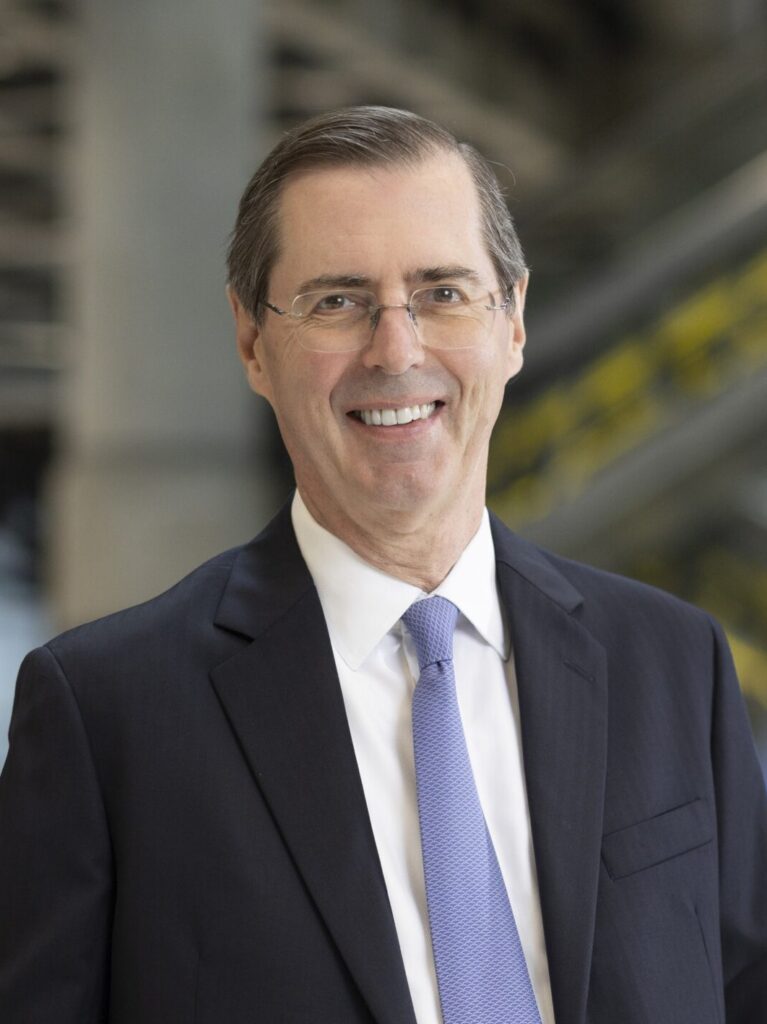
Sir Charles Roxburgh
Chair,
Lloyd’s of London
Welcome Remarks

Jenna Ben-Yehuda
Executive Vice President,
Atlantic Council
Moderated by
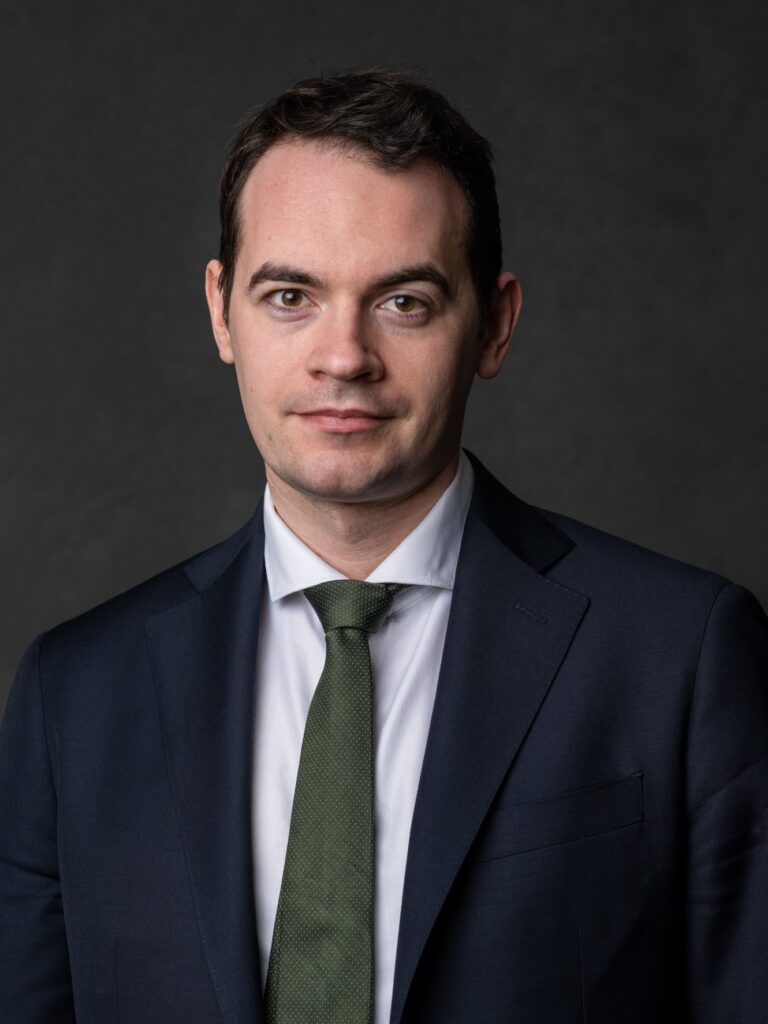
Charles Lichfield
Director of Economic Foresight and Analysis and
C. Boyden Gray Senior Fellow,
Atlantic Council GeoEconomics Center
An #ACFrontPage Event
Atlantic Council Front Page is our premier live ideas platform for global leaders to discuss the defining challenges of our time. #ACFrontPage is a high-level event series featuring top newsmakers across multiple digital platforms. #ACFrontPage harnesses the convening power and expertise of the Council’s programs and centers to spotlight the world’s most prominent leaders and the most compelling ideas across sectors and to engage new audiences eager for nonpartisan and constructive solutions to current global challenges.
Stay connected
Explore the program
At the intersection of economics, finance, and foreign policy, the GeoEconomics Center is a translation hub with the goal of helping shape a better global economic future.
Atlantic Council TV
Watch this event and more content on ACTV
Follow the conversations shaping our world. Available on all major platforms.
Follow the conversation on Twitter with @ACGlobalEcon and @AtlanticCouncil using #FutureOfEcon