Event Recap
On Tuesday, May 26, the Atlantic Council’s Africa Center, in partnership with the Policy Center for the New South, hosted a conversation on pathways to peace in the Sahel.
Rama Yade, senior director of the Africa Center, began the event by highlighting the stakes. Fifty percent of global terrorism-related deaths are in the Sahel, she explained, and in the wake of coordinated attacks in Mali, the situation is not abating. Yade stressed that “the growing operational sophistication of extremist groups and the fragility of the current security landscape in these countries” makes “one point remains clear: Durable stability in the Sahel cannot come from military responses alone.”
As she explained, “security and development are inseparable. Lasting peace requires stronger institutions, local legitimacy, economic inclusion, [and] regional cooperation. African voices and African-led solutions must remain at the center of any sustainable path forward.”
Joseph Sany, who moderated the event, highlighted the need for a “human-centered security approach where citizens are at the heart of security strategies: not just institutions, not just buildings, but actually citizens.”
Moussa Kondo, executive director of the Sahel Institute for Democracy and Governance, emphasized that the international community should “not just focus on the Sahel, but also the neighboring countries,” such as Benin, Côte d’Ivoire, Ghana, Mauritania, and Algeria. As he explained, the Sahel crisis is regional—and any lasting response must bring border and coastal countries into the conversation.
Kondo also stressed that the international community cannot focus entirely on “international interference” and that “local actors and local stakeholders” are key—but key political and religious leaders remain in jail or exiled. “You cannot build any kind of constructive dialogue or constructive peacebuilding, peace initiative, [or] stability with having everyone out of the conversation,” he said.
Carine Kaneza Nantulya, deputy Africa director at Human Rights Watch, emphasized the importance of adhering to human rights principles and humanitarian law, since “civilian protection in the context of the Sahel is not separate from national security; it is part and parcel of it.” Unpacking that, Nantulya said that in the Sahel, there is a “lack of trust,” and “citizens have local grievances against the state because of corruption” and “the lack of economic opportunities.” Islamist groups, she explained, then leverage these sentiments and “present themselves through intimidation [and] forceful recruitment as the alternative authority.”
Nantulya also remarked that it is “quite ironic” that sovereignty is being used as an argument to neglect human rights “as if human rights is a foreign construct.” She pointed out that in the days of the Mali Empire, Sundiata Keita, the founder of said empire, proclaimed the Manden Charter, which is regarded as one of the world’s foundational documents for human rights.
Mike Jobbins, civil society chair of the Mali Affinity Group, highlighted that the political and security situation in the Sahel “is a crisis that has been brewing for fifteen-plus years. There [are] deep origins,” and it has “metastasized.” “That means when it comes to political deals, Jobbins said, “it’s very hard to see how a signature on a piece of paper can advance without people behind it …There is no peace without people.”
Jobbins also stressed that with over a quarter of children in the Sahel stunted by hunger, and with the international community’s cuts to food assistance, “families are struggling on what kind of future they’re building for their kids. It’s really difficult to imagine a wider peace process, a wider political process, and real substantial change without taking into account the basic needs that families feel across the region.”
Andrea Walther-Puri, an independent policy advisor stressed that the Sahel is “at a real point of reckoning,” and that “military cooperation alone cannot compensate for weak political legitimacy,” a lesson underscored by the Sahel’s recent coups and shifting security landscape. “So while some of these programs did have tactical advances that were very successful on the battlefield,” Walther-Puri explained, “they didn’t do anything to stop the protests because the soldiers were not being resupplied. There was no food. There were no arms, and soldiers were dying on the battlefield. So, you can’t have approaches that only are the tip of the spear and strengthen tactically on the ground without having a security sector that can support it.”
event text
On Tuesday, May 26 at 9:30 a.m. ET, the Atlantic Council’s Africa Center and the Policy Center for the New South (PCNS) hosted a conversation that examines the path forward for countries in the Sahel, which are facing growing pressure. Nowhere is that more evident than Mali, where just last month extremists killed the defense minister and drove government forces and their Russian allies from key strategic locations.
The Sahel remains one of the world’s most fragile regions, confronting insecurity, political instability, humanitarian distress, food shortages, climate pressures, and economic hardship. The region also accounts for roughly 51 percent of global terrorism-related deaths. While international support remains important, regional actors and local communities are essential to restoring stability, strengthening governance, and advancing long-term development.
PCNS and the Africa Center will be launching a joint report on the Sahel later in 2026, as a follow up to their 2023 report.
Welcoming Remarks
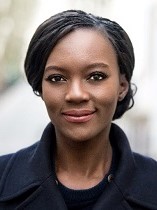
Rama Yade
Senior Director, Africa Center;
Senior Fellow, Europe Center,
Atlantic Council
Speakers


Carine Kaneza Nantulya
Deputy Africa Director,
Human Rights Watch

Moussa Kondo
Executive Director,
Sahel Institute for Democracy and Governance

Rida Lyammouri
Senior Fellow,
Policy Center for the New South

Andrea Walther-Puri, Ph.D.
Independent Policy Advisor,
International Security Assistance
Moderated by

Joseph Sany, Ph.D.
Former Vice President, Africa,
US Institute of Peace
In partnership with

Explore the program

The Africa Center works to promote dynamic geopolitical partnerships with African states and to redirect US and European policy priorities toward strengthening security and bolstering economic growth and prosperity on the continent.
Atlantic Council TV
Watch this event and more content on ACTV
Follow the conversations shaping our world. Available on all major platforms.