On Wednesday, June 17, at 3:30 p.m. ET, the Atlantic Council hosted Senators Jeanne Shaheen (D-NH) and Thom Tillis (R-NC), for an Atlantic Council Front Page conversation on the upcoming NATO Summit in Ankara.
With Russia’s continued war on Ukraine, NATO must confront growing challenges to European security with unity and purpose. Ahead of their final NATO Summit as co-chairs of Senate NATO Observer Group, Senators Shaheen and Tillis speak about US and allied goals for the NATO Summit, as well as reflect on progress undertaken by allies on meeting their defense spending commitments, scaling defense industrial capacity, and expanding their support for Ukraine.
TRANSCRIPT
Expand to read
Jenna Ben-Yehuda:
Good afternoon. I’m Jenna Ben-Yehuda, executive vice president of the Atlantic Council, and for those joining us for the first time, welcome to the AC Front Page. It’s our flagship live programming series, bringing the world’s most consequential leaders and thinkers into direct conversation on the issues that matter most. So today we are honored to welcome two of the United States Senate’s most distinguished voices on NATO and transatlantic security, Senator Jeanne Shaheen of New Hampshire and Senator Tom Tillis of North Carolina.
We’re also delighted to be joined by a really extraordinary group of diplomatic leaders, more than twenty ambassadors, chargés d’affaires, and deputy chiefs of mission representing NATO member countries. Your presence here today really underscores the importance of the conversation we’re about to have and really the enduring strength of the transatlantic alliance.
That alliance is at the very heart of the Atlantic Council’s mission, shaping the global future together, and nowhere is that mission more urgent than in the transatlantic relationship. NATO is one of the defining threads across this organization’s history. The Atlantic Council was founded in 1961 as a home for the Alliance’s most important debates, and today we’re proud to convene leaders and ideas at the forefront of the challenges and opportunities shaping NATO’s future.
The Atlantic Council also has a strong track record of engaging with both sides of the aisle on Capitol Hill to reflect the organization’s nonpartisan approach to building a more secure and prosperous world. Today’s event is very much a part of these traditions and follows a rich history of conversations we’ve hosted with NATO officials, allied defense ministers, and senior US and European officials in the lead up to summits in the past.
And the NATO summit in Ankara arrives at a truly historic moment for the alliance as the US remains in active conflict in the Middle East and Russia’s war against Ukraine continues to rage on. Political tensions across the Atlantic complicate these matters further, even as military and industrial ties remain strong. The Ankara summit will also be an important moment to assess progress on NATO’s bold 5 percent spending target increase agreed to at last year’s Hague summit, which is designed to transform the alliance’s defenses.
So now we face a critical test of whether that momentum holds and whether NATO can translate this new political will into real capability. So together, Senators Shaheen and Tillis have served as the co-chairs of the Senate NATO Observer Group, a bicameral bipartisan body that has brought together American legislators and to direct engagement with parliamentarians across the Alliance. They’ve led that group through perhaps the most consequential chapter in NATO’s post-Cold War history. And with both senators prepared to leave the Senate at the end of this Congress, today’s conversations carry additional weight. No pressure.
So this in many ways is a moment to reflect on what this remarkable partnership has achieved and what they hope endures. We’re really grateful for your decades of service and your willingness to share your perspectives here today. Just a note of housekeeping if you’re joining us virtually, you can submit a question at askacc.org. And you can also engage with us on social media at #ACFrontpage. We really want to hear from our global audience. So with that, it’s my pleasure to turn the floor over to Atlantic Council’s very own Dr. Torrey Taussig, director of the Transatlantic Security Initiative. To you.
Torrey Taussig:
Thank you very much, Jenna. OK. Great, thank you. Well, senators, we are thrilled to have you here today, taking the time off the Hill in between votes to talk to us about the upcoming NATO summit. We have a lot of interested folks in the audience and online, so I’m going to dive right in with my questions, Ankara summit being top of mind for all of us now. I think if Secretary General Rutte were here, he would say this is meant to be a scorecard summit to take stock of the progress allies have made on defense spending, defense production, support to Ukraine, and we’ll get into all of those pieces, but I think there are also real questions about whether the Alliance can present a united front in in light of the challenges that we face. So what does a successful summit look like from your point of view? Senator Shaheen, to you first.
Jeanne Shaheen:
Well first of all, I think it’s very important for us to have a united NATO. The worst thing that can happen, the best thing for Vladimir Putin, for President Xi in China, for our adversaries is to see a NATO that’s not united, that’s split. So I think following on the G7 Summit, which had a very positive statement coming out—I think that is good news to go into NATO with that. So I think that’s important.
You talked about the scorecard aspect. I think when Thom and I started doing the Senate NATO Observer Group, the SNOG—not a very appealing acronym—but about five countries were at 2 percent of GDP on defense spending. All thirty-two countries in NATO, and we have more countries in NATO now than we did then, are going to reach that—are at that 2 percent mark. And of course, we’re looking at the 5 percent, and we have, I think, about seven countries that are at 3, 3.5 percent. So that’s good news.
In terms of the progress that’s been made, 20 percent increase in defense spending among the NATO countries in the last year. So we’re making progress. Obviously there’s a lot more work that needs to be done, but I think if we can go into this NATO summit unified with one voice, on Ukraine in particular, on how we’re going to respond to the war, with one voice on addressing concerns that the NATO countries are facing globally, that that will be a positive summit and a positive statement for the world.
Torrey Taussig:
Senator Tillis?
Thom Tillis:
In the ready room I was saying ask all the difficult questions of Jeanne and I can just say I agree, because we generally do agree on the subject. I agree with Senator Shaheen, that should be the broad themes. I’ve used this analogy, I see a lot of familiar faces in the room, so some of you heard it before, but I still go back to trying to lower the temperature, and I use the analogy of my family of six kids. And we’ve clearly had a dust up, all right? And our family of democratic nations are fighting. That’s OK because that’s what Western democracies do. We don’t walk in a bloc. We have difference of opinions. We have different political imperatives, etc. So this is the nature of Western alliance, not one which is hierarchical and dictated from above.
We have to go in there and say that we’ve made tremendous progress after the first twenty years of those who fell below their 2 percent threshold, combined for a $2 trillion shortfall in our military-industrial base. And we’ve got to go to NATO and talk about how do we fix that? How do we fix the fact that we didn’t have those $2 trillion in demand signals that almost certainly would have created some sort of capacity, military industrial base capacity, that we don’t have because of the lack of spending in the past. So as long as people acknowledge that one of the reasons why the family is having a fight is because some of the brothers and sisters were just not stepping up to the level the family expected, then we could have a good discourse with this president.
Now, by the same token, as a member of the Republican Party, I don’t like the idea of us talking—I believe the United States has led by example, by virtue of what we’ve invested as a percentage of our GDP. We need to continue to lead by example and what we don’t want to have in Ankara is some discussion of us reducing our commitment to NATO.
That’s the worst possible thing that can come from that. I hope that we can also acknowledge that Russia is still one of our top adversaries. China is still one of our top adversaries and peer competitors. I don’t think it’s even near peer anymore in a complete sense. Iran is and will always be a foe, and so we’ve got to just re-establish why NATO exists, who the adversaries are, and the fact of the matter is their end games have not changed.
And if we don’t do that and work to counter Russia and Ukraine, work to counter China in the INDOPACOM area, and continue to try and contain Iran, then I think we’re making a mistake. But we should recognize I know we’ve got ambassadors in the room, take the loss. If you’re from a country that failed, don’t try to explain away why that was. It was a failure to deliver on a foundational requirement for the greatest treaty organization that’s ever existed. We’ve learned from it, we’re a family, we move on like families do. Then that will be a successful Ankara NATO summit.
Torrey Taussig:
Thank you for that. I want to come back to this idea of defense spending as being a core issue that will be on the agenda for the summit. Senator Shaheen, you mentioned some of the momentum we have seen: A 20 percent increase in spending from European and Canadian allies in the last year, $90 billion in new defense spending. Looking at the summit, but then also beyond, how can we keep this momentum going? What would be your message to European capitals about driving this momentum forward, again, not to Ankara, but beyond? Especially because you are both senators that respond to constituents, and now this is a case that Europeans need to make to their own constituents moving forward.
Jeanne Shaheen:
Well, clearly there’s still a threat, and the threat is much more imminent for Europe than it is for the United States as we look at Russia, as we look at even the partnership between Russia, China, North Korea, and Iran, as we look at Iran and the challenges from Iran. So I think acknowledging and understanding that that threat has not gone away. And so we need to continue to think about our defense spending. The real challenge, I think, is going to be how to ensure that we do that in a way that’s cooperative and that addresses what the need is.
One of the eye openers for me as a member of the Armed Services Committee has been, and I think this is true across the board, has been to realize that with the war in Ukraine, that the defense stockpile that we thought we had for weapons is not as good as we thought it was, that the industrial base is not as prolific as we thought it was in terms of responding to the need, and I think the war in Ukraine has really been an eye opener.
And we’re seeing it again with the war in Iran, that we don’t have the capacity to the extent we thought we did. And so we’ve got to figure out. And that means making some changes. It means engaging the industrial base, much more directly. I think we’ve been trying to do that through our Department of Defense. We’re changing some of our procurement guidelines and the NDAA this year. We’re talking about multi-year procurement in a way to try and incentivize companies to put their own skin in the game because they know we’re going to be there with contracts, but we’ve also got to look at how we can cooperate more with our allies and make sure that we’re sharing in production.
As part of NATO we have interoperable systems. Well, if we can do that on the battlefield, then we ought to be able to do that in the manufacturing floor. And so thinking about how we do that better I think is going to be one of the continuing challenges we have, and it’s one of the reasons that I think NATO has a day that’s focused on that as part of the summit.
Torrey Taussig:
And so prior to the meeting of heads of state and government on July 8, there will be a full day NATO Summit Defence Industry Forum that will address this critical challenge, really priority number one for the secretary general, for the NATO alliance. So yes, very happy to see that they’re devoting a full day to this. Senator Tillis, to bring you in on this issue, something that Secretary General Rutte calls for often is a stronger Europe and a stronger NATO, and a key aspect of that is building up the transatlantic defense industry base needed to produce the critical munitions needed to innovate at speed and scale. How do you see the United States as well and allies working better? What needs to be done better in tandem with industry to close critical production gaps? And also to some of the points that Senator Shaheen made, what is the role of Congress in moving this forward?
[Audience disruption]
Thom Tillis:
So one thing we have to do is create the staying power for these decisions. Yeah we’re all happy. We’re hitting the 2 percent mark, got a $90-billion increase. What happens 2.5 years from now? If a president that’s not willing to hold countries’ feet to the fire, what risks do we have of degradation? I’ve got my own ordinal ranking of countries that may drift because of—and this is no criticism.
I think partners have to be honest with each other, but if we want to overcome the future headwinds of people meeting the minimum requirement, we’ve got to create the political framework to let those policymakers build the case for their voters in their countries. And you do that not by saying everything has to be manufactured here. You do that by coming up with a Western alliance integrated supply chains where the value added makes sense for it to be positioned in one country or another. And, in fact, you probably get one or two NATO countries to kind of compete for being the primary link in that supply chain, and you create healthy competition that will make the United States better by having some of the links outside of the US, and you will create competition among our family of nations by being the best at whatever it is that that link in the supply chain for the military industrial base happens to entail.
Then you create integration. That, number one, produces—I was a partner at Pricewaterhouse, and supply chain resiliency—so first you create that integration and that healthy what we call “co-opetition” to make sure it’s best capabilities at the lowest price in the quickest time frame, you create more capacity for people to buy more things, you let the demand signals increase the supply commitments made, staying power over time. And that also then—you’ve got a politician, and those of us who are elected officials, you got to deal with domestic issues and now you got somebody saying we’re not spending this money and sending it somewhere, we’re creating jobs in fill-in-the-blank city in some country. These are creating jobs. This community is built around this Western alliance industrial base and that’s when I think you’ve got the staying power. You’ll make the United States better at what we do well already and will make all of us perform, I think true realization of synergy if we’re smart about that.
Jeanne Shaheen:
I mean, let me add, because I agree with Thom, with what you’ve said, but there’s real urgency about how we do this now. And one of the things, again I see the ambassador here, that the war in Ukraine has showed us is the changing nature of war. And war looks a lot different now than it did at the start of the war in Ukraine. And it’s going to look a whole lot different in a couple of years because of AI and what that means. And so, we’ve got to figure some of these issues out and there’s no time to waste because what we’re seeing is how fast things are changing, how fast the technology is iterating because of what’s happening in Ukraine.
And thank goodness the Ukrainians are doing such a great job on that. We need them to help us and NATO and the rest of the Alliance to figure out how we do it better. But AI is going to be a total game changer here, and we need to think about how we’re also incorporating that and the challenges—that means not just how it helps us, but what it means for our adversaries because it’s going to have a huge impact that our adversaries are going to be able to use against us. And we better figure it out before we get too much farther down the line.
Torrey Taussig:
The Ankara summit comes at a critical time in the ongoing Russian conflict in Ukraine. Kyiv is making tremendous progress on the battlefield. As you look toward Ankara, but also on Capitol Hill, can we expect new signs of support, packages for Ukraine? What do you expect out of the summit in support for Ukraine, but also just in the context of the bipartisan Ukraine support bill that has made its way out of the House and is headed to you in the Senate?
Thom Tillis:
I anticipate that we will have some positive progress in supporting Ukraine before Senator Shaheen and I are out of here in two hundred days.
Torrey Taussig:
Not that you’re counting.
Thom Tillis:
You know why? Because I’ve got two hundred days to make damn sure Ukraine gets more support, and I’m mindful of my project budget. And Madam Ambassador, I wore my Ukraine blue suit and yellow tie yesterday. I made a mistake. I should have worn it today, but I wear it once a week unless I leave that damn yellow tie at home.
But I feel very strongly that we have to send a signal to Putin that you are losing and that there is resolve to make sure that you’re unsuccessful in Ukraine. And I as a US senator will use whatever levers I have to bring about that end between now and January on any other manner of subjects. We cannot be silent on support for Ukraine. We may not have the same full-throated approach that I kind of used to things in terms of rhetoric coming out of the White House, but we’ve got to make it very clear that Putin is losing. He is afraid. They’re failing on the battlefield. The Ukrainians have proven bravery, and we got to support them.
Jeanne Shaheen:
And I think the House passing the bill on a discharge petition last week was a very good sign. It’s not clear if the Senate will take up that bill, but we also have the Graham-Blumenthal sanctions bill that’s been rewritten in a way that we think is going to garner even more support, and we’re hoping to have an announcement on that very soon. So I do think we’re going to see some action and as I said earlier, the fact that the G7 Summit has come out with a very positive statement on Ukraine that everyone has signed onto, I think is very good news.
Thom Tillis:
You know what, I continue to tell everyone too, but the American people are behind this effort—at the end of the day, it would be a failure for this administration to fail in Ukraine. The American people are behind the Ukrainian people. And here’s how I know that: Because the majority of the members of Congress are behind it. They wouldn’t be getting behind something that wasn’t a representation of the will of their voters. So we should just understand that, but we need to press the issue. Now I will say, I don’t know, Jeanne, I don’t know if you and I have ever had a disagreement I mean, honestly—
Jeanne Shaheen:
Not about foreign policy.
Thom Tillis:
I mean, we vote against each other all the time. I don’t consider that a disagreement. But here’s what I will say. We need the Democrats to make sure that politics does not enter into a decision, don’t get to “no” just because it could be a win for this president in supporting Ukraine because I will hold them accountable in the same way I hold—
Jeanne Shaheen:
If this president comes out with a strong statement in support of Ukraine, I’ll be on board with that.
Thom Tillis:
Here’s what I always worry about though. That’s why I was just saying, I never worry about it with Senator Shaheen. But I don’t want to get to fifty-nine votes on something that requires sixty votes. If this is a good, sound bill, don’t let the other baggage that you may have with this president take Ukraine down with it. I’m not anticipating that, but what I am saying is if I see politics playing into something that’s going to help the Ukrainian people—folks, you’ve got all kinds of reasons to beat us up this November. I mean, the Democrats do—not you.
Let’s just cast that aside and seize the moment to rise above politics on this one issue. We have so many things to debate and differentiate ourselves in the discussions leading up to November. Please don’t let this be one of the hostages taken in a very, very critical time. I think if the United States and our European allies send a strong statement this year, Putin’s days are numbered in Ukraine. And we should all be focused on that very positive outcome before this Congress ends two hundred days from now.
Birgitta Tazelaar:
Thank you very much, and thank you very much for showing this great bipartisanship, which I think is essential for the transatlantic relationship. I’m the ambassador of the Netherlands. I strongly agree with everything that you said on Ukraine. Of course, the Netherlands is a strong supporter, but I wanted to ask a question in relation to Senator Shaheen, what you mentioned, which I think is a spot on. I think in a transatlantic relationship we are now busy with taking over certain capabilities of the US as the US wants conventionally. I get the war is changing, so to change, to take all capabilities of the previous war, while not preparing for the war of the future doesn’t seem to be very smart. How do we go about this? Because I think for the time being, the capabilities that we’re supposed to take over are already things that we’re making. They are useful. We have them in stock, so that’s doable, but if this is going to lead to, and it looks like it does, to a request from the US side to take … then we’re going to have a real problem of absorption capacity to actually do it. But also are we doing, then, the right thing? Because are we then agile enough compared to our competitors who are probably much more agile than when we do not coordinate this together?
Jeanne Shaheen:
Well, hopefully that’s one of the things that will be discussed at the day where we’re engaging the defense companies before the NATO summit begins. And I think it’s one of the things that we’re wrestling with here. We had a pretty robust discussion as part of passing the National Defense Authorization Act in committee last week because it’s very clear that we need to begin to think about how to do things differently, how to take advantage of the technological advancements that Ukraine has made and that other countries have made: how do we deal with unmanned vehicles, unmanned underwater vehicles and unmanned space vehicles? All of that has got to be part of what we’re thinking about in the future. And I think it’s the kind of discussion that should involve all of the NATO countries because the United States isn’t going to have all the answers to that. I think having a robust discussion is going to be really helpful and thinking collectively about how we respond to these challenges.
Thom Tillis:
Yes, I also think there are two parts. When, when I’m talking about a, a sort of a global or a Western partner alliance industrial base, it may not mean that we go back and rethink the supply chains for the F-35. But what about all the new platforms and capabilities that we’re learning from Ukraine? We need to create a capability, that is a green field. I mean that can be positioned anywhere, so those are some of the ones that you immediately go to because then you’re not dealing with the politics of, well, in order to get one of my partners involved in the F-35 program, I’ve got to let people go and whatever city is doing that link in the chain.
So I think a part of what you do, the new capabilities, the war of the future, how are we doing that with the industrial base. I think on the one hand, it is good to see the tip of the spear change between some of the member countries and the US, kind of shuffling things, but we make a huge mistake if we withdraw from that. And, and I hadn’t thought about it until Jeanne was answering the question, but you all remember all the news reports before Russia invaded Ukraine. They were going to have air superiority within ninety-six hours. They were going to go anywhere they wanted to in Ukraine within a couple of weeks.
What they proved is the atrophy of a military that doesn’t practice and doesn’t understand and know how to execute multi-pillar complex exercises which we do with exquisite precision with people who don’t necessarily even speak the same language. That only comes from being there, not sort of outsourcing that to some other group. Because if you suddenly have to go to war alone, like Putin did, you find out that you’re noncommissioned officer corps is gone and it could take a decade to rebuild it. You find out that they don’t know how to execute multi-pillar complex attacks on Ukrainian soil. Those are all things that come by us showing up and being there. So sort of shifting primary and secondary responsibility makes sense as you’re plussing up your resources.
But to exit that is to exit what I consider to be probably the most important part of our alliance. It’s a level of sophistication and execution that’s never been seen in human history, and that’s what occurs when NATO show shows up on a battlefield together. It occurs because we’re embedded with each other. We know the terrain, we know the operational capabilities. When we go on the battlefield, it’s not something we’re looking up. And so there has to be that continuation of integration and presence on the part of the United States or we simply can’t execute the way we do today.
Torrey Taussig:
Rapid question, sir, here.
Thom Tillis:
I think it’s a nice way of saying maybe more rapid answers.
Torrey Taussig:
No, we’re here for you!
Majdi Yazji:
Thank you very much for the opportunity. My name is Majdi Yazji. I’m a Washington bureau reporter with Sky News Arabia. Senators, we usually chase you in the Congress, so this is a huge opportunity for me to ask you questions. I’ll start with Senator Shaheen. I’d like to ask you about Iran. How confident are you that Iran is going to comply with this agreement that has been announced from the White House, the memorandum of understanding? And one for Senator Tillis, if I may also, if Iran would renege on its commitments in this memorandum of understanding would you support military action later on, if President Trump decides to do that? Thank you.
Jeanne Shaheen:
Well, first of all, it’s not clear to me whether we’ve actually seen the real memorandum of understanding. What I have seen is a full capitulation to Iran. And so why would they not comply with it? They’re getting their sanctions lifted, they’re getting a $300 billion reconstruction fund. They’re getting some of their [frozen] assets lifted. So again, that’s why I say it’s not clear what we’re seeing. The devil is in the details, and so far we haven’t gotten the real signed agreement.
That’s why I would urge the president and the White House to release the agreement, whatever it is, as soon as possible to Congress because Congress needs to see it, the American public needs to see it. We need to know what was agreed to and whether we have accomplished any of the aims that were set out at the start of this war, because so far, based on the scorecard I’m keeping, I don’t see what the wins are.
Thom Tillis:
Yeah, for my part, the news broke of the fourteen-point plan coming out, and so my answer to reporters today were we’ve spent about $100 billion. We’ve lost thirteen lives, 365 people have been injured. We have partners in the region who have lost lives, had their infrastructure damaged. We set out to end any nuclear capability whatsoever in Iran. I think that that was overly ambitious. So I’m not going to begrudge anyone for stepping back a little bit from that.
I think it was overly ideal—who wouldn’t want that—but was unlikely to occur. But the bottom line is we’ve got a fourteen-point agreement. I mean, who in the hell here could say that’s a good plan or a bad plan. I mean, honestly, it’s a directional statement that better have a lot more details because here’s what I will tell you: If I’m ultimately asked by the administration to judge it on the basis of the fourteen points that we know, then it will not be a good assessment. And so I’m waiting for the details. So that I have an objective basis for assessing whether or not this achieves—
Very seldom in human history have the objectives of those who start a war, been fully achieved. Oftentimes, they haven’t been achieved at all. So I think it’s absurd to think that the letter of everything that President Trump wanted to achieve would have.
I can’t judge it on that pass, fail, binary assessment, but I have to see a lot more details that I have not seen. And again, if I’m asked to judge this on the basis of a fourteen-point agreement, then it’s absolutely inadequate. It’s also inadequate for me to form a negative opinion about it because we simply don’t know. And Congress should know. And I also believe that whatever agreement comes out, a part of my support will be whether or not it’s going to withstand congressional scrutiny and potentially a vote by Congress. I don’t want an agreement that lasts for 2.5 years. I want an agreement that lasts for a generation. And the only way you get an agreement that lasts for a generation is to have the binding force of a congressionally ratified treaty or agreement.
Torrey Taussig:
Well, we are unfortunately at time, and I know we’ve got to get you back up to the Hill for a vote later today. So with this, I would like to bring Atlantic Council Executive Vice President Jenna Ben-Yehuda back up to the stage to offer closing remarks.
Jenna Ben-Yehuda:
I will be brief. Thank you, Senator Shaheen and Tillis, both of you. I just want to note because this is your final summit in your current capacities, just the enormous debt of gratitude that we all feel for your tremendous decades of service, not just for the people of New Hampshire and North Carolina, but for the Alliance, and so much of that time has been spent in service of all NATO countries. We know you’ve traveled to several summits, built relationships across allied capitals, and made the case consistently and I suspect often quietly and not so quietly that American leadership in NATO is not a burden, but rather a tremendous strategic asset. So on behalf of the council, I just want to express our deep gratitude. The Senate NATO Observer Group has really been a model of bipartisan bicameral engagement, and we’re grateful to both of you for your service. So please join me in thanking the senators.
Speakers

The Hon. Jeanne Shaheen
Co-Chair of the Senate NATO Observer Group

The Hon. Thom Tillis
Co-Chair of the Senate NATO Observer Group
Moderated by
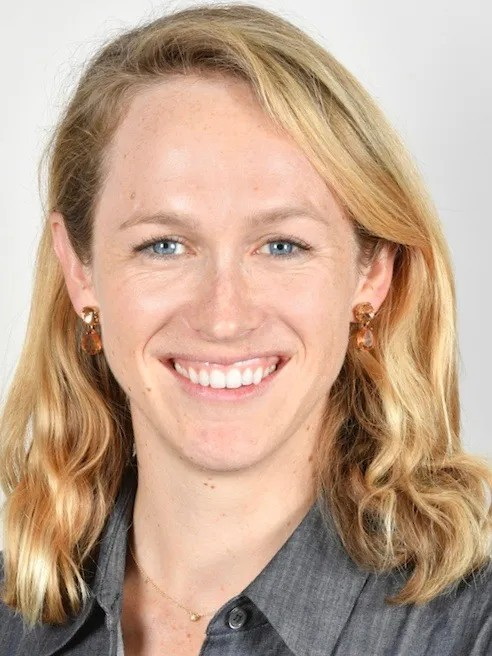
Torrey Taussig
Director, Transatlantic Security Initiative,
Atlantic Council
An #ACFrontPage Event
Atlantic Council Front Page is our premier live ideas platform for global leaders to discuss the defining challenges of our time. #ACFrontPage is a high-level event series featuring top newsmakers across multiple digital platforms. #ACFrontPage harnesses the convening power and expertise of the Council’s programs and centers to spotlight the world’s most prominent leaders and the most compelling ideas across sectors and to engage new audiences eager for nonpartisan and constructive solutions to current global challenges.
Explore the program
The Transatlantic Security Initiative, in the Scowcroft Center for Strategy and Security, shapes and influences the debate on the greatest security challenges facing the North Atlantic Alliance and its key partners.
Atlantic Council TV
Watch this event and more content on ACTV
Follow the conversations shaping our world. Available on all major platforms.