As geopolitical disruption redraws global markets, reshapes supply chains, and tests energy security, the Atlantic Council hosted a virtual AC Front Page conversation with Dr. Sultan Al Jaber, UAE minister of industry and advanced technology, managing director and group CEO of ADNOC, executive chairman of XRG, and chairman of Masdar.
In discussion with Helima Croft, among the world’s leading energy, economy, and industry strategists, Dr. Al Jaber examines how global energy systems are adapting to a new geopolitical order, what market disruption means for investment and economic growth, and how nations can build more resilient and secure energy systems.
The conversation also explores:
- The UAE’s evolving energy strategy following its departure from OPEC
- The growing convergence of energy, AI, and advanced technology
- The US-UAE partnership in energy security, investment, and industrial growth
- The long-term capital allocation shaping the next generation of global energy systems
At a moment when energy is no longer just about supply and demand, but also about security, intelligence, and economic competitiveness, Dr. Al Jaber offers his perspective on one of the world’s most consequential energy transformations.
TRANSCRIPT
Expand to read
Fred Kempe:
Welcome to Atlantic Council Front Page, our premier platform for global leaders. I’m Fred Kempe, president and CEO of the Atlantic Council. We are delighted today to welcome His Excellency Dr. Sultan Al Jaber for a discussion on the global energy implications of the war with Iran and the UAE’s energy strategy in a time of profound geopolitical transformation.
Dr. Sultan wears many hats. He is the minister of industry and advanced technology for the UAE, managing director and group CEO for the Abu Dhabi National Oil Company, executive chairman of the energy investment company XRG, and chairman of the renewable energy company Masdar. He also served as the president of the twenty-eighth session of the UN Climate Change Conference.
Dr. Sultan has firsthand experience as a leader at the intersection of global energy, economics, and technology: the very topics we’ll be diving into today. This discussion comes at a pivotal moment for the UAE itself, as the country’s role within the global energy system evolves following its decision to leave OPEC and pursue a more independent and diversified energy strategy. And it comes as many grapple with how to build a more resilient and integrated Middle East in the aftermath of the war with Iran.
Today’s discussion builds on the Council’s ongoing work across the Middle East and our efforts to advance dialogue on the connections between energy and geopolitics. Today’s conversation will be moderated by Helima Croft, herself a leading expert on these issues, as well as a member of the executive committee of the Atlantic Council’s Board of Directors. She’s also the managing director and head of global commodity strategy, and MENA research at RBC Capital Markets.
For those tuning in live today, please join the conversation by using the hashtag #ACFrontPage on social media and submitting your questions for Dr. Sultan using AskAC.org. Helima, over to you.
Helima Croft:
Thank you so much, Fred. Good morning, Dr. Sultan. Thank you for joining us for this conversation today. We have had so many questions have been submitted already, so I’m going to get right into it by asking you a few of my own, and then we will go to audience questions.
Dr. Sultan, you have been extremely vocal about the cost to the global economy of the closure of the Strait of Hormuz. Can you give us your latest thoughts on the cumulative impact of this crisis?
Dr. Sultan Al Jaber:
Halima, good morning, and allow me first to say thank you very much for wearing the ADNOC blue outfit. It looks very nice. And thank you for starting with such an easy question. It’s great to see you, and I hope you’re well, and allow me also to thank Fred for that very kind and generous introduction. I also want to thank the Atlantic Council for hosting this important conversation at a critical time for global energy and economic security.
So Helima, you’re asking an important question. And I really don’t want to sugarcoat the answer. The closure of Hormuz is the most severe supply disruption on record. So far, the world has lost over a billion barrels of oil, and that number goes up by almost 100 million barrels every single week. Brent is trading at 40 percent above pre-closure levels.
And Hormuz as we all know it is not just an oil story. It is in fact an everything story. Think about it: We’re talking LNG, jet fuel, fertilizers, ammonia, urea, aluminum, helium, critical minerals, plastics, consumer goods, and other general cargo products. In other words, the entire supply chain of the modern global economy: from the food on your table to the planes in the sky to the chips in your phone. Fuel prices are up 30 percent. Fertilizers are up 50 percent. Airfares are up 25 percent.
Every farm, every factory, every family is paying the price, and the ones who are most vulnerable end up carrying the heaviest load. And this is now flowing into the macro numbers. Global growth outlook has been cut to 3.1 percent for 2026. Inflation is already pushing past 4 percent, ones that really stands out.
Just over eighty days into this conflict and almost eighty countries have now taken emergency measures to support their own economies. And, Helima, there is something worth pointing out: Even if this conflict ends tomorrow. it will take at least four months to get back to 80 percent of pre-conflict flows, and full flows will not return before the first or even second quarter of 2027.
This is not just an economic problem. In fact, this sets a dangerous precedent. Once you accept that a single country can hold the world’s most important waterway hostage, freedom of navigation, as we know it, is just finished. So I’ll finish by saying this. If we don’t defend this principle today. we will spend the next decade defending against the consequences.
Helima Croft:
I mean, Dr. Sultan, the costs you’ve laid out are absolutely stunning, and I would argue still underappreciated by many watchers of this war. I want to ask you specifically about the impact on the UAE.
Dr. Sultan Al Jaber:
I’m sure everyone here knows how well we managed the situation. But yes, and of course we were affected. And I am sure you will agree that this was an illegal, erratic, unhinged, and unprovoked attack. We never called for this. In fact, we did everything to prevent it from happening.
The UAE was targeted by more than three thousand missiles and drones, more than any other country in this conflict. Every single target was civilian: Airports, terminals, refineries, gas processing plants, residential areas, shopping malls, and most recently, the Barakah nuclear power plant.
Now, whether carried out directly or through proxies, this was a terrorist act and a dangerous escalation. It showed a criminal disregard for civilian lives in the UAE and across the region. And let’s get real: They are targeting our infrastructure, but what they’re really targeting is our way of life. The UAE was attacked for its model of development, a model based on coexistence, tolerance, economic openness, and a model that has enabled success over the years by building bridges and creating very unique relationships and partnerships globally. And what we will remember from these months is not the missiles or the drones; it is, in fact, the millions of small acts of courage by people, nationals and residents, who kept our country running. And I am sure that you would agree this is a testament to the UAE’s leadership that put people above everything else.
Helima Croft:
Dr. Sultan, could you talk a little bit more specifically about ADNOC operations. Obviously, we’ve been following closely what has been happening with Iranian attacks on ADNOC. Can you talk about how your company has been resilient through this crisis?
Dr. Sultan Al Jaber
Thank you for that question, and again, I’ll be very direct and clear in my answers. When it comes to ADNOC, as you know, some of our facilities were directly targeted, and our infrastructure was directly hit. But this is exactly the kind of scenario our systems have been tested to withstand.
We kept supplies flowing and worked closely with our partners and with our customers, shipment by shipment, to meet demand wherever we could. We redirected volumes through the east coast and used our global trading network to secure additional supplies for our customers across Asia.
We are also working with our partners, in particular, our partners in Asia, to expand and restock strategic storage to strengthen resilience against future shocks, and we continue to adapt our commercial strategy to ensure our products remain very competitive, reliable and attractive to customers around the world. And honestly, the best proof of how we have adapted to the situation is in our financial results. Even in this environment, every one of our listed companies has achieved strong returns, many of them outperforming market expectations and analysts.
That tells you something important about the robustness of our business, the strength of our strategy, and the strength of our nation. This whole experience, in fact, showed the world how we truly are. People felt safe. The country kept moving. Energy kept flowing. Airports stayed open. Business continued to do business. Investor confidence remained very strong.
In fact, we are now seeing a new caliber or a new wave of investors looking at the UAE more seriously, precisely because of how the country responded and because of their faith in our infrastructure, our credibility, our systems, and our resilience.
Helima Croft:
Dr. Sultan, I had the pleasure in March of hearing a speech that you gave on the war, and you really talked about the lessons that we need to learn from this experience. Can you talk about how we come back from this better, if possible?
Dr. Sultan Al Jaber:
A few things have really stayed with me from the last few months. First, resilience matters a great deal. In fact, it is a critical success factor. It may seem expensive, until the day you need it. And when you need it, it becomes priceless. Second, AI must be built in, not bolted on. In a crisis, the speed of insight and the speed of decision making is the difference between continuity and disruption. Third, energy security is no longer just about your ability to continue to produce. It is about routes, access, storage, and redundancy. Right now too much of the world’s energy still moves through too few chokepoints.
That is exactly why the UAE made the decision more than a decade ago to invest in infrastructure that bypasses the Strait of Hormuz and it is why we moved ahead with our second pipeline in 2025. Today it’s already almost 50 percent complete, and we are accelerating its delivery toward 2027. and that leads me to one of the biggest lessons: investment as a sector and as an industry. We are dangerously underinvested. Upstream investment is sitting at around $400 billion a year, which barely offsets natural decline rates.
Global spare capacity is around three million barrels a day. It should be closer to five. And in just two months, the world drew down around 250 million barrels from storage. We have thirty to thirty-five days of effective cover. We need to at least double that.
And one final lesson this period revealed is who our real and true partners are. When the pressure rises, you quickly see who stands firm, who stands with you, who actually steps up and shows up. In a crisis, partnerships are your real strategic reserves. So, Helima, a lot of lessons were learned, and I am very much counting on all of you coming to Abu Dhabi in November to participate in ENACT and ADIPEC in order for us to be able to drill down and get an engagement that will allow us to better understand these lessons learned and develop new avenues of developing long-term solutions.
Helima Croft:
Well, we all look forward to joining you, Dr. Sultan, in Abu Dhabi in November. I wanted to ask the question about OPEC. There has been a lot of conversation about the UAE’s decision to exit OPEC and OPEC+. Can you walk us through the sort of rationale behind that decision and what you hope will be the benefits of taking that choice?
Dr. Sultan Al Jaber:
You’re right, and the choice of the word—historic is in fact the right word. The UAE is entering a new chapter of growth. This was a sovereign strategic decision, made with clarity, passion, conviction, and full confidence. We want greater flexibility to invest. We want greater flexibility to grow, to expand, to partner, and to create long term value, because ultimately, real strength is not measured by the abundance of resources but by how they are harnessed to serve the nation. It is about how you use them to build industries, create opportunities, and safeguard the economy for future generations. So the bottom line is we didn’t move away from something. We moved towards something. We are moving toward a world that needs more energy. With demand for oil staying well above 100 million barrels into 2040s, the world needs more of what the UAE produces, and that is the lowest cost, lowest carbon barrels out there. And now, we will have the flexibility to place more crude with customers everywhere. At the same time, we in the UAE need more energy to move at the speed of our ambition. In particular, natural gas is increasingly strategic, not only for our business but for power generation, AI infrastructure, manufacturing, advanced industries, and economic growth.
So ultimately this was not a reaction or a rupture and not directed against anyone or any institution. And let me just add this: For us, responsibility does not end with membership. Outside OPEC, the UAE will remain what it has always been, a disciplined, responsible, credible, reliable, and a stabilizing force in the global energy markets. We will keep engaging. We will keep talking, and we will keep showing up for our friends and partners when and wherever they need us.
Helima Croft:
Well, thank you, Dr. Sultan. You’ve talked so much about partnerships, the need for partnerships. Can you talk about the relationship with the United States. How has it evolved and where do you see it going? And how does it encompass all the things you’ve talked about in terms of AI, investment, security?
Dr. Sultan Al Jaber:
The relationship between the United Arab Emirates and the United States is becoming more integrated, more ambitious, and more consequential every year. We have a strategic partnership across technology, investment, industry, infrastructure, energy, defense, and, and much more.
Last year, bilateral trade reached a record of $39 billion US dollars. And the UAE remained America’s largest export market in the Middle East for the seventeenth consecutive year. The investment story is even more impressive. We have invested more than one trillion dollars in the United States with more to come over the next decade.
Our energy investments, for example, through ADNOC, XRG, and Masdar now total more than $85 billion across nineteen states. Look, the US remains a top investment priority for us simply because of its unique infrastructure, it’s unique combination of rich energy resources, deep capital markets, and pro-investment regulation. Through XRG, we already have significant assets from the Rio Grande LNG terminal to eighteen chemical sites across the US through NOVA chemicals, COVEStro, and Brugge.
And we are currently proactively and actively exploring opportunities with many of our partners, some of them do exist as partners, and some new partners, and our approach is simply across the whole energy value chain with special emphasis on the gas value chain from upstream shale to regasification terminals and the distribution network.
And of course, our relationship extends beyond energy. This includes AI and AI infrastructure, data centers, semiconductors, advanced manufacturing, critical minerals, financial services, and much more.
Here is what I want people to understand, really: We invest in America because we believe in America. We believe its energy resources, it’s capital markets, it’s innovation, ecosystem, and its people, and the quality of the ecosystem that has been created that helps attract investments.
The UAE and the United States are not just trading partners. We are co-investors in the economy of the next century, and that is a partnership built on trust, not on transactions. It is also exactly why it performs differently under pressure and why I believe that this relationship and this partnership will only keep growing.
Helima Croft:
Well, Dr. Sultan, I have so many questions coming in on my screen. I’m going to ask one last one, but it’s actually incorporating a number of questions that have already come in. It’s really on the “all of the above economy” and your biography. Many listeners and people submitting questions have pointed out that you’ve had a very expansive career. Chairman of Masdar, you were COP28 president. You’ve been the big advocate for “all of the above.” And so the question I’m getting is, has the current energy shortages that we’re facing now because of the war, has it changed your thinking on “all of the above” or really validated that approach?
Dr. Sultan Al Jaber:
In fact, actually, thank you very much for this question, first of all, and second, I think recent events have made the answer very clear. In fact, crystal clear. The global economy still runs on an energy system where oil and gas, renewable energy, nuclear energy all play different but essential roles. The idea that any one source could carry the entire system on its own was never realistic because the world is using more of every form of energy. So globally, renewables are growing fast. Nuclear is returning to the grid. Electricity demand is accelerating because of AI and data centers and this exponential growth. And at the same time, as I said earlier, oil demand remains above 100 million barrels a day.
So my position has not changed whatsoever. If anything, it has only become clearer, and that is exactly why ADNOC is expanding capacity to five million barrels a day. And that’s exactly why we’re growing our renewable energy portfolio to one hundred gigawatts. It is why we continue investing across the full energy value chain and that is exactly why we created XRG: to build a more diversified global energy investment platform spanning gas, chemicals, infrastructure, energy solutions, and energy systems.
I can tell you, the UAE continues to go all in on all of the above.
Helima Croft:
Well, Dr. Sultan, I’m now going to turn it to audience questions, and I just want to tell the viewers that we’ve had so many that I’m actually going to group them together so we can get to as many themes as possible. Obviously a lot has come in on AI, and I’m going to actually have a quote or this beginning of a question from Hassan Farhan, who is a grade nine inventor and developer who’s asked, I think, the most sophisticated version of this. I’m just going to take a top line. He starts with Dr. Sultan Al Jaber, you have spoken powerfully about how there is no artificial intelligence without actual energy.
The question he has, and that many viewers have is has enough investment gone into energy to meet the demand for molecules that is going to come from the AI revolution?
Dr. Sultan Al Jaber:
Do I hear you?
Helima Croft:
So the, the question is on the AI revolution, Dr. Sultan, you’ve been one of the leaders on the revolution, seeing the potential of the AI revolution, the demand for molecules. The question we have, we’re getting from many viewers is has enough investment been made on energy, on energy infrastructure to meet the demands of the AI revolution?
Dr. Sultan Al Jaber:
Thank you for such a great question. I actually think that the world is still underestimating just how energy intensive the AI revolution will be.
The investment gap is real, and it is just getting wider. Global data center electricity demand is expected to double by the end of this decade: around one thousand terawatt hours. And nowhere is this accelerating faster than in the United States, where data centers could rise from around 5 percent of electricity demand today to nearly 15 percent by 2030. That is only in the next four years. So in my view, this is no longer just a technology conversation. It is an energy infrastructure, capital, and competitiveness conversation. In many ways, the AI race is an electron race.
And countries that can provide reliable, scalable, and affordable power will have a major competitive edge and a major strategic advantage. That is why we continue to emphasize the importance of reliable base load energy, and this is why we see natural gas as a foundational part of the future energy system as the world works to close the growing power gap.
But there is another side to this transformation that is equally important: When the world is using energy to power AI, let me tell you what ADOC is doing. At ADNOC, we are using AI to empower energy. For us, AI is not a co-center. It is a competitive edge. Across our operations, from the wellhead to the trading floor, we are deploying thousands of Agentic AI and robotics applications, and we are now entering the next phase of AI integration and AI adoption.
We are moving from digital AI to physical intelligence: In other words, AI operating in the physical world. So we’re, this is more applied AI rather than anything else. In the first phase, AI helped generate content. It helped analyze information and automate workflows. In the next phase AI is helping us operate physical systems through robotics, autonomous inspections, intelligent infrastructure, and real-time operational optimization.
So in simple terms, AI is helping us produce more energy more intelligently, more efficiently, and with greater value from every molecule we produce.
Helima Croft:
The next question I have, and again we’ve had multiple questions along these lines, but I’m going to read out the question from our head of our own Atlantic Council Global Energy Center, Landon Derentz. How long would it take for ADNOC to restore production to pre-conflict levels following a resolution of the current conflict?
Dr. Sultan Al Jaber:
The fact is we are still assessing the damage and costs from the unprovoked and completely unjustified attacks. Our resilience playbook and the fact that we have integrated AI across our operations that helped us better understand the situation and better analyze the whole the consequences of such attacks and how to better mitigate the risks of those attacks. And I must say that it is through AI and through a robust resilience playbook we’ve been able to keep our operations running, despite the significant constraints. The time it will take to get back to full operational capacity of course varies case by case. In some cases, several weeks, and then others it will take several months.
Helima Croft:
So I think I have time for one more question, and I’m going to go to question from one of our board members, Marco Margheri. He said a few years ago, ADNOC initiated a bold $150 billion investment program when many were convinced it would be risky because of peak demand. What convinced you then that this was the right decision, and how do you project it now towards the future.
Dr. Sultan Al Jaber:
I promise you that the $150 billion investment was a bet on reality. The world will need more energy with fewer emissions delivered by the most credible and reliable producers. And that is exactly where ADNOC is positioned to lead.
As I mentioned earlier, oil demand will stay above 100 million barrels well into the 2040s. At the same time, global upstream investment is at a ten-year low. Our cap-ex program will drive investment in upstream oil and gas and across the value chain, including unconventional oil, unconventional gas, refined products, new processing capacities, chemicals, petrochemicals, fertilizers, and, of course, resilient infrastructure that is very much needed, especially after the most recent experiences.
And ADNOC enters this era with real advantages. We’re one of the world’s lowest cost, lowest carbon barrels, integrated refining and chemicals, advanced logistics and global trading capabilities, strong access to growth markets, a deep balance sheet, robust strategy, great relationships and partnerships across the globe. And of course now through XRG, as you know, XRG is a commercially driven international investment platform with the scale and flexibility to invest across the global energy value chain.
Helima Croft:
So Dr. Sultan, unfortunately we have come to the end of our discussion. I just wanted to ask you before you leave us, do you have final thoughts for the viewers and listeners.
Dr. Sultan Al Jaber:
Halima, thank you very much for the opportunity and for giving me the space to give you my final thoughts. And if you allow me, I would like to close with this: Resilience is not luck. It is what you built before the attack came. It is the air defense systems you invested in. It is the economic diversification you committed to. It is the partnerships that you have built over the years centered around trust, conviction, passion, and credibility and being there for your friends and for your partners when they need you. It is the social contract written fifty years ago, when my country was founded, that everyone who builds here belongs here.
The UAE was tested. And what the test revealed is that this country is more than a city skyline, more than oil reserves, more than a sovereign wealth fund. It is a model, and that model held. And as I said earlier, the world now knows better who we truly are.
The UAE builds, the UAE adapts, and the UAE will continue to move forward. And that is why even in difficult periods, people continue to invest in the UAE, work with the UAE, and place their full trust in the UAE.
Helima Croft:
Dr. Sultan, thank you so much for spending time with us this morning and this invaluable conversation, and thank you so much for your extraordinary partnership with the Atlantic Council. We very much look forward to seeing you in Washington again, and we very much look forward to joining you in Abu Dhabi soon. Thank you.
Featuring
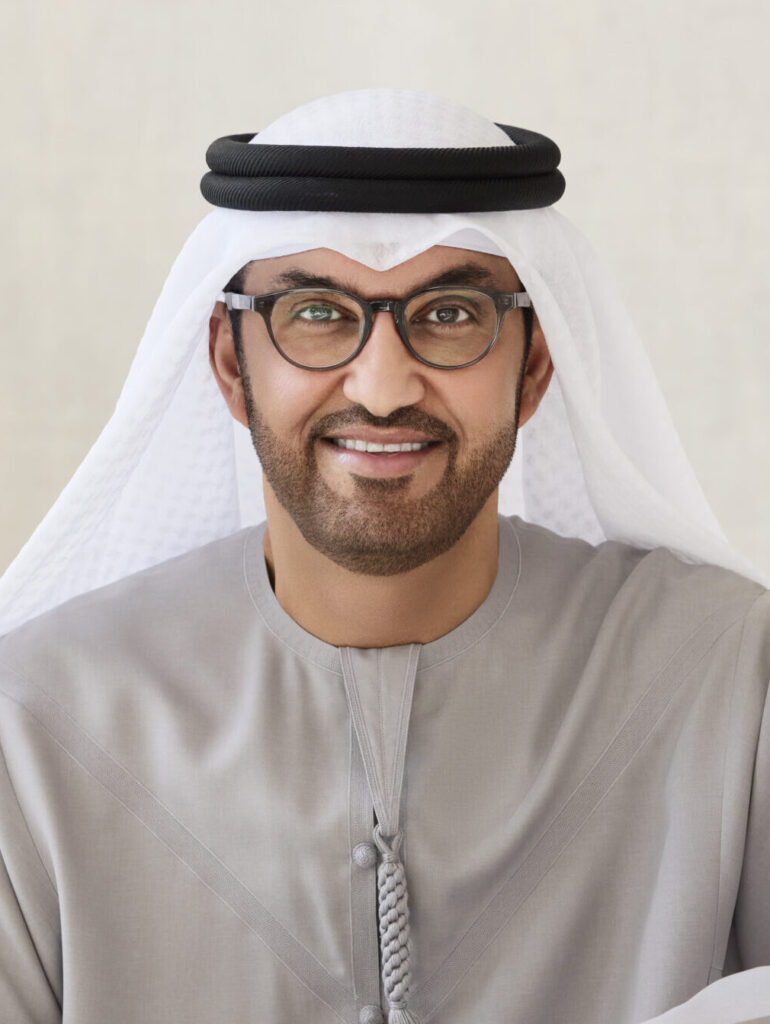
H.E. Dr. Sultan Al Jaber
Minister of Industry and Advanced Technology, United Arab Emirates;
Managing Director and Group CEO, ADNOC;
Executive Chairman, XRG;
Chairman, Masdar
Moderated by
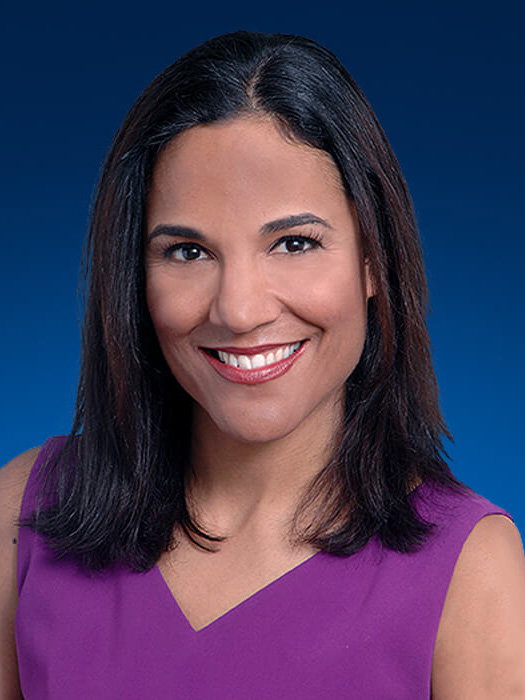
Helima Croft
Managing Director and Head of Global Commodity
Strategy and MENA Research,
RBC Capital Markets;
Board Member,
Atlantic Council
Welcome remarks
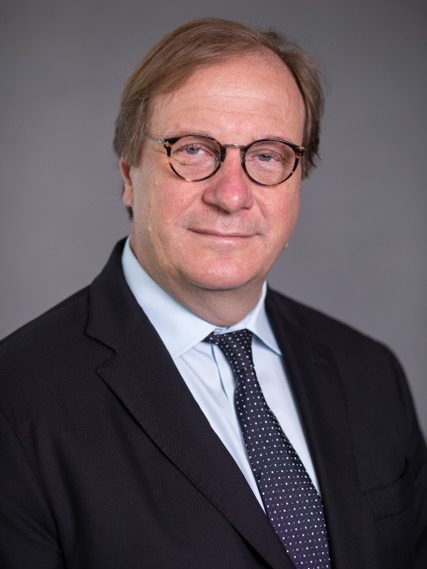
Frederick Kempe
President and CEO,
Atlantic Council
An #ACFrontPage Event
Atlantic Council Front Page is our premier live ideas platform for global leaders to discuss the defining challenges of our time. #ACFrontPage is a high-level event series featuring top newsmakers across multiple digital platforms. #ACFrontPage harnesses the convening power and expertise of the Council’s programs and centers to spotlight the world’s most prominent leaders and the most compelling ideas across sectors and to engage new audiences eager for nonpartisan and constructive solutions to current global challenges.
explore the program
The Global Energy Center develops and promotes pragmatic and nonpartisan policy solutions designed to advance global energy security, enhance economic opportunity, and accelerate pathways to net-zero emissions.
Atlantic Council TV
Watch this event and more content on ACTV
Follow the conversations shaping our world. Available on all major platforms.