
Boosting the Western Balkans’ digital transformation: The key role of the private sector
Bottom lines up front
- Creating tech-driven ecosystems, connecting the regional startup ecosystem, and reversing brain drain are necessary steps to drive digital transformation.
- The private sector can play a meaningful role in promoting economic development through information and communication technology and digitalization.
- Leveraging the shared priority of the six Western Balkan countries to join the EU is a promising way to promote collaboration in policymaking.
Table of contents
- Summary
- Glossary
- Introduction
- Support policymakers in creating tech-driven ecosystems
- Connect the regional startup ecosystem
- Move from brain drain to brain gain
- Conclusion: Handle with caution
- Appendix 1. Methodology
- Appendix 2. The Western Balkan economies’ economic and ICT data
- Appendix 3. Western Balkan snapshots—Main fields of digital transformation
Summary
For Western Balkan countries, opportunity for economic transformation lies in their progression toward digitally driven development, especially on the backs of existing pockets of excellence.1Pockets of excellence are segments of digital transformation in the Western Balkans that are performing at a top level (including companies, organizations, and individuals). Some entities within the Western Balkan region demonstrate global competitiveness in creating innovative digital products and services. However, a noticeable gap remains within the broader regional economy concerning the use of information and communication technology (ICT) and advanced technological solutions to generate business value.
When it comes to ICT development, the Western Balkan region is full of contrasts. An ever-growing number of born-global digital businesses are thriving and competing in the largest international markets. On the other hand, the digital skills of the population and the level of business enablers within the economy lag well behind European Union levels.
Globalization and digitalization are transforming the global economy, accelerating the diffusion of innovation, fostering competition, and driving economic growth. By embracing these trends and leveraging the opportunities they present, countries can position themselves to thrive in the digital age and unlock new pathways to prosperity. And within the Western Balkans, there are clear beacons of hope that this could be possible.
In this research, we investigate the current state of ICT and digitalization within the region and, more importantly, focus on the potential yet to be achieved. To do this, we have identified key areas to work on, based on the current state of development; the existence of insufficiently tapped know-how, resources, and commitment; and the potential for ICT and digitalization to positively impact economic development.
This report is structured around the following recommendations:
- Support policymakers in creating tech-driven ecosystems. ICT has become a key priority for Western Balkan policymakers and has been clearly recognized as a way to grow economies. This existing commitment should be leveraged. Currently, despite significant investments and dedication, countries still struggle with the digital divide. With more robust investment planning, Western Balkan countries could leapfrog other economies instead of merely catching up to them.
- Connect the regional startup ecosystem. Startups emerged from the region long before they had any institutional support, and this sector could again be a pioneer by leading regional cooperation. By leveraging shared cultural ties and addressing funding challenges through cross-border initiatives, the Western Balkans can unlock opportunities for regional entrepreneurship and development.
- Move from brain drain to brain gain. Brain drain challenges are nothing new for the region, which is struggling to attract and retain talent, particularly highly educated professionals, who have been leaving the region since the 1990s. These worrying statistics could be at least partially overturned by leveraging the diaspora’s expertise to support internationalization, business development, and even resource attraction.
Glossary
brain drain: the emigration of highly skilled or educated individuals from one country or region to another, typically in pursuit of better opportunities, which results in a loss of talent for the home country or region
digitization: The process of converting physical or analog data into digital form, typically through scanning or digitizing equipment
digital divide: the gap between individuals, communities, or regions that have access to digital technologies and those that do not, which often results in disparities in access to information, opportunities, and resources
digital literacy: the ability to effectively use digital technologies to find, evaluate, create, and communicate information, encompassing skills such as internet browsing, email communication, and basic software use
digital transformation: the comprehensive integration of digital technologies into all aspects of an organization, fundamentally changing how it operates and delivers value to stakeholders
digitalization: the process of converting analog information into digital format, enabling storage, processing, and transmission using digital technology
digitization: the process of converting physical or analog data into digital form, typically through scanning or digitizing equipment
electronic commerce (e-commerce): the buying and selling of goods and services over the internet, which encompasses online retail, electronic payments, and digital marketing strategies
financial technology (fintech): innovative technologies and platforms that enable financial services, including online banking, mobile payments, blockchain, and peer-to-peer lending
information and communication technology (ICT): a broad term encompassing technologies used to manage and communicate information, including computers, telecommunications, software, and networks
small and medium-sized enterprises: businesses that maintain revenues, assets, or numbers of employees below a certain threshold, varying by country and industry, and often play a significant and dominant role in local economies
startup ecosystem: the interconnected network of organizations, individuals, and resources supporting the growth and development of new and innovative businesses, including incubators, accelerators, investors, and mentors
Western Balkans: a region in southeastern Europe consisting of six countries: Albania, Bosnia and Herzegovina, Kosovo, Montenegro, North Macedonia, and Serbia
Introduction
How information and communication technology help the Western Balkans grow
Over the past decade, the Western Balkans has gained significant momentum in growth and development, driven largely by the global information and communication technology (ICT) boom. During this period, ICT has become an important export sector, steadily increasing its contribution to gross domestic product (GDP) growth and added overall value. New companies have emerged, primarily in outsourcing, but also those developing their own products and services. Several startups have grown into global brands, while both domestic and foreign capital has increasingly flowed into the real economy.
Figure 1. ICT as a percentage of GDP (gross value added as % of GDP), 2014-23

Source: Eurostat.2“Gross Value Added and Income by Industry,” Eurostat, n.d., https://ec.europa.eu/eurostat/databrowser/view/nama_10_a10__custom_11039991/default/table?lang=en, accessed September 2025.
The turning point came in the early 2010s, when international companies recognized the Western Balkans as an attractive outsourcing destination. With competitive labor costs, highly skilled programmers, and favorable time zones for both European and US clients, the region quickly developed into a hub for software development. As outsourcing matured, another path of ecosystem development emerged—startups proving that world-class Software-as-a-Service and Web3 solutions could also originate from the region. However, much of the potential remains untapped, as traditional sectors of the economy continue to lag in digital transformation.
All of this has placed the Western Balkans at a pivotal juncture. The region can continue leveraging its ICT growth and potential, alongside globalization and digitalization, to seize unprecedented opportunities for economic development. Today, with the rise of the agentic economy, where artificial intelligence (AI) agents—autonomous software entities—interact, negotiate, and transact with one another, the Western Balkan innovation ecosystem must once again adapt and align with new, lasting trends.
With this in mind, this report focuses on the foundation and assets the ICT ecosystem in the Western Balkans has built over the past decade. It examines the key drivers of growth and makes a case for exploring how these can be harnessed to support further progress in the era of the agentic economy. So far, most empirical studies on the impact of ICT on GDP have found that ICT positively influences economic growth (see Figure 1) and that this effect is even larger in developing countries.3See Appendix 2.1 for more details.
In today’s interconnected world, globalization and digitalization are catalyzing the rapid dissemination of new products, ideas, and concepts worldwide. This phenomenon is reshaping the dynamics of markets while presenting unprecedented opportunities for economic growth and development. And this is happening faster than ever before.
Figure 2. Technology adoption by households in the United States

One primary way in which globalization and digitalization are driving economic growth is through the accelerated adoption of innovative products and concepts. As new ideas emerge, they can quickly traverse the globe, reaching previously inaccessible markets and unlocking opportunities for businesses. A startup anywhere in the world can develop groundbreaking technology and rapidly scale its operations globally, thanks to digital platforms and global supply chains. For example, in just two months5PwC’s Global Entertainment & Media Outlook 2023–2027, Omdia, IMF, 2023. https://www.pwc.com.tr/global-entertainment-media-outlook-2023-2027, ChatGPT, the natural language–processing AI tool, reached a milestone of 100 million users. These instances underscore the swift evolution of new digital technologies, which are embraced by a wide consumer base and individuals employed across various local and multinational companies worldwide.
Figure 3. Time it took for select online services to reach 100 million users
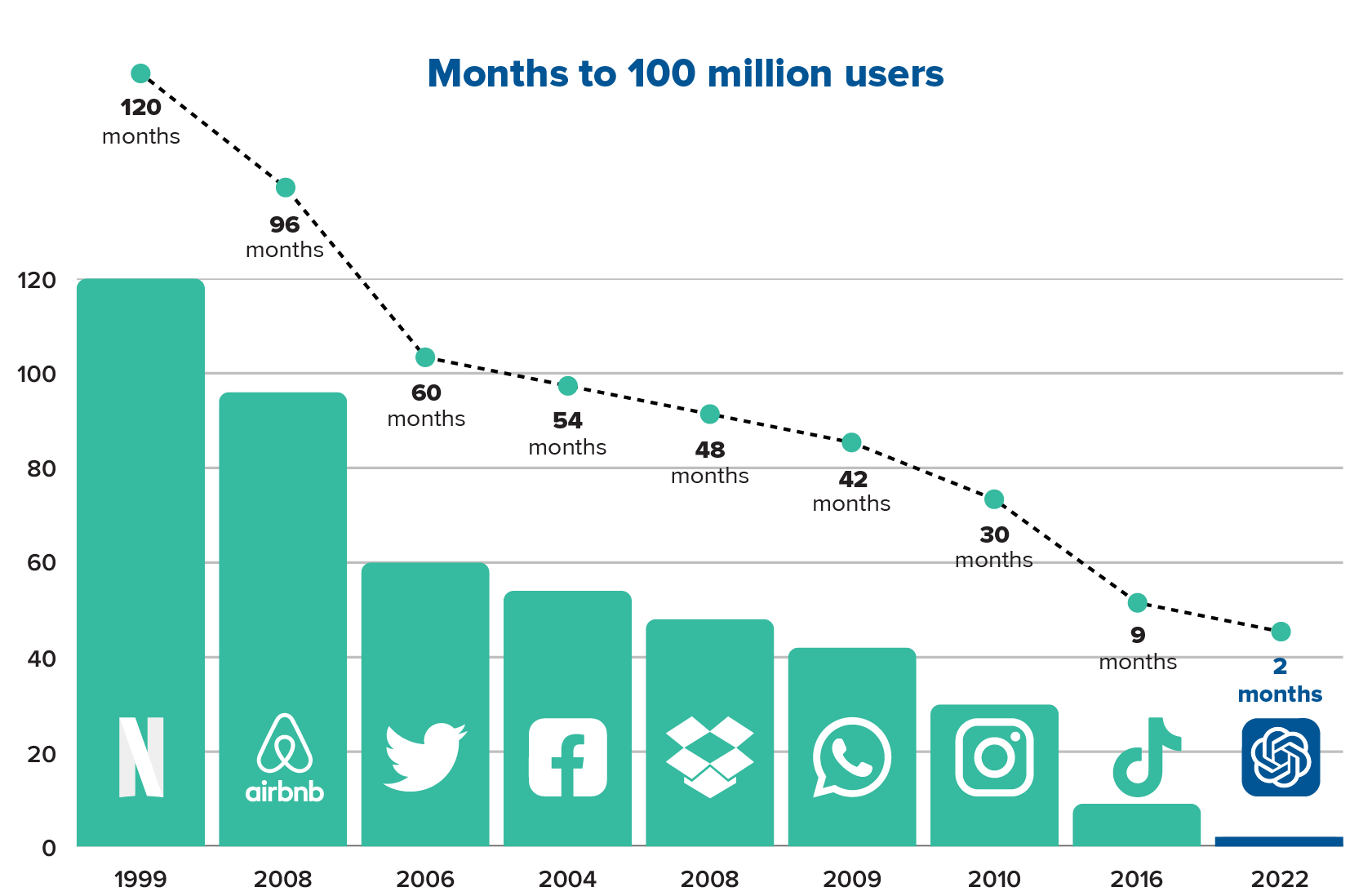
Moreover, the convergence of globalization and digitalization is breaking down traditional barriers to entry, democratizing entrepreneurship, and fostering a more competitive landscape. Small and medium-sized enterprises now have access to global markets like never before through electronic commerce (e-commerce) platforms, digital marketing channels, and online payment systems. This democratization of market access empowers entrepreneurs from diverse backgrounds to participate in the global economy, driving innovation and productivity.
The synergistic effects of globalization and digitalization also extend beyond the business realm: They facilitate the exchange of knowledge, expertise, and best practices among countries, spurring innovation and driving productivity gains. When it comes to Europe, Estonia stands as a shining example of a country that has adeptly leveraged the forces of globalization and digitalization to foster economic growth and innovation. With a population of only 1.4 million, Estonia has emerged as a global leader in digital governance and entrepreneurship, earning the nickname “e-stonia.” The country’s embrace of digital technologies has attracted entrepreneurs and innovators from around the world, leading to the emergence of successful tech companies such as Wise (formerly TransferWise), Skype, and Bolt (formerly Taxify), which have achieved global prominence.
Another key development is that neighboring countries have built strong ties. Collaborative research and development (R&D) initiatives, cross-border partnerships, and international talent mobility contribute to the creation of a vibrant global innovation ecosystem. To continue with the same example, Estonia has joined forces with its Baltic counterparts to amplify the benefits of digitalization and globalization. By pooling resources and expertise through the Baltic Innovation Fund and joint initiatives within the European Union’s (EU’s) digital single market, Estonia, Latvia, and Lithuania have enhanced their collective competitiveness in the global digital economy.
However, it is important to acknowledge that the benefits of globalization and digitalization are not evenly distributed. While these trends offer immense opportunities for countries and businesses that embrace them, they also pose challenges such as the digital divide, job displacement, and income inequality. Therefore, policymakers must strive to harness the potential of globalization and digitalization while addressing the associated risks and ensuring inclusive growth.
Based on the region’s strengths in ICT talent, strategic geographic location, and growing digital infrastructure, we identify key strategies and best practices that can empowered the Western Balkan economies to keep pace with global technological advancements and help them carve out a distinctive niche in the digital economy.
Through comprehensive analysis and insights, we seek to provide policymakers, industry stakeholders, and investors with actionable recommendations to foster innovation, stimulate entrepreneurship, and catalyze digital transformation across the Western Balkans. By harnessing the transformative power of ICT, these countries can position themselves as dynamic players in the global digital ecosystem, driving sustainable economic progress and prosperity for their citizens. This report is structured around three main recommendations for how the region can significantly improve its economic performance through innovation and digitally driven development:
- Support policymakers in creating tech-driven ecosystems
- Connect the regional startup ecosystem
- Move from brain drain to brain gain
See Appendix 1 for more details on this report’s methodology.
Support policymakers in creating tech-driven ecosystems
ICT has been the focus of almost all Western Balkan economies, which have placed it at the forefront of their economic growth. The World Bank’s latest GovTech Maturity Index (GTMI) from 2022 reveals a diverse landscape of technological development across the Western Balkans, underlining both the region’s achievements and its challenges on the path to digital transformation. The GovTech Maturity Index (GTMI) provides a comprehensive overview of digital transformation in the public sector across 198 economies. It measures the maturity of four critical GovTech focus areas through 48 indicators. GTMI looks at the maturity of four GovTech focus areas: core government systems (CGSI), online public service delivery (OPSD), digital citizen engagement (DCE)) and GovTech enablers (GTEI). Figure 4 shows the value of these indexes per economy.
- Serbia led the region with a GTMI score of 0.895, excelling in digital competitiveness, infrastructure (0.979 on the Digital Citizen Engagement Index), global tech integration (0.910 on the GovTech Enablers Index, or GTEI), and public sector digitalization (0.890 on the Public Service Delivery Index, or PSDI).
- Albania followed at 0.752, driven by strong public sector digitalization (0.857 on the PSDI) and steady performance across other dimensions.
- Kosovo scored 0.633, showing rapid public sector modernization (0.852 on the PSDI) but weaker global integration (0.456 on the GTEI).
- Montenegro (0.565) and North Macedonia (0.570) were mid-ranking, each facing challenges in infrastructure or ecosystem integration despite solid domestic progress.
- At the bottom, Bosnia and Herzegovina scored 0.271, reflecting deep structural gaps in digital competitiveness (0.160) and global integration (0.176), highlighting the need for systemic reforms and investment.
Figure 4. The state of development of government technology (GovTech) in the Western Balkans, measured by World Bank indexes

Source: World Bank GovTech Dataset6.“GovTech Dataset,” World Bank Group, n.d., https://www.worldbank.org/en/data/interactive/2022/10/21/govtech-maturity-index-gtmi-data-dashboard, accessed October 2025.
There is no doubt that policymakers are ready to invest in ICT as a GDP boost. Across the Western Balkans, various stakeholders insist that the technological gap is much smaller than the economic gap. But is it?
Western Balkan economies rank in the bottom tier among European countries according to a dataset on information technology (IT) investment per GDP. The fact that 20 percent of countries continue to make up 80 percent of total investments in new technologies highlights the risk of a growing digital divide for smaller countries.7Milovan Matijevic and Milan Šolaja, “ICT in Serbia: At a Glance, 2022,” Vojvodina ICT Cluster, 2022, https://vojvodinaictcluster.org/wp-content/uploads/2022/12/ICT-in-Serbia-At-a-Glance-2022.pdf.
Figure 5. Dataset on IT investment according to economic strength (GDP)
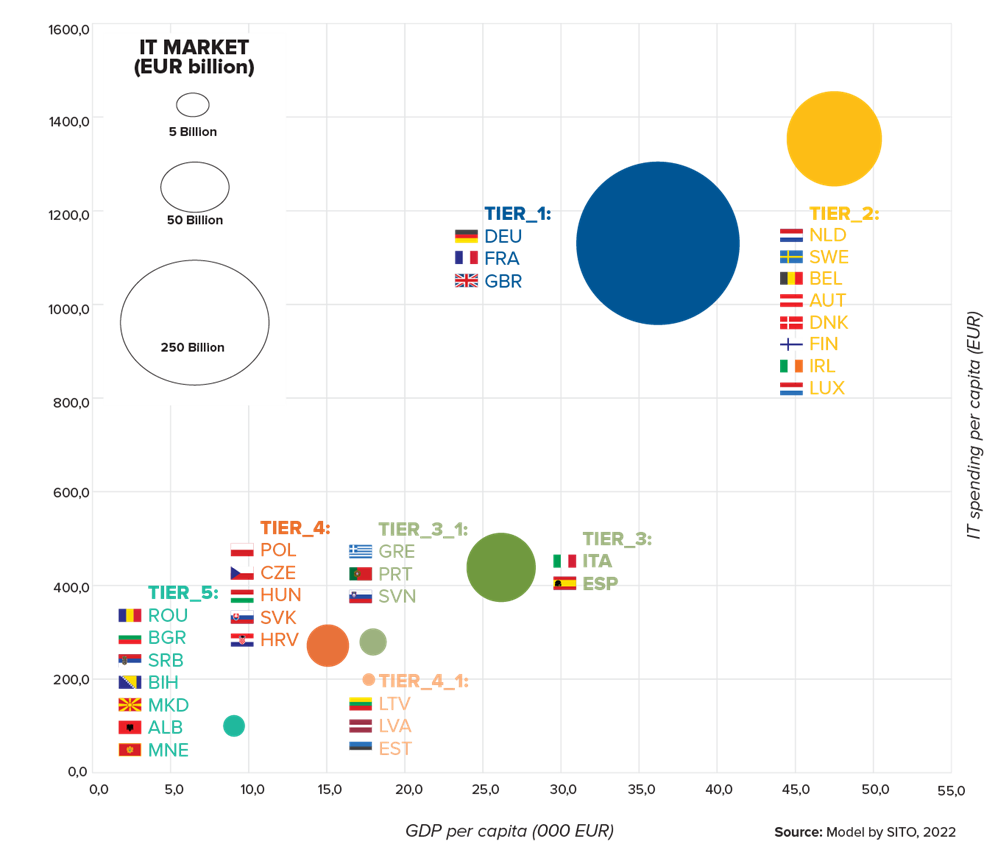
Source: Reproduced from Matijevic and Šolaja 2022.8Matijevic and Šolaja, “ICT in Serbia.” See also Appendix 2.3.
There are also some uncaptured data, specifically the high number of freelancers in the region. This is worrisome, particularly because it seems that policymakers are not aware of how far the region lags global leaders in ICT.9See also Appendix 2.3. Further, ICT access and usage in the region are advancing at a slower pace than in other countries, as emphasized by the World Intellectual Property Organization’s Global Innovation Index.10Global Innovation Index 2024: Promise of Social Entrepreneurship, World Intellectual Property Organization (WIPO), 2024, https://www.wipo.int/web-publications/global-innovation-index-2024/assets/67729/2000%20Global%20Innovation%20Index%202024_WEB3lite.pdf; see also Appendix 2.4.
This discrepancy in ICT indicators underscores the pressing need for Western Balkan economies to expedite their adoption of technology and improve their use of advanced solutions. Doing so will enable them to maintain competitiveness and foster innovation across various sectors. The previous experiences of other countries, such as Estonia and Finland, show the importance of government in this process. But Western Balkan countries are not currently equipped to turn increased investment in ICT into an opportunity for above-average growth, which has been confirmed in two studies (see Appendix 2.2).11Arta Ejupi Ibrahimi and Besnik Fetai, “The Impact of ICT on the GDP Growth of Western Balkan Countries,” SEEU Review 17, no. 1 (2022): 105-119, https://sciendo.com/article/10.2478/seeur-2022-0044; Predrag Mlinarević, Goran Balotić, and Sladana Paunović, “The Impact of Innovation on the Growth of Real Wages in the Western Balkan Countries,” Proceedings of the Third International Conference Economic and Business Trends Shaping the Future, 2022, https://repository.ukim.mk/bitstream/20.500.12188/24445/1/24%2010.47063EBTSF.2022.0024.pdf.
However, governments can stimulate demand for advanced digital products and services provided by the private sector. By actively endorsing and embracing these technological advancements, governments contribute to the development of a vibrant and competitive digital ecosystem. This collaborative relationship between the public and private sectors spurs innovation and fuels economic development by addressing the evolving needs of society.
The following are ways in which governments can support the digital ecosystem and create long-lasting impact:
- Integrate digital transformation policies and strategies. The extent to which digital technologies impact societies underscores the imperative for governments to integrate digital transformation into their development strategies. Digital technologies, on their own, do not inherently generate significant value for organizations. Therefore, these technologies must be implemented within the framework of an overarching strategy (see Appendix 1 for more data).
- Eliminate administrative burdens for businesses. Another crucial responsibility of the government is to facilitate the most efficient and least time-consuming administrative processes for businesses. In the Western Balkans, companies continue to face challenges in fully dedicating themselves to business development given the need to navigate often-complex administrative procedures.
- However, the situation is improving. Starting a business through an online service portal is a viable option in all Western Balkan economies except for Bosnia and Herzegovina and North Macedonia. Furthermore, e-filing for tax and customs declarations is available in all countries, and electronic invoicing has been fully implemented or is in the process of implementation. Nevertheless, the availability of digital signatures is lacking in Bosnia and Herzegovina. And in Kosovo, although there is a regulatory framework, the necessary infrastructure is not yet in place.
- Use government purchases as a tool for innovative demand creation. When it comes to allocating funds for software purchases, all countries in the region lag leading economies (see Table 4 and Figure 9). This deficiency becomes particularly pronounced considering that Western Balkan economies fall below the European average in terms of the most capital- and human-intensive activities in the value chain, such as R&D. Consequently, they depend on importing high-tech solutions and integrating them into business processes.Governments in the region are also underperforming in another important area: generating demand for innovative products. However, initiatives to increase demand are already under way. Serbia, Albania, and Kosovo have launched initiatives to improve public-sector innovation. Serbia has both a strategy and a program dedicated to improving public-sector innovation strategy, and Albania and Kosovo have such programs. However, there is still room for progress in terms of states turning these programs into action. Looking at the most successful innovation-driven countries shows that the first, and most risky, steps for building innovation should be undertaken or supported by the state. Therefore, taking the first step and creating demand for tech innovation should create spillover effects toward wider economic transformation and innovation-driven development.
- Make use of e-government. E-government offers numerous benefits in terms of efficiency, cost-effectiveness, transparency, citizen engagement, and ease of doing business. An efficient e-government framework simplifies bureaucratic procedures, minimizes red tape, and facilitates the seamless delivery of public services. The resulting cost efficiencies, coupled with enhanced transparency, contribute to a more accountable and responsive government. By digitizing and simplifying bureaucratic procedures, governments create a business-friendly environment that encourages entrepreneurship and foreign investment. This, in turn, propels economic growth and enhances global competitiveness. Notably, Serbia and Albania have made significant advancements in the provision of government services online (see Appendix 2.4).
Connect the regional startup ecosystem
Leveraging ICT services’ success to shift toward products and innovations
The proportion of IT value added in the GDPs of almost all Western Balkan economies has grown, and this growth is also reflected in employment opportunities within the IT sector.
About 80 percent, and more, of the domestic content of each of the Western Balkan economies goes into exports to other Western Balkan countries, but the total value of these exports is low. Importantly, the current low share of IT exports in each of the six economies that comes from other Western Balkan economies suggests the opportunity for increased cooperation going forward.
Figure 6. Value added by the ICT sector
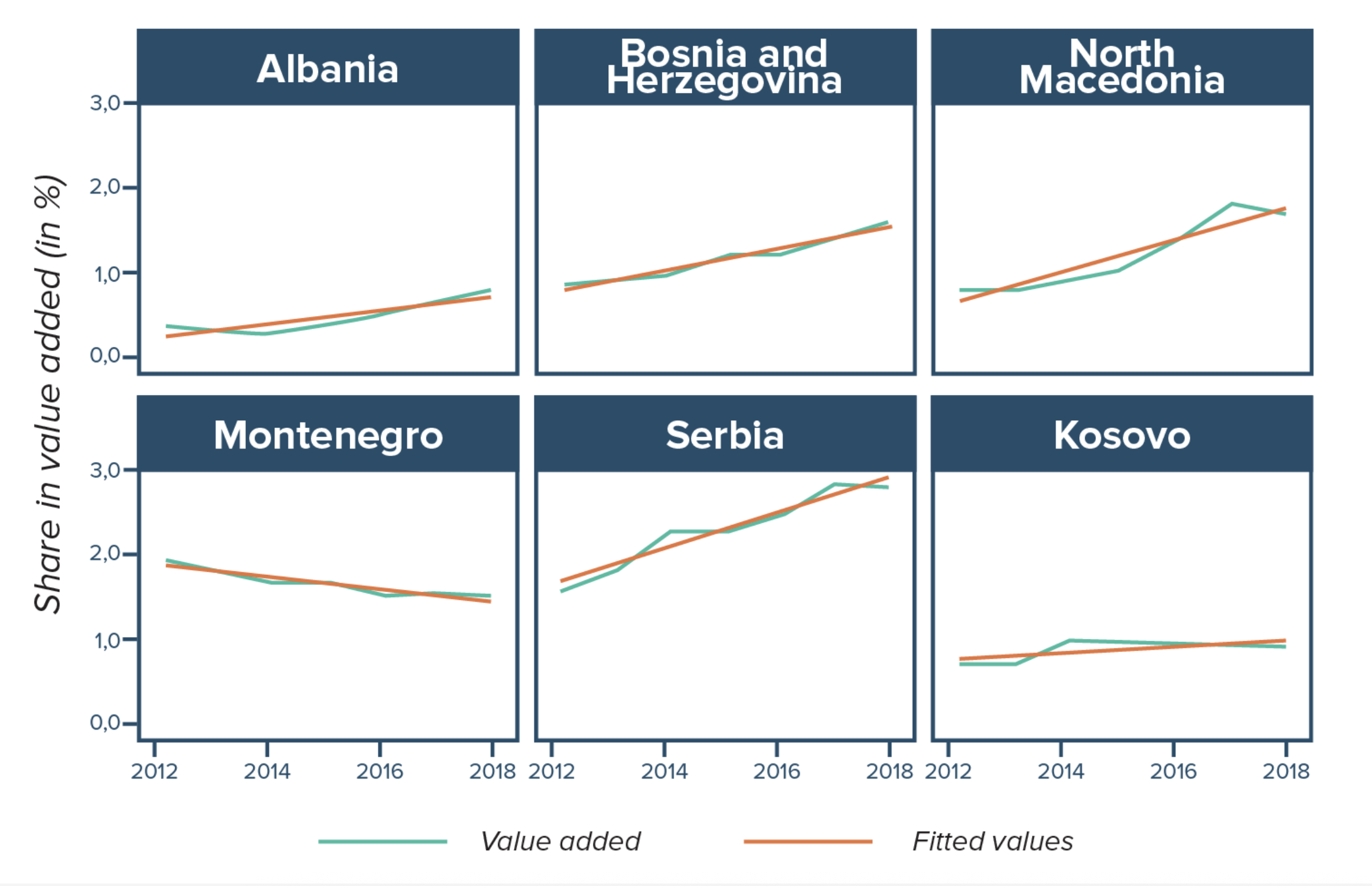
Most of our positive outlook regarding the potential of local economies to boost ICT comes from the global orientation of IT companies, especially in the segment of software development. Large demand for experts and above-average salaries create optimism that software development in the Western Balkans could be competitive globally. Focused on global markets and clients, many of these companies have their headquarters in the United States. However, they generate value by leveraging local talent within their respective markets.
For example, Symphony is a company headquartered in San Francisco, with engineering hubs in Banja Luka, Sarajevo, Belgrade, Niš, Novi Sad, and Santo Domingo. With advanced engineering teams based predominantly in the Western Balkans, Symphony has evolved from collaborating with startups in Silicon Valley to becoming a partner with Fortune 500 companies, including four of Fortune’s ten most admired brands of 2020. The company enables organizations globally to effectively address tech challenges and translate technology-driven initiatives into tangible business value.13“Our Vision,” Symphony, n.d., https://symphony.is/about-us/company, last visited January 7, 2025.
In Serbia, work-hire companies (a form of outsourcing) employ 77 percent of the ICT workforce and generate 69 percent of the export revenue.14Matijevic and Šolaja, “ICT in Serbia: At a Glance, 2022.” Our interviews and roundtable discussions found a similar situation in other Western Balkan economies, with the percentage even higher in most of them.
This cannot be a long-term strategy, as these companies would become less competitive as regional wages grow. A recent analysis of financial statement indicators collected for 327 European and regional ICT enterprises based on panel data estimation came to the same conclusion—competitive advantages such as a cheap labor force are no longer feasible for sustainable development.15Jolta Kacani and Gentjan Shaqiri, “Emerging ICT Clusters in the Western Balkans: A Convergence Model Based on Financial Statement Analysis,” Regional Science Policy and Practice 16, no. 10 (2023), https://www.researchgate.net/publication/371228013_Emerging_ICT_Clusters_in_the_Western_Balkans_A_Convergence_Model_based_on_Financial_Statement_Analysis.
Another concern regarding the region’s outsourcing industry comes from the proposed US HIRE Act, which would impose a 25 percent excise tax on US companies’ outsourcing payments to foreign service providers (and disallow those payments as tax deductions). This could dramatically reshape the outsourcing value proposition for many Western Balkan firms by increasing cost pressures, disrupting existing contracts, and forcing the renegotiation of pricing models. The ability to compete on wage differentials would be eroded if US clients internalize parts of the tax burden, migrate work back onshore, or automate.
All elements mentioned above are clear reasons why nations’ orientations toward more value-add segments of the ICT industry are crucial. One way to create value add is to grow innovative global startups. Governments play an important role in establishing an environment in which citizens and businesses can continue to prosper, even as emerging technologies disrupt their lives and everyday operations.
Building startup ecosystems
Still, we can say that the Western Balkan economies have all sought to develop their startup ecosystems over the last few years, resulting in telltale signs of early development of software-based startups, workspaces, and investment opportunities.
The development of robust startup ecosystems is not merely a tertiary policy goal but a strategic necessity, as these ecosystems introduce an “antifragile element” to the economy. 16“Global Startup Ecosystem Index 2025,” StartupBlink, n.d., https://startupmedias.net/storage/startupecosystemreport2025.pdf, accessed October 6, 2025. This resilience is essential for withstanding economic shocks and serves the critical function of creating jobs, attracting investment, and directly curbing the widespread problem of brain drain across the six Western Balkan countries.17“An Economic and Investment Plan for the Western Balkans,” European Commission, 2020, https://eur-lex.europa.eu/legal-content/EN/TXT/HTML/?uri=CELEX:52020DC0641.
While individual clusters have developed, they remain quite small and do not engage or interact with one another on a regular basis. With a low startup density in all countries, the region is firmly in the activation stage—the early stage of a startup ecosystem. In this phase, limited startup resources (such as founder know-how, experienced investors, advisers and mentors, and community behaviors that support startup success), an ecosystem of one thousand or fewer startups, and the leak of human capital to more developed ecosystems make it difficult to grow.18The Western Balkans Startup Ecosystem Report Assessment and Development Roadmap, Deutsche Gesellschaft für Internationale Zusammenarbeith (GIZ) GmbH, July 2023, https://wbstartupalliance.org/wp-content/uploads/2023/07/GIZWesternBalkansEcosystemAssessmentReport_compressed.pdf.
Among the six countries, Serbia is the largest and most developed ecosystem and, per Startup Genome, is ready to work toward the late activation phase and enter the globalization phase by 2026. A startup ecosystem enters this second phase when there are a series of regionally relevant results, such as achieving more than $100 million in business exits; when there are 800–1,200 startups; and when these results attract startups, entrepreneurs, talent, and investors to the less developed ecosystems. But the leakage of resources to top global ecosystems remains. North Macedonia has also exhibited promising growth and development.
Figure 7. Phases of startup ecosystem development

Low local connectedness could speed up regional connectedness
One factor that contributes to the success of a startup ecosystem is the level of local connectedness. This concept transcends mere networking and encompasses a deeply rooted culture of collaboration, knowledge-sharing, and mutual support among founders, investors, experts, and other stakeholders. In a highly connected ecosystem, founders are more likely to receive assistance, guidance, and mentorship from peers and industry veterans without the expectation of immediate financial gain. This spirit of altruism fosters a sense of community and camaraderie, in which individuals freely exchange ideas, resources, and insights to collectively elevate the whole ecosystem.
This collaborative ethos accelerates the growth and development of individual startups while contributing to the overall performance and resilience of the ecosystem. Startups operating within a highly connected ecosystem benefit from access to a wealth of expertise, diverse perspectives, and valuable networks, which can significantly enhance their chances of success. Further, startups embedded within a tightly knit community experience significantly higher revenue growth compared with those operating in less connected environments. In addition to driving economic growth and innovation, local connectedness also plays a vital role in attracting and retaining talent, fostering investor confidence, and cultivating a supportive ecosystem infrastructure.
Looking specifically at the Western Balkans, it is evident that no single ecosystem demonstrates sufficient local connectedness. While numerous actors within each country focus on increasing the output of startups, the connections among founders—as well as the connections between founders and experts or investors—remain relatively low when compared with other ecosystems in the activation stage.
However, despite this, the Western Balkan region has a unique opportunity to immediately build regional connectedness. By leveraging existing cultural ties, geographical proximity, and shared challenges, regional countries can foster deeper collaboration and connectivity among their startup communities.
The establishment of cross-border initiatives—such as joint accelerator programs, networking events, and mentorship exchanges—can facilitate knowledge-sharing, resource-pooling, and collaboration among startups and stakeholders across the region.
Moreover, policymakers, industry associations, and educational institutions play crucial roles in fostering regional connectedness by promoting entrepreneurship education, facilitating cross-border partnerships, and advocating for supportive policies and regulations that enable startup collaboration and innovation.
While building local connectedness might take time, the region can capitalize on its shared identity and common aspirations to strengthen regional ties and cultivate a thriving entrepreneurial ecosystem that transcends national borders. By embracing regional connectedness, the Western Balkans can unlock opportunities for economic growth, innovation, and prosperity in the digital age.
Global positioning by country
Global analyses, notably the Global Startup Ecosystem Index 2025 from StartupBlink, confirm a stark two-tiered structure within the Western Balkans. Serbia is significantly ahead, ranking fifty-sixth worldwide and maintaining its position as the clear regional leader. There is a substantial gap between Serbia and the next cluster of countries: North Macedonia (seventy-eighth), Albania (eighty-third), Bosnia and Herzegovina (ninety-first), and Kosovo (ninety-seventh). Serbia is also the only country in the region listed in the Global Startup Ecosystem Report by Startup Genome.
Montenegro is not ranked in the index, reflecting its status as the most nascent market, with only ten active startups indexed. Overall startup density across the region remains low, typically generating only two to four startups per one hundred thousand people, indicative of a still-limited capacity for organic, scalable startup formation relative to population size.
Table 1. Western Balkan startup ecosystem rankings and size (2025)

Sources: Data comes from Startup Blink and Startup Genome.20Startupblink.com (data assessed Sep 2025); Startup Genome, The Global Startup Ecosystem Report 2025, 2025, https://startupgenome.com/contents/report/gser-2025_4786.pdf. StartupBlink ranks the startup ecosystems of more than 100 countries and 1,000 cities, while Startup Genome highlights global top ecosystems. From the region, only Belgrade and Novi Sad are listed.
The data from 2024 to 2025 shown in Table 1 highlight the extreme vulnerability inherent in these nascent ecosystems. Bosnia and Herzegovina exhibited strong positive momentum, with a remarkable +27.8 percent ecosystem growth rate, climbing five spots. Part of this is due to the inclusion of Banja Luka in the index. Conversely, Albania experienced a significant retraction, declining by 19.1 percent and falling 11 spots.
The significant fluctuations observed in these lower-tier countries demonstrate that their performance is highly sensitive to the success or failure of just a few companies. For these markets, the strategic priority must be focused on building structural stability and reducing early-stage failure rates through reliable capital access, rather than solely increasing the sheer quantity of new ventures. Stability is a prerequisite for attracting long-term external investment, as founders globally seek locations that offer stability and continuously improving business environments.
Joining forces to improve funding for regional startups
One of the significant challenges faced by the startup ecosystem in the Western Balkans is the gap in funding, and particularly early-stage funding.
Table 2. Startup funding levels in the Western Balkan region

The lack of adequate funding poses a significant challenge for startup founders in the Western Balkans, often compelling them to pursue revenue generation too soon. This premature focus on revenue forces founders to launch products with minimal features and functionalities, known as minimum viable products, which might not fully meet market demand or offer competitive advantages. Consequently, startups are constrained in their ability to achieve rapid growth and scale effectively, limiting their potential for long-term success and sustainability.
The scarcity of seed-stage funding exacerbates the problem. While some funding might be available from donor organizations, it often comes with restrictions and might not be tailored to startups’ specific needs.
Unlike traditional venture capitalists or angel investors, who typically provide capital along with mentorship and strategic guidance, donor-funded capital might lack the expertise and resources necessary to support startups throughout their growth journeys.
This disparity in funding sources both hampers the growth of individual startups and stifles the overall development of the startup ecosystem in the Western Balkans. Without access to early-stage funding from experienced investors, startups struggle to advance beyond the initial stages of the ecosystem life cycle, hindering the emergence of a vibrant and sustainable regional startup ecosystem. Therefore, addressing the funding gap and diversifying sources of capital are essential steps toward nurturing a thriving startup ecosystem in the Western Balkans and unlocking the region’s full potential for innovation and economic growth.
Table 3. Highest individual funding rounds in 2024 and 2025 for Western Balkan startups

Source: Collected by authors.
Serbia and Albania stand out in the region in their dedication to startup ecosystem growth, which has produced better results compared with other regional economies. Both countries show significant progress in startup ecosystem development and are the only ones that have government policies that support startup investments.22“GovTech Dataset,” World Bank Group.
Why regional collaboration in this segment could really work
This is another obvious opportunity for regional collaboration. First, encouraging and incentivizing existing investors to invest in regional startups would create a more competitive funding landscape and increase potential gains. So far, some venture capital funds have invested in these startups, though this is still rare, and there has been almost no angel investor activity.
Regional investment funds, cross-border venture capital, and business angel networks can provide much-needed financial support and infrastructure to catalyze the growth of the startup ecosystem in the Western Balkans.
The entire region is struggling to attract local investors to the startup ecosystem. A large share of private capital in the Western Balkans is going into foreign direct investment (FDI), real assets, infrastructure, industry, and traditional sectors, rather than early-stage tech ventures. Between 2020 and 2023, private investment in the Western Balkan region averaged 18.7 percent of GDP, quite close to the EU average of 19.3 percent. This was mostly private fixed capital formation (i.e., investment in factories, machinery, and infrastructure), rather than risk capital or venture funding. However, FDI inflows were very large: Average net FDI inflows reached 6.4 percent of GDP in the Western Balkans between 2020 and 2023—more than four times the EU average of about 1.5 percent.23“Economic Convergence Scoreboard for the Western Balkans 2025,” Organisation for Economic Co-operation and Development, 2025, https://www.oecd.org/en/publications/economic-convergence-scoreboard-for-the-western-balkans-2025_bc0babf3-en/full-report/business-environment-cluster_5d7aef9e.html.
It is nothing new to recommend regional cooperation, as its potential for significant economic growth is clear. This is especially true because such cooperation aligns with the aspirations of all six economies to join the European Union. At the same time, a lot of the initiatives to strengthen regional cooperation have fallen short due to political instability.24Parashqevi Draçi, Gentiana Kraja, and Henrieta Themelko, “The Regional Cooperation of the Western Balkans and the Challenges on the Path of Integration in the European Union,” Interdisciplinary Journal of Research and Development 9, no. 4 (2022): 96, https://www.journal-uamd.org/index.php/IJRD/article/view/201.
However, when considering the potential for regional cooperation within Western Balkan ICT and startup ecosystems, there is a strong indication that such collaboration can serve as a positive example, showcasing the benefits of unified efforts for the economies of the region. Unlike other sectors, these ecosystems tend to be inherently export-oriented, with a primary focus on integrating into the global economy. This orientation toward global markets fosters a mindset of openness to cooperation among individuals and companies within the region.
Moreover, tech entrepreneurs and professionals have gained valuable global insights by participating in international markets, which underscores the advantages of presenting the region as a collective entity rather than individual countries. By aligning their efforts and resources, startups and ICT companies in the Western Balkans can amplify their impact on the global stage and overcome the limitations of operating within small, fragmented markets.
Furthermore, the regional ICT and startup ecosystems possess a wealth of untapped potential in their existing client bases, partnership opportunities, and networks. By tapping into the regional diaspora network, which spans the globe, the Western Balkans can mobilize additional funding and expertise to drive forward collaborative endeavors. Leveraging these resources can significantly enhance the success of regional initiatives, such as the establishment of a regional investment fund.
A regional investment fund, which could be funded predominantly through private capital, presents a promising avenue for pooling resources and catalyzing innovation and growth across the region. By attracting investment from both within and outside the Western Balkans, such a fund could provide much-needed financial support to startups and ICT ventures, fostering entrepreneurship and economic development on a regional scale.
Move from brain drain to brain gain
Western Balkan economies are grappling with challenges in attracting and retaining talent. In the 1970s, individuals with lower levels of education left the region. During and after the 1990s, highly educated professionals across various fields—including medicine, engineering, IT, architecture, and more—did the same. With the dawn of the new millennium, the transition process in the economy and the inability to offer competitive living and development conditions hindered regional economies from successfully attracting talented individuals migrating from other countries.
As this report has shown, talent is a regional strength, but retention mechanisms are weak. A recent European Commission study underscored that the region must push for policies that circulate talent and anchor value locally.25Strategic Foresight in the Western Balkans, European Commission, 2021, https://research-and-innovation.ec.europa.eu/knowledge-publications-tools-and-data/publications/all-publications/strategic-foresight-western-balkans_en.
Leveraging the diaspora
The Western Balkan region has fewer than eighteen million residents but more than ten million people in diaspora. Leveraging members of the diaspora with backgrounds in finance and financial markets can support companies and startups in connecting and accessing the network of investors and customers worldwide.
Post-COVID-19, a notable phenomenon emerged with the influx of people returning from overseas. Many of these individuals embarked on entrepreneurial ventures within their home markets, leveraging their international experience and networks to achieve remarkable success. By actively promoting these success stories and streamlining the conditions for repatriation, the region can catalyze more such stories. Furthermore, the strategic promotion of success narratives serves as a powerful magnet for garnering global investors’ interest in the region. Showcasing the achievements of innovative companies not only highlights the region’s potential but also underscores its attractiveness as a lucrative investment destination.
Startups with Western Balkan founders have raised significant amounts of funding. Most of these startups have a strong presence in the Western Balkans, largely through R&D offices. Jobs accrue locally, but intellectual property (IP) and exit value accrue abroad. Policy must evolve from “talent retention” to capital and IP anchoring. Moreover, engaging in fast-growing startups can significantly decrease career-driven reasons for leaving the country.
Table 4. Highest individual startup rounds in 2024 and 2025 founded by Western Balkan diaspora

Source: Collected by authors.
Influx of educated immigrants due to the war in Ukraine
Apart from the diaspora, there is another significant development happening in two regional countries. Due to Russia’s full-scale invasion of Ukraine, Serbia and Montenegro have welcomed a large number of Russian and Belarusian refugees, who have fled predominantly in opposition to the current politics of their countries. Montenegro has also welcomed Ukrainians, and per the United Nations, sixty-two thousand Ukrainians have registered for some legal status in the country, which is more than 10 percent of the country’s population.26Robert Greenall, “Oasis on the Adriatic Where Ukrainians and Russians Have Gone to Escape War,” BBC, October 6, 2024, https://www.bbc.com/news/articles/cyvye9l43dgo.
Unlike Western countries, which have made it difficult for Russians to do business, let alone cross their borders, these two countries have welcomed them, benefitting from a significant brain gain since most of the immigrants are well-educated. In Serbia, around two hundred thousand Russians had immigrated by the end of 2024.27Jovana Krstić, “‘Želim život u Srbiji’: Svaki drugi stranac sa dozvolom boravka, dolazi iz Rusije,” Radio Slobodna Evropa, June 2, 2025, https://www.slobodnaevropa.org/a/rusi-u-srbiji-boravak-strani-drzavljani/33429658.html.
By the end of 2023, data from Serbia’s business registry suggest that nine thousand new Russian-national businesses had opened in Serbia.28Camilla Bell-Davies, “Russian Entrepreneurship in Serbia Booms as Wartime Emigres Settle Down,” Moscow Times, February 2, 2024, https://www.themoscowtimes.com/2024/02/02/russian-entrepreneurship-in-serbia-booms-as-wartime-emigres-settle-down-a83812. For reference, before the war in Ukraine, there were only 851 active economic entities in Serbia with majority-Russian capital ownership.29“Economic Cooperation: Republic of Serbia–The Russian Federation,” Buy Serbian, n.d., https://buyserbian.com/economic-cooperation-republic-of-serbia-the-russian-federation, accessed Sep 2025. Additionally, several Russian tech companies have opened their branches in Serbia, and relocated large numbers of their workforces. The impact and size of these companies is showcased in the most recent Serbian Games Association annual report, which highlights that 40 percent of the top fifteen companies in the country by revenue were registered in Serbia after the onset of the war in Ukraine.30Serbian Gaming Industry Report, SGA, 2024, https://sga.rs/en/annual-report/.
In Montenegro, Russians have purchased significant real estate investments: up to €1 billion in property over the last fifteen years. Since the start of the war, approximately thirteen thousand Russians emigrated to Montenegro, setting up four thousand businesses.
The impact of this immigration has been seen in the tech sector. Several Russian gaming experts who emigrated to Montenegro have founded companies in the country, including Montenegro’s gaming association. These Russian-founded startups in cities are improving the local ecosystems. In Serbia, the most prominent startups are Bpacks and Hvala tips, and in Montenegro Kodio, 7tam, and iBench.
It is important to note that apart from welcoming the immigrants, these countries have not done much to support their integration, and their long-term stay in Serbia and Montenegro is questionable. There is significant potential in doing more to support their long-term integration into society, both in terms of knowledge sharing and for long-term brain gain.
However, the countries should also tread carefully, as their open-door policies carry political risk exposure, as entities with Russian exposure are affected by US and EU sanctions regimes, introducing risk to energy supply, financing, and political tethering.
Conclusion: Handle with caution
The Western Balkans is not a single market
Despite many similarities among the Western Balkan economies, the region is grouped together mostly due to the countries’ political statuses on their pathways to the EU. Countries’ regulations and government priorities are different and there is a language barrier between some regional economies. Cross-border procedures and political tensions among some economies must also be taken into account when designing support programs. For example, companies can replicate some things when growing from one economy to another, but not in certain areas—such as legal, administration, and marketing.
On the other hand, all of the Western Balkan economies are committed to joining the EU, which will lead to them complying with the same rules and going through a similar journey to get there. This can be, and already is, a way to get the economies to collaborate more when it comes to policymaking.
Furthermore, most non-ICT businesses in each Western Balkan market are channeling their export activities toward the region. If the region is deemed accessible for exporting tangible products, why should it not be the same for digital transformation services? Leveraging businesses’ experiences and market understanding, along with accumulated know-how, should be extended through digital transformation projects.
Just improving numbers is not enough
As seen in the first part of this report, many policymakers in the region are dedicated to digital transformation and technological development. Still, some studies suggest that current measures are not leading to sustainable long-term growth.
Western Balkan economies are not equipped to turn the increased values in various indexes mentioned across this report into an opportunity for growth. This can mean that, for example, new internet users are probably turning toward foreign products and content, as local businesses are less digitally savvy.
While this report discusses various internationally accepted rankings of economies when it comes to innovation, investing to improve rankings does not necessarily create a positive economic impact. To produce tangible and meaningful results, policymakers need to have a vision for what they are doing and what they are trying to achieve and must not postpone the hard things for later. For more details about two studies highlighting these issues, see Appendix 2.2.31Ibrahimi and Fetai, “The Impact of ICT on the GDP Growth of Western Balkan Countries”; Mlinarević, Balotić, and Paunović, “The Impact of Innovation on the Growth of Real Wages in the Western Balkan Countries.”
Appendix 1. Methodology
In the research process, we used available datasets and, through desk research, mapped the state of development of digital ecosystems in Western Balkan markets. To gain deeper insights into the topics of digitalization and digital transformation, we connected with founders and top executives of businesses, business associations, think tanks, digital transformation consultants, and representatives of chambers of commerce in regional markets.
More precisely, we organized three roundtables—one in Tirana, one in Belgrade, and one online—which were attended by about fifty individuals matching the above-mentioned profiles from Western Balkan economies.
Additionally, we conducted more than thirty in-depth interviews—mostly online—to get more details on specific topics determining and shaping businesses’ digital transformations.
To elucidate the level of businesses’ digital transformation development, we used available research, Eurostat, and the World Bank’s GovTech Dataset.
Appendix 2. The Western Balkan economies’ economic and ICT data
Appendix 2.1. The impact of ICT on GDP
Most empirical studies on the impact of ICT on GDP growth have concluded that ICT positively influences economic growth.32Stephen D. Oliner and Daniel E. Sichel, “The Resurgence of Growth in the Late 1990s: Is Information Technology the Story?” Journal of Economic Perspectives 14, no. 4 (2000): 3-22, http://www.jstor.org/stable/2647073; Seifallah Sassi and Mohamed Goaied, “Financial Development, ICT and Economic Growth: Lessons from MENA Region,” Telecommunications Policy, Elsevier 37, no. 4 (2016): 252-261, https://ssrn.com/abstract=2890988. A few studies focusing on developing countries have shown a positive impact of ICT.33Linda Flanagan and Michele Jacobsen, “Technology Leadership for the Twenty-First Century Principal,” Journal of Educational Administration 41 (2003): 124-142, https://www.emerald.com/insight/content/doi/10.1108/09578230310464648/full/html; Edna Maeyen Solomon and Aaron van Klyton, “The Impact of Digital Technology Usage on Economic Growth in Africa,” Utilities Policy 67 (2020), https://www.sciencedirect.com/science/article/abs/pii/S0957178720300989?via%3Dihub. However, other research shows this effect is much higher in developed countries.34Ayoub Yousefi, “The Impact of Information and Communication Technology on Economic Growth: Evidence from Developed and Developing Countries,” Economics of Innovation and New Technology 20, no. 6 (2011): 581-596, https://www.tandfonline.com/doi/abs/10.1080/10438599.2010.544470. Eurostat data support this statement, as countries like Bulgaria, Romania, and Estonia exhibit double-digit percentage growth in the ICT sector, which is higher than the EU average.35The EU average is 7.13. Bulgaria stands at 11.4, Romania at 14.5, and Estonia at 15.2, according to the percentage change of value added by the ICT sector at current prices.
Appendix 2.2. The impacts of government investments on the economy
Using an empirical growth model, a study published in SEEU Review36Ibrahimi and Fetai, “The Impact of ICT on the GDP Growth of Western Balkan Countries.” examined the impact of ICT on GDP growth in Western Balkan countries from 2000 to 2019. It assessed how various ICT indicators—including fixed broadband and telephone subscriptions, mobile cellular subscriptions, internet users, and general government final consumption—influence GDP growth through different econometric models and coefficient analyses. Interestingly, growth in all these parameters (except internet users) hurt GDP growth.37Ibrahimi and Fetai, “The Impact of ICT on the GDP Growth of Western Balkan Countries.” This means that the Western Balkan economies are not equipped to turn these increases into growth opportunities. For example, this could imply that new internet users are turning toward foreign products and content because local businesses are less digitally savvy.
While this report discusses various internationally accepted rankings of economies when it comes to innovation, other studies show that when countries focus exclusively on improving their rankings, it does not necessarily create positive economic impact. For example, one study researched ten years of data to determine the relationship between innovation and economic growth in Western Balkan countries.38Mlinarević, Balotić, and Paunović, “The Impact of Innovation on the Growth of Real Wages in the Western Balkan Countries.” The study found that increased output innovation—reflected in scientific and creative innovation—and overall innovation ratings did not have a statistically significant positive impact on real wage growth in Western Balkan economies. However, wage growth was significantly driven by innovation input growth. Because innovation input is an aggregate of five key components, enhancing these areas could play a crucial role in boosting real wages. The components include the following:
- Institutional quality: political stability, regulatory framework, and business environment
- Human capital and research: education, higher education, and R&D
- Infrastructure: ICT, general infrastructure, and environmental sustainability
- Market sophistication: access to credit, investment levels, competition, and market size
- Business sophistication: workforce skills, innovative networks, and knowledge absorption
Improving these components could strengthen economic performance and wage growth in the region.
Both studies show that to get tangible, meaningful results, policymakers need to have a vision for what they are doing and what they are trying to achieve and must not delay the difficult tasks for a later time.
Appendix 2.3. Freelancers
The Western Balkans have a large number of freelancers, and data about them are difficult to capture. Although these individuals are usually working on smaller-scale projects, most of them are tied to the global market, can bring new insights, and can increase knowledge-sharing and talent creation. The best way to measure the effect of crowd employment (outsourcing of tasks to a large pool of online workers) in the real market is to use the Online Labour Index.39“Explore Online Labour Markets with the Online Labour Observatory,” Online Labour Observatory, n.d., https://ilabour.oii.ox.ac.uk/online-labour-index, last visited January 7, 2025. Various indicators, including the Online Labour Index and others, put Western Balkan countries at the top globally in terms of use of freelancers. When it comes to the number of freelancers per thousand inhabitants, Serbia had the most worldwide in 2025, with 3.52 freelancers per thousand inhabitants. North Macedonia was next, with a coefficient of 3.41. Other countries from the region also ranked highly, with Montenegro coming in sixth, Bosnia and Herzegovina seventh, Albania eleventh, and Croatia twelfth.
Appendix 2.4. Indexes
The landscape of Western Balkan economies is diverse in terms of their progression toward digitally driven development. There are pockets of excellence where some entities within the region demonstrate global competitiveness in creating innovative digital products and services. However, a noticeable gap remains within the broader economy concerning the use of ICT and advanced technological solutions to generate business value.
Figure A2-1. Bar chart and table showing Western Balkan Country rankings in the 2024 Global Innovation Index

Source: World Intellectual Property Organization.40Global Innovation Index 2024, WIPO.
The United Nations E-Government Development Index shows that Serbia is progressing faster than other Western Balkan economies.41“Country Data,” UN E-Government Development Index, n.d., https://publicadministration.un.org/egovkb/en-us/Data-Center, last visited October 2024. The index also considers access-related factors, such as infrastructure and education levels, to reflect how a country uses information technologies to enhance access and inclusion for its citizens.
Table A2-2. Bar chart and table showing change in ranking on the E-Government Development Index from 2020 to 2022

Table A2-3. The number of digital public services offered to citizens and businesses

Source: Western Balkans Digital Economy Society Index Report 2024.43Western Balkans Digital Economy Society Index Report 2024, Regional Cooperation Council.
Especially in the human capital subindex, all countries in the region rank below the EU average, meaning that the services developed are improving faster than citizens’ capacity to use them. This is in line with data depicted in Figure A2-3, which show that the digital skills of the Western Balkan population are lower than the EU average.
Figure A2-4. Individuals with basic or above-basic digital skills (percentage of individuals)
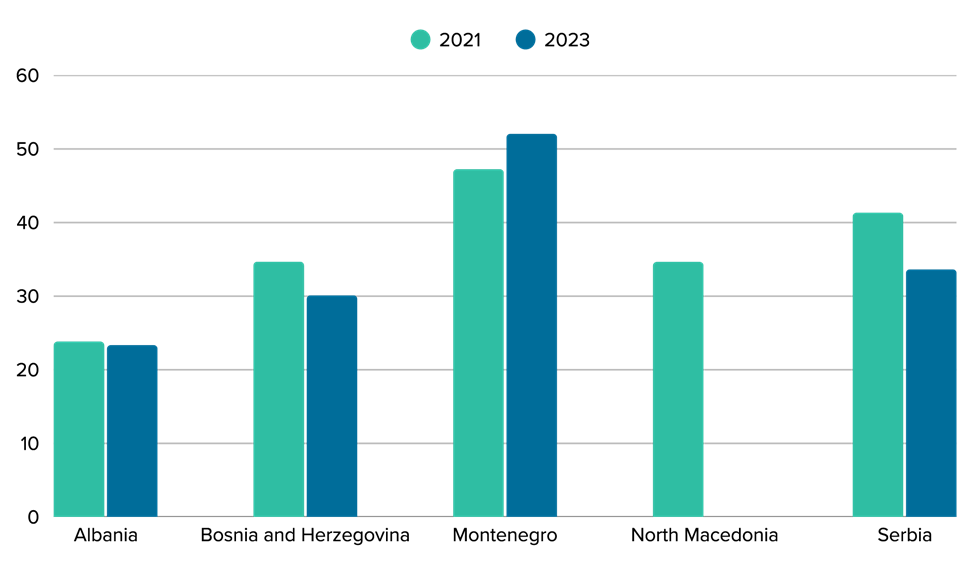
Note on data for Kosovo: The Regional Cooperation Council’s Western Balkans Digital Economy and Society Index 2024 report shows that in 2024, 37.7 percent of individuals had basic digital skills and 9.8 percent had above-basic skills.44Digital Economy and Society Dataset, Eurostat, n.d., https://ec.europa.eu/eurostat/web/digital-economy-and-society/database, accessed Month Year; Western Balkans Digital Economy and Society Index 2024 Report, Regional Cooperation Council, 2025, https://www.rcc.int/pubs/211/western-balkans-digital-economy-and-society-index-2024-report.
This was also highlighted in the Regional Cooperation Council’s Western Balkans Digital Economy and Society Index 2024 report, which showed that Western Balkan economies were generally performing below the EU average when it came to interactions with public authorities online.45Western Balkans Digital Economy and Society Index 2024 Report, Regional Cooperation Council. According to this report, 75 percent of individuals in the EU interacted with public authorities via the internet in 2023, while this percentage stood at 43 percent for Western Balkan countries. The study also reported that complete datasets for the region were missing.
Appendix 3. Western Balkan snapshots—main fields of digital transformation
Table A3-1. Main fields for Western Balkan digital transformation: challenges and opportunities

Source: Authors.
Acknowledgements
This report was created through extensive desk research, data analysis, in-depth interviews, and roundtables with key digital transformation stakeholders in the Western Balkans throughout 2023-25. The report was edited by the Atlantic Council team. The report adds to available research with new data and insights, offering recommendations on how to speed up digital transformation in the region, with a focus on the potential of the private sector.
About the authors

Jelisaveta Lazarević has a PhD in Strategy and Innovation, and she is very dedicated to researching companies known as Hidden Champions. She is an associate professor at FEFA faculty and Chief Content Officer at Bloomberg Adria, where she runs teams in 5 countries. She has been awarded two Campus France scholarships for research in the field of scientific research commercialization and science-industry collaboration, which she carried out at Lille University, the FEMTO-St Institute, and INRIA.

Zoja Kukic Djordjevic has been part of the startup ecosystem for over a decade. She was part of the founding teams of Startit and the “Digital Serbia” Initiative, and is currently an advisor and entrepreneur. She has worked with startups and digital transformation projects across 5 continents.
Explore the program

The Europe Center promotes leadership, strategies, and analysis to ensure a strong, ambitious, and forward-looking transatlantic relationship.