
Supporting freedom, combating anti-US regimes: A democracy assistance agenda for 2026-2028
Bottom lines up front
- Backing democracy abroad directly advances US security and prosperity and counters China, Russia, and Iran.
- Democracy assistance is effective, shows a strong return on investment, and is supported by a majority of Americans.
- The US Congress should establish a Freedom and Democracy Commission to center democracy assistance in foreign policy agendas and ensure initiatives are timebound and tangible.
This report is the culminating publication of the Freedom and Prosperity Center’s “The future of democracy assistance” series, which analyzes the many complex challenges to democracy around the world and highlights actionable policies that promote democratic governance.
Introduction
This report offers an actionable blueprint for US democracy assistance through 2028. It starts by surveying the state of democracy globally and articulates why underwriting the expansion of freedom (understood using the Atlantic Council’s Freedom Index definition) is vital to and helps advance US interests. The second section outlines priority challenges and opportunities, from the need to supercharge efforts to counter China’s malign influence to shoring up the core institutions of democracy in strategically important countries. The report concludes with a set of recommendations on which the White House, Department of State, and Congress can act to address challenges to US interests.
The recommendations presented here aim to provide the Donald Trump administration with a roadmap for shoring up democracy in priority states in a manner that is beneficial for the host government while advancing US national security and economic prosperity.
The freedom landscape
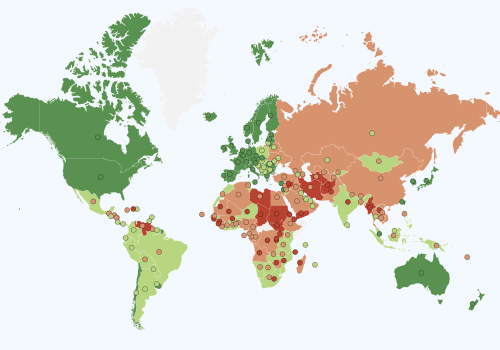
The security of the United States, its democratic partners and allies, and humanity’s future depends significantly on the state of democracy worldwide. Since 2012, if we look at indices like those published by the Atlantic Council’s Freedom and Prosperity Center, authoritarianism has risen globally while democracy shows alarming decline in regions of importance to the United States.
Many democracies are experiencing legitimacy crises due to a long-standing failure to deliver adequately for their constituents. This core weakness has made them more vulnerable to authoritarians, disruptive information technologies, external malign attacks, and internal demagogues who now use a well-trodden path to weaken democratic governance from the inside out.
As the Freedom and Prosperity Center’s “Future of Democracy Assistance” issue briefs show, no geography has avoided a hit to democracy and fundamental freedoms. Political freedom, in particular, has witnessed a pervasive decline across all regions.
In Latin America and the Caribbean, the decline started in 2003 and was exacerbated by diminishing political rights and a collapse of civil liberties beginning in 2016. Once a stable democracy, Ecuador has increasingly become a battleground among Mexican drug trafficking organizations. The country saw a drop from a freedom score of 68.7 in 2022 to 61.7 in 2025 amid a marked rise in violent crime and institutional corruption as gangs and cartels sought to deepen control of the country. Even so, new leadership in Quito seems committed to combatting the cartels and shoring up institutional weaknesses.
Sub-Saharan Africa is the region with the most recent decline in democracy, starting in 2014 and exemplified by a series of dramatic military coups. This decline is attributed primarily to mounting pressures on electoral systems from authoritarian regimes and the erosion of legislative controls over executive powers.
Europe has been grappling with a decline in political freedom since 2010, regressing to levels akin to those observed in 1995. The ongoing war in Ukraine has caused a precipitous decline in Ukraine’s democratic bona fides, from a freedom score of 56.6 in the Atlantic Council’s Freedom Index in 2021 to 52.4 in 2025. While the country’s anti-corruption efforts have provided some positive bulwark against both democratic decline and Russian hybrid tactics, its democratic institutions will require support to survive. In Georgia, after the ruling Georgia Dream party declared victory over a disadvantaged opposition in the 2024 parliamentary elections, widespread democratic protests broke out. The country’s freedom score dropped from 75.3 in 2023 to 66.6 in 2025.
The global trajectory of the rule of law has been on a downward trend since 2013 as authoritarians co-opted and undermined institutions. Nearly every region has faced mounting pressure on the rule of law. The Middle East and North Africa region has witnessed the most significant decline across most indicators, including security and judicial independence, along with a rise in corruption. Tunisia dropped from a 68.3 score in 2020 to a 56.1 score in 2025 following Kais Saied’s victory in the 2019 election. Saied suspended and then dissolved parliament in 2021 and has made efforts to purge the judiciary and remove potential democratic challengers. Saied has consolidated power and become an outright authoritarian leader.
These declines not only pose concerns for US interests abroad but also impede prosperity where democracy has backslid. Between 1995 and 2012, global prosperity exhibited an average annual increase of 0.4 points. From 2012 onward, this progress significantly slowed, dwindling to 0.2 points per year.
But all is not bleak. In Bolivia, for example, a broad coalition successfully pushed for presidential term limits, effectively preventing the return of left-wing anti-US populist and would-be autocrat Evo Morales. In the Dominican Republic, President Luis Abinader took office in 2020. His efforts to investigate and prosecute high-level corruption cases, as well as the government’s transparency reforms and the passage of the revamped Anti-Money Laundering and Illicit Finance Law, have restored faith in public institutions and brought his country from a 64.7 freedom score in 2019 to a 70.2 score in 2025.
Freedom abroad is essential to US national security at home
Americans want the United States to have a strong role in global affairs, with 83 percent saying it should stand up for human rights and democracy around the world. This includes 87 percent of Democrats, 81 percent of Republicans, and 84 percent of “Make America Great Again” (MAGA) Republicans. Linked to this, a majority of Democrats and MAGA Republicans agree that funding efforts that promote freedom and democracy abroad benefits the United States. More than seven in ten of Americans—73 percent, including 81 percent of Democrats and 67 percent of Republicans—say a good reason to support this funding is because such efforts help mitigate threats like extremism and authoritarianism before they end up in, or affect, the United States. A similar percentage of Americans, with comparable party-line support, say a good reason to support funding democracy programs is because they strengthen freedom worldwide.
Supporting democracy abroad is principally a strategic enterprise and not solely an altruistic effort. The United States should support freedom fighters and strong political institutions because doing so aligns with US values. But the main reason the United States promotes democracy through a combination of diplomacy, investment, and international assistance is because it is good for the United States. The country is more secure in a world that is free and open. Democracies are more reliable trading partners—which directly helps create jobs at home—less likely to go to war with one another, and less apt to incubate and export transnational crime and terrorism that impact US safety and well-being at home.
Some of the least free states produce and export the most instability. With no checks on their power, regimes in Russia and China have exported war, propped up US foes, and coerced their way economically to outcompete the US position in some societies. From the Sahel to the Middle East, weak states characterized by predatory elites governing captured, corrupt institutions have consistently been breeding grounds for terrorist cells that attack US interests, servicemembers, and allies. In Mali, for example, the Islamic State of Iraq and al-Sham (ISIS) is making gains toward its aim of solidifying an extremist caliphate in the Sahel. In the Western Hemisphere, Nicolás Maduro used the Venezuelan state apparatus to enrich himself by trafficking cocaine into the United States before it removed him from power. The autocrat and his regime thugs orchestrated a two-pronged crisis—a failed economy and severe repression of political opponents—that pushed millions of Venezuelans to flee and seek economic opportunities and safety elsewhere, including in the United States.
Democracy abroad is also better for US businesses. Autocrats often oversee regulatory regimes that are unfavorable (if not hostile) to US businesses. In Venezuela, regime corruption and opaque regulation led to hundreds of millions in losses for US companies operating there. By contrast, countries with transparent regulations and processes are more reliable markets for US companies. According to the Atlantic Council’s Freedom Index—which ranks countries on a composite score of economic, political, and legal freedom—four of the five top emerging markets for US companies are free (South Korea) or mostly free (Brazil, Mexico, and India), while the fifth, Argentina, has also made promising reforms.
A foreign policy with democracy support as a key component also positions the United States to compete with China, Russia, and Iran. The US model is better than its adversaries’ model. Citizens recognize the moral and transformative power of democratic representation. On the other hand, the Chinese Communist Party (CCP) and the Kremlin understand that other countries’ political systems affect their national security and have therefore widely promoted an authoritarian development and governance model. The CCP is working to create a world safe for the communist party—one composed of authoritarian regimes—by exporting surveillance technology, autocratic governance practices, and other repression modalities. The CCP provides training to political parties in the Global South to promote authoritarian solutions to governance challenges, while co-opting regimes so they align with Beijing and not with Washington. To curry favor with local elites and foster an environment favorable to China’s interests, Beijing co-opts journalists and invests in the media sector to shape reporting. China actively supports and bankrolls coverage that favors and whitewashes Beijing’s corrupt deals, and that spreads anti-US propaganda.
The weak regulatory environment and minimal transparency around foreign financing and investments in fragile democracies create conditions for countries to become dependent on China. Both unsustainable debt to Chinese state-governed banks and reliance on information communications technologies from Chinese government-linked companies create this dependency. The consequence is an expanding set of countries will choose China as their primary economic and political partner and side with Beijing against US interests; this undermines US economic and security interests.
Democracy assistance in practice: Tools and proven return on investment
Three decades ago, the United States played a pivotal role in supporting democratic transformations in former Soviet bloc nations across Europe. It helped establish free elections, revitalize long-dormant parliaments, and guide the shift from single-party rule to vibrant multiparty systems. It empowered citizens to form new political parties, strengthened judicial frameworks to ensure credible rule of law, and supported non-state-controlled media in exposing the realities of communist regimes. While some bloc countries swiftly embraced democracy, others faced prolonged transitions or setbacks requiring longer-term forms of assistance. Just as importantly, US diplomacy reflected these goals and worked in concert with these support efforts.
Ultimately, most countries broke free from Soviet influence and emerged as steadfast US allies. US-funded democracy programs, including those from the National Endowment for Democracy (NED) and supported by the US Department of State—along with international broadcasting—served as critical soft-power instruments in fostering Europe’s democratic opening. Today, nations such as Poland, Lithuania, Czechia, Albania, and Romania stand as vital NATO partners, collaborating to counter terrorism, resist authoritarianism, and prevent conflicts that could involve the United States and take the lives of its citizens. These countries are also key economic partners, hosting US investments, engaging in robust trade, and embracing US culture and values. Poland alone conducted over $28 billion in trade with the United States in 2025.
What does US support for democracy look like in practice? It is not nation building or forcing democracy at the tip of a gun, as some pundits like to suggest.
Democracy support is assistance the United States provides to protect and strengthen democratic governance abroad. Its two main tools are complementary: foreign assistance programs that strengthen the capacity of democratic institutions or actors within and outside government; and US diplomatic engagement that champions local democracy advocates and holds despotic regimes accountable for their actions. Without both efforts, the United States will be unsuccessful in shaping its global environment to its own advantage and to the benefit of other societies.
Democracy assistance can help strengthen institutions to make them more effective and accountable; bolster democracy advocates working to hold corrupt leaders accountable; and advance more transparent regulatory regimes, among other benefits. The changes that democracy promotion can help bring about deter malign states from exerting their influence in a target country or, at a minimum, make it more difficult for them to do so. Robust electoral processes defend against foreign interference from authoritarian aggressors and help maintain public confidence in democracy. Independent civil societies and media help hold leaders accountable and mitigate external actors corrupting and ultimately co-opting them.
Democracy support helps bolster transparency and counters CCP and Kremlin efforts to capture political and economic elites. Such efforts, if unchecked, can result in both reduced political accountability and policy and commercial decisions in line with China’s or Russia’s interests and contrary to those of Washington and US businesses.
Democracy assistance is effective and shows a strong return on investment for US taxpayers by advancing US interests overseas. Democracy support investments deliver real results. Democracy support is a small overall investment and far smaller than managing the inevitable public safety, military, and economic losses that come from a more autocratic world. A study of US democracy promotion programs conducted between the critical post-Cold War period of 1990 and 2003 found that democracy assistance had “clear and consistent impacts” on increases in host government democracy including civil society, judicial and electoral processes, and media independence. This is good for Americans at home for the reasons outlined above: more democracy means less terrorism, more stability, and better business environments for US companies and therefore jobs for US citizens. Despite the global democratic recession from 2012 to 2022, eight countries that were veering toward autocracy bounced back to democracy in 2023. International democracy support and protection was an important factor in securing these gains.
A US democracy support agenda: Core priorities
The United States cannot, and should not, address all democracy challenges everywhere. It must prioritize tackling threats that pose the greatest challenge to freedom and US interests—and employ cost-effective, timebound approaches to do so.
Guided by these tenets, the US democracy support agenda should focus on two priorities, centered on the main threats to US interests and evidence-based approaches to addressing them.
Shore up countries’ resilience to malign influence of anti-US regimes in China, Cuba, Iran, and Russia
The US confrontation with China, Iran, and Russia is principally military and economic in nature, but its struggle with these adversaries is also ideological and non-kinetic. Beijing, Moscow, and Tehran use a range of soft-power instruments—from economic deals to development assistance—to shore up critical mineral deals or port access and to undermine politicians with favorable views of the United States, all while decrying democracy as a failed model. Xi Jinping and Vladimir Putin have mastered using non-military tools to complement their hardware and achieve their aims.
This workstream should therefore aim to make sure that China and Russia cannot co-opt or otherwise influence local politicians to pass policies or laws, or to agree to opaque deals that benefit Kremlin and CCP interests at the expense of that country’s citizens and the United States.
Countering China’s influence requires the United States to essentially reverse engineer the ways the CCP exerts control by implementing cost-effective programs that train political parties to be responsive to citizens and not foreign masters; helping legislatures, executive offices, and the general public understand the costs of predatory loans; helping local civic actors keep politicians honest in the face of Chinese inducements; and helping governments understand the risks of the CCP’s preferred artificial intelligence (AI) models and approaches. The United States should use this same counter-CCP playbook to mitigate the influence operations of Iran, Russia, and Cuba. As with all democracy promotion, this workstream should not center on forcing any specific model on another country. Recipients of US support do this for their own countries’ democratic resilience, and the United States benefits in the process.
Bolster core political and institutional elements of democracy and governance, and empower rising leaders
US democracy assistance should focus on bolstering political parties, legislatures, electoral commissions, and other related ministries, while empowering newly elected, reform-minded leaders to deliver.
Institutional infrastructure, often associated with the tenets of stable democracy, is just as important as ports or railways, as it creates the foundational governing infrastructure that enables countries to prosper economically and civically. This same infrastructure also makes it harder for the anti-US regimes of Cuba, North Korea, China, and Iran to co-opt elites in other countries and advance their malign agendas.
Strong institutions set the playing field for robust competition of policy ideas and offer better return on investment than approaches rooted in a specific social agenda. The United States’ own constitutional principles and settled US policy should be the basis for its democracy support criteria. It doesn’t fund social agendas that wax and wane between administrations or might find less receptive audiences globally. In deciding which types of democracy support deserve focus, the United States has recently drifted too far toward helping grow civil society in target countries so these actors can push elected leaders for specific policy solutions. Absent capable officials and institutions to make policy, however, civil society advocacy is in vain. The United States needs balance between these approaches.
A policy framework for advancing democracy
The sections above establish that expanding freedom is vital to US national security and articulate the two areas on which the United States should focus to advance democracy abroad. This section outlines a roadmap for realizing this aim. It includes two sets of recommendations: one centered on changes to the US government bureaucracy necessary to maximize the probability that the United States can advance democracy overseas; and the second focused on actions to advance the four priorities outlined above.
Reforms to the US government
Delivering priorities requires having the bureaucratic structures in place to carry out policy, develop a strategy to execute said policy, and then deliver the associated goals and objectives through coordinated action overseas. Several deficiencies in the extant structure of the executive branch must be changed to realize these priorities.
Prioritize supporting democracy in foreign policy deliberations. The state of democracy directly influences the United States’ ability to advance its key foreign policy objectives, whether to enable its companies to invest overseas or to prevent the CCP from co-opting strategically important countries. Democracy promotion will not, and should not, trump many purely security considerations. Nor will prioritizing democracy promotion mean cutting off collaboration or engagement with less democratic states. The United States will need to engage non-democracies to address pressing security challenges, particularly those that imperil US citizens and territory.
However, if the United States is to succeed in shoring up democracy to compete with its adversaries, the government must actively consider implications for democracy in its foreign policy deliberations. Failing to do so, and blindly prioritizing short-term security gains, will feed the vicious cycle we see globally. This approach has fueled grievances undermining democratic governance and produced instability that hurts US interests rather than sustainably advancing its objectives.
Establish a congressionally authorized Freedom and Democracy Commission to develop a US democracy strategy that outlines clear goals and metrics for success. The US State Department has a bureau dedicated to supporting democracy, freedom, and individual liberties. The White House has said the United States stands by free speech advocates in Europe and foresees elections as a logical next step following its removal of Maduro. Hours after the United States and Israel started bombing cities across Iran—killing Ayatollah Ali Khameinei—Trump told the Iranian people, “the hour of your freedom is at hand.” He urged them to, after the attack finished, “take over your government, it will be yours to take.”
To unite these various strains, Congress should establish a Freedom and Democracy Commission and appoint its commissioners. The commission should draft a democracy strategy that encompasses relevant agencies and departments, and articulates short- and long-term goals and theories of success for realizing these objectives. The throughline for this strategy, as outlined above, should be collaborating with parters to gird them against anti-US regime influence operations, enable the institutional infrastructure that makes it easier for US companies to do business, and safeguard against other threats like terrorism.
Focus on results rather than modality in the delivery of US foreign assistance. Instead of prioritizing localization of US international assistance or identifying new partnerships with international assistance providers or the private sector, the United States should focus on the end goal and choose partners and approaches proven to help realize that aim.
International assistance benefits US citizens by leading to changes in a recipient country, such as stronger electoral commissions or laws. US citizens do not benefit if a specific amount of aid goes to local organizations. Americans also do not benefit if the State Department gives grants to a dozen new international assistance partners or private-sector entities just to diversify funding allocations in the spirt of doing something new. The United States should instead focus staff time on crafting foreign assistance interventions that deliver tangible, time-bound results—such as free and fair elections that result in a stable transfer of power, or training for political parties across the political spectrum that makes them less vulnerable to CCP cyberattacks. Said interventions should include components to increase the capacity of local entities to execute specific types of work. The interventions should also include direct support to movements or organizations that can—through financial and managerial controls—ensure proper use of taxpayer funds. All partners must be given opportunities to bid on US government grants. But the US government should not privilege a given organization simply because it has never done work for the US government.
Policy recommendations: Advancing democracy agenda priorities
With the above bureaucratic and policy recommendations in place, the United States should implement the following steps for each priority. These recommendations and those above are meant to serve as a broad framework to guide decision-making and transition team ideas and policies; they are not meant to represent a comprehensive set of solutions.
Shore up countries’ resilience to the malign influence of anti-US regimes in China, Cuba, Iran, and Russia:
- Expand initiatives focused on detecting, preventing, and countering anti-US regime interference. Strong institutions, addressed in priority two below, are an effective source of resilience to foreign malign influence. They are necessary—but unfortunately not sufficient—to mitigate attempts by Beijing or Moscow to influence the political systems of other countries and undermine democracy, and US interests, in the process. The United States must therefore pair institution strengthening with diplomacy and foreign assistance-supported programming in areas that have proven effective in building democratic resilience to foreign authoritarian influence: supporting independent media, including digital media, to expose the predatory practices of China and Russia both domestically and abroad; providing cutting-edge tools to freedom fighters to enhance their ability to communicate safely and leverage cryptocurrency to enable them to fund operations without authoritarians seizing funds; combating transnational repression of dissidents by exposing these practices and shoring up legal frameworks among democratic allies; and enabling dialogues between elected officials from the United States and other nations to share understanding of foreign influence operations and solutions to address them.
- Support pro-democracy movements in authoritarian contexts—especially in countries governed by anti-US regimes—to continue a push for reform and ensure actors are in place to lead once the autocratic government falls. In some contexts, institutions are captured by the ruling authoritarian regime and therefore do not warrant support. In these closed spaces, the United States should focus on supporting nonviolent civil resistance movements, which have proven to be vital to advancing democracy and reversing authoritarianism. In closed societies, these movements offer the best bet and return on US investment for enabling a democratic opening—and ensuring there are pro-democracy actors present to lead once the authoritarian regime falls or reforms begin. The Trump White House has been clear that it wants change in Cuba. But what comes after the regime falls? The United States needs capable, aligned partners to work with in the short term, and these partners must be ready to lead when an opportunity for democratic change emerges. The same applies in Iran.
- Ensure the National Endowment for Democracy is adequately funded to advance freedom and maintains is Title I independence. The NED and its four core institutes are nonprofit entities with low overhead budgets that focus resources on addressing threats to democracy—and US interests—rather than turning a profit. Their structure and work are also an expression of the US political system and parties abroad. The NED is a mission-oriented enterprise with two goals: to defend freedom and spread democracy. Its institutes are the logical partners for on-the-ground work because they have long-standing relationships with local democracy champions that are rooted in trust and can therefore deliver better results. Congress should keep NED’s budget level.
Focus US democracy assistance on bolstering the core political and institutional elements of democracy and governance (namely political parties, legislatures, electoral commissions, and other related ministries) and empowering newly elected, reform-minded leaders to deliver:
- In priority countries where there is political will and a desire for support, work with partners to assess the capacity of political parties, electoral commissions, legislatures, and related institutions, and focus democracy assistance on shoring up gaps. If a partner government wants assistance to bolster its electoral system and, in turn, help ensure free and fair elections, the United States should answer that call. The same applies, for example, to political parties asking for know-how to shore up defenses against Chinese cyberattacks or be more effective in their next electoral cycle.
- In countries experiencing a democratic opening, surge support to the newly elected and reform-minded leader to ensure they can deliver on campaign promises and head off disenchantment with democracy. It is not enough to oppose anti-US regimes. The United States needs to help transitional leaders—as well as pro-US elected administrations—to deliver and, in turn, be pro-US governments. Following the election of a pro-US leader or the fall of an anti-US regime, the United States should surge support to newly elected leaders to ensure they have the resources to govern and deliver on their mandate. US support should not just mean procurement of resources or material goods. It should include surge support to help US allies advance governing plans for their first one hundred days and first year to advance meaningful reforms and improve institutional effectiveness. It should also mean changing key US policies—for example, lifting sanctions where warranted—that make it easier for the new government to deliver.
Conclusion
The importance of strengthening democracy will never supersede immediate security concerns. However, failing to support countries in strengthening governance, even over the medium term, will lead to a repeat of many security challenges—from coups across Africa leading to unpredictable partnerships to terrorists launching attacks from semi-governed spaces. Failing to support democracy overseas also goes against the wishes of the majority of Americans who say they want the United States to support freedom abroad.
This report outlines a measured proposal for supporting democracy in the places that matter most for US interests and in a manner that maximizes return on investment.
Going forward, the US democracy assistance strategy should be anchored by four priorities: helping countries build resilience to malign influence from anti-US regimes; bolstering the core political and institutional elements of democracy (political parties, legislatures, electoral commissions, and other related ministries); empowering newly elected, reform-minded leaders to deliver; and supporting pro-democracy movements in authoritarian contexts—especially in countries governed by anti-US regimes—to continue a push for reform and ensure actors are in place to lead once the autocratic government falls. The US Congress should establish a Freedom and Democracy Commission to center democracy assistance in foreign policy agendas and ensure initiatives are time-bound and tangible.
about the author
Patrick Quirk is a senior adviser in the Atlantic Council’s Freedom and Prosperity Center. He would like to thank Alyssa Caver, visiting fellow with the center, for her excellent research assistance that supported this project.
Related content
explore the program
The Freedom and Prosperity Center aims to increase the well-being of people everywhere and especially that of the poor and marginalized in developing countries through unbiased, data-based research on the relationship between prosperity and economic, political, and legal freedoms, in support of sound policy choices.
Image: People wave Poland s national flags and shout slogans as they rally outside the presidential palace in Warsaw, Poland, on January 9, 2024. Around a hundred of people gathered outside the presidential palace to show support to lawmakers Maciej Wasik and Mariusz Kaminski who have been ordered by a court to go to prison. Both MP s have been arrested at the presidential palace earlier this evening. Warsaw Poland Rally in support of PiS MP s in Warsaw 2024/01/09 Copyright: xMarekxAntonixIwanczukx MAI09537-Enhanced-NR