Content

Event Recap

Apr 29, 2020

US commercial policy in Africa: A new normal?

By Africa Center

On Wednesday, April 29, the Africa Center hosted a virtual roundtable on the impacts of COVID-19 on US commercial policy toward Africa. The private discussion featured Ms. Victoria Whitney, the Chief Operating Officer of Prosper Africa, and Mr. Andrew Herscowitz, the Chief Development Officer at the US International Development Finance Corporation.

Africa
Coronavirus

New Atlanticist

Apr 27, 2020

Financial markets pressure likely to force additional European action soon

By Bart Oosterveld

Markets are likely to test the resolve of policymakers to preserve the monetary union in the upcoming months, and the risk of a series of funding shocks remains elevated.

Coronavirus
European Union

New Atlanticist

Apr 27, 2020

IMF managing director urges more global action to soften coronavirus’ economic toll

By David A. Wemer

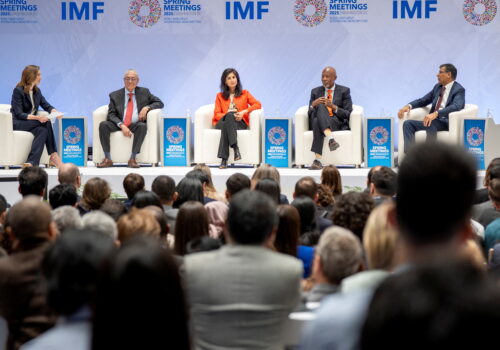
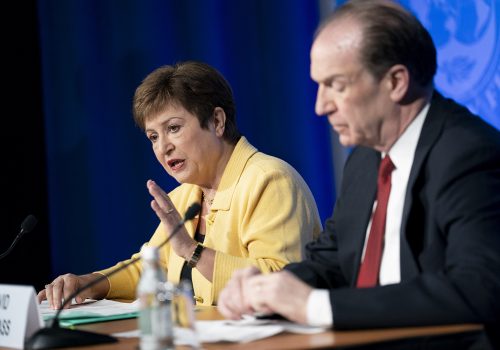
As the global economy continues to absorb the shock of the coronavirus pandemic, International Monetary Fund (IMF) Managing Director Kristalina Georgieva urged policymakers to commit more money to recovery efforts. “Do as much as you can,” she said on April 27, “then do a little bit more.”

Coronavirus
Inclusive Growth
gtc photo of the dollar as a puzzle piece

Digital currencies

Apr 23, 2020

Design choices of Central Bank Digital Currencies will transform digital payments and geopolitics

By Nikhil Raghuveera

In this analysis, the Atlantic Council GeoTech Center examines the geopolitical implications of Central Bank Digital Currencies (CBDCs) and calls for the United States to lead on setting standards for CBDC and financial technology.

Civil Society
Digital Currencies

New Atlanticist

Apr 22, 2020

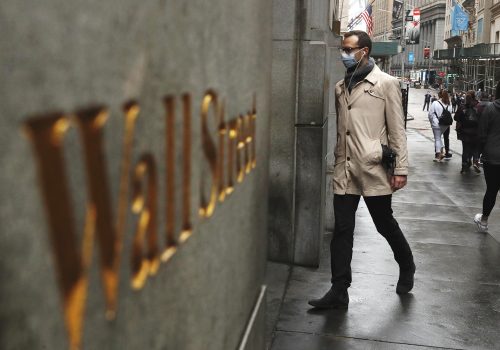
The pandemic’s next stop: The financial system

By Bart Oosterveld

The peak of bank failures closures during the Global Financial Crisis happened two years after the collapse of real estate prices—there is an argument that there may be some time before the financial sector’s reserves are depleted. The wider picture however shows gyrating equity and commodity markets, very high unemployment, and a fragmented ‘reopening’ picture. All in all, the moment of the need for a meaningful injection of capital, whether from private markets or from the taxpayers, is approaching.

Coronavirus
International Financial Institutions

In the News

Apr 15, 2020

Director Josh Lipsky Interviewed by Yahoo Finance on IMF Meeting

By Josh Lipsky

Read the full article here.

International Financial Institutions

New Atlanticist

Apr 13, 2020

The IMF and World Bank need to protect smaller countries during the Spring Meetings

By Hung Tran

While many larger economies have passed significant coronavirus relief packages, many middle- and low-income countries are in dire straits—suffering the full impact of the pandemic and global economic crises. World leaders in their meetings need to make decisions to significantly increase the lending capacity of the IMF to meet the urgent needs of these countries.

Coronavirus
International Financial Institutions

UkraineAlert

Apr 10, 2020

Breadbasket Ukraine must not prohibit grain exports

By Anders Åslund

Ukrainian policymakers are reportedly discussing the prohibition of grain exports. This could have a disastrous impact on the economy while also damaging ties with Ukraine's international partners.

International Financial Institutions
Trade and tariffs

New Atlanticist

Apr 2, 2020

The United States’ stealth diplomat: The Federal Reserve

By Robert Dohner

In stepping forward to calm US financial markets, reactivate swap lines, and create the new foreign repo facility, the Fed has helped backstop the global economy. One may argue whether the United States is still the indispensable nation. What is clear is that, in a crisis, the Federal Reserve is the indispensable central bank.

Financial Regulation
International Financial Institutions

New Atlanticist

Apr 1, 2020

The coronavirus economic crisis: Supporting the weak links

By Hung Tran

In the present pandemic crisis, major countries have moved more quickly, offering more substantial monetary and fiscal support packages, including better targeted programs than in 2008-09. The challenge now is to quickly deliver the help to the weak entities which need liquidity the most. After all, any system is only as strong as its weakest link.

Coronavirus
International Financial Institutions

Experts