Bottom lines up front
- European gas prices do not jump 45 percent in a vacuum. They do so when geopolitics collides with structural vulnerability. The latest spike is not just a market reaction to Middle East tensions; it is a stress test for Europe’s energy strategy and political cohesion—and a reminder that Russia still benefits when the system shakes.
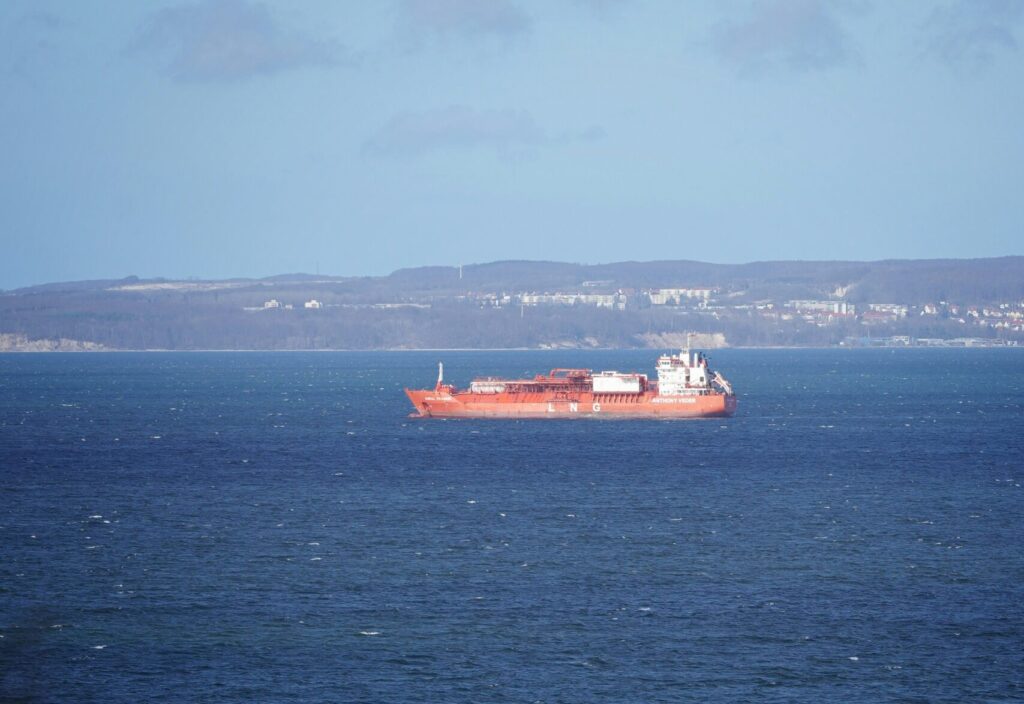
The immediate triggers are clear. Broader regional escalation has raised the risk premium across oil and gas markets. QatarEnergy paused liquefied natural gas (LNG) production following attacks on key facilities in Ras Laffan Industrial City, a complex that underpins a significant share of global LNG trade. At the same time, disruption in the Strait of Hormuz—through which roughly a fifth of global LNG and oil flows transit—have forced traders and shipowners to reassess exposure.
Add to this the uncertainty around pipeline gas flows between Iran and Turkey. If those volumes are curtailed or interrupted, Ankara may need to source additional cargoes on the spot LNG market. That would introduce yet another price-sensitive buyer competing directly with Europe for flexible supply.
Individually, each of these developments is manageable. Together, they create something more destabilizing: a synchronized tightening of global gas optionality.
Europe’s structural weakness this year
What makes this moment particularly uncomfortable for the European Union is timing.
First, storage levels are low after a relatively harsh winter, now below 30 percent. That does not mean an immediate shortage—but it does mean a steeper refill requirement.
Second, snow coverage in parts of Southern and Central Europe has been below average. Lower snow coverage translates into lower hydro generation in spring and summer. In practical terms, that means more gas-fired power generation precisely when Europe needs to inject gas back into storage.
Third, the storage refill clock is unforgiving. EU rules require storage facilities to approach 90 percent fullness ahead of winter. Even with recent flexibility in deadlines, the market knows injections must accelerate over the summer.
This is why conflict duration matters more than the initial price spike. Even if the Trump administration’s original estimate of four to five weeks proves accurate, that window overlaps with the early injection season. Four weeks of shipping disruptions, elevated insurance costs, and LNG rerouting is more than enough to reshape summer price curves—and political narratives.
The political spillover: A test for the Russian phaseout
Here is where the story shifts from markets to geopolitics.
The EU has committed—politically and legally—to phasing out Russian gas imports. The logic is strategic: reduce structural dependence on Moscow, limit Kremlin’s leverage, and harden Europe’s energy security architecture.
However, price spikes revive old arguments. In this context, governments such as Hungary and Slovakia could raise concerns about the feasibility of maintaining the current phaseout timeline amid elevated market stress. The argument would likely emphasize the perceived affordability, reliability, and geographic proximity of Russian pipeline gas, raising the question of whether additional constraints are prudent during a period of global instability.
In practical terms, an easing of the phaseout could take the form of delayed implementation deadlines, temporary exemptions for certain member states, extended transitional contracts, or a slower reduction of remaining pipeline and LNG imports under the justification of market stability.
This framing ignores the strategic cost of dependency. Yet in times of economic strain, short-term affordability arguments gain traction. High prices do not just test consumers—they test cohesion.
In this sense, Russia benefits without firing a shot in the Gulf. A tighter LNG market strengthens the perceived value of residual Russian flows. Moscow does not need to regain market dominance to gain leverage; it only needs to remain a marginal supplier in a tight system.
The oil dimension: Moscow’s quiet advantage in Asia
The advantage is not limited to gas.
If conventional oil flows from Gulf Cooperation Council exporters to Asia continue to be disrupted, China’s refiners will look for reliability. At the same time, Venezuelan exports to China have already been constrained by US enforcement actions. This context leaves Russia in a stronger negotiating position.
China, in particular, has been importing record volumes of Russian crude at steep discounts. In a context where Gulf supply faces logistical risk, Moscow’s barrels become relatively more valuable. The Kremlin may not eliminate discounts overnight, but it can narrow them—protecting revenue at a moment when higher oil prices already improve its fiscal outlook.
The real question for Europe
Against this backdrop, Russia appears to be the primary short-term beneficiary. Not because it controls the crisis, but because it benefits from fragmentation. Higher gas prices complicate Europe’s phaseout strategy. Political fault lines inside the EU widen as affordability concerns grow. But this advantage is contingent.
If Europe responds by doubling down on diversification, strengthening demand-side flexibility, and maintaining political unity on the Russian phaseout, the shock could ultimately reinforce strategic resilience.
If, instead, the crisis triggers policy backtracking, delayed phaseouts, or reconsidered bilateral gas deals with Moscow, then the Kremlin will have achieved something more durable than short-term revenue gains: restored leverage.
Andrei Covatariu is a nonresident senior fellow at the Atlantic Council Global Energy Center.
about the author

stay connected
Sign up for PowerPlay, the Atlantic Council’s bimonthly newsletter keeping you up to date on all facets of the energy transition
Related work
our work

The Global Energy Center develops and promotes pragmatic and nonpartisan policy solutions designed to advance global energy security, drive economic opportunity, and foster a sustainable energy future.
Image: (Daniel Schuh, Unsplash, https://unsplash.com/photos/a-large-boat-in-the-middle-of-a-large-body-of-water-_0DoA_oP3J8)